

Tax Revenues Reach Historic Highs as Non-Oil Contributions Dominate
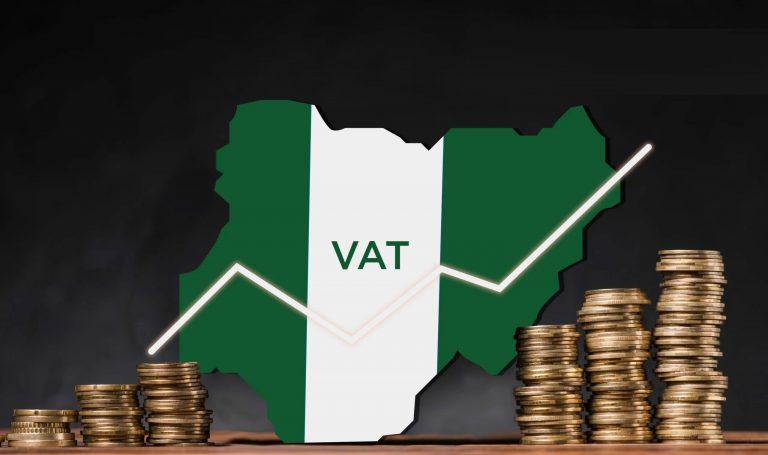
The Federal Inland Revenue Service (FIRS) has announced that Nigeria’s Value Added Tax (VAT) collections surged to N6.72 trillion in 2024, marking a remarkable 84.62% year-on-year increase from the N3.64 trillion recorded in 2023.
This unprecedented rise highlights the growing role of non-oil revenue in Nigeria’s fiscal strategy, as the federal government aggressively broadens its tax base to reduce dependency on oil earnings. The figures were disclosed at the 2025 FIRS Management Retreat, where tax officials reviewed the agency’s revenue performance and outlined projections for the coming year.
The surge in VAT collection underlines not just improved tax administration and enforcement but also rising consumer spending on essential goods amid soaring inflation.
Register for Tekedia Mini-MBA edition 20 (June 8 – Sept 5, 2026).
Register for Tekedia AI in Business Masterclass.
Join Tekedia Capital Syndicate and co-invest in great global startups.
Register for Tekedia AI Lab.
In addition to VAT, other tax categories recorded significant growth. Non-import VAT, which stood at N2.93 trillion in 2023, rose by 75.09% to N5.13 trillion in 2024. Import VAT more than doubled, increasing from N715 billion to N1.59 trillion, reflecting a 122.38% growth. The depreciation of the naira played a major role in this surge, as imported goods became more expensive, increasing the amount of VAT collected on them.
Company Income Tax (CIT) also saw a substantial rise, growing by 102.5% from N3.35 trillion in 2023 to N6.78 trillion in 2024. This increase was driven by inflationary pricing, which boosted nominal corporate earnings and, in turn, raised taxable income.
Petroleum Profit Tax (PPT), Hydrocarbon Tax (HT), and Upstream CIT recorded a 35.2% growth, increasing from N4.26 trillion to N5.76 trillion. However, this segment failed to meet internal revenue projections due to lower-than-expected crude oil production, which averaged 1.55 million barrels per day (mbpd) instead of the projected 1.78 mbpd.

Education Tax (EDT) posted the highest year-on-year percentage growth, surging by 127.8% from N719 billion in 2023 to N1.64 trillion in 2024. The government’s intensified efforts to enforce tax compliance among businesses contributed significantly to this increase. Overall, non-oil tax revenue rose by 97% compared to 2023, reflecting the government’s push to diversify revenue sources amid declining oil income.
Oil Revenue Falls Short Despite Gains in Other Sectors
Despite strong growth in tax revenues across the board, oil-related tax revenue fell short of expectations. The Petroleum Profit Tax, Hydrocarbon Tax, and Upstream CIT segment, projected to generate N7 trillion, only delivered N5.76 trillion, achieving 82.3% of its target. This shortfall was attributed to lower-than-expected crude oil production, hindered by ongoing challenges such as oil theft, underinvestment in production infrastructure, and OPEC-imposed production quotas.
To mitigate the impact of the shortfall, FIRS intensified its debt collection efforts, recovering outstanding tax liabilities from oil companies and other corporations. While these measures helped cushion the revenue gap, the underperformance in oil tax collections underscores Nigeria’s vulnerability to fluctuations in the global oil market and production challenges.

VAT and CIT Collections Surpass Projections
VAT and CIT collections exceeded initial projections, highlighting the growing role of domestic taxation in Nigeria’s revenue framework. Import VAT, initially projected at N1.1 trillion, significantly outperformed expectations, reaching N1.59 trillion and achieving 144.3% of its target. Non-import VAT also surpassed expectations, reaching N5.13 trillion instead of the projected N4.25 trillion, exceeding the target by 20.7%.
Company Income Tax collections followed a similar trend, outperforming projections by a wide margin. The tax, expected to generate N5.7 trillion, closed the year at N6.78 trillion, achieving 118.9% of its target. The increase in CIT collections reflects improved enforcement of tax compliance, as well as the impact of inflation on corporate revenues.
2025 Revenue Target Set at N25.2 Trillion Amid VAT Sharing Dispute
Following the strong revenue performance in 2024, FIRS has set an ambitious target of N25.2 trillion for 2025, representing a significant increase from the N21.6 trillion collected in 2024. However, this target comes at a time of intense debate over the sharing formula for VAT revenue, as state governments push for a larger share of the tax proceeds.
Under the current VAT Act, revenue is allocated as follows: 15% to the Federal Government, 50% to States and the Federal Capital Territory (FCT), and 35% to Local Governments. Additionally, 4% of VAT collections are allocated to FIRS as a collection fee, while 2% goes to the Nigeria Customs Service for import VAT collection.
The Nigeria Governors’ Forum (NGF) has endorsed a revised VAT-sharing formula that would allocate 50% of VAT revenue based on equality among states, 30% based on derivation (i.e., the amount generated by each state), and 20% based on population. The governors argue that this formula would ensure a more equitable distribution of resources, particularly for states that contribute significantly to VAT revenue. However, economic experts warn that such a revision could create disparities between wealthier and poorer states, potentially leading to new fiscal tensions.
While the federal government celebrates the record-breaking tax collections, many believe that higher VAT revenue means a greater tax burden on Nigerian consumers. With inflation worsening and the cost of living soaring, many households and businesses are feeling the strain of increased taxation.
The government maintains that expanding the tax base is necessary to reduce Nigeria’s reliance on borrowing, but there are concerns that aggressive tax policies could stifle economic growth and worsen poverty.
FIRS Chairman Zacch Adedeji has reassured Nigerians that the agency will continue to improve tax compliance while avoiding excessive tax increases. However, as Nigeria targets N25.2 trillion in tax revenue for 2025, the challenge will be to sustain revenue growth without exacerbating economic hardship.