

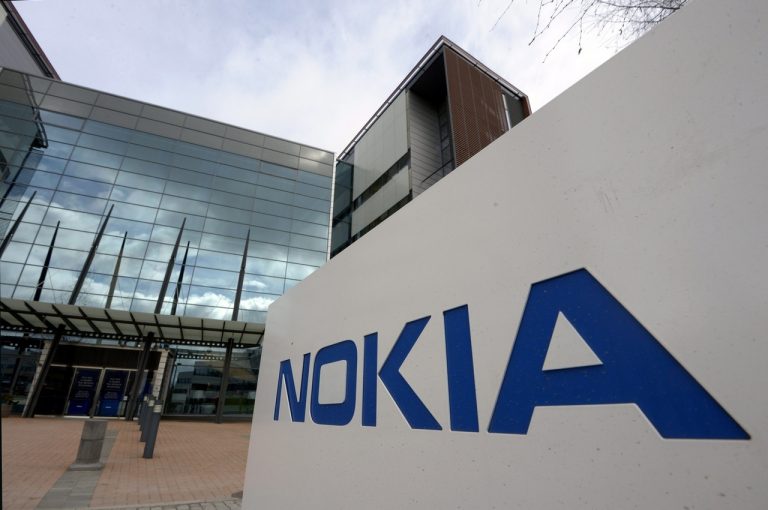
Nokia reported stronger-than-expected third-quarter earnings on Thursday, boosted by surging demand for optical networks and AI-driven cloud services following its acquisition of U.S. optical networking firm Infinera.
The Finnish telecom equipment maker’s shares jumped 10.6% to €5.20 — their highest level in more than three years — adding roughly €3 billion to its market capitalization.
Comparable operating profit for the quarter through September rose to €435 million ($507 million), easily beating analyst expectations of €342 million, according to data compiled by LSEG. Group net sales climbed 12% to €4.83 billion, ahead of the €4.6 billion forecast. The results marked a sharp rebound for Nokia, which only months earlier had issued a profit warning amid U.S. tariffs, currency headwinds, and a slowdown in global telecom spending.
Register for Tekedia Mini-MBA edition 20 (June 8 – Sept 5, 2026).
Register for Tekedia AI in Business Masterclass.
Join Tekedia Capital Syndicate and co-invest in great global startups.
Register for Tekedia AI Lab.
CEO Justin Hotard said the company’s pivot toward high-capacity data networks and AI-related infrastructure is now bearing fruit.
“AI and data center demand continues to be robust. In fact, it continues to accelerate from our perspective,” Hotard told reporters during a post-earnings call.
Nokia stated that AI and cloud customers accounted for 6% of the company’s total group sales and 14% of its network infrastructure revenue, underscoring the growing significance of the company’s non-mobile segments. Its Optical Networks division was a standout performer, expanding 19% on a constant-currency basis — driven by hyperscaler demand and next-generation data center connectivity.

The results come amid a period of strategic repositioning for Nokia after years of losing ground to rivals in its core mobile networks business. U.S. carrier AT&T began phasing out its 5G contract with Nokia in favor of Swedish rival Ericsson, which secured a $14 billion deal in 2023. The setback prompted Nokia to expand into new growth areas like optical networking and AI-powered cloud infrastructure to diversify revenue streams.
The Infinera acquisition, completed earlier this year, has strengthened Nokia’s position in high-speed optical transmission, an increasingly critical backbone for AI workloads and cloud computing. Analysts say it also gives Nokia a stronger foothold in the North American enterprise market, where demand for next-generation data links is accelerating despite weakness in telecom operator spending.
In an effort to maintain momentum, Nokia said it now expects full-year operating profit to range between €1.7 billion and €2.2 billion, up slightly from a previous upper limit of €2.1 billion. The company reiterated its guidance that the second half of 2025 would outperform the first, helped by seasonal demand and improved supply-chain conditions.

The upgrade partly reflects changes in how Nokia reports results from its venture fund, after it announced plans to scale down passive investment activities and focus on core operational performance.
Despite persistent challenges from a weaker dollar and price competition in Europe and Asia, Nokia’s ability to offset declining mobile sales with strong optical and cloud momentum marks a crucial inflection point for the 159-year-old firm. It also pinpoints how firms are boosting growth by pivoting to AI infrastructure and cloud services.
With major AI infrastructure investments sweeping across global markets, Nokia’s repositioning appears well-timed. Its renewed focus on optical technology, cloud interconnectivity, and AI-centric networking positions it to capture a growing slice of the digital infrastructure powering the next phase of global connectivity.