

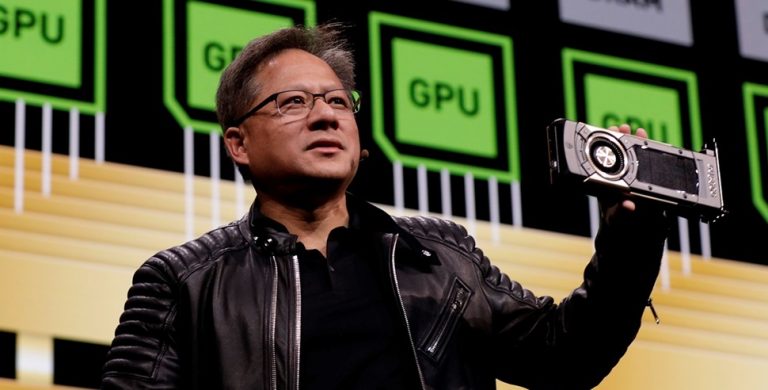
In the latest episode of the Lex Fridman Podcast, released this week, Nvidia CEO Jensen Huang offered a rare glimpse into the no-frills management philosophy powering one of the most valuable companies on the planet.
At the helm of a roughly $4.3 trillion AI juggernaut, Huang oversees more than 60 direct reports, engineers, C-suite executives, and senior vice presidents across chips, software, systems, and finance, yet he refuses to hold private one-on-one sessions with any of them.
“I don’t have one-on-ones with them because it’s impossible,” Huang told Fridman. “We present a problem, and all of us attack it.”
Register for Tekedia Mini-MBA edition 20 (June 8 – Sept 5, 2026).
Register for Tekedia AI in Business Masterclass.
Join Tekedia Capital Syndicate and co-invest in great global startups.
Register for Tekedia AI Lab.
The approach, which Huang calls “extreme co-design,” turns every staff meeting into a high-stakes group dissection. His direct reports include specialists in CPUs, GPUs, algorithms, memory, networking, power, cooling, and architecture. They gather daily, often with Huang reasoning aloud through problems step by step. Anyone can chime in; anyone can tune out.
“Whoever wants to tune out, tune out,” he said. “The people who are on the staff, they know when to pay attention.”
But there’s an edge to the openness. Huang has no qualms about calling out a team member who stays silent on a topic where their expertise should matter. The point isn’t comfort—it’s clarity and speed. Information flows to everyone at once. No one hoards it. No one gets a privileged preview.

This is deliberate as Huang has long argued that private conversations create unnecessary hierarchy and slow everything down. He first outlined the philosophy years ago, telling audiences that one-on-ones clutter calendars and dilute collective intelligence.
In the Fridman interview, he doubled down, noting that group reasoning lets people challenge the logic without torpedoing the outcome.
“The nice thing about reasoning through things and letting people interact with it,” he said, “is that they don’t have to disagree with your outcome. They can disagree with your reasoning steps.”

The structure stands in stark contrast to the cookie-cutter corporate org charts Huang openly mocks. He dismisses the classic “hamburger” model—thin senior leadership bun on top, thick middle-management meat in the middle, employee bun on the bottom—as nonsensical.
“I see a lot of companies’ organization charts, and they all look the same,” he said. “Hamburger organization charts, soft organization charts, and car company organization charts. They all look the same. And it doesn’t make any sense to me.”
Instead, Huang wants the company’s architecture to mirror the complex, interdependent systems it builds. That means keeping layers thin and the CEO’s span of control wide. In a 2024 talk at Stanford Graduate School of Business, he made the case plainly: CEOs should have the largest number of direct reports because the people reporting to them need the least hand-holding.
The fewer rungs on the ladder, the faster decisions travel, and the more empowered everyone feels. Internal lists have shown the number fluctuating, 36 in late 2025, higher in earlier estimates, but the principle has stayed constant.
Nvidia’s meeting dynamic carries more than a faint echo of another Silicon Valley icon. The late Steve Jobs ran Apple sessions the same way: raw debate, ideas poked full of holes, no sacred cows. Huang has cited the same logic for years—equal access to information levels the playing field and sparks better solutions.
For a company that started in 1993 as a graphics-chip upstart and now sits at the center of the global AI boom, the formula has worked. Nvidia’s chips train the models that power everything from ChatGPT to autonomous vehicles. Its data-center revenue has exploded. And Huang, still showing up in his signature black leather jacket for keynotes, has kept the machine moving at a pace that leaves competitors gasping.
Critics sometimes wonder how one person can meaningfully engage 60 high-powered reports. Huang’s answer is simple: he doesn’t try to micromanage them individually. He orchestrates the room. The specialists know their domains; his job is to make sure the whole system coheres. It’s not warm and fuzzy. It’s not traditional.
But in an industry where yesterday’s breakthrough is today’s table stakes, it has kept Nvidia not just relevant, but indispensable. As Huang put it in the podcast, the company is constantly optimizing across the entire stack—hardware, software, systems, and algorithms. He long ago decided that the fastest way forward isn’t through back-channel chats, but through the full force of the group.