

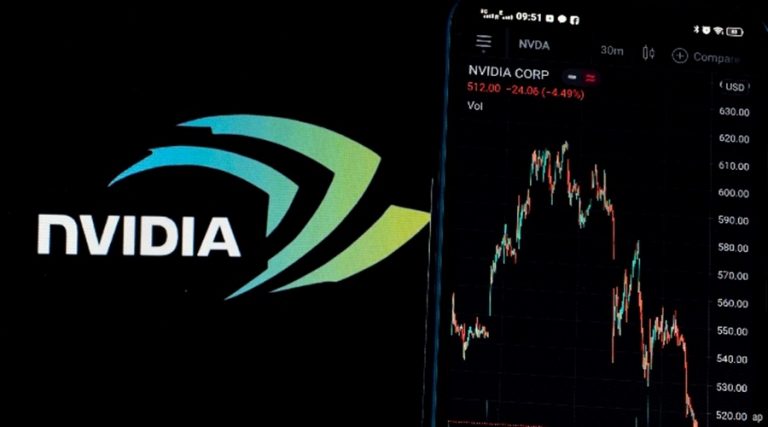
Nvidia’s sudden leadership crisis has shaken global markets, with shares falling after co-founder Jensen Huang resigned as chief executive following 33 years at the helm.
The sell-off pushed the company’s market value below $4 trillion, highlighting investors’ dependence on its long-serving founder. The company confirmed that Huang had stepped down as president, CEO and a board member, effective immediately.
Nvidia appointed Chief Financial Officer Colette Kress as interim chief executive while it searches for a permanent successor. Kress, who joined Nvidia in 2013, will retain her finance responsibilities. The board appointed longtime director Harvey C. Jones as its first-ever chairman.
Register for the next Tekedia Mini-MBA.
Register for Tekedia AI in Business Masterclass.
Join Tekedia Capital Syndicate and co-invest in great global startups.
The announcement triggered an immediate market reaction. Nvidia shares fell as much as 13% to 14% during early trading, briefly erasing hundreds of billions of dollars in market value and taking its capitalization below $4 trillion.
The stock later recovered part of its losses, but the decline underscored investors’ concern about an abrupt change at the top of one of the world’s most influential technology companies.
Huang’s departure followed scrutiny surrounding reports about his personal relationships, including allegations involving a woman suspected of links to Chinese intelligence.

The revelations created a reputational and governance challenge for Nvidia, whose chips sit at the center of the global artificial intelligence industry.
The company has not indicated that its product strategy or customer commitments will change, but the resignation has introduced uncertainty at a critical moment.
For more than three decades, Huang shaped Nvidia’s transformation from a graphics-chip maker into the dominant supplier of processors used to train and operate advanced artificial intelligence systems.

Its graphics processing units have become essential infrastructure for technology companies, cloud providers, governments and research institutions investing in AI. That position helped Nvidia become one of the most valuable publicly traded companies in history.
The leadership transition raises questions beyond Nvidia’s immediate operations. Investors will want assurance that the company can preserve its product roadmap, maintain major customer relationships and execute its strategy without the founder synonymous with its success.
Kress offers continuity, given her experience overseeing Nvidia’s finances and understanding its business. However, managing investor confidence while leading a search for a permanent CEO will be a substantial challenge.
The timing matters because Nvidia is navigating debate over the sustainability of AI spending. Major technology companies are committing enormous sums to data centers and computing capacity.
While investors are examining whether future returns will justify those investments. Nvidia’s influence across the AI supply chain means leadership uncertainty can affect sentiment toward chipmakers, cloud-computing companies and other businesses connected to the infrastructure boom.
Nvidia’s scheduled quarterly results on November 17 will give management an opportunity to address concerns about demand, financial performance and strategic continuity.
Until then, markets are likely to remain sensitive to developments in the succession process. The board will consider internal and external candidates, leaving the interim arrangement’s duration uncertain.
Kress must reassure employees, customers and shareholders that daily operations will remain steady. Huang’s resignation marks a defining moment for Nvidia.
Its technology leadership remains formidable, but its next chapter will test whether its institutional strength can stand independently of its founder. Restoring confidence will require stable governance, clear communication and consistent execution.