

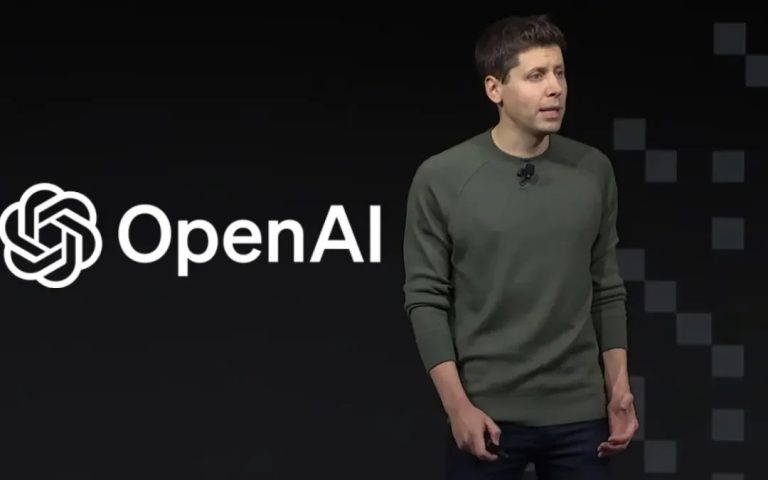
OpenAI CEO Sam Altman took a subtle aim at rival Anthropic on Thursday while defending his company’s relationship with the U.S. government, arguing that it would be “bad for society” if powerful technology firms abandoned democratic processes simply because they disagreed with political leadership.
Speaking during the Morgan Stanley Technology, Media & Telecom Conference, Altman said it was important for private companies to recognize the authority of elected institutions.
“The government is supposed to be more powerful than private companies,” he said, cautioning against a scenario where technology firms circumvent public institutions because “some people don’t like the person or people currently in charge.”
Register for Tekedia Mini-MBA edition 20 (June 8 – Sept 5, 2026).
Register for Tekedia AI in Business Masterclass.
Join Tekedia Capital Syndicate and co-invest in great global startups.
Register for Tekedia AI Lab.
The comments come at a delicate moment in the intensifying rivalry between OpenAI and Anthropic — two of the world’s fastest-growing artificial intelligence developers — and as tensions escalate between Anthropic and the U.S. defense establishment.
Anthropic CEO Dario Amodei reportedly criticized Altman’s relationship with President Donald Trump in a memo to staff, saying Anthropic had not offered “dictator-style praise” to Trump, while suggesting OpenAI had been more accommodating.
The dispute widened after disagreements between Anthropic and the U.S. Department of Defense over how its artificial intelligence models could be used by the military. Negotiations deteriorated in recent weeks, culminating in Defense Secretary Pete Hegseth declaring Anthropic a “Supply-Chain Risk to National Security” in a post on X.

Soon after, President Trump ordered all federal agencies to “immediately cease” using Anthropic’s technology, effectively cutting the company off from a potentially lucrative government market that many AI firms view as strategically important. Within hours of that directive, OpenAI announced its own agreement with the Pentagon — a move that sparked criticism across the technology sector and among policymakers who viewed the timing as opportunistic.
Altman acknowledged that perception, saying the announcement “looked opportunistic and sloppy,” but insisted the company’s intention was to prevent the dispute from escalating further.
“It is complicated, we are busy with other things,” Altman said. “But last week, when things started to get into a fight, it became increasingly clear to us that there was a chance things were going to go very badly.”

The development is seen as a pointer to how the AI industry is becoming increasingly entangled with geopolitics and national security policy, as governments view advanced artificial intelligence systems as critical strategic infrastructure.
For OpenAI, the Pentagon partnership appears to represent more than a simple commercial contract. Analysts say it strengthens the company’s standing in Washington at a time when policymakers are shaping rules that could determine the future structure of the AI industry.
Founded in 2015 as a nonprofit research lab, OpenAI has rapidly evolved into one of the most valuable technology companies in the world following the launch of ChatGPT in 2022. The chatbot triggered a global surge of interest in generative AI and propelled the company into the center of the tech industry’s most consequential race.
Last week, OpenAI announced a massive funding round worth $110 billion that valued the company at roughly $730 billion before the new capital was injected — a figure that places it among the most highly valued technology firms globally. The company’s commercial momentum has been equally striking. ChatGPT now supports more than 900 million weekly active users, up from 800 million in October, according to company figures.
Financially, OpenAI’s annual revenue run rate has climbed above $25 billion, according to sources familiar with the company’s finances. Anthropic, which has emerged as one of its closest competitors, is believed to have surpassed $19 billion in annual revenue run rate. Yet the political fallout from the Pentagon dispute has produced sharply different outcomes for the two companies.
OpenAI has faced a backlash among some users and developers who view its deepening military ties as a departure from the company’s original mission as a nonprofit research organization focused on ensuring artificial intelligence benefits humanity. The criticism has translated into a wave of uninstallations of the ChatGPT app in some developer and privacy-focused communities, according to industry tracking platforms.
Anthropic, meanwhile, has seen a surge in downloads of its AI assistant products as some users migrate toward alternatives perceived as more independent from government or military partnerships.
At the same time, OpenAI appears increasingly willing to pursue defense contracts as a strategic lever. Military partnerships can provide both large, stable revenue streams and privileged access to government research funding, while also strengthening relationships with policymakers responsible for regulating advanced AI systems.
U.S. officials view AI as a critical domain in the country’s broader technological rivalry with China, making collaboration with leading domestic developers a national priority. The Pentagon’s interest in generative AI spans a wide range of potential uses, including intelligence analysis, cybersecurity defense, battlefield logistics, and autonomous systems. Securing partnerships with companies capable of building the most advanced models has therefore become a strategic objective for the U.S. government.
The dispute involving Anthropic and the Defense Department underlines a growing tension many AI firms face as they balance commercial opportunities with ethical considerations around military use of their technology. Anthropic has positioned itself as a company emphasizing AI safety and governance, often highlighting the potential risks posed by advanced models. That stance has sometimes translated into caution around certain government applications. OpenAI, by contrast, appears to be charting a more pragmatic path — cooperating closely with state institutions while attempting to frame such engagement as part of a broader democratic framework.