

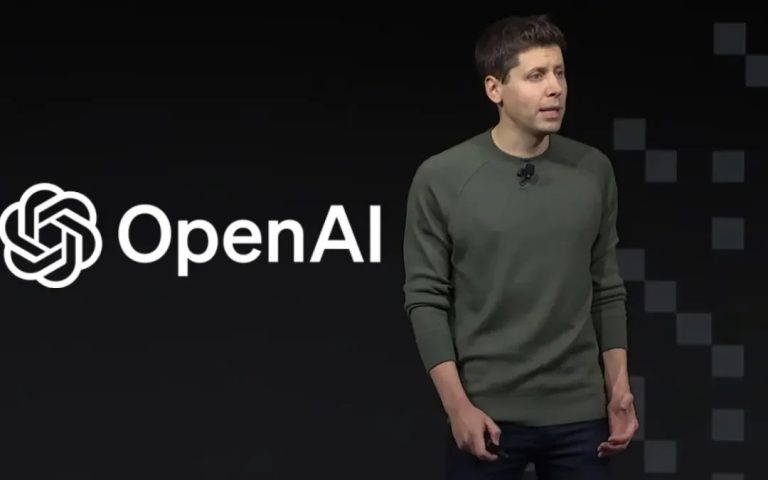
OpenAI, the company behind ChatGPT, is expanding its footprint in India with an ambitious plan to build a massive data center and expand access to artificial intelligence tools.
According to Bloomberg, the company is in talks with local partners to set up a data center with a projected capacity of at least 1 gigawatt, a scale that would make it one of the largest AI-focused facilities in Asia.
The move comes after OpenAI formally registered as a legal entity in India and began assembling a local team. In August, the company confirmed plans to open its first office in New Delhi later this year, acknowledging India’s role as its second-largest user market. While the precise location and timeline for the proposed data centre remain undisclosed, speculation is mounting that CEO Sam Altman could unveil more details during his scheduled visit to India in September.
Register for Tekedia Mini-MBA edition 20 (June 8 – Sept 5, 2026).
Register for Tekedia AI in Business Masterclass.
Join Tekedia Capital Syndicate and co-invest in great global startups.
Register for Tekedia AI Lab.
The data center project would be a significant part of “Stargate,” the private-sector AI infrastructure initiative announced in January by US President Donald Trump. Stargate has drawn heavyweight backers including SoftBank, OpenAI, and Oracle, with investments projected to reach as high as $500 billion. If materialized in India, the facility would not only support OpenAI’s global infrastructure but also place India at the heart of the emerging AI arms race in Asia, a region where China, South Korea, and Japan are already investing heavily in advanced computing power.
Alongside infrastructure ambitions, OpenAI is simultaneously investing in India’s education sector through a large-scale digital inclusion programme. Just last week, the company unveiled a major initiative to distribute 500,000 free ChatGPT licences for six months to students and teachers across the country. The licenses will cover government schools from Classes 1 to 12, engineering and technical institutes, as well as K-12 educators.
Leah Belsky, OpenAI’s vice-president of Education, framed the initiative as a step towards using AI to augment—not replace—human teaching.

“We believe AI has the potential to transform education for students. AI can be a personal lifelong tutor and learning agent. For educators, AI can free up time for them to focus more on the core part of teaching,” Belsky said at a media briefing.
Branded as the OpenAI Learning Accelerator, the programme is an “India-first” effort. Belsky stressed that the initiative is not a monetization play but a groundwork for long-term engagement.
“The focus for now is access and training,” she said, adding that the company’s larger goal is to learn how Indian educators adapt ChatGPT to their classrooms and then replicate those lessons globally.

Distribution of the licenses will be carried out in partnership with the Ministry of Education, the All India Council for Technical Education (AICTE), and schools under the Association for Reinventing School Education (ARISE).
OpenAI’s twin strategy in India—building foundational infrastructure through a possible gigawatt-scale data center while simultaneously embedding its tools in classrooms—reflects both the scale of its ambitions and the geopolitical backdrop against which they are unfolding. The Stargate project itself has been pitched in Washington as a counterweight to China’s rapid AI progress, and India, with its vast population of young tech-savvy students and relatively cheap power resources, offers an ideal testing ground.
However, OpenAI’s India expansion is unfolding against a complicated geopolitical backdrop. Trump has repeatedly urged American tech giants to keep their operations and capital investments inside the United States, warning that moving critical infrastructure abroad could undermine jobs and national competitiveness. Apple, which has been scaling up its iPhone assembly operations in India, has often been cited by Trump as an example of US companies “shipping jobs overseas” instead of investing more domestically. How the Trump administration, which threatened to impose tariffs on Apple devices made in India, will respond to OpenAI building large-scale AI infrastructure abroad remains uncertain.
The development also comes amid an ongoing tariff spat between Washington and New Delhi. The Trump administration has taken a tougher line on India’s trade policies in recent months, raising concerns about market access and tariffs on American goods. Against this backdrop, OpenAI’s move to deepen its physical footprint in India could complicate policy discussions between the two countries.
However, by linking national-scale infrastructure to grassroots education initiatives, OpenAI seems to be betting that India could become not just a consumer of AI but also a hub for training the next generation of AI-literate workers—an essential step in competing with global rivals in what has become one of the most consequential technological races of the century.