

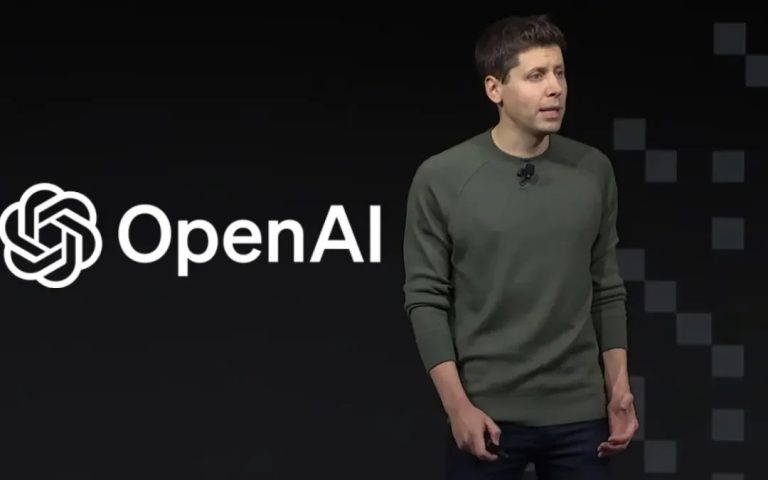
OpenAI is considering significant price reductions across parts of its artificial intelligence product lineup as competition with Anthropic escalates into what resembles a battle for market share, enterprise customers, and investor confidence ahead of potential public listings.
According to a Wall Street Journal report, OpenAI is evaluating substantial cuts to token pricing, the core unit used to charge developers and businesses for access to AI models. The move is reportedly being considered partly in anticipation of similar pricing actions from Anthropic, underscoring how competition among frontier AI companies is shifting from a race centered on model performance to one focused on economics, scale, and customer acquisition.
The potential pricing changes come at a time when the tech industry, especially artificial intelligence, is witnessing a public listing boom. OpenAI recently confidentially filed paperwork for an initial public offering with the U.S. Securities and Exchange Commission, just days after Anthropic submitted its own confidential IPO filing. The parallel moves suggest that two of the world’s most valuable AI companies are preparing to tap public markets as investors scrutinize not only growth rates but also the sustainability of their business models.
Register for the next Tekedia Mini-MBA.
Register for Tekedia AI in Business Masterclass.
Join Tekedia Capital Syndicate and co-invest in great global startups.
The timing is notable because both companies are operating in an environment where revenue is expanding rapidly, but so are infrastructure costs.
OpenAI currently offers consumer subscriptions ranging from roughly $8 per month for entry-level access to more than $100 monthly for premium tiers built around its GPT-5.5 models. Anthropic charges approximately $17 per month for Claude Pro subscriptions and $100 or more for Claude Max offerings.
A reduction in token pricing would have implications extending well beyond consumer subscriptions. Enterprise customers and software developers generate a substantial portion of revenue for leading AI firms, and lower token costs could encourage broader adoption of AI-powered applications while simultaneously increasing pressure on competitors to follow suit.

Over the past two years, companies have competed primarily by releasing powerful models. Today, performance differences among top-tier systems are narrowing, making pricing, reliability, ecosystem integration, and enterprise support increasingly important competitive differentiators.
The pressure is intense because OpenAI and Anthropic are pursuing similar customer bases. Both companies have aggressively targeted software development, financial services, legal services, healthcare, and enterprise productivity applications. As these markets mature, pricing could become a powerful lever for winning long-term customers.
OpenAI enters this phase from a position of considerable scale. ChatGPT recently surpassed one billion monthly app users, becoming one of the fastest-growing consumer technology products in history. The milestone gives OpenAI a distribution advantage that few competitors can match and creates opportunities to monetize users through subscriptions, enterprise services, and developer tools.

Anthropic, however, has established itself as perhaps OpenAI’s strongest challenger in the enterprise segment. The company closed a massive Series H financing round in May that valued it at approximately $965 billion, exceeding OpenAI’s March valuation of $852 billion. Anthropic’s rapid revenue growth has been driven largely by enterprise adoption of its Claude family of models, particularly among software developers and corporate customers.
The possibility of price reductions also denotes that while demand remains robust, investors are increasingly focused on profitability.
Training and operating frontier AI models requires enormous spending on computing infrastructure, data centers, and advanced semiconductors. OpenAI, Anthropic, Google, Meta, and other major AI developers are collectively spending hundreds of billions of dollars annually on AI infrastructure.
That spending has sparked growing debate about whether the industry will eventually experience margin compression. Lower prices can accelerate adoption and expand usage volumes, but they can also make it more difficult for companies to recover the massive capital expenditures required to train and operate increasingly sophisticated models.
The decision comes as OpenAI’s management attempts to convince investors that the company can maintain leadership while building a sustainable business. Chief Executive Sam Altman recently described the company as entering a new phase focused on making advanced AI more abundant, affordable, and widely accessible. Lower pricing would align with that strategy, though it could also intensify competitive pressures across the sector.
The emerging pricing battle could prove beneficial for enterprises, developers, and consumers. Just as cloud computing costs fell dramatically as competition intensified among major providers, AI services may become increasingly affordable, potentially accelerating adoption across industries.
However, the answer investors are seeking is whether the industry’s leading players can continue delivering rapid technological advances while simultaneously reducing prices.