

OpenAI has announced a sweeping expansion of ChatGPT that could alter the balance of power in the tech industry, revealing plans to build an app store-like ecosystem inside its popular AI chatbot — a move that directly challenges the long-standing dominance of Apple’s App Store and Google Play.
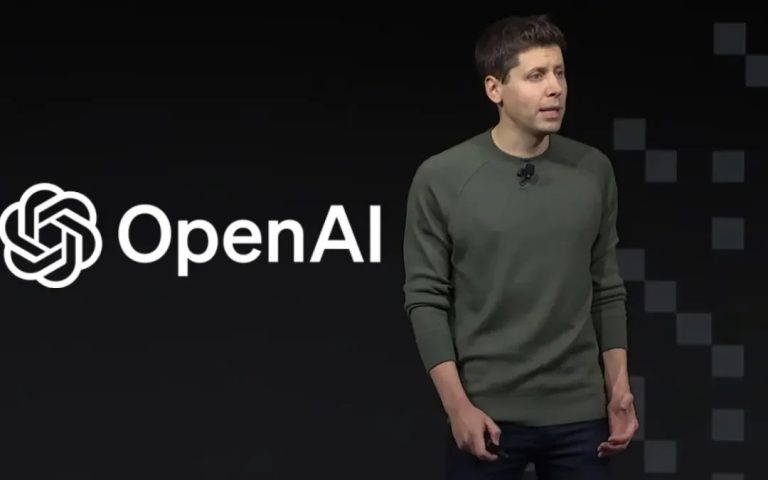
At its DevDay event on Monday, OpenAI CEO Sam Altman said users will soon be able to interact with third-party applications directly within ChatGPT, marking a shift that transforms the chatbot from a conversational assistant into a full-scale digital platform. The company also unveiled a software development kit (SDK) that allows developers to build and publish their own ChatGPT-compatible apps — a significant step toward creating a new kind of app economy centered on artificial intelligence.
Altman revealed that ChatGPT now boasts 800 million weekly users, giving OpenAI a massive audience to support the new marketplace.
Register for Tekedia Mini-MBA edition 20 (June 8 – Sept 5, 2026).
Register for Tekedia AI in Business Masterclass.
Join Tekedia Capital Syndicate and co-invest in great global startups.
Register for Tekedia AI Lab.
“This will enable a new generation of apps that are interactive, adaptive, and personalized — that you can chat with,” he said. “We hope this will be a big deal for helping developers rapidly scale products.”
ChatGPT Becomes a Platform
Under the new model, users can invoke apps naturally within conversations — for example, asking Spotify to curate a playlist, Zillow to show homes in a specific area, or Expedia to recommend vacation packages. When an app is mentioned for the first time, ChatGPT will prompt users to connect it and select what data to share, effectively allowing users to operate multiple apps through natural dialogue.
OpenAI said it will begin accepting app submissions later this year for review and publication. Developers will also gain the ability to monetize their apps through OpenAI’s upcoming commerce functionality, enabling purchases and transactions to take place directly inside ChatGPT.

The company is also launching a public directory where users can browse available apps. Those meeting higher standards for quality and functionality will be featured prominently, both within the ChatGPT interface and in the app listing itself.
Among the first partners in the program are major global brands, including Booking.com, Canva, Coursera, Figma, Expedia, Spotify, and Zillow, with additional partners such as AllTrails, Khan Academy, Instacart, Peloton, Target, Tripadvisor, and Uber expected to roll out later this year.
OpenAI’s Push Beyond AI — and Into Big Tech Territory
The new announcement marks the latest in a series of moves by OpenAI that have steadily expanded its reach into areas long dominated by Google, Apple, and Meta. Once known solely for its breakthroughs in natural language processing, OpenAI has been methodically transforming ChatGPT into an all-encompassing digital hub — one that combines search, communication, productivity, and commerce in a single interface.

Earlier this year, the company began testing its own search engine, allowing users to query the web in real time — a direct challenge to Google Search’s supremacy. It also introduced a browser tool within ChatGPT that enables users to navigate websites, read news articles, and access live data without leaving the platform.
In addition, OpenAI has touted social-style features that allow users to share prompts, experiences, and creative projects — a move that analysts say could evolve into a lightweight social network. These expansions, combined with Monday’s announcement of an app store and in-chat commerce, have fueled the perception that OpenAI is building an “everything app” — a single digital environment capable of replacing multiple online tools.
OpenAI is believed to be positioning itself as a new kind of platform gatekeeper — one that could bypass traditional app store rules and commission structures. For over a decade, Apple and Google have dominated mobile software distribution, taking cuts of up to 30% on app purchases.
Altman did not specify what percentage OpenAI might charge developers, but he confirmed that app monetization would be part of the platform’s long-term model. The company’s approach — blending natural conversation with integrated commerce — could appeal to developers and businesses frustrated by restrictive app store policies.
This conversational interface could prove especially disruptive, analysts note, because it streamlines how users access digital services. Instead of searching, downloading, and opening different apps, users can simply ask ChatGPT to perform a task — effectively collapsing the digital journey from several steps into one.
Toward the “Everything App”
Altman’s ambition to make ChatGPT the hub of digital interaction echoes a concept that major tech companies have long pursued but never fully realized: a single, unified platform that integrates work, entertainment, shopping, communication, and productivity.
While Meta has tried to pivot Facebook and WhatsApp into commerce-driven ecosystems, and Apple continues to expand its services portfolio, OpenAI’s advantage lies in its conversational interface — one that can personalize responses, automate workflows, and connect users directly to multiple external services through a single chat.
If successful, OpenAI’s app marketplace could represent the beginning of a broader shift — from mobile app ecosystems to AI-driven conversational ecosystems, where the line between applications and intelligent agents begins to blur.
With its search, social, browser, and now app store functionalities, OpenAI is clearly expanding beyond the boundaries of artificial intelligence research into a comprehensive digital infrastructure.