DD
MM
YYYY

PAGES

DD
MM
YYYY

spot_img

PAGES

Home Blog Page 10

Evergrande Founder Hui Ka Yan Sentenced to Life in Prison as China Draws Line Under Property Giant’s Collapse

0

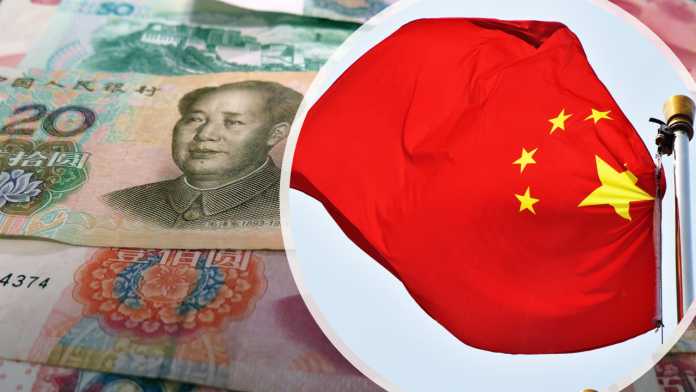
Hui Ka Yan, the billionaire founder of China Evergrande Group, has been sentenced to life in prison after a Chinese court found him guilty of multiple financial crimes, bringing a dramatic end to the rise and collapse of one of the country’s most indebted property developers.

A Hong Kong court ordered the liquidation of EVergrande in 2024, over failure to present a viable restructuring plan more than two years after defaulting on its offshore debt.

Hui, who once ranked among China’s richest businessmen, pleaded guilty in April to eight charges, including misuse of funds, fundraising fraud and illegally taking public deposits. The court also ordered the confiscation of his personal property.

The Shenzhen court in southern China additionally fined Evergrande 8.82 billion yuan ($1.31 billion) and imposed a 7 billion yuan fine on Hengda Real Estate, the group’s main domestic subsidiary. Five other senior Evergrande executives received prison sentences ranging from six to 18 years and were also fined.

The ruling closes a major chapter in the collapse of Evergrande, but it does little to resolve the financial losses suffered by the company’s creditors, investors, homebuyers and suppliers.

Evergrande became a symbol of China’s debt-fueled property boom before its financial structure unraveled. The developer defaulted in 2021 after accumulating roughly $300 billion in liabilities, triggering one of the most severe corporate debt crises in China’s modern history.

Its collapse exposed the risks created by years of aggressive borrowing, rapid land purchases and heavy reliance on presales of unfinished homes to finance new projects.

Hui built Evergrande from a relatively small property business into a sprawling conglomerate with interests extending beyond real estate. At its peak, the company was one of China’s largest developers, and Hui was among the country’s wealthiest entrepreneurs.

The company’s rapid expansion, however, left it heavily dependent on continued access to credit and strong property demand. When Chinese authorities began tightening restrictions on developers’ leverage and financing, Evergrande struggled to refinance its debts.

The resulting liquidity crisis eventually spread across China’s property sector, with other highly leveraged developers also defaulting or restructuring their obligations.

Hui’s conviction is separate from the broader debt restructuring and liquidation process involving Evergrande.

A Hong Kong court ordered Evergrande to be liquidated in January 2024 after creditors and the company failed to reach a restructuring agreement. The company subsequently moved through a lengthy liquidation process involving billions of dollars of assets and claims from creditors around the world.

The criminal case against Hui adds a personal accountability dimension to a corporate collapse that has had far-reaching consequences.

The Shenzhen court’s decision to confiscate Hui’s personal assets and impose billions of yuan in fines on Evergrande and Hengda also signals the severity with which Chinese authorities have treated the conduct at the centre of the case.

Yet the penalties are unlikely to materially improve recovery prospects for Evergrande’s creditors. The company’s liabilities vastly exceed the value of its remaining assets, while creditors have been competing for recoveries from a complex portfolio of unfinished property projects and other holdings.

Foreign investors have also faced uncertainty over the recovery of offshore debt, while millions of Chinese homebuyers were left concerned about the delivery of apartments they had purchased from developers during the property boom.

A warning to China’s property industry

Hui’s life sentence also carries significance beyond Evergrande.

China’s property crisis has been a major drag on economic growth, weighing on household confidence, construction activity, local government finances and demand for commodities and related industries.

Beijing has introduced measures to support the property market and encourage the completion of unfinished housing, while seeking to prevent another wave of excessive borrowing by developers.

The prosecution of Hui reinforces the government’s message that financial misconduct and aggressive leverage will carry serious consequences, particularly where they threaten the stability of the broader financial system.

The case also highlights the risks of the business model that helped fuel China’s property boom. Developers borrowed heavily to acquire land, used presale proceeds to finance construction and relied on rising property values and continued access to credit to sustain expansion.

When those assumptions failed, the consequences spread beyond individual companies.

Evergrande’s downfall has therefore become a cautionary example of the vulnerabilities created when rapid corporate expansion is built on increasingly large amounts of debt.

While the sentence marks the end of Hui’s extraordinary rags-to-riches story, the problems that Evergrande exposed in China’s property sector, however, remain far from resolved.


Apple Reworks iPhone Tracking Prompts in Europe After Antitrust Pressure

0

Apple is changing the way iPhone and iPad users in Europe are asked to approve app tracking, bringing an important competition investigation by Germany’s Federal Cartel Office to an end.

The changes follow years of criticism from regulators and the advertising industry over Apple’s App Tracking Transparency (ATT) framework, which was introduced as a major privacy measure but became the subject of an increasingly contentious debate about competition and self-preferencing.

Apple introduced ATT with iOS 14.5, requiring applications to obtain explicit permission before tracking users across other apps and websites.

The system fundamentally changed mobile advertising by making cross-app tracking an opt-in decision.

Privacy advocates welcomed the move, while advertising companies argued that it weakened an important mechanism for measuring campaigns, targeting audiences and generating advertising revenue.

The German investigation focused on whether Apple was applying its privacy rules equally to itself and competing developers. The Federal Cartel Office concluded that Apple’s own advertising-related consent prompt could provide a more favorable experience than the prompt imposed on third-party applications.

Regulators were particularly concerned that differences in language, symbols, layout and the presentation of choices could influence users toward rejecting tracking by third-party apps while making consent for Apple’s own services comparatively easier.

Under the settlement, Apple will redesign the ATT prompt used by third-party applications. The revised interface is expected to use more neutral language and presentation, removing elements regulators considered discouraging.

The changes also bring the third-party consent experience closer to the interface used for Apple’s own offerings. Developers will receive additional space to explain why personalized advertising and data use may be important to their services.

Another significant change is the possibility for developers to ask users again for permission after a year. This could give advertising-supported applications another opportunity to obtain consent from users who previously declined, potentially improving the ability of publishers and developers to build sustainable advertising businesses.

The new framework is expected to apply across most European Union countries, although Poland will follow a different implementation timetable.

For Apple, the agreement represents a compromise between maintaining its privacy-focused philosophy and responding to competition authorities.

Apple has consistently argued that users should have greater control over how their personal information is collected and used. Yet regulators have increasingly emphasized that privacy protections cannot become a mechanism through which a dominant platform disadvantages competing businesses.

The case therefore highlights a broader challenge facing major technology companies. Privacy, competition and platform governance are becoming increasingly interconnected.

A policy can be legitimate from a consumer-protection perspective while still raising competition concerns if a platform applies different standards to its own services and third-party rivals.

The Federal Cartel Office’s decision demonstrates that European regulators are willing to examine the design of digital interfaces themselves, rather than focusing exclusively on pricing or contractual restrictions.

The wording and visual presentation of a consent screen can influence consumer behavior, making interface design a potentially important competition issue. Apple now has four months to implement the required changes.

While the commitments will remain subject to monitoring for seven years. The outcome could ultimately influence how other technology platforms design privacy controls across Europe.

For consumers, the immediate result may be relatively subtle: different wording, buttons and explanations when granting tracking permissions. For developers and advertisers, however, the changes could have broader consequences.

Apple’s revised approach may restore some balance between privacy protections and access to advertising data, while establishing a new regulatory principle: dominant platforms must protect user privacy without designing those protections in ways that systematically favor their own businesses.

Strategy Ends Bitcoin Sales Streak as Nasdaq Moves Toward Overnight Stock Trading

0

Two important developments are reshaping the relationship between traditional financial markets and digital assets: Strategy is ending a period of Bitcoin selling, while Nasdaq prepares to introduce overnight trading for U.S. equities.

The moves highlight how financial markets are becoming increasingly continuous, globally accessible and closely connected to the evolving digital-asset economy. Strategy, the corporate Bitcoin holder formerly known as MicroStrategy, has attracted intense attention because of its aggressive approach to Bitcoin accumulation.

The company has also demonstrated that its strategy can change when capital requirements demand it. Recent Bitcoin sales were used to fund distributions on preferred stock and replenish dollar reserves, illustrating the growing importance of liquidity management alongside its long-term Bitcoin thesis.

A July filing showed that Strategy sold 1,363 BTC for approximately $80.8 million and another 2,225 BTC for about $135.2 million during the following period. The decision to halt the sales streak therefore carries significance beyond the immediate transaction.

Investors closely monitor Strategy because its balance sheet represents one of the largest corporate exposures to Bitcoin. When the company sells, markets can interpret the move as a signal of financial pressure or changing risk management. When it resumes accumulation or stops selling, the message can be considerably more constructive for Bitcoin sentiment.

Strategy’s behavior also demonstrates the tension between maintaining a large Bitcoin treasury and meeting obligations associated with preferred securities. The company must balance its conviction in Bitcoin’s long-term appreciation against the practical requirements of servicing its capital structure.

This makes every purchase or sale an important indicator of corporate treasury strategy. Nasdaq is preparing for a major transformation in traditional equity-market infrastructure. The exchange plans to introduce a new overnight session from 9 p.m. to 4 a.m. Eastern Time, creating a 23-hour trading day, five days a week.

Nasdaq currently expects the expanded schedule to begin on December 6, 2026, subject to the readiness of market infrastructure and applicable regulatory requirements.

The proposed structure would preserve the existing daytime market while adding a dedicated night session. Investors would therefore have substantially greater access to U.S. equities outside conventional market hours.

Nasdaq argues that the change responds to rising global demand from investors who want to trade U.S. securities according to their own time zones. This development is particularly relevant to crypto markets, which already operate around the clock.

Bitcoin and other digital assets have accustomed investors to continuous price discovery, allowing markets to react immediately to geopolitical developments, economic announcements and corporate news. Traditional equity exchanges are now moving toward a similar model, although with scheduled pauses and additional safeguards.

The transition could increase competition between traditional financial markets and digital assets. Investors may no longer need to wait until the next morning to respond to major overnight events affecting U.S. companies. Extended hours also introduce challenges involving liquidity, volatility, spreads, market surveillance and price discovery.

Strategy’s Bitcoin decisions and Nasdaq’s overnight-trading plans reflect the same broader transformation: financial markets are becoming more continuous and globally interconnected. Strategy is adapting its Bitcoin treasury to capital demands.

While Nasdaq is adapting its infrastructure to investors’ demand for near-continuous access. As these trends develop, the boundary between traditional finance and the always-on digital-asset economy is likely to become increasingly difficult to define.

China Orders Companies Not to Cooperate with EU Investigation Into JD.com’s $2.5bn Ceconomy Deal

0

China has escalated a growing regulatory dispute with the European Union by ordering companies and individuals not to cooperate with a Brussels investigation into JD.com’s proposed $2.5 billion acquisition of German electronics retailer Ceconomy, accusing the EU of exercising “improper extraterritorial jurisdiction.”

The directive, issued by China’s Ministry of Justice on Wednesday, marks the second time Beijing has used regulations introduced in April to counter what it considers unlawful foreign jurisdiction. The move raises the prospect of a broader confrontation between Beijing and Brussels over how far European regulators can reach into the operations and financing of Chinese companies.

China said the EU investigation had sought “extensive and unnecessary” information from within China and described the requests as a “serious violation of the international rule of law.”

“If the EU persists in its unilateral actions, China will resolutely retaliate in accordance with the law,” the ministry said.

The dispute centers on JD.com’s proposed takeover of Ceconomy, the German retail group behind MediaMarkt and Saturn. The transaction would give JD.com a major physical retail footprint across Europe and represent one of the most significant attempts by a Chinese e-commerce company to expand its consumer business into the European market.

The European Commission opened an in-depth investigation in May under its Foreign Subsidies Regulation, or FSR, after raising preliminary concerns that JD.com may have benefited from foreign subsidies capable of distorting competition in the EU internal market. The Commission identified potential preferential financing, tax incentives and grants provided by entities possibly attributable to the Chinese government.

JD.com has rejected the subsidy concerns. The company said the Ceconomy acquisition would not be financed by subsidies from China or any other non-EU government, but through external private bank debt and cash generated through its ordinary business operations.

The EU investigation has nevertheless advanced. In July, the Commission formally notified JD.com of its objections, a significant step that indicates the regulator has moved beyond an initial information-gathering exercise and is actively assessing whether the proposed transaction could distort competition.

The latest intervention from Beijing could now make that process substantially more difficult.

The Foreign Subsidies Regulation gives Brussels powers to examine financial contributions from non-EU governments when they may have given companies an unfair advantage in the European market. The rules are intended to address a gap in traditional competition policy, which generally focuses on the behavior of companies within the EU rather than the influence of state support received outside the bloc.

That is why the JD.com case matters. Brussels is attempting to establish whether state-backed advantages enjoyed by a foreign company before it enters the European market could affect competition after an acquisition. Beijing, by contrast, is challenging the EU’s ability to demand information from Chinese entities located outside the bloc.

The clash therefore extends beyond a single takeover. It tests the practical reach of one of the EU’s newest economic-security tools at a time when European authorities are increasingly examining Chinese companies over subsidies, market access and competitive practices.

A Bigger China-EU Regulatory Confrontation

The JD.com dispute comes as Brussels has intensified scrutiny of Chinese companies operating or expanding in Europe.

China issued a similar order in May concerning an EU investigation into Nuctech, a Chinese security equipment company. The repeated use of Beijing’s extraterritorial-jurisdiction rules indicates that the government is developing a formal mechanism to resist foreign regulatory demands rather than treating individual investigations as isolated disputes.

The confrontation also follows increased European scrutiny of Chinese e-commerce platforms. In July, the European Commission accused Temu of failing to cooperate with an investigation under the same Foreign Subsidies Regulation.

For Brussels, the underlying concern is about whether Chinese companies competing in Europe benefit from forms of state support that European companies cannot access on equivalent terms. But aggressive use of such rules risks becoming another barrier to Chinese companies seeking overseas growth.

That tension could become a major concern for JD.com as it expands beyond its domestic market. The Ceconomy acquisition would provide access to more than 1,000 stores across Europe through the MediaMarkt and Saturn networks, giving JD.com a substantial physical distribution platform alongside its e-commerce capabilities.

The proposed transaction therefore has an industrial dimension as well as a competition dimension. It would give one of China’s largest technology and retail groups greater access to European consumers, logistics networks and established retail infrastructure.

Beijing’s Warning Raises Uncertainty Over The Deal

The immediate question is whether Chinese restrictions on cooperation will impede the Commission’s ability to complete its investigation.

The European regulator can impose remedies or potentially block a transaction if it determines that foreign subsidies have distorted the internal market and that the problem cannot be adequately addressed through commitments. The investigation is therefore capable of affecting both the timing and final structure of the Ceconomy transaction.

The German authorities have already approved the deal, but the EU-level review remains a separate and potentially decisive hurdle.

Beijing’s warning also introduces a new legal risk for companies caught between two regulatory systems. Chinese entities could face pressure from Beijing not to provide information demanded by European authorities, while failure to cooperate with Brussels could expose them to consequences under EU rules. That creates the possibility of a regulatory standoff in which compliance with one jurisdiction could conflict with compliance with the other.

More broadly, the case shows that trade and investment disputes between China and Europe are increasingly shifting from tariffs and market-access restrictions toward questions of subsidies, corporate ownership, data and regulatory jurisdiction.

The JD.com investigation has inadvertently become an opportunity for the EU to establish whether the Foreign Subsidies Regulation can effectively scrutinize state support behind major foreign acquisitions. For Beijing, the case is a test of whether its new countermeasures can prevent European regulators from extending their investigations deep into China’s domestic financial and corporate systems.

Trump Vows to Keep U.S. as ‘Undisputed Leader’ in Bitcoin, Crypto And AI

0

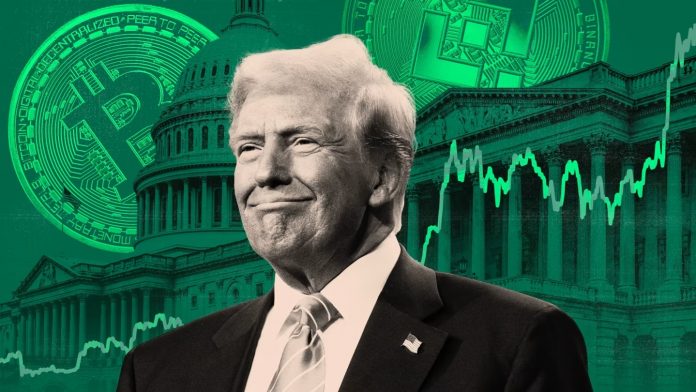
U.S. President Donald Trump has reaffirmed his administration’s ambition to position the United States at the forefront of the rapidly evolving digital economy, declaring that the country must remain the “undisputed leader” in Bitcoin, cryptocurrency, artificial intelligence and related technologies.

Trump made this statement while speaking with a group of cryptocurrency executives at the White House on August 19, 2026.

Speaking during a meeting that also marked the kickoff of a Commodity Futures Trading Commission Innovation Advisory Committee, Trump emphasized the need for a clear regulatory framework so that innovators and companies can operate confidently on American soil rather than moving overseas.

“They don’t have to go to other countries to do their business,” he said. “We’re ensuring that America remains the undisputed leader not only in Bitcoin and crypto, but also technologies like prediction markets, artificial intelligence, and much more.”

The gathering brought together prominent industry figures, including executives from Coinbase, Ripple, Robinhood, and other major firms.

Trump used the occasion to highlight his administration’s earlier actions, including the establishment of a Strategic Bitcoin Reserve, the creation of a digital assets stockpile, and the signing of the Genius Act, which provided a legal framework for stablecoins.

He indicated that the United States is considering the idea of acquiring “sizable” amounts of Bitcoin and other cryptocurrencies, describing the concept as something that “has been talked about” within the administration.

Trump linked the potential accumulation to the strength of the dollar. “It’s been talked about. It’s taken a lot of pressure off the dollar. It’s been very, very good for the dollar, and I think if you came in with recommendations, I would certainly listen,” he said when asked whether the administration had plans to build larger holdings.

However, Trump did not announce any immediate buying plan, timeline or funding mechanism. He indicated he would rely on recommendations from advisors, including SEC Chair Paul Atkins and other officials.

While the statements stop short of a formal policy commitment, they reinforce his administration’s pro-crypto stance and keep open the possibility of treating Bitcoin as a longer-term strategic asset alongside traditional reserves.

He also pointed to efforts aimed at ending what he described as the previous “war on crypto” and urged Congress to advance market-structure legislation, such as the Clarity Act, to keep the United States ahead of competitors, particularly China.

He framed the bill as essential to keeping the United States ahead of China and other competitors in cryptocurrency, prediction markets, artificial intelligence and related technologies.

Trump framed digital assets and emerging technologies as extensions of broader American economic and technological strength.

He warned that failure to maintain leadership would hand opportunities to rival nations and reiterated that the United States is already “way ahead” in artificial intelligence and other key fields.

The remarks come amid continued industry growth and ongoing debates over regulation, with the administration positioning itself as supportive of domestic innovation while seeking to solidify rules that would be harder for future administrations to reverse.

Notably, former New York Gov. Andrew Cuomo is urging Congress to pass the bill, warning that the U.S. is falling behind other countries on crypto regulations as “it has to pass.”

Outlook

Trump’s latest remarks are likely to reinforce expectations that his administration will continue pursuing a more crypto-friendly regulatory environment in the United States.

While his comments on potentially acquiring larger amounts of Bitcoin do not amount to a formal commitment, they could strengthen market expectations that the asset may play a greater role in the country’s long-term financial strategy.

The outlook will largely depend on whether Congress can advance the Clarity Act and other market-structure legislation, as well as how regulators translate the administration’s pro-innovation stance into clear and enforceable rules.