DD
MM
YYYY

PAGES

DD
MM
YYYY

spot_img

PAGES

Home Blog Page 10

Brazil Splits $444m AI Investment Between China and U.S. as Lula Pushes for Tech Autonomy

0

Brazil is investing about 2.3 billion reais ($444.2 million) to build out its artificial intelligence infrastructure, dividing major projects between Chinese and U.S. technology suppliers as President Luiz Inácio Lula da Silva’s government seeks to strengthen the country’s technological independence while maintaining ties with both global powers.

The investment places Brazil among a growing group of emerging economies seeking to develop domestic AI capacity rather than becoming entirely dependent on technology and infrastructure controlled by a handful of foreign companies.

More than half of the funding, about 1.3 billion reais, will finance a supercomputing infrastructure project in Rio de Janeiro being developed with China’s Huawei Technologies and iFlytek. The government said the infrastructure will primarily support the development of large language models for general and sector-specific applications.

The remaining 1 billion reais will be allocated through a tender to acquire a supercomputer that Brazil expects to rank among the world’s 10 most powerful AI processing systems. The machine will be installed in Rio Grande do Norte, a northeastern state selected partly because of its energy potential.

Lula attended an announcement ceremony in the state on Thursday.

Brazilian officials expect U.S. chipmaker Nvidia to win the supercomputer tender, although the procurement process has not yet been completed. Science and Technology Minister Luciana Santos told Folha de S. Paulo last week that she expected Nvidia to supply the system.

The division of the projects is considered strategic because Brazil is effectively seeking to use Chinese technology and expertise to build part of its AI infrastructure while relying on U.S. technology for another critical component of the country’s computing capacity.

“The strategy is not to depend on a single company, technology or country,” Lula’s administration said in a statement, adding that the investments are intended to strengthen Brazil’s sovereignty over data.

That approach reflects the increasingly fragmented global technology landscape, in which access to advanced chips, computing infrastructure and AI models has become closely linked to national security and economic policy.

The strategy offers Brazil a way to avoid choosing exclusively between Washington and Beijing at a time when both powers are competing for influence over critical technologies.

China has become Brazil’s largest trading partner and has expanded its economic presence across Latin America’s largest economy. The United States remains Brazil’s biggest source of foreign direct investment, giving Washington considerable economic importance even as its share of Brazil’s trade has declined.

The balancing act has become more complicated following Washington’s decision to impose additional tariffs on Brazilian goods. Brasília has continued to pursue closer technological cooperation with China while maintaining commercial and strategic links with the United States.

The AI programme is being financed by Brazil’s National Fund for Scientific and Technological Development, with money to be released in phases.

The government expects the new supercomputer in Rio Grande do Norte to begin operating by the end of 2027. The cooperation agreement involving Huawei and iFlytek is scheduled to begin in July 2027.

Brazil is also attempting to build capabilities further down the technology stack.

The government announced a partnership with Spain based on the open-source RISC-V architecture to develop semiconductors, alongside plans to establish a Brazilian cloud-computing service through public-private partnerships.

It also plans to create a national center dedicated to algorithmic transparency and trustworthy AI. The center is expected to be operated by the Federal University of Minas Gerais.

The combination of computing infrastructure, semiconductor development, cloud services and AI governance suggests that Brasília is pursuing a broader industrial policy rather than simply purchasing access to foreign AI models.

The immediate challenge will be converting that investment into domestic technological capability. Building a powerful supercomputer does not automatically create competitive AI models or a self-sufficient technology industry. Brazil will also need researchers, engineers, software developers, high-quality datasets, and companies capable of turning computing capacity into commercially useful products.

Energy availability could give Brazil an advantage in that effort. AI data centers require enormous amounts of electricity, and the government’s decision to locate the new supercomputer in Rio Grande do Norte reflects the growing importance of energy infrastructure in determining where large-scale AI computing can be deployed.

The investment also comes with a geopolitical dimension.

Brazil is seeking to develop what Lula’s government calls strategic autonomy at a time when access to advanced AI chips is increasingly affected by U.S. export controls and the technology supply chain is becoming more politically divided. By working with both Chinese and U.S. companies, Brazil can potentially broaden its access to critical technologies while reducing exposure to restrictions imposed by either side.

The policy will face greater scrutiny as Brazil heads toward a presidential election later this year. Lula, who is seeking re-election, has repeatedly argued for greater strategic independence in Brazil’s foreign and economic policy.

His main rival, right-wing Senator Flavio Bolsonaro, has pledged closer ties with U.S. President Donald Trump if elected. That could produce a significant shift in Brazil’s technology strategy if the opposition wins, particularly as Washington and Beijing continue competing for influence over AI, semiconductors, cloud computing and digital infrastructure.

For now, however, Lula’s government is pursuing a deliberately non-aligned approach: Nvidia for part of its computing infrastructure, Huawei and iFlytek for another, RISC-V for semiconductor development and public-private partnerships for cloud services.

The objective is not to make Brazil independent of foreign technology overnight. Rather, it is to ensure that the country has enough domestic computing capacity, infrastructure and technical expertise to avoid becoming entirely dependent on any single foreign supplier as artificial intelligence becomes increasingly important to economic competitiveness and national security.

Uber, Pony.ai and Verne Launch First Robotaxi Service in Europe, While Tesla Remains Behind

0

The robotaxi market is moving from years of testing and ambitious promises into a more commercially meaningful phase, with a growing number of companies now operating paid autonomous ride services across the United States, China and, increasingly, other international markets.

Uber’s launch of autonomous rides in Zagreb on Wednesday, in partnership with Chinese self-driving company Pony.ai and Croatian mobility startup Verne, is the latest sign that the industry is beginning to build a global operating footprint. It also highlights an unexpected shift in the competitive landscape: Tesla, once widely expected to dominate the robotaxi market because of its enormous vehicle fleet, software capabilities and manufacturing scale, is not currently among the companies leading the commercial rollout.

In Zagreb, passengers can book an autonomous vehicle through Uber’s app, making it the first European city where Uber has offered self-driving rides. The service initially covers selected parts of the Croatian capital, including the city center, with a licensed operator aboard to supervise the vehicle as the companies work toward fully autonomous operations.

Pony.ai supplies the autonomous driving technology, Verne owns and operates the fleet, while Uber provides the customer network and booking infrastructure. The arrangement shows that technology developers do not necessarily need to build their own ride-hailing platforms, while companies such as Uber can gain exposure to autonomous vehicles without developing the underlying driving system themselves.

The Zagreb launch is notable because the partnership is already moving beyond a single-city experiment. Uber and Pony.ai announced last week that they plan to deploy more than 2,000 robotaxis across five European cities, expanding their existing partnership beyond Zagreb.

Pony.ai is also pursuing a much broader international expansion. The Chinese company said this week that it plans to deploy more than 4,000 robotaxis outside China, targeting markets in Europe, the Middle East and Asia as competition intensifies in its home market. Robotaxi revenue jumped 691.2% year over year in its second quarter, accounting for about one-third of Pony.ai’s total revenue for the first time.

The developments suggest that the robotaxi market is no longer simply a race between Tesla and Waymo, as it was often portrayed during the earlier stages of the autonomous-driving boom. A group of companies is now establishing commercial networks, with Waymo, Baidu’s Apollo Go, Pony.ai and WeRide among the most advanced operators.

Waymo remains the clearest leader in the U.S. market. By June, the Alphabet-owned company was providing more than 500,000 paid robotaxi trips a week across 11 cities with a fleet of about 3,500 vehicles, according to an autonomous-vehicle industry ranking.

China is producing an equally important competitive force. Baidu’s Apollo Go delivered 3.2 million fully driverless rides in the first quarter of 2026, with weekly rides exceeding 350,000 in March. Its cumulative public rides had surpassed 22 million by April, while its global footprint had reached 27 cities by May.

Pony.ai and WeRide are also expanding internationally, including through partnerships with established mobility platforms. Their strategy became necessary because robotaxis require more than autonomous-driving software. Operators need vehicles, fleet management, maintenance, mapping, regulatory approvals, customer acquisition, and a mechanism for matching passengers with available cars.

That is where Uber’s role becomes strategically important.

Rather than trying to become a vertically integrated autonomous vehicle manufacturer, Uber is building what could become a global distribution network for robotaxis. The company has partnerships with multiple autonomous-driving companies, allowing it to potentially deploy different technologies in different markets.

The approach also gives Uber a hedge against the possibility that one autonomous-driving technology ultimately emerges as dominant. If Waymo, Pony.ai, Baidu, WeRide, or another developer succeeds in a particular market, Uber can potentially integrate that operator into its platform rather than being forced to compete against it.

Tesla presents a striking contrast.

For years, Tesla was widely touted as one of the companies best positioned to dominate autonomous transportation. Its enormous installed vehicle base, Full Self-Driving software, vertically integrated manufacturing capabilities, and access to vast amounts of driving data gave it a potentially powerful foundation for a robotaxi network.

Yet the commercial rollout has been much slower than the company’s earlier projections suggested.

Tesla’s robotaxi service is currently operating in only a handful of U.S. markets and remains considerably smaller than Waymo’s network. Reuters reported in July that Tesla had accumulated about 2.5 million robotaxi miles, compared with roughly 220 million autonomous miles for Waymo, while Tesla had scaled back its previously aggressive expansion projections and adopted a more cautious city-by-city approach.

Tesla’s regulatory progress has also been uneven. The company sought approval for 5,000 robotaxis in Nevada but received permission for only 10 vehicles in Clark County, with conditions requiring human supervision.

That does not mean Tesla has been eliminated from the race. It remains one of the industry’s most consequential potential challengers. Tesla has begun preparing its purpose-built Cybercab, a vehicle designed without a steering wheel or pedals, and its autonomous fleet has continued to expand in the United States. Recent reports indicate that Tesla robotaxis in Austin have begun operating without human safety monitors on some rides.

The difference is that Tesla’s advantage remains more prospective than operational.

Waymo and the leading Chinese companies have spent years accumulating real-world autonomous miles and operating commercial services under defined geographic and regulatory conditions. Tesla has spent much of the same period promising that its software and enormous vehicle fleet would eventually allow it to leapfrog competitors.

But autonomous driving is not simply a software problem. A company must demonstrate that its system can handle edge cases reliably, operate safely across changing conditions, and satisfy regulators before it can put thousands of vehicles on public roads without human drivers.

The market is therefore beginning to reward operational experience and deployment density, not just technological claims.

A recent industry ranking illustrates the shift. Waymo ranked first, followed by Baidu Apollo Go, Pony.ai and WeRide, while Tesla ranked fifth. The ranking attributed the strong positions of the Chinese companies partly to their international expansion through partnerships with ride-hailing platforms including Uber, Lyft, Bolt and Grab.

The emerging competitive structure could eventually resemble the broader technology industry, with several layers of companies competing rather than a single winner.

Autonomous-driving companies will provide the “driver.” Vehicle manufacturers will supply the hardware. Fleet operators will manage vehicles and maintenance. Ride-hailing platforms will provide passengers and payments. Cities and regulators will determine where and under what conditions the vehicles can operate.

This structure could accelerate adoption because it reduces the amount of capital any individual company needs to deploy the entire system.

It also explains why Uber’s Zagreb launch matters beyond Croatia.

The immediate number of vehicles is small, and the presence of a licensed operator means the service has not yet reached the fully driverless model that represents the industry’s ultimate objective. But the commercial significance lies in the infrastructure being assembled around the technology.

A passenger does not need a separate robotaxi application. They can open Uber, request an UberX or Comfort ride and, when an autonomous vehicle is available, receive instructions for the self-driving vehicle. That makes autonomous transportation invisible to the customer. The robotaxi becomes another vehicle category within an existing transportation network.

Europe could become an important battleground as this model expands. Pony.ai and Uber’s plan for more than 2,000 robotaxis across five European cities indicates that companies are moving quickly to establish early positions before regulation and market structures become more settled.

Citi, HSBC, StanChart Adopt Ant International’s Forex AI Tool, As Global Banks Turn to Specialized Tools For Liquidity Management

0

Ant International has launched an upgraded artificial intelligence model designed for financial forecasting, signing partnerships with six major global banks as lenders accelerate efforts to deploy specialized AI systems to manage liquidity, foreign exchange and other balance-sheet risks.

The Singapore-based fintech company on Thursday unveiled the Falcon Time-Series Transformer Model 2.0, an upgraded forecasting system aimed specifically at financial applications. Kelvin Li, Ant International’s general manager of platform technology, said the model has been adopted through partnerships with six major banks, including Citi, HSBC, Deutsche Bank, Standard Chartered and Barclays.

The partnerships underline the growing push by financial institutions to move AI beyond customer-service applications and into core banking functions where more accurate forecasts can directly affect trading, treasury management and capital allocation.

Financial institutions manage large and constantly changing pools of cash across currencies, markets and jurisdictions. Errors in forecasting can leave banks holding excess liquidity that earns little return or force them to obtain funding at higher costs. More accurate predictions of cash flows, foreign exchange movements and liquidity requirements can therefore produce substantial savings.

Li said Falcon 2.0 is designed specifically for such financial scenarios and has advantages over general-purpose AI models.

General-purpose large models have “yet to achieve a universal breakthrough in the financial sector,” Li said, arguing that specialized systems can be better suited to highly structured financial data and forecasting requirements.

Ant International said the model’s forecasting capabilities can reduce foreign-exchange hedging and allocation costs by more than 60%. Such savings could be significant for banks and multinational companies with large cross-border exposures, although the actual benefit will depend on the quality of underlying data, the markets covered and how institutions integrate the technology into their existing risk-management systems.

The launch comes as banks globally increase spending on AI amid pressure to improve productivity and automate complex processes. Financial institutions have been among the largest corporate adopters of AI, using the technology for fraud detection, risk assessment, trading, compliance, customer service and software development.

The next phase is focused on specialized systems capable of operating within tightly controlled financial environments. Unlike consumer-facing generative AI, treasury and risk-management applications require reliable numerical forecasting, explainability, data security, and strict controls over how models influence financial decisions.

Time-series models are relevant to these applications because they are designed to identify patterns and relationships in sequential data. In banking, that can include historical cash flows, currency movements, interest rates, transaction volumes, and other market indicators.

Ant International’s strategy puts it in competition with both established financial-technology providers and technology companies seeking to supply AI infrastructure to banks. The company’s focus on specialized financial models could also allow it to target a market where institutions are reluctant to rely entirely on general-purpose AI because of the consequences of inaccurate outputs.

The move is part of Ant International’s broader international expansion. The company, the overseas affiliate of Chinese fintech group Ant Group, raised $1.2 billion in its latest equity fundraising last month as it seeks to expand its business.

The capital raising gives the company additional resources as competition intensifies for enterprise AI contracts and financial institutions become more selective about the systems they adopt.

For global banks, the appeal of specialized AI is increasingly tied to measurable financial outcomes rather than the technology’s novelty. Forecasting improvements that lower hedging costs, optimize liquidity positions, or improve capital allocation can provide a direct return on AI investment.

The challenge is that financial markets are highly dynamic. Models trained on historical patterns can struggle when market conditions change abruptly, meaning banks are likely to require continuous monitoring, human oversight, and safeguards around AI-generated forecasts.

Ant International’s latest model therefore marks a broader shift in financial AI: from general-purpose experimentation toward specialized systems designed to solve specific, high-value problems inside banks.

As banks deepen their use of AI in treasury and risk management, the ability to demonstrate measurable improvements in forecasting accuracy and operating costs is expected to become a key factor in determining which AI platforms gain widespread adoption across the financial sector.

SK Hynix Shifts AI Windfall To Stock Bonuses As $29 Billion Buyback Lifts Shares

0

SK Hynix has reached a tentative wage agreement with its South Korean workers that would pay at least 60% of this year’s bonuses in company shares, reshaping how employees will receive a windfall generated by the artificial intelligence boom as the chipmaker moves simultaneously to return billions of dollars to shareholders.

The agreement was necessitated by the growing financial and labor pressures created by SK Hynix’s surge in profitability. Demand for high-bandwidth memory, or HBM, used in AI accelerators has driven earnings sharply higher, producing unusually large employee bonuses while also intensifying investor demands for the company to distribute more of its cash.

Workers are expected to receive an average of 779 million won ($547,000) in compensation in 2026, according to Reuters calculations. The scale of the payouts indicates that the AI semiconductor boom is increasingly reaching beyond chipmakers’ income statements and into employee compensation.

Under the tentative agreement, 40% of the bonus would be paid in cash and another 40% in company stock that employees can cash out immediately. The remaining 20% would be provided as deferred stock compensation, with half available after one year and the rest after two years. The agreement still requires approval in a vote by union members.

The shift marks a significant departure from last year’s arrangement, under which SK Hynix agreed to distribute 10% of annual operating profit to workers in cash under a 10-year agreement. Some employees initially resisted management’s proposal to move more than half of the bonuses into shares, citing concerns over the volatility of SK Hynix’s stock.

That concern became relevant after the shares reached a record high in June on expectations for sustained AI-related demand before falling sharply as investors began questioning whether the enormous amounts being invested across the AI industry would generate adequate returns quickly enough.

The new structure gives SK Hynix and its employees a way to share the upside from the company’s performance while reducing the immediate cash burden on the business. Kim Yong-jin, a management professor at Sogang University, described the arrangement as a “win-win solution”, saying an all-cash payment could have strained the company’s cash reserves and generated public backlash over the size of employee payouts.

The agreement also includes a 6.3% increase in base wages. SK Hynix will have the ability to defer up to 3% of wages if the company records losses, introducing a degree of flexibility into its compensation structure should the semiconductor cycle turn.

“Labor and management came up with their own breakthrough without relying on external mediation or systems,” SK Hynix said.

The timing of the labor agreement is significant because SK Hynix is simultaneously embarking on one of the most aggressive shareholder-return programmes in South Korea.

On Wednesday, the company announced plans to buy back and cancel 40 trillion won ($28.6 billion) of its own shares, the largest such share cancellation by a South Korean listed company. The programme covers about 24.07 million shares and is scheduled to run from Aug. 20 through Nov. 19. SK Hynix said it believes its current market valuation does not adequately reflect the company’s underlying business strength, cash-generation capacity and longer-term growth prospects.

The company also raised its shareholder-return target, saying it plans to return more than 50% of cumulative free cash flow generated between 2025 and 2027 through a combination of share buybacks, cancellations and dividends. Its previous policy had targeted returns of up to 50% of cumulative free cash flow.

Investors responded immediately. SK Hynix shares jumped about 13% on Thursday following the buyback announcement, recovering some of the ground lost during the recent sell-off in technology stocks.

The rally shows how the company’s capital-allocation strategy has become almost as important to investors as its operating performance. SK Hynix has been one of the biggest beneficiaries of the AI infrastructure build-out, supplying advanced HBM memory to companies developing and deploying large-scale AI systems. Yet the extraordinary expectations surrounding AI have also made semiconductor stocks vulnerable to sharp swings whenever investors question the pace or profitability of AI spending.

That tension has placed SK Hynix in an unusual position. Its strong cash generation gives it room to reward both employees and shareholders, but the company must also preserve enough capital to fund the enormous investment required to maintain its technological lead in memory chips.

The employee stock component effectively links part of workers’ compensation to that same valuation cycle. Employees who receive immediately saleable shares can convert them to cash, while the deferred portion gives them a longer-term financial interest in the company’s performance. For SK Hynix, the arrangement limits the immediate cash outflow associated with record bonuses and potentially aligns employees more closely with shareholders.

The development also comes as South Korea’s major chipmakers face growing pressure to distribute more of the profits generated by the AI boom. SK Hynix and Samsung Electronics have both benefited from surging demand for advanced memory, while investors have increasingly pushed companies to return excess cash rather than allow large cash balances to accumulate.

Samsung is also reportedly preparing a shareholder-return programme worth more than 100 trillion won, potentially including a special dividend and a commitment to return 50% of free cash flow to shareholders, according to media reports. This comes after months of a face-off with employees over bonuses.

However, the combination of employee stock compensation and a record buyback points to a broader change in how SK Hynix is managing the proceeds of the AI semiconductor cycle. Rather than treating the boom purely as a source of higher wages or larger shareholder payouts, management is attempting to distribute the gains across both groups while retaining the financial capacity needed to compete in an increasingly capital-intensive industry.

The immediate market reaction is seen as an indication that investors welcomed the strategy. The longer-term test will be whether SK Hynix can sustain its exceptional profitability as AI memory demand expands, while avoiding the overinvestment and valuation pressures that have recently caused sharp swings in semiconductor stocks.

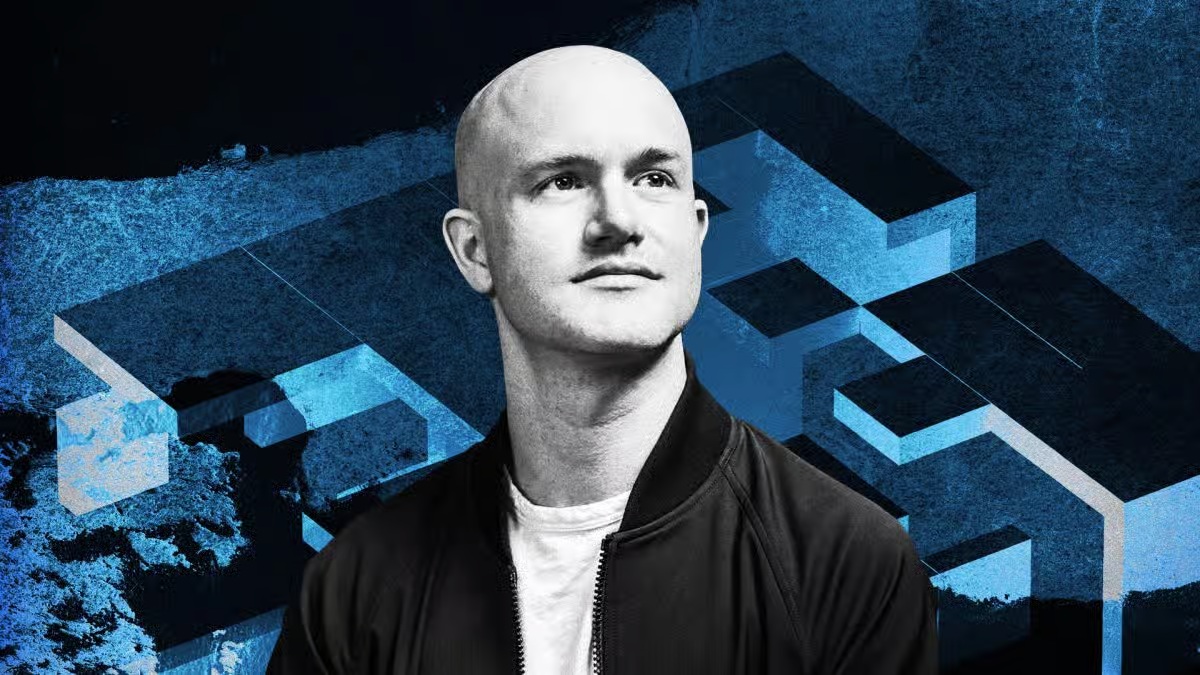
Coinbase CEO Brian Armstrong Predicts Bitcoin Could Reach $300,000 to $400,000 by 2030

1

Bitcoin could be on track for a dramatic rise over the next four years, with Coinbase CEO Brian Armstrong predicting that the world’s largest cryptocurrency could reach between $300,000 and $400,000 by 2030.

Speaking on Fox Business Network, Armstrong pointed to improving U.S. regulatory conditions as a key supporting factor for the long-term outlook.

“I think over the next couple of years if I say 2030 I think it’s very likely we’ll see $300,000 and $400,000 Bitcoin and we’ll see how it goes”, he said.

His forecast reflects growing optimism around Bitcoin’s long-term adoption, institutional demand and its potential to become an increasingly important global financial asset.

Also, the comments came one day after President Donald Trump hosted a meeting at the White House with crypto executives and traditional finance leaders.

Trump called on Congress to pass a bill that would provide clearer definitions for the growing cryptocurrency sector, a top priority for industry executives who had gathered at the White House for an event with the President.

“Now we need Congress to take the next step by passing the Clarity Act- a fair version of the Clarity Act”, Trump said in remarks at the event.

Armstrong, who attended the meeting, said the discussion focused heavily on advancing the Clarity Act, legislation aimed at providing clearer rules for digital assets.

He described a strong sense of urgency from the administration and top regulators at the SEC and CFTC to move the bill forward. Notably, he has highlighted cryptocurrency’s growing role in expanding financial access globally, arguing that the industry has not received enough credit for the opportunities it has created.

According to Armstrong, crypto has helped break down traditional financial barriers by giving more people access to digital payments, global markets and financial services, particularly in regions underserved by conventional banking systems.

His forecast arrives as Bitcoin has shown renewed strength, recently climbing past $72,000 and posting gains of around 10% over the prior 24 hours.

The cryptocurrency climbed from the mid-$64,000 range earlier in the session to exceed the psychologically important $70,000 mark on several major exchanges, trading as high as $70031, before settling in the high $68,000s to low $69,000s, up roughly 7 percent on the day.

The Coinbase chief has also suggested the broader crypto market may be approaching the end of its recent downturn and could be nearing the start of a new phase of stronger spot trading activity.

While Armstrong has expressed bullish views on Bitcoin for years, including higher targets in earlier comments, the $300,000–$400,000 range by 2030 represents a specific and relatively grounded long-term projection tied to institutional adoption, Bitcoin’s fixed supply, and potential regulatory clarity in the United States.

As with any price forecast in a volatile asset class, the outcome remains uncertain and will depend on multiple economic, technological, and policy developments over the coming years.

Outlook

Looking ahead, Bitcoin’s path toward Armstrong’s $300,000–$400,000 target will likely depend on a combination of institutional adoption, regulatory clarity, market liquidity, and broader acceptance of the cryptocurrency as a global financial asset.

Continued demand from institutional investors and greater integration of Bitcoin into traditional financial markets could provide significant support for its long-term valuation.

While Armstrong has expressed bullish views on Bitcoin for years, including higher targets in earlier comments, the $300,000–$400,000 range by 2030 represents a specific and relatively grounded long-term projection tied to institutional adoption, Bitcoin’s fixed supply, and potential regulatory clarity in the United States.