DD
MM
YYYY

PAGES

DD
MM
YYYY

spot_img

PAGES

Home Blog Page 1033

Boeing Delivers First Jet to China, Signaling Easing Trade Tensions After U.S.-China Tariff Deal

0

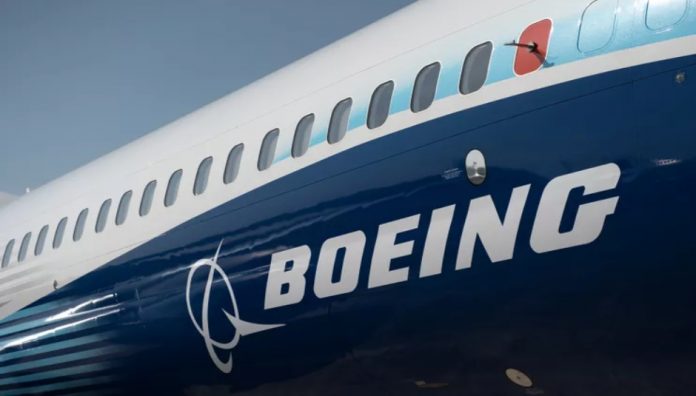
Boeing has delivered its first commercial aircraft to a Chinese airline since the United States and China agreed to roll back some of the tariffs imposed during the bruising trade war that began under President Donald Trump.

The handover of a 787-9 Dreamliner to Juneyao Air, which took off from Paine Field in Everett, Washington, on Friday en route to Shanghai Pudong International Airport, is being seen as a key sign that trade relations between the world’s two largest economies are beginning to stabilize.

The aircraft delivery, tracked via Flightradar24, had been delayed for a long as China imposed retaliatory duties on U.S. goods, including Boeing aircraft after the U.S. government slapped tariffs on hundreds of billions of dollars worth of Chinese exports in 2018. At the height of the dispute, both sides had imposed tit-for-tat tariffs covering goods ranging from semiconductors to soybeans, snarling global supply chains and freezing aircraft orders. The Chinese government, in protest, largely suspended approval for new Boeing purchases and slowed or blocked deliveries of already completed jets.

But this recent delivery comes just days after Beijing and Washington reached a partial agreement to reduce or suspend select tariffs on key industrial and consumer goods, including aerospace components. While the full details of the deal remain under wraps, U.S. officials confirmed that the Trump administration had agreed to delay further tariff hikes on Chinese-made electronics and auto parts, while China had signaled readiness to reopen its market to U.S. aircraft and agricultural exports. Both sides also committed to resuming bilateral talks to address broader trade imbalances and technology transfer concerns.

The breakthrough appears to be yielding tangible results. Earlier this week, a Boeing 737 Max aircraft designated for Xiamen Airlines landed at the company’s Zhoushan delivery facility in China, a move widely interpreted as a signal that China is once again preparing to accept U.S. jetliners. On Friday, a second 737-8 Max also departed from Boeing Field in Seattle, heading across the Pacific via Hawaii en route to China — further evidence that the delivery pipeline, which had been effectively frozen, is now beginning to thaw.

The resumption of deliveries is critical for Boeing. The U.S. planemaker has about 85 completed aircraft originally ordered by Chinese customers that have been sitting undelivered, some for years. China had been Boeing’s largest overseas market before the trade war and before the prolonged grounding of the 737 Max following two fatal crashes in 2018 and 2019.

Now, with Chinese airlines grappling with a rebound in passenger demand and a growing need to modernize their fleets, the thaw in trade relations comes at a pivotal moment. The delivery of the Juneyao Dreamliner, in particular, offers hope for Boeing’s 787 program, which has been under pressure following a recent crash involving an Air India Express 787, and broader scrutiny over safety and quality control lapses.

Industry analysts say the move also underscores China’s strategic calculus in balancing its domestic aviation ambitions — particularly the commercial rollout of the C919 jet by COMAC — with the need to maintain a diversified fleet that includes advanced U.S.-made aircraft. Airbus has aggressively expanded its footprint in China in recent years, striking multiple deals and even opening final assembly lines. Boeing’s renewed access signals a potential rebalancing of that competitive dynamic.

For now, the deliveries remain modest. But they could grow quickly. Boeing has reportedly lined up nearly 50 aircraft for Chinese customers this year, and the latest movements suggest that regulatory bottlenecks are easing. More broadly, the delivery reflects a significant softening of trade tensions between Washington and Beijing after more than five years.

The tariff dispute, which began in early 2018 when Trump imposed sweeping levies on Chinese steel, aluminum, and later on over $200 billion worth of other products, marked the most significant rupture in U.S.-China trade in decades. It led to $550 billion worth of tariffs being levied by both countries and severely disrupted sectors like technology, automotive, and aviation.

The delivery of Boeing jets, therefore, is more than just a business transaction — it’s a diplomatic barometer.

Google, Other Rivals Pull Out of Scale AI Over Security Concerns as Wang Joins Meta in Surprise Deal

0

Google is severing ties with Scale AI following Meta’s shock announcement of acquiring a 49% stake in the AI data-labeling startup, Reuters reports, citing sources.

The deal, which values Scale at $29 billion, more than double its previous $14 billion valuation — has sent shockwaves through Silicon Valley, triggering an exodus by major AI companies wary of exposing proprietary research and sensitive data to a direct competitor.

Sources familiar with the development say Google had planned to pay Scale nearly $200 million in 2025 for human-labeled training data crucial to the development of its Gemini models. But that arrangement has now been scrapped. The company, reportedly Scale’s largest client, is moving swiftly to redirect contracts to rival vendors. Already, Google has begun talking to multiple Scale competitors this week in a bid to offload most of its AI annotation needs.

This rapid shift stems from rising concerns about Meta — parent of Facebook, Instagram, and WhatsApp — gaining access to privileged data from companies it competes with directly in the artificial intelligence arms race. Meta now has a powerful foothold in the AI infrastructure backbone, by owning nearly half of Scale AI and absorbing its CEO Alexandr Wang into its AI division.

The Deal Was A Silent Coup

The Meta-Scale partnership came together quietly but swiftly. Multiple sources suggest the deal was orchestrated over the past several months as Meta aggressively sought to bolster its AI development following underwhelming reviews of its Llama 4 model released in April. While the model showed promise, it failed to match the performance of OpenAI’s GPT-4 or Google’s Gemini in key benchmarks, prompting fears Meta was falling behind.

To accelerate its progress, Meta turned to Scale AI, which built a reputation since its founding in 2016 as the premium supplier of high-quality, human-labeled datasets — a crucial resource for training advanced AI systems. Scale’s services are not cheap: some annotations by PhD-level experts can cost upwards of $100 each. But its clients, which include Google, Microsoft, OpenAI, xAI, and the U.S. government, were willing to pay for precision.

With Wang set to lead Meta’s AI efforts and several Scale employees also transitioning to the company, the deal raises alarm for rival firms. Many of them rely on Scale for labeling not just raw data, but also prototype model outputs, internal prompts, and context-rich examples that are core to their development strategies. Now, those same companies fear their crown jewels could end up within Meta’s line of sight.

Industry Backlash Gathers Pace

The backlash has been swift with Google, Microsoft, Elon Musk’s xAI, and even OpenAI — which had already begun reducing its reliance on Scale months ago — all walking away. Google in particular is moving fast to dismantle all key contracts with Scale. Although the exact timeline varies by agreement, the sources say the shift could be completed quickly due to the flexible structure of many data-labeling deals.

Labelbox, Turing, Handshake, and Mercor — smaller competitors once overshadowed by Scale’s dominance — are now witnessing a surge in demand. Labelbox’s CEO expects to generate hundreds of millions in new revenue from defecting clients. Handshake said its workload tripled within 24 hours of the Meta-Scale announcement. Turing’s CEO summed up the mood across the industry: “Neutrality is no longer optional, it’s essential.”

OpenAI, despite spending far less than Google on Scale services, has reiterated it will continue working with Scale but emphasized that the startup is only one of many vendors. Elon Musk’s xAI, meanwhile, is said to be preparing to exit completely. Microsoft has not commented publicly but is also believed to be shifting its data-labeling contracts.

A Strategic Gamble for Meta — and a Risk for Scale

The deal is undoubtedly a win for Meta. Alexandr Wang’s appointment is expected to inject new technical vigor into Meta’s AI roadmap. But for Scale AI, the Meta alliance could come at a high cost. Much of the company’s revenue — $870 million in 2024 — comes from providing services to companies that now view it as compromised. Unlike its government and automotive contracts, which may be insulated from competitive threats, the lucrative generative AI sector that powered its growth now stands on shaky ground.

The company’s statement following the deal tried to project stability, insisting that its business “remains strong” and that it is committed to customer data protection. But it did not comment directly on the specifics of Google’s departure or the ongoing client exodus.

Beyond immediate business impacts, the Meta-Scale deal is expected to reshape the AI industry’s supply chain. Companies have come to recognize that control over data infrastructure — including labeling, annotation, and fine-tuning processes — is just as critical as access to GPUs or large model architectures. This realization is pushing more labs to build in-house data-labeling teams and secure their own AI training pipelines, even at greater cost.

Meta’s strategic bet on acquiring a direct line into that ecosystem is high-risk, high-reward. While it stands to gain a wealth of internal capability through Scale and Wang, the fallout may permanently alienate Meta from industry collaborations at a time when AI research increasingly hinges on trust, interoperability, and data security.

In the end, what Meta gains in scale, it may lose in credibility, at least in the eyes of its fiercest AI rivals.

Kaspa Moves Toward $0.35, PEPE Hits $1.5B Volume, and BlockDAG’s $303M Presale Buzz Gains Massive Traction

0

The crypto landscape is packed with noise, but only a few names are showing true breakout potential. Kaspa is racing ahead by focusing on ultra-fast transaction speeds and strong network activity. PEPE continues to capture attention with its meme-driven volatility and massive trading numbers.

Then there is BlockDAG (BDAG), a rising presale project that is making serious waves. With more than 2 million users already mining through its X1 app, BlockDAG is close to changing how early crypto projects gain public trust. A rumored US-based sponsorship deal could place the brand on mainstream channels, turning a presale into something much bigger. For 2025, BDAG is not just another digital asset. It is starting to look like one of the most credible new names in the space.

Kaspa Focuses on Speed and Scalable Use

Kaspa is steadily rising in reputation for its high-speed and decentralized network. The project uses GHOSTDAG, a protocol that supports multiple parallel blocks instead of just one chain. This structure allows Kaspa to maintain strong decentralization while processing transactions faster than most networks.

The market outlook has turned more positive recently. Some analysts now expect Kaspa’s price to reach between $0.26 and $0.35 by the end of the year. These predictions are supported by a growing interest in micro-payments and instant transaction networks.

Another reason for the optimism is Kaspa’s move toward adding smart contract support. This will make the network more useful for developers and open the door for DeFi applications to enter its ecosystem.

PEPE Sees $1.5 Billion Volume as Bulls Watch Resistance

PEPE continues to dominate discussions in meme coin circles. After jumping around 11 percent in early June, the price has now stabilized near $0.0000127. Traders are closely watching the $0.000016 resistance level. If it breaks, another upward move could follow.

Activity remains high. Daily trading volume recently crossed $1.5 billion. Whale activity has picked up as well, with major holders increasing their positions. On-chain data supports the idea that many expect short-term gains.

That said, warning signs are starting to appear. The Relative Strength Index shows that PEPE is in overbought territory. This usually means a slowdown or price dip could happen soon. The project still lacks technical development or any clear roadmap, which keeps it in the category of pure speculation.

BlockDAG’s Presale Goes Viral: Rumors Of a Major New Partnership Intensify

While Kaspa focuses on real-time utility and PEPE thrives on buzz, BlockDAG is doing both. It has raised $303 million in public presale funding. Over 22.6 billion BDAG coins have been sold. The presale is now in Batch 29 with the price set at $0.0276. Early buyers from Batch 1 are already seeing a return of 2,660%.

BlockDAG’s X1 Miner app has crossed 2 million users. It is available globally and allows people to mine BDAG straight from their phones. No complicated setups. No expensive gear. This easy entry point has driven strong user engagement well before listing.

What sets BlockDAG apart is what may come next. A rumored US-based sponsorship could bring the project into the mainstream spotlight. This would mean national media exposure and brand placement on some of the most visible platforms. It would also create trust and visibility that few presale projects ever achieve.

BlockDAG has been CertiK-audited. It runs on a DAG structure with EVM compatibility and zero gas fees. Its gamified system includes referral rewards, streak bonuses, and a feature called Buyer Battles. This helps keep the user base active and growing.

Unlike many projects that launch with empty hype, BlockDAG is proving itself before the first exchange listing. It is creating something built on credibility and actual user participation. The excitement is not just around the numbers, but the bigger picture it is painting for what crypto can be.

Final Thoughts

Kaspa offers speed and real technical innovation. PEPE delivers viral energy and huge trading activity. But BlockDAG might be the only project combining both relevance and readiness.

With more than 2 million users mining BDAG daily, a fully working ecosystem, and $303 million already raised, BlockDAG is already ahead of where many projects hope to be post-launch.

If the rumored US sponsorship becomes official, BlockDAG could set a new standard for early crypto visibility. Not only would it gain exposure in mainstream channels, but it would also show how a project can grow from presale to prominence through real participation, not just promotion.

Presale: https://purchase.blockdag.network

Website: https://blockdag.network

Telegram: https://t.me/blockDAGnetworkOfficial

Discord: https://discord.gg/Q7BxghMVyu

Meet Blucera WinGPT, WinGPT Enterprise; Call for Partnerships with Companies, Universities

0

Good People, meet Tekedia’s Blucera WinGPT, an AI system which is trained with Tekedia Institute global library and knowledge.  With Tekedia Mini-MBA annual plan, you will have access to this solution later in the month. We want everyone to settle with Tekedia Mini-MBA platform before we move into the domain of using AI to learn on Tekedia’s world class knowledge system at Blucera.

I am also using this moment to ask people to share case studies of companies, with focus on Nigerian and African enterprises. Knowledge about your community.  If you are a company, you can load your knowledge, and your staff can learn about your firm by asking questions through Blucera WinGPT Enterprise version.

If you are a university, the Blucera WinGPT Enterprise can make sense of all lectures, courses, videos, etc within your school, making it easier for students to deepen the academic mastery.  A professor of agriculture loads his class on maize farming, another professor of geography loads her course on the geography of Ovim Abia State, a professor of business administration loads his on farming business in Abia State, etc, our technology will provide clear answers on “How Can A Graduate Build A Maize Business in Ovim?” as the engine aggregates and parses all the knowledge base with practical and actional insights.

Many startups use my One Oasis Strategy around the world. I have expanded the framework, well beyond what I have in Harvard Business Review, to enable the practical application of the One Oasis and Double Play Strategy.  Blucera is launching later in the month.

A Private ChatGPT-Like AI On Proprietary Internal Data

In June, Tekedia Mini-MBA’s learners with an annual plan will have access to Blucera WinGPT, a personal AI educator and coach. Besides other capabilities, Blucera WinGPT will enable learners to study on Tekedia Institute libraries and proprietary internal knowledge systems which are not public. The knowledge systems include videos, written materials, etc. Our system also has a node to global knowledge systems (yes, the public internet).

To companies, universities, and all types and forms of organizations, we can extend what we are doing with our private knowledge systems, to enable you to do the same,  on your own systems. Yes, we will give you a personalized ChatGPT-like AI solution that relies on your internal knowledge systems, not just the global ones, since some of the most impactful understanding of companies can only be done via proprietary data. 

You feed the AI with your internal knowledge and advance your mission. Email support@blucera.com for a Demo; use your business email, not free Yahoo or Gmail.

To Universities and Companies in Nigeria and Africa

We’re excited to unveil Tekedia’s Blucera WinGPT, an AI system which is trained with Tekedia Institute global library and knowledge.  We created this AI to help our learners advance the mastery of business education and entrepreneurial capitalism. Our technology has an enterprise version, Blucera WinGPT Enterprise, which is designed to support universities and companies. Our focus is on Nigeria and broad African companies. With Blucera WinGPT, we bring unification of disparate knowledge within your firm, making it possible for you to see the full picture, and based on that capability, advance your corporate mission. Let us partner with your firm; connect here.

For universities, we take knowledge to a new level. You have, say three professors, and they have created different courses focusing on their specialties – yam farming best practices in Southeast Nigeria (from a Prof of Agriculture), geography of Umuahia (from a Prof of geography), agro business in Umuahia (Prof of a Business Administration) – our technology can help answer questions like “how can I build a good yam farming business in Umuahia?”,  by heuristically parsing the knowledge base, and in the process deliver actional practical insights for farmers, students and policymakers.

What we have done is beyond software. Yes, besides coding, we’re microelectronics engineers. Fasmicro, Intel’s only programmable microprocessor knowledge partner in Africa (here on Intel website), is our company, and we are experts on building the infrastructure component of the AI agentic era.

I am using this medium to reach professors with PhD students in their labs, to explore how we can partner to aggregate proprietary knowledge, deepen productive applications and fulfil the vision of UNN (to restore the dignity of man & woman) through my beloved FUTO’s mission of “technology for service”.

U.S. Securities and Exchange Commission (SEC) Rescinds 14 Rule Proposals Under Gary Gensler

0

U.S. Securities and Exchange Commission (SEC) announced on June 12, 2025, the withdrawal of 14 rule proposals introduced during the tenure of former SEC Chair Gary Gensler under the Biden administration. These proposals, introduced between October 2020 and November 2023, were rescinded under the leadership of new SEC Chair Paul Atkins, signaling a shift in the agency’s regulatory approach. The decision reflects a move away from what some critics described as an overly regulatory agenda, particularly in areas affecting investment managers and the cryptocurrency industry.

This would have expanded the Custody Rule to include all assets, such as cash, real assets, and cryptocurrencies, requiring segregation to protect them in case of bankruptcy. Critics argued it was impractical for certain assets and could limit banking services for crypto firms. Proposed in May 2022, this rule aimed to combat “greenwashing” by requiring funds claiming ESG (environmental, social, governance) focus to disclose specific details about their strategies and categorize them as integrated, focused, or impact funds.

Predictive Data Analytics and Conflicts of Interest: This rule targeted the use of AI, machine learning, and data algorithms by investment advisers to address potential conflicts of interest.

Cybersecurity Risk Management: Proposed in February 2022, it would have mandated broker-dealers to maintain policies identifying cybersecurity risks and report major incidents to the SEC within 48 hours.

Regulation Best Execution (Reg BE): Proposed in January 2023, it aimed to shift enforcement of best execution standards from FINRA to the SEC.

Adviser Outsourcing: This would have imposed diligence, monitoring, and recordkeeping requirements on investment advisers outsourcing certain functions.

Order Competition Rule: Intended to enhance competition in securities trading. Exchange Act Rule 3b-16: This proposal would have included decentralized finance (DeFi) platforms under national securities exchange rules, a move criticized by blockchain policy experts.

The SEC provided no detailed reasoning for the withdrawals, stating only that it no longer intends to issue final rules for these proposals. Industry experts, such as Jay Gould from Baker Botts, noted that many of these areas are already covered by existing SEC regulations, suggesting the specific rules may have been redundant. For instance, conflicts of interest are regulated even without the predictive data analytics proposal, and misleading ESG claims remain prohibited.

The move has been praised by figures like Rep. French Hill (R-Ark.), Chair of the House Committee on Financial Services, who called it a step toward restoring balance, protecting investors, and encouraging innovation. In the crypto sector, the withdrawal of rules like the Custody Rule and Exchange Act Rule 3b-16 is seen as a shift toward a more pro-crypto regulatory stance under Atkins’ leadership, emphasizing clarity and consultation over enforcement.

The SEC’s decision to rescind 14 unfinished rule proposals from the Gensler era, announced on June 12, 2025, carries significant implications for financial markets, investors, and specific industries like cryptocurrency. The withdrawal of rules like the Safeguarding of Client Assets, Adviser Outsourcing, and Predictive Data Analytics reduces compliance burdens. Firms won’t face new requirements for asset custody, outsourcing oversight, or AI-driven conflict management, potentially lowering operational costs.

Scrapping the Cybersecurity Risk Management and Regulation Best Execution proposals means broker-dealers avoid stricter reporting and enforcement standards, maintaining reliance on existing FINRA regulations. The rescission of the Safeguarding of Client Assets and Exchange Act Rule 3b-16 proposals is a major win for the crypto sector. The former would have imposed stringent custody requirements on crypto assets, potentially limiting banking services for crypto firms. The latter would have classified DeFi platforms as securities exchanges, subjecting them to heavy regulation.

This signals a more crypto-friendly SEC under Chair Paul Atkins, likely fostering innovation and market growth in blockchain and digital assets. It aligns with broader political shifts, as seen in comments from Rep. French Hill, emphasizing innovation. The withdrawal of the ESG Disclosures rule means funds won’t need to categorize or provide detailed disclosures for ESG strategies. This could lead to continued “greenwashing” risks, as investors may lack clear information to assess ESG claims, but it also reduces compliance costs for funds marketing ESG products.

The move reflects a pivot toward deregulation under the new SEC leadership, prioritizing market efficiency and innovation over stringent oversight. This could encourage risk-taking and investment but may raise concerns about investor protections, especially in areas like cybersecurity and conflicts of interest. Without rules like ESG Disclosures or Cybersecurity Risk Management, investors may face higher risks from misleading fund claims or unreported cyber incidents. However, existing SEC and FINRA regulations still provide some safeguards.

Reduced regulatory burdens could stimulate market activity, particularly in crypto and alternative investments, but may also lead to volatility if oversight gaps emerge. The decision aligns with a broader deregulatory agenda under the incoming administration, as Atkins’ leadership emphasizes consultation over enforcement. This could set the stage for further rollbacks or a reevaluation of SEC priorities, impacting future rule-making.

Critics may argue that withdrawing these proposals weakens investor protections and market stability. For example, the absence of the Cybersecurity Risk Management rule could leave markets vulnerable to unreported cyber threats, while scrapping the Order Competition Rule may limit trading efficiency gains. The SEC’s action creates a more permissive environment for financial and crypto industries, potentially spurring innovation but raising concerns about oversight gaps.