DD
MM
YYYY

PAGES

DD
MM
YYYY

spot_img

PAGES

Home Blog Page 1039

World Bank Holds Nigeria’s 2025 Growth Outlook at 3.6%, Despite Global Downgrade

0

The World Bank has maintained its earlier projection that Nigeria’s economy will grow by 3.6 percent in 2025, even as it trimmed its global forecast due to mounting trade tensions and rising uncertainty in international markets.

In its Global Economic Prospects report released Tuesday, the Bank revised its 2025 global growth outlook downward to 2.3 percent, a 0.4 percentage point cut from its January estimate. It cited “higher tariffs and heightened uncertainty” as critical drags on global trade, investment, and supply chains.

Despite this more pessimistic global tone, the Bank said Nigeria’s economic momentum is expected to hold steady, bolstered by ongoing reforms and rising investment in service sectors such as financial services and ICT. It reaffirmed that domestic growth would accelerate from an estimated 3.4 percent in 2024 to 3.6 percent in 2025, and average 3.8 percent from 2026 through 2027.

“Domestic reforms have helped spur investment, supporting growth in the services sector, especially in financial services and information and communication technology,” the Bank said. “Services activity will continue to be the main driver of growth, while the industrial sector will remain constrained by subdued crude oil production.”

The Bank’s outlook also suggests gradual inflation easing, as monetary tightening implemented in 2024 — in response to the naira’s rapid depreciation — begins to take effect. Inflation has remained elevated in Nigeria, driven by exchange rate volatility, fuel subsidy removal, and rising food costs. However, tighter policy and structural reforms are expected to moderate price growth in the coming year.

Limited Impact of Global Trade Tensions

While the World Bank expects escalating trade tensions between major powers like the United States and China to dampen global output, it downplayed the immediate impact on Nigeria and much of Sub-Saharan Africa (SSA). The report noted that the region’s limited integration into global manufacturing supply chains offers some insulation from direct trade fragmentation.

“The direct impact on SSA growth of further escalation in global trade tensions may be contained owing to the limited direct exposure to export markets in China and the United States, apart from commodity demand,” the report said.

That said, Nigeria remains vulnerable to commodity price fluctuations, particularly a downturn in crude oil or mineral exports linked to any broader slowdown in China — one of Africa’s largest commodity trading partners. A steeper-than-expected slowdown in China would shrink demand for minerals and metals, with ripple effects across SSA economies dependent on extractive exports.

Growth Too Weak to Cut Poverty

While Nigeria’s macro outlook appears stable, the Bank warned that the region’s per capita income growth — including Nigeria’s — remains weak. It forecasts average per capita gains of just 1.6 percent between 2025 and 2027, far too low to make meaningful progress in lifting people out of poverty.

“This pace would mean that, in terms of living standards, the region would fall even further behind other emerging markets and developing economies, excluding China and India,” the Bank noted. “These per capita income gains will remain inadequate for significantly reducing extreme poverty in the region.”

Sub-Saharan Africa still hosts the majority of the world’s poorest people, and the Bank emphasized that sustained improvement in welfare would require faster income growth, greater investment in social infrastructure, and more inclusive economic planning.

Mounting Risks from Insecurity and Climate Shocks

The report also flagged rising insecurity, climate shocks, and limited fiscal space as key threats to long-term growth. It noted that persistent violence across parts of the region, including Nigeria, continues to weigh heavily on investment, agricultural productivity, and household welfare.

Meanwhile, the economic toll from worsening weather events — floods, droughts, and erratic rainfall — is rising sharply.

“The share of the population affected by adverse weather events, which destroy crops and dampen economic activity, has increased sharply in recent years,” the Bank warned.

Even though public debt levels are projected to ease moderately, high debt servicing costs remain a concern. Nigeria and many of its regional peers are struggling with limited fiscal space for development-related spending, particularly after a recent rise in sovereign spreads increased borrowing costs.

Foreign aid inflows are also shrinking, putting more pressure on national budgets. “Further declines in official development assistance inflows risk worsening humanitarian and fiscal challenges,” the report said.

Conversely, the World Bank’s decision to maintain Nigeria’s growth projection at 3.6 percent signals cautious optimism. However, the Bank’s warning that current growth remains inadequate to reduce poverty underlines economists’ warning that macro stability alone will not solve Nigeria’s deeper development challenges.


Innovation, Growth and the Mission of Companies | Ndubuisi Ekekwe | Tekedia Mini-MBA

0

We will begin the live Zoom component of Tekedia Mini-MBA on Saturday. In my lead presentation, I will discuss the mission of firms and why innovation is very vital for companies to accomplish whatever they have set out to do. Simply, innovation must facilitate growth. It is more than innovation; you must have symphonic innovation.

Symphonic Innovation is an innovation that is not domain-specific but is anchored on a unified and harmonious approach in the deployment of technology and business components to accelerate productivity gains and cushion competitiveness. With Symphonic Innovation, you do not deploy and launch for blockchain, for example, only to be tripped by AI; you launch with a mindset that these technologies and business components are like extended musical compositions which must be carefully organized to make the orchestra an unforgettable experience.

We will solve the equations of markets by mastering the mechanics of entrepreneurial capitalism and business management. It’s time to co-learn!

Sat, June 14| 7pm-8.30pm WAT | Innovation, Growth and the Mission of Companies – Ndubuisi Ekekwe | Zoom link https://school.tekedia.com/course/mmba17/

Polymarket-X-Grok Integration Could Revolutionize How People Access And Interpret Predictive Data

0

Polymarket has partnered with X and xAI to integrate its prediction markets with X’s social media platform and Grok’s AI capabilities. Launched on June 6, 2025, the first integrated product combines Polymarket’s real-time prediction probabilities with X’s social data and Grok’s AI-driven insights, providing live annotations explaining market movements alongside relevant X posts.

This allows users to access contextualized, data-driven forecasts for events like elections, sports, and breaking news directly within X’s ecosystem, using USDC on the Polygon blockchain. The partnership aims to enhance transparency and user engagement, with plans for additional integrations to create a suite of innovative tools. However, regional gambling regulations and Polymarket’s restricted access in countries like the US, France, and others may pose challenges.

The integration of Polymarket with X and Grok has significant implications for prediction markets, information dissemination, and societal dynamics, but it also highlights a divide in access, trust, and regulatory challenges. Combining Polymarket’s prediction market data with X’s social media trends and Grok’s AI analysis offers users a powerful tool for understanding events as they unfold. For instance, live annotations explaining market shifts alongside relevant X posts can provide nuanced context for political, economic, or cultural events.

By embedding prediction markets into a widely used platform like X, more users can engage with probabilistic forecasting, potentially improving collective understanding of uncertain events like elections or market trends. The integration could drive higher user participation in prediction markets, as X’s vast user base (over 500 million monthly active users as of recent estimates) gains seamless access to Polymarket’s tools. This could amplify market liquidity and accuracy.

The visibility of market probabilities on X may influence public opinion or betting behavior, creating feedback loops where social sentiment and market odds reinforce each other. Grok’s ability to analyze vast datasets from X and Polymarket could refine market predictions, offering insights into why odds shift (e.g., key X posts driving sentiment). This could set a new standard for data-driven forecasting.

Using USDC on Polygon ensures transparent, secure transactions, potentially attracting crypto-savvy users while maintaining low transaction costs. Polymarket and X could monetize integrated tools through premium features or ads, leveraging Grok’s insights to target users based on their prediction market activity.

Accurate, transparent prediction markets could challenge traditional polling, but they also risk amplifying polarized narratives if X’s algorithm promotes divisive content alongside market data. Polymarket’s operations are restricted in several countries, including the US, due to gambling regulations. This creates a digital divide where users in permitted regions (e.g., parts of Europe or Asia) can access these tools, while others are excluded, limiting global adoption.

While USDC on Polygon lowers transaction costs, participation still requires crypto literacy and access to stablecoins, which may exclude non-technical or less affluent users. X’s history of amplifying polarizing content could undermine trust in integrated prediction markets if users perceive market annotations as skewed by algorithmic bias or Grok’s interpretations.

Prediction markets are vulnerable to manipulation (e.g., large bets to sway odds), and X’s open platform could amplify coordinated efforts to mislead users, especially if Grok’s analyses are not fully transparent. Varying global regulations on prediction markets and gambling could limit scalability. For example, US users face barriers due to strict laws, potentially creating a fragmented user experience.

Integrating prediction markets into a social platform raises questions about gamifying serious events (e.g., elections or crises), potentially trivializing their societal impact or encouraging speculative behavior. Grok’s advanced features, like DeepSearch or think mode, may be limited to premium users or specific platforms (e.g., SuperGrok subscribers), creating a tiered experience where only some benefit from enhanced AI insights.

Users unfamiliar with blockchain or prediction markets may struggle to engage, widening the gap between tech-savvy and less experienced individuals. The Polymarket-X-Grok integration could revolutionize how people access and interpret predictive data, fostering a more informed public. However, it risks deepening divides based on geography, economic status, and technological literacy. Regulatory hurdles and trust issues could further complicate adoption, particularly in restricted regions like the US.

GameStop Confirms Purchase of 4710 Bitcoin Valued Above $500M

0

GameStop confirmed that it purchased 4,710 Bitcoin, valued at approximately $500–$513 million, marking its first crypto investment. The move followed a March announcement to include Bitcoin as a treasury reserve asset, funded partly by a $1.5 billion convertible notes offering. CEO Ryan Cohen emphasized Bitcoin’s potential as a hedge against currency devaluation. However, GameStop’s stock fell 10–23% after the announcement, reflecting investor concerns about crypto volatility.

The purchase aligns with a trend among companies like MicroStrategy, with GameStop holding the 11th-largest corporate Bitcoin stash. GameStop’s $500 million Bitcoin purchase has significant implications, reflecting both strategic financial moves and broader market divides. GameStop’s move mirrors strategies by companies like MicroStrategy and Tesla, using Bitcoin as a treasury reserve to protect against fiat currency devaluation, especially amid persistent inflation concerns (U.S. inflation was 3.1% in Q1 2025, per recent data).

Bitcoin’s volatility (e.g., 40% price swings in 2024) introduces financial risk. A sharp drop could impact GameStop’s balance sheet, potentially affecting its $4.5 billion market cap (as of June 2025). The purchase signals confidence in Bitcoin’s long-term value, aligning GameStop with a tech-forward, speculative investor base, but it may alienate traditional investors wary of crypto’s unpredictability.

The 10–23% stock drop post-announcement (May 28, 2025) reflects investor skepticism. Retail investors on platforms like X praised the move, while institutional investors expressed concerns over governance and risk management. GameStop’s decision aligns with its meme-stock community’s pro-crypto sentiment, potentially strengthening loyalty among retail investors but risking further volatility in its stock (GME traded at ~$30–$35 in early June 2025).

GameStop’s purchase, making it the 11th-largest corporate Bitcoin holder, may encourage other firms to follow suit, legitimizing Bitcoin as a corporate asset. This could drive Bitcoin’s price, which hovered around $100,000–$106,000 post-purchase. Increased corporate adoption may attract stricter oversight, especially as global regulators (e.g., SEC, ECB) debate crypto’s role in financial systems. The U.S. lacks clear crypto accounting standards, complicating GameStop’s reporting.

GameStop’s move positions it as a forward-thinking, tech-savvy retailer, potentially appealing to younger, crypto-native customers. However, it risks diluting focus on its core gaming business, which reported flat Q1 2025 revenue. Tying up $500 million in Bitcoin reduces cash reserves for operational investments or debt repayment ($600 million in convertible notes due 2027).

Retail investors on X and crypto enthusiasts view this as a bold, visionary move. They argue Bitcoin’s finite supply (21 million cap) and historical returns (10-year CAGR of ~100%) make it a superior store of value compared to fiat. This group anticipates Bitcoin’s price rising to $150,000–$200,000 by 2026, potentially boosting GameStop’s balance sheet and stock value.

Institutional investors and analysts, as seen in reports from Seeking Alpha and Bloomberg, argue the purchase is reckless. They cite Bitcoin’s volatility (e.g., 20% drop in Q4 2024) and lack of intrinsic value as risks to shareholder value. Critics worry about governance, noting CEO Ryan Cohen’s unilateral push without clear shareholder approval. They also highlight opportunity costs, as $500 million could fund store renovations or e-commerce expansion.

The stock’s 10–23% drop reflects this skepticism, with some hedge funds reportedly shorting GME, expecting further declines if Bitcoin crashes. Some analysts, like those from JPMorgan, view the move as experimental but not catastrophic, given GameStop’s $1.2 billion cash reserves (post-purchase). They note it diversifies assets but caution against overexposure.

Regulators may scrutinize GameStop’s accounting, as U.S. GAAP treats Bitcoin as an intangible asset, requiring impairment tests if prices fall, potentially hitting earnings. Pro-Bitcoin retail investors see crypto as a rebellion against centralized finance, while skeptics prioritize stability and traditional metrics like EPS and free cash flow. Retail investors, often younger, embrace Bitcoin’s volatility, while institutions prefer predictable returns.

GameStop’s Bitcoin purchase is a high-stakes bet that strengthens its appeal to retail investors and crypto enthusiasts but risks alienating traditional shareholders and inviting regulatory hurdles. The divide reflects broader tensions between decentralized finance advocates and conventional markets. If Bitcoin sustains its ~$100,000 price or climbs, GameStop could see balance sheet gains; if it crashes (e.g., to $50,000, as seen in 2022), the company faces financial and reputational damage.

Multichoice Reports 1.4m Subscriber Loss in Nigeria Over Two Years Amid Inflation, Power Crisis, and Price Hikes

0

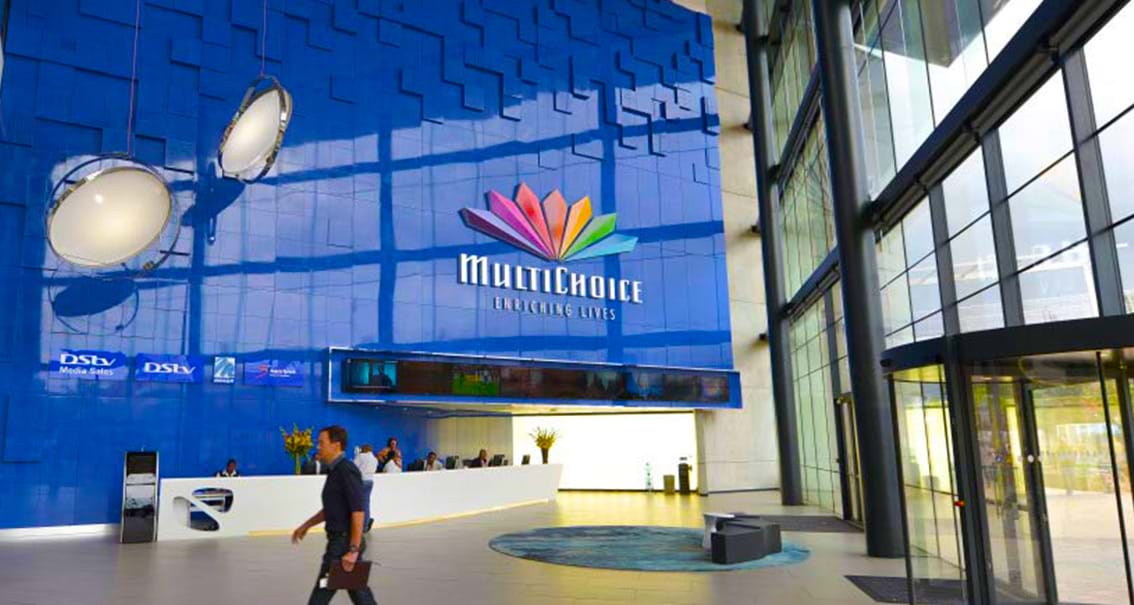
African pay-TV giant Multichoice Group has confirmed that its Nigerian operations shed a staggering 1.4 million subscribers between 2023 and 2025, marking one of the most significant contractions for the company in any single market.

The development, disclosed Wednesday in its audited results for the financial year ended March 31, 2025, underscores the intensifying financial pressure on households in one of Africa’s largest economies.

This follows an increase in the prices of Multichoice’s DStv and GOtv subscription packages three times within the two-year period. The Group, in its report, blamed several structural and economic factors—most notably high inflation, repeated power grid failures, and widespread fuel scarcity—for the downturn in its Nigerian customer base.

But beyond those operational and infrastructural issues, analysts say the real drag is Nigeria’s harsh economic reality, which has steadily pushed pay TV off the list of essential household spending.

Multichoice’s earnings report lends weight to that perspective. According to the company, Nigeria accounted for 77% of the total 1.8 million subscribers lost across its Rest of Africa (RoA) operations during the review period. The RoA subscriber base dropped from 9.3 million in 2023 to 7.5 million in 2025.

“Inflation across key markets remained high (around 20% on a weighted average basis, above 30% in Nigeria and Angola) and caused pressure on customer spending,” Multichoice wrote in its report.

The economic downturn has deeply affected consumer behavior. A combination of job losses, reduced disposable income, and rising prices of food, fuel, and other essentials has made entertainment spending increasingly unsustainable for many Nigerian families.

While the company continues to lose customers, the rate of decline has shown some moderation. In 2024, Multichoice’s RoA subscriber base fell by 1.2 million—from 9.3 million to 8.1 million—a 13% drop. That pace slowed in 2025, with the base declining by 600,000 to 7.5 million, representing a 7% decrease.

However, Nigeria’s share of the loss remains disproportionately large. According to the company, the country alone contributed over half of the 2025 decline.

“Subscriber activity was further affected by power shortages across Zambia, Zimbabwe and Malawi, ongoing power and fuel shortages in Nigeria, and civil unrest in Mozambique,” the Group added.

Multiple Price Hikes Deepened Consumer Resentment

Even as incomes shrank, Multichoice Nigeria increased its subscription prices three times in the last two years—a strategy many say worsened its attrition problem. The company first hiked prices in April 2023, followed by another increase in November of the same year. A third increase was announced in April 2024 and implemented on May 1.

These price hikes sparked outrage among Nigerian subscribers and consumer protection groups, many of whom argued that the increases were unjustifiable given the worsening quality of service and economic hardship.

While the company has not announced another increase, many observers expect that Multichoice could consider it again, given ongoing currency pressures and a shrinking revenue base. But analysts warn that another hike could trigger even more losses.

Group Financial Performance Under Pressure

The toll from Nigeria and other African markets is clearly visible in Multichoice Group’s broader financials. Revenue for the 2025 financial year fell by ZAR5.2 billion (about 9%) to ZAR50.8 billion, mainly due to an 11% drop in subscription revenue driven by currency depreciation and lower subscriber volumes.

Trading profit dropped 49% year-on-year, down from ZAR3.8 billion to ZAR4.0 billion. A significant part of this came from a ZAR2.3 billion loss at its streaming arm, Showmax, and a ZAR5.2 billion foreign exchange loss.

“The past two financial years have been a period of significant financial disruption for economies, corporates and consumers across sub-Saharan Africa,” the company stated in its executive summary, adding that “macroeconomic pressures, piracy, social media, and cheaper streaming alternatives” had materially impacted overall performance.

A Shifting Landscape for Pay-TV in Africa

Multichoice’s struggles highlight a broader challenge for legacy pay-TV providers across Africa. As streaming services like Netflix and Amazon Prime expand into African markets and data costs fall, traditional satellite and cable TV face increasing competition—not just in pricing, but also in content accessibility and flexibility.

However, for now, affordability remains king.

With the customer base still in decline and macroeconomic conditions unlikely to improve soon, the big question remains whether Multichoice can adapt fast enough to retain relevance in one of its most strategic, yet most volatile markets.