DD
MM
YYYY

PAGES

DD
MM
YYYY

spot_img

PAGES

Home Blog Page 1042

xAI Granted Emissions Permit for Memphis Supercomputer Facility Despite Protests and NAACP Lawsuit

0

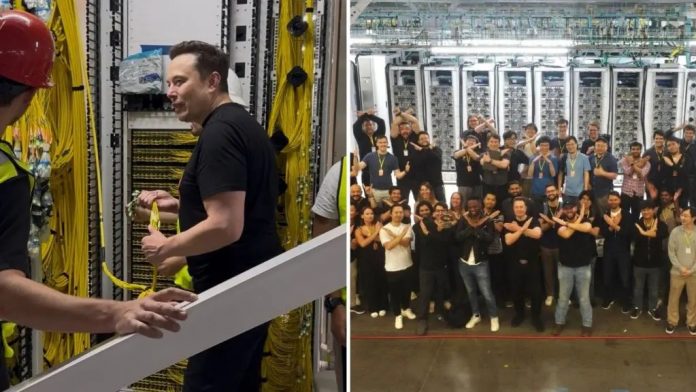
Elon Musk’s artificial intelligence startup, xAI, has secured a permit to operate natural gas-burning turbines at its controversial supercomputer facility in Memphis, Tennessee, despite mounting public opposition and legal pressure.

The permit, issued by the Shelby County Health Department on July 2, allows the company to power its Colossus datacenter using 15 gas turbines, which have become the focus of heated environmental and health concerns from residents and advocacy groups.

The approval comes after months of protests and public hearings during which local residents criticized the project’s effect on air quality in the surrounding neighborhood. Many said the operation of the turbines had already resulted in air pollution so severe that they could no longer open their windows or exercise outside without experiencing strong odors and discomfort.

According to specifications from Solaris Energy Infrastructure (SEI), the Houston-based company installing the turbines, the machines emit pollutants including nitrogen oxides and formaldehyde—substances linked to increased respiratory illness and long-term health risks. Solaris markets itself as a rapid-deployment energy firm for data centers and industrial operations with large, immediate power needs.

The permit comes with strict conditions: xAI must adhere to emissions limits, conduct environmental testing, and meet regulatory deadlines or face penalties of up to $10,000 per day for each violation. However, many believe the enforcement mechanisms remain weak and the decision marks a disregard for community health.

Adding to the controversy, the Southern Environmental Law Center, which is representing the NAACP in an ongoing lawsuit against xAI, said satellite imagery taken on July 1—just one day before the permit was granted—showed “at least 24 turbines” on the property. That number exceeds the 15 turbines the permit allows to be operational.

The NAACP has accused xAI of violating the Clean Air Act, and the law center said it had previously documented more than 35 turbines at the site, many running simultaneously, in breach of environmental laws.

The permit also followed a leadership shake-up within the local health authority, with Bruce Randolph named interim director of the Shelby County Health Department just one day before the decision was announced.

xAI’s Response and Future Plans

xAI responded to the controversy on Wednesday, telling CNBC that it welcomed the decision by county officials. The company claimed the site would feature “state-of-the-art emissions control technology,” adding that Colossus would be the “lowest emitting of its kind in the country.”

Yet, the community remains unconvinced. Local residents and environmental activists point out that natural gas turbines—even with advanced control systems—still release significant pollutants, and their placement in a residential area raises questions about environmental justice.

Beyond Colossus, xAI is already plotting its next move. The company intends to build an even larger datacenter in the Memphis area, again with SEI providing the turbines. This expansion effort is being powered by a fresh round of capital: a combined $10 billion in debt and equity raised this week, led in part by Morgan Stanley.

xAI, which recently merged with Musk’s social media platform X in a deal valuing the combined entity at $80 billion, is working to compete directly with AI titans like Google’s Gemini and OpenAI’s ChatGPT. The Memphis facility serves as the backbone for the company’s AI chatbot, Grok, now integrated into X.

Tesla, another Musk-owned company, is also benefiting from the project. According to recent filings, xAI spent around $191 million in 2024 and another $36.8 million in early 2025 on Tesla’s Megapacks—large-scale battery systems used to store backup power for critical infrastructure.

Rising Tensions Over AI-Powered Infrastructure

The rapid buildout of energy-hungry data centers in urban and suburban areas has triggered widespread concern, with communities increasingly pushing back on the environmental costs of powering next-generation AI systems. While companies like xAI claim to be investing in clean energy innovations, critics argue the continued reliance on fossil fuels—even in “state-of-the-art” formats—is a step backward in the fight against climate change.

The Memphis case now joins a growing number of legal and social battles surrounding AI infrastructure, particularly in historically underserved communities. With lawsuits pending, further regulatory scrutiny likely, and construction still underway, Musk’s AI ambitions in Tennessee may face even more resistance before the supercomputers fully come online.


Swiss-Based Amina Bank Supports Ripple’s RLUSD Stablecoin

0

Swiss-based AMINA Bank has become the first bank globally to support Ripple’s RLUSD stablecoin, offering custody and trading services for institutional clients and professional investors. Launched on July 3, 2025, this initiative marks a significant step in integrating regulated stablecoins into traditional banking. RLUSD, pegged 1:1 to the US dollar and backed by U.S. Treasuries, is regulated by the New York Department of Financial Services and has a circulating supply of approximately $430-$469 million.

AMINA, regulated by Switzerland’s FINMA, aims to bridge traditional banking and crypto infrastructure, with plans to expand RLUSD services in the coming months. This move reflects growing institutional demand for compliant digital assets. The adoption of Ripple’s RLUSD stablecoin by AMINA Bank carries significant implications for the financial sector, particularly in bridging traditional banking and cryptocurrency ecosystems.

AMINA Bank’s move signals growing institutional acceptance of stablecoins as legitimate financial instruments. By offering custody and trading of RLUSD, a stablecoin pegged to the US dollar and backed by U.S. Treasuries, AMINA positions itself as a pioneer in integrating crypto assets into regulated banking services. This could encourage other banks to follow suit, accelerating the mainstreaming of stablecoins for payments, remittances, and asset management.

Stablecoins like RLUSD, with regulatory oversight from the New York Department of Financial Services, provide a safer, more transparent option for institutions wary of crypto’s volatility and regulatory uncertainty. Ripple’s RLUSD is designed for efficient, low-cost cross-border payments. AMINA’s adoption could streamline international transactions for its institutional clients, reducing reliance on traditional systems like SWIFT, which are often slower and more expensive.

The move could attract businesses seeking faster settlement times and lower fees, potentially reshaping how global trade and remittances are conducted. Switzerland, already a leader in crypto-friendly regulation through FINMA, benefits from AMINA’s first-mover advantage. This positions the country as a hub for innovative financial services, attracting more crypto-focused firms and investment.

AMINA’s regulated status enhances trust in RLUSD’s integration, setting a precedent for other jurisdictions to develop similar frameworks. By supporting RLUSD on both Ethereum and XRP Ledger, AMINA demonstrates confidence in blockchain technology’s scalability and reliability. This could spur further institutional investment in blockchain infrastructure, driving innovation in decentralized finance (DeFi) and tokenized assets.

The collaboration between a FINMA-regulated bank and a NYDFS-regulated stablecoin sets a benchmark for compliance in the crypto space. It shows that regulated entities can integrate digital assets while adhering to strict financial standards, potentially influencing global regulatory approaches to stablecoins. Traditional banks adopting stablecoins may compete with crypto-native platforms (e.g., exchanges like Coinbase or Binance) that already offer stablecoin services.

Crypto-native firms may lose market share to banks unless they enhance their regulatory compliance or offer unique value propositions. Meanwhile, banks may struggle to match the speed and innovation of decentralized platforms. The adoption of RLUSD by a Swiss bank primarily benefits institutional clients and professional investors in developed markets with robust regulatory frameworks. Developing economies, where stablecoins are often used for financial inclusion (e.g., remittances or escaping currency volatility), may see slower adoption due to limited access to regulated banking infrastructure.

This could widen the gap between regions with advanced financial systems and those reliant on informal crypto solutions, potentially excluding underserved populations from the benefits of institutional-grade stablecoin services. RLUSD’s regulatory backing (NYDFS) gives it an edge over less-regulated stablecoins like Tether (USDT), which has faced scrutiny over reserve transparency. Banks like AMINA may prioritize regulated stablecoins, marginalizing others.

This could consolidate market share among a few compliant stablecoins, reducing diversity in the stablecoin market and potentially stifling innovation from smaller, less-regulated issuers. AMINA’s RLUSD services target institutional and professional investors, potentially leaving retail users with limited access to similar offerings. Retail investors may rely on unregulated or less secure platforms, creating a tiered access structure.

This could exacerbate wealth inequality in crypto adoption, as institutions benefit from secure, regulated services while retail users face higher risks on less-regulated platforms. RLUSD’s integration on Ethereum and XRP Ledger strengthens Ripple’s ecosystem but may sideline competing blockchain networks (e.g., Solana, Binance Smart Chain) that support other stablecoins. This could intensify competition among blockchain protocols for institutional partnerships.

Ripple’s dominance in institutional stablecoin adoption could centralize influence in the blockchain space, potentially limiting the growth of alternative networks. AMINA Bank’s adoption of RLUSD is a landmark step toward integrating stablecoins into traditional finance, promising faster, cheaper cross-border transactions and reinforcing Switzerland’s role as a crypto hub. However, it also highlights divides between traditional and crypto-native systems, developed and developing economies, regulated and unregulated stablecoins, institutional and retail investors, and competing blockchain networks.

JPMorgan Chase Is Piloting A Tokenized Program For Carbon Credits

0

JPMorgan Chase, through its blockchain unit Kinexys, is piloting a program to tokenize carbon credits in collaboration with S&P Global Commodity Insights, EcoRegistry, and the International Carbon Registry. The initiative aims to convert carbon credits—each representing one ton of CO2 removed or not emitted—into digital tokens on a blockchain to enhance transparency, traceability, and efficiency in the voluntary carbon market.

This market has faced challenges like fragmentation, lack of standardization, and credibility issues due to concerns over double-counting and greenwashing. By leveraging blockchain, JPMorgan seeks to create a unified, tradable ecosystem for carbon credits, potentially improving liquidity and trust. The pilot focuses on tracking credits from issuance to retirement, addressing past tokenization pitfalls. Alastair Northway, head of natural resource advisory at JPMorgan Payments, noted the market’s potential for innovation, with the bank aiming to become a leader in climate finance. The voluntary carbon market could reach $2 trillion by 2030 if infrastructure improves, though risks like regulatory divergence remain.

Tokenizing carbon credits on a blockchain ensures immutable records of issuance, trading, and retirement, reducing risks of double-counting and fraud. This could rebuild confidence in the voluntary carbon market, which has been criticized for greenwashing and lack of credibility. Digital tokens can standardize and streamline trading, making carbon credits more liquid and accessible to a broader range of investors and companies. This could drive market growth, potentially reaching the projected $2 trillion valuation by 2030.

Blockchain-based systems automate processes like verification and settlement, cutting costs and time compared to traditional carbon credit trading, which often involves fragmented registries and manual processes. Success in this pilot could position JPMorgan as a leader in climate finance, encouraging other financial institutions to adopt similar technologies. This could accelerate investment in carbon reduction projects globally.

While tokenization addresses some market issues, divergent global regulations and lack of universal standards for carbon credits could hinder scalability. Harmonization will be critical for a cohesive global market. By making carbon credits more tradable and trustworthy, the initiative could incentivize more companies to offset emissions, supporting global decarbonization efforts. However, the effectiveness depends on the quality and verification of the underlying credits.

Blockchain enhances transparency but doesn’t inherently solve issues like the environmental integrity of credits. Poorly designed projects could still undermine the system’s impact if not rigorously vetted. Established players in the carbon market, like traditional registries or brokers, may face competition from blockchain-based platforms, potentially reshaping market dynamics and business models. This move could catalyze innovation in climate finance but requires careful navigation of regulatory, technical, and environmental challenges to realize its full potential.

JPMorgan’s carbon credit tokenization initiative could transform the VCM by enhancing transparency, efficiency, and liquidity, potentially unlocking significant climate finance. However, its success depends on overcoming technical, regulatory, and credibility challenges. While blockchain offers promising tools, it cannot address underlying issues like project quality or greenwashing without complementary reforms.

The initiative signals a convergence of climate finance and blockchain innovation, but its real-world impact will hinge on rigorous execution and alignment with global climate goals. Stakeholders should monitor the pilot’s outcomes, particularly its ability to deliver verifiable environmental benefits alongside financial gains


FXHASH Launches $FXH On Base Network

0

fxhash, a generative art platform, launched its $FXH token on Base, an Ethereum Layer 2 blockchain, on July 2, 2025, introducing the FXH Protocol. This protocol enables artists to create and link art coins (ERC-20 tokens with a 1M supply) to their collections via a bonding curve on Base. Once sufficient activity is achieved, these coins can graduate and be paired with $FXH in a liquidity pool, owned by the artist and locked for two years.

The system aims to create a new on-chain art economy, offering artists multiple revenue streams beyond royalties and new interaction models for collectors. The $FXH claimdrop opened on May 21, 2025, with trading and art coin launches (e.g., $CIPHRD, $P1XEL, $EBOY, $SLIPS) starting July 2–3, 2025. The launch of fxhash’s $FXH token and the FXH Protocol on Base has significant implications for the generative art ecosystem, artists, collectors, and the broader Web3 space.

The FXH Protocol allows artists to create art coins tied to their collections, offering a novel way to monetize their work beyond traditional royalties or NFT sales. By linking art coins to a bonding curve and eventually pairing them with $FXH in liquidity pools, artists can potentially earn from trading activity and pool ownership. This could democratize revenue opportunities, enabling artists to benefit from the speculative and cultural value of their work in a decentralized market.

Collectors can interact with art coins, which represent a stake in an artist’s collection, fostering deeper engagement with the art and its creator. This gamifies collecting, as collectors may speculate on art coins’ value while supporting artists. The protocol’s structure incentivizes early participation, as bonding curves typically reward early buyers with lower prices, potentially attracting a new wave of collectors.

The FXH Protocol aims to establish a self-sustaining art economy on Base, leveraging Ethereum’s Layer 2 scalability for lower transaction costs and faster interactions. This could make generative art more accessible and scalable compared to Ethereum mainnet. By locking liquidity pools for two years, the protocol encourages long-term commitment, potentially stabilizing the market for art coins and reducing pump-and-dump schemes.

Launching on Base, known for its low fees and Coinbase integration, could drive more artists and collectors to the platform, boosting its adoption in the Web3 art space. This aligns with Base’s growing ecosystem, potentially positioning fxhash as a key player in its DeFi and NFT communities. The $FXH token may evolve to include governance features, giving token holders a say in the platform’s future (though specifics on governance are not yet detailed).

Base’s low fees and the claimdrop model make $FXH and art coins more accessible to a broader audience compared to high-cost Ethereum mainnet projects. This could attract new artists and collectors, especially from underrepresented regions or those priced out of traditional NFT markets. The bonding curve and liquidity pool mechanics may favor early adopters or those with significant capital to invest in art coins or $FXH.

The FXH Protocol’s reliance on bonding curves, liquidity pools, and DeFi concepts may alienate less tech-savvy artists and collectors. Understanding and navigating these systems requires familiarity with Web3 tools, wallets, and decentralized exchanges, creating a divide between crypto-native users and newcomers. Artists without coding or blockchain expertise may struggle to fully leverage the protocol, potentially favoring those with technical skills or resources to hire support.

The introduction of art coins tied to bonding curves could fuel speculative trading, where prices rise rapidly based on hype rather than artistic value. This risks creating a divide between artists who prioritize creative integrity and those chasing market trends for profit. Volatility in $FXH or art coin prices could disproportionately affect smaller artists or collectors who lack the financial cushion to weather market swings.

While fxhash operates on decentralized infrastructure, the platform’s control over the claimdrop, art coin launches, and protocol rules may raise concerns about centralized decision-making. This could create a divide between fxhash’s core team and the community, especially if governance isn’t fully decentralized. The claimdrop and art coin launches may not be equally accessible globally due to regulatory restrictions or lack of crypto infrastructure in certain regions. This could widen the divide between artists and collectors in crypto-friendly regions (e.g., North America, Europe) and those in less developed markets.

The FXH Protocol is a bold step toward redefining the generative art market, offering artists new revenue models and collectors innovative ways to engage with art. However, it also risks creating divides based on technical knowledge, financial capacity, and market access. To mitigate these, fxhash could prioritize user education, transparent governance, and inclusive onboarding to ensure the protocol benefits a diverse range of participants.

Addentax’s $1.3B Bitcoin Acquisition Plan Is A High-Stakes Move

0

Addentax Group Corp. (Nasdaq: ATXG), a Chinese textile and logistics company with a market cap of approximately $6.83 million, announced on July 2, 2025, a non-binding term sheet to acquire up to 12,000 Bitcoins, valued at roughly $1.3 billion, through the issuance of new common stock. This expands on their May 2025 plan to acquire 8,000 Bitcoins and other cryptocurrencies for $800 million.

The transaction, still subject to due diligence, definitive agreements, and regulatory approvals, aims to bolster Addentax’s balance sheet and align with its blockchain strategy, leveraging Bitcoin’s liquidity and institutional interest. However, the company’s small market cap and stock trading below $1 for over a year have raised concerns about share dilution and volatility. Analysts note skepticism, citing past unmaterialized crypto deals and the 2017 Long Island Iced Tea rebranding as cautionary examples.

The deal’s completion remains uncertain, with potential to position Addentax as a significant Bitcoin holder if finalized. The announcement by Addentax Group Corp. (Nasdaq: ATXG) to raise $1.3 billion through issuing new common stock to purchase 12,000 Bitcoins has significant implications and highlights a divide in perspectives within financial and crypto communities. By acquiring a substantial amount of Bitcoin, Addentax aims to diversify its assets, moving away from its core textile and logistics operations.

This positions the company to benefit from Bitcoin’s potential as a store of value and hedge against inflation, especially given its growing institutional adoption. The move aligns with Addentax’s stated blockchain strategy, potentially signaling further ventures into crypto-related technologies or services, which could attract investors interested in blockchain innovation. Issuing new stock to fund the purchase could significantly dilute existing shareholders’ equity, especially for a company with a market cap of only $6.83 million. This could depress the stock price further, given its already low trading value (below $1 for over a year).

The announcement has already driven a 25% pre-market surge in ATXG’s stock price on July 3, 2025, reflecting speculative interest. However, such moves often lead to volatility, as seen in similar cases like MicroStrategy’s Bitcoin pivot or the 2017 Long Island Iced Tea rebranding. The feasibility of raising $1.3 billion for a company of Addentax’s size is questionable. The non-binding nature of the term sheet, combined with the need for regulatory approvals and due diligence, introduces significant execution risk.

The announcement has sparked skepticism due to Addentax’s small scale and past unfulfilled crypto-related plans (e.g., the May 2025 $800 million crypto acquisition plan). Critics draw parallels to speculative rebranding efforts that failed to deliver, which could undermine investor confidence if the deal falters. If successful, Addentax could emerge as a notable Bitcoin holder, potentially attracting crypto-focused investors and boosting its market profile. This could mirror the success of companies like MicroStrategy, which gained prominence through large Bitcoin investments.

A successful acquisition could reinforce Bitcoin’s legitimacy as an asset class, encouraging other small-cap companies to follow suit. This aligns with increasing institutional interest, as seen with firms like BlackRock and Fidelity entering the crypto space. The announcement could fuel speculative trading in both ATXG stock and Bitcoin.

Many crypto supporters on X view this as a bold move, praising Addentax for embracing Bitcoin as a treasury asset. They argue it could position the company as a leader in the small-cap crypto space, potentially driving stock and Bitcoin price appreciation. Retail investors see the announcement as a catalyst for short-term gains, as evidenced by the 25% pre-market stock surge. Some believe the deal could attract institutional investors, boosting Addentax’s credibility.

Proponents of Bitcoin’s long-term value see this as a strategic bet on cryptocurrency’s future, especially if Addentax leverages its holdings for blockchain-related ventures. Financial analysts and some X users express caution, citing Addentax’s small market cap, low stock price, and history of unfulfilled crypto plans. They question the company’s ability to raise $1.3 billion without massive dilution or financial strain.

Critics highlight the non-binding nature of the term sheet and historical examples of failed crypto pivots (e.g., Long Island Iced Tea’s 2017 rebranding to Long Blockchain). They warn of potential “pump-and-dump” schemes or speculative hype without substance. Some X posts note the challenges of securing regulatory approval and completing due diligence for such a large transaction, especially for a company with limited financial resources.

Addentax’s $1.3 billion Bitcoin acquisition plan is a high-stakes move with transformative potential but significant risks. It could elevate the company’s profile and align it with the growing crypto economy, or it could lead to financial strain and shareholder losses if the deal fails or dilutes value excessively. The divide in sentiment reflects broader tensions in the market: enthusiasm for Bitcoin’s potential versus skepticism about speculative corporate pivots.