DD
MM
YYYY

PAGES

DD
MM
YYYY

spot_img

PAGES

Home Blog Page 1053

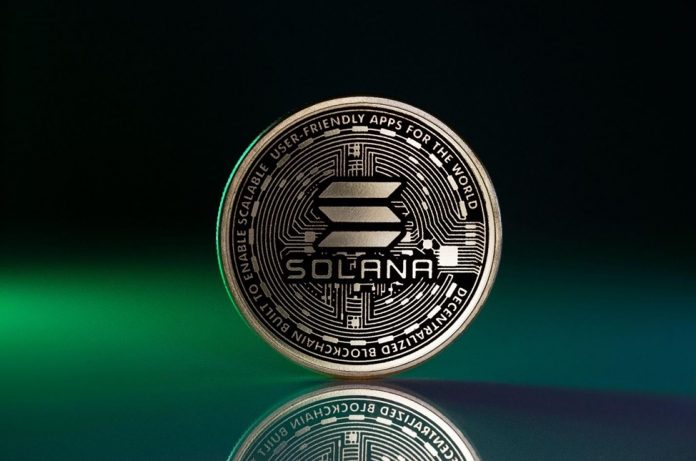
Fiserv’s FIUSD Stablecoin Platform Launched on Solana

0

Fiserv, a $90 billion financial services giant, announced on June 23, 2025, the launch of a new digital asset platform featuring a USD-pegged stablecoin called FIUSD, built on the Solana blockchain. The platform leverages infrastructure from Paxos and Circle, aiming for interoperability with leading stablecoins like PayPal’s PYUSD. FIUSD will integrate with Fiserv’s existing network, serving approximately 10,000 financial institutions and six million merchants processing 90 billion transactions annually, at no additional cost to clients.

The move aligns with advancing U.S. stablecoin regulations, including the GENIUS Act, and aims to enable real-time, programmable payments while maintaining compliance and fraud monitoring. Fiserv is also exploring deposit tokens for capital efficiency. The launch of Fiserv’s FIUSD stablecoin platform on Solana has significant implications for the financial services industry, blockchain adoption, and the broader digital asset ecosystem.

Fiserv’s vast network, serving 10,000 financial institutions and six million merchants, positions FIUSD to bridge traditional finance (TradFi) and decentralized finance (DeFi). By embedding stablecoin functionality into existing payment systems at no extra cost, Fiserv lowers the barrier for merchants and institutions to adopt blockchain-based payments.

FIUSD’s use of Solana’s high-speed, low-cost blockchain enables near-instantaneous, programmable transactions, potentially transforming payment processing for businesses. This could challenge incumbent systems like SWIFT or ACH, which are slower and costlier. The launch aligns with U.S. stablecoin regulations like the GENIUS Act, signaling a maturing regulatory environment that could encourage other financial giants to explore digital assets.

Boost for Solana’s Ecosystem

Fiserv’s choice of Solana over other blockchains (e.g., Ethereum, Polygon) underscores Solana’s scalability and low transaction costs, potentially driving more enterprise adoption to its ecosystem. By building on infrastructure from Paxos and Circle, FIUSD aims for compatibility with major stablecoins like USDC and PYUSD, enhancing Solana’s role as a hub for stablecoin transactions.

Increased transaction volume from Fiserv’s 90 billion annual transactions could boost Solana’s native token (SOL) value and network activity, attracting developers and DeFi projects. FIUSD’s smart contract capabilities enable automated, conditional payments (e.g., escrow, subscriptions), offering businesses new ways to manage cash flow and contracts.

Fiserv’s exploration of deposit tokens could redefine how banks manage liquidity, offering tokenized assets that improve capital efficiency while remaining compliant with regulations. Fiserv’s integration of fraud monitoring and compliance tools into the platform ensures that blockchain adoption doesn’t compromise security, a key concern for financial institutions.

Rivals like Visa, Mastercard, or PayPal (with PYUSD) may face pressure to accelerate their own blockchain initiatives to keep pace with Fiserv’s scale and integration. The platform could attract new players—both TradFi and crypto-native firms—into the stablecoin space, fostering innovation but also intensifying competition.

Fiserv’s platform bridges TradFi and DeFi by bringing blockchain to mainstream institutions, potentially reducing friction in adopting decentralized technologies. DeFi purists may criticize FIUSD for being centralized, as Fiserv (a corporate entity) controls the platform, potentially limiting the decentralized ethos of blockchain. This could create a divide between permissioned, corporate-led stablecoins and fully decentralized alternatives.

While Fiserv’s scale accelerates adoption, it may prioritize regulated, controlled systems over open DeFi protocols, potentially stifling innovation in fully decentralized ecosystems. Fiserv’s no-cost integration benefits its six million merchants, particularly smaller businesses that can now access fast, low-cost payments without upfront investment.

Smaller institutions or merchants outside Fiserv’s network may struggle to compete if they lack access to similar blockchain infrastructure, widening the gap between Fiserv’s clients and others. The platform could consolidate Fiserv’s dominance, creating a divide where non-Fiserv clients face higher costs or slower systems, potentially locking them out of digital asset benefits.

Fiserv’s global reach could standardize stablecoin use in payments, particularly in regions with strong regulatory support like the U.S. Emerging markets or regions with less developed financial infrastructure may lag in adoption due to regulatory uncertainty or lack of access to Fiserv’s network, deepening the global digital finance divide.

Countries with robust regulations (e.g., U.S. via the GENIUS Act) may see faster adoption, while others risk being left behind, exacerbating economic inequalities. Solana’s selection by Fiserv validates its technology, potentially attracting more developers and users to its ecosystem. The influx of corporate players like Fiserv could shift Solana’s focus toward enterprise use cases, sidelining smaller DeFi projects or community-driven initiatives.

A divide may emerge within Solana’s ecosystem, where corporate-backed projects dominate resources and attention, potentially alienating grassroots developers. Fiserv’s compliance-focused approach aligns with evolving regulations, setting a model for other firms to follow. Overregulation or stringent compliance requirements could exclude smaller crypto firms or startups lacking the resources to meet Fiserv’s standards, creating a divide between well-funded corporations and smaller players.

The stablecoin market may consolidate around a few large, compliant players, reducing diversity and innovation in the space. Fiserv’s FIUSD platform on Solana is a landmark step toward integrating blockchain into mainstream finance, offering faster, cheaper, and programmable payments while aligning with regulatory trends.

It strengthens Solana’s position and could reshape the competitive landscape for financial services. However, it also highlights divides between centralized and decentralized systems, large and small players, global and regional markets, and corporate versus community-driven blockchain initiatives.
Oil Prices Slide, Stocks Climb as Trump Declares Israel-Iran Ceasefire — But Doubts Linger Amid Fresh Attacks

0

Oil prices tumbled and stocks rose sharply in Asian trading early Tuesday after President Donald Trump declared a “complete and total” ceasefire between Israel and Iran, claiming an end to nearly two weeks of military escalation.

At 8:48 p.m. ET Monday, U.S. West Texas Intermediate (WTI) crude fell 3.6% to $66.04, and Brent crude dropped to $68.93, also down 3.6%. The retreat followed a 7.2% plunge on Monday, bringing oil prices below levels seen before Israel’s initial strike on Iran on June 13.

Meanwhile, U.S. stock futures rallied, with investors seemingly betting that geopolitical tensions would ease:

  • S&P 500 futures rose 0.5% to 6,077.07
  • Dow futures climbed 0.5% to 42,895.05
  • Nasdaq futures jumped 0.8% to 22,075.67

Markets defied what should have been a jarring development: the United States’ entry into the conflict with direct airstrikes on Iran’s nuclear infrastructure. On Sunday, Trump ordered bombings on three Iranian nuclear sites—Fordow, Natanz, and Esfahan—marking a sharp escalation in America’s military involvement.

The move surprised many, especially after Trump had just days earlier suggested diplomacy could resolve tensions within two weeks. But despite this major development, analysts interpreted the U.S. action as calculated and limited, rather than a prelude to full-blown war.

“The market is downplaying escalation risks, viewing the U.S. strike as a tactical move rather than the start of open-ended conflict,” analysts at Rystad Energy wrote.

That perception was reinforced after Iran’s measured retaliation—a missile attack on a U.S. military base in Qatar that resulted in no reported casualties and was largely intercepted, according to U.S. and Qatari officials. The restrained response fueled speculation that Iran was signaling a willingness to de-escalate.

“The attack on Qatar suggests a desire by Iran to save face without provoking a broader conflict,” Rystad noted.

But Is There Really a Ceasefire?

Hours after Trump’s ceasefire announcement on Truth Social, Iran’s foreign minister Abbas Araghchi threw cold water on the claim, stating there was “no agreement” on a ceasefire. He added that Iran would only stop retaliatory attacks if Israel ceased its “illegal aggression” by 4 a.m. local time Tuesday (00:30 GMT).

In the meantime, Iran launched a fresh round of missiles at Israel, striking the southern city of Beersheba and reportedly killing at least three people, according to Israeli media. This latest attack raises serious doubts about whether Trump’s truce announcement is credible or enforceable.

The ceasefire was supposed to be implemented in stages, according to Trump, and marked what he called the end of the “12-day war.” But developments on the ground suggest there is still no formal, coordinated ceasefire involving all parties.

“This is still a very fluid and fragile situation,” Deutsche Bank analysts said in a note. “Any spark could reignite a broader confrontation.”

Oil Markets Cautiously Watch the Strait of Hormuz

Despite the violence, oil prices fell as traders took comfort in the fact that Iran has not moved to close the Strait of Hormuz, the narrow waterway through which about 20% of global oil supply and 25% of liquefied natural gas trade pass.

“The waterway handles significant volumes for global markets and its importance cannot be understated,” added Janiv Shah, a vice president of oil markets analysis at Rystad Energy.

However, analysts caution that the risk remains. The Iranian parliament has endorsed a move to shut the strait, though any final decision would rest with the country’s Supreme National Security Council.

U.S. Secretary of State Marco Rubio on Sunday called on China, Iran’s top oil customer, to intervene and urge restraint. Rubio warned that it would be “economic suicide” for Tehran to block Hormuz.

“We retain options to deal with that,” Rubio said, suggesting U.S. naval forces could intervene if shipping is disrupted.

For now, oil markets are banking on a pause, driven by tactical restraint and hopes that diplomacy might still prevail. But the U.S. bombing of Iran’s nuclear sites, Iran’s latest attacks on Israeli civilians, and the absence of a verified ceasefire agreement leave the region on edge.

Analysts believe that there are too many conflicting signals to say with confidence that this crisis is over.

If Iran follows through on threats to close Hormuz—or if Israel launches another retaliatory strike—markets could reverse course quickly, triggering spikes in oil prices and volatility across global equities.

This means that the gap between market optimism and on-the-ground reality remains uncomfortably wide.

Business Model: The Biggest Invention by Elon Musk In Tesla

0

Elon Musk is his generation’s finest innovator. But he is not there because he makes great physical products like SpaceX rockets, Tesla cars, etc. The best part of Musk’s business is in pricing. Since Bill Gates changed the ordinance on how software is priced in the late 1970s, away from giving it free for hardware contracts as IBM was doing, no other person has brought better ideas than Musk on pricing physical things.

Musk launched Tesla. And if he had kept Toyota, Ford and GM’s pricing models, the company would have failed. What did Musk do? He invented a software pricing framework for a car which means you never finish paying for your Tesla. Indeed, there are subscriptions here and there to the extent that if you should sell the car, the next owner will still need to get in touch with Tesla to activate something.

Contrast with your Toyota, once you pay 100% and leave the dealer with the car, you have forever paid, and Toyota will not get anything from you again. Tesla has recurring revenue like software while other car brands are one-off like your old Nokia phone. That explains the higher multiples investors use in Tesla stock valuation as a Tesla car could be earning revenue for Tesla Inc until it goes to the landfill. Other car companies do not have that ability.

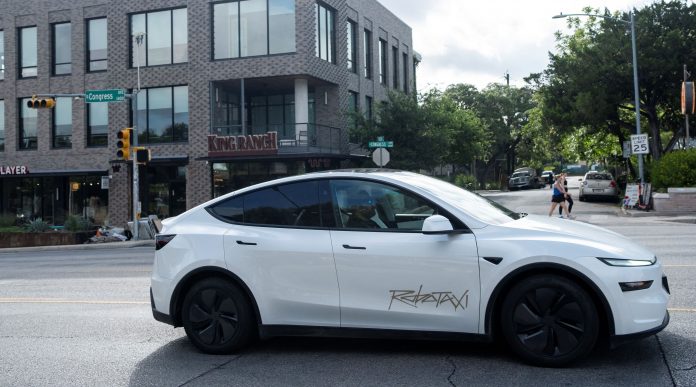
Musk is extending that pricing sagacity into the fledgling era of autonomous taxis: “Tesla’s long-awaited robotaxi debut kicked off Sunday in Austin, Texas — and with it came not just a successful technical demonstration, but a pricing shockwave that could redefine the ride-hailing market. Offering autonomous rides for just $4.20 flat, Tesla’s entry is now being touted as a potential category killer that could disrupt incumbents like Uber and Lyft, whose fares in the area typically range from $25 to $40 per trip. “

Did you read that? Flat fee! Who will use Uber and Lyft if you have a brand that offers you a flat fee? Why is Tesla doing this? Total vertical integration as Tesla owns and makes the cars, and that means it can use the one oasis strategy to milk the system. In other words, Tesla can get carbon credit of $2 per trip and when everything is computed, it would be fine financially because there are oil companies and other EU car companies waiting to buy those carbon credits. (Tesla generates $billions by selling carbon credits on all cars sold!)

Uber and co are in trouble. And Google Waymo is also in trouble even though Google has big wallets to compete with Tesla, but this competition is not symmetric since Tesla makes its cars while Google only retrofits. And with that, Musk and team can even expand the flat fee framework.

Comment on Feed

Musk didn’t just disrupt industries, he rewrote the rules of value capture.
Other CEOs: ‘How do we make cars cheaper?’
Elon: ‘How do we charge customers forever?’
And just like that… the auto industry became Netflix.
While Detroit obsessed over ‘sticker prices,’ Musk built the Apple App Store for vehicles:
Own the OS (Tesla software)
Control the App Economy (FSD subscriptions, robotaxi fees)
Monetize the Ecosystem (carbon credits, driverless data)
Toyota sells cars. Tesla sells car-as-a-service, and Wall Street pays 10x multiples for the difference.
Robotaxi Shock Therapy: $4.20 fares aren’t charity, they’re loss leaders to dominate data/credit markets
The playbook? Sell the razor, monopolize the blades, then sell the shaving habits to third parties.
When historians write about 21st century capitalism, they won’t talk about Musk’s rockets or cars. They’ll study how he turned physical products into financial derivatives.

Tesla’s Robotaxi Rollout Ignites Stock Surge and Analyst Praise, as $4.20 Fare Threatens Uber and Lyft

Tesla’s Robotaxi Rollout Ignites Stock Surge and Analyst Praise, as $4.20 Fare Threatens Uber and Lyft

0

Tesla’s long-awaited robotaxi debut kicked off Sunday in Austin, Texas — and with it came not just a successful technical demonstration, but a pricing shockwave that could redefine the ride-hailing market.

Offering autonomous rides for just $4.20 flat, Tesla’s entry is now being touted as a potential category killer that could disrupt incumbents like Uber and Lyft, whose fares in the area typically range from $25 to $40 per trip.

Following CEO Elon Musk’s announcement of the launch on X, Tesla shares closed up 8.2% on Monday, as Wall Street digested early footage and firsthand reviews from invited users who tested the new service. Around 10 to 20 modified Tesla Model Y SUVs, each wrapped in “Robotaxi” livery, are operating in a geofenced area of Austin, supervised by in-vehicle safety operators and remote teleoperation teams.

Analysts say the $4.20 price point, while clearly symbolic in its number, could give Tesla a real edge as it pushes into the ride-hailing space. It drastically undercuts the dominant players, and if Tesla can scale the service while maintaining safety and reliability, the model could force an industry-wide price realignment.

“There are countless skeptics of the Tesla robotaxi vision with many bears thinking this day would never come,” said Dan Ives, senior equity analyst at Wedbush Securities and one of Tesla’s most vocal bulls.

Ives took two 15-minute rides in the robotaxi and came away convinced.

“Going into it, we expected to be impressed but walking away from it, all there is to say is that this is the future,” he wrote in a note Sunday night.

He believes Tesla’s early moves in autonomy are more than just hype — they’re groundwork for something enormous.

“We view this autonomous chapter as one of the most important for Musk and Tesla… as we believe the AI future at Tesla is worth $1 trillion to the valuation alone over the next few years.”

Ives predicted that Tesla’s robotaxi service could expand to “25 to 30 cities” by 2026, mirroring Elon Musk’s own prediction that “millions” of robotaxis would be on the road by the second half of that year.

While Tesla has not disclosed expansion timelines or when the broader public can begin using the service, the pilot program in Austin already demonstrates key integration features. Riders can sync their Tesla accounts with the vehicle, automatically loading personalized media apps such as Netflix, Spotify, Hulu, and Disney+, creating a tailored in-cabin experience.

Ives noted that in one scenario, the robotaxi handled a narrow, chaotic street in Austin filled with parked cars, open doors, and opposing traffic — “masterfully maneuvering with patience and safety among this chaos.”

Safety Still a Major Hurdle

However, analysts and regulators are closely watching safety and scalability. Tesla’s system still includes human monitors — a Tesla employee in the front passenger seat and a remote operator system — a sign that full autonomy remains a work in progress.

Earlier on Monday, Reuters reported that Tesla’s responses to safety questions posed by the National Highway Traffic Safety Administration (NHTSA) were classified by the company as confidential business information, prompting concern among transparency advocates.

Tesla’s rollout comes in the shadow of earlier setbacks for competitors. Uber pulled back on autonomous testing after a 2018 pedestrian fatality, and GM’s Cruise suspended operations after a high-profile incident in San Francisco last year.

But the early signs from Austin may put Tesla ahead of the pack, at least in public perception — particularly with bullish investors.

Dan Ives also suggested that the current U.S. administration under President Donald Trump is likely to support autonomous vehicle deployment and may remove regulatory roadblocks that have delayed progress in the past.

“We expect the Trump administration will clear the runway for Tesla, especially as the robotaxi rollout pivots from the recent ‘soap opera’ of legal questions into commercial reality,” Ives said.

Scaling the Vision

To reach Musk’s lofty vision of a million autonomous rides daily, Tesla must prove it can scale production, deploy thousands of cars, and build out infrastructure for cleaning, charging, and maintenance — all without traditional driver income offsetting those costs.

Tesla also must contend with fierce competition from players like Waymo (Alphabet) and Zoox (Amazon), both of which have logged millions of autonomous miles and have been slower — and more cautious — in bringing full autonomy to market.

Dogecoin Price Holds Key Support at $0.156 After Dip – Could This Be the Turning Point for DOGE?

0

The original meme coin is once again keeping investors interested. But as people wonder over whether this represents a resurgence or merely a break in the fall. People are asking whether DOGE is still the future of meme?currencies or if it’s ready for growth.

A new type of meme coin is gaining popularity—one that combines fun with usefulness and community with real-world applications. Leading the new generation is the Angry Pepe Fork project, generating significant attention on Twitter and Telegram with its coin $APORK.

Is Dogecoin Still Worth Buying?

DOGE’s volatility has been as unstable as the Tesla share price. The internet culture surrounding Dogecoin was driving the price up instantly with Elon Musk’s viral support. Each of Musk’s tweets in the past has ballooned DOGE, often hand in hand with Tesla’s price movements.

Angry Pepe Fork is different from this narrative. Angry Pepe Fork expands on this idea by not only attaching itself to the meme and viral potential of $PEPE, but it also provides actual utility by way of CommunityFi and GambleFi, or simply put, it pays the user for their support of the project versus just holding on to the tokens.

What Sets the Angry Pepe Fork ($APORK) Apart?

Dogecoin largely depends on celebrity hype as?well; Elon Musk and Donald Trump have both talked about meme coins. Angry Pepe Fork ($APORK) proves it’s popular for its form, not just its?symbol. Here are keypoints that make $APORK, different from DOGE coin:

Play-to-Earn GambleFi Games: The GambleFi platform enables users to play mini-games to win $APORK.

CommunityFi Rewards: Content providers, meme makers, and promoters are rewarded for spreading the word.

Multi-Chain Launch: DOGE is limited to a single blockchain, and unlike DOGE, Angry Pepe Fork will be available on Ethereum, BNB, and Solana, boosting reach while lowering transaction fees.

Beginning of a New Meme Cycle?

As the cryptocurrency market continues to grow, meme coins are shifting towards a new trend. Imagine how Tesla’s stock price shoots up every time Elon Musk tweets or unveils a?new product. Likewise, meme?coins today are responding to broader ecosystem forces, not just viral events.

This move opens the way for smarter, more sophisticated meme tokens—those that generate profits through strategy. Taking cues from tremendous success stories like Bonk, which exploded after community-first activation, Angry Pepe Fork looks to be one of the few surfing the wave with meaning.

The Bottom Line: Hold DOGE or Buy APORK?

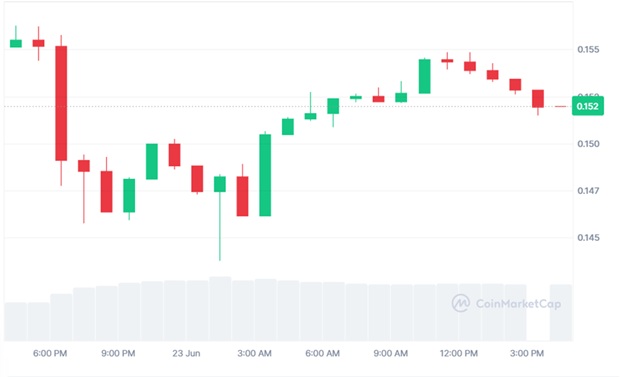
Looking at the charts, Dogecoin may hold the $0.156 support level. It may even recover following a news cycle or a Musk tweet. In the meantime, prospective buyers are constantly searching for new presale possibilities with strong tokenomics and fewer barriers to participation.

$APORK pricing at $0.0269 in presale and staking incentives exceeding 10,000% APY can be a great time for investors wishing to invest before a major listing. Dogecoin may have sparked the meme revolution, but projects like Angry Pepe Fork have the potential to revolutionize what meme coins will look like in the future.