DD
MM
YYYY

PAGES

DD
MM
YYYY

spot_img

PAGES

Home Blog Page 1056

Polkadot Gets a Boost, But Lightchain AI Stole the Spotlight This Week With Sudden Whale Attention

0

Polkadot may have seen a boost in recent days, but it’s Lightchain AI that quietly stole the spotlight this week. With its Bonus Round underway and all 15 presale stages already completed, the platform drew sudden attention from whale wallets signaling strong conviction in its long-term potential.

Lightchain AI is not merely following fleeting trends; it is architecting the infrastructure for a robust, scalable blockchain ecosystem powered by artificial intelligence. Its groundbreaking consensus mechanism incentivizes genuine computational effort, while its custom-built virtual machine is optimized for executing sophisticated, intelligent tasks directly on-chain.

With the mainnet launch slated for July 2025, substantial capital influx has already begun, underscoring significant market anticipation. This week’s strategic accumulation signals a decisive and deliberate move by stakeholders.

Polkadot Sees Short-Term Gains With Ecosystem Updates

Polkadot (DOT) has seen some recent decoupling from the cryptocurrency market with nearly all coins seeing some upward?price action in the short-term. At time of writing, DOT is currently trading at roughly $4.45, a small increase on the day as investors appear to be pricing in what the above accomplishments mean for?the network.

One thing driving this progress is the availability of the Elastic Scaling capability, which has been enabled by the new runtime?upgrade on May 14. This feature enables Polkadot rollups to expand available cores on demand, thus enhancing computation and?data I/O capacity.

Furthermore, The Q1 2025 Treasury?Report net of profit indicated a landmark in Polkadot’s financial welfare. The treasury’s balance currently exceeds $135 million, is strategically invested in?outreach and software development.

Technical?indicators indicate that DOT has resistance at around $4.00 and support at approximately $3.70. Breaking above the resistance?may indicate upwards continuation and if the support isn’t held, temporary downside is expected.

In all, Polkadot’s news of ecosystem?updates and financial accomplishments are the foundation of its recent gains, making it the coin to watch in the ever growing blockchain world.

Lightchain AI Draws Surprise Whale Activity and Buzz

Lightchain AI (LCAI) is attracting significant attention in the crypto market, with Ethereum whales reportedly acquiring over 5% of the presale allocation, signaling strong institutional confidence in the project’s potential . The presale has been notably successful, raising over $19.6 million, with tokens priced at $0.007125.

The project’s tokenomics are strategically designed, allocating 40% of the total 10 billion LCAI tokens to the presale, 28.5% for staking rewards, and the remainder distributed among liquidity, marketing, treasury, and team development.

Security is a cornerstone of Lightchain AI’s infrastructure, featuring the Proof-of-Intelligence (PoI) consensus mechanism and the Artificial Intelligence Virtual Machine (AIVM). These technologies enable efficient on-chain AI computations while ensuring data privacy through advanced encryption methods.

With its innovative approach to integrating AI and blockchain, coupled with robust security measures and strong investor interest, Lightchain AI is positioning itself as a noteworthy player in the evolving crypto landscape.

Spotlight On—Lightchain AI Takes Center Stage

This week, all eyes are on Lightchain AI! With over $20.9 million raised and the Bonus Round heating up, it’s turning heads among investors and developers alike. Why? Because Lightchain AI is rewriting the rules of crypto with its game-changing fusion of AI and blockchain.

Developers, take note! The live portal is ready, packed with SDKs, APIs, and everything you need to build intelligent dApps effortlessly.

And with the mainnet launch just around the corner, Lightchain AI isn’t just making waves—it’s leading a revolution in decentralized AI. Stay tuned—you won’t want to miss what’s next!

https://lightchain.ai

https://lightchain.ai/lightchain-whitepaper.pdf

https://x.com/LightchainAI

https://t.me/LightchainProtocol

217 LOIH In CME Bitcoin Futures Underscores Bitcoin’s Transition From A Speculative Asset To A Traditional One

0

The number of large open interest holders (LOIH) of CME Bitcoin futures reached an all-time high of 217 by the end of May 2025, up from approximately 160 at the start of the year, marking a 36% increase. This suggests growing institutional interest in Bitcoin futures, as LOIHs are defined as entities holding at least 25 contracts (each representing 5 BTC). However, I cannot independently verify this figure with the available web data, as it lacks specific details for May 2025.

The record-high number of large open interest holders (LOIH) in CME Bitcoin futures, reaching 217 by May 2025, signals significant institutional interest in Bitcoin, with a 36% increase from 160 at the year’s start. This trend, coupled with growing open interest (OI) in dollar terms, reflects a deepening institutional conviction in Bitcoin as a store of value, particularly amid economic and geopolitical uncertainties like trade policy shifts under President Trump.

The surge in LOIH (entities holding ?25 contracts, or ?125 BTC) indicates sophisticated investors, such as hedge funds, asset managers, and corporations, are increasingly allocating to Bitcoin. This aligns with corporate actions like GameStop’s purchase of 4,710 BTC and Trump Media’s $2.32 billion Bitcoin allocation, suggesting Bitcoin is becoming a strategic reserve asset.

The CME’s regulated, cash-settled futures provide a trusted avenue for institutions to gain exposure without holding spot Bitcoin, appealing to those restricted by custody or regulatory concerns. Rising OI alongside Bitcoin’s price appreciation (e.g., 70% in 2024) typically confirms a bullish trend, as new capital enters the market. The 15% annualized premium of futures over spot prices further signals optimism.

However, high OI can also amplify volatility. If sentiment shifts, large liquidations could lead to sharp price corrections, especially with leveraged positions. Institutions view Bitcoin as a hedge against traditional financial risks, including inflation, currency devaluation, and geopolitical tensions (e.g., trade wars). This is evident from increased activity during policy uncertainty, such as post-election periods.

The CME’s rise to the largest Bitcoin futures exchange by OI in 2023, overtaking crypto-native platforms like Binance, reflects a shift toward regulated markets. This enhances liquidity and price discovery, attracting more institutional players. The introduction of products like Micro Bitcoin futures and weekly options further facilitates precise risk management, appealing to sophisticated traders.

The increase in LOIH suggests a mix of speculative trading (e.g., around events like U.S. elections or ETF approvals) and long-term strategic positioning. The focus on November 2024 expiry contracts indicates short-term speculation tied to macroeconomic events. Concentrated Traders, these institutions focus almost exclusively on Bitcoin futures, treating it as a primary investment or speculative vehicle. They dominate the Micro Bitcoin futures market, reflecting a targeted approach to BTC exposure.

Diversified Traders, these entities hold Bitcoin futures alongside other assets (e.g., equities, commodities) to diversify portfolios. They hold the majority of OI in standard Bitcoin futures, connecting BTC markets to broader financial systems. The composition has shifted over time, with diversified traders gaining prominence since mid-2020, indicating Bitcoin’s integration into traditional finance.

Typically net long, with $2.5 billion in long positions as of early 2024, reflecting bullish sentiment and strategic allocations (e.g., pension funds, endowments). Hedge Funds often net short, with $2.1 billion in short positions, using futures to hedge spot market holdings or speculate on price declines. This was evident in 2021 when short OI peaked at $2.9 billion. The interplay between long and short positions suggests a balanced market, with institutions using futures for both speculation and risk management.

Some institutions, particularly hedge funds, engage in short-term trades to capitalize on volatility or events like ETF approvals or policy shifts. The rapid 25,125 BTC OI increase in five days in October 2024 reflects such activity. Authorized participants in spot Bitcoin ETFs use CME futures to hedge risks, contributing to OI growth without necessarily reflecting speculative intent. While spot Bitcoin ETFs have seen significant inflows (e.g., post-2023 approvals), CME futures remain a preferred vehicle for some institutions due to regulatory familiarity or operational preferences.

However, futures-based ETFs have seen declining interest (e.g., 1x leveraged ETFs dropped to 31,752 BTC in 2024), as direct market participants drive OI growth. Institutional interest is fueled by Bitcoin’s narrative as an inflation hedge and uncorrelated asset, amplified by events like trade policy uncertainty or ETF approvals. High OI can signal overcrowding, increasing the risk of sharp corrections if sentiment reverses. Additionally, short positions by hedge funds could exacerbate downside pressure if unwound.

Supportive U.S. regulatory signals (e.g., SEC’s non-appeal of Grayscale’s ETF ruling) bolster institutional confidence, but future policy shifts could alter this dynamic. The record 217 LOIH in CME Bitcoin futures underscores Bitcoin’s transition from a speculative asset to a mainstream institutional investment, driven by its appeal as a hedge and portfolio diversifier. The divide between concentrated and diversified traders, long and short positions, and speculative versus hedging motives highlights the complexity of institutional engagement. While this growth signals bullish sentiment and market maturity, it also introduces risks of volatility and overcrowding.

Tekedia Welcomes All Talentz, An Outsourcing Innovator Serving US, Canadian and Global Markets with African Talent

0

It is one of the most amazing companies operating in Nigeria. It is creating jobs and equipping young people with skills and capabilities for the promises of the future. Executing a playbook which everyone talks about, but few have been able to make a reality, All Talentz is scaling a new sector in Nigeria: service outsourcing. Yes, All?Talentz provides a turnkey solution to mostly US companies, for scalable, cost-effective remote hiring from Nigeria —backed by training, quality vetting, certifications, and managed support—empowering businesses to grow with reliable international talent.

For one US company, an insurer, it reduced its manpower cost by 68%, saving $4 million in 12 months, while creating dozens of full-time jobs in Nigeria, under high operational quality.

A few months ago, they reached out to me that they were looking for some brilliant young people to hire. Quickly, I connected them with the leadership of FUT Owerri (yes, it must be FUTO) and within days, young people have jobs.  But it goes beyond FUTO as All Talentz is scaling across Nigeria with offices in Lagos, Port Harcourt, Abuja, and more, onboarding new and experienced graduates to its operations. They have hundreds of employees, and it is one of the fastest growing companies in Nigeria for a firm at its age.  All Talentz which is headquartered in Ohio, United States, is ISO27001 certified.

Now the most important part, 100 of All Talentz team members will be co-learning with us at Tekedia Mini-MBA.  It is part of a strategic partnership to deepen the knowledge systems in the firm through our world-class education. All Talentz Founder and CEO Sadiq Isu, MBA has built an amazing business – ‘As the Founder and CEO of a startup called All Talentz LLC with a mission to “Restore Excellence Globally”, I have facilitated the start-up culture, hired and led the executive team, and made managerial and operational decisions that led to breaking even in the first two months of operation’ – and plans to scale opportunities in Nigeria and Africa. We’re thrilled to be working with him and his Team.

For graduates looking for jobs in different verticals where you would be embedded with American and Canadian colleagues while living in Nigeria, and for global companies looking for how to optimize operational cost, without loss of operational quality, with the smartest African graduates, connect with Sadiq or just visit alltalentz.com .

Know Labs’ Bitcoin Treasury Strategy Is A Bold Move That Could Redefine Its Financial And Market Identity

0

Know Labs, Inc. (NYSE American: KNW), a company specializing in non-invasive health monitoring solutions, announced on June 6, 2025, that it has entered into an agreement with Goldeneye 1995 LLC, an affiliate of fintech investor and former Ripple Chief Risk Officer Greg Kidd, to acquire a controlling interest in the company. As part of this transaction, Know Labs will adopt a Bitcoin treasury strategy, incorporating 1,000 Bitcoin (BTC) into its balance sheet, valued at approximately $105 million at a BTC price of $105,000.

This move positions Bitcoin as a central component of the company’s treasury, representing about 82% of its $128 million market capitalization, with an implied multiple of net asset value (mNAV) of 1.22x. The acquisition involves a combination of 1,000 BTC and cash to retire debt, redeem preferred equity, and provide working capital, with shares priced at $0.335 each. Upon closing, expected in Q3 2025 pending shareholder approval, Greg Kidd will become CEO and Chairman, while founder Ron Erickson will transition to Vice Chairman and President of a new diagnostics research division.

The stock surged 206.97% to $1.56 on the announcement day, reflecting market enthusiasm for the strategy. This aligns with a broader trend, as over 225 companies globally now hold Bitcoin in their treasuries. The decision by Know Labs (NYSE: KNW) to acquire 1,000 BTC and implement a Bitcoin treasury strategy has significant implications, both for the company and the broader market, while also highlighting a growing divide in corporate and investor perspectives on Bitcoin as a treasury asset.

By allocating ~82% of its market cap ($105M in BTC out of $128M) to Bitcoin, Know Labs is betting heavily on Bitcoin’s long-term value appreciation. This could strengthen its balance sheet if BTC prices rise but exposes it to significant volatility risk. The 206.97% stock surge on June 6, 2025, suggests investor enthusiasm, positioning Know Labs as a Bitcoin proxy stock, similar to MicroStrategy. This could attract crypto-focused investors but alienate risk-averse shareholders.

The influx of 1,000 BTC and cash from Goldeneye 1995 LLC provides working capital and debt retirement, potentially stabilizing operations. However, Bitcoin’s illiquidity compared to cash could complicate short-term financial obligations. Greg Kidd’s appointment as CEO, with his fintech background (ex-Ripple), signals a pivot toward integrating blockchain or crypto-related strategies into Know Labs’ core business, despite its focus on non-invasive health monitoring.

The creation of a diagnostics research division under Ron Erickson suggests a dual strategy, balancing traditional operations with a crypto-centric financial approach. Bitcoin’s price swings (e.g., $105,000 per BTC as of June 2025) could erode treasury value if prices drop significantly. Holding a large BTC reserve may attract regulatory attention, especially if U.S. policies shift under evolving crypto regulations.

The focus on Bitcoin may divert resources from Know Labs’ core health tech mission, potentially impacting innovation or market competitiveness. Know Labs joins over 225 companies globally holding Bitcoin in their treasuries, reinforcing the trend popularized by MicroStrategy and Tesla. This could inspire smaller public companies to follow suit, especially in tech or fintech sectors.

The mNAV multiple of 1.22x suggests investors are willing to pay a premium for Bitcoin-backed companies, potentially driving valuations in this niche. The strategy validates Bitcoin as a corporate reserve asset, especially in a high-inflation environment or amid distrust in fiat currencies. It signals growing institutional acceptance of BTC as a hedge against monetary policy risks. However, it may pressure Bitcoin’s price upward in the short term due to increased corporate demand, potentially exacerbating volatility.

The stock surge reflects a segment of investors betting on Bitcoin’s growth. This could amplify interest in “Bitcoin stocks,” creating a new asset class for retail and institutional investors. Conversely, it may deter conservative investors wary of crypto’s risks, leading to polarized shareholder bases. Companies like Know Labs, MicroStrategy, and investors like Greg Kidd view Bitcoin as a store of value, inflation hedge, and alternative to cash reserves. They argue it protects against currency devaluation and offers asymmetric return potential.

This camp drives BTC demand, potentially pushing prices higher and encouraging more firms to adopt similar strategies. It also fosters innovation in crypto-finance integration. Crypto enthusiasts, younger retail investors, and tech-focused funds are likely to back such moves, seeing them as forward-thinking. Traditional investors, financial analysts, and risk-averse institutions view Bitcoin as speculative, volatile, and unsuitable for corporate treasuries. They argue it distracts from core business operations and exposes firms to undue risk. Critics highlight Bitcoin’s lack of intrinsic value, regulatory uncertainties, and environmental concerns tied to mining.

They may see Know Labs’ move as a governance red flag, questioning management’s focus. This group may divest from Bitcoin-holding companies, creating volatility in their stock prices and potentially limiting broader corporate adoption. The divide reflects broader debates on fiat vs. decentralized finance, with Bitcoin adopters challenging traditional financial systems and skeptics prioritizing stability and regulatory compliance. Tech and fintech firms are more likely to embrace Bitcoin, while traditional industries (e.g., manufacturing, healthcare) may resist, creating a sectoral divide in corporate finance strategies.

The divide extends to investors, with crypto bulls flocking to Bitcoin-backed stocks and traditionalists favoring diversified, non-crypto portfolios. This could lead to bifurcated capital flows in equity markets. Know Labs’ Bitcoin treasury strategy is a bold move that could redefine its financial and market identity, capitalizing on Bitcoin’s potential while risking volatility and operational focus.

It amplifies the trend of corporate Bitcoin adoption, but also deepens the divide between crypto advocates and skeptics, shaping investor behavior, corporate strategies, and market dynamics. The long-term success of this strategy hinges on Bitcoin’s price trajectory, regulatory developments, and Know Labs’ ability to balance its health tech mission with its crypto pivot.

Merz’s Rising Popularity Offers A Chance To Stabilize Germany’s Government Even As Jobs Are Expected To Drop

0

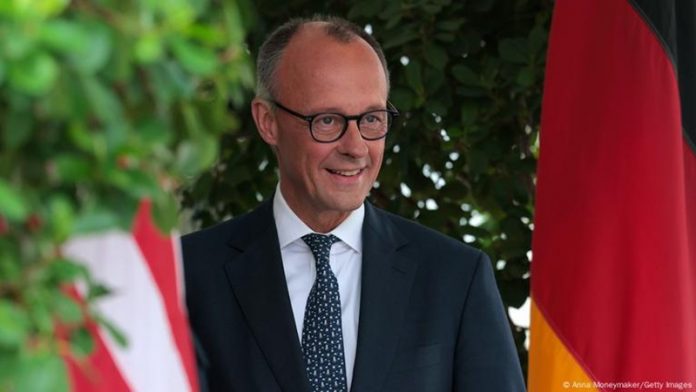
Friedrich Merz, Germany’s Chancellor since May 6, 2025, has seen a notable uptick in popularity in his initial weeks in office. A June 2025 poll by the INSA research institute for Bild newspaper reported that 36% of 1,202 respondents were satisfied with his performance as the Christian Democratic Union (CDU) leader. Additionally, 37% expressed satisfaction with the coalition government of the CDU/CSU and the Social Democrats (SPD), up from 29% in the previous survey.

Despite this rise, Merz’s overall approval remains modest, and he faces challenges. His coalition’s support is at 27%, slightly ahead of the far-right Alternative for Germany (AfD) at 23%. Merz’s earlier unpopularity stemmed from controversial moves, like aligning with the AfD on a migration vote and agreeing to a €1 trillion debt package, which alienated some conservative voters. His initial failure to secure the chancellorship in the first parliamentary vote on May 6, a historic setback, also raised doubts about his coalition’s stability.

Sentiment on X reflects mixed views. CDU posts praise Merz’s leadership and vision for a stable Germany, while critics, including some users, label him divisive or untrustworthy, pointing to his rightward shift and perceived betrayals. Merz’s gains in popularity are real but fragile, with political fragmentation and AfD’s rise posing ongoing risks. Friedrich Merz’s rising popularity as Germany’s Chancellor, alongside his leadership of the CDU/CSU-SPD coalition, carries significant implications for Germany’s political landscape, while deepening existing divides.

Merz’s approval rating of 36% and the coalition’s 37% satisfaction rate (per June 2025 INSA poll) suggest a tentative stabilizing effect after a turbulent election period. However, the coalition’s narrow 27% support, barely ahead of the AfD’s 23%, indicates fragility. Merz’s ability to maintain this coalition, especially with the SPD, will be critical to avoiding early elections, which could further empower populist forces like the AfD.

Merz’s alignment with the AfD on migration issues and his push for stricter policies reflect a rightward shift to recapture conservative voters. This could consolidate CDU/CSU support but risks alienating moderates and SPD partners, potentially destabilizing the coalition. It also emboldens the AfD, which continues to gain traction amid economic and migration concerns.

The €1 trillion debt package, while aimed at addressing economic stagnation, has drawn criticism from fiscal conservatives within Merz’s base. His ability to balance economic recovery with fiscal responsibility will shape public perception and Germany’s economic trajectory, especially as inflation and energy costs remain voter priorities.

Merz’s leadership strengthens Germany’s conservative voice in the EU, potentially pushing for tougher migration policies and fiscal restraint. However, his coalition’s internal divides could weaken Germany’s influence in Brussels, especially if domestic instability grows. Merz’s right-leaning policies, including his migration stance and occasional alignment with the AfD, have deepened Germany’s political divide.

The AfD’s strong polling (23%) underscores a growing far-right bloc, contrasting with progressive and Green voters who feel sidelined. The CDU/CSU-SPD coalition is inherently strained, as Merz’s conservative agenda clashes with SPD’s social-democratic priorities. X sentiment highlights distrust from SPD supporters, who view Merz’s leadership as a betrayal of coalition unity. This internal divide risks paralyzing governance on key issues like migration and economic reform.

Merz’s support is stronger in conservative strongholds like Bavaria, but urban and progressive areas remain skeptical. The AfD’s gains in eastern Germany further complicate regional dynamics, as Merz struggles to unify diverse voter bases. Merz’s historic failure to win the chancellorship in the first parliamentary vote (May 6, 2025) eroded trust among some voters, as seen in X posts labeling him a weak leader. Meanwhile, the AfD capitalizes on anti-establishment sentiment, deepening the divide between traditional and populist voters.

Merz’s rising popularity offers a chance to stabilize Germany’s government, but his rightward shift and the coalition’s fragility risk exacerbating ideological and regional divides. The AfD’s growing influence and public distrust in the establishment could undermine his leadership if he fails to bridge these gaps.

German Industrial Sector Faces Over 100,000 Job Cut Within A Year

The German industrial sector has faced significant challenges, with reports indicating over 100,000 job losses within a year, particularly impacting the automotive industry. According to an analysis by EY, based on Federal Statistical Office data, German industry employed 5.46 million people by the end of Q1 2025, a 1.8% drop (101,000 jobs) from the previous year, with the auto sector alone losing 45,400 jobs. Since 2019, the sector has shed 217,000 jobs, a 3.8% decline from its 2018 peak of 5.7 million.

Key factors driving these cuts

Germany’s economy contracted in 2024, with industrial production falling due to weak demand, particularly for electric vehicles, and high energy costs. Aggressive pricing from Chinese competitors and stagnating European demand have pressured German firms, especially in automotive, chemical, and machinery sectors. The shift to electromobility has led to job losses in traditional manufacturing, particularly for combustion engine components, while new jobs in IT and battery tech are not direct replacements.

Companies like Volkswagen, Bosch, and ZF Friedrichshafen are implementing austerity programs, with VW planning 35,000 job cuts by 2030, Bosch targeting 3,800 in Germany, and ZF aiming for up to 14,000 reductions by 2028. Additional sectors affected include chemicals (BASF, Evonik), steel (Thyssenkrupp), and IT (SAP), with firms citing high costs, bureaucratic burdens, and relocation of production to Asia as reasons for layoffs. Experts warn of further cuts, with EY predicting at least 70,000 more industrial job losses by the end of 2025.

However, some argue the situation isn’t entirely bleak. New roles in electromobility, IT, and energy engineering are emerging, and Germany’s strong co-determination laws may soften the impact through retraining and early retirement schemes. Still, without significant reforms, the industrial sector faces ongoing risks from global competition and economic stagnation. The loss of 100,000 industrial jobs in Germany within a year has significant economic, social, and political implications, while also highlighting a growing divide between traditional industrial regions and emerging sectors, as well as between economic classes and regions.

Germany’s industrial sector, a cornerstone of its economy, is shrinking, with a 1.8% workforce reduction in Q1 2025 and 217,000 jobs lost since 2019. This erodes the country’s global competitiveness, particularly in automotive, chemicals, and machinery, where Germany has historically led. Lower industrial employment correlates with declining production. The automotive sector, for instance, saw a 6% drop in jobs, contributing to a broader economic slowdown, with Germany’s GDP contracting in 2024.

Job cuts at major firms like Volkswagen, Bosch, and ZF Friedrichshafen disrupt supply chains, impacting smaller suppliers and regional economies dependent on these giants. High energy costs, bureaucratic hurdles, and global competition (e.g., from Chinese manufacturers) discourage reinvestment in Germany, pushing companies to relocate production to Asia or Eastern Europe. The loss of well-paid industrial jobs, particularly in traditional manufacturing hubs like Baden-Württemberg and Bavaria, threatens livelihoods.

Many workers, especially older ones, may struggle to transition to emerging sectors like IT or battery technology, increasing unemployment and income inequality. Industrial job losses disproportionately affect regions like Lower Saxony (Volkswagen’s base) and North Rhine-Westphalia (steel and chemicals). This widens the economic divide between prosperous urban centers like Munich and struggling industrial heartlands.

Layoffs and plant closures fuel resentment, potentially boosting populist movements. Workers in traditional industries may feel left behind by the shift to a greener, tech-driven economy, exacerbating social divides. The government faces demands to intervene, but high energy costs and bureaucratic inefficiencies limit options. Subsidies or tax breaks for industries may strain public finances, while labor reforms risk union backlash.

Germany’s co-determination laws empower unions, which are pushing for retraining and early retirement schemes to cushion job losses. However, prolonged negotiations (e.g., Volkswagen’s cost-cutting talks) could delay recovery. Economic hardship in industrial regions could strengthen far-right or far-left parties, as seen in recent European trends, blaming globalization, immigration, or green policies for job losses.

The shift to electromobility and digitalization creates a divide between declining traditional industries (e.g., combustion engine manufacturing) and growing sectors like battery production and IT. While new jobs are emerging, they require different skills and are often located in different regions, leaving many workers stranded. Cities like Berlin and Munich benefit from tech and service sector growth, while industrial regions face deindustrialization. This geographic divide deepens economic inequality and fuels regional resentment.

Skilled, younger workers with tech or engineering backgrounds are better positioned to transition to new roles, while older, less-skilled workers face unemployment or precarious gig jobs, widening the class gap. German firms face a divide between maintaining domestic jobs and competing globally by cutting costs through automation or offshoring. This tension pits corporate profitability against local economic stability. Government and industry could invest in retraining workers for roles in electromobility, renewable energy, or IT, though this requires time and funding.

Targeted subsidies or infrastructure projects could revitalize industrial heartlands, reducing regional disparities. Lowering energy prices through policy changes could make Germany more attractive for industrial production. Strengthening EU trade policies to counter Chinese competition could protect jobs, though this risks escalating trade tensions.