DD
MM
YYYY

PAGES

DD
MM
YYYY

spot_img

PAGES

Home Blog Page 1057

FTC Clears $13.5bn Omnicom Merger—But Bans Bias Against ‘Ideological’ Platforms Like X

0

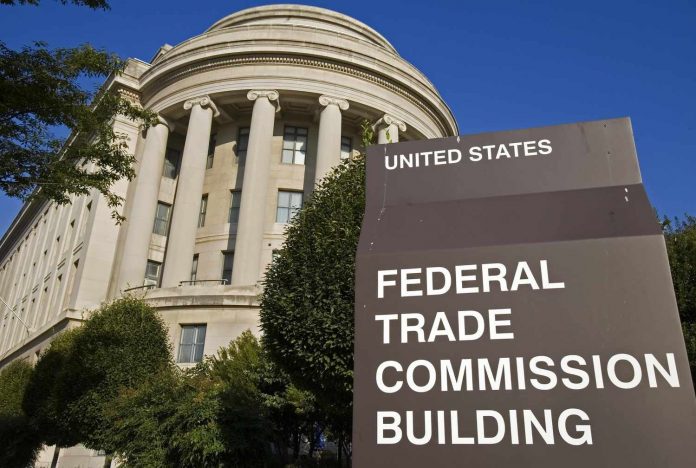
The U.S. Federal Trade Commission, now under an all-Republican leadership, has given conditional approval to a $13.5 billion merger between advertising giants Omnicom and Interpublic Group—on the unusual condition that the newly formed company cannot direct advertisers to avoid media platforms based on political or ideological viewpoints.

The FTC’s proposed consent order, made public Monday, targets concerns that media-buying power could be weaponized to block ad spending on platforms such as Elon Musk’s X (formerly Twitter), which lost major advertisers in 2023 after some ads appeared next to pro-Nazi and extremist content.

The merger combines the third- and fourth-largest ad-buying agencies in the U.S. and could reshape how billions of dollars in digital ad spending are allocated across media platforms.

“With one fewer major competitor in the Media Buying Services industry… the remaining competitors have fewer impediments to coordinating the placement of advertisements,” the FTC wrote in its complaint, warning against consolidated control that could stifle dissenting platforms.

A Victory for Musk, A Warning to Advertisers

The order is widely seen as a win for Elon Musk, who has claimed that advertisers engaged in an “illegal boycott” against X for ideological reasons. Musk has repeatedly targeted the Global Alliance for Responsible Media (GARM)—a World Federation of Advertisers initiative that guided brands on “brand safety” by avoiding ads alongside harmful or politically extreme content.

GARM, which played a central role in ad content moderation, recently disbanded due to lack of resources and growing legal pressure, including a pending antitrust case filed by Musk’s X.

The FTC referenced GARM in its complaint, raising concerns that consolidating Omnicom and IPG would give them similar power to control advertising access through coordinated policies that could edge out controversial but legal content.

What’s In the FTC Order?

The proposed consent decree, spearheaded by Republican Chair Andrew Ferguson and Commissioner Melissa Holyoak, bars Omnicom-IPG from:

  • Maintaining any internal policy that refuses to do business with advertisers based on political or ideological views.
  • Steering ad dollars away from media publishers based on the publishers’ political or ideological alignment, unless explicitly requested by the client.
  • Punishing platforms like X for their content unless clients independently demand such exclusions.

Advertisers will still be allowed to instruct the company to avoid certain websites or platforms for brand safety reasons. However, Omnicom cannot proactively enforce those exclusions across clients based on political content alone.

“Omnicom-IPG may choose with whom it does business and follow any lawful instruction from its customers,” Ferguson said in a statement. “No one will be forced to have their brand appear in venues they do not wish. But the firm cannot impose those values unilaterally.”

A Politicized FTC—and a Legal Gray Zone

The decision comes amid a political reshaping of the FTC under President Donald Trump. The agency, typically comprised of five members representing both parties, now operates with just three Republicans after Trump attempted to fire the remaining Democratic commissioners. Commissioner Mark Meador recused himself from the Omnicom-IPG decision, leaving Ferguson and Holyoak to approve the order.

This partisan alignment has raised concerns that the FTC’s traditionally bipartisan antitrust oversight is increasingly reflecting Republican cultural grievances—especially as the order leans into longstanding GOP complaints of “viewpoint discrimination” by Big Tech and mainstream media.

While the U.S. Supreme Court has repeatedly upheld the right to boycott, especially in political contexts, the FTC appears to be drawing a distinction between coordinated business decisions by dominant players and individual brand choices.

Ripple Effects on the Ad Industry

The ruling will likely ripple through the $1 trillion global advertising industry. Media buyers, brands, and publishers now face a less predictable regulatory landscape. The case may also set a precedent for future government intervention in content moderation and ad placement decisions, blurring the lines between business discretion and viewpoint discrimination.

Advertisers already wary of reputational risk must now tread carefully: while they retain the right to choose their media platforms, agencies like Omnicom cannot enforce blanket bans on platforms like X unless the advertiser explicitly instructs them to.

Bottom Line

The FTC’s greenlight of the Omnicom-IPG merger comes with a sharp caveat: ad giants must serve clients, not ideologies. As ideological debates reshape the digital economy, the future of ad placement may now rest on the fine print of agency contracts—and the ideological preferences of clients themselves.
Coinbase To Delist Helium, Render, Ribbon Finance and Synapse On June 26th

0

Coinbase announced it will suspend trading for Helium Mobile (MOBILE), Render (RNDR), Ribbon Finance (RBN), and Synapse (SYN) on June 26, 2025, at 2 p.m. ET. The delisting is due to newer versions of these tokens being released, rendering the original versions non-compliant with Coinbase’s listing standards. Trading for these assets is currently in limit order mode, allowing users to place, cancel, or match orders until the suspension date. Users can still withdraw these tokens to external wallets after trading halts.

The decision led to price drops, with SYN falling up to 15%, RNDR 8%, MOBILE 12%, and RBN 14%. Coinbase has not confirmed support for the upgraded token versions. Investors should monitor updates and consider transferring assets to platforms supporting the new versions or selling before the deadline to avoid liquidity issues. The delisting of these tokens from Coinbase, effective June 26, 2025, has significant implications for investors, projects, and the broader crypto market.

The announcement triggered immediate price drops: SYN (-15%), RNDR (-8%), MOBILE (-12%), and RBN (-14%). These declines reflect reduced investor confidence and anticipated liquidity challenges. Post-delisting, trading on Coinbase will cease, potentially limiting liquidity as investors may struggle to find alternative platforms supporting these legacy tokens. This could lead to further price depreciation if holders rush to sell before the deadline.

Users retaining these tokens after June 26 can withdraw them to external wallets, but without Coinbase’s trading support, market access may be restricted, particularly for retail investors unfamiliar with decentralized exchanges (DEXs) or other platforms. The delisting stems from newer token versions being released, which the original tokens (MOBILE, RNDR, RBN, SYN) no longer meet Coinbase’s listing standards. This suggests projects are migrating to updated protocols or blockchains (e.g., RNDR’s planned shift to Solana as RENDER).

Projects must communicate clearly about token swaps or migration processes to maintain community trust. Lack of clarity could harm their reputation and adoption. Coinbase’s decision not to confirm support for the upgraded tokens introduces uncertainty, potentially forcing projects to seek listings on other exchanges, which may have less reach or credibility. Investors face a tight window (until June 26, 2025, 2 p.m. ET) to trade these tokens on Coinbase in limit order mode. They must decide whether to sell, hold, or transfer to wallets/exchanges supporting the legacy or upgraded tokens.

Risks include missing the trading deadline, leading to stranded assets, or transferring to platforms with lower security or liquidity. Investors unfamiliar with token migrations may face losses if they fail to swap for new versions. The delisting highlights the importance of staying informed about project updates, as token upgrades often require proactive action (e.g., swapping tokens via official project channels).

Coinbase’s delisting reinforces its commitment to regulatory compliance and listing standards, which may strengthen its position amid U.S. regulatory scrutiny. However, it risks alienating users who prefer access to a wider range of tokens. The move could drive trading volume to competing exchanges (e.g., Binance, Kraken, or DEXs like Uniswap) that support these tokens or their upgraded versions, fragmenting liquidity across platforms.

It underscores the challenges of token upgrades in crypto, where technical improvements can disrupt market access and user experience, particularly for retail investors. Retail Investors often less informed about token migrations, retail users on Coinbase may panic-sell or miss migration deadlines, incurring losses. They rely heavily on centralized exchanges for simplicity, and delistings complicate their experience.

Institutional Investors likely better equipped to navigate delistings, institutions may already hold tokens in private wallets or have access to alternative platforms. They may view price dips as buying opportunities for upgraded tokens on other exchanges. Teams behind MOBILE, RNDR, RBN, and SYN may feel pressured to accelerate token migration processes and secure listings for new versions elsewhere. They risk losing credibility if migrations are poorly executed or if major exchanges like Coinbase don’t support the upgrades.

Coinbase prioritizes compliance and user protection, but its conservative approach may alienate projects and users seeking broader token access. Competing exchanges could capitalize by listing both legacy and upgraded tokens, gaining market share. Delistings like this highlight the gatekeeping role of CEXs, which control token access based on their standards. This can frustrate users but reinforces trust in regulated platforms.

DEXs like Uniswap or SushiSwap may see increased activity as users seek alternatives to trade these tokens. However, DEXs require technical know-how and carry risks like high gas fees or scams, creating a barrier for less experienced users. Coinbase’s alignment with regulatory standards appeals to users and regulators in jurisdictions like the U.S., where compliance is critical. Delistings signal a maturing market prioritizing stability over speculative assets.

Decentralized finance (DeFi) enthusiasts may view Coinbase’s decision as overly cautious, preferring platforms that embrace innovation and support all token versions. This divide reflects broader tensions between centralized control and crypto’s ethos of decentralization. Monitor project announcements for token migration details. Consider selling before June 26 if uncertain about future liquidity, or transfer tokens to wallets/exchanges supporting the assets. Research platforms like Binance, Kraken, or DEXs for continued trading.

This delisting highlights the evolving nature of crypto markets, where technical upgrades, regulatory pressures, and platform policies create both challenges and opportunities. The divide between stakeholders underscores the need for clear communication and adaptability in navigating these changes.

Norway Cracks Down on Crypto Mining—Are Meme Coins Investor’s Next Big Move for 2025? This Frog Coin Says Yes!

0

Norway Bans Crypto Mining, Shaking Up Crypto Market

Norway’s government has stunned the crypto community by deciding to ban cryptocurrency mining, particularly targeting proof-of-work systems such as Bitcoin, Ethereum, and Dogecoin. Driven by sustainability concerns, Norwegian officials argue that crypto mining consumes excessive electricity and generates a substantial carbon footprint, contradicting the nation’s environmental ambitions. Minister of Climate and Environment Espen Barth Eide explained the necessity of diverting Norway’s renewable energy resources to greener industries, citing long-term climate objectives as the primary motivator for this controversial decision.

Ministers Karianne Tung and Terje Aasland further emphasized that these mining operations consume enormous amounts of power yet offer minimal local economic benefits, citing minimal job creation and increasing community noise complaints. The decision aligns with Norway’s commitment to prioritizing sustainable energy usage, significantly shifting resources towards essential sectors such as manufacturing, heating, and AI infrastructure.

Historically, Norway’s abundant renewable energy, primarily derived from hydroelectric dams and increasingly supplemented by wind farms, had attracted global crypto-mining operations. At its peak, Norway’s crypto miners contributed significantly to the global Bitcoin hash rate, leveraging low-cost renewable energy resources. The abrupt shift toward banning these operations highlights a strategic reevaluation. Prior actions, such as the elimination of tax incentives for energy-intensive data centers in 2022 and heightened regulatory oversight through mandatory registration of mining facilities, have laid the groundwork for this comprehensive ban.

Global Regulatory Context & Market Reaction

Norway’s stance mirrors a broader global trend, following similar moves by countries such as China, which imposed a nationwide mining ban in 2021, and regions within Russia that have introduced severe restrictions on mining through 2031. Additionally, parts of the European Union have increased scrutiny over energy-intensive crypto mining practices under its Markets in Crypto Assets (MiCA) regulations.

The immediate reaction from the crypto community was swift and critical. Prominent crypto influencer BitBoy Crypto characterized Norway’s decision as a regressive measure, suggesting it could potentially redirect investments to more crypto-friendly jurisdictions, negatively impacting Norway’s tech innovation landscape. Market impacts were immediate, with Bitcoin and other major cryptocurrencies experiencing brief price fluctuations. This move has also triggered wider concerns about the possibility of similar restrictions being implemented by other environmentally-conscious countries, potentially leading to increased uncertainty and volatility within the global crypto market.

Meme Coins Gain Attention Amid Regulatory Pressure

As governments worldwide tighten regulations, meme coins like Neo Pepe Coin ($NEOP) have started capturing significant investor attention. Positioned strategically as a top pepe coin, Neo Pepe Coin stands out due to its innovative governance and community-driven initiatives.

The Neo Pepe presale, touted as one of the best crypto presales currently available, employs a progressive, 16-stage pricing model that incrementally increases token prices to reward early adopters. Early stages offered tokens as low as $0.054230, escalating gradually to $0.162690, generating intense excitement and urgency among investors. This innovative presale structure, combined with a robust community and clear governance, positions Neo Pepe as an attractive alternative amidst growing scrutiny of traditional cryptocurrencies.

Crypto Vlog delivers a compelling new video unpacking Neo Pepe’s presale, exploring in detail why investors and crypto enthusiasts alike are buzzing about its standout tokenomics, innovative liquidity strategies, and thoughtfully designed community governance—definitely worth a watch.

Top 3 Reasons Investors Are Flocking to Neo Pepe Coin

  1. Innovative Governance: Neo Pepe Coin emphasizes genuine decentralization and transparent community governance through the advanced NEOPGovernor smart contract. All significant decisions require secure, community-approved, on-chain voting.
  2. Sustainable Liquidity: Neo Pepe’s auto-liquidity mechanism ensures permanent liquidity on decentralized exchanges such as Uniswap. By burning LP tokens, it guarantees enhanced market stability and investor confidence.
  3. Community Momentum: With active engagement across platforms like Telegram and Twitter, Neo Pepe has fostered a strong community that is instrumental in driving adoption and growth.

Why Now is  Neo Pepe’s Explosive Moment

Considering global regulatory shifts, investing in a community-focused, environmentally sustainable cryptocurrency like Neo Pepe Coin is increasingly appealing. Investors seeking alternatives amid heightened environmental and regulatory concerns might want to get a little Neo Pepe sooner rather than later.

Participating in Neo Pepe Coin is straightforward—investors can easily join by visiting the official Neo Pepe website, contributing through supported cryptocurrencies like ETH or USDT, and tracking their token allocation in real time. Given the project’s growing community and momentum, Neo Pepe’s presale could be one of this year’s most significant crypto investment opportunities.

Discover more about Neo Pepe on their Official Website or stay updated through their socials

Get Started with $NEOP

Trump’s Youngest Makes Crypto Headlines—Now There’s Another Crypto Presale Grabbing Market Attention

0

Unpacking Speculation Between Barron Trump & Crypto Involvement

Recently, speculation surged across social media and financial circles regarding Barron Trump, the youngest son of former President Donald Trump, reportedly making millions from family-associated cryptocurrency ventures. The rumors emerged after various claims spread rapidly online, implying significant financial gains linked to digital assets allegedly promoted or launched by the Trump family.

The Hindustan Times investigated the validity of these claims, discovering that they largely originated from misleading content and unfounded social media posts. No credible evidence suggests that Barron Trump, currently 19, actively engaged in or profited from such cryptocurrency ventures. According to reputable fact-checking sources, the Trump family itself has neither endorsed nor officially launched any cryptocurrency project that resulted in substantial profits for Barron or any other family member.

In-depth scrutiny revealed that the confusion primarily stemmed from online advertisements and deceptive clickbait strategies. Such digital marketing campaigns falsely hinted at endorsements from prominent figures like Donald Trump and his family, including Barron, aiming to lure unsuspecting investors into dubious crypto schemes. These schemes frequently exploit celebrity images without consent, creating illusions of credibility and trustworthiness.

Moreover, further research highlighted regulatory warnings issued by the Securities and Exchange Commission (SEC) regarding the deceptive use of celebrities’ images and false endorsements in crypto promotions. The SEC strongly advises investors to verify all investment claims independently and remain cautious about unsolicited investment opportunities promoted through social media.

Cautionary Tale of Celebrity Endorsements in Crypto

Barron Trump isn’t the only public figure whose name has been misused in crypto scams. The phenomenon of exploiting celebrity names to attract investment in fraudulent cryptocurrency schemes is widespread and alarmingly effective. High-profile cases have involved stars like Elon Musk, Kim Kardashian, and even reputable financial figures like Warren Buffett. These schemes leverage the influence and trust associated with famous individuals, manipulating public perception and enticing inexperienced investors into risky or fraudulent investments.

One notorious incident involved Kim Kardashian, who was fined by the SEC for promoting EthereumMax without adequately disclosing her financial involvement. Similarly, fake endorsements falsely attributed to Elon Musk have repeatedly surfaced online, leading to significant financial losses for those who fell victim. These deceptive practices not only harm investors financially but also damage the reputations of the celebrities involved, even if unintentionally.

Regulators worldwide have stepped up efforts to combat these deceptive tactics. Agencies like the SEC and Federal Trade Commission (FTC) actively pursue cases involving fraudulent crypto promotions and issue regular public warnings. Investors are advised to exercise heightened vigilance, verify claims independently, and report suspicious activities promptly.

Another Crypto Story You Should Follow Beyond Recent Trump Movements

While the internet buzzed about Barron Trump’s alleged crypto profits, savvy investors turned their attention to what is emerging as the best crypto presale in the memecoin space—Neo Pepe Coin ($NEOP). This isn’t just another cryptocurrency; it’s quickly establishing itself as the top pepe coin, earning comparisons to the most successful meme tokens in crypto history.

Neo Pepe is currently captivating crypto enthusiasts as it heads towards its 4th presale stage, designed to maximize urgency, excitement, and rewards for early supporters. Here are five key reasons investors are taking notice:

  1. Progressive Stages: The presale unfolds in 16 progressive stages, incrementally raising the token price and capping allocations to foster exclusivity.
  2. Community Governance: Neo Pepe empowers holders through an innovative DAO (Decentralized Autonomous Organization), enabling community-driven decisions on liquidity allocation and exchange listings.
  3. Advanced Tokenomics: A 2.5% transaction fee is automatically converted into liquidity on Uniswap, with liquidity provider tokens permanently burned to ensure long-term stability and protect against volatility.
  4. Security and Transparency: Neo Pepe utilizes Chainlink oracles for accurate token valuation and OpenZeppelin’s robust, audited smart contracts to ensure maximum security.
  5. Gradual Token Unlock: Presale tokens unlock gradually, mitigating market manipulation and maintaining investor confidence.

Crypto Goat’s recent deep dive offers a sharp and balanced perspective on the Neo Pepe Presale, carefully unpacking what genuinely sets this memecoin apart—from its transparent tokenomics and innovative liquidity strategy to its robust community governance model—providing crypto investors valuable insights to evaluate its potential carefully and confidently.

Amidst the crypto market buzz and noise, discerning investors recognize that now might be the opportune moment—”you might want to get a little Neo Pepe”—positioning yourself ahead in what could become the best pepe coin presale of the year.

To participate or learn more about why Neo Pepe is currently seen as the top pepe coin, visit their official website

Get Started with $NEOP

If Shiba Inu (SHIB) Retakes Its ATH Price and Little Pepe (LILPEPE) Soars to $0.15, Here’s How Much You’ll Make from Just $800 in Each

0

The cryptocurrency market is heating up in 2025. While many investors are betting on the return of big names like Shiba Inu (SHIB), others are looking at the next meme monster, Little Pepe (LILPEPE). What will happen if both of these tokens hit significant price levels again? Meme coins have a history of giving huge returns. What would your $800 investment in each project be worth if SHIB returned to its all-time high and LILPEPE increased to $0.15?

The Case for Shiba Inu (SHIB): A Comeback to Its Best?

In October 2021, Shiba Inu surged to the ATH of $0.00008845 from mere fractions of a penny, capturing headlines across the country. At its highest point, some who bought it early turned hundreds of dollars into millions. Today, SHIB is worth approximately $0.00001106 and has a market capitalization of around $6.5 billion. It’s a long way from its all-time high (ATH). Still, a retest of the all-time high (ATH) is possible due to its vast and enthusiastic community, developer work on Shibarium (its Layer 2 solution), and the potential for another meme coin wave.

What would a $800 investment look like if SHIB returns to its all-time high (ATH)?

You could buy the following with $800 at the current price of $0.00001106:

$800 ÷ $0.00001106 ? 72,342,180 SHIB tokens

If SHIB goes back up to $0.00008845, your tokens would be worth:

72,342,180 × $0.00008845 ? $6,398.61

That’s about an 8x return, which is an excellent gain, especially for a token that has so many in circulation.

What If LILPEPE Hits $0.15? The Breakout Story

Now let’s talk about the new powerhouse, Little Pepe (LILPEPE).

LILPEPE is not just riding the trend like other meme coins; it is also constructing its Layer 2 EVM-compatible blockchain, called the Little Pepe Chain, just for meme tokens. The initiative has eliminated the conventional pump-and-dump model by making it tax-free, bot-proof, and a Launchpad for new meme projects. This makes the meme coin world more useful. It’s currently in Stage 3 of its presale, and 1 LILPEPE costs $0.0012. It’s currently more than 66% sold out and has raised more than $1.6 million. The pricing for the following stage is $0.0013, and the ultimate launch is projected to be $0.003.

What happens if this token hits $0.15? Many community members believe this is plausible due to its low market cap, ambitious roadmap, and growing enthusiasm.

You can get the following for $800 at the presale price of $0.0012:

$800 ÷ $0.0012 ? 666,666 Tokens for LILPEPE

If LILPEPE hits $0.15, those tokens would be worth:

666,666 x $0.15 = $100,000.

That’s a 12,400% return, which is enough to turn $800 into six figures if the roadmap is followed and the market moves in the same way that it did for SHIB and PEPE.

Comparing $800 in SHIB to $800 in LILPEPE

Token Current Price Price Target Tokens with $800 Value at Target Price ROI
Shiba Inu $0.00001106 $0.00008845 (ATH) ~72.34M SHIB    ~$6,398 ~700%
Little Pepe $0.0012 $0.15 ~666,666 LILPEPE    $100,000 ~1240%


There is a vast difference in the possible ROI. If SHIB returns to its former glory, it could be a good investment. But if you get in early and hold on through the hype cycle, LILPEPE could change your life.

How To Get in on the LILPEPE Presale

Here is how to get a piece of LILPEPE before it goes on sale to the public:

  • Go to the official website at https://littlepepe.com
  • Link your wallet: MetaMask, Trust Wallet.
  • Select your preferred payment method: ETH or USDT
  • Enter the amount you want to invest, agree to the terms, and then confirm.
  • You can see your tokens on the presale dashboard and claim them after the launch. 

Risk vs. Reward

SHIB has demonstrated its potential to surge significantly, and a retest of its all-time high would benefit those who believe in it. LILPEPE is the more interesting prospect right now for individuals seeking to generate substantial income quickly, as it combines meme appeal with genuine blockchain innovation. The two outcomes are very different, with just $800. In a market where virality and early momentum are crucial, the next LILPEPE bull run might be discussed in 2026, just as people discussed SHIB in 2021. If you spend $800 on memes, ask yourself if you want a rebound or a rocket.


For more information about Little Pepe (LILPEPE) visit the links below:

Website: https://littlepepe.com

Whitepaper: https://littlepepe.com/whitepaper.pdf

Telegram: https://t.me/littlepepetoken

Twitter/X: https://x.com/littlepepetoken