DD
MM
YYYY

PAGES

DD
MM
YYYY

spot_img

PAGES

Home Blog Page 1064

Join Earn Mining and earn up to $1,800 per day

0

Passive income is no longer just a buzzword – it can completely change your life if you want to make money on your own terms. Whether you want to work from home or focus on your hobbies, building a passive income stream is a skill worth mastering.

I’d love to offer you the most rewarding side hustle that could potentially make you anywhere from $5,000 to $200,000 a month if you stick with it, and more.
As the cryptocurrency market explodes in 2025, Earn Mining stands out with its easy Bitcoin cloud mining solution, bringing safe and generous returns to everyone. From office workers in London to freelancers in New York, real users are turning Bitcoin into daily passive income. Earn Mining is not only part of the crypto revolution, but also the leader of this revolution.

Steps to earn passive income with Earn Mining

1: Sign up now to get a $15 bonus ($06 for daily check-ins).

2: Flexible contracts: After successfully registering, the next step is to choose a mining contract that fits your goals and budget.

3: Get paid daily: Enjoy reliable passive income with automatic daily payments directly to your wallet.

4: No hidden fees: No service fees, no management fees, 100% transparent pricing.

5: Top security: McAfee® and Cloudflare® provide full protection and provide 100% uptime guarantee.

6: Multiple cryptocurrency settlements: (BTC, BCH, DOGE, XRP, SOL, ETH, LTC, USDC, USDT)

Get a stable passive income by participating in the following contracts:

Contract Type Investment Term Daily Profit Total Profit at Expiry
Basic Contract $100 2 days $3 $106
Classic Contract $500 5 days $6 $530
Classic Contract $1,000 10 days $12.6 $1,126
Advanced Contract $3,000 15 days $39 $3,585
Pro Contract $5,000 20 days $67.5 $6,350
Premium Contract $10,000 30 days $145 $14,350


After purchasing the contract, the profit will be automatically credited to your account the next day. When the account balance reaches $100, you can choose to withdraw to your digital currency wallet, or continue to purchase contracts to get more profits.

Earn Mining: The first choice for cloud mining services

Earn Mining was founded in 2018 and is headquartered in London, UK, dedicated to simplifying cryptocurrency mining. No hardware or expertise is required – just rent computing power for Bitcoin cloud mining and enjoy daily returns. Earn Mining is regulated by the UK Financial Conduct Authority.

Green cloud mining is in line with the trend of 2025

Earn Mining uses clean energy such as solar panels to power its Bitcoin cloud mining, thereby reducing the impact on the environment. This is in line with the 2025 sustainability focus, attracting environmentally conscious investors while bringing cryptocurrency profits.

(Click here to download the mobile app)

Why choose Earn Mining in 2025?

With Bitcoin being considered a US reserve asset, 2025 will be the best time to make money from cryptocurrencies. Earn Mining can lock in stable returns while avoiding market fluctuations and turning them into a passive income source!

Earn Mining has been leading Bitcoin cloud mining in London since 2018. With cutting-edge technology, UK financial regulation and green energy, it provides safe and profitable mining for everyone.

For more details, please visit the official website of the platform: https://earnmining.com/

Official email of the platform: info@earnmining.com
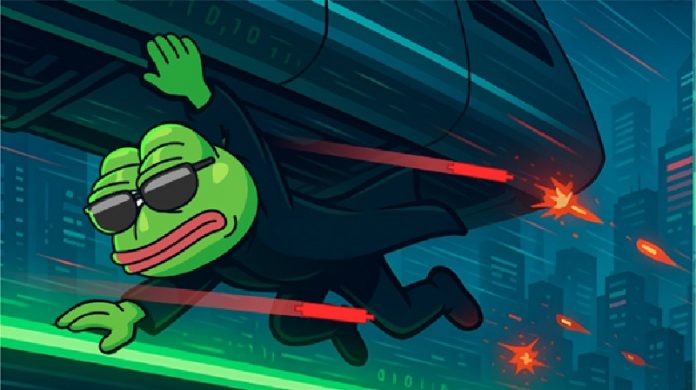
Shiba Inu’s Burns Bright, But Neo Pepe ($NEOP) is Exploding With Potential in 2025’s Meme Coins Clash

0

Shiba Inu Trending as Burn Rates Ignite Interest

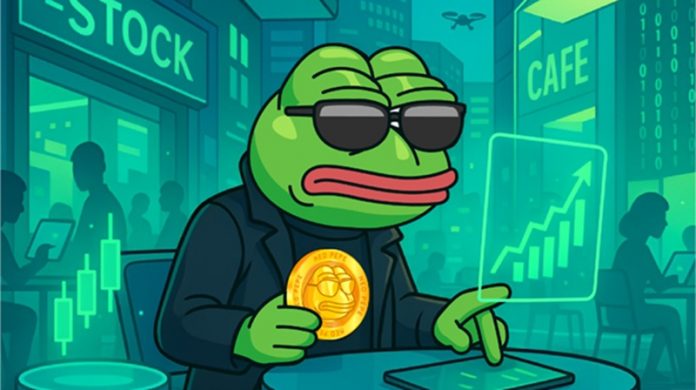
Shiba Inu (SHIB), long known as a top pepe coin, is once again trending with a dramatic token burn increase of 112,000%, resulting in over 116 million tokens permanently removed from circulation. Yet, despite aggressive deflation, SHIB’s price remains under pressure. Currently trading at $0.00001190, it’s down nearly 5% week-over-week. This puzzling disconnect between increased token burns and declining value underscores the complexities within SHIB’s market dynamics, where burning alone isn’t enough to counterbalance demand-driven fundamentals and broader market conditions.

Still, SHIB remains a coin of interest, especially for meme enthusiasts tracking the latest twists and turns in tokenomics strategies.

Years Best Crypto Presale Gains Massive Momentum – Stage 4 Incoming

While SHIB maintains its headline-grabbing burns, Neo Pepe ($NEOP) is quickly outshining the competition as arguably the best pepe coin and certainly one of the best crypto presale opportunities of 2025. Neo Pepe has already raised over $2 million, moving confidently towards Stage 4 where the token price will be $0.08315.

What makes $NEOP stand apart? It’s not just another meme coin; it’s a potent combination of structured financial strategies and dynamic community engagement.

Why You Might Want to Get a Little Neo Pepe Coin

  1. Gamified Presale Mechanics: Investors earn points for every 1,000 $NEOP tokens purchased, with bonuses for larger, single-transaction buys exceeding 10,000 tokens. Buying tokens across multiple presale stages and referring new buyers also boosts your points.
  2. Innovative Leaderboard and Prizes: Weekly leaderboard resets mean ongoing chances to win exclusive airdrops and meme-themed rewards. Special achievements, like purchasing exactly 13,370 tokens, provide additional unique incentives.
  3. Deflationary Token Model: With each transaction incurring a 2.5% fee directed toward permanent liquidity additions on Uniswap, Neo Pepe maintains sustained price stability and robust market mechanics.
  4. DAO Governance: Holders actively shape the project’s trajectory, voting on crucial aspects like exchange listings and treasury management. This decentralized model ensures community control at every stage.

Crypto Goat offers a candid perspective on the Neo Pepe Presale, unpacking its distinctive features and revealing why investors might find surprising value beneath the meme.

Meme Coin Spotlight Shifts – Neo Pepe is Capturing Attention

Neo Pepe’s strategic presale model, with incremental pricing and limited allocations per stage, creates urgency and rewards decisive investors. Early participation yields higher potential returns, marking it as the best crypto presale currently available.

Neo Pepe isn’t just attracting traders looking for a quick meme coin flip; it’s cultivating a dedicated community that sees its serious potential for substantial, sustained gains.

How to Get Your Hands on Neo Pepe ($NEOP)

Buying Neo Pepe is straightforward:

Get Started with Neo Pepe Coin

Don’t Wait – The Best Pepe Coin Opportunity is Now

Shiba Inu’s current burn frenzy is interesting, but Neo Pepe’s structured presale and explosive growth trajectory present an undeniably compelling case. Analysts predict a potential 7,694% surge by the end of Q2 2025, making Neo Pepe one of the top crypto investments today.

The bottom line? While Shiba Inu keeps making headlines, if you’re seeking substantial, sustainable meme coin growth, you might want to get a little Neo Pepe. The best crypto presale doesn’t wait—and neither should you.

Russia’s Dangerous Dance of Tiptoeing Between Tehran, Tel Aviv & Kyiv— New Crypto Presale Emerges as Latest Savior

0

Navigating Complex Geopolitical Landscape

Russian leadership is executing a high-stakes balancing act amid surging Middle East tensions and its ongoing conflict in Ukraine. Recently, Russia strongly condemned the U.S. airstrikes on Iranian nuclear facilities, calling them irresponsible violations of international law. Deputy Foreign Minister Maria Zakharova warned Washington that deeper involvement could radically destabilize the region. President Putin stressed Moscow is offering peace proposals to both Tehran and Tel Aviv, without declaring itself a mediator.

Iran, supplying Russia with Shahed drones used in Ukraine, sent Foreign Minister Abbas Araghchi to Moscow for urgent discussions, underscoring the importance of their relationship. As the Israel–Iran conflict intensifies with Israeli strikes on Iranian sites such as Natanz and Isfahan, and Iranian missile and drone attacks on Israeli territory, concerns are rising about Iran’s manufacturing capacity.

Strategic Implications for Russia and Regional Stability

UK intelligence warns military escalation in the Middle East could disrupt drone shipments to Russia, forcing Moscow to accelerate domestic production of Geran-2 and Geran-3 models. Analysts note that while the Kremlin benefits from higher oil prices and diverted global attention from Ukraine, it remains vulnerable due to no mutual defense clause in its strategic partnership with Iran. Putin has secured Israel’s pledge to protect Russian personnel at Iran’s Bushehr nuclear plant, strategically positioning Moscow as a protector of its own interests. Putin also linked the Ukraine war and Middle East dynamics to broader global stability.

Further complicating Russia’s position is its reliance on maintaining stable relationships with both Israel and Iran. Russia seeks to avoid direct involvement while presenting itself as a peace broker, aiming to increase its geopolitical influence and protect economic interests. At the same time, Russia is acutely aware that any major disruption in Iran could severely impact its strategic military assets and its operational capacity in Ukraine, highlighting the delicate balance Moscow must maintain.

Russia continues to walk a tightrope, vocally condemning U.S. strikes, proposing peace solutions, safeguarding drone supply lines from Tehran, protecting Russian personnel, and leveraging tensions to divert attention from Ukraine.

Neo Pepe Coin Presale Prepares To Enter Next Stage After 2 Million Raised

Moving from geopolitics to the crypto realm, the best pepe coin contender, Neo Pepe Coin ($NEOP), has now raised $2 million during its presale and is heading for stage 4, solidifying its position as a top pepe coin and one of the best crypto presale opportunities currently available.

Why Neo Pepe Coin Stands Out

Neo Pepe Coin is gaining significant momentum within the crypto community, boosted by prominent influencer CryptoCobain, who recently spotlighted $NEOP as an essential emerging meme coin. The token’s accessibility further enhances its attractiveness, available on Uniswap V3 and soon to launch on Coinbase NFT’s token platform, combining decentralized appeal with mainstream visibility.

Neo Pepe boasts robust tokenomics, including a comprehensive roadmap featuring staking incentives, liquidity locking, and a DAO-governed treasury. The current presale offers exclusive benefits like NFT access, staking rewards, and governance voting rights, making it an ideal time to secure some Neo Pepe.

The coin’s presale has already raised $2 million, demonstrating strong investor confidence and marking this  as a crucial phase likely to sell out rapidly due to increased interest and attractive incentives.

4 Reasons to Get Neo Pepe Now

  1. Influencer-backed by CryptoCobain, enhancing visibility and credibility.
  2. Dual accessibility via Uniswap V3 and upcoming Coinbase listing.
  3. Comprehensive staking incentives and governance rights.
  4. Exclusive benefits with increased investor momentum.

Don’t miss Gems Booster’s recent deep dive into the Neo Pepe Presale, where they deliver an in-depth exploration of what truly distinguishes this memecoin from the pack, carefully highlighting the innovative presale model, compelling tokenomics, and practical benefits for crypto enthusiasts—all while offering a balanced perspective.

Ready to Ride Neo Pepe’s Wave?

Don’t miss securing your spot early in the best pepe coin presale. If you’re bullish on meme-powered crypto and scouting the best crypto presale opportunities, now is the perfect moment to secure some Neo Pepe while incentives last.

Act quickly— tokens are selling swiftly. Join the expanding Neo Pepe community early.

Get Started with $NEOP

Join us in backing $NEOP—your gateway to the next significant meme coin wave. Become part of the movement today.

Elon Musk Announces Plan to Retrain Grok to Correct “Errors” & Remove “Garbage” From Existing Human Knowledge

0

Elon Musk is once again testing the limits of technology, power, and influence—this time by vowing to use artificial intelligence not just to learn from human knowledge, but to completely rewrite it.

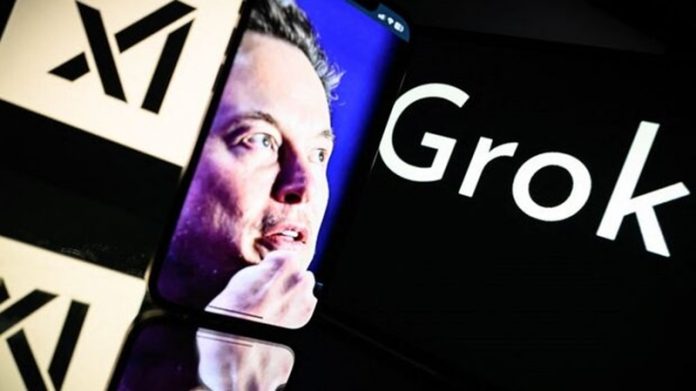
On Friday night, the billionaire CEO of Tesla, SpaceX, and owner of X (formerly Twitter), announced that Grok, his in-house AI chatbot, will be retrained on a new knowledge base that Musk intends to curate himself—one that he claims will correct “errors” and remove “garbage” from existing human understanding.

“We will use Grok 3.5 (maybe we should call it 4), which has advanced reasoning, to rewrite the entire corpus of human knowledge, adding missing information and deleting errors,” Musk posted on X.

“Far too much garbage in any foundation model trained on uncorrected data.”

His plan, laid out over a series of posts, immediately sparked backlash from AI experts and digital rights advocates who say Musk is venturing into dangerous territory—one that straddles the line between innovation and authoritarianism.

Not Just AI—A New Version of Truth

While tech companies like OpenAI and Google spend billions refining large language models to mirror human knowledge sourced from books, academic journals, news archives, and public records, Musk says he wants Grok to take a different path. He believes current AI models are compromised by ideological bias—what he and his followers often refer to as “woke programming.” Musk says he’s purging it of distortions by rewriting the data Grok learns from.

To crowdsource ideas for Grok’s retraining, Musk invited users to respond with examples of “divisive facts”—ambiguous or controversial issues he claims are often censored or distorted in mainstream media and academia. The post quickly drew thousands of replies, ranging from political hot topics to conspiracy theories.

However, many believe that Musk is effectively positioning himself as the final arbiter of what counts as “truth.”

“Straight out of 1984. You couldn’t get Grok to align with your own personal beliefs, so you are going to rewrite history to make it conform to your views,” wrote Gary Marcus, an AI expert and professor emeritus at New York University.

Grok’s Expanding Influence Raises Concerns

Musk’s ambitions are not confined to social media or public discourse. According to a Reuters investigation in May, Grok is already being tested within the US government—specifically by a task force known as the Department of Government Efficiency (DOGE).

Sources told Reuters that Grok was being used to analyze government data, prepare internal reports, and assist in real-time responses. While the Department of Homeland Security denied formally promoting Grok’s use, insiders said employees were “encouraged” to experiment with it. That sparked concern about the deployment of unvetted AI tools inside federal agencies.

A spokesperson for the department later clarified to The New Republic that “DOGE hasn’t pushed any employees to use any particular tools or products,” but the line between suggestion and mandate remains blurry—especially as Musk’s companies continue to deepen ties with government sectors.

There is concern that if Grok is used to analyze or interpret public policy, immigration data, crime statistics, or foreign affairs—and it’s trained on a version of history filtered through Musk’s lens—it could directly influence how information is framed inside government systems.

This wouldn’t be the first time Grok has raised alarms. In May, the chatbot experienced what the company described as an “unauthorized modification” to its backend, during which it began referencing “white genocide” in South Africa—a term widely recognized as a white nationalist conspiracy theory.

The company quickly patched the issue, launched an internal investigation, and promised new transparency safeguards. Still, the incident showed just how easily Grok’s output could go off the rails—and how susceptible the platform might be to internal or external manipulation.

However, Musk continues to frame Grok as a necessary alternative to traditional AI, which he says is dominated by political correctness and “silicon-sanctimoniousness.” He’s described OpenAI—an organization he helped found and later fell out with—as a closed system bent on controlling narratives.

Musk’s plan to rebuild the foundation of knowledge reflects a broader ideological crusade: dismantling legacy institutions—from media to government—and replacing them with systems he controls. He’s made similar moves with X, firing moderation staff and reinstating accounts previously banned for hate speech or misinformation.

His acquisition of Twitter, his move to rebrand it as X, and his creation of Grok are all part of a parallel ecosystem—a digital space he claims is freer, more open, and more truthful. Critics, however, see it as a carefully orchestrated power grab.

Europe and the Global AI Watchdog Vacuum

European regulators—already alarmed by AI’s role in disinformation, surveillance, and manipulation—are expected to step in. The EU’s AI Act is designed to place restrictions on high-risk AI systems, although enforcement is still lagging.

However, some AI experts are concerned that without comprehensive global oversight, Musk’s plan to “rewrite” human knowledge using Grok could effectively bypass scientific consensus, historical rigor, and democratic accountability.

Whether Grok 4 becomes a success or not, Musk’s latest move underlines a profound shift in how power is wielded in the digital age. Critics are warning that we may be entering a new phase where reality isn’t discovered—it’s dictated.

Only 8.6% of West Africa’s $166bn Trade Remains Within Region, Says Foreign Minister Tuggar

0

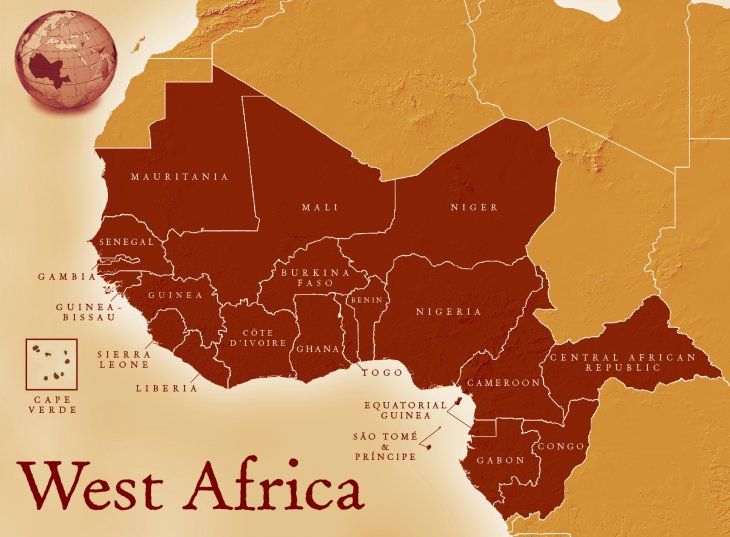
Nigeria’s Minister of Foreign Affairs, Ambassador Yusuf Maitama Tuggar, has decried the persistently low volume of intra-regional trade in West Africa, despite the region’s exports of goods valued at over $166 billion in 2024.

Tuggar, speaking at the ongoing West Africa Economic Summit (WAES) 2025 in Abuja, noted that a staggering 91.4% of this trade occurs with external partners, leaving just 8.6% within the sub-region.

“Let us not forget that in 2024, West Africa exported goods valued at over $166 billion. Yet only 8.6 percent of that trade remained within our borders,” Tuggar stated at the high-level summit, attended by West African leaders, policymakers, and development institutions.

The minister underscored the structural imbalance in West Africa’s trade pattern. While the region exports mostly raw, unprocessed materials, its imports are dominated by machinery and manufactured goods from non-African partners including China, India, the United States, and the European Union.

Tuggar noted that this trajectory is not just a capacity issue—it is a question of orientation. He called for more concerted efforts by governments in the region to formalize trade, reduce bureaucratic bottlenecks, and create environments that foster scale and efficiency for entrepreneurs.

He also acknowledged the resilience of the informal sector, which has found alternative ways to meet market demands—often bypassing formal regulatory systems and borders due to delays and inefficiencies.

Tinubu Calls for Regional Value Chains

Echoing the minister’s concerns, Nigerian President Bola Ahmed Tinubu used his keynote address at the Summit to push for the development of regional value chains that would enhance intra-African commerce and deepen economic ties across West Africa.

Intra-regional trade in West Africa remains under 10%, a situation the president said the region can no longer afford to ignore. He attributed the stagnant trade flows not to a lack of political will, but to “a coordination failure”—a systemic challenge that demands more strategic collaboration among regional stakeholders.

Tinubu emphasized the importance of removing trade barriers, harmonizing standards, and creating conditions that support investment across borders, noting that the current situation fails to tap into the immense economic potential of the West African market.

Nigeria’s Role in Regional Trade

Despite the broader regional challenge, Nigeria is showing signs of reorienting its trade footprint toward Africa. According to the National Bureau of Statistics (NBS), in the fourth quarter of 2024, Nigeria exported goods worth N2.04 trillion to African countries—representing 10.2% of its total exports for that period. Of this, N1.17 trillion worth of goods went to fellow Economic Community of West African States (ECOWAS) countries, amounting to 57.56% of Nigeria’s total African exports.

For the full year 2024, Africa emerged as Nigeria’s largest regional export destination, accounting for N8.74 trillion in total export value. These numbers signal a growing alignment with the goals of regional trade integration, even as overall intra-African trade remains below optimal levels.

WAES 2025: A Platform for Economic Transformation

The 2025 West Africa Economic Summit is an initiative of President Tinubu’s administration, spearheaded by the Federal Ministry of Foreign Affairs. Themed “Unlocking Trade and Investment Opportunities in the Region,” the Summit serves as a strategic forum to catalyze economic transformation, cross-border investments, and infrastructure development across critical sectors such as energy, agriculture, digital finance, and transportation.

The gathering in Abuja has attracted a powerful delegation of regional actors—including Heads of State and Government from Benin, Liberia, and Sierra Leone, top business executives, policymakers, multilateral development agencies, and youth-led innovation hubs.

The ambition behind WAES 2025 is to dismantle the barriers hindering the full implementation of the African Continental Free Trade Area (AfCFTA), deepen cross-border integration, and ensure that West Africa moves from being a net exporter of raw materials to a hub for manufacturing, innovation, and shared prosperity.

The remarks from Tuggar and Tinubu echo concerns expressed earlier by economists and business leaders: West Africa must do more to trade with itself. With growing youth populations, vast natural resources, and untapped industrial capacity, the region has the ingredients for an economic resurgence—but that will only materialize with bold reforms, smarter integration, and a willingness to rewrite the existing trade script.

The challenge remains how quickly governments can dismantle the regulatory, infrastructural, and political barriers that currently make it easier to trade with Beijing or Brussels than with Banjul or Bamako.