DD
MM
YYYY

PAGES

DD
MM
YYYY

spot_img

PAGES

Home Blog Page 107

From High-Risk Bets to Controlled Crypto Trading Strategies

0

Early on, cryptocurrency trading strategies were more akin to gambling than investing. Traders chased spikes and dumps, guided by hype and social media tips. Overnight, fortunes were made and lost. Today, that era is fading. The modern-day trader is turning from a risk-taking, thrill-seeking adrenaline junkie into a disciplined strategist.

They use analytics and structured rules, along with backtested trading performance systems, to achieve consistency over time. The data-driven, logic-based, controlled new world of crypto trading doesn’t want to leave anything up to chance. IQCent and many other exchange platforms target this change, providing instruments that are designed to be used in conjunction with user-friendly yet quantified risk management and trading.

Why Risky Trading Fails and How Traders Regain Control

In times of volatility, which is often the norm in digital assets, a 10% drop can wipe out weeks of gains in just a few hours. This gambler’s reasoning is intoxicated by the mirage of quick profits but fails when emotions run high. The result is a harmful cycle of chasing losses and overleveraging, based on fear and euphoria rather than data.

Disciplined traders take control back through process, not prediction. Each trade is written up, from market conditions, entry and exit points, to the emotional state of mind in a structured trading journal. This log transforms conjecture into quantifiable truth and provides an opportunity to identify trends over time of both success and failure.

A trading journal helps traders set their risk tolerance according to their own trading rules, such as a 1-2% risk per trade, so that no one trade can retroactively destroy a portfolio. Stop-loss parameters and position sizing add continuity even when the markets are erratic.

Traders continue to develop their systems rationally as the performance data fills out rather than emotionally, in response to whims. The transition from emotional reaction to strategic analysis heralds a shift from mindless betting to calculated trading, where order and reason, not chaos and chance, take the wheel in the face of market volatility.

How Data and Rules Turn Chaos Into Structure

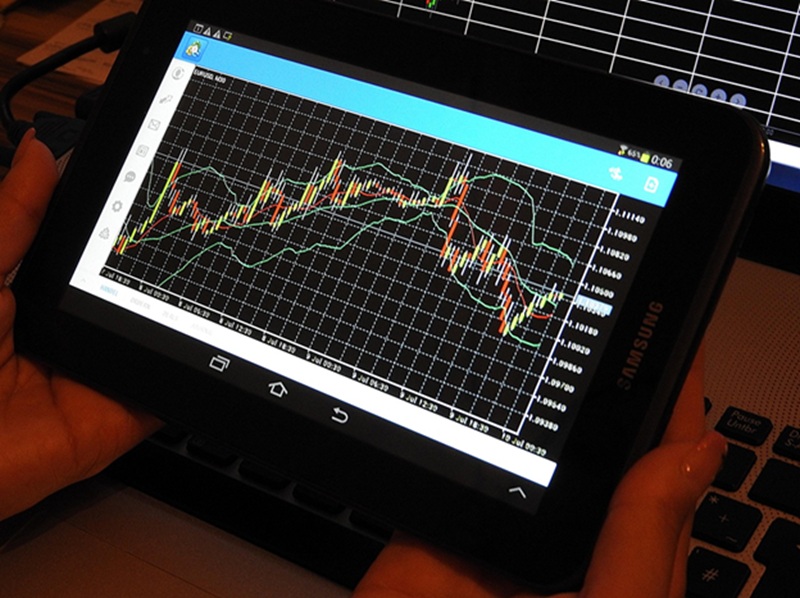
Market data and consistency are the modern trader’s north star. Unlike the rumor-driven and social media-influenced world of NFTs, crypto trading uses technical indicators such as the Relative Strength Index (RSI) as well as moving averages. For instance, a move by the RSI below 30 can indicate an oversold market, and when a 50-day moving average crosses above its 200-day line, it can mean a trend reversal.

These indicators translate complex market motion into simple, clearly defined signals that assist traders in timing entries and exits based on probability rather than emotion. Traders who consistently apply technical signals to their crypto trading strategy can very well decrease their performance dispersion. It has to be said that technical analysis is not foolproof. It can be at risk of false signals and market manipulation. In markets such a crypto, which are especially volatile, consistency and discipline in the application of signals play key roles in reducing dispersion.

Controlled Trading Strategies That Actually Work

There are three main trading strategies preferred by investors: swing trading, day trading, and position trading.

  • Swing traders capitalize on medium-term market trends, utilizing support and resistance levels to manage risk. They usually last from a few days to a couple of weeks, and they wait for technical signals before entering the trade. Swing trading gives time to analyze and avoid exposure to snap volatility driven by news.
  • Day traders are trading in a shorter time frame, frequently looking at 5 and 15-minute charts to gauge changing momentum. They close all positions each day, never leaving for chance what will happen overnight or on weekends. Consistency and speed are of the essence. Day traders depend on real-time data feeds and need in-the-moment risk-reward ratios.
  • Position traders ignore short-term price signals and look instead at global macroeconomic data and blockchain fundamentals. What they watch are trends that take place over a period of weeks or months, in concert with the larger market cycles and asset narratives.

For the three, success is less in prediction and more in rule-based implementation. Those who delineate specific entry, exit, and risk points in advance remove the “fly-by-night” factor of emotion out of their trades.

Many aggregate several approaches, employing swing trades for mid-term holding periods and holding long-term positions for the trend. This mix permits freedom within an ordered framework. Implementing controlled systems can reduce impulsive trades, lessen emotions, and give investors a sense of power over the decisions they make.

Core Elements of a Controlled Trading Strategy

All good cryptocurrency trading strategies that stand the test of time share a common base for long-term success:

Defined entry and exit points.  Practitioners only act when signals indicate defined criteria.

Clear risk management rules. The 1% rule (never risk over 1% of the account) is the primary safeguard against a big drawdown.

Performance review and journaling. Looking back through your trades reveals patterns, which help improve precision for the future.

Position sizing and stop losses. Good capital allocation stops you blowing out on a single trade.

Dollar-cost averaging (DCA). Reduces the effect of volatility by spreading entries over time.

These features actually turn trading into a quantifiable system. When implemented consistently, they lessen drawdowns and make you more profitable in the long term. Ultimately, risk management is not about avoiding loss; it’s about surviving long enough for data-driven consistency to work its magic in the financial market.

From Speculation to Systematic Investing

The modern generation of crypto trading is a combination of fundamental analysis and technical vision. Looking at blockchain adoption, liquidity factors, and macro considerations next to chart data gives traders the context they need. Organized systems are better than speculative guesses because they’re built to learn.

The very best traders aren’t chasing perfect entries for digital assets. They are managing imperfect markets with perfect discipline. In a world of more mature digital assets, it will be controlled investment strategies that determine success. The cryptocurrency market favors not the bravest, but rather the most disciplined, those who transform chaos into controlled trading strategies, risk into opportunity, and data into lasting gains.


$SPY Nears Final Launch: Could This Quiet Presale Be the Next Big Crypto Winner?

0

SpacePay’s ($SPY) launch is finally getting closer. The project, created to tackle many of the major issues that crypto users have been struggling with, is now in its final testing phase.

Based on the information given by the developers, the focus for November will include testing withdrawals, carrying out gasless transactions, and final integrations.

The token has been growing quietly in its presale, with more than $1.4 million raised so far. Early investors are getting in at the current low price of $0.004210 before the final launch. One could easily see it as one of the best cryptos to buy at this time because of its offerings.

What Makes SpacePay Stand Out?

SpacePay is a London-based fintech solution that seeks to make crypto payments as easy as using cash. The platform is integrating features that can encourage more people to adopt crypto since they can use it just like the systems they are accustomed to.

SpacePay works with more than 325 crypto wallets, meaning many users can use almost any wallet they have. The platform also integrates with current point-of-sale payment machines. Stores only need to incorporate it, and they can start receiving crypto.

Many People Do Not Want to Receive Crypto Payments, but That Could Be Changing

Various factors discourage people from making or accepting crypto payments. These range from high fees to volatility. Many people also do not understand how it works, as it typically requires learning a new payment model.

SpacePay developers understand these problems and aim to improve them. According to their whitepaper, they are creating a volatility protection mechanism, ensuring that when a customer pays with crypto, the merchant can receive the funds in fiat currency of their choice. So, if a customer pays with BTC, the seller can receive the funds in USD.

The entire process is also designed to be fast. In fact, the white paper describes it as instant, with zero waiting time. This is tailored to fit various types of businesses, so users don’t have to wait long hours to access their funds.

SpacePay also charges very low fees. The system is designed to charge a 0.5% merchant fee per transaction, which is lower than the industry standard for payments.

SpacePay has a Global Vision: Why $SPY Could Be the Best Altcoin to Buy Right Now

There is also concern about crypto regulation, as many are wary of the rules governing the use of crypto in their locations. SpacePay developers state that they will be operating in all unsanctioned countries worldwide. They are interested in operating based on what is permitted within each region.

The platform is not controlled by a central authority. This gives users complete control over their funds. It could also protect against unauthorized access by a third party.

With the increasing popularity of crypto, a system that simplifies its use for everyone could see rapid adoption. The goal is worldwide use, and if SpacePay achieves this, its $SPY token could experience massive adoption in a short time. This may position it as a viable altcoin to buy now.

The Testnet Is Live, and Final Integrations Are Expected This November

The SpacePay One testnet is already live, available on the Base Sepolia and Ethereum Sepolia networks. This allows various developers and users to test how everything works before the final launch.

This testnet features a functional payment widget and a seamless user experience flow for checkout. The multi-chain capabilities enhance its reach and leverage more tools. The foundation needed for fiat integration will also be tested in this version.

The developers advise using only desktop devices for now. They are fixing a few bugs that may arise when using the mobile version. Feedback received from this first public preview will be used to make the platform better.

$SPY Could See a Spike in Value Once Adoption Begins

The $SPY token could be the biggest beneficiary of the project’s maturation. It is tied to various uses within the ecosystem, potentially increasing its value over time. If SpacePay begins to see global adoption as it hopes, tokens like $SPY could experience more holding.

Apart from being used for transactions within the platform, the token offers additional benefits to its holders. This includes monthly loyalty airdrops, which reward the most active users of the platform as a token of appreciation.

There are also revenue-sharing models that allow users to enjoy passive income from the platform’s revenue. $SPY holders will also be involved in the platform’s governance and its growth over time, gaining access to new features before the general public. Moreover, they will participate in charitable initiatives through the platform.

The Platform is Getting Recognized Already: Here’s How to Buy $SPY in the Crypto Presale

The platform is already gaining attention; despite still being in the crypto presale stage, it received an award for ‘New Payment Platform of the Year’ at the CorporateLiveWire awards 2022/23. Some investors who believe in its vision have also invested around $750,000 into the platform.

Here is how to secure the token: get a decentralized wallet, fund it with a supported token, which includes ETH, USDT, BNB, SOL, and various other options. Connect the wallet to the presale website.

After this, the investor can click on the option to buy the token and fill in the required information. The $SPY tokens will be secured after the transaction has been confirmed.

Discover the future of crypto payments with SpacePay


Presale: https://presale.spacepay.co.uk/
Website: https://spacepay.co.uk/
X: https://x.com/spacepayltd
Telegram: https://t.me/SpacePayTG

Price Targets for Ozak AI: How Upcoming Exchange Listings Could Trigger a Multi-Phase Rally

0

Ozak AI ($OZ) has emerged as a serious player in the rapidly expanding AI crypto market. Built on a blend of artificial intelligence and decentralized physical infrastructure, the project positions itself at the intersection of predictive analytics, automated decision-making, and distributed compute power. Instead of relying on speculative momentum alone, Ozak AI presents a structured ecosystem designed to allow data, execution, and intelligence to move autonomously across Web3.

Phase 7 Presale Sees Strong Demand

As the presale progresses, confidence in the project continues to build. Ozak AI is currently at Phase-7, with tokens priced at $0.014. A total of 1,006,829,064.70 $OZ tokens have already been sold, making total funds raised 4,495,644.83. The strong pace of the presale thus far has put market eyes on its forthcoming stages, particularly as the listing target still stands at $1. The expectation of exchange listings is seen by many early buyers as a potential catalyst that can unlock price discovery and fast-track growth.

Technology Designed for Long-Term Scalability

The technology behind Ozak AI is a significant driver of investor interest. The product stack integrates artificial intelligence with DePIN infrastructure, enabling analytics, automation, and intelligent execution through decentralized computing resources rather than centralized servers. Cross-chain compatibility expands reach across multiple blockchains, while token utility is built into staking, governance, and ecosystem usage. The project has also emphasized transparency, completing a smart contract audit confirming no unresolved issues.

Partnerships Supporting Ecosystem Expansion

Ozak AI has also attracted attention through its recent partnerships. The collaboration with Hive Intel supplies advanced blockchain data pipelines, improving the accuracy of predictive signals by analyzing wallet behavior, DeFi activity, and NFT movement across chains. Its work with Weblume integrates Ozak’s live market signals into a no-code Web3 builder, allowing developers to embed analytics and automated actions into dashboards and dApps without custom engineering. Through its partnership with Meganet, Ozak AI gains access to a bandwidth-sharing network of millions of active nodes, enhancing processing speed and reducing infrastructure costs. SINT adds another layer by enabling cross-chain execution, voice interfaces, and autonomous agents capable of responding instantly to Ozak AI market signals. These relationships are reinforced by the project’s visibility at global events such as Coinfest Asia 2025 and the recent GM Vietnam community meet-ups.

Analysts Expect Movement Post-Listing

As the presale progresses, analysts have begun considering the impact of exchange listings. Early projections suggest that Ozak AI may experience a multi-phase rally if liquidity and trading demand match presale momentum. With a listing target of $1 and a presale price of $0.014, the gap between current and projected market value has been central to investor discussions. The combination of scalable infrastructure, a full suite of real-world integrations, and a growing network of strategic partners supports the argument that Ozak AI could enter exchanges with a stronger foundation than most early-stage AI tokens.

Conclusion: Why Listings May Be the Turning Point

As the AI token sector gains speed, market attention naturally shifts to projects with measurable utility and verifiable growth. Ozak AI’s presale performance, expanding ecosystem, and infrastructure partnerships provide that footing. If exchange listings unfold as anticipated, they may serve as the catalyst for a broader rally, opening the door to price discovery and new demand cycles. With Phase-7 approaching capacity and investor buzz increasing, Ozak AI now stands positioned for a potentially transformative next chapter.


For more information about Ozak AI, visit:

Website: https://ozak.ai/

Twitter/X: https://x.com/OzakAGI

Telegram: https://t.me/OzakAGI

Can Ozak AI Sustain Momentum Into 2030? Experts Outline Three Scenarios for Explosive Growth

0

Ozak AI ($OZ) has positioned itself as a next-generation AI-powered crypto project, combining artificial intelligence with DePIN infrastructure to build a decentralized environment for predictive analytics, automation, and multi-chain data execution. As the AI sector expands across blockchain ecosystems, analysts have begun evaluating how long Ozak AI’s momentum can realistically last and what the project may look like heading toward 2030.

Presale Strength Continues in Phase 7

The $OZ token remains in Phase 7 of its presale. The current price of the token is $0.014, with 1,009,373,903.44 $OZ already sold and $4,531,272.57 raised. From its first pricing stage to the present, the token has seen over 1200% growth. The team keeps a targeted listing price of $1.00, and the presale allocation feeds into staking, governance, infrastructure incentives, and ecosystem utility. The smart contract has already completed an audit by @sherlockdefi, which reported zero unresolved issues.

Scenario One: Expansion Through AI-Powered Infrastructure

One pathway analysts highlight is continued expansion through its technology stack. Ozak AI’s predictive agents and automated analytics are integrated into a decentralized physical infrastructure network, designed to reduce dependence on centralized compute while delivering faster and more secure AI execution. As cross-chain support grows, Ozak AI could serve as a bridge between decentralized applications and machine-learning-based intelligence. Sustained adoption of dApps integrating AI-generated signals could drive platform usage.

Scenario Two: Acceleration Through Global Partnerships

A second scenario of long-term growth stems from strategic partnerships. The collaboration with Hive Intel (HIVE) connects Ozak AI to structured blockchain data, including NFT flows, DeFi movements, wallet activity, and market-level token metrics. The integration with Weblume brings real-time predictive signals into a no-code builder, enabling teams to deploy dashboards or decentralized applications without engineering bottlenecks. The partnership with Meganet, a bandwidth-sharing network hosting more than 6.5 million active nodes, gives Ozak AI access to low-cost distributed compute, improving processing of predictive tasks.

Scenario Three: Market Growth and Exchange Listings

The third scenario is driven by future exchange listings and global market conditions. While Ozak AI has not yet entered its post-presale listing phase, analysts point to the combination of token utility, infrastructure use cases, audit completion, and partnerships as potential factors that could influence traction when public trading begins. Growth in the AI sector across blockchain markets could also adjust demand for decentralized predictive systems. How effectively the project executes its roadmap after listing will determine whether momentum continues into the next market cycle.

Conclusion

Development of Ozak AI implies steady growth instead of short-term interests. Thus, its whole presale progress, multi-chain infrastructure, technical partnerships, on-ground community events, and audited smart contracts just prove the fact that the project is working very hard to build a functional ecosystem. As such, sustained momentum into 2030 will lie in continuous integrations, adoption, and liquidity driven by exchanges once trading commences. For now, though, metrics and partnerships show that this foundation is being laid for long-term growth rather than speculative activity.


For more information about Ozak AI, visit the links below:

Website: https://ozak.ai/

Twitter/X: https://x.com/OzakAGI

Telegram: https://t.me/OzakAGI

5 Spot Crypto ETFs are Launching Next Week

0

Based on recent SEC approvals and filings amid the ongoing U.S. government shutdown which has allowed several procedural launches without active review, the altcoin spot ETF market is exploding.

Multiple sources confirm a surge in launches, with five spot crypto ETFs set to go live in the U.S. this week, building on the momentum from Bitcoin and Ethereum products. This follows the successful rollout of Solana ETFs in early November and XRP/Dogecoin products earlier this month.

These launches are driving institutional inflows, with early XRP and Dogecoin ETFs already seeing $250M+ and $11M in day-one volume, respectively. Broader predictions point to over 100 new crypto ETFs in the next 6 months, including staking variants, memecoins, and hybrids.

First-ever spot DOGE ETF; $11M inflows on debut, $1.4M day-one volume reported today. Strong memecoin momentum. Hybrid spot 40% direct XRP holdings; $32M+ trading volume already, up 15% intraday. Part of XRP ETF wave.

Pure spot exposure; leading XRP ETF pack with 1.3M+ shares traded yesterday. High liquidity expected. First U.S. spot BNB ETF; S-1 amendment filed recently. Targets Binance ecosystem growth.

Record $250M day-one inflows in prior XRP launches; focuses on direct custody. Look for GDOG and GXRP to continue building volume today/tomorrow, with XRPL potentially debuting mid-week. U.S. markets close early Thursday (Thanksgiving) and Friday, so launches may cluster Tuesday–Wednesday to avoid holiday slowdowns.

XRP has jumped 15%+ on ETF news, while DOGE sees spillover hype. Solana ETFs (e.g., Bitwise BSOL) added $57M inflows yesterday, showing sustained demand. This is part of a “second wave” post-shutdown delays. Litecoin (LTC) and Hedera (HBAR) filings are next, with 90% approval odds for LTC by year-end.

Solana (SOL) spot ETFs, which debuted in late October 2025 amid a wave of SEC approvals during the U.S. government shutdown, have marked a significant milestone in institutional crypto adoption.

Launched on October 28, these products provide direct exposure to SOL while enabling staking yields typically 5-7% APY, attracting investors seeking regulated access to Solana’s high-throughput blockchain ecosystem.

Despite broader market volatility—SOL has dropped ~20% from its October peak of $205 to around $145 today—the ETFs have shown remarkable resilience with 20 consecutive days of net inflows, totaling $568 million since inception.

This contrasts sharply with outflows from Bitcoin $151M net on Nov 24 and Ethereum $37M net on Nov 20 ETFs, signaling a rotation toward yield-generating altcoins. Key drivers include Solana’s DeFi, NFT, and memecoin ecosystem growth daily active users up 15% MoM, tokenization trends, and competitive fees.

However, ETF demand hasn’t yet translated to sustained SOL price appreciation due to macro de-risking and technical breakdowns below $150 support. Analysts project $2.7-5.5B in inflows within the first year, potentially capturing 10-15% of SOL supply via staking, which could tighten liquidity and support a rebound to $200+ by mid-2026.

November Highlights: $369M inflows month-to-date; second-biggest weekly at $421M early Nov. SOL traded at $145 down 5% daily, 20% from ETF launch, breaking $150 support amid 13% volume surge. Yet, ETF inflows correlate with rising Cumulative Volume Delta (CVD), indicating genuine buying pressure from institutions.

Staking has locked 407M SOL up from 350M YTD, reducing sell pressure. ETFs pass ~6.3% APY, outpacing BTC/ETH yields and drawing $715M AUM. Solana ETFs bucked $513M crypto ETP outflows post-Oct liquidation event. X sentiment echoes this: “20 straight days… on rampage” and “record $39.5M inflow” highlight institutional FOMO.

JPMorgan eyes $6B inflows by mid-2026; price targets $200-400 if inflows hit $5B. Risks include correlation to BTC (r=0.85) and potential outflows if Fed cuts disappoint. Solana ETFs are a bright spot in a turbulent market, validating SOL as a “high-conviction” asset for diversified portfolios.

Watch for $160 resistance breakout on sustained flows. Analysts predict Bitcoin ETFs could triple gold ETFs’ size ($125B) soon. Stay tuned—volatility is high, but these launches signal crypto’s mainstream pivot.