DD
MM
YYYY

PAGES

DD
MM
YYYY

spot_img

PAGES

Home Blog Page 1073

Microsoft Deepens Swiss Commitment with $400m Investment in AI, Cloud, and Skills Development

0

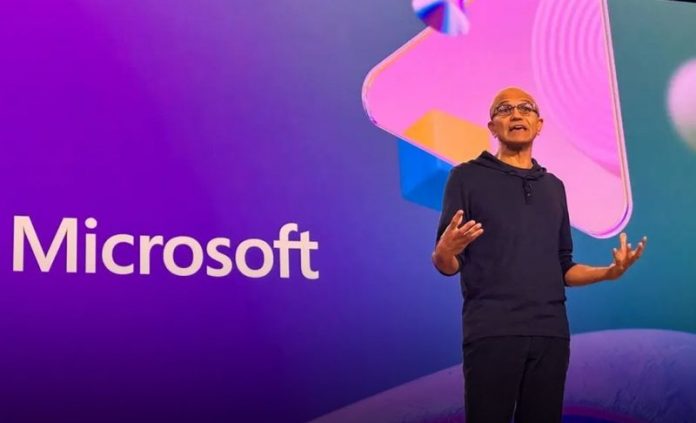
Microsoft has announced a $400 million investment to bolster its cloud computing and artificial intelligence capabilities in Switzerland, marking a significant expansion of its 36-year presence in the country.

The announcement was made in Bern by Microsoft Vice Chair and President Brad Smith, who was joined by Swiss Federal Councilor Guy Parmelin and Catrin Hinkel, CEO of Microsoft Switzerland.

The tech giant’s latest commitment builds upon earlier initiatives, including the launch of local data centers in 2019 and the opening of its Innovation Hub in 2022. This new investment aims to reinforce Switzerland’s role as a leader in AI adoption, digital resilience, and innovation.

Microsoft will expand its existing data center infrastructure in the Zurich and Geneva regions to meet the country’s growing demand for cloud and AI services. These upgrades will serve over 50,000 customers, including key players in highly regulated sectors such as healthcare, finance, and government. The investment will also introduce the most advanced graphics processing units (GPUs) to support intensive AI workloads.

Microsoft said this is part of its broader strategy to enable data to stay within Swiss borders, a critical requirement for institutions that handle sensitive information. Catrin Hinkel, CEO of Microsoft Switzerland, emphasized the company’s enduring partnership with the country.

“Our commitment and investment in Switzerland spans 36 years, and today’s announcement is a testament to that enduring partnership,” she said. “We are steadfast in our mission to empower our customers and partners, as AI’s true potential is unlocked when innovation meets real-world implementation.”

Brad Smith echoed the sentiment. “Switzerland has created one of the world’s leading innovation ecosystems, blending world-class research with real-world applications,” he said. “This latest investment helps further strengthen Switzerland’s long-term economic resilience and competitiveness, while ensuring full compliance with Swiss regulations.”

Federal Councilor Guy Parmelin described Microsoft’s decision as a sign of confidence in the country’s political stability and technological prowess.

“Every investment represents trust in the future. This initiative is putting trust into Switzerland, in our people, and in our ability to push the boundaries of AI,” Parmelin said.

According to Microsoft’s internal data, Swiss engagement with AI technologies is rising sharply. Azure OpenAI usage in the country has increased significantly since mid-2023. GitHub data shows that Switzerland ranks second globally in AI-related code contributions, with the number of contributors nearly doubling since 2022. Over the past six months, the share of Microsoft users in Switzerland using AI tools rose by about three percentage points to 31 percent.

Among the organizations benefiting from this expansion is UBS, one of the world’s largest banks. UBS relies on Microsoft services that comply with Swiss data sovereignty requirements and scale to meet global business needs.

Mike Dargan, UBS’s Group Chief Operations and Technology Officer, noted the two companies’ decade-long collaboration.

“UBS’s partnership with Microsoft in Switzerland, and globally, is deep and long-standing. We are working together to support UBS’s ambition to be a technology leader in financial services and support its evolving business needs in areas like AI,” he said.

Healthcare institutions such as Luzerner Kantonsspital (LUKS), one of Switzerland’s largest hospitals, will also benefit from the upgraded infrastructure.

The investment is part of Microsoft’s broader European Digital Commitments, a continent-wide initiative focused on building a resilient cloud and AI ecosystem. These commitments include advancing open-source support, defending cybersecurity, protecting data privacy, and ensuring digital sovereignty — all principles that align closely with Switzerland’s regulatory framework and innovation heritage.

Microsoft is also targeting the country’s innovation ecosystem through partnerships and programs aimed at nurturing startups and small businesses. A new collaboration with the Switzerland Innovation Parks will help speed up the commercialization of AI research across sectors ranging from manufacturing to public administration. The aim is to bridge the gap between research and market-ready solutions, with a particular focus on empowering SMEs, which Microsoft describes as the backbone of the Swiss economy.

The company’s Swiss AI Tech Accelerator will continue with a new cohort in the fall of 2025, offering startups nationwide access to technical training, mentorship, and community support. Since 2019, Microsoft has provided more than CHF 30 million in technology resources to over 1,500 local startups, contributing to the creation of more than 11,000 jobs.

To sustain innovation, Microsoft is placing a strong emphasis on skills development. It plans to train one million people in Switzerland by 2027, targeting workers, students, educators, and nonprofit organizations. Training programs will be run in collaboration with partners such as FH Schweiz, Innovate Switzerland, local chambers of commerce, and industry associations. A special “AI Guide for SMEs” is being developed to support AI adoption in small businesses, while educational tools like AI-Fitness.ch and LerneKI.ch aim to promote broad-based AI literacy.

Microsoft is also extending training to apprentices and young professionals, including a transatlantic program in collaboration with Swiss firm Bühler and the State Secretariat for Education, Research, and Innovation.

The company is doubling down on its presence in “International Geneva,” where it works alongside the United Nations and other international bodies to promote responsible AI development and governance. Microsoft is supporting UN agencies such as UNHCR, IOM, and OHCHR in deploying AI tools to streamline refugee support, manage migration, and enhance human rights advocacy.

The company’s work with the International Federation of Red Cross and Red Crescent Societies (IFRC) is helping modernize digital platforms for humanitarian response. Meanwhile, its partnership with the CyberPeace Institute is providing cybersecurity support to NGOs. Microsoft also collaborates with the International Telecommunication Union (ITU) on global AI initiatives, including the AI for Good Summit and the Partner to Connect project.

Environmental sustainability remains another cornerstone of Microsoft’s Swiss operations. The company has pledged to become carbon-negative, water-positive, and zero waste by 2030. It currently powers all its operations in Switzerland with renewable energy and continues to procure green power across Europe to meet its 100 percent direct renewable energy target. In 2024, Microsoft signed a six-year agreement with Swiss firm Neustark for the removal and storage of 27,600 tons of biogenic carbon, with deliveries from projects in Switzerland and Germany.

The Swiss expansion follows similar moves by Microsoft in other parts of Europe, as the company ramps up multi-billion-dollar investments to build secure, scalable, and sustainable AI infrastructure across the continent. With Switzerland now more deeply embedded in that strategy, Microsoft is positioning the country as a key node in the global AI ecosystem.
Dangote Says Nigerians Pay 55% Less for Petrol as Refinery Cuts Import Dependence

0

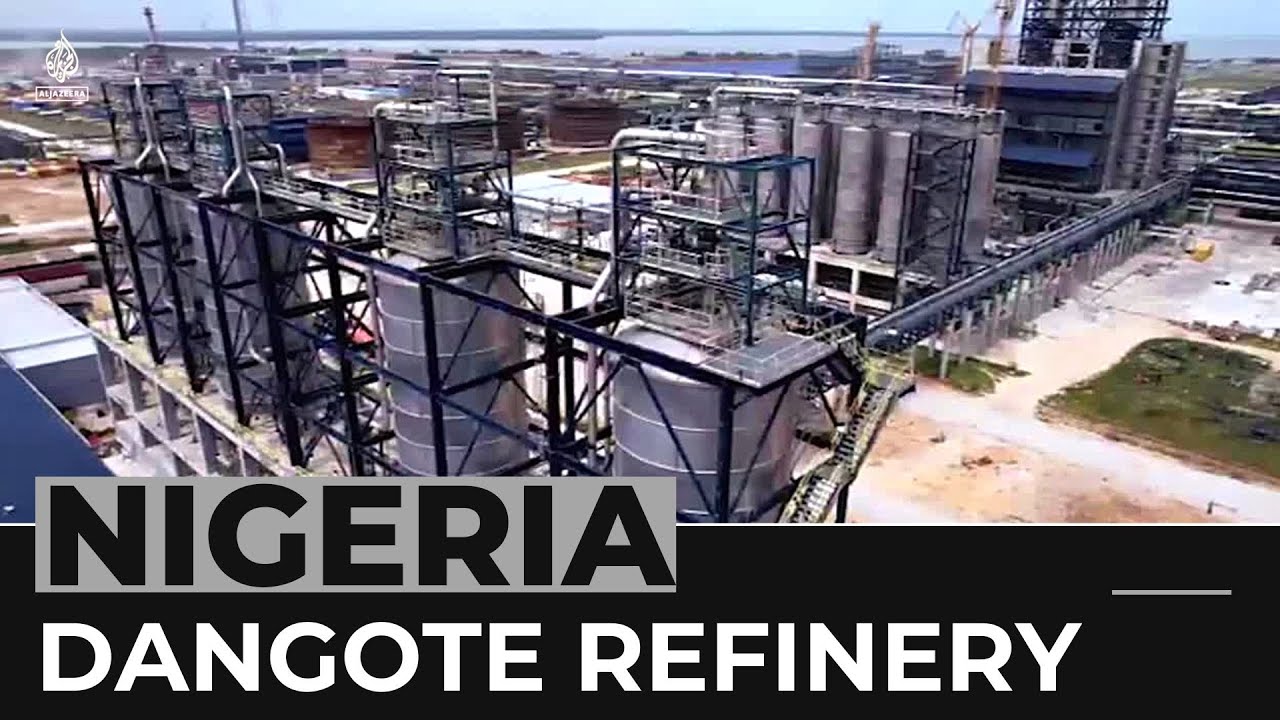
Aliko Dangote, president of the Dangote Group, says Nigerians are paying nearly half of what their West African neighbors spend on petrol, thanks to local refining at his multi-billion-dollar refinery.

Speaking during a visit to the refinery by Omar Touray, president of the Economic Community of West African States (ECOWAS) Commission, Dangote said: “In neighboring countries, the average price of petrol is around $1 per liter, which is about N1,600. But here at our refinery, we’re selling at between N815 and N820.”

“Many Nigerians don’t realize that they are currently paying just 55% of what others in the region are paying for petrol,” he said, insisting that the price gap is a direct benefit of domestic refining, which cuts transport, importation, and demurrage costs.

But while the announcement has been welcomed, it has also reignited the conversation around the enduring pain caused by the removal of fuel subsidy, as current pump prices remain far above pre-subsidy levels.

The remarks come months after the Dangote Refinery began rolling out diesel and aviation fuel and distributing petrol. The facility was long-touted as Nigeria’s solution to crushing import costs and a key buffer in the aftermath of President Bola Tinubu’s decision to end the petrol subsidy in May 2023, which sent fuel prices soaring from under N200 per liter to over N600 — and later above N1,000 in some parts of the country.

Since then, Nigerians have looked to the Dangote Refinery to help ease the burden. While the company has made a series of downward adjustments to diesel and now petrol, many say the reductions still fall short of expectations.

When compared to prices in neighboring countries, Dangote’s N815–N820 pricing is in a relatively better position. But within Nigeria, this level still represents a more than 300% increase from what Nigerians were paying before the subsidy was scrapped.

Though Dangote did not mention a timeline for further price cuts, he hinted at “a much larger initiative in the pipeline” that he says will deliver “maximum benefit” to Nigerians.

“This refinery is built for them,” he said.

But with household incomes stretched and inflation pushing basic necessities out of reach, any relief offered by local refining is yet to bridge the gaping hole left by the end of government-backed fuel discounts.

“We Must Stop Importing What We Can Produce”

Dangote argued that the refinery is more than just a business venture. He framed it as a symbol of economic self-reliance, saying: “As long as we continue importing what we can produce, we will remain underdeveloped.”

He also addressed widespread doubts over the refinery’s capacity.

“Some people have said we don’t even produce enough to meet Nigeria’s needs. But now, they are here to see the reality for themselves — and more importantly, to encourage other nations to embark on similarly large-scale industrial projects,” he said.

Citing the diesel market, he noted that prices fell sharply from N1,700 to N1,100 when local production started, and have since declined further.

“This reduction has made a significant impact across various sectors,” he said, including agriculture, manufacturing and mining.

ECOWAS: Dangote Refinery Key to Regional Standards

Touray, who led the ECOWAS delegation, praised the refinery’s ability to meet the 50 parts per million (ppm) sulfur standard — something he said many imported fuels still fail to meet.

“We are still importing products below our standard when a regional company such as Dangote can meet and exceed these requirements,” Touray said. He called on the private sector to take the lead in West Africa’s industrialization, saying the region can no longer make decisions for businesses “from a distance.”

He also pledged ECOWAS’ full support for companies like Dangote to access broader markets across the region and urged African countries to emulate Nigeria by developing infrastructure that serves regional economies.

“As we mark 50 years of ECOWAS, we are more committed than ever to bringing the private sector to the table,” Touray said, pointing to industrial development as key to reducing youth unemployment, poverty, and insecurity.

While Dangote’s refinery has finally begun supplying petrol — after several delays — and has introduced measurable cost relief relative to regional markets, the relief is tied to international oil prices. This means that the refinery could increase the price if the oil price, currently trading around $60 per barrel, goes up.

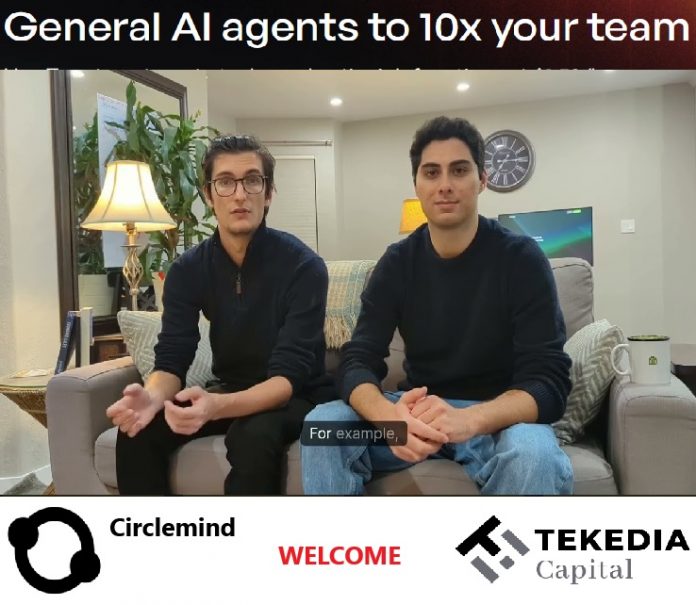
Tekedia Capital Welcomes Circlemind, a maker of General AI agents

0
Tekedia Capital welcomes Circlemind, a maker of general AI agents. We believe that in the next few years, one person can build a billion-dollar company and big enterprises could be managed and run by just dozens of people. What will happen is clear: when you are hired, you will be assigned AI agents to work with you.
 
One of the leading companies building that future is Circlemind. It creates general AI agents which can do many things including helping your sales team find new leads, summarizing your GitHub open issues, researching people you are scheduled to meet or speak with, finding B2B supplies, and many more things. If you look at the whole enterprise spectrum, Circlemind has the pieces to enable you run a business with mainly AI agents, as it has engineering, IT, marketing, sales, operations capabilities.
 
Circlemind’s Zero is engineered to think deeply, execute complex tasks, and maintain a personalized memory of your company knowledge. With one click, it anchors integrations to over 300 popular apps from Slack to Salesorce, and can operate browsers like humans. More so, Zero integrates seamlessly with your custom MCPs servers, allowing you to connect your internal systems with smart automation.
 
Tekedia Capital welcomes Antonio and Luca, wishing them great luck as they build systems to remake the nature of firms. To learn more about Circlemind, visit https://circlemind.co/ ; for Tekedia Capital, go to capital.tekedia.com

Trump, Xi Call Expected Amid Escalating Trade Rift—But Hopes for Breakthrough Remain Dim

0

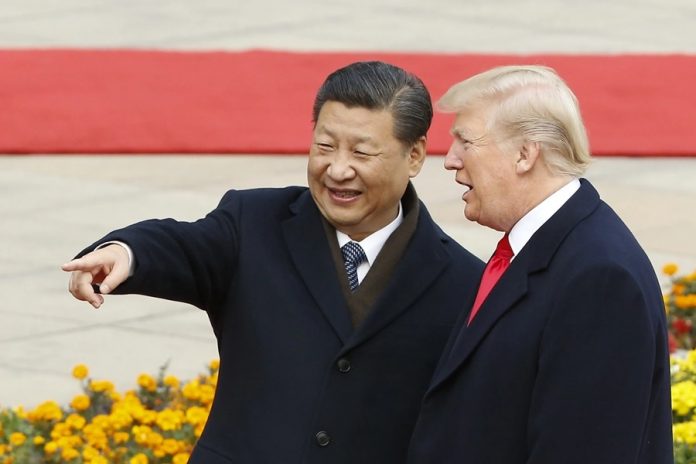
A long-anticipated call between President Donald Trump and Chinese President Xi Jinping could happen this week, as both countries face deepening hostilities over trade, technology, and diplomatic posturing.

A senior White House official told CNBC on Monday that the two leaders could speak “very soon,” although not immediately. The conversation, which follows the fragile agreement reached in Geneva in mid-May, comes as both countries ramp up accusations of betrayal and backtracking on the terms of their three-month tariff truce.

The mood between the two sides has soured rapidly. China on Monday forcefully rejected U.S. claims that it had violated the trade agreement. “China firmly rejects these unreasonable accusations,” the country’s Commerce Ministry said in a statement. It listed export controls on artificial intelligence chips, curbs on the sale of chip design software, and even the revocation of student visas for Chinese nationals as evidence of Washington’s antagonism.

“We urge the U.S. to meet China halfway, immediately correct its wrongful actions, and jointly uphold the consensus from the Geneva trade talks,” the ministry added.

Trade Deal on the Brink

In April, Trump stunned markets when he raised tariffs on Chinese goods to 145%, a sweeping move that effectively erased months of negotiation. Though both sides agreed weeks later to roll back most of those tariffs temporarily, the detente has not held.

Instead, accusations of sabotage are flying. Washington says Beijing is deliberately delaying exports of rare earth minerals and critical tech components. China, in turn, accuses the U.S. of engaging in economic containment, including its warning to allies against using Chinese-made chips and tightening export restrictions on advanced semiconductors.

Trump, visibly frustrated, wrote on Truth Social last Friday, “CHINA, perhaps not surprisingly to some, HAS TOTALLY VIOLATED ITS AGREEMENT WITH US… So much for being Mr. NICE GUY!”

High Stakes, Low Expectations

Despite the anticipation surrounding a possible Trump-Xi call, many observers doubt it will produce meaningful results. The tone from Beijing suggests hardening positions, not conciliation.

China’s posture has been one of defiance, underscored by a belief that it will not be bullied into making concessions. Even top global financiers agree. Speaking at a recent event, JPMorgan Chase CEO Jamie Dimon said the assumption that Beijing will bow to Washington is mistaken.

“China is a potential adversary. They’re doing a lot of things well. They have a lot of problems,” Dimon said. “But they’re not scared, folks. This notion that they’re going to come bow to America—I wouldn’t count on that.”

This sentiment reflects a growing consensus that Beijing is unlikely to compromise, even if Xi agrees to a direct conversation with Trump. The call, while diplomatically important, may be more symbolic than strategic.

The Impact of the Economic Fallout on Markets

The uncertainty is weighing heavily on markets. U.S. stocks opened lower Monday, rattled by fears that a new phase of economic confrontation may be on the horizon. Analysts warn that without a clear path forward, the current truce could unravel completely, unleashing another wave of trade shocks.

Before tensions escalated, trade between the U.S. and China exceeded $600 billion annually, making the partnership one of the most economically significant in the world. But with both governments now clamping down on each other’s technology sectors and intensifying national security restrictions, the relationship is rapidly deteriorating.

Xi-Trump Call May Be Final Attempt

The coming call, if it happens, could serve as a last attempt to revive the Geneva consensus. But even within Trump’s own team, there’s acknowledgment that only direct intervention from the two leaders might save the process.

Treasury Secretary Scott Bessent said last week that talks have stalled, and that progress will “require both leaders to weigh in with each other.” But even that seems a long shot.

However, it’s becoming increasingly clear that the Trump-Xi call may carry more symbolism than substance—a reflection of the widening gulf between two nations whose rivalry is no longer confined to trade, but to the future balance of global power.

Solana Price Prediction: Meet the Monster Token Expected to Crush SOL in 2025 – Projected to Soar 300% in 48 Hours

0

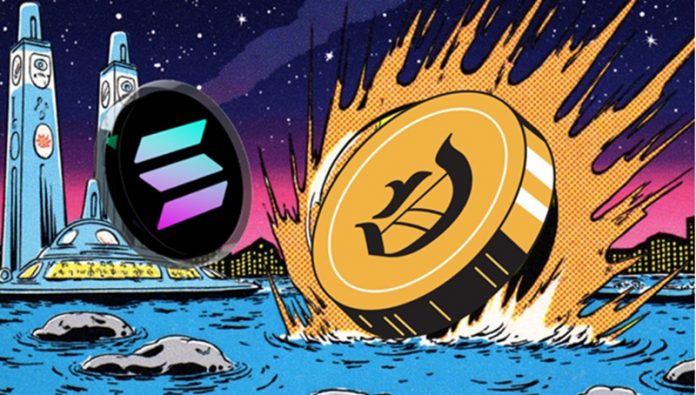
In the context of increased market activity and a renewed interest in blockchain assets, the token Salamanca ($DON) has emerged as a noteworthy competitor. This press release outlines how $DON is positioned as a “monster token” with the potential to outperform Solana (SOL) in 2025. With a projected 300% price surge over the next 48 hours, Salamanca is gaining traction through a combination of community-driven growth, strong exchange listings, and a strategic branding approach.

Centralized Exchange Interest Fuels $DON Momentum

Currently, $DON is listed on Gate.io, MEXC, PancakeSwap, and many others. As one of the most impressive top-tier Global Cryptocurrency Exchanges, Gate.io offers $DON with the highest visibility and international liquidity. We’ve had an average daily trading volume of $20 million so far, with consistency across both CEX and DEX platforms.

While writing at a current price of $0.0009842 $DON sits in a zone where the cost for growth is competitive. Further market expansion is possible based on additional ongoing evaluations by additional centralized exchanges. And this listing momentum is going to be so important for that momentum to carry forward, obviously, in what is becoming a time in the market that is receptive to broader trends related to Bitcoin reaching another all-time high. Investor interest, liquidity, all of that stuff.

Narrative Branding and Community Engagement

What sets Salamanca apart from many other meme coins is its narrative-driven identity. The token draws thematic inspiration from the fictional Salamanca cartel portrayed in a well-known television series. This approach has resulted in a unique brand presence that departs from the typical humor-based meme coin model.

The community surrounding $DON has grown rapidly, producing a wide range of user-generated content inspired by cartel culture, anime, and narrative storytelling. This level of organic engagement continues to amplify the token’s visibility across social platforms. The community’s involvement is not only promotional but integral to the asset’s evolving digital culture.

Forecasts indicate that $DON may experience a 300% surge within the next 48 hours, supported by high trading volumes, market exposure, and user activity. The project’s roadmap includes new features to enhance its ecosystem and facilitate smoother token utility. Discussions with Binance and other major platforms may further elevate its market standing.

Among meme tokens operating on the Binance Smart Chain, $DON has shown one of the fastest growth trajectories in 2025. Its alignment with entertainment IPs and blockchain functionality presents a distinctive offering in the saturated crypto landscape. The combination of narrative identity and practical utility offers $DON multiple growth pathways that could outpace Solana in performance metrics.

For more information about Salamanca (DON), visit:

Website: https://salamanca.club/

Twitter/X: https://x.com/salamanca_token

Telegram: https://t.me/salamancatoken