DD
MM
YYYY

PAGES

DD
MM
YYYY

spot_img

PAGES

Home Blog Page 108

Bill Ackman Aims to Raise $5bn for U.S.-Listed Closed-End Fund as Pershing Square Prepares IPO

0

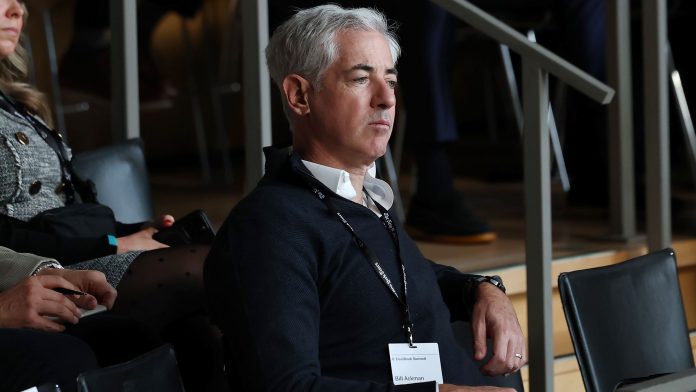
Bill Ackman is plotting a major two-pronged move: raise $5 billion for a new U.S.-listed closed-end fund while taking his hedge-fund firm, Pershing Square Capital Management, public.

People familiar with the plan told Reuters the two listings are intended to launch together, a synchronization meant to give investors simultaneous exposure to the new vehicle and to the firm itself.

The closed-end fund is being structured to mirror Ackman’s hedge-fund strategy but with two important differences designed to broaden its appeal: lower fees and faster access to capital than traditional hedge funds typically allow. That combination is intended to attract a wider array of investors — from large pensions and endowments to retail buyers who normally cannot get into hedge funds. Pershing’s people have discussed offering existing investors a sweetener: recipients of shares in the closed-end vehicle would also receive free shares of Pershing Square itself as part of the launch package.

Pershing Square’s management first contemplated a U.S. closed-end listing in 2024 and even moved to list Pershing Square USA, only to pull the IPO days before it was due to begin trading in July of that year. Ackman pared back earlier, much larger ambitions, plans that once targeted as much as $25 billion in capital, and the relaunch appears to be more modest and surgical by comparison. The earlier withdrawal remains a cautionary backdrop: the new effort is smaller, more targeted, and tied to an IPO of the management firm itself.

Pershing Square manages roughly $21 billion in assets today, largely through Pershing Square Holdings, the London-listed closed-end fund that has been the public bellwether for Ackman’s strategy. That vehicle has delivered double-digit returns in recent years, performance that underpins the pitch to U.S. investors who might otherwise be wary of a hedge-fund-style product.

Pershing’s recent balance-sheet moves, including a series of high-profile equity stakes and an expanded footprint in publicly traded and private assets, feed into the narrative that the firm has scale and an investable track record.

People briefed on the plan say the new closed-end fund will aim to bring in cornerstone institutional investors to anchor the deal; Bloomberg reported that about $2 billion could come from well-known institutional backers. That anchor demand would be intended to provide confidence to broader retail and wealth-management distribution at launch, and to help the new vehicle hit scale quickly — a critical factor for a fund that seeks to replicate the concentrated, activist style of a flagship hedge fund while still offering daily navigability.

Ackman has repeatedly said he wants to convert parts of his business to more permanent, institutionally accessible formats. The rationale is straightforward: converting a large, closed investor base into publicly tradable instruments can lower funding friction, reduce redemptions, and monetize the firm’s brand and investment track record. For investors, the pitch is also mechanical and attractive — easier liquidity than private hedge funds, lower headline fees than bespoke hedge funds, and a direct line to Ackman’s concentrated investing playbook.

The plan still faces material hurdles. Market windows matter for IPOs, and people familiar with the offering warned that the structure and timing could change with market conditions. The dual-listing strategy raises complex regulatory and governance questions: how to price the incentive shares, how to align the interests of public shareholders with those who will remain in the firm’s private partnerships, and how to manage conflicts that can arise when an activist manager runs both a public vehicle and a firm with separate private clients.

Pershing has been testing many of these ideas in the London market through Pershing Square Holdings, but the U.S. listing will invite a different set of investor expectations and regulatory scrutiny.

Corporate moves earlier this year show the firm’s appetite for large, concentrated wagers. Pershing Square has pushed heavily into Howard Hughes — increasing its stake substantially via cash investments and proposals to reshape the company — a reminder that Ackman still prefers to run big, concentrated positions and, when necessary, to assume active roles in management. Those deals demonstrate the kind of assets the closed-end fund might hold, and they also explain why some investors see Pershing as a hybrid between a public investment trust and an activist merchant bank.

The public reaction to the revived IPO idea will likely hinge on three things. First, the credibility of Pershing’s track record: the London vehicle has produced strong returns in recent years, and Pershing’s managers will lean on that performance to win investor commitment. Second, fee structure and governance: investors will scrutinize whether the “lower fees” pitch is genuinely meaningful after carried interest and performance fees are baked in. And third, the optics of selling free shares of the management company: regulators and long-term investors will want to see clear disclosure on dilution, voting rights, and how management incentives align with outside shareholders.

Ackman’s public personality is also part of the calculus. He is as well known for his activist campaigns as for his social media presence, a platform he uses regularly to shape market narratives and to spotlight investments. That visibility can help distribution — he has a large following on X and other platforms — but it also brings scrutiny and magnifies reputational risk if an investment goes wrong.

If the plan proceeds, it would represent one of the higher-profile attempts in recent years to bring hedge-fund alpha to a broader investor base without the classic liquidity and fee constraints. It would also mark a rare simultaneous public offering of both a fund vehicle and the management company — an arrangement that, if successful, could reset how prominent activist managers package and monetize their businesses.

For now, Pershing Square’s spokesperson declined to comment publicly, and those familiar with the plans cautioned that the numbers and timing could shift. Sources told reporters that early-2026 remains the target window for both the closed-end fund IPO and a listing of Pershing Square Capital — provided market conditions remain favorable.

Why Analysts Expect the Top Crypto Presale Projects to Lead Web3 Growth Heading Into 2026

0

Black Friday Week continues to shape the early-stage market as investors shift attention toward infrastructure, onboarding, and gaming-focused projects in the crypto presale ecosystem. Rising presale participation, limited-time bonuses, and rapid stage progression have pushed several emerging tokens into the spotlight. Among them, Mono Protocol, WeWake, and Nexchain stand out for offering distinct utility models across different areas of Web3 development.

Here is an in-depth look at how these three projects are influencing the Black Friday phase of the presale crypto market.

1. Mono Protocol — Leading the Black Friday Cycle With Chain Abstraction and Rapid Stage Growth

Mono Protocol remains the strongest performer of Black Friday Week as the project nears completion of Stage 18 after raising $3.52 million out of $3.60 million. With its token priced at $0.0525 and a projected listing value of $0.500, the protocol continues to attract investors seeking transparent pricing and advanced infrastructure utility.

The platform positions itself as a universal execution layer built around chain abstraction, MEV-resistant routing, and guaranteed settlement. Its unified design removes the friction of navigating multiple networks, simplifying swaps, transfers, and bridging into a single flow.

This Black Friday cycle has been driven heavily by Mono’s 100% bonus, which doubles all token purchases made between November 24 and 30. As the presale advances through its later stages, many analysts place Mono at the top of web3 crypto presale research lists due to its multi-chain architecture and utility-driven approach.

Mono remains one of the most widely referenced new crypto presale projects of the season, supported by a clear roadmap and a growing ecosystem designed for long-term adoption.

2. WeWake — Walletless, Gasless Layer 2 Designed for Mass Web3 Adoption

WeWake continues to attract strong interest during Black Friday Week, particularly among participants evaluating onboarding-focused pre sale cryptocurrency solutions. The project eliminates common barriers to Web3 participation by removing wallets, seed phrases, and gas fees entirely. Instead, users access the network using familiar logins such as Google, Apple, or Telegram.

The WeWake presale is positioned within an 80-stage model, with the project currently in Stage 17, priced at $0.0340. The presale has already raised $1.435 million, assisted by the release of a 100% Black Friday bonus, dashboard upgrades, and consistent weekly development progress.

WeWake’s hybrid execution design—gasless, fast off-chain matches secured by on-chain settlement—supports a wide range of decentralized applications without exposing newcomers to technical friction. This UX-first approach aligns with broader market trends where accessibility is becoming a leading factor in cryptocurrency presales.

As user-friendly networks gain traction, WeWake has become a notable presale coin for investors monitoring long-term adoption themes beyond the holiday period.

3. Nexchain — AI-Integrated Blockchain Presale Driving Stage 30 Growth

Nexchain has entered Black Friday Week as one of the most active AI-driven blockchain presales. The project is attracting investors who prefer verifiable development progress, stage-based pricing, and open testing environments over purely marketing-focused presale launches.

Nexchain has advanced into Stage 30, with tokens priced at $0.12 and over $12 million raised. Its structured presale design provides predictable pricing through each stage, creating steady participation from both new and returning buyers as the project moves toward its Token Generation Event.

The platform’s appeal comes from its AI-enhanced blockchain framework, which integrates adaptive consensus, AI-managed smart contract optimization, anomaly detection, cross-chain interoperability, and post-quantum security. This technical positioning sets Nexchain apart within the broader presale crypto ecosystem.

Nexchain’s Black Friday activity accelerated after the project introduced a 250% bonus, boosting user allocations during the promotional window. Combined with active dashboard growth and testnet traction, Nexchain has secured its place as one of the leading early-stage blockchain presales heading into 2026.

As demand for AI-integrated infrastructure expands, Nexchain remains a standout presale coin for users tracking high-utility blockchain innovation.

Early-Stage Market Acceleration Continues Through Black Friday

Black Friday Week remains one of the most active periods for crypto presale participation, with Mono Protocol, WeWake, and Nexchain each offering a different vector of utility: multi-chain infrastructure, simplified onboarding, and decentralized skill-based gaming.

Together, these projects illustrate the diverse themes driving the current web3 crypto presale landscape. As promotional windows close and stage pricing increases, the holiday cycle continues to shape how investors evaluate early-stage opportunities across the evolving cryptocurrency presales market.


Learn More about Mono Protocol

Website: https://www.monoprotocol.com/

X: https://x.com/mono_protocol

Telegram: https://t.me/monoprotocol_official

LinkedIn: https://www.linkedin.com/company/monoprotocol/


As Bitcoin and Ethereum Rally, Avalon X Presale Offers 25% Bonus This Black Friday

0

Top crypto assets like Bitcoin (BTC) and Ethereum (ETH) are setting the mood as the broader market recovers. With the Bitcoin price and Ethereum price rallying, investors seek a modest price altcoin to ride the momentum of these pioneer assets for profit.

Among various options, RWA-based assets are in massive demand and nascent Avalon X (AVLX) is emerging as one of the top new crypto projects in 2025. The hype of this real estate backed cryptocurrency is not an illusion, but fueled by institutional backing, exclusive incentives.

Everyone loves a discount and as this year’s Black Friday looms closer, AVLX has introduced a massive 25% bonus for early birds.

Although Bitcoin and Ethereum are the major movers in the crypto space, the Avalon X crypto offerings position the asset as one of the best altcoins to invest in 2025, especially for investors who don’t want to miss out on what could be a generational wealth creation opportunity.

Bitcoin Price USD Recovers

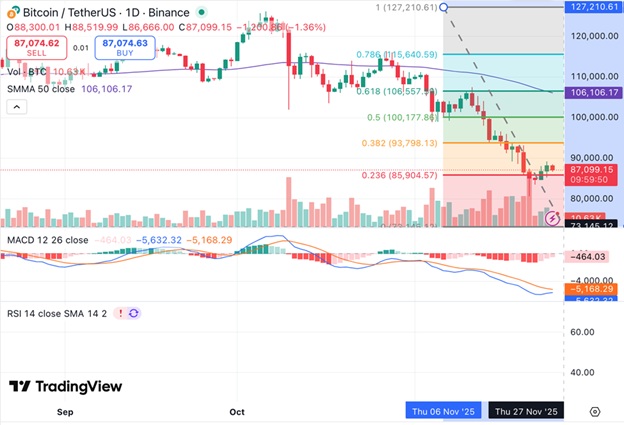
Amid market recovery, the Bitcoin price today at $87,099 has gained 1.11% in the past day. The trading volume also increased by 2.23%, indicating rising investors’ interest.

The catalyst to this recovery is attributed to recent Bitcoin news, stating that BlackRock’s spot Bitcoin ETF recently deposited an additional 900 BTC worth $77.59 million into Coinbase Prime. This brings the total to a staggering $321.29 million, creating a ripple effect that can lead to reduced volatility and increased liquidity.

Source: TradingView

Looking at the technical analysis, Bitcoin displays a bearish signal as it trades below its 50-day SMA value of $106,106. However, the Bitcoin price is showing signs of recovery after finding support at the 23.6% Fibonacci retrenchment value of $85,904. A continuous broader market rally could push the pioneer asset into new price levels.

Ethereum Price Prediction: Support at $2,700

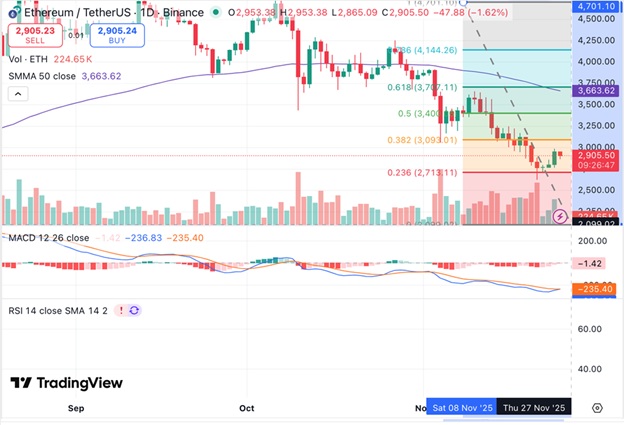
At press time, the Ethereum price USD at $2,913 gained 4.02% in the past day. The trading volume also increased by 20.38% in the past 24 hours, showing positive investors’ interest.

This recent rally can be attributed to latest Ethereum news, stating that U.S. banks now have the regulatory approval to hold Ethereum as principal assets. The guidance reflects increasing institutional adoption, which potentially influences Ethereum market dynamics.

Source: TradingView

According to its technical analysis, the Ethereum price displays a bearish trend as it trails below its 50-day SMA value of $3,663. On the other hand, the asset has found support around the 23.6% Fibonacci retracement level of $2,713. Ethereum needs to hold above this level for a while and push towards the next price level.

Despite the anticipated positive rally from these assets, Avalon X appeal comes from its identity as a crypto backed by real world assets. Unlike market-reliant assets, the real estate tokenization crypto offers stability and long-term wealth-building opportunity.

Avalon X Real Estate Crypto Innovation

Avalon X (AVLX) taps into the multi-trillion dollar real estate industry to simplify investment for everyday investors through property tokenization. This innovation of blockchain and tangible real-world assets is backed by Grupo Avalon, a leading real estate developer with nearly $1 billion in total project value.

Investors can get into this wealth-creating project through the Avalon X token, AVLX, which also grants access to exclusive incentives such as staking rewards, property discounts, and VIP reservations.

Access Avalon X Giveaway And Discounts

To support its community, the project has organized multiple Avalon X contest events and crypto presale bonuses in 2025. As a result, AVLX coin holders can look forward to the $1M crypto giveaway incentive and an opportunity to own a crypto townhouse giveaway in the exclusive Eco Avalon development.

Eco Avalon Townhouse Giveaway

Avalon X is further adding to the excitement with the introduction of its referral program and an extra 25% bonus in tokens this Black Friday. However, note that these events are time-limited so now is the best time to be a part.

Get in Before the Next Price Surge

Although Bitcoin and Ethereum stand as pioneers in the crypto space, their heavy reliance on market trends and high price keeps them out for most everyday investors.

On the other hand, Avalon X (AVLX) currently sells at a modest price of $0.01 per token in Stage 2 following the successful completion of Stage 1, which delivered a 100% return on investment (ROI) to early participants.

The AVLX coin also benefits from a CertiK-audited smart contracts, a deflationary token model, and a forthcoming listing on Binance and Uniswap expected to increase liquidity. However, demand is increasing daily as the Avalon X presale has sold over 77 million tokens already.

Take advantage of the Avalon X 25% bonus now and be a part of the disruption that’s reshaping wealth creation for everyone.


Join the Community

Website: https://avalonx.io

CoinMarketCap: https://coinmarketcap.com/currencies/avalon-x/

Telegram: https://t.me/avlxofficial

X: https://x.com/AvalonXOfficial

US SEC Investigates Jefferies’ Exposure to Bankrupt First Brands Group Amid Complex Debt Defaults

0

The U.S. Securities and Exchange Commission (SEC) has launched a probe into Jefferies’ involvement with the bankrupt auto parts manufacturer First Brands Group, the Financial Times reported Thursday.

The investigation, which is still in its early stages, is focused on whether Jefferies provided investors with sufficient disclosure regarding the Point Bonita fund’s exposure to First Brands’ debt, and whether internal controls at the bank were adequate to prevent conflicts of interest.

An SEC spokesperson, consistent with standard protocol, declined to comment on the existence or nonexistence of a possible investigation. But sources told the Financial Times that it remains unclear whether the probe will lead to formal allegations of wrongdoing.

First Brands’ Debt Web

First Brands Group, a significant supplier in the automotive sector, financed its operations through a highly leveraged and complex debt structure. The company relied on a mix of senior secured loans, subordinated notes, and high-yield credit facilities. Its capital stack included multiple layers of collateralized obligations, intercompany loans, and guarantees between subsidiaries, which created substantial opacity for investors and lenders.

In mid-2024, First Brands began experiencing cash flow pressures due to a combination of supply chain disruptions and lower-than-expected revenue from key auto clients. These operational issues, combined with a debt maturity schedule heavily concentrated in late 2024 and early 2025, triggered cascading defaults across several debt tranches. Senior secured lenders were partially repaid from collateral liquidation, but subordinated noteholders and other unsecured creditors suffered significant losses.

Jefferies’ Point Bonita fund had invested heavily in these instruments, particularly the subordinated and high-yield notes. Market analysts note that the fund’s exposure to these high-risk tranches may not have been fully appreciated by investors, raising questions about whether the bank adequately communicated the intricacies and vulnerabilities of First Brands’ debt structure.

Timeline of Key Events

  • Early 2024: Jefferies initiates exposure to First Brands’ debt via Point Bonita fund.
  • Mid-2024: First Brands begins to experience operational strain; early signs of missed payments emerge.
  • July 2024: Investors report concerns regarding the fund’s exposure, as market rumors about First Brands’ debt struggles circulate.
  • Late 2024: Multiple debt tranches begin defaulting; Jefferies’ fund faces significant mark-to-market losses.
  • Early 2025: First Brands officially files for bankruptcy; Jefferies and other creditors attempt to recover collateral and restructure remaining debt.
  • November 2025: SEC begins inquiry into Jefferies’ disclosures and internal controls related to Point Bonita fund exposure.

Market Impact and Investor Concerns

The collapse of First Brands has reverberated across the auto parts sector and the broader high-yield lending market. Investors are increasingly cautious about complex, layered debt structures that obscure true exposure, particularly when market conditions tighten or operational risks materialize. Jefferies’ share price has suffered, dropping over 12 percent this quarter and 27 percent year-to-date, reflecting heightened investor apprehension.

Analysts suggest that the SEC’s inquiry could have broader implications for hedge funds and asset managers invested in highly leveraged corporate borrowers. It may prompt heightened scrutiny of disclosure practices, especially for funds holding complex or opaque debt instruments. The outcome could influence market perceptions of risk and governance standards, particularly in the high-yield credit space.

While the investigation is still preliminary, Jefferies faces potential reputational and regulatory risks. The SEC’s inquiry may also influence broader regulatory thinking on how banks and investment funds manage and communicate risks associated with highly structured corporate debt, with potential repercussions across Wall Street’s high-yield and structured finance markets.

Alibaba Pushes Into AI Wearables With New Quark Glasses, Challenging Meta’s Global Lead

0

Alibaba on Thursday introduced its new Quark artificial intelligence glasses in China, marking a fresh push by the company to carve out space in a wearables market that global players like Meta currently dominate.

The headset starts at 1,899 yuan ($268.25) and is powered by Alibaba’s in-house Qwen AI model and app. Alibaba has opted for a familiar, everyday look instead of the more conspicuous visor-style designs that have defined Western rivals.

The Quark glasses resemble regular eyewear with a black plastic frame, a design choice that appears aimed at helping the device blend more seamlessly into daily use rather than calling attention to itself.

Alibaba said the glasses will be tightly woven into its ecosystem, including Alipay and its e-commerce platform Taobao. Wearers will be able to use them for functions like on-the-go translation and instant price recognition, positioning the device as an extension of tools consumers already use throughout the Alibaba universe.

Li Chengdong, a Beijing-based electronics industry analyst, said Alibaba’s strength lies in its shopping, payments, and navigation services, and that the Quark headset is designed to work more like a life assistant rather than a purely entertainment or gaming device. He added that the company is moving aggressively into consumer-focused AI after lagging competitors in the space for years.

Earlier this month, Alibaba rolled out a major upgrade to its AI chatbot.

Li said the strategy behind the glasses also reflects the company’s long-term attempt to defend its territory in an increasingly competitive e-commerce sector.

“Alibaba is not a monopoly in e-commerce,” he said. “It hopes AI can help it secure the next-generation traffic gateway.”

The new Quark glasses are available on major Chinese e-commerce platforms, including Tmall, JD.com, and Douyin. Sales numbers have not yet been made public, as the product only officially launched on Thursday.

The release drops Alibaba into a global race that is intensifying as tech companies hunt for the next device category that combines entertainment, communication, and computing underpinned by AI. Meta currently dominates the VR headset market with around 80 percent of global share through its Quest line. Apple’s Vision Pro is also in play, while Samsung, working with Google, introduced its Galaxy XR extended-reality headset in October, incorporating AI features built on Alphabet’s technology.

Alibaba is not alone in China’s AI-wearables experimentation. Xiaomi released its own AI-powered glasses in June, while Baidu has had a comparable product on the market already. The overlapping timelines underline a broader shift within China’s tech sector, where companies are racing to capture new hardware entry points as consumers migrate toward AI-driven interfaces.

Although Alibaba has historically been known for its core e-commerce and cloud operations, the Quark glasses signal the company’s attempt to embed AI more directly into personal devices. It is an area where it has been considered a step behind rivals. The company is now trying to reposition itself as a frontrunner in consumer AI, using its sprawling ecosystem of payment, shopping, and lifestyle services as its leverage.

The headset’s launch comes amid renewed pressure across China’s tech industry to find fresh sources of growth. With the battle for online retail intensifying and user attention fragmenting across platforms, major firms are seeking new hardware that could serve as the next major entry point for digital services. Alibaba is betting that AI glasses—lightweight, functional, and integrated into everyday habits—might become that gateway.

The company’s move signals that the wearables fight in China is only getting started, though it’s not clear yet whether consumers will embrace the device at scale.