DD
MM
YYYY

PAGES

DD
MM
YYYY

spot_img

PAGES

Home Blog Page 1085

Cardone Capital’s 1000 Bitcoin Acquisition Is A Pioneering Step That Could Redefine Real Estate

0

Cardone Capital, a U.S.-based real estate firm managing over $5.1 billion in assets, acquired 1,000 Bitcoin (BTC) valued at approximately $102 million, as announced by CEO Grant Cardone on June 21, 2025. This move marks the firm as the first real estate company to fully integrate a Bitcoin strategy, combining its portfolio of 14,200 rental units and 500,000 square feet of office space with cryptocurrency. The firm plans to purchase an additional 3,000 BTC by year-end, potentially exceeding $400 million in holdings, using rental income through hybrid funds like the 10X Miami River Bitcoin Fund.

This strategy blends real estate’s stable cash flow with Bitcoin’s growth potential, positioning Cardone Capital alongside institutional Bitcoin adopters like MicroStrategy and Metaplanet. Cardone Capital’s acquisition of 1,000 BTC, with plans for 3,000 more, signals a bold shift in real estate investment strategy, merging traditional assets with cryptocurrency.

Cardone’s move legitimizes Bitcoin as a corporate treasury asset beyond tech firms like MicroStrategy. Real estate, a traditionally conservative sector, adopting BTC could encourage other firms to diversify into crypto, accelerating institutional adoption. The use of rental income to fund Bitcoin purchases via hybrid funds like the 10X Miami River Bitcoin Fund creates a new model for blending stable cash flows with high-growth assets, potentially attracting more investors to crypto-backed real estate funds.

Portfolio Diversification

Bitcoin’s high volatility (30-day annualized volatility ~40% as of June 2025) contrasts with real estate’s stability, offering Cardone Capital a hedge against inflation and fiat currency devaluation. BTC’s historical 10-year annualized return of ~60% could boost fund performance if the bull market continues. However, Bitcoin’s price swings pose risks. A sharp correction (e.g., 2022’s ~65% drop) could strain fund liquidity or investor confidence, especially if rental income is heavily allocated to BTC.

Cardone’s $102 million purchase (1,000 BTC) and planned $400 million+ investment (3,000 BTC) represent a small but notable fraction of Bitcoin’s $1.9 trillion market cap (as of June 2025). Large buys like this could contribute to price momentum, especially in a supply-constrained market post-2024 halving. Increased demand from institutional players may tighten Bitcoin’s circulating supply (current total supply ~19.7 million BTC, with ~15% illiquid), potentially driving prices higher but also amplifying volatility.

Integrating Bitcoin into real estate funds may attract scrutiny from U.S. regulators (e.g., SEC, IRS). Unclear crypto regulations could complicate fund structures or tax treatments, especially if BTC is treated as property rather than currency. Cardone’s high-profile move might push regulators to clarify crypto’s role in traditional finance, impacting future adopters.

Cardone’s strategy targets accredited investors seeking exposure to both real estate and crypto. This could expand its investor base, particularly among younger, crypto-savvy demographics. However, combining Bitcoin’s risk profile with real estate’s illiquidity could deter conservative investors, requiring clear communication of risks and returns.

Many real estate investors prioritize predictable cash flows and tangible assets, viewing Bitcoin as speculative. They may avoid firms like Cardone that embrace crypto, fearing volatility or regulatory risks. Younger or risk-tolerant investors see Bitcoin as a store of value or growth engine. Cardone’s model appeals to this group, bridging old and new asset classes. This divide could reshape investor demographics in real estate.

Most real estate companies stick to conventional assets (property, REITs). Cardone’s BTC move sets it apart, but competitors may hesitate to follow due to crypto’s complexity and risks. Firms adopting Bitcoin (e.g., Cardone, MicroStrategy) position themselves as forward-thinking, potentially gaining a first-mover advantage if crypto adoption accelerates. This creates a strategic split between risk-averse and risk-embracing corporations.

Bitcoin’s high entry barriers (current price ~$102,000/BTC) and Cardone’s focus on accredited investors limit access to this hybrid strategy. Wealthier investors can capitalize on potential BTC gains, while retail investors are sidelined, deepening the wealth gap. Conversely, Cardone’s funds could democratize crypto exposure for some accredited investors, but the divide persists between those with access to such opportunities and those without.

In developed markets (e.g., U.S.), Bitcoin adoption by firms like Cardone is feasible due to mature financial systems and crypto infrastructure. In emerging markets, regulatory hostility or economic instability may hinder similar strategies, widening the gap between global investment landscapes. Countries with pro-crypto policies (e.g., El Salvador, UAE) may see local firms emulate Cardone, while others lag, creating a geopolitical divide in crypto integration.

Cardone Capital’s Bitcoin acquisition is a pioneering step that could redefine real estate investment, blending stability with crypto’s growth potential. It strengthens Bitcoin’s institutional credibility but introduces risks tied to volatility and regulation. The move deepens divides between traditional and hybrid investors, conservative and innovative firms, and those with or without access to such strategies. As Cardone plans to scale its BTC holdings, its success or failure will likely influence whether other firms bridge this divide or remain on the sidelines.


Multichoice Slashes Decoder Price by 50% Amid Massive Subscriber Loss in Nigeria

0

Multichoice Nigeria has slashed the price of its DStv decoder by 50%, from N20,000 to N10,000, in a renewed bid to boost its subscriber base. The aggressive pricing strategy comes as part of the company’s broader effort to address plummeting subscriptions in Africa’s largest PayTV market.

As part of the offer, Multichoice also launched a free tier upgrade campaign for both active and returning subscribers. From June 16 to July 31, 2025, customers who pay for their current DStv subscription package in full will be upgraded automatically to the next higher tier, granting access to more channels and content at no additional cost.

“By repositioning itself as a platform for daily value, DStv aims to encourage content discovery across a wider array of genres, including movies, drama, kids’ programming, and news,” the company stated.

Multichoice Nigeria’s CEO, John Ugbe, described the promotion—branded the “We Got You” campaign—as a way of rewarding loyalty and making premium content more accessible, especially for non-sports viewers.

“We want to ensure our customers feel appreciated and have access to the best entertainment every day. The ‘We Got You’ campaign is about making premium content more accessible and showing that DStv offers something for everyone, not just football fans,” Ugbe said.

Subscriber Loss and Public Backlash

The announcement follows Multichoice’s stunning loss of 1.4 million subscribers in Nigeria between March 2023 and March 2025, according to financial disclosures from its parent company, Multichoice Group. The Nigerian market alone accounted for 77% of the total 1.8 million subscriber losses across its “Rest of Africa” (RoA) business segment during the period.

The group blamed a combination of economic headwinds for the mass exit, including soaring inflation, repeated power grid collapses, fuel scarcity, and a sharp fall in disposable income that left many unable to afford television subscriptions.

But industry analysts point to repeated price hikes as a key driver of customer dissatisfaction. Between April 2023 and May 2024, Multichoice Nigeria implemented three separate price increases on its DStv and GOtv bouquets—twice in 2023 and once in 2024—stirring public anger and sparking calls for regulation.

Inflation and the Case for Flexible Subscription Plans

At the heart of the issue is Nigeria’s unrelenting inflation, which in May 2025 stood at 22.97%, making consistent PayTV subscriptions increasingly unaffordable for a large portion of the population. As household incomes shrink and purchasing power erodes, many Nigerians are choosing to forgo traditional entertainment packages in favor of mobile streaming options that offer cheaper, on-demand content.

In response to this, Multichoice recently began trialing weekly subscription packages in Uganda, offering users the flexibility to pay in smaller amounts instead of committing to a full month. The company is reportedly considering expanding the initiative to Nigeria—a move analysts say could provide a much-needed cushion for low-income subscribers and reduce churn.

Some consumers believe that if the weekly payment option is extended to Nigeria, it could boost retention and slow subscriber loss, as It’s a model that better aligns with the income cycles of many African households.

Multichoice’s challenges come amid rising competition from low-cost streaming platforms and a general shift in consumer behavior, especially among younger viewers who prefer on-demand content over traditional linear TV. Platforms like Netflix, Showmax (also owned by Multichoice), and YouTube are attracting growing audiences, especially in urban centers, due to their flexibility and data-friendly features.

To compete, Multichoice says it is broadening its content offering beyond sports to include more movies, kids’ programming, documentaries, and local drama series. The decoder price slash and free tier upgrade are part of that repositioning effort.

However, observers caution that unless Multichoice significantly revises its pricing model and payment flexibility, particularly in Nigeria, any gains from promos or hardware discounts may be short-lived.

While Multichoice works to stabilize its subscriber base, all eyes will be on whether it can roll out weekly packages quickly enough and balance profitability with affordability in an increasingly strained economy.

Coin Price Prediction: PEPE Is Not The Only Frog Coin Bulls Are Buying

0

As the crypto market waits for another bull run that can bring in some excitement, Pepe Coin ($PEPE) remains on the buying list of those looking for big returns. With its price remaining around micro-cent levels and its tendency to give shocks to the market, PEPE’s potential cannot be doubted.

However, a new frog token has announced itself that might just be the next big thing in the crypto market. It promises to engage genuine earning opportunities along with meme coin virality to make a perfect balance. The coin in conversation is Angry Pepe Fork, the new age frog coin set to shake things up in the year 2025.

What Is PEPE’s Price Forecast?

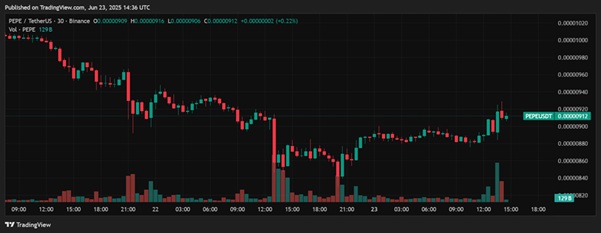
PEPE is currently traded at $0.000009946 and has gained over 12% in the past day. This data alone speaks volumes about the coin’s nature. It is known to generate sharp price leaps and also dips pretty regularly. So, even a 60% price growth prediction looks achievable for the frog-inspired coin, but the fall can be drastic at the same time.

However, $PEPE’s real success story is based more on hype than just pure fundamentals. Its massive supply and reliance on viral movement mean any rally may be sharp but short-lived. Bulls wanting longer arcs of growth are now scouting tokens that offer both meme appeal and real utility.

But, change is the only constant, and in 2025, meme coins are maturing. Newer projects like Angry Pepe Fork integrate CommunityFi and GambleFi models that reward investors beyond just price moves.

Earn Over 10,000% APY, The earlier you get in the higher the APY – Buy $APORK

Why Is Angry Pepe Fork the New Frog Alternative

Angry Pepe Fork is pretty well prepared to be the next meme coin king. Its presale has already raised over $244k in just a few weeks. The token is currently available for $0.0269 each.

Here’s what makes the altcoin special:

CommunityFi Missions: Every tweet, meme creation, and referral will help you earn tokens. So, effectively, growth is promoted through rewarding its own community.

10,000% Staking APY: Investors who stake $APORK during the presale will be getting about 10,000% APY. This will make them massive gains, even before the token gets launched on major exchanges.

Deflationary Token Burn Mechanism: Once the GambleFi gaming platform goes live, every win will incinerate a portion of tokens. This is done to make sure scarcity remains intact to push price growth.

Multi-Chain Expansion: After the presale, Angry Pepe Fork will list on Ethereum, Binance Smart Chain, and Solana. The team is focused on increasing access and liquidity for the investors.

We have seen several presale successes in the recent past. Angry Pepe Fork aims to replicate that success with even stronger mechanics in place. By rewarding community action and embedding deflationary economics, $APORK will cater to both meme coin traders and DeFi enthusiasts who seek sustainable growth.

Earn Over 10,000% APY, The earlier you get in the higher the APY – Buy $APORK

PEPE or Angry Pepe Fork?

We suggest a balance between both coins will be a better option in an uncertain yet forward-looking market. Here’s how:

Balanced Upside: While $PEPE bulls chase quick gains, $APORK presale participants will benefit from presale bonuses, staking rewards, and GambleFi utility.

Diversified Portfolio: Adding $APORK to a portfolio alongside $PEPE offers exposure to both legacy meme coin gains and next-gen utility-based growth.

Which Frog Coin Should You Choose for 2025

So, by now, you know that PEPE is not the only frog-based coin in the investors’ minds. The newcomer Angry Pepe Fork is working hard to cement its place in the meme coin industry. However, both coins offer something unique and the right thing to do will be to include a percentage of both in the portfolio.


Website: https://angrypepefork.com

X (Formerly Twitter): https://x.com/AngryPorkCoin

Telegram: https://t.me/AngryPepeFork

Instagram: https://www.instagram.com/angrypepefork/

Implications of Digital Warfare Using Cryptocurrencies

0

Israeli authorities recently arrested three individuals suspected of spying for Iran, with payments allegedly made in cryptocurrencies. This incident highlights the escalating digital dimension of the Israel-Iran conflict, where digital assets are increasingly used to fund espionage and cyberattacks. A 27-year-old Tel Aviv resident was detained for tasks like photographing officials’ homes and military sites, reportedly receiving thousands of dollars in crypto.

This follows earlier cases, such as the October 2024 arrest of seven Israeli Jews from Haifa, originally from Azerbaijan, for over 600 espionage missions, also paid in digital currencies. The use of crypto in these operations raises concerns about its role in enabling state-sponsored espionage, as it offers anonymity and cross-border efficiency. Meanwhile, Iran’s intelligence services are reportedly shifting to aggressive, mass-recruitment strategies via social media, exploiting digital platforms to target vulnerable individuals.

This evolving landscape underscores a new age of digital warfare, blending traditional espionage with cutting-edge technology.  Cryptocurrencies enable state and non-state actors to fund espionage, cyberattacks, or terrorism with reduced risk of detection. Blockchain’s pseudonymous nature complicates tracking, especially when privacy-focused coins or mixers are used, as seen in the alleged Iranian payments to Israeli spies.

Digital assets facilitate rapid, borderless transactions, allowing adversaries like Iran to orchestrate operations in Israel or elsewhere without reliance on traditional banking systems, which are subject to sanctions and monitoring. The Israel-Iran case exemplifies hybrid warfare, blending physical espionage with digital tools. This trend could intensify, with nations leveraging cryptocurrencies to fund proxies, sabotage, or disinformation campaigns, blurring lines between war and peace.

Regulatory Challenges: Governments struggle to regulate cryptocurrencies without stifling innovation. The misuse of digital assets in espionage underscores the need for global coordination on anti-money laundering (AML) and counter-terrorism financing (CTF) frameworks, but enforcement varies widely.

Vulnerable Populations Targeted: Iran’s reported use of social media to recruit spies, coupled with crypto payments, exploits economically or socially vulnerable individuals. This tactic could proliferate, creating insider threats in targeted nations.

Counterintelligence Strain: Intelligence agencies like Israel’s Shin Bet face increased pressure to adapt to digital threats. Tracking crypto transactions requires specialized expertise and tools, diverting resources from traditional counterespionage efforts.

Advanced nations like Israel possess robust cyber defenses and blockchain analysis capabilities, while less-resourced states or groups rely on off-the-shelf tools or crypto’s inherent anonymity. However, even sophisticated actors like Iran can exploit gaps in global crypto regulation. Wealthier nations can invest in AI-driven threat detection and cybersecurity, while poorer ones are more vulnerable to digital manipulation or recruitment via crypto incentives. This creates uneven resilience against hybrid threats.

Democratic states face constraints balancing privacy rights with security needs, limiting aggressive crypto surveillance. Authoritarian regimes like Iran face fewer such hurdles, enabling faster deployment of digital warfare tactics. Governments and intelligence agencies are increasingly aware of crypto’s risks, but public understanding lags, making civilians easy targets for recruitment or scams tied to espionage, as seen in the Israeli arrests.

While global powers push for unified crypto regulations, regional conflicts like Israel-Iran exploit regulatory fragmentation. Sanctions on Iran, for instance, incentivize its use of crypto to bypass financial isolation, deepening regional instability. This divide amplifies the complexity of digital warfare, where technological, economic, and geopolitical disparities shape how nations engage in and defend against emerging threats.

Google Gemini Now Core to Search as Sundar Pichai Unveils AI-Powered Vision at I/O 2024

0

Alphabet and Google CEO Sundar Pichai delivered a sweeping keynote at the 17th annual Google I/O developer conference on Tuesday, casting a clear message: artificial intelligence isn’t just an add-on—it’s becoming the foundation of Google’s entire ecosystem.

“We are shipping faster than ever,” Pichai said, highlighting that Google has announced over a dozen new models, made research breakthroughs, and launched more than 20 major AI products and features since last year’s I/O. Leading the pack is Gemini 2.5 Pro, which Pichai claimed now sweeps the LLMArena leaderboard in all categories, cementing its place as a leading large language model globally.

But beyond performance metrics, Pichai’s address signaled a profound shift in how users interact with Google’s core products—from Search and Gmail to Google Docs and Meet. Gemini, once a model, is now the thread running through the company’s ambitions, with AI woven deeply into the user experience.

Gemini Replaces Traditional Search, Gains “AI Mode”

Perhaps the boldest shift is Google’s new AI Mode in Search, a feature that’s currently rolling out under Google Labs. Billed as a “total reimagining” of the Google search experience, AI Mode offers an “end-to-end” AI-driven interface. Rather than presenting links and snippets, this new mode integrates directly with Gemini 2.5 and a user’s personal data to generate tailored responses.

“For those who want an end-to-end AI search experience, we are introducing an all-new AI mode,” Pichai said.

While Google has long dominated web search, this move reflects growing pressure from AI-native services like Perplexity AI, ChatGPT, and others that offer direct, conversational answers instead of traditional search results. But the shift raises critical questions—particularly about the potential impact on web traffic for publishers and businesses who rely on referrals from Google. For now, Google is rolling it out gradually and hasn’t disclosed plans for wider implementation.

Gemini Will Soon Know You—Really Know You

A centerpiece of Google’s AI vision is “Personal Context”, a controversial new feature that allows Gemini to scan across a user’s Google apps—Gmail, Drive, Docs, Calendar—to understand routines, preferences, tone of communication, and even vacation history.

“With your permission, Gemini models can use relevant context across your Google Apps, in a way that is private, transparent and fully under your control,” Pichai said.

One application of this is Personalized Smart Replies. These go beyond the existing short auto-responses by drawing from a user’s own documents and communication history to draft longer, more personalized messages.

To demonstrate, Pichai offered an example: a friend asking for travel advice. Rather than writing a fresh reply, Gemini would comb through your past trip notes, reservations, and email tone, and generate a message that mimics how you typically write—making it appear like you wrote it yourself.

Some see convenience; others see something far more dystopian.

“Gemini matches my typical greetings, captures my tone, style, and favorite word choices… and automatically generates a reply,” said Pichai. While aimed at boosting productivity, critics argue this approach risks devaluing human communication, blurring the lines between genuine interaction and machine-generated mimicry.

The feature is expected to roll out to Gmail subscribers this summer.

Real-Time Translation, AI in Meetings, and SynthID

On a more promising front, Pichai introduced real-time bi-directional voice translation during video calls using Project Starline—a futuristic video conferencing initiative. The feature is now integrated into Google Meet for English and Spanish, with plans to expand to more languages soon. Powered by AI-generated speech, the tool enables live conversations across language barriers, with an avatar voicing translations instantly.

Meanwhile, in an almost self-aware nod to AI overload, Google also launched SynthID Detector, a web tool that helps users identify whether content has been AI-generated. The feature will support detection for text, audio, images, and video.

Given the rise of AI-generated misinformation and deepfakes, SynthID aims to bring some level of transparency, though skeptics are already wondering: will users now need to run their friends’ emails or texts through AI detectors to check if they were written by a person or a machine?

Big AI Vision, Bigger Risks

Tuesday’s announcements confirm that Google sees Gemini not as a tool, but as the interface of the future. It’s set to power your email replies, search results, translations, and even social conversations.

But the company’s AI push also raises critical questions about privacy, data use, authenticity of communication, and Google’s responsibility in shaping the very fabric of digital interaction. While Pichai stressed user consent and transparency, the move toward deeply personalized AI inevitably brings trade-offs—between convenience and control, between speed and sincerity.

However, one thing is clear: Google is betting that users will embrace a world where machines speak like us, think like us, and even write for us. Time will tell whether that vision empowers or alienates users.