DD
MM
YYYY

PAGES

DD
MM
YYYY

spot_img

PAGES

Home Blog Page 1089

Anthropic CEO Warns of AI Threat to Eliminate Entry-Level White Collar Jobs Within The Next Five Years

0

Anthropic CEO Dario Amodei has issued a stark warning about the impact of artificial intelligence (AI) predicting that it could eliminate half of all entry-level white-collar jobs within the next one to five years.

Amodei who disclosed this in an interview with Axios, warned that AI could potentially drive up the unemployment rate to as high as 20%. He called for both AI companies and governments to stop “sugar-coating” the impending disruption that advanced AI systems may bring to industries like technology, finance, law, and consulting particularly for those just starting their careers.

“Most people are unaware that this is about to happen,” said Amodei, who is leading the development of powerful AI systems capable of coding and reasoning at near-human levels. “It sounds crazy, and people just don’t believe it.”

Amodei warned that while the technology has vast potential to improve lives, it also carries immense risks including the mass displacement of workers. He expressed concern that lawmakers are either uninformed or skeptical, CEOs are reluctant to speak publicly, and the broader workforce remains dangerously unprepared for what could be a sweeping economic transformation.

“Lawmakers don’t get it or don’t believe it. CEOs are afraid to talk about it. Many workers won’t realize the risks posed by the possible job apocalypse until after it hits”, he said. He added, “It’s a very strange set of dynamics, we’re essentially saying, ‘You should be worried about where the technology we’re building is going. And the critics reply, ‘You’re just hyping it up.’ But they should ask themselves: ‘What if we’re right?”

Amodei’s warning comes as the industry intensifies the advancement of technology.

Here is how he fears the White-collar bloodbath is unfolding:

  • Big AI companies including OpenAI, Google, and Anthropic continue to build large language models (LLMs) that increasingly outperform humans across a growing list of tasks. This trend is real and accelerating.
  • The U.S. government, concerned about losing technological ground to China or panicking the workforce, remains largely silent. There’s little regulation and even less public communication.
  • The public remains mostly unaware. Millions of Americans do not realize how fast AI is advancing or the threat it poses to their jobs.

The final domino? Corporate adoption at scale. Business leaders, eyeing cost savings and efficiency, have begun pulling the plug on human labor. They have stopped hiring for new roles, declined to fill vacant ones, and replaced staff with AI agents or other automation.

Amodei’s concern is that the job disruption isn’t some distant sci-fi concept, it’s already in motion. According to him if no one acts, the tipping point may arrive before the world is ready.

Notably, in line with Amodei’s warning about AI job disruption, a 2024 survey by Resume Templates, found that 30% of companies replaced workers with AI in 2024, with 38% planning further replacements in 2025, particularly in data

Several of these companies across various industries replaced workers with AI to streamline operations, reduce costs, and boost efficiency.

Here’s a summary of notable examples:

– Duolingo: In 2024, the language-learning app adopted an “AI-first” strategy, phasing out 10% of its contractor workforce. AI now handles tasks like content translation for its 100+ language offerings, reducing reliance on human translators. No permanent employees were laid off, but the shift signaled a move toward AI-driven content creation.

– Klarna: The buy-now-pay-later platform replaced hundreds of customer service workers with an internally developed AI system leveraging OpenAI’s large language model. This move was part of a broader effort to cut costs and enhance efficiency.

– Salesforce: In 2024, Salesforce cut 700 workers (about 1% of its global workforce) while increasing investments in AI. Though not explicitly stated, the timing and reduced hiring budget suggest AI automation may have contributed to these layoffs.

Foxconn: In a single factory, Foxconn replaced 60,000 workers with robots, showcasing large-scale automation in manufacturing, particularly for electronics assembly.

Looking Ahead

As A.I. technologies rapidly emerge, their impact on the job market raises many questions. While there are concerns that AI could disrupt jobs, ILO research indicates that many occupations could benefit from AI, by replacing mundane tasks and freeing time for more creative and interpersonal work.

By expressing concerns, Anthropic CEO Amodei hopes to spur urgent action from industry leaders and policymakers to brace for the societal upheaval ahead and to start implementing safeguards before it’s too late.
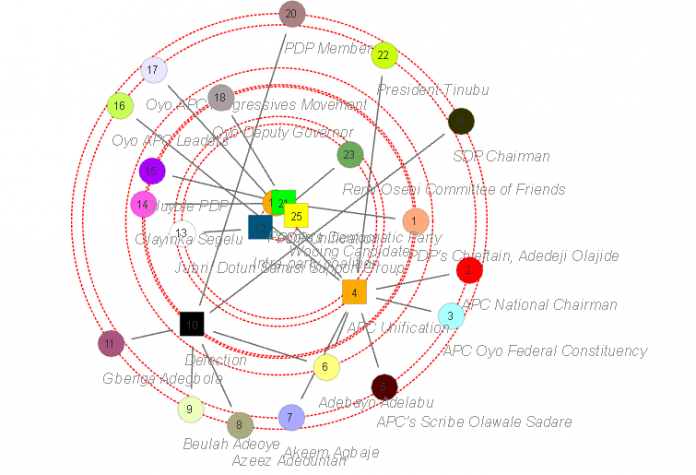
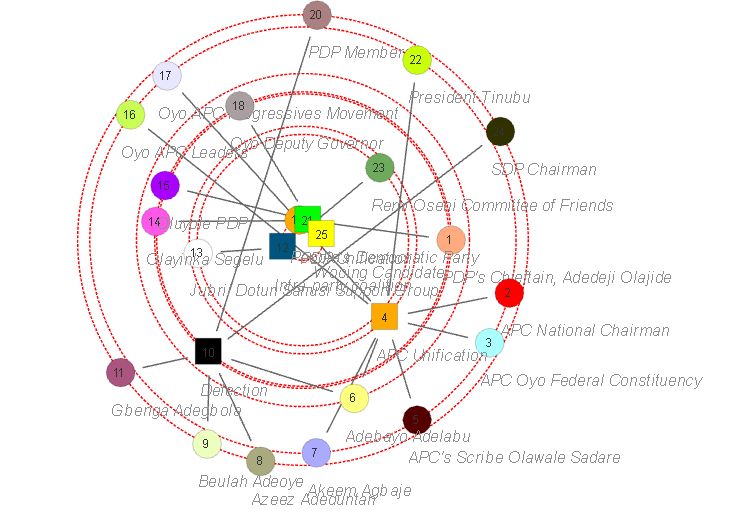
Party and Power Dynamics Towards Securing Agodi in 2027

0
Source: Nigerian Newspapers, 2024-2025; Infoprations Analysis, 2025

As Oyo State approaches the 2027 governorship election, the political scene is already charged with strategic maneuvering, quiet alliances, and shifting loyalties. The race for Agodi, location of government secretariate, will not be defined by loud declarations or political theatrics alone. Instead, the decisive factors lie in the subtle yet powerful moves being made behind closed doors. Our analysis of the recent moves by political parties, party members and prospective candidates reveals the forces and players shaping the road to 2027, and offers an early glimpse into what it will take to emerge victorious.

One of the most striking patterns is the sheer importance of unity within political parties. Coalition building and internal reconciliation have emerged as the most powerful levers of influence. They surpass the impact of individual politicians, no matter how prominent. The ability of a party to close ranks and present a common front holds more value than any single endorsement or campaign promise. This is especially true for the People’s Democratic Party, which shows signs of structural strength but remains vulnerable to internal conflict. If the PDP can maintain internal discipline and keep all factions aligned, it stands a strong chance of retaining power. However, a divided party would struggle to inspire voters or rally resources.

Exhibit 1: Strategic choices and alignments ahead of 2027 election

Source: Nigerian Newspapers, 2024-2025; Infoprations Analysis, 2025

In the case of the All Progressives Congress, the situation is more complex. Several key figures within the APC command influence, but none dominates. The national chairman, state leaders, party scribe, and other prominent actors each hold similar levels of clout. This kind of balance suggests that decision-making could become sluggish, especially in moments when swift, unified action is required. The APC’s unification efforts, however, rank high on the list of influential strategies. If those efforts succeed, the party will pose a serious threat to any opposition. If they fall short, internal competition may dilute the party’s ability to mobilize and win.

Defections continue to play a central role in shaping political power. The act of switching party allegiance remains a powerful move that can shift momentum and recalibrate expectations. While defections can bring in new talent or boost a party’s image, they often come at a cost. Parties must weigh the short-term gains against the risk of appearing unstable or opportunistic. The fact that defections are seen as almost as influential as internal unification speaks to the fluid nature of political loyalty in Oyo State.

Among the emerging forces are individuals and groups that do not yet occupy the headlines but are quickly gaining ground. Figures like Jubril Dotun Sanusi and the Remi Oseni-led committee are becoming increasingly relevant. Their influence suggests that political momentum is not limited to traditional powerbrokers. These actors may play the role of unifiers, facilitators, or kingmakers, particularly if they can bridge gaps between rival factions. Another standout is Adebayo Adelabu. Though not fully aligned with the two major parties, his growing influence positions him as a potential swing figure. His movements and alliances may prove decisive in a closely contested race.

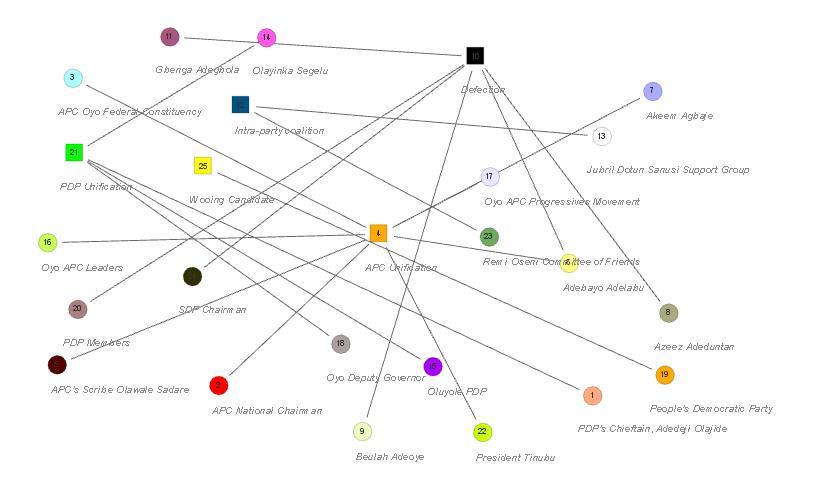
Exhibit 2: Actors and issues within power centrality arena

Source: Nigerian Newspapers, 2024-2025; Infoprations Analysis, 2025

Another critical trend is the growing importance of strategic recruitment. Efforts to woo high-profile candidates are proving just as influential as the strategies of established political parties. In many ways, political campaigns are becoming more about individuals and less about ideologies. A well-timed endorsement or the entry of a respected candidate can tip the balance in an otherwise even race. This development highlights the personalization of politics, where voter appeal increasingly revolves around the credibility and reputation of individuals rather than the party platforms they represent.

While much attention is placed on state-level actors, local leaders and party structures still play a vital role. Figures connected to specific districts, such as those in Oluyole or the deputy governor, may not have overwhelming influence on their own, but their grassroots reach is essential. Mobilizing support at the local level remains a crucial part of any successful campaign, and state-level candidates ignore these networks at their peril.

Looking ahead, the path to Agodi in 2027 will be shaped not just by public opinion or media attention but by internal discipline, coalition strength, and strategic agility. The PDP may have a head start if it can maintain its unity, but it cannot afford to be complacent. The APC has the potential to rally a powerful campaign, though it must first resolve its internal power struggles. Meanwhile, independent figures and third-party actors will be watching for opportunities to step in and play decisive roles.

Ultimately, the most successful political strategy will be the one that listens closely, builds sincerely, and adapts quickly. Winning the governorship in 2027 will be less about dominating the airwaves and more about understanding the quiet shifts in loyalty, the weight of local alliances, and the strategic importance of timing. In the politics of Oyo State, power belongs to those who can unify, not just those who can command attention.

Okomu Oil Shows That Agriculture Is Nigeria’s AI Moment

0

This is Nigeria’s leading “AI company”* and it inspires: “Okomu Oil Palm Company Plc has recorded its highest-ever net profit of N39.9 billion in 2024, a staggering 94 percent increase from the N20.6 billion it posted in 2023, positioning the firm as one of the clear winners in Nigeria’s fast-rising palm oil sector, which is quietly turning into one of the country’s most profitable agribusiness frontiers.”

Good People, America may have its OpenAI and ChatGPT, but Okomu Oil is our “AI company” and it is showing where Nigeria’s alpha moments can come right now. Nations rise at different levels. In the 1900s, America’s most valued company was US Steel, and it ran the market then. Fifty years later, they moved from steel to mainframe computers as IBM ran the show. By the 1980s, GE and Jack Welch brought the age of conglomerates with a fusion of making things and modelling finances at scale.

But never forget the greatest postulation of Pythagoras: the universe is numbers. Quickly, the age of Apple, Microsoft and knowledge companies began at scale. But they played within the framework of the innovation society. New species of companies like OpenAI and Anthrophic are taking America into what I have called the accelerated society age. Look deeper, it is making better sense of the world via numbers through artificial intelligence. If you understand your numbers, you understand your universe! That was what Prof Ashiegbu taught me in my first year of college in FUT Owerri, as he explained the Great Debate.

But just as America laboured in the age of steel, Nigerian entrepreneurs need to understand where the value is right now. Okumu Oil reminds me of one of our startups, Winich Farms, which generates tons of money. Yes, do you want to grow as fast as OpenAI? Be like Okomu Oil because that may be what Nigeria needs right now…and not another app.

*sure, Okomu Oil is a palm oil firm, and not an AI company. I am drawing the analogy mainly on the growth of the company which mirrors what we have in AI companies in America.

Okomu Oil Nets Record N39.9bn Profit in 2024 as Nigeria’s Palm Oil Sector Becomes the New Gold

Cetus $223M Hack Exposes DeFi’s Ongoing Struggle To Balance Security and Decentralization

0

Following the $223M Cetus Protocol hack on May 22, 2025, caused by a flaw in Cetus’s math library not Sui’s blockchain or Move language, Sui Network allocated $10M to enhance ecosystem security. This includes funding for smart contract audits, expanded bug bounty programs, formal verification tools, and developer collaboration to strengthen decentralized applications (dApps). The initiative aims to shift toward shared accountability and prevent future exploits.

Cetus froze $162M of the stolen funds through swift validator action, with $60M bridged to Ethereum. They offered a $6M white-hat bounty for the return of 20,920 ETH and frozen assets, plus a $5M reward for information leading to the hacker’s identification. Cetus proposed an on-chain community vote involving Sui validators and token holders to decide on unlocking the frozen $162M for user compensation, sparking debate over decentralization due to validator control. The Sui Foundation provided a loan to Cetus to aid full user refunds, pending the vote’s outcome.

The Cetus hack and Sui’s response reveal significant implications for decentralized finance (DeFi) ecosystems, particularly around security, governance, and community trust, while exposing a divide in perspectives on decentralization and fund recovery. Sui’s $10M security fund signals a proactive shift toward bolstering DeFi ecosystem resilience. By investing in audits, bug bounties, and formal verification, Sui aims to address vulnerabilities in dApps like Cetus, which suffered from a math library flaw.

This could set a precedent for other blockchains to prioritize preventive measures over reactive fixes, potentially reducing future exploits. However, the hack underscores persistent risks in DeFi, where even audited protocols (Cetus was audited) can fail due to overlooked bugs. This may push developers to adopt more rigorous testing, like formal verification, though cost and complexity could limit smaller projects.

Governance and Decentralization

The community vote to decide the fate of the $162M in frozen funds highlights the tension between decentralized governance and practical recovery. Validators’ ability to freeze funds demonstrates centralized control within a supposedly decentralized system, raising concerns about power concentration. If validators hold sway over the vote, it could undermine trust in Sui’s decentralization ethos. The vote’s outcome will shape user confidence. A transparent, fair process could strengthen community trust, while perceived manipulation or delays could alienate users and developers, impacting Sui’s reputation.

The Sui Foundation’s loan to Cetus for user refunds mitigates immediate financial harm, but full recovery depends on the vote and the hacker’s response to the $6M bounty. Failure to return funds could lead to partial losses, eroding user trust in Sui-based dApps. The incident may deter new users from DeFi on Sui, as high-profile hacks often amplify perceptions of risk. Conversely, successful fund recovery and enhanced security measures could position Sui as a safer platform, attracting developers and users.

The hack reinforces the need for standardized security practices across DeFi. As exploits remain common (e.g., $1.7B lost to hacks in 2024), protocols may face pressure to adopt advanced tools like invariant testing or AI-driven code analysis, though these are resource-intensive. The bounty approach, offering $6M for fund return and $5M for hacker identification, could normalize white-hat negotiations but risks incentivizing future attacks if hackers perceive low consequences.

The Cetus hack has sparked a divide within the Sui community and broader DeFi space, primarily over governance, decentralization, and recovery strategies. Critics argue that validators’ ability to freeze $162M undermines Sui’s decentralized principles. They see the community vote as a test of whether token holders have real influence or if validators and the Sui Foundation hold de facto control. Some fear this sets a precedent for centralized interventions in crises, clashing with DeFi’s ethos.

Supporters of the freeze argue it was necessary to protect users and recover funds, showcasing the benefits of pragmatic governance. They view validators’ swift action as a strength, arguing that absolute decentralization can hinder effective crisis response. The vote, they claim, balances community input with practical recovery. Advocates for the on-chain vote emphasize that token holders and validators should collectively decide fund allocation, ensuring transparency and fairness. They argue this empowers the community and aligns with DeFi’s democratic ideals.

Others believe waiting for a vote delays justice for affected users. They argue that the Sui Foundation or validators should unilaterally distribute funds (via the loan or frozen assets) to prioritize user refunds, even if it bypasses full community consensus. Some praise Sui’s $10M fund as a forward-thinking move to protect the ecosystem, arguing that shared security resources benefit all dApps. They see it as a model for collective responsibility in DeFi.

Critics contend that individual protocols like Cetus should bear the cost of their failures, as the hack stemmed from their code, not Sui’s blockchain. They worry that ecosystem-wide bailouts could encourage lax development practices. Supporters of the $6M+$5M bounties argue they’re a practical way to recover funds and deter future hacks by incentivizing ethical behavior. They point to past successes, like white-hat interventions in Ethereum hacks.

Opponents warn that offering large bounties risks normalizing hacks, as attackers might expect negotiations rather than prosecution. They argue for stricter measures, like legal action or blacklisting stolen funds, to deter malicious actors. The Cetus hack exposes DeFi’s ongoing struggle to balance security, decentralization, and user trust. Sui’s $10M security fund and the community vote are steps toward resilience and fairness, but they highlight a divide between those prioritizing decentralized ideals and those favoring pragmatic control.

The vote’s outcome and fund recovery will be critical in shaping Sui’s reputation and influencing DeFi governance models. Meanwhile, the incident underscores the need for robust security practices to prevent exploits, as community trust hinges on balancing innovation with safety.

OpenAI To Launch “Sign in with ChatGPT”

0

At a time where users are skeptical about handing out their data to big tech, OpenAI is launching a Sign-In (in order words ‘track-me’) service which would provide OpenAI identity wide access to user’s activity across the internet.

Signing in using a generic identity provider has been a game changer to onboarding which saves users from creating several accounts on every platform you visit just to grant access to protected resources; but it comes at a cost. The third party provider now has access and wide knowledge to what you service you have signed up to, how many times you use this service and lots more.

Take for instance Google. Google provides an all-round OAuth identity service which several websites owners have incorporated into which allows their visitors to use Google identity to sign in without having to create a new account since Google has an array of widely used services and offers an identity service. 3 out of 5 people you meet on the internet has a google account. Of course Google in turn provides ad-services which in a way tracks your activity across several websites.

With the use of AI, things becomes more lethal. Imagine an AI agent you interact with now no longer only knows what you have been thinking, how much vulnerable you are, but now can tell where you’ve been to and what you performed there. This opens up an all wide tracking opportunity for the agent, which could become a bug in your bed, which raises more privacy concerns for individuals.

OpenAI is exploring ways for users to sign into third-party apps using their ChatGPT accounts. We’re looking for developers interested in integrating this capability into their own apps.