DD
MM
YYYY

PAGES

DD
MM
YYYY

spot_img

PAGES

Home Blog Page 1090

Blockchain Group’s Bitcoin Treasury Strategy Strengthens Its Position As A Crypto Pioneer

0

The Blockchain Group, a Paris-based company listed on Euronext Growth Paris (ticker: ALTBG) and recognized as Europe’s first Bitcoin Treasury Company, raised €63.3 million ($72 million) through convertible bond issuances to bolster its Bitcoin holdings. The issuance, executed via its Luxembourg subsidiary, The Blockchain Group Luxembourg SA, aims to acquire approximately 590 additional Bitcoin, increasing its total holdings to around 1,437 BTC. Approximately 95% of the funds will be used for Bitcoin acquisition, with the remaining 5% allocated to operational expenses and management fees.

Key investors include Fulgur Ventures (€55.3 million), Moonlight Capital (€5 million), and UTXO Management (€3 million). The bonds, denominated in Bitcoin and convertible into shares at €3.809, carry a 30% premium over the closing price on May 23, 2025, and have a five-year maturity. This move aligns with the company’s strategy to increase Bitcoin per share, with a long-term goal of acquiring 1% of Bitcoin’s total supply by 2033. The company’s Bitcoin treasury strategy, launched in November 2024, has already driven a 709.8% BTC yield, significantly outpacing Bitcoin’s price performance.

The Blockchain Group’s €63.3 million convertible bond raise to pursue a Bitcoin treasury strategy has significant implications for the company, its investors, and the broader market, while also highlighting a growing divide in corporate approaches to cryptocurrency adoption. Acquiring ~590 additional Bitcoin brings the company’s total to ~1,437 BTC, positioning it as a significant corporate holder. This aligns with their goal of owning 1% of Bitcoin’s total supply (21 million BTC) by 2033, roughly 210,000 BTC, signaling a long-term bet on Bitcoin’s value appreciation.

The company’s 709.8% BTC yield since November 2024 demonstrates a high-return strategy compared to Bitcoin’s price growth. By tying shareholder value to Bitcoin’s performance, the company aims to deliver outsized returns if Bitcoin’s price continues to rise. The bonds, convertible at €3.809 (a 30% premium), incentivize investors to hold long-term, potentially stabilizing the stock price while aligning investor interests with Bitcoin’s performance. The five-year maturity provides flexibility for both the company and bondholders.

The Blockchain Group’s move, following the lead of companies like MicroStrategy, reinforces Bitcoin as a legitimate corporate treasury asset, especially in a high-inflation environment or amid fiat currency devaluation concerns. Backing from Fulgur Ventures, Moonlight Capital, and UTXO Management signals growing institutional confidence in Bitcoin-focused strategies, potentially encouraging other firms to follow suit.

As a Euronext-listed company, this strategy may normalize Bitcoin adoption in Europe, though it could attract scrutiny from regulators wary of crypto’s volatility or speculative nature. Allocating 95% of funds to Bitcoin purchases prioritizes crypto over traditional business operations, which could limit diversification but amplify returns if Bitcoin appreciates. Heavy Bitcoin exposure ties the company’s financial health to a volatile asset, risking significant losses if Bitcoin’s price crashes.

Using only 5% for operational expenses suggests a lean approach, but it may constrain growth in other business areas like blockchain technology development. The Blockchain Group’s strategy highlights a broader divide in corporate approaches to cryptocurrency, particularly Bitcoin. Companies like The Blockchain Group, MicroStrategy, and Tesla (to a lesser extent) view Bitcoin as a hedge against inflation, a store of value, or a high-yield asset.

They prioritize Bitcoin accumulation to diversify treasuries and capitalize on its potential upside. Many corporations remain skeptical, citing Bitcoin’s volatility, regulatory uncertainty, and environmental concerns (e.g., energy-intensive mining). These firms prefer traditional assets like bonds, equities, or cash reserves, viewing crypto as speculative.

The Blockchain Group’s long-term goal (1% of Bitcoin supply by 2033) reflects a deliberate, core business strategy tied to crypto. This contrasts with firms that hold Bitcoin opportunistically, selling during price spikes or using it for PR. Strategic adopters risk overexposure but may gain competitive advantages if Bitcoin’s adoption grows, while opportunistic players face less risk but miss out on long-term gains.

The Blockchain Group’s move as a European firm contrasts with the U.S.-centric Bitcoin treasury trend (e.g., MicroStrategy). Europe’s stricter regulatory eenvironment like MiCA framework may limit similar strategies, creating a divide between regions with varying crypto tolerance. Pro-Bitcoin firms face potential regulatory crackdowns, while conservative firms avoid these risks but may lag in innovation or returns.

The bond issuance appeals to crypto-savvy investors (e.g., Fulgur, UTXO), but traditional shareholders may worry about volatility or dilution from convertible bonds. This creates a divide in investor bases, with some embracing the high-risk, high-reward model and others preferring stability. Bitcoin’s price has risen significantly since 2020, with institutional adoption growing (e.g., ETFs, corporate treasuries). The Blockchain Group’s strategy capitalizes on this but faces risks from market corrections or regulatory shifts.

Persistent inflation and currency devaluation concerns (e.g., Euro, USD) make Bitcoin attractive, but central bank digital currencies (CBDCs) or tighter regulations could challenge its role. The Blockchain Group’s 709.8% BTC yield sets a high bar, but competitors like MicroStrategy (with larger BTC holdings) may overshadow smaller players, creating a divide between market leaders and followers.

The Blockchain Group’s bold Bitcoin treasury strategy strengthens its position as a crypto pioneer but underscores a divide between crypto-forward and traditional corporate strategies. Its success hinges on Bitcoin’s long-term performance and regulatory developments, while the divide reflects broader tensions in how businesses navigate the crypto landscape.

Africa Remittance Landscape: West Africa Leads as Major Recipient, East Africa Drives Mobile Money Adoption

0

Africa’s remittance landscape remains a vital component of the continent’s economy, driven by the financial contributions of its diaspora.

Remittances account for a significant portion of GDP in several countries, with 18 of 54 African nations relying on them for at least 4% of GDP. In 2022, remittance inflows across the continent totaled hundreds of billions, playing a crucial role in household income, trade, and national economies.

West Africa: A Leading Major Recipient

A report by Oui Capital, reveals that West Africa leads the continent as one of the largest recipients of remittances in Africa, with inbound flows reaching approximately $48 billion in 2022. Nigeria alone accounted for $20 billion, primarily from the U.S., U.K., and Canada. Ghana, Senegal, and Côte d’Ivoire also receive significant inflows, driven by strong migration links to France and other European nations.

Intra-regional remittances are substantial, with corridors such as Côte d’Ivoire – Burkina Faso ($1.5 billion), Ghana – Nigeria ($900 million), and Mali-Senegal ($750 million).

These flows are largely trade-driven, facilitated by informal networks due to high remittance fees averaging 8-10% (IMF, 2023). Interoperability between mobile money and bank-led systems remains a challenge in some areas, despite advancements in financial infrastructure.

While Nigeria and Ghana have stronger bank-led systems that facilitate broader integration, seamless transactions between mobile money and traditional banking channels are still evolving.

East Africa Leads in Mobile Money Adoption

East Africa leads the continent in mobile money adoption, with over 60% of remittance transactions conducted digitally (GSMA, 2023).

The continent accounts for 70% of Africa’s mobile money transaction volume and 42% of its value, despite having only 15% of the continent’s population. Kenya’s M-Pesa, pioneers this with 96% of Kenyan households using mobile money as of 2023. Tanzania, Uganda, and Rwanda follow, with platforms like Tigo Pesa, MTN Mobile Money, and Airtel Money driving growth.

In 2023, East Africa processed over 2 billion mobile money transactions monthly, with Kenya and Tanzania leading. The region’s mobile money accounts grew from 160 million in 2018 to 300 million by 2023.

Outbound remittances from the region are heavily directed toward the Middle East, particularly from Ethiopia ($5.3 billion), Somalia ($2.1 billion), and Kenya ($3.5 billion). These flows support family maintenance and small businesses. However, cross-border payments within East Africa remain constrained by regulatory discrepancies and lack of seamless interoperability, limiting financial inclusion.

Southern Africa is marked by high outbound remittance flows, particularly from South Africa, which remitted $17 billion to neighboring countries in 2022 (Statista, 2023). Zimbabwe alone received $1.9 billion from South Africa, followed by Mozambique ($1.2 billion) and Malawi ($800 million).

Labor migration is the primary driver, with workers in mining, construction, and domestic services regularly sending money home. However, remittance fees remain among the highest in Africa, averaging 12-15% for formal channels (World Bank, 2023), driving reliance on informal networks, which account for nearly 40% of total transfers.

Southern Africa’s remittance landscape is heavily bank-led, with traditional financial institutions playing a dominant role in cross-border transactions. Unlike East Africa, where mobile money has gained widespread adoption, mobile money penetration in Southern Africa is relatively low.

North Africa, led by Egypt ($32 billion), Morocco ($11 billion), and Algeria ($5.1 billion), remains one of the top remittance-receiving regions, fueled by large diaspora communities in Europe (World Bank, 2023). More than 65% of inflows originate from France, Spain, and Italy.

The Middle East is also a significant remittance source, particularly for Egypt, where Saudi Arabia, the UAE, and Kuwait account for over 50% of total remittance inflows (World Bank, 2023). Moroccan and Tunisian migrants working in Gulf states also contribute substantial remittances, though European inflows remain dominant.

In Central Africa, remittance corridors are driven by intra-African migration, with Cameroon receiving $2.8 billion from Chad and the Central African Republic (AfDB, 2023). Over 70% of transactions remain informal due to limited financial infrastructure and high fees exceeding 10% in formal channels.

In this region, financial systems are more fragmented, with heavy reliance on informal networks and limited interoperability between banks and mobile money platforms.

Conclusion

Remittances continue to play a vital economic and social role across Africa, yet the efficiency, affordability, and inclusiveness of cross-border payments vary greatly by region.

Countries that embrace digital innovation, foster interoperability, and reform regulatory frameworks are best positioned to unlock the full potential of remittance flows to drive financial inclusion and economic development.

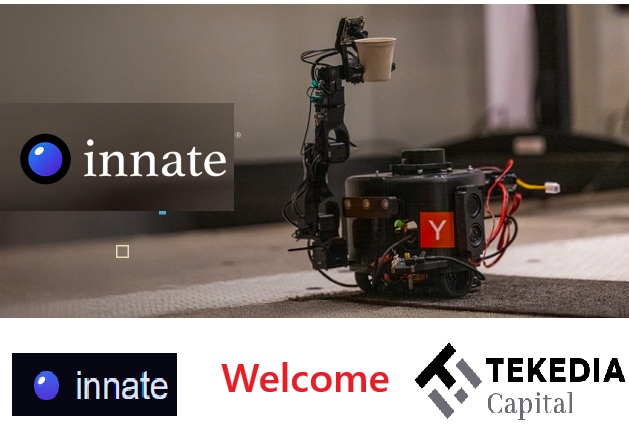
Tekedia Capital Welcomes Innate, Which building AI brains for General-Purpose Robots

0

For most jobs in this age, machines will cause massive disintermediation and, in the process, displace humans even as new roles are created. While the software element is what many are discussing with ChatGPT, Gemini and others heralded at the forefront of this redesign, we cannot forget the implication of what AI systems could do at the kinetic domain. Yes, how can we personalize robots and enable them to serve us across different vistas of what we do daily?

“Robot, go to the fridge and fetch zobo”; the robot which has been stationed in the parlour does, opens the fridge, gets zobo and returns! For that to happen, you have trained it on fetching zobo in that house!

More so, because of the unbounded nature of what we do daily, there is no way anyone can program all the possibilities of what we do daily. So, how do we overcome those “unbounded” possibilities? You simply focus on the brain of the robot and then tell the end users to train the robot, as desired. Simply, with AI, we think a new era in robotics is coming and that one is where engineers focus on building AI brains for general-purpose robots, with affordable embodiments, and the actual training left for end users.

Good People, Tekedia Capital welcomes Innate, a company which is building personal robots for the AI age: “Innate is developing teachable home robots for builders. Our robots act entirely autonomously, and can be taught new behaviors in under 30 minutes.” Indeed, AI will become even more useful in the physical space.

To learn more about Innate, go here https://innate.bot/. To learn more about Tekedia Capital, visit capital.tekedia.com

Circle USDC Filed For Initial Public Offering Listed On NYSE

0

Circle Internet Group, the issuer of the USDC stablecoin, filed for an initial public offering (IPO) with the U.S. Securities and Exchange Commission (SEC) on April 1, 2025, to list its Class A common stock on the New York Stock Exchange (NYSE) under the ticker symbol “CRCL.” The IPO was launched on May 27, 2025, offering 24 million shares, with 9.6 million from Circle and 14.4 million from selling stockholders, at a price range of $24 to $26 per share. Underwriters, including J.P. Morgan, Citigroup, and Goldman Sachs, were granted a 30-day option to purchase up to an additional 3.6 million shares to cover over-allotments.

Circle reported $1.68 billion in revenue for 2024, a 16% increase from 2023, with 99% derived from stablecoin reserves, though net income fell 41.8% to $155.6 million. The company previously attempted to go public via a SPAC merger in 2021, which was abandoned in 2022, and filed confidentially for an IPO in January 2024. The IPO of Circle Internet Group on the NYSE, under the ticker “CRCL,” carries significant implications for the cryptocurrency industry, traditional finance (TradFi), and the broader financial ecosystem. Circle’s listing on the NYSE, a prestigious traditional exchange, signals growing acceptance of crypto-native companies in mainstream finance.

As the issuer of USDC, the second-largest stablecoin with a $61.4 billion market cap, Circle’s IPO could enhance trust in stablecoins and blockchain-based financial solutions, particularly due to its regulatory compliance focus. The IPO aligns with a more favorable U.S. regulatory environment under the current administration, which has advocated for a “rational” approach to crypto regulation. This could encourage other crypto firms to pursue public listings, transforming the industry narrative from “build ? get sued” to “build ? IPO ? attract TradFi.”

Interest from institutional investors like Cathie Wood’s ARK Investment Management, which plans to buy up to $150 million in shares, indicates growing confidence in crypto’s stability and profitability. This could draw more institutional capital into the sector, further integrating crypto with traditional markets. Circle aims to raise up to $624 million by offering 24 million shares at $24–$26 each, with 9.6 million from the company and 14.4 million from selling stockholders like Accel, General Catalyst. This capital could fuel expansion, product development, and competition with rivals like Tether (USDT).

Targeting a valuation of $5.65–$6.71 billion, Circle’s IPO reflects confidence in its business model, despite a 41.8% drop in net income to $155.6 million in 2024. However, its reliance on Coinbase for distribution (54% of revenue paid in 2024) and thin profit margins raise concerns about sustainability and valuation justification. Circle’s mission to “augment global economic prosperity” through stablecoins positions it to capitalize on the growing stablecoin market, projected to reach $500–$750 billion. Its partnerships with financial institutions and plans to expand the USDC network globally could strengthen its market position.

Stablecoin Market Dynamics

USDC’s transparency and regulatory compliance contrast with Tether’s opacity, positioning Circle as a preferred choice for institutions. The IPO could amplify USDC’s adoption, especially as stablecoins gain traction in trading, DeFi, and cross-border payments. The stablecoin market grew 47% in the past year, becoming “systemically important” to crypto. Circle’s IPO could accelerate this trend, especially as stablecoin legislation advances in the U.S. Senate, potentially boosting adoption.

The IPO, following Coinbase’s 2021 listing and Galaxy Digital’s recent debut, reflects a bullish sentiment for crypto IPOs, driven by rising token prices and a supportive regulatory climate. Despite optimism, Circle’s S-4 filing highlights risks like crypto volatility, cybersecurity threats, and reliance on third-party systems, which could temper investor enthusiasm.

The IPO bridges crypto and TradFi, but it also underscores a divide between crypto purists who favor decentralization and those embracing integration with regulated markets. Some crypto advocates may view Circle’s NYSE listing as a compromise of blockchain’s original ethos, while others see it as a step toward mainstream adoption. Circle’s compliance-focused approach contrasts with less transparent competitors like Tether, creating a divide between regulation-friendly and regulation-averse crypto firms. This could influence investor preferences and market dynamics, favoring compliant entities.

Analyst commentary reveal a split in sentiment. Optimists view the IPO as a bullish signal for crypto’s integration with TradFi, boosting USDC’s credibility and stablecoin adoption. Skeptics, however, point to Circle’s declining profits ($155.6M in 2024 vs. $267.5M in 2023), high distribution costs (e.g., $1B to partners like Coinbase), and competitive pressures from banks and new stablecoins, questioning its $5–$6.7 billion valuation.

Institutional interest (e.g., ARK’s $150M commitment) contrasts with retail investor concerns about Circle’s financial health and market risks, potentially creating a divide in investment strategies. Circle’s IPO could intensify competition with Tether, highlighting a divide between USDC’s transparency and Tether’s reported $13 billion profit and $113 billion reserves. Investors may favor Circle for its regulatory alignment, but Tether’s dominance (larger market cap) poses a challenge.

The IPO filing notes increasing competition from banks and financial institutions entering the stablecoin space as U.S. regulations loosen, potentially eroding Circle’s market share. Circle’s high distribution costs (54% of revenue to Coinbase) and $260M in salaries highlight a divide between short-term profitability and long-term growth. The IPO funds could address this, but critics argue the valuation is inflated given current margins.

Circle’s ambition to capture the global monetary supply contrasts with its heavy reliance on the U.S. market and Coinbase, creating a strategic divide between global aspirations and domestic dependencies. While Circle’s IPO is a landmark for crypto, it’s not without risks. The company’s dependence on Coinbase for distribution raises concerns about cost efficiency and autonomy. The 41.8% drop in net income, despite 16% revenue growth, suggests profitability challenges that could spook investors, especially if competition intensifies.

Additionally, the crypto market’s volatility and cybersecurity risks, as noted in Circle’s S-4, could undermine confidence. The divide between crypto’s decentralized ideals and Circle’s TradFi integration may also alienate some community members, though it aligns with broader market trends toward regulation and institutional adoption. Circle’s IPO could strengthen the crypto-TradFi bridge, boost USDC’s adoption, and signal a maturing industry, but it also highlights divides in investor sentiment, market competition, and strategic priorities.

Binance’s Live Trading Feature Makes Crypto Trading More Interactive and Educational

0

Binance has introduced a “Live Trading” feature on its Binance Square platform, launched on May 26, 2025. This feature allows users to watch real-time livestreams of verified traders, follow their strategies, and execute Spot or Futures trades directly within the stream. It integrates market commentary, trade execution, and live video, enabling users to act on insights instantly via pinned strategy cards or a Strategy Tab that display trade details like trading pair, direction, and order size.

Verified creators with at least 1,000 followers can share up to 100 past trades per session and earn up to 50% commission on trading fees from users who follow their strategies. Traders with fewer followers can apply for the Binance Square Live Trading Incubation Program. The feature aims to make trading more interactive, educational, and community-driven, with Binance reporting a 2% surge in BNB price to $677 and now trading above $681 following the announcement.

Future plans include livestream competitions and multistreaming support. The introduction of Binance’s “Live Trading” feature on Binance Square has several implications, both positive and potentially divisive, for the crypto trading community. The feature democratizes access to trading strategies by allowing users to observe and replicate the moves of experienced traders in real time. This can serve as an educational tool for novice traders, helping them learn market analysis and decision-making from verified creators.

By integrating live commentary with trade execution, it fosters a more engaging trading experience, potentially increasing user participation and platform activity. Verified traders sharing up to 100 past trades per session provide transparency, allowing users to assess a trader’s track record before following their strategies. This could build trust in the platform and its creators.

The feature encourages a community-oriented approach, where users can interact with traders, ask questions, and share insights, potentially reducing the isolation often felt in individual trading. Verified creators with over 1,000 followers can earn up to 50% commission on trading fees from users who follow their strategies. This incentivizes skilled traders to share knowledge, potentially attracting high-quality talent to Binance Square.

The program for smaller creators (with fewer than 1,000 followers) lowers the barrier to entry, fostering a pipeline of new talent. The announcement led to a 2% surge in BNB’s price to $677.50, signaling market approval. Increased platform activity could further bolster BNB’s value, as trading volume and user engagement rise. Features like livestream competitions and multistreaming could set a new standard for crypto trading platforms, pushing competitors to innovate.

The feature makes trading strategies accessible to a broader audience, leveling the playing field for retail investors. The requirement for creators to have at least 1,000 followers to monetize fully creates a divide between established and emerging traders. Newer traders may feel marginalized, despite the incubation program, as visibility and follower count heavily influence earning potential. Novice traders can learn from experienced ones, reducing the learning curve.

Blindly following verified traders’ strategies could lead to over-reliance, discouraging independent analysis. This risks amplifying losses if a popular trader makes poor decisions, especially in volatile crypto markets. The commission structure rewards skilled traders, potentially attracting top talent. The 50% commission model could exacerbate wealth disparities, as successful traders earn significantly from followers’ trades, while less successful users may incur losses without equivalent gains. This could create a perception of exploitation, particularly if followers lose money following strategies.

Transparency in trade history and verification processes could mitigate fraudulent behavior. High-profile traders with large followings could influence markets by sharing specific strategies, potentially leading to pump-and-dump schemes or coordinated trading that disadvantages smaller retail investors. Binance strengthens its ecosystem by integrating trading, education, and community features, potentially increasing user retention.

The feature ties users more closely to Binance’s platform, which could limit diversification and increase systemic risk if the platform faces outages, regulatory issues, or security breaches. Binance’s Live Trading feature is a bold step toward making crypto trading more interactive and educational, with potential to grow its user base and enhance BNB’s value.

However, it also risks deepening divides between established and emerging traders, as well as between profitable creators and less experienced followers. The success of this feature will depend on Binance’s ability to balance accessibility with safeguards against market manipulation and over-reliance, while ensuring smaller creators have equitable opportunities to participate.