DD
MM
YYYY

PAGES

DD
MM
YYYY

spot_img

PAGES

Home Blog Page 1091

Fidelity Bank, FirstHoldCo Commit to Exiting CBN Forbearance as Sector Pushes for Stability and Dividend Resumption

0

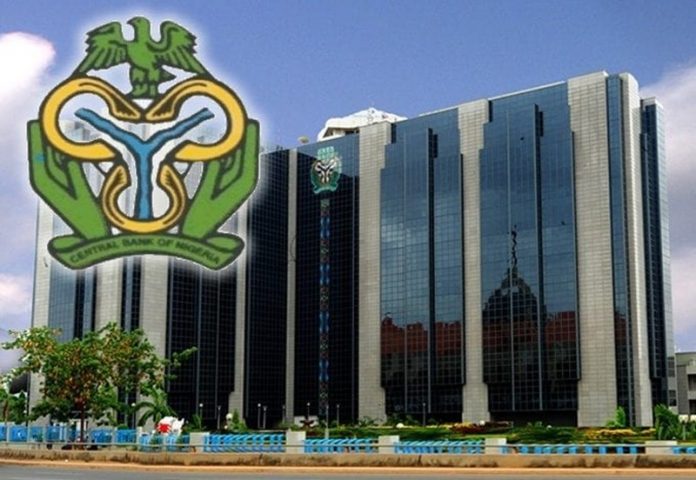
Fidelity Bank and FirstHoldCo Plc have both confirmed plans to fully exit the Central Bank of Nigeria’s (CBN) regulatory forbearance framework in 2025.

Their separate announcements mark a key development in Nigeria’s banking sector, which has come under heightened regulatory scrutiny over capital adequacy and compliance amid new prudential directives by the CBN.

Fidelity Bank Targets Full Compliance by H1 2025

Fidelity Bank announced on Wednesday its commitment to exit CBN’s forbearance arrangements by the end of the first half of 2025, a move that would restore its capacity to pay dividends and resume other discretionary spending. According to a statement signed by the bank’s Company Secretary, Ezinwa Unuigboje, the forbearance linked to a breach of the Single Obligor Limit (SOL) is tied to two obligors. The bank expressed confidence that the exposures will be brought within regulatory thresholds by June 2025.

The lender also revealed that it is managing four other credit facilities currently under forbearance. The bank said it has made significant provisioning on those accounts and is working towards either full provisioning or returning the loans to performing status by the middle of 2025.

“Fidelity Bank remains committed to strict compliance with all regulatory policies, including the recent CBN directive on forbearance. We have proactively made substantial provisions on affected facilities and taken targeted steps to resolve the exposures,” the statement said.

To strengthen its capital base and meet the CBN’s N500 billion minimum capital requirement for banks with international authorization, Fidelity Bank disclosed that it has successfully raised N273 billion through an oversubscribed Public Offer and Rights Issue. The public offer recorded a 237.92% subscription, while the rights issue was oversubscribed by 137.73%.

In addition, the bank is planning to raise another N200 billion through a private placement in the 2025 financial year. It confirmed that CBN and shareholder approvals for the private placement have already been secured, with other regulatory clearances underway to ensure completion.

Fidelity Bank emphasized that the capital raising efforts and planned exit from forbearance will position it for dividend resumption in the 2025 financial year.

“We remain in a strong position to meet all regulatory expectations to enable dividend payments going forward,” the bank stated.

FirstHoldCo Moves to Resolve SOL Breach and Loan Forbearance

Similarly, FirstHoldCo Plc disclosed on Thursday that its banking subsidiary, FirstBank, is working to resolve breaches of the Single Obligor Limit stemming from two foreign currency loan exposures. The loans were affected by the over 200% naira devaluation that occurred between 2023 and 2024, pushing the exposures above regulatory limits.

The firm explained that the affected loans are part of syndicated credit facilities with industry-wide exposure and that all the underlying assets are now back in active production and generating revenue. Some of the projects are also awaiting receivables from government agencies.

“The syndicate is actively restructuring and re-tenoring the loans based on improved cash flows. The process is expected to be completed within the current financial year,” the statement said.

Should the restructuring fail to be completed in time, FirstHoldCo assured that it would make full provisioning on the remaining facilities to ensure a clean exit from forbearance and resume dividend payments in 2025.

In parallel, FirstHoldCo is undertaking its own capital raise scheduled for the second half of 2025, reinforcing its long-term commitment to balance sheet stability and regulatory compliance.

CBN Forbearance Framework and Sector-Wide Impact

These developments come in response to the CBN’s directive earlier this year that banks under regulatory forbearance must suspend dividend payments, defer executive bonuses, and halt foreign investments. The central bank’s new rules aim to improve capital buffers, encourage prudent risk management, and ensure that banks under financial stress are not distributing value to shareholders or engaging in expansionary activity.

The forbearance framework primarily applies to banks with unresolved breaches of lending concentration rules (such as SOL breaches) and non-performing credit exposures that require exceptional regulatory tolerance.

Both Fidelity Bank and FirstHoldCo appear determined to resolve their exposures and exit the CBN’s list of forbearance beneficiaries. Their capital-raising efforts and transparent updates to shareholders indicate an industry-wide effort to regain regulatory confidence and reposition for long-term stability.

What This Means for Investors

Investors in Fidelity Bank and FirstHoldCo can take some assurance in the clear timelines provided for resolving outstanding issues and the strong commitment to dividend resumption. Both banks have linked their strategic plans to the broader CBN agenda of deepening financial system resilience and curbing systemic risk.

If successfully executed, the exit from forbearance would allow both banks to restore their full standing in Nigeria’s capital markets and deliver on shareholder returns as early as the 2025 financial year.

More banks are expected to follow suit in reassessing their credit exposures, recapitalizing, and reestablishing dividend-paying capacity in line with evolving CBN’s regulatory standards.


Dangote Refinery Expands Export Push with First-Ever Gasoline Shipment to Asia Amid Global Market Disruption

0

Nigeria’s Dangote Refinery is set to ship 90,000 metric tons of gasoline to Asia, marking the first gasoline export beyond West Africa by Africa’s largest refining complex.

This milestone comes months after the refinery began full operations, and underscores the company’s ambition to become a global force in petroleum exports.

According to Reuters, the cargo is expected to be loaded by Mercuria, a global energy and commodities trading firm, on June 22. While Dangote Refinery has previously exported refined products such as jet fuel and naphtha within the West African region, this will be the first time its gasoline reaches Asian markets—a move that signals a bold pivot in the continent’s downstream trade dynamics.

A New Era for African Energy Exports

Commissioned in 2023 and built at a cost of $19 billion, the 650,000-barrel-per-day Dangote Refinery located in the Lekki Free Trade Zone has quickly become a game changer for Nigeria’s oil industry and Africa’s energy security. Designed to process a wide range of crude types, from Nigeria’s Bonny Light to heavier crudes, the refinery is not only reducing the country’s reliance on imported fuel but is now also positioning Nigeria as a net exporter of refined petroleum products.

Since the start of operations, Dangote Refinery has exported:

  • Over 1.7 million barrels of jet fuel to the United States, across six different shipments.
  • Two separate consignments of jet fuel to Saudi Aramco, marking a rare case of Nigeria exporting finished fuels to the Gulf.
  • A shipment of low-sulfur straight-run fuel oil (LSSR) to Singapore in April, reflecting growing demand from Asia’s marine fuel market.

LSSR is commonly used as a blendstock to produce low-sulfur fuel oil for bunkering or further refining. The cargo to Singapore marks one of the earliest signs that Dangote is already reshaping regional trade flows traditionally dominated by the Middle East and Asia.

The End of Europe’s Fuel Dominance?

The refinery’s growing exports are also rattling the European markets. For decades, Africa—despite being a major crude producer—has been heavily dependent on refined fuel imports, particularly gasoline from Europe. In 2022, that trade was valued at over $17 billion, with Europe exporting as much as 1 million barrels per day of gasoline and diesel to West Africa, especially Nigeria.

But with Dangote ramping up output and capable of meeting a substantial portion of regional demand, analysts now warn that Europe’s long-held market share is under threat. In January, OPEC acknowledged that Nigeria’s new refining capacity was beginning to disrupt supply chains in the Atlantic Basin, particularly for gasoline and jet fuel.

Experts suggest that if the refinery operates near full capacity, it could eliminate the need for gasoline imports into West Africa altogether, redirecting surplus volumes instead to more profitable markets in Asia and the Americas.

The exports align with Nigeria’s broader goal of capturing more value from its natural resources by refining domestically rather than exporting raw crude. For decades, Nigeria exported crude oil and imported nearly all of its refined petroleum products, draining foreign exchange and creating fuel shortages at home. The Dangote Refinery is seen as a central piece of President Bola Tinubu administration’s plan to restructure Nigeria’s oil and gas sector and reduce its exposure to global fuel market volatility.

Furthermore, fuel exports are expected to boost Nigeria’s non-oil revenue, improve trade balances, and support the naira by reducing the demand for foreign currency to import refined products.

What Lies Ahead?

While gasoline to Asia represents a significant step, Dangote Refinery is not stopping there. Sources say the facility is preparing to ramp up production of diesel and aviation fuel at even larger volumes and is actively in talks with buyers in Latin America and Southeast Asia.

By the end of 2025, industry insiders believe the refinery could reach output levels close to 450,000 barrels per day, enabling Nigeria to potentially join the ranks of global refined product exporters alongside giants like India, South Korea, and the United States.

With its latest export announcement, Dangote Refinery has officially entered a new phase—one in which Nigeria is no longer just a source of crude oil, but a competitive player in the refined petroleum market, rewriting decades of African energy trade.

Tekedia Capital-backed Winich Farms Secures Six-Figure Series A Funding Round From Egypt’s Disruptech Ventures

0

Winich Farms, a Nigerian Agritech startup, has secured a six-figure pre-series A funding round from Egyptian fintech investment firm Disruptech Ventures to expand its services to over 180,000 Nigerian farmers.

Based in Lagos, Nigeria, Winich Farms connects smallholder farmers who account for 80% of Nigeria’s farming population and 90% of its agricultural output to formal markets and financial services.

The platform links farmers directly with off-takers like retailers and processors, using a network of agents at collection points to transport produce without owning physical infrastructure. This eliminates middlemen, increasing farmers’ earnings.

Speaking on the funds raised, Attai Riches, CEO and Co-founder, noted that the new partnership would support the company’s next phase of growth.

Also commenting on the funding round, Mohamed Okasha, Managing Partner at DisrupTech Ventures, said the decision reflects the firm’s belief in the growth potential of Nigeria’s agri-fintech space.

He noted that Winich’s model is scalable and addresses practical problems in the agriculture sector. He further highlighted the opportunity for cross-learning between Egypt and Nigeria, given both countries’ reliance on agriculture.

Founded in 2018 by Riches Attai and David Osafaye, Winich Farms operates a vertically integrated platform that links farmers directly to buyers, while streamlining logistics, payments, and financial access.

The Agric-tech startup is the foremost inventory organizer and supplier for small and mid-sized factories to enable their production plant to run effectively without any delays in accessing raw materials. It does this through its thousands of collection points at the last mile connecting over 40,000 smallholder farmers harvested produce directly to the offtakers, returning profit that was once taken by the long chain of middlemen to the farmers.

Also, Winich Farms has over time provided support services like Credit previously via crowdfunding but now via partnering with lending institutions; and Insurance services with our insurance partners. The startup has built a robust on-ground infrastructure with over 180,000 smallholder farmers onboarded across 29 of Nigeria’s 36 states.

It has also established four regional fulfilment centres in Benue, Kebbi, Kwara, and Taraba State to support aggregation, quality control, and last-mile distribution. Through its digital platform, the company now facilitates over $3.7 billion (~$2.2 million) in monthly transactions, with a cumulative gross merchandise volume (GMV) exceeding $30 million.

The company addresses key challenges which include:

Market Access: Farmers bypass exploitative middlemen, selling directly via collection points, with geo-zone technology ensuring quick deliveries from nearby farms.

Financial Inclusion: Winich builds credit scores for farmers using AI based on transaction data, partnering with financial institutions to offer loans and insurance. It also issues Winich Cards (in collaboration with Sterling Bank) to facilitate digital payments, helping farmers shift from cash-based transactions and build financial records.

Traceability: The platform provides visibility into produce movement, allowing buyers to track sources and logistics, enhancing trust and efficiency.

Winich Farms is backed by Tekedia Capital, GSMA, 54 Collective, Orange Corners, ARAF, and CRAF, amongst others, promoting financial inclusion through its Winich Cards for cashless transactions, enabling financial histories for loan access, and offering credit and advisory services in partnership with the Kebbi Agricultural Research Development Agency (KARDA).

The company hopes to extend its services to other African markets and explore export opportunities in regions such as the Middle East and North Africa.

Winich’s vision is to build Africa’s most efficient and largest Supply Chain platform and improve the lives of producers, businesses, and consumers in a meaningful manner.

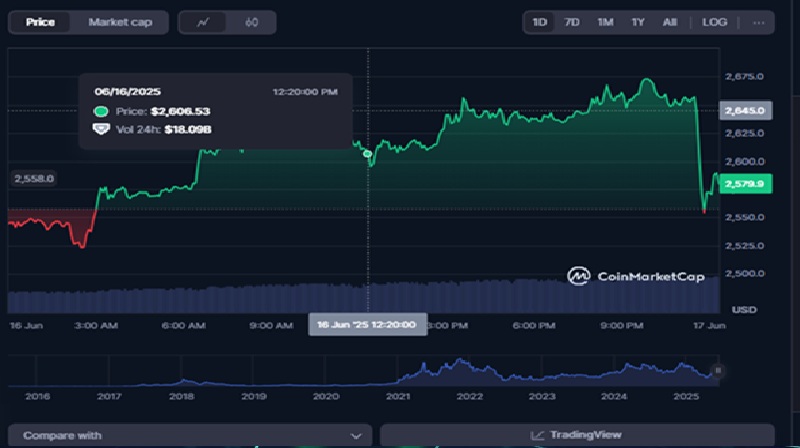
Ethereum (ETH) Bulls Fight to Push Above $3000 By the End of June, While Smart Money Piles Into Little Pepe (LILPEPE) Under $0.0015

0

As June heats up, Ethereum (ETH) is battling a critical psychological barrier—the $3000 mark—as bulls return to the driver’s seat. Institutional confidence is building, on-chain activity is spiking, and a potential rate cut from the Fed could light the fire ETH needs to reclaim its bullish structure. But while Ethereum continues its climb, an unexpected underdog is drawing the attention of smart money and early crypto whales—Little Pepe.  With a presale price slashed to under $0.0015 and backed by a revolutionary narrative, Little Pepe is fast becoming the most anticipated meme token of 2025. But make no mistake—it’s not just another memecoin.  This is a Layer 2 blockchain designed explicitly for memes, combining real innovation with viral power in equal measure. As Ethereum tries to break out, savvy investors quietly accumulate Little Pepe, sensing another Doge or Shiba moment in the making.

Ethereum (ETH) Holds the Line—$3,000 In Sight

Ethereum has once again become the focal point of the broader crypto market. After a volatile first half of the year, ETH bulls are re-emerging, emboldened by renewed spot ETF speculation, increasing DeFi TVL, and the continued success of Layer 2 rollups built on top of Ethereum’s infrastructure. Technical analysts are eyeing $3,000 as a key resistance zone, but if Ethereum can flip that into support before July, it could open the floodgates to $3,500 and beyond. Ethereum’s fundamentals are undeniably strong; yet, ironically, some of the most exciting narratives in crypto—memes, Layer 2 innovations, and microcap altcoins are unfolding outside of Ethereum itself. This is where Little Pepe enters the picture.

Ethereum Price Chat

Little Pepe: The Meme Layer 2 Built for Explosive Growth

Little Pepe is not just a token. It’s the lifeblood of the Little Pepe ecosystem, a next-generation Layer 2 blockchain designed exclusively for meme coins and meme culture. It’s faster than Solana, more playful than Dogecoin, and more strategic than any memecoin you’ve seen before. Think of it as the Arbitrum of meme tokens—but better, weirder, and bot-resistant. Launching at a listing price of $0.003, Little Pepe is now available at an attractive entry point of under $0.0015, capturing the attention of savvy investors who recognize a trend before it takes off. Unlike other meme coins that ride hype without utility,  Little Pepe is built on a complete Layer 2 stack, providing:

  • Ultra-low gas fees
  • Finality faster than Elon can tweet
  • Unmatched security
  • The only chain where sniper bots can’t exploit token launches

This means meme creators and degens alike can finally launch and trade their tokens on a chain that understands them, without the interference of bots or outrageous fees.

Tokenomics with Purpose: Little Pepe’s Distribution Plan Is Built for Longevity

Smart money isn’t just looking at price—they’re watching tokenomics. $LILPEPE offers one of the cleanest, community-first token models in the meme market:

  • 5% Presale – Rewards early adopters and believers
  • 30% Chain Reserves – For growth, grants, and development
  • 5% Staking & Rewards – Fueling diamond hands with long-term value
  • 10% Marketing – For viral dominance across the web
  • 10% DEX Allocation – Ensures liquidity when it hits exchanges
  • 10% Liquidity – Keeps the market juicy and fluid
  • 0% Tax – No buy or sell tax, period. True DeFi spirit.

With no tax on trades, Little Pepe is a trader’s dream—perfect for quick flips, diamond handers, and memers who want more control and fewer constraints.

The Roadmap: From Pregnant Frogs to Meme Royalty

$LILPEPE isn’t just promising the moon—it’s got a roadmap to get there:

1. Pregnancy Phase

  • Presale kicks off
  • Strategic partnerships (with well-known crypto veterans backing the launch)
  • Community engagement reaches fever pitch

2. Birth Phase

  • Launch on top DEXes and two major centralized exchanges
  • Viral marketing with memes, videos, and even a crazy billboard campaign
  • Targeting $1 billion market cap

3. Growth Phase

  • Mainnet launch of Little Pepe’s Layer 2 chain
  • Meme Launchpad activated
  • Degen-friendly tools released (sniper bot protection, instant liquidity features)
  • Aim for Top 100 CoinMarketCap ranking

The project also teases a future listing on the world’s largest exchange, with all necessary backend, compliance, and marketing preparations underway—without, of course, dropping names.

The Meme Chain of the Future Is Here

The Little Pepe Chain will be the world’s first Layer 2 dedicated to meme tokens. That means:

  • A Launchpad exclusively for memes
  • The fastest, cheapest chain for meme transactions
  • Built-in protections against sniper bots—giving fair launch back to the people

It’s no wonder several anonymous yet credible advisors—with a track record of helping top meme coins like Shiba, FLOKI, and Pepe—are backing this project. They’ve seen this movie before, and they’re betting on $LILPEPE as the following prominent meme legend.

Smart Money Buys Low—and They’re Buying Little Pepe

As Ethereum grinds toward $3,000, the smart money isn’t just holding blue chips. They’re accumulating undervalued, high-potential gems like Little Pepe. Little Pepe represents a once-in-a-cycle opportunity with its current sub-$0.0015 price, zero-tax policy, meme narrative, and upcoming CEX listings. And with a massive $770,000 giveaway celebrating the presale—where 10 winners will receive $77,000 worth of tokens each—the team is putting its money where its meme is. To benefit in the offerings of Little Pepe, now is the time to decide by joining the Little Pepe presale.

Final Word: ETH to $3K, but LILPEPE to the Moon

Ethereum may soon surpass $3,000. That would be a win for the market. However, for those seeking 100x asymmetric opportunities, Little Pepe (LILPEPE) provides the ideal blend of early-stage pricing, robust tokenomics, Layer 2 innovation, and meme magic. This isn’t just a frog coin—it’s a Layer 2 blockchain for memes, with the momentum, backers, and roadmap to dethrone the meme elite. If you missed Doge, Shiba, or Pepe, this might be your chance for redemption.

For more information about Little Pepe (LILPEPE) visit the links below:

Website: https://littlepepe.com

Whitepaper: https://littlepepe.com/whitepaper.pdf

Telegram: https://t.me/littlepepetoken

Twitter/X: https://x.com/littlepepetoken

Microsoft Weighs Pulling Out of OpenAI Talks Amid High-Stakes Dispute Over Future of AI Alliance

0

Microsoft is reportedly prepared to walk away from ongoing high-stakes negotiations with OpenAI as both companies struggle to reach consensus on critical terms governing the future of their $13 billion partnership.

The tech giant has signaled that unless OpenAI presents a deal equal or superior to existing arrangements, it is ready to continue operating under its current contract—which secures exclusive access to OpenAI’s models through 2030—without committing to further equity investment or concessions.

This development, first reported by the Financial Times, throws a spotlight on the mounting tensions between the two AI powerhouses, with negotiations stalled over equity stakes, revenue sharing, infrastructure demands, and the strategic direction of the partnership.

A Fractured Alliance

OpenAI is in the midst of a structural transformation, seeking to shift from its original nonprofit status to a for-profit public-benefit corporation. This conversion is central to its goal of unlocking billions in funding, launching an IPO, and maintaining investor confidence. Microsoft’s approval is a legal requirement for this transition to succeed.

However, Microsoft is hesitant to commit to a restructuring that would diminish its control over OpenAI’s most valuable outputs. Sources familiar with the talks say both parties are clashing over how much of OpenAI’s restructured equity Microsoft should receive in exchange for its investment. While figures ranging from 20% to 49% have reportedly been discussed, Microsoft is reluctant to reduce its existing contractual benefits, particularly its share of revenues from OpenAI, currently capped at $92 billion with a 20% cut.

Insiders say OpenAI is now proposing to reduce Microsoft’s revenue share to as little as 10% by 2030, a move the tech giant views as diminishing its return on a massive outlay. Microsoft sources argue that public markets and shareholders care more about monetized access to AI infrastructure than about how much equity the company owns in a third-party vendor like OpenAI.

Strategic Stakes for Both Parties

Despite the tension, Microsoft and OpenAI released a joint statement saying, “We have a long-term, productive partnership that has delivered amazing AI tools for everyone. Talks are ongoing and we are optimistic we will continue to build together for years to come.”

However, the atmosphere behind closed doors tells a different story. According to reports, OpenAI has even contemplated a “nuclear option”—accusing Microsoft of anti-competitive behavior—to pressure the company into loosening its grip on the current partnership terms.

One person close to OpenAI described Microsoft’s negotiation stance as “just making OpenAI sweat,” underscoring the software giant’s leverage in the talks. Another Microsoft insider added, “The status quo is fine with us. We’re happy with the current contract and prepared to run it through until 2030.”

However, for OpenAI, securing this deal is not optional. Several investors in recent financing rounds—most notably SoftBank, which led a $30 billion round—have agreed to terms that require the nonprofit-to-for-profit conversion. Without Microsoft’s consent by the end of 2025, OpenAI risks losing billions in committed capital. SoftBank alone could retract $10 billion if the transition is not completed on time. Though OpenAI’s leadership believes backers will remain on board even in the event of delays, the pressure to deliver is significant.

Diverging Agenda

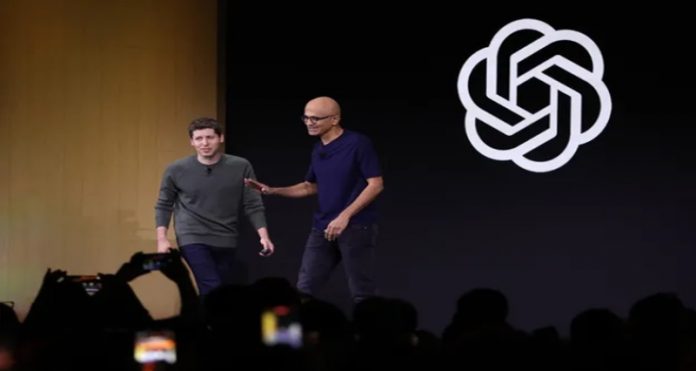
Microsoft, led by CEO Satya Nadella, has been actively reducing its dependence on OpenAI models, anticipating a future in which foundational AI models become commoditized. Instead of betting solely on OpenAI, Microsoft is integrating multiple AI models into its cloud services. In May 2025, it began offering access to Elon Musk’s xAI Grok model to Azure customers—a move that underscores Microsoft’s pivot toward a multi-model ecosystem.

According to several sources, Microsoft is also becoming less patient with OpenAI CEO Sam Altman’s escalating demands for computing infrastructure. Altman has reportedly pressured Microsoft for faster access to GPUs and expanded server capacity to handle ChatGPT’s soaring user base—now at 500 million weekly active users globally—while also training new models.

The partnership has become particularly strained over infrastructure issues, with OpenAI also exploring alternative cloud partnerships with Oracle, Google Cloud, and SoftBank to diversify its backend operations.

Legal and Regulatory Hurdles

Even if both companies reach a new agreement, it must survive scrutiny from U.S. regulators. The conversion of OpenAI into a for-profit entity is subject to review by attorneys-general in California and Delaware, given its original nonprofit charter. Elon Musk, a former OpenAI board member and current head of xAI, has launched a legal challenge against the transformation, which further complicates the timeline and risks.

Additionally, current contract elements are under renegotiation, including Microsoft’s exclusive right to sell OpenAI’s products through its Azure cloud, its right of first refusal on infrastructure services, and its early access to OpenAI’s intellectual property in the event of a breakthrough in artificial general intelligence (AGI). Reports suggest the AGI clause may be dropped entirely, as it has become a point of contention.