DD
MM
YYYY

PAGES

DD
MM
YYYY

spot_img

PAGES

Home Blog Page 1093

Tinubu Seeks $21.5bn Loan, N758bn Bond to Fund Projects, Settle Pension Arrears Amid Surging Debt and Rising Concerns Over Borrowing for Consumption

0

President Bola Tinubu has formally asked the National Assembly to approve a new wave of borrowing—seeking $21.5 billion in external loans, a N758 billion bond issuance, and an additional $2 billion in domestic borrowing—to finance critical infrastructure and offset long-standing pension arrears.

The request, read during Tuesday’s Senate plenary, has been referred to the Senate Committee on Local and Foreign Debts, which is expected to report back within two weeks.

In his letter to the legislature, President Tinubu explained that the proposed borrowings were necessary to finance key sectors of the economy, including infrastructure, health, education, and water supply. He further requested legislative approval to issue bonds in the domestic market worth N757.9 billion to settle outstanding pension liabilities under the Contributory Pension Scheme.

The president said the request is to enable the Federal Government to meet its obligations to retired public servants and to support the implementation of major infrastructure projects that will drive growth and job creation.

This is not the first such appeal by the Tinubu administration. A separate request was also sent to the House of Representatives seeking approval for the revised 2025–2026 external borrowing plan. Under this plan, the government is looking to secure $21.5 billion, €2.2 billion, ¥15 billion in Japanese yen, and a €65 billion grant. The House Speaker, Tajudeen Abbas, read the letter on the floor and referred it to the House Committee on Aids, Loans, and Debt Management for further review.

Mounting Debt Profile and Soaring Debt Servicing

The fresh requests come at a time Nigeria’s public debt burden is rising rapidly, triggering alarm from economists, financial watchdogs, and ordinary citizens.

According to the data released by the Debt Management Office (DMO), Nigeria’s total public debt as of December 31, 2024, stood at N144.7 trillion (approximately $94.2 billion). Of this amount, N74.4 trillion is domestic debt, while N70.3 trillion is external.

Even more worrisome is the cost of servicing the debt. In 2023, the country spent N7.8 trillion on debt servicing—more than double the N3.52 trillion spent in 2022. That figure soared to N13.12 trillion in 2024, reflecting a 68 percent rise within a single year.

These figures show that Nigeria is increasingly spending more to service existing loans than on capital projects. It also signals a deeper structural weakness: the country is not generating enough revenue to meet its obligations. Analysts warn that such a trend is unsustainable and could crowd out spending on critical sectors like education, healthcare, and infrastructure.

Borrowing for Consumption, Another Concern

Beyond the sheer size of Nigeria’s debt, another growing concern is how the borrowed funds are being utilized. Many have long pointed out that Nigeria borrows heavily to fund recurrent expenditure or service arrears, rather than to build capital projects that can stimulate the economy and generate returns.

This concern is not unfounded. The Tinubu administration’s new borrowing request includes a N758 billion domestic bond specifically earmarked for settling pension liabilities—a noble gesture on its own but one that falls under consumption, not investment.

A financial expert, Mr. Babatunde Salami, has cautioned both the federal and state governments against borrowing from the capital market for consumption. In an interview with VON, Salami said government at all levels should only borrow for capital projects whose capital returns would pay for the borrowed fund.

While President Tinubu’s request has now been submitted to the appropriate legislative committees, it is likely to be approved, though, several lawmakers have previously expressed concern over the country’s borrowing spree, especially without a clear repayment plan or project-specific transparency.

Senator Ali Ndume (APC, Borno South) earlier this year, expressed concern that the government is borrowing for consumption.

Ndume said, “Let me say that I am not against borrowing, America, Japan, China and other big countries do borrow.

“They (Nigerian government) borrow for fiscal, tangible and accountable projects, which they pay back over time. But my worry is what they borrow for.”

If approved, the proposed borrowings will push Nigeria’s total public debt beyond the N150 trillion mark. And with debt servicing costs already consuming a significant chunk of government revenue, concerns remain over how the administration intends to manage fiscal stability in the long term.


Web3 ai’s AI Utility Puts It Ahead of TRUMP Coin Price & Cardano Price Potential in the Most Popular Cryptocurrency Race

0

TRUMP coin price, Cardano (ADA) price potential, most popular cryptocurrency

While TRUMP and Cardano continue to hold major visibility in 2025 discussions, investor focus is beginning to move in a different direction. The TRUMP coin price still reacts strongly to event-driven hype, and the Cardano (ADA) price potential appears to be declining as on-chain metrics lose momentum. Though both assets remain prominent in media coverage, the shift in sentiment suggests utility and functionality are now leading factors for investor interest, and that’s where Web3 ai is quickly gaining recognition.

Currently in Stage 06 of its presale at $0.000383, Web3 ai has secured more than $5.7 million in funding. With a launch price projection of $0.005242, early buyers are eyeing a possible 1,747% ROI. More than just another trending token, Web3 ai is positioning itself as a serious candidate for the most popular cryptocurrency, thanks to its emphasis on real-world AI functionality and future scalability.

TRUMP Coin (TRUMP): Volatility Without a Clear Roadmap

The TRUMP coin price has shown frequent spikes tied to media cycles and politically charged events. Analysts report that short-term trading strategies dominate the market, as many look to enter and exit based on upcoming high-visibility news. This approach has led to repeated patterns in 2025, brief rallies, followed by fast corrections.

However, the TRUMP coin price lacks any underlying infrastructure. There’s no official platform or product roadmap supporting its value. With no sustained development or long-term planning, momentum continues to depend entirely on headlines. As a result, profit-taking remains common, and many longer-term investors are starting to question its viability.

Even as one of the most popular cryptocurrency names in discussions, TRUMP remains limited in scope. It captures attention but offers little depth. For investors seeking structured growth and real fundamentals, it is no longer the top choice.

Cardano (ADA): Declining Usage Impacts Price Outlook

The Cardano (ADA) price potential continues to weaken as user activity on the network falls. On-chain data shows drops in both transaction volume and participation, causing ADA to hover around support zones without strong buying interest. Cardano’s mission of providing a secure and decentralized platform is still intact, but the pace of technical progress appears to be slowing.

In the past, ADA gained from expectations surrounding staking, updates, and new project rollouts. But in the current market, faster-moving platforms focused on utility are capturing attention. As these alternatives grow, Cardano is losing ground. Even its dedicated base of holders is starting to look toward newer options with faster innovation cycles.

Although Cardano still holds weight in the conversation around the most popular cryptocurrency, it’s clear that many investors are exploring AI-powered platforms and early-stage entries like Web3 ai.

Web3 ai: A Utility-Focused Approach With AI and Decentralized Growth

Unlike TRUMP and Cardano, Web3 ai is focused on functionality and infrastructure rather than narrative or legacy status. It’s a platform built to support investors with AI-powered tools and predictive analytics. Where the TRUMP coin price thrives on attention and the Cardano (ADA) price potential leans on its past, Web3 ai is winning over support by looking ahead.

Part of the project’s vision includes developing new tools like NFT valuation engines, chatbot support, and SDKs that developers can use to plug AI into other crypto services. This creates room for scalable utility across Web3 products and offers flexibility for users and institutions alike.

Web3 ai is also planning integrations with exchanges, wallets, and DeFi protocols so its AI tools can be used directly through third-party platforms. This expands the $WAI token’s role beyond just internal utility, embedding it into everyday crypto workflows.

The token, priced at $0.000383 in its AI crypto presale, has a projected listing price of $0.005242. That puts early participants in position for a 1,747% ROI. With more than $5.7 million raised already, investor confidence is clearly building as the project differentiates itself from short-term or brand-driven competitors.

Concluding Thoughts

The TRUMP coin price might continue to spike around headline events, and the Cardano (ADA) price potential could rebound if its ecosystem sees progress. But right now, both rely heavily on either sentiment or legacy appeal. In contrast, Web3 ai is building a decentralized platform with clear use cases, structured governance, and a plan for AI integration.

At just $0.000383, with more than $5.7 million already raised and a projected 1,747% ROI, Web3 ai is doing more than following trends, it’s preparing to shape them. With planned tools for NFTs, SDKs, and cross-platform integrations, this project is emerging not just as another token but as a contender for the most popular cryptocurrency of 2025. Its rise is grounded in actual utility, not hype, and that could make all the difference.


Join Web3 ai Now:

Website: http://web3ai.com/

Telegram: https://t.me/Web3Ai_Token

X: https://x.com/Web3Ai_Token

Instagram: https://www.instagram.com/web3ai_token

HBAR Looks Bullish, AVAX Eyes Recovery, but Unstaked Might Already Be the Next Big Crypto with $7.5M Raised

1

Hedera (HBAR) bullish signals, Avalanche (AVAX) price outlook, next big crypto

All eyes are on Hedera (HBAR) bullish signals and the shifting Avalanche (AVAX) price outlook, but another contender is stealing the spotlight, Unstaked. This AI-powered presale project has now crossed $7.5 million in funding, attracting major attention from early investors looking beyond hype and into hands-on utility. While HBAR’s expanding stablecoin market and token outflows are pushing momentum, and AVAX is slowly rebounding, Unstaked is blazing its own trail.

With cross-platform AI agents, a $1 million Gleam competition, and a presale price that hints at 28x returns, Unstaked may already be claiming the title of next big crypto.

HBAR Gains Strength with On-Chain Growth & Technical Momentum

Hedera is on the move. A series of Hedera (HBAR) bullish signals have started to shape the current narrative. Despite being 50% down from its annual high, HBAR still trades at $0.20, and investor confidence is rising. The stablecoin market on Hedera has grown to over $182 million, up from just $38 million in January. That’s a huge leap for DeFi on the network.

Even more telling are the exchange outflows. More than $18 million worth of HBAR left exchanges in the last two weeks alone, and over $100 million since the start of the year. That’s typically a strong indicator that holders are locking in their positions and preparing for a rally. Technically, HBAR sits above its 50-day moving average and is forming a broadening wedge, both classic Hedera (HBAR) bullish signals that could trigger upward price movement soon.

AVAX Shows Signs of Rebound, But Caution Still Lingers

Avalanche is trying to bounce back, and the Avalanche (AVAX) price outlook is beginning to improve. As of May 21, 2025, AVAX is trading at $23.19, still far from its $146.22 all-time high, but recent action is encouraging. The price moved from $19.09 to $26.84 before settling in the $23 range.

AVAX is now sitting above key short-term averages, including its 50-day SMA at $21.01. While the 200-day SMA at $26.24 acts as resistance for now, the technicals suggest a recovery is in progress. The RSI sits at 58.56, and the MACD histogram also leans positive, signs that a bullish swing might be building. Forecasts hint at $33.36 by the end of 2025 and potentially $326.17 by 2031. If Avalanche continues to grow its ecosystem, it’s bound to stay in the next big crypto conversation.

Unstaked’s $7.5M Presale & AI Model Signal a Different Kind of Breakout

While HBAR attracts long-term holders and AVAX fights back from correction territory, Unstaked is charging ahead with real utility and a community-driven rollout. Now in Stage 15, it’s raised over $7.5 million with its token priced at $0.009831. With a launch target of $0.1819, early backers are looking at a possible 28x return.

What’s setting Unstaked apart is its AI agent model. Designed for creators and crypto teams, these agents will automate activity across Twitter, Telegram, Discord, and Instagram. And this isn’t just talk, Unstaked is built around a unique “Proof of Intelligence” structure, rewarding users based on AI performance instead of standard consensus methods.

The project also launched a massive $1 million Gleam campaign. Twenty winners will walk away with $50,000 each in $UNSD, simply for completing social tasks and buying at least $100 in tokens. That’s not just promotion, it’s fuel for viral engagement and commitment at scale.

While meme coins come and go, Unstaked is building something deeper. It’s not just gunning for price action; it’s offering tools, automation, and long-term value. If there’s a project primed to become the next big crypto, Unstaked is making a strong case right now.

Closing Thoughts

The crypto market isn’t just chasing the next meme anymore, it’s chasing functionality. And 2025 is shaping up to be the year that separates the speculative from the scalable. While Hedera (HBAR) bullish signals continue to build and Avalanche (AVAX) price outlook starts to improve, Unstaked is already delivering on expectations.

With $7.5 million raised, a live AI roadmap, and a presale price positioned for explosive growth, Unstaked is quickly moving beyond hype. It’s not just in the race, it’s setting the pace.

Between the Proof of Intelligence model, platform integrations, and the $1 million Gleam campaign, this isn’t a token you watch, it’s one you prepare to use. If you’re looking for the next big crypto, Unstaked may already be crossing the line before the rest even get started.


Join Unstaked Now:

Presale: https://presale.unstaked.com/

Website: https://unstaked.com/

Telegram: https://t.me/UnstakedTokenOfficial

X: https://x.com/unstaked_token

Ambience Unveils AI Medical Coding Model That Outperforms Doctors by 27%, As Health Sector Embraces AI-Led Practices

0

Ambience Healthcare, a U.S.-based artificial intelligence startup backed by OpenAI’s Startup Fund and top-tier venture firms, on Tuesday, announced the release of a new AI-powered medical coding model that outperforms board-certified doctors by 27% in identifying ICD-10 codes.

The model, built using OpenAI’s fine-tuning technology, marks what the company calls a significant step forward in automating the administrative burden in modern healthcare.

With this announcement, Ambience joins a growing wave of companies pushing artificial intelligence into the core of clinical practice, as the healthcare sector begins to embrace sweeping changes driven by automation. The timing of this development is notable: just weeks earlier, Saudi Arabia opened the world’s first fully AI-powered medical clinic, where an AI doctor named “Dr. Hua” leads patient consultations and treatment planning, while human physicians supervise from the background.

The Ambience model, while focused on coding rather than diagnosis, builds on this trend, reaffirming the potential of AI to transform not just how care is delivered—but how it’s documented, billed, and audited.

Outperforming Humans at the Administrative Core of Healthcare

The centerpiece of Ambience’s announcement is its new ICD-10 coding model, which the company says shows a 27% relative performance improvement over practicing physicians. ICD-10, short for the International Classification of Diseases (10th revision), is a universal coding system used by doctors, hospitals, and insurers worldwide. With more than 70,000 constantly updated diagnostic codes, the system is notoriously complex, making accurate documentation a difficult and time-consuming task for clinicians.

Ambience says its model is capable of listening to real-time patient encounters and automatically extracting the correct ICD-10 codes. The goal is to relieve doctors of the administrative weight of documentation and billing errors, which are frequent sources of inefficiency, frustration, and financial penalties in the healthcare industry.

“We’re not replacing doctors or coders,” said Brendan Fortuner, head of engineering at Ambience, in an interview with CNBC. “What we’re doing is we’re liberating them from administration, and we’re fixing mistakes that help make health care better, safer, more cost-effective.”

Rigorous Testing, Remarkable Results

To validate the model, Ambience developed a “gold panel” of coding labels agreed upon by seasoned clinicians who reviewed complex cases and determined the most accurate ICD-10 classifications. The company then recruited 18 board-certified physicians and tested them on the same set of cases. The AI model’s performance surpassed the average physician by 27% in coding accuracy.

“It shows for the first time that an AI system can actually surpass clinician experts at a very, very important administrative task, especially in coding,” Fortuner said.

Dr. Will Morris, Ambience’s chief medical officer and a former Cleveland Clinic executive, added that ICD-10 coding is more than just paperwork—it’s central to healthcare operations.

“It’s the cornerstone for quality,” Morris said. “If you think about it from a data perspective, it’s how you can compare and contrast clinician A to B, or health system A to B.”

Ambience’s technology is already being used by over 40 healthcare organizations, including Cleveland Clinic and UCSF Health. The startup has raised more than $100 million to date from investors such as Kleiner Perkins and Andreessen Horowitz. According to a report by The Information, the company is currently seeking new capital at a valuation exceeding $1 billion—a claim Ambience declined to comment on.

Built with OpenAI, Tuned for Healthcare

The model was built using OpenAI’s reinforcement fine-tuning tools, which enable companies to tailor high-performing large language models to highly specific domains—such as medicine. This specialization is crucial in healthcare, where accuracy, context, and clinical nuance can mean the difference between proper care and potential harm.

Beyond ICD-10, Ambience has also developed AI models capable of handling other medical codes such as CPT (Current Procedural Terminology), and is now exploring expansions into prior authorizations, utilization management, and clinical trial matching—areas notorious for bureaucratic delays and inefficiencies.

Fortuner noted that while the current focus is coding, the long-term vision is broader: building AI tools that can quietly but intelligently streamline the invisible but critical parts of medicine that often consume more time than the patient care itself.

The Bigger Picture Is AI Changing Healthcare
Artificial intelligence is no longer just a support tool in healthcare—it is becoming a lead actor.

Last month, Saudi Arabia recorded a breakthrough when it unveiled the world’s first fully AI-operated clinic. Unlike telehealth services or chatbot symptom checkers, Dr. Hua interacts with patients in real-time, collects clinical data, proposes treatment plans, and handles medical documentation. Human doctors are present, but only in a supervisory capacity—to review and approve decisions.

The AI clinic represents a radical rethinking of clinical workflows. And while it’s still a tightly controlled pilot, it offers a glimpse into how AI might take a central role in direct patient care in the near future.

Ambience’s approach is more conservative by comparison. Its tools operate behind the scenes—quietly listening, interpreting, coding—but its model’s performance, surpassing trained physicians, suggests that even the back-office tasks of healthcare are being reshaped by intelligent systems.

Ambience plans to roll out its new ICD-10 model to healthcare customers over the summer. If widely adopted, it could dramatically reduce the time clinicians spend on documentation, lower billing error rates, and standardize the way healthcare is coded and analyzed across systems.

Africa’s Cross-border Payments Market Projected to Reach $1 Trillion in 2035 – Report

0

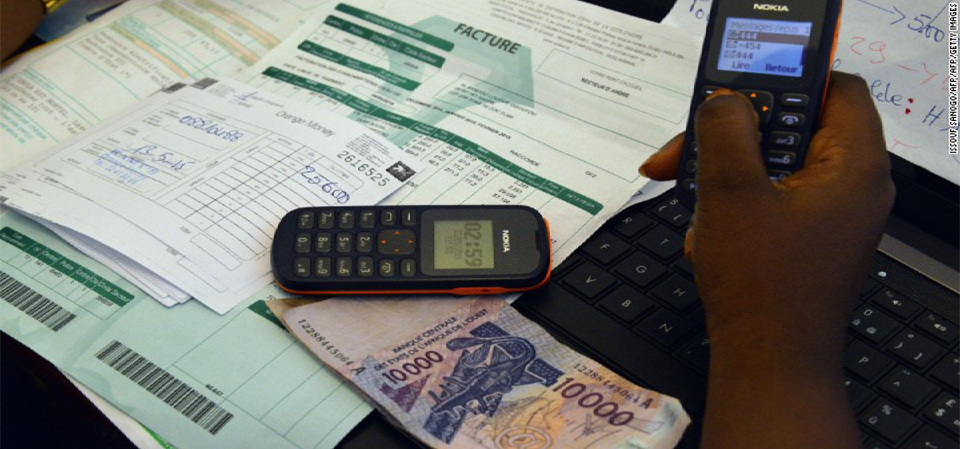
A recent report by Oui Capital, an Africa-focused venture capital firm, has revealed that Africa’s cross-border payments market, which is currently valued at $329 in 2025, is expected to reach $1 trillion in 2035.

Key drivers such as increased regional trade, growing migration, mobile money penetration, and fintech innovation are reshaping how money moves across borders. Yet, inefficiencies persist, costing consumers and businesses billions annually. High fees, currency volatility, fragmented regulations, and limited interoperability continue to hinder progress.

Despite these barriers, opportunities abound. Africa had 781 million registered mobile money accounts in 2022, with a staggering $837 billion in transaction volumes 66% of global mobile money transactions. Fintech solutions are significantly reducing remittance costs, with digital channels averaging 3.5% fees compared to the traditional 8–12%, and enabling near-instant transfers.

SMEs are driving intra-African trade, increasingly leveraging digital tools to simplify cross-border commerce. But deeper structural issues remain:

  • Remittance fees still average 7.4–8.3%, the highest globally.
  • Only 55% of African countries allow electronic KYC, creating repetitive compliance burdens.
  • FX liquidity issues and inconsistent policies in countries like Nigeria lead to $5 billion in extra costs annually, driven by offshore clearing and double currency conversions.

Key Growth Drivers Cross-Border Payments in Africa

1. Regulatory Reforms – PAPSS & AfCFTA

The Pan-African Payment and Settlement System (PAPSS), launched in 2022, enables instant cross-border payments in local currencies—cutting out the need for dollar clearing and potentially saving up to $5 billion annually.

Alongside this, the African Continental Free Trade Area (AfCFTA) is working to harmonize financial systems across member states, reducing dependence on SWIFT and foreign banking intermediaries, and fostering a more integrated African financial market.

2. Mobile Money Penetration

Mobile money is revolutionizing remittances in Sub-Saharan Africa, now processing 30% of all SSA remittance flows—valued at $16 billion in 2022. With transaction volumes growing 22% year-over-year and mobile remittance growth at 48% annually, these platforms offer significantly lower transaction fees (1.5%–3%) compared to traditional banks (7%+), making them a more accessible option for cross-border transfers.

3. Regional Migration, Trade & Urbanization

Intra-African remittances reached $20 billion in 2022, highlighting the impact of increasing regional migration and urbanization. These dynamics are fueling South-South remittance corridors, strengthening regional financial ties, and driving demand for efficient, affordable payment solutions.

Growing intra-African trade is also accelerating the adoption of digital payment tools across borders, enhancing financial inclusion and economic integration.

Notably, the report revealed that Digital transfers have significantly reduced remittance fees from 7.4% to 3% or lower, saving migrants $4 – $5 billion annually while making cross border payments more affordable. Additionally, PAPSS and fintech APIs have the potential to eliminate $5 billion in correspondent banking fees, further accelerating transactions and lowering costs.

With every 1% reduction in remittance fees, African families save an estimated $6 billion per year, underscoring the immense financial impact of digital innovation in the remittance sector.

Key characteristics of Africa’s Cross-Border Payments   

Low-value, High-Frequency Transactions Dominate

Remittances, SME trade, and informal payments are the primary use cases. The average remittance transaction value in Africa is $200-$400, with an estimated 60-80 million transactions per month (World Bank, 2023). Informal cross-border traders typically process payments between $200-$1,000 per transaction, often transacting multiple times per week (UNCTAD, 2021).      

Fragmented Currencies

Africa has 40+ currencies, leading to high FX costs and dependence on USD/EUR for settlement.       

Heavy Reliance on Cash

Digital adoption is growing, but over 80% of transactions remain cash-based (World Bank, 2023). Money dominating.     

Strong Mobile Money Networks

Africa leads in mobile money penetration, with platforms like M-Pesa, MTN MoMo, and Airtel Money dominating.

Reliance on Correspondent Banks

Many African banks lack direct cross-border relationships, increasing transaction costs and processing time.

Conclusion

The cross-border payments market in Africa is poised for significant growth, driven by increasing digital adoption, mobile money penetration, and fintech dominance. The volume of intra-African remittances is expected to rise as more individuals and businesses seek cost effective, faster, and more accessible payment solutions.

With the emergence of regional payment networks such as PAPSS, dependency on SWIFT based correspondent banking is likely to decline, reducing transaction costs and efficiency.