DD
MM
YYYY

PAGES

DD
MM
YYYY

spot_img

PAGES

Home Blog Page 1095

Ambience Unveils AI Medical Coding Model That Outperforms Doctors by 27%, As Health Sector Embraces AI-Led Practices

0

Ambience Healthcare, a U.S.-based artificial intelligence startup backed by OpenAI’s Startup Fund and top-tier venture firms, on Tuesday, announced the release of a new AI-powered medical coding model that outperforms board-certified doctors by 27% in identifying ICD-10 codes.

The model, built using OpenAI’s fine-tuning technology, marks what the company calls a significant step forward in automating the administrative burden in modern healthcare.

With this announcement, Ambience joins a growing wave of companies pushing artificial intelligence into the core of clinical practice, as the healthcare sector begins to embrace sweeping changes driven by automation. The timing of this development is notable: just weeks earlier, Saudi Arabia opened the world’s first fully AI-powered medical clinic, where an AI doctor named “Dr. Hua” leads patient consultations and treatment planning, while human physicians supervise from the background.

The Ambience model, while focused on coding rather than diagnosis, builds on this trend, reaffirming the potential of AI to transform not just how care is delivered—but how it’s documented, billed, and audited.

Outperforming Humans at the Administrative Core of Healthcare

The centerpiece of Ambience’s announcement is its new ICD-10 coding model, which the company says shows a 27% relative performance improvement over practicing physicians. ICD-10, short for the International Classification of Diseases (10th revision), is a universal coding system used by doctors, hospitals, and insurers worldwide. With more than 70,000 constantly updated diagnostic codes, the system is notoriously complex, making accurate documentation a difficult and time-consuming task for clinicians.

Ambience says its model is capable of listening to real-time patient encounters and automatically extracting the correct ICD-10 codes. The goal is to relieve doctors of the administrative weight of documentation and billing errors, which are frequent sources of inefficiency, frustration, and financial penalties in the healthcare industry.

“We’re not replacing doctors or coders,” said Brendan Fortuner, head of engineering at Ambience, in an interview with CNBC. “What we’re doing is we’re liberating them from administration, and we’re fixing mistakes that help make health care better, safer, more cost-effective.”

Rigorous Testing, Remarkable Results

To validate the model, Ambience developed a “gold panel” of coding labels agreed upon by seasoned clinicians who reviewed complex cases and determined the most accurate ICD-10 classifications. The company then recruited 18 board-certified physicians and tested them on the same set of cases. The AI model’s performance surpassed the average physician by 27% in coding accuracy.

“It shows for the first time that an AI system can actually surpass clinician experts at a very, very important administrative task, especially in coding,” Fortuner said.

Dr. Will Morris, Ambience’s chief medical officer and a former Cleveland Clinic executive, added that ICD-10 coding is more than just paperwork—it’s central to healthcare operations.

“It’s the cornerstone for quality,” Morris said. “If you think about it from a data perspective, it’s how you can compare and contrast clinician A to B, or health system A to B.”

Ambience’s technology is already being used by over 40 healthcare organizations, including Cleveland Clinic and UCSF Health. The startup has raised more than $100 million to date from investors such as Kleiner Perkins and Andreessen Horowitz. According to a report by The Information, the company is currently seeking new capital at a valuation exceeding $1 billion—a claim Ambience declined to comment on.

Built with OpenAI, Tuned for Healthcare

The model was built using OpenAI’s reinforcement fine-tuning tools, which enable companies to tailor high-performing large language models to highly specific domains—such as medicine. This specialization is crucial in healthcare, where accuracy, context, and clinical nuance can mean the difference between proper care and potential harm.

Beyond ICD-10, Ambience has also developed AI models capable of handling other medical codes such as CPT (Current Procedural Terminology), and is now exploring expansions into prior authorizations, utilization management, and clinical trial matching—areas notorious for bureaucratic delays and inefficiencies.

Fortuner noted that while the current focus is coding, the long-term vision is broader: building AI tools that can quietly but intelligently streamline the invisible but critical parts of medicine that often consume more time than the patient care itself.

The Bigger Picture Is AI Changing Healthcare
Artificial intelligence is no longer just a support tool in healthcare—it is becoming a lead actor.

Last month, Saudi Arabia recorded a breakthrough when it unveiled the world’s first fully AI-operated clinic. Unlike telehealth services or chatbot symptom checkers, Dr. Hua interacts with patients in real-time, collects clinical data, proposes treatment plans, and handles medical documentation. Human doctors are present, but only in a supervisory capacity—to review and approve decisions.

The AI clinic represents a radical rethinking of clinical workflows. And while it’s still a tightly controlled pilot, it offers a glimpse into how AI might take a central role in direct patient care in the near future.

Ambience’s approach is more conservative by comparison. Its tools operate behind the scenes—quietly listening, interpreting, coding—but its model’s performance, surpassing trained physicians, suggests that even the back-office tasks of healthcare are being reshaped by intelligent systems.

Ambience plans to roll out its new ICD-10 model to healthcare customers over the summer. If widely adopted, it could dramatically reduce the time clinicians spend on documentation, lower billing error rates, and standardize the way healthcare is coded and analyzed across systems.
Africa’s Cross-border Payments Market Projected to Reach $1 Trillion in 2035 – Report

0

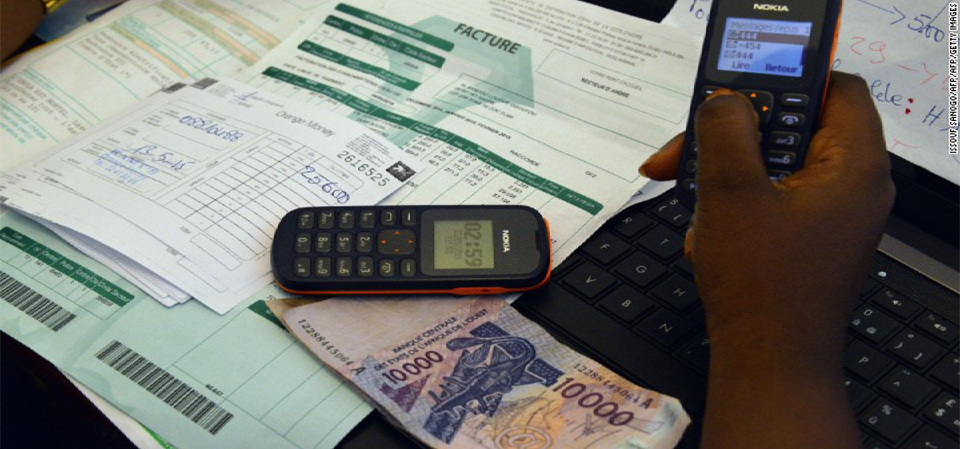
A recent report by Oui Capital, an Africa-focused venture capital firm, has revealed that Africa’s cross-border payments market, which is currently valued at $329 in 2025, is expected to reach $1 trillion in 2035.

Key drivers such as increased regional trade, growing migration, mobile money penetration, and fintech innovation are reshaping how money moves across borders. Yet, inefficiencies persist, costing consumers and businesses billions annually. High fees, currency volatility, fragmented regulations, and limited interoperability continue to hinder progress.

Despite these barriers, opportunities abound. Africa had 781 million registered mobile money accounts in 2022, with a staggering $837 billion in transaction volumes 66% of global mobile money transactions. Fintech solutions are significantly reducing remittance costs, with digital channels averaging 3.5% fees compared to the traditional 8–12%, and enabling near-instant transfers.

SMEs are driving intra-African trade, increasingly leveraging digital tools to simplify cross-border commerce. But deeper structural issues remain:

  • Remittance fees still average 7.4–8.3%, the highest globally.
  • Only 55% of African countries allow electronic KYC, creating repetitive compliance burdens.
  • FX liquidity issues and inconsistent policies in countries like Nigeria lead to $5 billion in extra costs annually, driven by offshore clearing and double currency conversions.

Key Growth Drivers Cross-Border Payments in Africa

1. Regulatory Reforms – PAPSS & AfCFTA

The Pan-African Payment and Settlement System (PAPSS), launched in 2022, enables instant cross-border payments in local currencies—cutting out the need for dollar clearing and potentially saving up to $5 billion annually.

Alongside this, the African Continental Free Trade Area (AfCFTA) is working to harmonize financial systems across member states, reducing dependence on SWIFT and foreign banking intermediaries, and fostering a more integrated African financial market.

2. Mobile Money Penetration

Mobile money is revolutionizing remittances in Sub-Saharan Africa, now processing 30% of all SSA remittance flows—valued at $16 billion in 2022. With transaction volumes growing 22% year-over-year and mobile remittance growth at 48% annually, these platforms offer significantly lower transaction fees (1.5%–3%) compared to traditional banks (7%+), making them a more accessible option for cross-border transfers.

3. Regional Migration, Trade & Urbanization

Intra-African remittances reached $20 billion in 2022, highlighting the impact of increasing regional migration and urbanization. These dynamics are fueling South-South remittance corridors, strengthening regional financial ties, and driving demand for efficient, affordable payment solutions.

Growing intra-African trade is also accelerating the adoption of digital payment tools across borders, enhancing financial inclusion and economic integration.

Notably, the report revealed that Digital transfers have significantly reduced remittance fees from 7.4% to 3% or lower, saving migrants $4 – $5 billion annually while making cross border payments more affordable. Additionally, PAPSS and fintech APIs have the potential to eliminate $5 billion in correspondent banking fees, further accelerating transactions and lowering costs.

With every 1% reduction in remittance fees, African families save an estimated $6 billion per year, underscoring the immense financial impact of digital innovation in the remittance sector.

Key characteristics of Africa’s Cross-Border Payments   

Low-value, High-Frequency Transactions Dominate

Remittances, SME trade, and informal payments are the primary use cases. The average remittance transaction value in Africa is $200-$400, with an estimated 60-80 million transactions per month (World Bank, 2023). Informal cross-border traders typically process payments between $200-$1,000 per transaction, often transacting multiple times per week (UNCTAD, 2021).      

Fragmented Currencies

Africa has 40+ currencies, leading to high FX costs and dependence on USD/EUR for settlement.       

Heavy Reliance on Cash

Digital adoption is growing, but over 80% of transactions remain cash-based (World Bank, 2023). Money dominating.     

Strong Mobile Money Networks

Africa leads in mobile money penetration, with platforms like M-Pesa, MTN MoMo, and Airtel Money dominating.

Reliance on Correspondent Banks

Many African banks lack direct cross-border relationships, increasing transaction costs and processing time.

Conclusion

The cross-border payments market in Africa is poised for significant growth, driven by increasing digital adoption, mobile money penetration, and fintech dominance. The volume of intra-African remittances is expected to rise as more individuals and businesses seek cost effective, faster, and more accessible payment solutions.

With the emergence of regional payment networks such as PAPSS, dependency on SWIFT based correspondent banking is likely to decline, reducing transaction costs and efficiency.

The Birth of Bitcoin: A New Dawn in Digital Finance

0

1. The Birth of Bitcoin: A New Dawn in Digital Finance

In 2009, a mysterious figure known as Satoshi Nakamoto quietly launched a revolutionary concept—Bitcoin. At the time, it was largely ignored by the world. One U.S. dollar could buy you 1,300 Bitcoins.

But Bitcoin wasn’t just a new form of money—it was a bold response to traditional finance. Built on blockchain technology, it offered decentralization, anonymity, and a fixed supply—challenging the status quo of central banks and fiat currencies.

2. The Rise of Bitcoin: From Obscurity to Global Spotlight

In 2017, Bitcoin made headlines as its price skyrocketed. From under $1,000 in January to nearly $20,000 by December, it soared over 1700% in a single year.

As of May 2025, Bitcoin has reached a record high of $100,000 per coin. What was once a fringe innovation is now recognized as a legitimate global asset and a powerful store of value.

 3. Bitcoin’s Future: From Digital Gold to Global Financial Backbone

Bitcoin’s role continues to expand beyond just being a speculative asset:

  •  Up 55% in the past six months 
  • Adopted as legal tender by countries like El Salvador and the Central African Republic 
  •  ARK Invest projects Bitcoin could hit $1.5 million by 2030 
  •  Michael Saylor, chairman of MicroStrategy, predicts it could reach $13 million by 2045 

As blockchain matures and global trust in fiat currencies wavers, Bitcoin is poised to revolutionize international remittances, asset protection, and sovereign finance.

 4. Mining Bitcoin: Unlocking Wealth from the Digital Ground

Unlike fiat currencies, Bitcoin is not printed—it’s mined. Through powerful computing, “miners” validate transactions on the blockchain and are rewarded in Bitcoin.

Bitcoin mining is a crucial process that underpins the security and functionality of the Bitcoin network. It involves specialized computers competing to solve complex mathematical puzzles to verify and add new transactions to the blockchain, Bitcoin’s public ledger.

Here’s an overview of how it works:

  • Verifying Transactions and Creating New Blocks: When people make Bitcoin transactions, these transactions are broadcast to the network. Miners’ computers (nodes) collect these pending transactions and bundle them into a “block.”
  • Solving Cryptographic Puzzles (Proof-of-Work): To add a block to the blockchain, miners must solve a complex cryptographic puzzle. This involves finding a “nonce” (a random number) that, when combined with the block’s data and put through a cryptographic hash function (SHA-256), produces a hash (a 64-digit hexadecimal number) that meets a specific target set by the Bitcoin network. This process is known as “Proof-of-Work” (PoW) because the work done to find the solution serves as proof that the miner validated the transactions.
  • Competition and Reward: Thousands of miners worldwide are constantly competing to be the first to solve this puzzle. The first miner to find the correct solution broadcasts their validated block to the network. If other miners verify and accept the solution, the new block is added to the blockchain. The successful miner is then rewarded with a predetermined amount of newly minted Bitcoin (the “block reward”) and also collects the transaction fees from the transactions included in that block.
  • Decentralization and Security: This mining process is intentionally designed to be resource-intensive and difficult. This makes it computationally impractical for any single entity to manipulate the blockchain, ensuring the network’s security and decentralization. The “difficulty” of these puzzles automatically adjusts approximately every two weeks (or every 2,016 blocks) to ensure that new blocks are added to the blockchain roughly every 10 minutes.
  • Hardware and Energy Consumption: In the early days of Bitcoin, mining could be done with standard computer CPUs. However, due to the increasing difficulty of the puzzles and the massive computing power of the network, specialized hardware called Application-Specific Integrated Circuits (ASICs) is now essential for competitive mining. These ASICs consume significant amounts of electricity, which has led to environmental concerns and makes profitability a challenge for individual hobbyists.
  • Mining Pools: To improve their chances of earning rewards, many miners join “mining pools,” where they combine their computational resources and share the rewards proportionally to their contribution.
  • Finite Supply: Bitcoin has a finite supply of 21 million coins. The block reward halves approximately every four years (an event called the “Bitcoin Halving”). This halving mechanism reduces the rate at which new Bitcoins are introduced into circulation. Once all 21 million Bitcoins have been mined (expected around 2140), miners will primarily be incentivized by transaction fees.

In essence, Bitcoin mining is the engine that keeps the Bitcoin network running, validating transactions, securing the blockchain, and introducing new Bitcoins into circulation in a decentralized and verifiable manner.

Top Mining Contracts Overview:

Miner Hash Rate Investment Duration Daily Profit Total Profit
WhatsMiner M30S++ 200 MH/s $100 1 day $3 $3
Sol Token Contract 450 MH/s $500 3 days $15 $45
Litecoin Miner L3++ 420 MH/s $900 7 days $19.8 $138.6
Goldshell LT6 3.35 GH/s $1500 10 days $34.5 $345
ANTMINER S19 XP Hyd 150 TH/s $5000 20 days $125 $2500
ANTMINER S21 Pro 200 TH/s $30,000 15 days $900 $13,500
On-rack Filecoin Miner 200 TH/s $50,000 10 days $2,250 $22,500


Must-Have Tokens for June-July Crypto Surge: Why Big Players are Snapping up Ethereum, XRP and Salamanca (DON) Token

0

With many analysts predicting a mid-year rise in the crypto market, some impressive tokens are becoming popular among both individual and professional investors. Even as Bitcoin leads the way, attention is now turning to Ethereum (ETH), Ripple’s XRP and a popular meme coin called Salamanca (DON). Because of their special mix of setup, storytelling and community activity, these projects are sure to be worth watching as we move into June and July 2025.

Ethereum (ETH): The Macro Bull Flag Ready to Fly

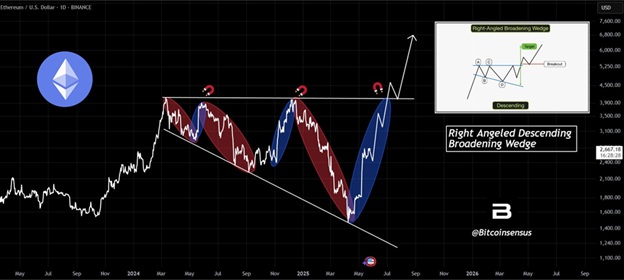
Ethereum has been quietly building a very strong bullish pattern. Since last year, ETH has been forming a right-angled descending broadening wedge which is a rare but proven structure that usually leads to a major breakout. Because the trendline has been respected several times and price is now approaching the upper limit, technical traders are closely watching ETH for a clear breakout.

Source / X

This isn’t the only thing going on. Ethereum’s system is still solid and Layer 2 rollups like Optimism and Arbitrum are helping to increase its capacity. After the merge, there has been an increase in institutional staking which supports the long-term faith in Ethereum.

XRP: A Reversal Confirmed as ETF Buzz Ignites Momentum

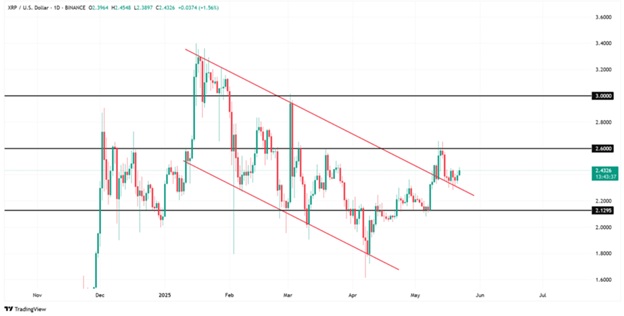
XRP, which has often been a controversial altcoin, is now gaining attention for a good reason. According to technical charts, XRP has now broken out of a long-lasting descending channel, a sign that the price is set to rise. Currently, the price is near the $2.00 resistance, and traders are quickly becoming more positive.

Source / Tradingview

Robinhood has added XRP ETF products, including 2x leverage and futures which means more institutions are accepting and exposing themselves to XRP. In the past, XRP has done well when regulations become clearer and new liquidity is introduced. The market is now seeing many traders hope for another test of the $3.80–$4.00 level, and some even aim for higher targets if the broader market gains momentum in July.

Salamanca (DON): From Meme to Market Momentum

ETH and XRP are backed by strong technical and institutional support, but Salamanca (DON) is making a name for itself in the meme coin arena with its cultural strength and surprising ability to bounce back. Drawn from the world of gritty TV, DON is built on Binance Smart Chain and is quickly building a strong ecosystem that expands its potential.


Salamanca is different from most meme coins because it is developing steadily, giving its community real value and planning to add DeFi and NFT features. Perhaps most importantly, DON continues to see strong daily trading and steady support, which suggests that demand is real. As of late May, the token was near $0.0012, but experts predict that a rise above $0.0020 could quickly lead to a sharp rise toward $0.01, which would be nearly 10x the current price.

Many people are joining the community on Telegram, X and Discord, thanks to viral content, anime-inspired branding and natural memes. Even though Binance hasn’t confirmed, DON’s price movement hints that whales are preparing for a rise before the listing.

Final Thoughts: Positioning for the Summer Run

As the crypto market enters a historically strong mid-year period, Ethereum, XRP and Salamanca (DON) are three different ways to invest: ETH for its stable background and chances to break out, XRP for renewed regulatory interest and ETF support, and DON for those looking for a risky but potentially highly rewarding meme coin.

These assets are based on real patterns, progress and important stories, not just guesswork. For anyone trying to take advantage of the June–July trend, these are the top tokens you should have in your 2025 portfolio.

For More Details:

Twitter/X: https://x.com/salamanca_token

Telegram: https://t.me/salamancatoken

Website: https://salamanca.club/

Neobanks Are Disrupting The Market With Their Agility and Customer-centric Approach

0

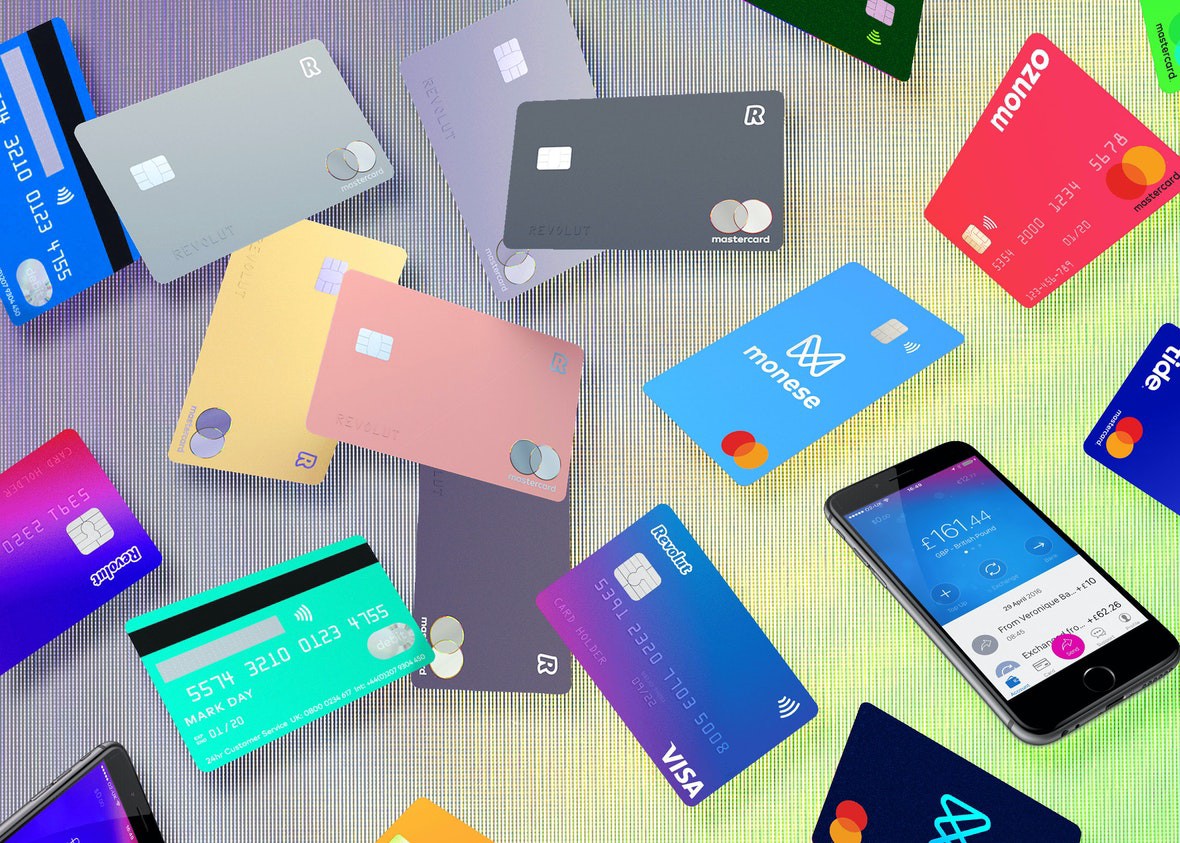
Neobanks, digital-only banks that operate without traditional physical branches, are rapidly disrupting the global financial ecosystem.

The emergence of these banks has revolutionized the banking experience for customers, especially in areas not sufficiently covered by conventional banking activities. Neobanking is one of the new technologies that have made financial services and processes easier, and more efficient and have changed how consumers access their funds.

Their rise is fueled by a combination of technological agility, streamlined operations, and a relentless focus on customer-centric solutions. These institutions leverage mobile-first platforms, data-driven personalization, and user-friendly interfaces to offer banking services that are faster, more accessible, and often more affordable than traditional banks.

In 2021, the global Neobanking market was valued at $30.77 billion and was anticipated to grow with a healthy growth rate of more than 54.00% over the forecast period 2022-2028. The market is expected to grow from USD 96 billion in 2023 to over USD 2 trillion by 2030.

One of the key differentiators of neobanks is their ability to respond quickly to evolving customer needs and market dynamics. By minimizing bureaucracy and embracing innovation, they are better positioned to experiment with new products, integrate emerging technologies like artificial intelligence and open banking APIs, and deliver seamless user experiences.

This disruptive model is resonating with consumers and investors alike. The explosive growth is driven not only by increased digital adoption but also by underserved populations gaining access to financial services through these platforms.

How Neobanks Are Disrupting the Market

Neobanks are reshaping the financial sector through their agility and customer focus in the following ways:

Streamlined Technology: Neobanks use cloud-based infrastructure and simplified IT systems, enabling faster product development and deployment. For instance, 60% of neobanks have integrated open banking APIs to connect with third-party financial tools, enhancing flexibility.

Rapid Innovation: Neobanks leverage artificial intelligence (AI), machine learning (ML), and blockchain for personalized services, fraud detection, and secure transactions. In 2023, 47% of neobanks introduced personal financial management tools like auto-budgeting, while 35% added cryptocurrency wallets.

Customer-Centric Approach: Neobanks offer users a friendly experience, by prioritizing intuitive mobile apps with features like real-time spending alerts, instant payments, and budgeting tools.

Accessibility and Inclusion: Neobanks target underserved groups, such as millennials, gig workers, and small businesses, offering simplified account opening and low-cost services.

In Nigeria, where a significant portion of the population is unbanked or underbanked, neobanks are playing a crucial role in promoting financial inclusion. By using technology to reach customers traditionally overlooked by conventional banks, they offer a range of services that are both accessible and affordable.

Their innovative offerings have seen them challenge traditional banking models that have dominated for decades. The likes of Kuda, Carbon, ALAT by Wema, VFD Bank and Lidya, amongst others, are providing a seamless and user-friendly banking experience. In 2024, Nigeria’s neobanking sector is estimated to have generated a transaction value of $1.658 billion.

The sector’s growth is fueled by increasing internet penetration and the need for digital financial services, particularly in areas underserved by traditional banking.

Looking ahead

The Neobank market’s growth to USD 2 trillion by 2030 signals a transformation in how people and businesses manage finances. With their agility and innovativeness, these institutions are gradually expanding into new services like cryptocurrency, micro-investing, and ESG-aligned products.

As Neobanks continue to scale, they are not just redefining the banking experience, they are reshaping the future of finance by making it more inclusive and responsive.