DD
MM
YYYY

PAGES

DD
MM
YYYY

spot_img

PAGES

Home Blog Page 1096

OpenAI Sam Altman: AI Is Smarter Than Ever, But Society Seems Unfazed

0

OpenAI CEO Sam Altman says his predictions about the trajectory of artificial intelligence have largely proven correct. What has surprised him, however, is not the technology’s development—but society’s muted response to it.

Speaking on a recent episode of Uncapped with Jack Altman, the OpenAI chief reflected on how far generative AI has come. He believes the company’s latest language model, known as o3, demonstrates reasoning ability on par with a human Ph.D. across many subject domains. But despite the groundbreaking nature of such capabilities, Altman said it feels as though the world hasn’t quite caught up emotionally or institutionally.

“The models can now do the kind of reasoning in a particular domain you’d expect a Ph.D. in that field to be able to do,” Altman said. “And we’re like, ‘Oh okay…’ and we’re not that impressed. It’s crazy.”

Altman admitted he expected society to feel more changed—perhaps even shaken—by the rollout of these highly capable systems. Tools like ChatGPT have entered widespread use across the globe, augmenting everything from corporate workflows to scientific research. Yet everyday life, he noted, remains relatively stable and recognizable.

“If I told you in 2020, ‘We’re going to make something like ChatGPT that’s as smart as a Ph.D. student, and deploy it to a significant portion of the world who use it regularly,’ you’d think the world would look way more different than it does right now,” he said.

Altman believes OpenAI has effectively “cracked” reasoning—a cornerstone of human-level intelligence—and that this is reflected in o3’s performance on math problems, logic tasks, and coding challenges that would traditionally demand years of study and expertise.

However, he concedes that AI remains a co-pilot for now, not a driver. In his view, the real shift will come when AI becomes capable of acting autonomously. For example, AI systems helping scientists triple their productivity are significant, but the game-changer will be when the AI itself can independently conduct research or discover new scientific principles.

“We don’t have AI maybe autonomously doing science,” he said. “But if a human scientist is three times as productive using o3, that’s still a pretty big deal… and as that keeps going… figure out novel physics…”

Is Altman Worried About the Risks?

Unlike other AI leaders—such as Anthropic’s Dario Amodei or DeepMind’s Demis Hassabis—who have publicly warned about catastrophic risks from superintelligent systems, Altman downplayed fears of existential doom. Instead, he acknowledged concerns that are more grounded, even mundane.

“I don’t know about way riskier,” he said, referring to powerful future models. “It gets riskier in sillier ways. Like, I’d be afraid to have a humanoid robot walking around my house that might fall on my baby, unless I really, really trusted it.”

Altman pointed out that damaging outcomes don’t always require high-tech sci-fi scenarios. The ability to cause large-scale disruption—from cyberattacks to bioweapons—can be executed without robotics or even general AI.

But he admitted that beyond the capability frontier, the societal picture remains murky.

“I think we will get to extremely smart and capable models—capable of discovering important new ideas, capable of automating huge amounts of work. But I feel totally confused about what society looks like if that happens,” he said.

Maybe in The Future, With more Capable Models

Altman’s comments highlight a growing disconnect between AI’s actual capabilities and public perception. For a technology now underpinning everything from legal research to code generation, public discourse remains relatively subdued. That gap, he suggests, may soon narrow.

But while AI insiders continue to push boundaries, Altman said it’s time for a broader conversation—not just about what the technology can do, but how society should adapt to and benefit from it.

“Maybe at this point more people should be talking about: how do we make sure society gets the value out of this?” he concluded.

Altman, long at the forefront of the AI boom, remains bullish on progress. But even he is unsure what a future shaped by autonomous, Ph.D.-level AI might actually look like—or how prepared the world will be when it finally arrives.

Would you switch jobs for $100 million? Mark Zuckerberg hopes so — if you’re a top-flight AI researcher, that is. The Meta CEO has tried to poach staffers from OpenAI and Google DeepMind for his new “superintelligence” unit with compensation packages worth more than $100 million, according to OpenAI chief Sam Altman. But so far, Altman added, “none of our best people have decided to take him up on that.” Altman said his employees believe OpenAI has the best shot at achieving artificial general intelligence.

OpenSea Partners With MoonPay For Fiat Card NFT Purchases

0

The partnership between OpenSea, the leading NFT marketplace, partner with MoonPay for fiat NFT Purchases, a crypto payment solutions provider, allows users to purchase NFTs using credit/debit cards, Apple Pay, and Google Pay, bypassing the need to acquire cryptocurrency first. This has significant implications for the NFT market and intersects with the broader crypto ecosystem, including speculative assets like $DOG (a Bitcoin-based Runes token teased for listing by Kraken). Below, I explore these implications and how they relate to the divide in the crypto community, as seen with $DOG.

By enabling fiat payments, OpenSea’s integration with MoonPay simplifies the NFT purchasing process for non-crypto natives, who previously needed to navigate crypto exchanges and wallets. Users can now buy NFTs directly with Visa, MasterCard, American Express, Apple Pay, or Google Pay, with transactions processed on-chain. This move broadens OpenSea’s user base, potentially onboarding millions who lack crypto knowledge, as MoonPay’s CEO Ivan Soto-Wright noted, aiming to “unlock ownership and onboard the world to Web3.” This could increase NFT trading volume, which hit $5 billion in January 2022.

Similar to how Kraken’s potential $DOG listing could make Bitcoin Runes more accessible, OpenSea’s fiat integration reduces friction for speculative assets. Both initiatives aim to attract mainstream users, but $DOG’s volatility as a meme coin contrasts with NFTs’ focus on unique digital assets. MoonPay’s NFT Checkout service, launched in January 2022, allows instant NFT purchases without requiring users to leave OpenSea’s platform or pre-fund a wallet with crypto. Users pay a 3.5% processing fee (minimum $3.99), with gas fees for blockchain transactions.

Kraken’s $DOG listing could similarly simplify access to Bitcoin-based tokens, but unlike NFTs, $DOG lacks intrinsic utility, relying on community hype. OpenSea’s fiat integration is more user-friendly for tangible assets like digital art, while $DOG’s appeal is speculative, potentially amplifying price swings. OpenSea’s fiat payments could reduce the NFT market’s dependence on crypto price fluctuations (e.g., ETH rose 12.4% in March, making NFTs pricier). This stabilizes NFT pricing for fiat users, potentially boosting sales.

$DOG’s price, tied to Bitcoin’s blockchain, is highly volatile (e.g., 30% surge post-Kraken futures listing, then -23.9% in a week). A Kraken spot listing could mirror OpenSea’s goal of decoupling speculative assets from crypto volatility by increasing liquidity, but meme coins remain riskier than NFTs. The NFT space faces issues like plagiarism, wash trading, and money laundering, and fiat payments could attract stricter regulations to protect investors. MoonPay’s KYC requirements (e.g., identity verification for purchases over $7,500) aim to mitigate risks.

Kraken’s regulatory challenges (e.g., SEC lawsuit in 2023) highlight similar risks for $DOG. Both OpenSea and Kraken must navigate compliance, but $DOG’s decentralized, community-driven nature may complicate oversight compared to NFTs’ clearer ownership records. OpenSea’s move follows similar integrations by competitors like Nifty Gateway and Coinbase NFT (partnered with Mastercard). This pressures other platforms to adopt fiat payments to remain competitive.

Kraken’s potential $DOG listing positions it as a pioneer among Tier 1 exchanges for Runes tokens, akin to OpenSea’s early adoption of fiat for NFTs. However, $DOG faces competition from other meme coins, and its success depends on community momentum rather than established utility like NFTs. The OpenSea-MoonPay partnership, like Kraken’s $DOG listing tease, amplifies ideological and practical divides in the crypto space, reflecting tensions between accessibility, decentralization, and speculation.

Crypto purists, especially Bitcoin maximalists, argue that fiat integrations (like OpenSea’s) and speculative tokens (like $DOG) dilute the decentralized ethos of blockchain. They prioritize crypto-native transactions and view fiat on-ramps as centralizing forces that invite regulation. Supporters, including OpenSea and $DOG communities, see fiat payments and accessible tokens as critical for mass adoption. X posts (e.g., @CryptoGorillaYT) praise OpenSea’s fiat checkout as a “key step toward onboarding the next wave of collectors,” mirroring $DOG enthusiasts’ view of its listing as expanding Bitcoin’s utility.

OpenSea’s fiat integration fuels speculative NFT purchases, as users can buy instantly without crypto knowledge. Similarly, $DOG’s listing could attract traders chasing short-term gains, as seen in its 30% pump post-futures listing. NFT collectors and $DOG’s “DOG Army” prioritize community and long-term value. OpenSea users may invest in art or utility-driven NFTs, while $DOG holders see it as Bitcoin’s “mascot” for onboarding users, despite its volatility.

Some dismiss OpenSea’s fiat payments as inflating an already speculative NFT market, prone to rug pulls and hacks (e.g., OpenSea’s 2022 phishing attacks). Similarly, $DOG skeptics view it as a hype-driven meme coin with no lasting value. OpenSea’s partnership is celebrated for making NFTs accessible (62% positive sentiment on X), while $DOG supporters see its Kraken listing as validating Bitcoin Runes’ potential.

OpenSea’s partnership with MoonPay, enabling fiat payments for NFTs, lowers barriers, boosts accessibility, and could stabilize NFT pricing, but it invites regulatory scrutiny and fees (3.5% minimum $3.99). Similarly, Kraken’s potential $DOG listing could drive liquidity and validate Runes, but its meme coin volatility poses risks. Both initiatives bridge crypto to mainstream audiences, yet they deepen divides between purists and adoption advocates, centralized platforms and decentralization purists, and speculators and long-term holders.

Brazil’s Strategic Bitcoin Reserve Bill Passes First Committee Review

0

Brazil’s Strategic Bitcoin Reserve Bill (PL 4501/2023) passed its first committee review in the Economic Development Committee of the Chamber of Deputies on June 12, 2025. Introduced by Deputy Eros Biondini, the bill proposes creating a “Sovereign Strategic Bitcoin Reserve” (RESBiT), allowing up to 5% of Brazil’s foreign exchange reserves—approximately $18.5 billion—to be allocated to Bitcoin. The initiative aims to diversify national assets, hedge against inflation and geopolitical risks, and support Brazil’s upcoming digital currency, Drex, using blockchain and AI for transaction integrity.

The bill advocates a cautious, gradual approach, with Bitcoin stored in secure cold wallets and monitored by experts to prevent fraud. It now faces review by the technology, constitution, and finance committees before moving to a full congressional vote and potential approval by President Lula. If passed, Brazil would be the second Latin American country after El Salvador to hold Bitcoin in its national reserves, marking a significant step in institutional cryptocurrency adoption.

Allocating up to 5% of Brazil’s foreign exchange reserves ($18.5 billion) to Bitcoin could hedge against inflation and currency devaluation, given Bitcoin’s fixed supply of 21 million coins. However, Bitcoin’s volatility—price swings of 20-30% in weeks—poses risks to reserve stability. If passed, Brazil would join El Salvador as a pioneer in holding Bitcoin as a national asset, potentially inspiring other emerging economies to follow. This could increase institutional demand, driving Bitcoin’s price higher (current price ~$103,000, up 2.45% in 24 hours as of June 18, 2025).

The bill ties Bitcoin to Brazil’s digital currency, Drex, leveraging blockchain for transparency. This could enhance trust in Drex and position Brazil as a leader in digital finance in Latin America. Large-scale Bitcoin purchases by Brazil could trigger short-term price spikes, while any future sales could cause market dips, impacting global crypto investors. Holding Bitcoin could lessen reliance on the U.S. dollar, aligning with BRICS nations’ (Brazil, Russia, India, China, South Africa) push for alternative reserve assets amid geopolitical tensions.

Adopting Bitcoin may signal Brazil’s openness to innovation, attracting crypto-friendly investors and businesses. However, it risks criticism from traditional financial institutions like the IMF, which has warned against crypto reserves due to volatility. Bitcoin’s price appreciation could bolster Brazil’s fiscal position if managed well, but losses could strain public trust and government budgets.

The bill’s emphasis on secure storage (cold wallets) and expert oversight could spur robust crypto regulations, fostering a safer environment for domestic blockchain innovation. With 30% of Brazilians owning crypto (per 2024 surveys), the bill may resonate with younger, tech-savvy voters but alienate others wary of speculative assets.

Brazilian crypto communities on X celebrate the bill as a “game-changer,” arguing it validates Bitcoin’s legitimacy and could drive mass adoption. They highlight its potential to protect against inflation (Brazil’s IPCA inflation was 4.42% in 2024). Figures like Deputy Eros Biondini view Bitcoin as a tool for economic modernization, aligning with Brazil’s tech ambitions (e.g., Drex). They argue it could attract foreign investment and position Brazil as a crypto hub.

Polls show 18-34-year-olds in Brazil are twice as likely to support crypto policies, seeing Bitcoin as a hedge against economic instability (e.g., 2015-2016 recession). Brazil’s central bank and economists like Roberto Campos Neto (former central bank governor) express skepticism, citing Bitcoin’s lack of intrinsic value and risks to monetary policy. They fear losses could destabilize reserves needed for debt servicing ($400 billion external debt in 2024).

Some in President Lula’s coalition worry about political fallout from a volatile asset. Lula’s administration has prioritized fiscal discipline, and Bitcoin’s unpredictability could undermine this. Brazilians over 50, less familiar with crypto (only 10% ownership per 2024 data), view Bitcoin as speculative and risky, preferring traditional assets like gold or dollars.

The debate mirrors global crypto divides, with supporters emphasizing innovation and sovereignty, while critics focus on stability and systemic risks. If the bill passes, Brazil could see increased crypto investment and blockchain development but faces risks of market crashes or international pushback. Failure to pass could slow Brazil’s crypto ambitions, maintaining the status quo but avoiding speculative risks. The bill’s multi-committee review suggests a long road ahead, with amendments likely.

Gemini Trust Files Formal Complaint Against CFTC

0
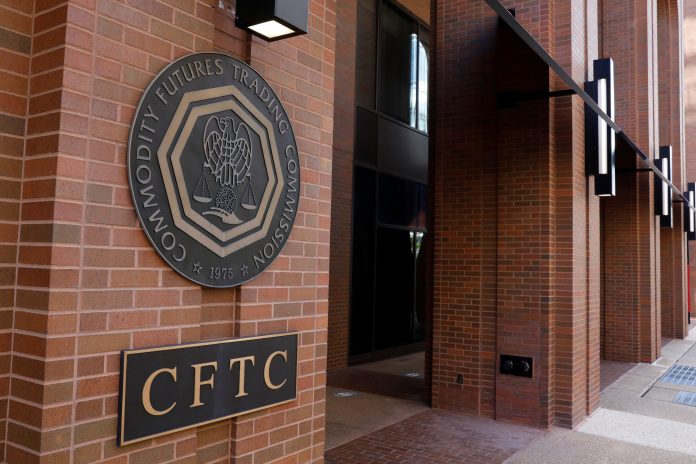
Signage is seen outside of the US Commodity Futures Trading Commission (CFTC) in Washington, D.C., U.S., August 30, 2020. REUTERS/Andrew Kelly

Gemini Trust Company, founded by Cameron and Tyler Winklevoss, filed a formal complaint on June 13, 2025, with the Commodity Futures Trading Commission’s (CFTC) Inspector General, Christopher Skinner, accusing the agency’s Division of Enforcement (DOE) of conducting a seven-year “lawfare” campaign against the crypto exchange. The 13-page letter alleges that the CFTC’s 2022 lawsuit, which claimed Gemini made false or misleading statements about its Bitcoin futures contract in 2017, was based on fraudulent whistleblower claims from a discredited former Chief Operating Officer, Benjamin Small.

Gemini asserts that Small, fired in 2017 for facilitating a $7.45 million rebate fraud scheme involving customers Hashtech LLC and Cardano Singapore, filed false whistleblower reports to “destroy” the exchange. A 2022 arbitrator ruling found Small had lied about his experience, fraudulently obtained his job, and made false statements in his whistleblower submission. Despite this, the CFTC pursued Gemini for years, culminating in a $5 million settlement in January 2025, which Gemini claims it paid without admitting fault due to a lack of viable alternatives.

The complaint names nine CFTC lawyers, accusing them of prioritizing career advancement over consumer protection and wasting taxpayer resources on baseless charges. Gemini argues that its Bitcoin futures contract, linked to Cboe’s 2017 launch, operated without manipulation for 19 months, and no market harm was proven. The exchange aligns its complaint with CFTC Acting Chair Caroline Pham’s calls for reform, criticizing the agency’s “regulation-by-enforcement” approach and toxic culture. Gemini seeks internal accountability and supports broader regulatory clarity for crypto markets.

The CFTC’s 2022 complaint alleged Gemini misled regulators about its Bitcoin auction pricing mechanism’s susceptibility to manipulation, violating the Commodity Exchange Act. Gemini counters that the investigation ignored evidence discrediting Small and failed to address the actual fraud perpetrators. Gemini’s accusation of a “lawfare” campaign suggests the CFTC’s enforcement actions may prioritize aggressive litigation over fair regulation, potentially chilling innovation in the crypto industry. If substantiated, this could erode trust in the CFTC’s impartiality and fuel broader criticism of “regulation-by-enforcement” tactics, as echoed by CFTC Acting Chair Caroline Pham and industry stakeholders.

The complaint highlights a perceived misuse of whistleblower programs, where false or self-serving claims (e.g., Benjamin Small’s) could trigger costly investigations, disproportionately harming compliant firms like Gemini. This may prompt calls for stricter vetting of whistleblower allegations to prevent abuse. The case underscores ongoing tensions between crypto exchanges and regulators, particularly as the CFTC asserts jurisdiction over digital assets like Bitcoin as commodities. A successful challenge by Gemini could limit the CFTC’s ability to pursue similar enforcement actions, potentially emboldening other crypto firms to resist regulatory pressure.

However, if the CFTC’s actions are upheld, it could signal tighter scrutiny of crypto exchanges’ compliance with Commodity Exchange Act requirements, especially around market manipulation and transparency in futures contracts. Gemini’s claim that Small, a discredited former employee, may receive a $1.5 million whistleblower award despite fraudulent conduct raises questions about the CFTC’s whistleblower program integrity. This could lead to reforms in how awards are evaluated, ensuring they reward genuine misconduct reports rather than incentivizing bad-faith claims.

Gemini’s $5 million settlement, despite no admission of liability, reflects the financial burden of prolonged regulatory battles, even for firms confident in their compliance. This may push other crypto firms to settle rather than fight, reinforcing perceptions of regulatory coercion. The complaint’s outcome could set a precedent for how agencies handle enforcement actions based on disputed whistleblower claims, potentially influencing future litigation strategies across financial sectors.

Regulators argue that robust enforcement protects investors and market integrity, while crypto firms like Gemini see these actions as punitive and misaligned with the decentralized, rapidly evolving nature of digital assets. Gemini’s alignment with Acting Chair Pham’s reformist stance highlights a divide within the CFTC itself. Progressive voices within the agency advocate for clearer rules and less reliance on enforcement, while the Division of Enforcement’s aggressive tactics suggest a more traditional, litigation-heavy approach. This internal conflict could shape future CFTC policies.

The public and industry may perceive the CFTC as either a necessary enforcer of market fairness or an overzealous regulator targeting crypto firms for political or careerist reasons. Gemini’s complaint, if validated, could amplify distrust in federal agencies, particularly among crypto advocates who already view regulators skeptically. Conversely, if the CFTC successfully defends its actions, it could bolster its authority but deepen the crypto industry’s sense of being unfairly targeted, widening the divide.

The case exposes a divide between whistleblower protections meant to uncover misconduct and their potential exploitation for personal gain. This could spark debate over balancing incentives for legitimate whistleblowers with safeguards against frivolous or vindictive claims, affecting how firms and regulators interact with such programs.

Gemini’s complaint arrives amid heightened regulatory scrutiny of crypto exchanges, with the SEC and CFTC increasingly active. Posts on X reflect polarized sentiments: some users support Gemini’s pushback against perceived regulatory overreach, while others argue the CFTC’s actions are justified to curb crypto market risks. The outcome of this complaint could influence not only Gemini’s operations but also the regulatory landscape for cryptocurrencies, potentially prompting Congressional oversight or policy changes to address the growing regulator-industry divide.

Italy detains German rescue ship Sea-Eye 5, as German Chancellor Merz’s Coalition Sees Stress

0

Italy detained the German rescue ship Sea-Eye 5 in a Sicilian port, preventing it from resuming operations in the Mediterranean. The move is part of Italy’s stricter migration policies under Prime Minister Giorgia Meloni’s government, which has repeatedly targeted NGO-operated rescue vessels. Italian authorities cited unspecified irregularities, a tactic critics argue is politically motivated to curb migrant rescues. The Sea-Eye 5, operated by the German charity Sea-Eye, had recently rescued migrants off Libya.

Posts on X reflect polarized sentiment, with some praising Italy’s actions as a defense of national sovereignty, while others condemn it as a violation of international maritime law, which mandates rescuing and disembarking people in distress at a safe port. This follows a pattern of Italian restrictions on NGO ships, with similar incidents reported in 2019, 2020, 2021, 2022, and 2023, often involving safety or administrative pretexts. NGOs argue these blockades delay life-saving missions, while Italy insists flag states like Germany should take responsibility for migrants.

No official statement from Italian authorities specifies the duration of the Sea-Eye 5’s detention or exact reasons beyond vague “irregularities.” The detention of the Sea-Eye 5 by Italy in a Sicilian port on June 17, 2025, highlights significant implications and deepens the divide over migration policy in Europe, particularly in the Mediterranean. The detention delays Sea-Eye 5’s ability to conduct rescue operations, potentially endangering migrants crossing the Mediterranean in unsafe vessels. In 2024, over 2,500 migrants were reported dead or missing in the region, per the International Organization for Migration (IOM). Blocking NGO ships could exacerbate this crisis.

NGOs like Sea-Eye argue that Italy’s actions violate international maritime law, specifically the 1974 SOLAS Convention and the 1982 UNCLOS, which require rescuing people in distress and disembarking them at a safe port. Prolonged detentions strain NGO resources and reduce operational capacity. Italy’s actions align with Prime Minister Giorgia Meloni’s hardline migration stance, which prioritizes border control and deterrence. By targeting NGO ships, Italy pressures flag states like Germany to take greater responsibility for rescued migrants, potentially straining EU relations.

Legal challenges may arise. NGOs have previously contested Italy’s detentions in European courts, citing violations of human rights and maritime obligations. A prolonged detention could escalate to international tribunals, though outcomes are uncertain given Italy’s claim of national sovereignty. The incident underscores the lack of a unified EU migration strategy. Southern states like Italy, Greece, and Malta face disproportionate pressure as entry points, while northern states like Germany often host NGOs or accept migrants. This fuels resentment and unilateral actions like ship detentions.

It could accelerate calls for revising the EU’s Dublin Regulation, which assigns asylum processing to the first country of entry, or push for stronger external border controls, as seen in recent EU deals with countries like Tunisia and Libya. Italy’s policies resonate with domestic voters favoring stricter migration controls, boosting Meloni’s far-right coalition. However, they draw criticism from human rights groups and liberal EU states, potentially isolating Italy diplomatically.

Supporters of Italy’s actions, including Meloni’s base and right-wing groups across Europe, view the detention as a necessary measure to protect national borders and deter illegal migration. They argue NGOs act as a “pull factor,” encouraging dangerous crossings by providing rescue guarantees. On X, posts from this camp praise Italy for asserting sovereignty and pressuring Germany to manage migrant inflows. Some claim NGOs are complicit in smuggling networks, though these claims lack substantiation.

This side often emphasizes the burden on Italy, which received over 150,000 migrants in 2023, per Frontex, straining local resources and infrastructure. Critics, including human rights organizations, liberal EU politicians, and NGOs, condemn Italy’s detentions as inhumane and illegal. They argue that rescuing migrants is a moral and legal obligation, and blocking ships endangers lives while scapegoating NGOs for broader migration challenges.

X posts from this group highlight the humanitarian crisis, citing data like the IOM’s 2024 Mediterranean death toll and accusing Italy of violating international law. They frame the detentions as politically motivated to appease far-right voters. This side calls for shared EU responsibility, arguing that Italy’s actions reflect a failure of collective action and burden-sharing within the EU.

The issue reflects a deeper cultural and political schism in Europe between nationalist, anti-immigration sentiments and cosmopolitan, pro-humanitarian values. This divide is amplified on X, where polarized echo chambers reinforce opposing views with little middle ground. Nationalists prioritize state control and cultural homogeneity, while humanitarians emphasize global human rights and solidarity. The Sea-Eye 5 detention becomes a flashpoint for these competing visions of Europe’s future.

The detention of Sea-Eye 5 intensifies the Mediterranean migration crisis, risks legal and diplomatic fallout, and highlights the EU’s fractured approach to migration. It deepens the divide between those prioritizing border security and those advocating for humanitarian rescue, with both sides entrenched in their views. Without a cohesive EU policy or compromise, such incidents will likely recur, further polarizing public discourse and complicating solutions to the migration challenge.

Disagreement Between Schwarz and Reiche Exposes Friction Within Chancellor Merz’s Coalition Government

German Environment Minister Steffen Schwarz criticized Economy Minister Katherina Reiche for attending a meeting with nuclear-friendly EU countries, calling it an “individual decision” that didn’t reflect Germany’s official anti-nuclear stance. Reiche’s participation in the nuclear alliance meeting, instead of an EU renewable energy summit, sparked tensions within Chancellor Friedrich Merz’s government. Germany, which phased out nuclear power in 2023, continues to prioritize renewables, though Reiche has agreed to respect other EU states’ pro-nuclear choices at the EU level.

The incident highlights a deeper divide within Germany and the EU over energy policy, with significant implications. The disagreement between Schwarz (Environment) and Reiche (Economy) exposes friction within Chancellor Merz’s coalition government. Germany’s firm anti-nuclear stance, cemented by its 2023 nuclear phase-out, clashes with Reiche’s engagement with pro-nuclear states, signaling potential policy incoherence. This could weaken public trust in the government’s unified commitment to renewables and climate goals, especially as energy prices and security remain contentious issues.

The meeting Reiche attended reflects a broader EU split. Pro-nuclear countries (e.g., France, Hungary) advocate for nuclear energy as a low-carbon solution to meet 2050 net-zero targets, while anti-nuclear states like Germany, Austria, and Denmark prioritize renewables. Reiche’s presence at the nuclear alliance meeting, despite Germany’s official stance, risks signaling tacit support for nuclear, potentially undermining Germany’s influence in pushing the EU toward renewable-focused policies.

Germany’s renewable-heavy strategy faces challenges like intermittency and grid stability, especially amid recent energy price volatility. Pro-nuclear advocates argue nuclear offers a stable, low-carbon complement. Reiche’s engagement might suggest openness to pragmatic energy diversification, but it risks alienating Germany’s anti-nuclear base, which sees nuclear as costly and risky compared to wind, solar, and hydrogen.

Reiche’s assurance to respect other EU states’ nuclear choices at the EU level aims to maintain diplomatic harmony but could complicate Germany’s leadership in shaping EU energy policy. If Germany appears to waver, it might weaken its push for EU-wide renewable investment and green taxonomy rules that exclude nuclear.

The public spat could fuel domestic debates over energy strategy. Anti-nuclear sentiment remains strong in Germany, rooted in historical fears post-Fukushima. Schwarz’s criticism taps into this, framing Reiche’s move as a betrayal of national policy, which could escalate political pressure on Merz’s government to clarify its stance.

The Bavarian Alps experienced an unusually dry winter in 2024-2025, with record-low snowfall in several areas, according to meteorologists. At Zugspitze, Germany’s highest ski area, snowfall was below the previous record low from 1971-1972. The region saw only 470 liters of precipitation per square meter, close to the 1933-1934 record of 400 liters, marking the driest winter in over 90 years.

High-pressure systems led to increased sunshine hours and temperatures about 2°C warmer than the long-term average at summit locations. This aligns with broader trends of declining snowfall in the Alps, with a 34% decrease from 1920 to 2020, particularly pronounced below 2,000 meters. The climate crisis has warmed the Alpine region significantly, exacerbating snow loss and impacting water reserves and winter tourism.

This incident underscores a delicate balance: Germany’s commitment to renewables versus pragmatic engagement with nuclear-friendly EU partners. It risks internal coalition strain and could dilute Germany’s influence in EU energy debates, while highlighting the ongoing challenge of aligning national priorities with collective EU climate goals.