DD
MM
YYYY

PAGES

DD
MM
YYYY

spot_img

PAGES

Home Blog Page 11

U.S. Treasury Yields Hold Steady Ahead of Fed Minutes as Investors Seek Clarity on 2026 Rate Path

0

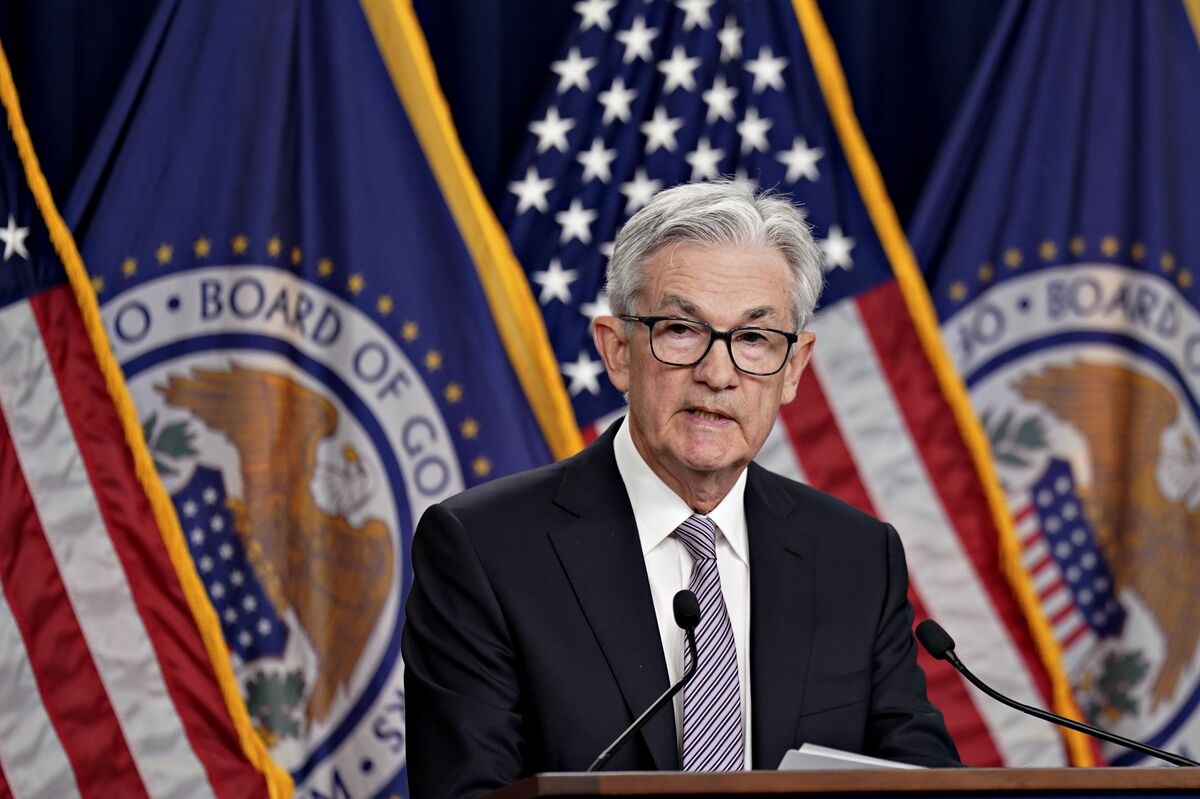
U.S. Treasury yields were largely unchanged on Tuesday as investors adopted a cautious stance ahead of the release of minutes from the Federal Reserve’s December policy meeting, one of the final major macro events before markets close out the year.

The benchmark 10-year Treasury yield was flat at around 4.12% in early trading, while the 2-year yield, which is more sensitive to expectations around monetary policy, edged down by less than one basis point to 3.459%. With many global markets operating with reduced staff and lower volumes during the year-end period, price movements remained muted, reflecting limited conviction ahead of the Fed release.

Markets are focused on the minutes from the Federal Open Market Committee’s Dec. 9–10 meeting, scheduled for publication at 2 p.m. ET. At that meeting, policymakers approved a 25-basis-point interest rate cut, bringing the federal funds target range to 3.50%–3.75% and marking the third rate reduction of the year. The decision signaled a further shift away from the aggressive tightening cycle that defined much of the Fed’s response to post-pandemic inflation.

Still, the cut was far from unanimous, and the minutes are expected to shed light on the depth of divisions within the committee. Some policymakers pushed for additional easing, citing concerns that restrictive policy could lead to further softening in the labor market. Others argued that financial conditions were already accommodative enough and warned that cutting too quickly could undermine progress on inflation, which, while easing, has yet to return decisively to the Fed’s 2% target.

Investors will be parsing the minutes for any indication of how policymakers are weighing those risks heading into 2026. Of particular interest will be language around inflation persistence, wage growth, and the resilience of consumer demand, as well as how confident officials are that inflation expectations remain anchored.

“Our baseline assumption is that the Committee will remain incentivized to retain as much flexibility as possible into the January 29 FOMC decision – a stance that has been consistent throughout 2025 and we expect will be rolled into the new year,” Ian Lyngen, head of U.S. rates strategy at BMO Capital Markets, said.

That emphasis on flexibility has become a defining feature of the Fed’s recent communication. Rather than committing to a preset path of cuts, officials have repeatedly stressed data dependence, a message that has kept short-term yields elevated relative to longer-dated bonds and contributed to a flatter yield curve.

Beyond the Fed minutes, broader macro conditions continue to shape Treasury market dynamics. Recent data have shown inflation cooling from earlier highs but remaining uneven across sectors, while the labor market has slowed without showing signs of abrupt deterioration. This combination has reinforced expectations that the central bank will move cautiously, balancing the need to support growth against the risk of rekindling price pressures.

Currently, the lack of movement in yields reflects both the thin liquidity typical of the final days of the year and the market’s reluctance to take strong positions ahead of clearer guidance from policymakers. Once full trading resumes in early January, the tone of the December minutes is likely to play a key role in shaping expectations for the Fed’s next steps and setting the direction for Treasury yields at the start of 2026.


Femi Otedola Exits Geregu Power in $750 Million Deal, Narrowing Focus to Banking Empire

0

Billionaire investor Femi Otedola has divested his controlling stake in Geregu Power Plc, Nigeria’s leading independent power producer, in a landmark transaction valued at approximately $750 million.

The deal, executed through the sale of his 95% interest in Amperion Power Distribution Company Limited—Geregu’s majority shareholder—to MA’AM Energy Ltd, an Abuja-based integrated energy firm, marks one of the largest private power sector divestments in Nigerian history. According to a regulatory filing on the Nigerian Exchange website dated December 29, 2025, MA’AM Energy acquired the 95% equity in Amperion, effectively transferring indirect control of Geregu’s 77% stake from Otedola’s Calvados Global Services Limited to the new entity.

Geregu clarified that the transaction “does not involve the direct sale or transfer of shares of Geregu Power Plc,” preserving the company’s public shareholding structure on the Nigerian Exchange unchanged. However, ultimate beneficial ownership of the controlling block has shifted. Sources familiar with the matter confirmed the deal closed on December 29, financed by a consortium of Nigerian banks led by Zenith Bank, with Blackbirch Capital serving as financial adviser.

MA’AM Energy, engaged in electricity generation, supply, trading, and marketing, gains operational control of Geregu, positioning it to expand within Nigeria’s evolving power market. One source linked MA’AM Energy to Senator Abdulaziz Yari, a former Zamfara governor, though this has not been officially confirmed. Geregu Power, currently valued at N2.85 trillion and trading at N1,140 per share, remains one of the Nigerian Exchange’s most capitalized and profitable firms, contributing roughly 10% of the national grid supply with a nameplate capacity of 435 MW.

Under Otedola’s stewardship since the 2013 privatization, the plant expanded from 40 MW, achieved consistent profitability, and delivered average annual dividends of N20 billion. The company, listed on the Nigerian Exchange in October 2022, has been a cornerstone of Nigeria’s power sector, generating over N50 billion in revenue in 2024 and maintaining strong margins amid chronic electricity shortages. Otedola’s energy journey spans over two decades: founding Zenon Petroleum and Gas in 1999, acquiring and rebranding African Petroleum as Forte Oil, and carving out Geregu post-2019 exit from downstream oil.

The divestment unlocks substantial liquidity, signaling a strategic pivot toward financial services where Otedola chairs First HoldCo, parent of First Bank of Nigeria, holding a 17.1% stake—the largest individual shareholding. Otedola regained his position as First Bank’s majority shareholder earlier this year through strategic acquisitions, further consolidating his influence. Since entering First Bank in 2022, Otedola has driven aggressive reforms: recapitalization (raising over N300 billion), restructuring non-performing loans, and debt recovery initiatives amid Nigeria’s banking consolidation wave.

The $750 million proceeds position him to deepen influence in a sector bracing for higher capital requirements under CBN guidelines, potentially fueling further acquisitions or expansions in First HoldCo’s portfolio. The transaction arrives amid pivotal developments in Nigeria’s electricity market. The Federal Government recently launched a N4 trillion power-sector liquidity fund, with an initial N590 billion disbursement to settle legacy debts owed to generation companies, including Geregu. This intervention aims to stabilize cash flows and encourage private investment in a sector plagued by liquidity gaps, with debts to GenCos exceeding N1.5 trillion as of mid-2025.

Otedola’s exit reflects a maturing investment cycle for early post-privatization players, with rising valuations and improving liquidity prompting capital recycling. Similar transactions are underway: the sale of Eko Electricity Distribution Company to North South Power is nearing completion, with approximately N150 billion already received. Industry observers see increased investor activity, with legacy operators seeking fresh capital for a more market-driven environment featuring limited government support and tariff reforms under the Multi-Year Tariff Order framework.

However, Industry stakeholders have mixed views. While some praise the deal for injecting fresh capital into power generation, others question MA’AM Energy’s experience in managing large-scale assets, given its focus on smaller-scale energy trading. The acquisition could accelerate Geregu’s expansion, including potential upgrades to its gas-fired plant or diversification into renewables, aligning with Nigeria’s energy transition goals.

Market reaction was muted in thin holiday trading, with Geregu shares unchanged at N1,140. Analysts view the deal positively for sector maturation, though questions linger on MA’AM’s execution capabilities in a capital-intensive industry plagued by gas supply constraints, transmission bottlenecks, and regulatory uncertainties. Geregu’s strong fundamentals—consistent output of 300-400 MW and EBITDA margins above 50%—position it well under new ownership.

With Nigeria’s power demand projected to double by 2030, such transitions could catalyze investment, but energy experts believe success hinges on addressing systemic issues like the N2 trillion sector debt and 60% energy poverty rate.

GM’s Breakout Year: Inside the Forces Powering General Motors to the Top of the U.S. Auto Market

0

General Motors is heading into the final days of 2025 as the strongest-performing U.S.-traded automaker, capping what has become its most consequential year in the equity markets since emerging from bankruptcy more than a decade ago.

A powerful mix of earnings consistency, shareholder-friendly capital allocation, regulatory tailwinds, and a recalibration of the auto industry’s electric vehicle ambitions has driven GM shares to record highs and reshaped how investors view the Detroit manufacturer’s long-term prospects.

GM stock has climbed more than 55% this year to above $80 per share, marking its best annual performance since 2009 and surpassing last year’s 48.3% gain. The rally has accelerated into year-end, with shares rising nearly 13% in December alone and extending a streak of five straight months of gains, according to FactSet data. Since June, the stock has remained positive on a cumulative weekly basis, underlining the durability of investor confidence rather than a short-lived trading surge.

According to CNBC, that performance places GM well ahead of its peers. Tesla has gained about 17% this year, Ford Motor is up roughly 34%, while Stellantis, the parent of Chrysler, has recorded a notable decline. Japanese rivals Toyota Motor and Honda Motor have posted more modest advances, leaving GM as the clear outlier among major global automakers listed in the U.S.

For GM’s management, the rally validates an argument they have made repeatedly over the years: that the company’s market valuation failed to capture its earnings power and operational discipline. Chief Executive Mary Barra has consistently pointed to GM’s ability to generate cash through cycles, manage costs, and deliver shareholder returns as evidence that the stock was mispriced.

“Great vehicles, innovative technology, a rewarding customer experience, along with strong financial results, will continue to set GM apart in an increasingly competitive landscape,” Barra told analysts during the company’s October earnings call.

Earnings execution has been central to that narrative. Over the past five years, GM has beaten Wall Street’s adjusted earnings-per-share expectations in every quarter except one, based on analyst estimates compiled by FactSet. That track record has given investors confidence in management’s guidance and long-term planning. The third-quarter earnings report in October proved to be a turning point, with GM not only exceeding forecasts but also raising its full-year outlook and signaling that earnings in 2026 are expected to surpass those projected for 2025. The stock jumped more than 19% that week, its largest weekly gain of the year.

Analysts responded quickly. UBS raised its 12-month price target on GM by 14% to $97 per share and named the automaker its top pick heading into 2026. Morgan Stanley followed with an upgrade to overweight and a $90 price target, highlighting GM’s performance relative to what it called the “Detroit Three.”

“In our view, General Motors leads the D3 in the North America and global market with steady unit sales growth, average transaction price growth, disciplined incentive spend and inventory management,” Morgan Stanley analyst Andrew Percoco wrote in a Dec. 7 note.

He added that this operating approach has translated into stronger margins and returns than those of competitors.

Beyond earnings, GM’s capital allocation strategy has played a major role in the stock’s ascent. The company has leaned aggressively into share buybacks, reducing its share count and amplifying earnings per share. Chief Financial Officer Paul Jacobson said earlier this month that buybacks remain a priority as long as management believes the stock trades below its intrinsic value.

“As long as the stock remains as undervalued as it is, the priority is to buy back shares,” Jacobson said at a UBS investor conference. “And I think you’ll continue to see that from us going forward.”

That approach has coincided with notable insider activity. Barra has exercised options or sold roughly 1.8 million shares this year, transactions valued at more than $73 million, according to public filings confirmed by GM. As of her most recent disclosure in September, she still owned more than 433,500 shares worth over $35 million, with a significant portion of her compensation delivered through equity awards.

External policy shifts have also reshaped GM’s operating environment. Under President Donald Trump’s administration, the U.S. has loosened fuel economy and emissions standards, removed penalties introduced under the previous administration, and renegotiated aspects of its trade relationship with South Korea, a key manufacturing hub for GM. Analysts say these changes favor automakers with strong North American footprints and traditional internal combustion portfolios.

“GM is effectively a regional North American automaker, and we believe it is well positioned to benefit from the relaxed U.S. regulatory environment on emissions and fuel economy,” UBS analyst Joseph Spak said in a Dec. 15 note raising his price target.

At the same time, the broader auto industry has pulled back from aggressive electric vehicle expansion after slower-than-expected demand and pressure on margins. That shift has worked to GM’s advantage. The company has moderated EV spending, prioritized profitability over volume, and leaned on its highly profitable trucks and SUVs, a strategy investors see as pragmatic in the current market.

Taken together, these forces have transformed GM’s standing on Wall Street. Once viewed as a cyclical manufacturer struggling to convince investors of its future relevance, the company is now being priced as a disciplined cash generator with clear strategic priorities. Analyst averages compiled by FactSet currently rate the stock overweight, with a consensus price target of about $80.86.

Overall, GM’s rally tells a broader story about how execution, policy alignment, and capital discipline can converge to reshape investor perception. With guidance pointing to stronger earnings ahead and buybacks set to continue, the company enters 2026 with momentum that few would have predicted just a few years ago.

Samsung to Bring Google Photos to TVs in 2026, Filling a Long-Standing Gap in the Living Room Screen

0

Google Photos, one of Google’s most widely used consumer services, has been available for years across smartphones, tablets, laptops, and the web. Yet it has remained absent from what is arguably the most prominent screen in many homes: the television.

Even Google’s own Google TV platform does not offer a native Google Photos app, forcing users to rely on casting from phones or using indirect workarounds to view personal photos and videos on a large display.

Samsung is now moving to close that gap.

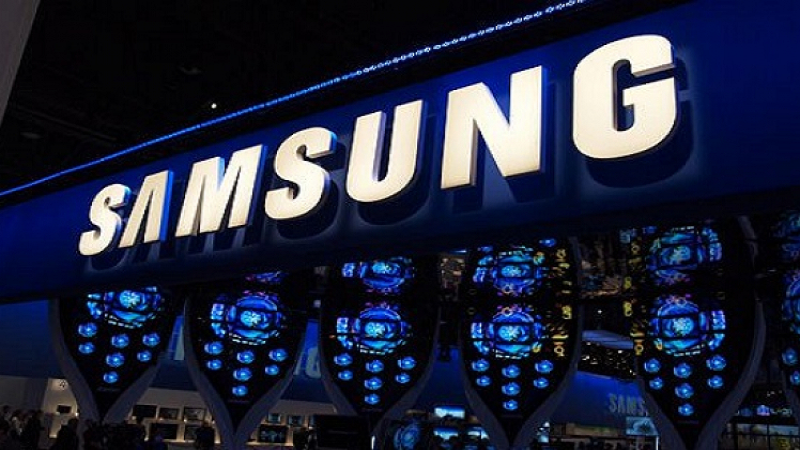
Ahead of CES 2026 early next year, the South Korean electronics giant announced a partnership with Google that will integrate Google Photos directly into Samsung’s TizenOS-powered smart TVs. The move marks Samsung as the first major TV manufacturer to offer a built-in Google Photos experience without requiring an external device or smartphone connection.

Under the integration, Samsung TVs will not provide unrestricted access to a user’s entire Google Photos library. Instead, the experience will center on curated “Memories” generated by Google Photos, organized around people, places, and moments. According to Samsung, this design is intended to suit lean-back viewing, where photos and videos surface automatically rather than requiring active searching or scrolling.

The Memories feature is scheduled to launch in March 2026 and will be exclusive to Samsung TVs for the first six months. The exclusivity underscores Samsung’s broader strategy of using software partnerships to differentiate its televisions in an increasingly competitive market where hardware innovations alone are no longer enough to stand out.

Later in 2026, Samsung TVs will also gain access to creative tools powered by Google’s generative AI. Through a “Create with AI” feature within Google Photos, users will be able to generate themed templates and apply stylistic transformations to photos and videos directly on their TV screens. This includes the Nano Banana feature and a Remix tool that allows users to change the visual style of media. Samsung said some AI templates will be available only on its TVs, reinforcing its push to position TizenOS as an AI-forward entertainment platform.

Personalization will be expanded further in the second half of 2026. Samsung and Google plan to enable personalized slideshows based on themes detected in a user’s photo library, such as beach scenes, hiking trips, or city visits like Paris. The feature is designed to surface related images automatically, turning personal photos into ambient content suitable for family viewing or background display.

The Google Photos integration will debut on Samsung TV models launching in 2026. Samsung said it will also roll out to select existing TVs via a software update later in the year, though it has not yet detailed which models will be eligible.

The partnership also highlights an unusual industry dynamic. While Google owns both Google Photos and Google TV, it is Samsung that will first deliver a native TV-based Photos experience. That raises questions about Google’s broader platform priorities and whether similar functionality will eventually arrive on Google TV or competing smart TV operating systems.

For consumers, the announcement marks a long-awaited step toward making personal photo and video libraries easier to enjoy on large screens, even if the experience is initially shaped by curation rather than full manual control. For Samsung, it strengthens its ecosystem strategy by tying cloud services, AI features, and everyday personal content more closely to its TVs.

Smart TVs’ increasing competition in software and services rather than just display technology, as underscored by Samsung’s integration of Google Photos, signals how personal media and AI-driven experiences are becoming central to the future of the living room. Whether Google extends the same capabilities to other platforms will likely become clearer as 2026 approaches.

China to Pay Interest on Digital Yuan Holdings in Major Overhaul Aimed at Reviving Adoption

0

China’s central bank has unveiled a sweeping overhaul of its digital yuan framework, announcing that commercial banks will soon begin paying interest on digital yuan holdings — a significant policy shift designed to accelerate adoption of the country’s central bank digital currency after years of slow uptake.

In an article published on Monday by state-owned Financial News, Lu Lei, a deputy governor of the People’s Bank of China (PBOC), said the digital yuan, officially known as the e-CNY, will transition from functioning primarily as digital cash to operating as a form of “digital deposit currency.” The new framework is set to take effect on January 1, 2026.

The move marks the most substantial change yet in China’s decade-long digital currency project and signals Beijing’s recognition that the e-CNY needs stronger economic incentives to compete with dominant private payment platforms.

From digital cash to digital deposits

Under the new framework, verified digital yuan wallets will earn interest, with rates aligned to existing self-regulatory agreements governing deposit pricing in China’s banking system. In addition, digital yuan balances will be covered by China’s deposit insurance scheme, giving them the same level of protection as conventional bank deposits.

Lu said the reform follows more than ten years of experimentation and pilot programmes, noting that the e-CNY is widely viewed as one of the most advanced central bank digital currencies globally. Despite that technological lead, adoption has lagged behind expectations since the formal pilot began in 2019.

By allowing interest payments, the PBOC is effectively positioning the digital yuan closer to a bank deposit rather than a simple cash substitute — a shift analysts say could make the currency more attractive to households and businesses that currently see little reason to hold it.

The policy also gives banks greater flexibility to integrate digital yuan balances into their broader asset and liability management, potentially easing concerns that widespread e-CNY use could disrupt traditional funding structures.

For non-bank payment institutions, Lu said digital yuan reserve funds will be treated the same as existing customer reserves, with a 100% reserve requirement applied — a measure aimed at maintaining financial stability and regulatory consistency.

Scale without mass adoption

As of the end of November 2025, China had processed 3.48 billion digital yuan transactions worth a cumulative 16.7 trillion yuan ($2.38 trillion), according to PBOC data cited by Lu. While the figures highlight the scale of the pilot programme, they also mask a key challenge: the e-CNY remains marginal in daily consumer payments compared with entrenched platforms such as Alipay and WeChat Pay.

Those private platforms dominate China’s cashless economy, offering seamless ecosystems that combine payments with messaging, shopping, credit, and wealth management. By contrast, the digital yuan has largely been used for government disbursements, transport payments, pilot retail scenarios, and controlled trials.

The introduction of interest and deposit insurance appears aimed squarely at narrowing that gap and encouraging users to hold e-CNY balances rather than treating the currency as a pass-through payment tool.

Renewed push at home and abroad

The overhaul comes as Chinese authorities intensify efforts to promote the digital yuan both domestically and internationally. Last week, the PBOC said it would expand cross-border use of the e-CNY, including a planned pilot with Singapore, while deepening CBDC payment links with Thailand, Hong Kong, the United Arab Emirates, and Saudi Arabia.

In September, the central bank also launched the e-CNY International Operation Center in Shanghai, a move widely seen as part of Beijing’s broader ambition to increase the global role of the yuan and reduce reliance on dollar-based payment systems.

The international push contrasts with China’s continued hard line against decentralized cryptocurrencies. While Beijing has embraced blockchain technology and state-backed digital money, cryptocurrency trading and mining remain banned on the mainland, underscoring the government’s preference for tightly controlled digital finance.

By paying interest on digital yuan holdings, China is addressing one of the core weaknesses of its CBDC rollout: the lack of a clear financial incentive for users. The shift also blurs the line between traditional bank deposits and central bank-issued digital money, raising longer-term questions about competition for deposits and the evolving role of commercial banks.

However, the PBOC is betting that aligning the e-CNY more closely with existing banking norms, rather than positioning it as a disruptive alternative, will finally help the digital yuan move from pilot projects to everyday use. Whether that is enough to challenge China’s powerful private payment giants remains the next test.