DD
MM
YYYY

PAGES

DD
MM
YYYY

spot_img

PAGES

Home Blog Page 11

Japan’s Physical AI Race Turns Into an Industrial Survival Strategy as Labor Crunch Deepens

0

Japan is increasingly using Physical AI to fill a gap in its industries amid a global push to make robotics the defining industrial contest of the coming decades. But the move by Japan is being shaped less by futuristic ambition than by economic necessity, demographic pressure, and national competitiveness.

With factories, warehouses, logistics networks, and critical services facing an accelerating labor squeeze, Japanese companies are moving from pilot projects to full deployment of AI-powered robots and autonomous systems, in what industry executives increasingly describe as a response to industrial survival rather than mere efficiency gains.

According to a report by TechCrunch, that urgency has now been formalized at the highest policy level. Japan’s Ministry of Economy, Trade and Industry said in March that it wants the country to build a domestic physical AI industry capable of capturing 30 per cent of the global market by 2040, building on a long-established strength in industrial robotics, where Japanese manufacturers accounted for roughly 70 per cent of the global market in 2022.

But the scale of the ambition reflects the scale of the problem. Japan’s population declined for a 14th straight year in 2024, while the working-age share of the population has dropped to 59.6 per cent, according to figures cited by investors and industry executives. More critically, that labor pool is projected to shrink by nearly 15 million people over the next 20 years, a demographic trend that is already altering boardroom decisions across manufacturing and logistics.

As Hogil Doh, general partner at Global Brain, put it: “Physical AI is being bought as a continuity tool: how do you keep factories, warehouses, infrastructure, and service operations running with fewer people?”

He added: “From what I’m seeing, labor shortages are the primary driver.”

Those remarks go to the heart of Japan’s strategic calculus. In many Western markets, AI adoption is often framed around productivity gains and margin expansion. In Japan, the debate has moved beyond efficiency into continuity risk. Essential industrial and social functions increasingly face a physical shortage of workers.

That is why Sho Yamanaka, principal at Salesforce Ventures, described the shift in stark terms.

“The driver has shifted from simple efficiency to industrial survival,” he said.

“Japan faces a physical supply constraint where essential services cannot be sustained due to a lack of labor. Given the shrinking working-age population, physical AI is a matter of national urgency to maintain industrial standards and social services.”

This framing is crucial because it explains why Japan’s approach differs markedly from that of the United States and China. While the U.S. continues to dominate foundational AI models and software ecosystems, and China is aggressively scaling vertically integrated robotics systems, Japan’s advantage lies in industrial precision, robotics hardware, and operational deployment.

The country’s long-standing strengths in sensors, actuators, servo motors, and control systems remain a strategic moat.

“Japan’s expertise in high-precision components – the critical physical interface between AI and the real world – is a strategic moat,” Yamanaka said.

“Controlling this touchpoint provides a significant competitive advantage in the global supply chain. The current priority is to accelerate system-level optimization by integrating AI models deeply with this hardware.”

That hardware legacy is one of Japan’s most important competitive assets. From precision motors to industrial control systems, Japanese manufacturers continue to occupy a dominant position in the physical building blocks of robotics.

Yet the bigger question is whether that advantage can be extended into the AI era, where value is shifting beyond hardware into orchestration software, simulation tools, perception systems, and deployment intelligence.

This is where companies such as Mujin are emerging as critical players. According to co-founder and chief executive Issei Takino, the company’s strategy centers on robotics control platforms that allow existing industrial machines to perform more autonomously.

That software layer is increasingly where defensible value is expected to reside. Takino was explicit about the limits of a software-only approach divorced from physical engineering.

“In robotics, and especially in Physical AI, it is critical to have a deep understanding of the physical characteristics of hardware,” he said.

“This requires not only software capabilities, but also highly specialized control technologies, which take significant time to develop and involve high costs of failure.”

That observation speaks to a broader strategic divide. Unlike consumer AI, where digital models can be iterated quickly, failure in physical AI carries operational, financial, and safety risks.

A software error in a chatbot may be embarrassing, but a software error in an autonomous warehouse system or factory robot can halt production lines and trigger multimillion-dollar losses. This is precisely why investment is now moving beyond hardware into digital twins, simulation environments, and orchestration software.

These tools allow companies to model real-world environments virtually before deployment, reducing operational risk and shortening implementation cycles.

Doh described the transition from experimentation to real deployment in practical terms.

“The signal is simple – customer-paid deployments rather than vendor-funded trials, reliable operation across full shifts, and measurable performance metrics such as uptime, human intervention rates and productivity impact,” Doh said.

That shift is already visible across multiple sectors. For instance, in logistics, companies are deploying autonomous forklifts and warehouse systems. In industrial facilities and data centers, inspection robots are increasingly being used for monitoring and maintenance. In defense, autonomous systems are becoming strategically significant.

Terra Drone chief executive Toru Tokushige said competitiveness in defense will increasingly depend on physical AI-driven operational intelligence rather than platforms alone. The government’s financial commitment under Prime Minister Sanae Takaichi reinforces the seriousness of the push.

Japan has committed about $6.3 billion to strengthen core AI capabilities, deepen robotics integration, and support industrial deployment, while broader AI and semiconductor investments are expanding further, including Microsoft’s newly announced $10 billion infrastructure investment in the country.

Another distinctive feature of Japan’s physical AI ecosystem is its collaborative structure. Rather than a winner-take-all model, executives and investors increasingly expect a hybrid ecosystem where industrial incumbents such as Toyota Motor Corporation, Mitsubishi Electric, and Honda Motor Co. provide scale and deployment capacity, while startups drive innovation in perception, orchestration, and workflow software.

Yamanaka described this as a complementary model. “The relationship between startups and established corporations is a mutually complementary ecosystem,” he said.

“Robotics requires heavy hardware development, deep operational know-how, and significant capital expenditure. By fusing the vast assets and domain expertise of major corporations with the disruptive innovation of startups, the industry can strengthen its collective global competitiveness.”

But the stakes go beyond technology leadership for Japan. This is increasingly an industrial policy story, a labor-market story, and a national resilience story. Physical AI is no longer being framed as optional innovation. It is being treated as the infrastructure required to keep the economy functioning in the face of a shrinking workforce.


Rewane Pushes Refinery-Led Subsidy Model as Nigeria Weighs Oil Windfall Against Rising Fuel Costs

0

Renowned economist and Managing Director of Financial Derivatives Company, Bismarck Rewane, has reopened the debate over Nigeria’s post-subsidy fuel framework, proposing a refinery-based intervention model that seeks to cushion consumers without fully reversing the government’s market reforms.

Speaking during a session on Nairametrics TV, Rewane argued that rather than returning to the old, fiscally draining blanket subsidy regime, the government should channel support through domestic refineries by supplying crude at a controlled price and ensuring the savings are passed directly to consumers.

His proposal comes at a delicate moment for Africa’s largest oil producer, where the gains from subsidy removal are increasingly colliding with the economic pain of surging pump prices, transport costs, and food inflation.

“Nigeria will actually sell oil to the refiners at a particular price and insist that the refiners bring down their price and pay the difference,” Rewane said, adding that it would be “more efficient for Nigeria to pay three or four refineries to keep going and for them to transfer the subsidies to the consumers.”

The argument is essentially for a targeted subsidy architecture, one that narrows fiscal exposure while preserving some consumer protection.

Under the previous petrol subsidy regime, the government effectively absorbed the difference between international landing costs and the regulated pump price across the entire downstream value chain. That system, while politically popular, became synonymous with fiscal leakages, opaque claims, arbitrage, and cross-border smuggling. The World Bank had estimated that Nigeria was losing around N10 trillion annually through fuel subsidy and multiple exchange rate distortions before the reforms introduced by President Bola Tinubu.

Rewane’s intervention attempts to create a middle path. Instead of subsidizing importers, marketers, and distributors across the board, the state would support a limited number of local refiners, allowing lower ex-refinery prices to cascade through the retail market. In theory, this reduces the points of leakage and improves accountability.

Rewane’s proposal comes at a time when Nigeria is once again confronting the consequences of global oil market volatility. Recent geopolitical tensions in the Middle East, particularly disruptions linked to the Iran-Israel conflict and threats to shipping routes, have pushed crude prices above the $100 per barrel mark, raising the prospect of a major revenue windfall for Nigeria.

The Nigerian Economic Summit Group has projected that if the crisis persists, the country could earn as much as N30.2 trillion in additional oil revenues. Rewane’s argument is that such windfall gains should not simply strengthen fiscal buffers or debt service capacity, but should be recycled into direct economic relief.

“Nigeria is going to double its oil revenues because the price of oil has gone up. You must be able to recycle the oil windfall into the pockets of the people,” he said.

That framing is likely to resonate with households and businesses already grappling with the second-round effects of subsidy removal. Since the policy was scrapped, fuel prices have moved closer to international benchmarks, amplifying inflationary pressures across the economy. Transport fares have surged, production costs for manufacturers and SMEs have risen sharply, and food prices have remained elevated as logistics expenses feed directly into supply chains.

The challenge of Rewane’s refinery-based intervention, however, lies in execution. Nigeria’s experience with price intervention mechanisms has historically been undermined by governance weaknesses. A refinery-led subsidy framework would require strict pricing transparency, verifiable crude allocation, and clear mechanisms to ensure that refiners transfer the benefits to end users rather than retaining the margin.

This is particularly relevant in light of recent market developments. Even with the Dangote Group refinery operating at scale, domestic fuel prices have remained high because much of the crude feedstock is still priced at international rates, while part of Nigeria’s crude output remains tied to forward sale obligations and debt-backed supply arrangements.

That reality could complicate Rewane’s proposal. Unless the government is willing to allocate crude below prevailing market rates, the refiners themselves may struggle to sustain lower prices without a fiscal backstop. In effect, the proposal still amounts to a subsidy, only more concentrated and potentially more manageable.

The challenges have created a central question of whether the fiscal space exists for policymakers. Higher oil prices may offer temporary relief, but Nigeria’s production challenges, theft losses, and legacy crude supply commitments continue to limit the full benefit of any price rally. Rewane himself recently warned that the country may not fully benefit from the oil surge because of structural inefficiencies and stagflation risks.

Still, the proposal is seen as a viable alternative for the government in cushioning the effects of rising oil prices. Rather than a binary choice between total deregulation and the return of blanket subsidies, the refinery-based model presents a more calibrated option, one aimed at preserving reform credibility while easing the burden on consumers.

For a government under pressure to show that economic reforms can translate into tangible relief, that middle ground may become increasingly difficult to ignore

4 Top Crypto Coins in 2026: Comparing Ethereum, Chainlink, Bittensor, & BlockDAG’s Growth Potential

0

Watching the top crypto coins in 2026 means looking deeper than the obvious choices. Four projects are standing out right now: BlockDAG (BDAG), Ethereum (ETH), Chainlink (LINK), and Bittensor (TAO). Every one of these covers a unique part of the industry, from programmable money to shared AI.

Some are powerful names moving on long-term basics, while others are gaining strength without much noise. However, one is moving under a cutoff time that makes everything else seem very slow. Below is an honest look at where each project sits and why the market is paying so much attention.

1. BlockDAG (BDAG): The Facts Are Out, and They Are Hard to Ignore

For anyone still hunting for the top crypto coins in 2026, BlockDAG (BDAG) is the name that keeps showing up, and there is a good reason for it. Trading starts soon, so this is the last chance to buy BDAG at $0.000022. This price is 85x lower than the cost on Pionex, but that door shuts on April 8 when the open market takes over. There are only a few hours left before the presale price is gone forever. People who joined early already understand what that means for an 85x instant ROI.

Market experts said it would hit $0.4, and BDAG did it. That goal is no longer just a guess; it is a finished milestone. The next target on the list is $1, supported by a total market value that is already over $10 billion. These are not just hopes built on hype; they are based on real work that everyone can see.

Data from the Keynote 5 shows the case is even more powerful. Within the first 48 hours after starting on exchanges, the cost of BDAG went up more than three times. The project then became the second most followed coin on CoinMarketCap, with only Bitcoin sitting above it. The network is running with 2-second agreement speeds, nearly 2 billion BDAG are already locked for rewards, and 100+ smart contracts are live and checked on the chain. The tech is real, and it is already moving.

The list of exchanges is getting longer too: you can find it on LBank, XT, BitMart, WEEX, BTCC, BTSE, BiFinance, Biconomy.com, and P2B, with 15 more spots coming soon. For those still searching for the top crypto coins in 2026, the $0.000022 price is a door that is closing fast, and April 8 is almost here.

2. Ethereum (ETH): The Foundation for Digital Finance

Ethereum remains the most popular platform for smart contracts in the digital world. Finance protocols, stablecoin tools, art markets, and digital versions of real assets are mostly built on it. That base is not going away any time soon.

ETH is currently selling at $2,129, down 1.08% in the last day, as it follows Bitcoin lower while the whole market feels unsure. The switch to a reward system and the fee-burning tool give ETH an advantage over time. For anyone following the top crypto coins in 2026, Ethereum is a long-term winner. Money coming into ETFs and a very busy group of builders keep it important, even when the price meets short-term pressure.

3. Chainlink (LINK): The Vital Tech Layer People Often Miss

Chainlink sits in a special spot in the digital coin market. It does not fight for news space as meme coins do, but what it creates is very hard to replace. As the top network for shared data, Chainlink lets smart contracts see real-world prices and off-chain info safely and at a large scale.

Its tool for linking different blockchains is already working across many systems. LINK is currently selling for around $9. As more real-world assets move onto the blockchain across the globe, the need for safe data tools grows too. For those checking the top crypto coins in 2026, LINK is a project based on real use in a market that often moves on feelings.

4. Bittensor (TAO): Shared AI Drawing More Developer Interest

Bittensor is doing something that is truly new. It works as an open market where people share machine learning models and computer power to get coin rewards. The plan is simple: make AI open the same way blockchain made finance open to everyone.

TAO is currently selling for around $315, and the number of builders and buyers interested has grown a lot over the last year. It is a newer project, which means there is more risk than with old assets, but the AI area it works in is pulling in a lot of focus as people worry more about big AI firms. For those scanning the top crypto coins in 2026, TAO is the choice for people who are curious about high-risk, high-reward tech.

Final Say

Ethereum runs the base for digital finance. Chainlink links that base to the real world. Bittensor is finding its place in the world of open AI. All three are real projects with solid basics.

But BlockDAG is the only one with a firm cutoff date. A total value of over $10 billion, a $0.4 goal already reached, and a #2 rank on CoinMarketCap right after starting, putting it above every other project except Bitcoin. With $1 as the next set target, the list of top crypto coins in 2026 keeps pointing to BDAG, which you can get at $0.000022 only until April 8. The facts are clear. The clock is running.

4 Top Cryptos in 2026: BlockDAG, Pepe, Dogecoin, & Shiba Inu – Which One Could Deliver Biggest Gains?

0

The hunt for the top cryptos in 2026 is more intense than ever. Four specific names are currently at the front of every conversation: BlockDAG (BDAG), Shiba Inu (SHIB), Pepe (PEPE), and Dogecoin (DOGE). Every single one of these has its own history, a group of fans, and a reason to stay on your radar.

Certain projects have already made their mark over the years, others are moving on the back of internet trends, and one is currently at a point that will not stay open for long. Below is a clear look at where each project stands and what exactly is creating so much noise around them at this very moment.

1. BlockDAG (BDAG): The Entry Price is Low, But Only for a Moment

Right now, BlockDAG (BDAG) represents perhaps the most urgent chance among the top cryptos in 2026, and the time to act is disappearing fast. You can still get BDAG straight from the source for only $0.000022, but this will stop very soon as trading starts soon on major exchanges. This specific price is 85x lower than what you see for BDAG on Pionex. Once the open market begins to set the cost, this low entry is gone forever. Anyone still waiting is watching the timer run out in real time.

What makes this impossible to ignore? Market experts said BDAG would hit $0.4, and it did exactly that. This was not a guess or just a hope; it really happened. The next goal for the project is $1, and with a total market value that has already passed $10 billion, this is not a small project, making empty talk. The actual numbers are already proving the story is true.

The list of places to trade is growing very quickly. BDAG is live on LBank, XT, BitMart, WEEX, BTCC, BTSE, BiFinance, Biconomy.com, and P2B, while 15 more exchanges are getting ready to add it soon. Every new spot to trade brings in more money, more eyes, and more people wanting the coin all at once. There is an 85x instant ROI on the table, but only a few hours left.

The cost is still very easy to reach. The old guesses have already been shown to be right. The places to trade are lining up. For anyone still searching for a lead choice, the last chance to buy BDAG at $0.000022 is right here, but it has a very firm ending.

2. Shiba Inu (SHIB): A Well-Known Name Moving With the Market

Shiba Inu made a giant name for itself during one of the biggest jumps in the history of digital coins. It turned people who bought early into very wealthy individuals and proved it deserved its famous nickname. Today, SHIB is selling at $0.00000598, moving right along with Bitcoin and the rest of the market’s rise.

The link between this coin and other risky assets is at 96%, which proves this move was not because of anything special about SHIB; it simply went up because everything else did. For those looking for top cryptos in 2026, Shiba Inu is a name everyone knows with a very loyal group of fans, but the giant number of coins in the market is still the biggest wall stopping the kind of fast wins it saw years ago.

3. Pepe (PEPE): Internet Trends With a Real Price Tag

Very few coins based on jokes can say they have the kind of long internet history that Pepe has. The green frog was a part of the web long before digital coins were made, and that gives PEPE a kind of lasting power that most other joke coins do not have.

Currently selling at $0.00000343, Pepe did slightly better than Bitcoin’s wins in the same period. This move happened because the whole market went up and trading grew by 37%, showing a new wave of interest in these kinds of assets. Anyone looking into top cryptos in 2026 will see that Pepe is still holding its place, even though the massive wins from the very start might be a thing of the past.

4. Dogecoin (DOGE): The First Meme Coin That Will Not Quit

Dogecoin began as a simple joke and turned into one of the most famous digital coins on the planet. That is a very big win. It built a huge and loyal fan base, got the attention of famous people, and lived through many market ups and downs.

DOGE is currently selling at $0.0924, up 2.71% in one day, following the general market climb.

Trading activity is picking up, interest is up 6.64%, and more people are buying and selling, showing that traders are paying attention again. For those weighing the top cryptos in 2026, Dogecoin gives you a name you know and a history of success. That said, its huge supply of coins and its high spot in the market mean there is less room for the giant jumps that newer coins can provide.

Conclusion: Four Options, One Clear Leader

Every one of these four names has something real to offer. Dogecoin has a long history and many fans. Shiba Inu has a name everyone knows and a dedicated group of followers. Pepe has a place in the culture that keeps people talking about it.

But BlockDAG is playing a completely different game right now. A total value over $10 billion, spots on 10 big exchanges with 15 more coming, and a $1 price goal from the same experts who were right about $0.4 these are not just guesses; they are real facts.

The top crypto in 2026 for those wanting a strong setup is BDAG, which you can get at $0.000022 only until April 8. After that, the open market will decide the price. The facts are all here, and the window is almost closed.

Airtel Crosses 650m Subscribers, Tightens Grip as Global Telecom Powerhouse, and Deepens Nigeria Expansion

0

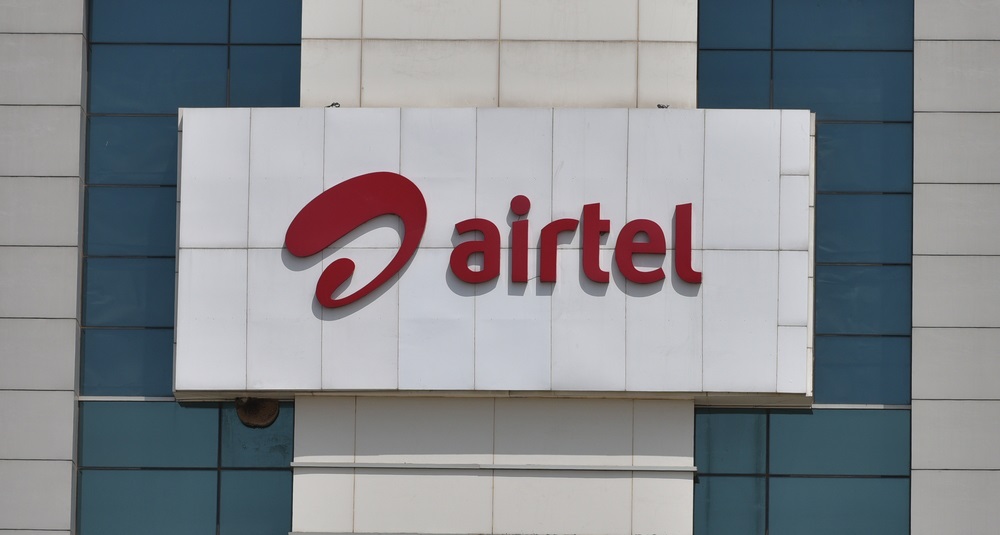
Bharti Airtel has crossed the 650 million mobile subscriber mark globally, a milestone that now places the telecom giant as the second-largest operator in the world by customer base, underscoring the scale of its international footprint and the importance of its Africa operations, particularly Nigeria.

The company disclosed the development in a statement, noting that the milestone reflects the breadth of its network and its ability to serve diverse markets across Asia and Africa with increasingly integrated digital services. According to GSMA Intelligence, Airtel now ranks second globally by mobile customer base.

“Crossing 650 million mobile subscribers worldwide, now positions the company as the second-largest telecommunications operator on the planet by customer base.

“Crossing this threshold reflects a network of immense scale, the capacity to reach customers across diverse markets with consistent quality, and the ability to deliver experiences shaped by sustained innovation,” they stated

The latest milestone is more than a symbolic achievement as it reflects the transformation of Airtel from a traditional telecom carrier into a broader digital infrastructure and services platform, spanning mobile connectivity, broadband, enterprise solutions, data centers, fintech, and satellite-enabled services.

Globally, the company’s operations now cover 15 countries, with network reach extending to more than two billion people. Of the 650 million subscribers, over 368 million are in India, while more than 179 million customers are spread across 14 African markets, making the continent a major pillar of Airtel’s growth strategy.

In Africa, Nigeria remains one of its most strategic and revenue-critical markets.

Airtel Nigeria has significantly expanded its network infrastructure in recent years, increasing its site count from just over 13,000 to nearly 17,200 within three years. The addition of more than 1,500 sites in the last year alone points to an aggressive infrastructure-led growth strategy aimed at addressing capacity constraints, reducing congestion, and extending services into previously underserved areas.

This expansion comes at a critical time for Nigeria’s telecom sector, where demand for mobile data, digital payments, video streaming, and enterprise connectivity continues to rise sharply.

According to data from the Nigerian Communications Commission, the country had 145,141 base stations across all network layers as of December 2025, with Airtel accounting for 46,918 of that infrastructure footprint, a sizeable share that underlines its growing market presence.

That investment is particularly significant against the backdrop of persistent consumer complaints over network quality. Dropped calls, slow data speeds, and congestion in high-density urban corridors have remained key issues in the Nigerian market, prompting the NCC to tighten quality-of-service oversight.

Last week, the regulator directed operators to compensate users in areas where service quality falls below required benchmarks, including the issuance of airtime credits where operators fail to meet standards. This means Airtel’s expansion is not merely about growth. It is also a regulatory and competitive necessity.

The company is also advancing plans for a second submarine cable internet breakout point at Kwa Ibo in Akwa Ibom State, as part of the early rollout of the 2Africa cable system. That project could materially improve network resilience and internet redundancy in Nigeria.

At present, much of the country’s international internet traffic remains heavily concentrated through Lagos landing stations. A second breakout point in the South-South region would reduce geographic concentration risk, improve latency in eastern and southern corridors, and strengthen disaster recovery capability.

This is strategically important for a digital economy increasingly reliant on cloud services, fintech transactions, and enterprise-grade connectivity. The move also aligns with Airtel’s wider infrastructure ambitions beyond telecom towers.

The company recently announced a $1 billion investment into its data center arm, Nxtra, with backing from global investors including Carlyle and Alpha Wave, signaling a deeper push into AI-ready digital infrastructure. That positions Airtel not only as a telecom operator but as a broader infrastructure player in the digital services economy.

In Nigeria, this could have significant implications for enterprise connectivity, cloud adoption, and hyperscale digital services over the medium term. From a market standpoint, the local telecom space remains dominated by MTN Nigeria and Airtel Nigeria, with the two operators accounting for the overwhelming majority of subscribers and industry revenue.

MTN still leads by market share, but Airtel’s consistent infrastructure rollout and aggressive customer acquisition strategy continue to narrow the operational gap.

While MTN remains the market leader in earnings, Airtel’s strong data monetization, fintech expansion, and subscriber growth suggest it is increasingly moving beyond pure volume competition toward higher-value digital services. This mirrors the company’s global model, where mobile money, enterprise solutions, and broadband services are becoming as important as traditional voice subscriptions.

The expansion of telecom infrastructure directly feeds into financial inclusion, digital commerce, remote work, online education, and e-government services.

In effect, the company’s growth trajectory is increasingly intertwined with Nigeria’s digital transformation agenda. Crossing 650 million users globally, therefore, marks more than a corporate milestone. It cements Airtel’s status as one of the most influential connectivity and digital infrastructure players in emerging markets, with Nigeria being a significant part of that success.