
DD
MM
YYYY

PAGES

DD
MM
YYYY

spot_img

PAGES

Home Blog Page 11

Wall Street Record Highs Face Skepticism as 2008 Housing Crash Predictor Turns Bearish

0

Global financial markets opened the day on a strong footing as optimism surrounding the Strait of Hormuz helped fuel a broad-based rally across equities, commodities, and digital assets.

Investors welcomed signs of easing geopolitical tensions in one of the world’s most strategically important energy corridors, driving Wall Street to fresh record highs while sending crude oil prices sharply lower. The positive sentiment also spilled into cryptocurrency markets, with Bitcoin holding above the $64,000 mark as traders embraced a renewed appetite for risk.

Yet beneath the surface of the rally, some veteran investors remain deeply cautious, warning that today’s market enthusiasm could be masking the conditions for a significant correction.

The improvement in market sentiment was largely driven by expectations that disruptions to global oil supplies through the Strait of Hormuz may be avoided. The narrow waterway handles a substantial portion of the world’s seaborne crude exports, making it a critical chokepoint for global energy markets.

As concerns over supply interruptions eased, crude oil prices dropped nearly 5%, relieving inflation fears and improving expectations for corporate earnings and consumer spending. Lower energy prices immediately benefited equity markets.

Wall Street surged to new all-time highs, with technology stocks leading the advance. The Nasdaq Composite climbed an impressive 2.59%, reflecting renewed investor confidence in artificial intelligence companies, semiconductor manufacturers, and high-growth technology firms.

The S&P 500 and Dow Jones Industrial Average posted strong gains, reinforcing the view that investors are once again positioning for economic resilience despite lingering macroeconomic uncertainties. The improving risk environment extended into digital assets.

Bitcoin traded comfortably above $64,000, maintaining recent gains as institutional demand remained steady and broader financial markets embraced risk assets. While Bitcoin has increasingly developed its own market dynamics through exchange-traded funds, institutional adoption, and long-term holders.

It continues to benefit from periods of improving global liquidity and investor optimism. Other major cryptocurrencies also recorded modest gains as traders interpreted the broader rally as supportive for digital assets.

However, not everyone is convinced that the current optimism is justified. One of the most closely watched bearish voices on Wall Street.

The investor widely recognized for accurately predicting the collapse of the U.S. housing market before the 2008 financial crisis, has once again issued a stark warning. According to the veteran investor, financial markets may be approaching a dangerous peak resembling the conditions that preceded the infamous 1987 stock market crash.

The comparison to 1987 has attracted attention because that year’s “Black Monday” saw the Dow Jones Industrial Average plunge more than 22% in a single trading session, marking one of the worst crashes in financial history.

The investor argues that today’s elevated asset valuations, widespread investor optimism, and heavy concentration in technology stocks create vulnerabilities that could leave markets exposed to a sudden reversal should economic conditions deteriorate or an unexpected shock emerge.

While many analysts acknowledge that current market fundamentals differ significantly from those of 1987, concerns over stretched valuations, persistent geopolitical risks, and uncertainty surrounding future monetary policy continue to fuel debate among investors. Bulls argue that strong corporate earnings, resilient consumer demand, and accelerating innovation in artificial intelligence justify higher valuations.

Bears counter that excessive optimism often precedes sharp market corrections. For now, markets continue to celebrate easing geopolitical tensions and declining oil prices, pushing stocks to new records while supporting gains in cryptocurrencies.

The contrasting views between bullish investors and experienced market skeptics serve as a reminder that periods of strong optimism can coexist with significant underlying risks. As global economic data, central bank decisions, and geopolitical developments unfold in the coming weeks.

Investors will be watching closely to determine whether this rally represents the beginning of another sustained bull market or the calm before a more turbulent period.
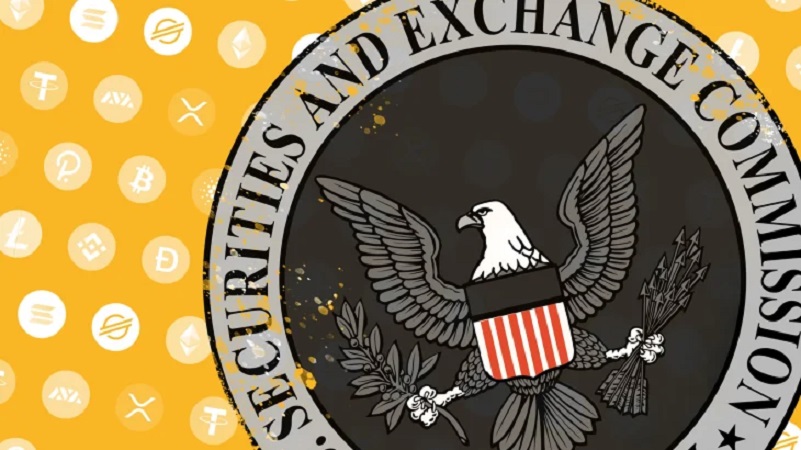

Solana’s Disinflation Proposal Goes Live, as Trump Memecoin Under Fire as US Lawmakers Call for SEC Probe

0

The digital asset industry continues to evolve through a combination of technological innovation and growing community engagement. Two recent developments have attracted significant attention across the crypto ecosystem.

The activation of Solana’s long-awaited disinflation proposal and the upcoming sale of tickets for ApeFest, one of the most recognized gatherings in the NFT community.

These events demonstrate how blockchain networks are simultaneously advancing their economic models while strengthening the communities that support them.

Solana’s disinflation proposal officially went live, marking an important milestone for one of the world’s leading smart contract blockchains. The proposal is designed to gradually reduce the network’s token inflation rate.

Reinforcing Solana’s long-term tokenomics by limiting the pace at which new SOL tokens enter circulation. Inflation has long been a critical component of blockchain economics, as newly minted tokens reward validators responsible for securing the network while encouraging decentralization.

As blockchain ecosystems mature, many networks seek to reduce inflation over time to enhance scarcity and potentially strengthen the value proposition for long-term holders.

Solana’s latest upgrade reflects this philosophy by creating a more sustainable balance between validator incentives and token supply.

A slower issuance rate could reduce sell pressure from staking rewards while making SOL increasingly attractive to institutional investors and long-term participants seeking predictable monetary policies.

The implementation reflects Solana’s increasingly sophisticated governance process. Rather than relying solely on core developers, major economic changes are debated and approved through community participation, demonstrating the growing maturity of decentralized governance.

The successful rollout further reinforces confidence in Solana’s ability to execute complex protocol upgrades without disrupting network performance, an area where the blockchain has made considerable improvements over the past year.

While infrastructure developments continue behind the scenes, the cultural side of Web3 is also preparing for one of its biggest annual celebrations. Tickets for ApeFest are scheduled to go on sale tomorrow, generating excitement among holders of the Bored Ape Yacht Club ecosystem and NFT enthusiasts worldwide.

ApeFest has become much more than an exclusive gathering for NFT collectors. The event has evolved into a major conference featuring networking opportunities, live entertainment, product announcements, and discussions surrounding the future of digital ownership, blockchain gaming, creator economies, and decentralized culture.

It serves as a meeting point where builders, investors, artists, celebrities, and technology companies converge to celebrate the expanding influence of Web3.

Demand for ApeFest tickets has historically been strong, particularly among members of the Bored Ape Yacht Club community who view the event as one of the flagship experiences associated with NFT ownership.

Beyond entertainment, ApeFest often becomes the stage for significant ecosystem announcements, partnerships, and product launches that shape the direction of Yuga Labs and the broader NFT industry.

The timing of both developments illustrates the dual nature of today’s blockchain landscape. On one hand, networks like Solana continue refining their technical and economic foundations to support long-term adoption.

On the other, community-driven events such as ApeFest highlight the social layer that differentiates Web3 from traditional financial systems. Technology alone cannot sustain an ecosystem; vibrant communities remain equally important in driving adoption, innovation, and user engagement.

As the crypto market continues to mature, both infrastructure upgrades and community events will play increasingly complementary roles. Solana’s disinflation proposal demonstrates how blockchain networks are improving their economic sustainability.

While ApeFest showcases the enduring cultural appeal of NFTs and decentralized communities. These milestones underscore an industry that continues to innovate technologically while fostering global communities united by digital ownership, decentralized participation, and the evolving promise of Web3.

Trump Memecoin Under Fire as US Lawmakers Call for SEC Probe

A fresh political and regulatory controversy has emerged in the United States after a group of Democratic senators called on the U.S. Securities and Exchange Commission to investigate President Donald Trump’s involvement with the TRUMP memecoin.

The request marks another chapter in the ongoing debate over the intersection of digital assets, political influence, and financial regulation. As cryptocurrencies become increasingly tied to public figures and government officials.

Lawmakers are raising concerns about whether existing ethics and securities laws are sufficient to address potential conflicts of interest.

The senators argue that the president’s association with the TRUMP memecoin could create significant ethical and financial concerns. According to their letter to the SEC, Trump’s public promotion and financial ties to the token may have influenced investor behavior.

Potentially benefiting insiders while exposing retail investors to substantial market risks. Memecoins are known for their extreme price volatility, often driven more by social media hype and celebrity endorsements than by underlying utility or economic fundamentals.

The lawmakers are urging the SEC to determine whether the TRUMP token falls under federal securities laws and whether any disclosures, trading activity, or promotional efforts violated existing regulations.

They also want the agency to examine whether individuals connected to the project received unfair financial advantages through privileged information or coordinated market activity. The controversy highlights the growing challenge regulators face in overseeing digital assets linked to influential public figures.

Unlike traditional cryptocurrencies such as Bitcoin or Ethereum, memecoins frequently derive their value from internet culture, branding, and community engagement.

When a political leader becomes associated with such an asset, questions inevitably arise about market manipulation, investor protection, and the appropriate separation between public office and private financial interests.

Supporters of President Trump have dismissed the senators’ request as politically motivated, arguing that the investigation is another attempt to target the president rather than address genuine regulatory concerns.

They contend that investors voluntarily purchase memecoins with full awareness of their speculative nature and that the SEC should apply the law consistently rather than selectively pursuing projects based on political considerations.

The SEC has not publicly indicated whether it intends to launch a formal investigation. Under current leadership, the agency has taken a more measured approach toward cryptocurrency regulation compared to previous years.

Focusing on developing clearer rules for digital assets while maintaining enforcement against fraud and investor deception. Whether the TRUMP memecoin falls within the SEC’s jurisdiction will likely depend on legal analyses of how the token was issued, marketed, and distributed.

The issue reflects the broader evolution of crypto regulation in the United States. As digital assets become increasingly integrated into politics, finance, and mainstream investing, regulators face mounting pressure to balance innovation with consumer protection.

Cases involving high-profile individuals often attract significant public attention because they test the boundaries of existing legal frameworks and shape future regulatory precedents.

The outcome of any potential SEC inquiry could extend far beyond a single memecoin. A formal investigation could influence how celebrity-backed and politically affiliated tokens are treated under federal law, potentially leading to stricter disclosure requirements or new regulatory guidance for projects relying on public endorsements.

The dispute underscores growing convergence of politics and digital finance. As cryptocurrencies continue to gain mainstream visibility, lawmakers and regulators will likely face increasing demands to establish clear standards governing how public officials engage with digital assets while preserving market integrity and protecting investors from undue risk.

BNY Launches Institutional Crypto Staking as Jeff Bezos Plans $4.1 Billion Amazon Share Sale

0

BNY, the world’s largest custodian bank with more than $57 trillion in assets under custody and administration, has taken another major step into the digital asset economy by launching institutional crypto staking through a partnership with Galaxy.

The announcement underscores how traditional financial institutions are increasingly embracing blockchain-based services as demand from institutional investors continues to grow.

At the same time, Amazon founder Jeff Bezos has revealed plans to sell approximately $4.1 billion worth of Amazon shares under a pre-arranged trading plan, a move that has attracted widespread attention across financial markets.

These developments reflect the evolving relationship between traditional finance, cryptocurrencies, and the world’s largest technology companies. BNY’s move into crypto staking represents another milestone in the mainstream adoption of digital assets.

As the world’s largest custodian bank, BNY plays a critical role in safeguarding assets for institutional investors, pension funds, asset managers, and governments worldwide. By introducing institutional staking services in collaboration with Galaxy, a leading digital asset financial services company.

BNY is expanding beyond traditional custody into blockchain-native financial products. Crypto staking allows investors to lock digital assets on proof-of-stake blockchain networks in exchange for rewards while contributing to network security and transaction validation.

For institutional investors, staking has become an increasingly attractive source of yield, particularly as blockchain ecosystems such as Ethereum continue to mature.

Many large institutions have been hesitant to participate due to operational complexity, regulatory considerations, and security concerns.

BNY’s institutional infrastructure addresses many of these challenges by providing trusted custody alongside staking capabilities. The partnership with Galaxy combines BNY’s global custody expertise with Galaxy’s digital asset infrastructure and blockchain experience.

This collaboration aims to offer institutional clients secure access to staking rewards without requiring them to manage the technical aspects of blockchain validation.

The initiative reflects the growing acceptance of cryptocurrencies among established financial institutions, many of which are expanding their digital asset offerings following increasing regulatory clarity and sustained institutional demand.

Meanwhile, Bezos disclosed plans to sell approximately $4.1 billion worth of Amazon shares. The sale will be executed under a Rule 10b5-1 trading plan, a mechanism that allows corporate insiders to schedule stock sales in advance to avoid concerns surrounding insider trading.

Such plans are commonly used by executives to diversify their wealth while maintaining compliance with securities regulations. Although the size of the planned sale is substantial, it does not necessarily signal declining confidence in Amazon’s long-term prospects.

Bezos remains one of the company’s largest shareholders even after multiple rounds of stock sales over recent years.

Much of his wealth remains tied to Amazon, while proceeds from previous share sales have frequently supported ventures including Blue Origin, philanthropic initiatives, and personal investments.

Investors often monitor insider transactions carefully because they can influence market sentiment. Pre-arranged trading plans are generally viewed differently from discretionary sales, as they are established well before the transactions occur.

Consequently, analysts tend to focus more heavily on Amazon’s operational performance, artificial intelligence investments, cloud computing business, and long-term growth strategy than on routine insider sales.

These two announcements illustrate the rapid transformation occurring across global financial markets. BNY’s expansion into institutional crypto staking demonstrates how legacy financial institutions are increasingly integrating blockchain technology into their core services.

While Jeff Bezos’ planned Amazon share sale highlights the continued financial influence of technology leaders. As digital assets become more deeply embedded within traditional finance and major technology firms continue to shape capital markets.

Investors are witnessing a new era where innovation, regulation, and institutional participation are reshaping the future of global finance.

Bitcoin Developers Launch Red Team Security Audit After Coldcard Hack

0

Bitcoin developers have launched a broad “red team” security initiative targeting wallets, hardware devices, and other Bitcoin software in the wake of the recent Coldcard wallet security incident.

The coordinated effort reflects the Bitcoin ecosystem’s growing emphasis on proactive cybersecurity, with developers seeking to uncover vulnerabilities before they can be exploited by malicious actors.

The Coldcard hack served as a wake-up call for many participants in the Bitcoin community. While hardware wallets are widely regarded as one of the safest methods for storing digital assets.

The incident demonstrated that even highly respected security products can face unforeseen threats. Rather than treating the event as an isolated issue, Bitcoin developers have responded by expanding security testing across the entire ecosystem.

A red team exercise involves ethical hackers and security researchers simulating real-world attacks against software and hardware products. Their objective is to identify weaknesses, exploit potential vulnerabilities, and report findings to developers so that security flaws can be patched before they are discovered by cybercriminals.

This approach has long been used in enterprise cybersecurity and is increasingly becoming a standard practice in the cryptocurrency industry. The current initiative extends well beyond Coldcard hardware wallets.

Developers are evaluating popular Bitcoin wallets, node implementations, signing software, firmware, backup systems, and supporting infrastructure that millions of users rely on every day. The goal is not to single out any individual project but to strengthen the resilience of Bitcoin’s entire ecosystem against increasingly sophisticated attack methods.

Security researchers participating in the initiative are examining multiple attack vectors, including supply chain compromises, firmware manipulation, physical device attacks, phishing techniques, software bugs, cryptographic implementation errors, and user-interface vulnerabilities that could lead to accidental loss of funds.

By approaching products from the perspective of an attacker, developers hope to identify weaknesses that traditional software testing may overlook. The effort also reflects Bitcoin’s open-source development philosophy. Unlike proprietary financial systems.

Bitcoin software is publicly available for inspection, allowing independent researchers from around the world to audit code, report vulnerabilities, and contribute security improvements. This collaborative model has historically helped Bitcoin maintain a strong security record despite being one of the world’s most valuable digital networks.

The Coldcard incident has renewed discussions about responsible disclosure practices within the cryptocurrency industry. Developers are encouraging researchers to privately report vulnerabilities to project maintainers before making them public. This gives teams sufficient time to develop patches and release updates, minimizing risks for users while maintaining transparency once fixes have been implemented.

The red team initiative serves as an important reminder that security is a shared responsibility. Even the most secure hardware wallet cannot fully protect users who fail to verify firmware updates, ignore security best practices, or fall victim to phishing attacks.

Experts continue to recommend using genuine devices purchased from authorized vendors, verifying software downloads, enabling passphrases where appropriate, maintaining secure backups of recovery phrases, and regularly updating wallet firmware.

The coordinated security review demonstrates the maturity of the Bitcoin ecosystem. Rather than waiting for future attacks to expose weaknesses, developers are actively stress-testing critical infrastructure to improve resilience.

As Bitcoin adoption continues to expand among individuals, institutions, and governments, maintaining robust security standards will remain essential for preserving trust in the network.

The red team initiative highlights a broader commitment to continuous improvement, ensuring that Bitcoin’s infrastructure evolves alongside the increasingly complex cybersecurity challenges facing the digital asset industry.

SpaceX Earnings Surprise, Nvidia Partnership, AMD Selloff, and Cloudflare’s Stablecoin Wallet Signal a Shifting Tech Landscape

0

The technology and financial markets witnessed another eventful trading session as SpaceX reported stronger-than-expected earnings while unveiling a strategic partnership with Nvidia aimed at accelerating artificial intelligence infrastructure.

Despite the positive financial results and high-profile collaboration, SpaceX shares fell 11% in post-market trading, highlighting investors’ increasingly demanding expectations for the world’s largest technology companies.

At the same time, AMD declined 8% after the market closed, suggesting broader concerns across the semiconductor and AI sector.

SpaceX’s earnings demonstrated continued strength across its commercial launch business, Starlink satellite internet operations, and expanding enterprise services.

Revenue growth reflected sustained demand for global connectivity and space-based communications, while management emphasized future investments in next-generation launch systems and AI-powered satellite networks.

The newly announced partnership with Nvidia is expected to deepen the integration of advanced AI computing into SpaceX’s infrastructure, potentially improving autonomous operations, satellite data processing, and cloud-based AI services for enterprise customers.

Financial markets often react not only to strong results but also to expectations for future growth. Following months of significant gains, SpaceX entered earnings season with elevated valuations.

Investors appeared to focus on forward guidance, capital expenditure requirements, and the pace of monetizing new AI initiatives rather than the company’s headline earnings beat.

The 11% post-market decline illustrates how even exceptional quarterly performance can disappoint markets when expectations have already been priced in. The weakness extended beyond SpaceX. AMD shares dropped 8% in after-hours trading, adding pressure across semiconductor stocks.

Although AMD remains one of the leading competitors in AI accelerators and high-performance computing, investors continue to scrutinize spending trends among cloud providers and enterprise customers.

The decline reflects ongoing uncertainty surrounding AI infrastructure investments, where markets have become increasingly sensitive to execution risks and competitive positioning.

While equity markets processed earnings volatility, another important development emerged from the fintech and blockchain ecosystem. Cloudflare announced a new wallet designed to allow AI agents to make payments using stablecoins.

The announcement represents a notable step toward enabling autonomous software agents to transact economically without relying on traditional banking rails.

As AI systems become increasingly capable of performing independent tasks, payment infrastructure has emerged as one of the missing components required for broader automation.

Cloudflare’s stablecoin-enabled wallet could allow AI agents to purchase computing resources, pay for APIs, settle digital services, or execute machine-to-machine transactions with minimal human intervention. Stablecoins, which maintain relatively stable values by being pegged to fiat currencies, offer near-instant settlement and lower transaction costs compared to conventional payment networks.

The convergence of artificial intelligence and blockchain technology is becoming increasingly apparent. Companies are no longer treating AI and digital assets as separate innovation tracks but are exploring how programmable money can support autonomous digital economies.

Infrastructure providers see stablecoins as an efficient settlement layer capable of supporting millions of automated transactions between AI-powered applications. These developments illustrate the rapidly evolving landscape of technology markets.

SpaceX’s earnings and Nvidia partnership reinforce the growing importance of AI infrastructure, even as investors become more selective in rewarding high-growth companies.

AMD’s decline highlights continued competitive pressures within the semiconductor industry, while Cloudflare’s stablecoin wallet demonstrates how blockchain-based payments are beginning to serve practical AI use cases.

As artificial intelligence, cloud computing, and digital finance continue to converge, the companies successfully integrating these technologies may define the next phase of global innovation.