DD
MM
YYYY

PAGES

DD
MM
YYYY

spot_img

PAGES

Home Blog Page 11

What Is Zero Knowledge Proof? A Clear Guide to Proof Pods and Private Data Innovation

0

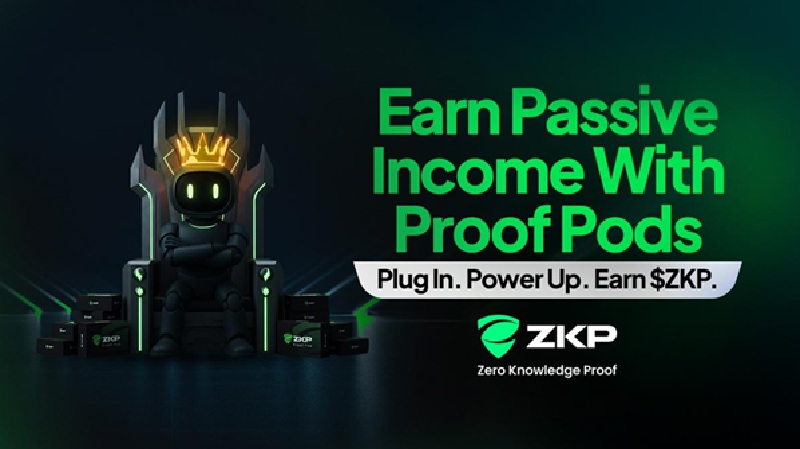
Zero-knowledge proofs may sound technical, yet the goal behind them is straightforward. They allow one party to confirm a statement is correct without showing the actual data. ZKP crypto, a project with its presale auction live now at stage 2, brings this concept into real use through dedicated hardware known as Proof Pods. Instead of expecting users to learn cryptography or manage complicated software, the ZKP network places the heavy work onto a compact, tablet-sized device designed for this purpose.

Once connected to power and the internet, a Proof Pod performs defined calculations that produce cryptographic proofs for the blockchain. These proofs confirm that data and computation are valid while keeping sensitive information private. By moving advanced math into a physical device that operates automatically, ZKP lowers entry barriers and makes private verification tools practical for ordinary users. This structure also helps many people explore what may be the best crypto to buy right now based on active infrastructure and live participation.

How Proof Pods Handle Cryptographic Tasks

Proof Pods are built to focus on a single responsibility: producing zero-knowledge proofs for the ZKP network. Each unit includes tuned hardware and software optimized for cryptographic workloads. After setup, the device receives tasks from the protocol. These tasks require running specific mathematical operations and generating short proofs that show correct execution.
Although the proofs are small, the calculations needed to create them are demanding. This is why purpose-built hardware matters. After creation, each proof is sent to the blockchain, where it can be checked within milliseconds. This process strengthens network reliability while ensuring raw data remains hidden. From a user view, participation stays simple, which often draws attention from those researching the best crypto to buy right now with working systems already online.

There is no coding, no tuning, and no constant oversight needed. The Proof Pod runs quietly in the background, converting advanced cryptography into steady, automated contributions. Ownership stays with the user, while rewards are distributed automatically as valid proofs are submitted over time, without manual effort or technical supervision.

Why Specialized Hardware Plays a Key Role

By relying on purpose-built hardware, ZKP changes how people engage with private verification tools. Many common obstacles are removed because users no longer need complex software setups. Instead, they depend on a single-use device. The value of this approach becomes clear through several points.

  • Low power usage supports continuous operation without large energy costs.
  • Fixed hardware lowers exposure to setup errors or malicious software.
  • Automatic proof generation removes the need for advanced technical skills.
  • Consistent output allows the network to verify results quickly.
  • Simple installation opens participation to non-experts.

Together, these features show how Proof Pods turn cryptographic work into a stable routine. Users support the protocol simply by staying connected, while the network gains dependable proofs without revealing private information. This structure allows steady growth as more devices join and supports uniform performance across regions. Such clarity often influences discussions about the best crypto to buy right now when comparing active networks.

Security, Verification, and Reward Structure

Every proof produced by a Proof Pod helps keep the ZKP network dependable. Validators and smart contracts can confirm that computations were completed correctly without accessing the underlying data. This reduces fraud risk and limits the need for trust between participants. In exchange for providing this verification work, Proof Pod owners receive network rewards tied to valid output.

The reward system focuses on proof accuracy rather than raw computing force alone. This supports honest participation and discourages wasteful behavior. Because proofs are quick to verify, the network can expand without performance slowdowns. As more devices contribute, security improves, since creating false proofs at scale becomes extremely difficult. These factors are often reviewed by users looking for the best crypto to buy right now with aligned incentives.

The result is a framework where privacy, efficiency, and incentives work together through clear cryptographic rules. This balance supports gradual protocol growth while keeping verification costs low and access open to a wide range of participants across different locations and skill levels.

Making Cryptography Practical for Daily Use

Transforming zero-knowledge proof into a physical device reshapes how people view cryptography. Instead of abstract equations hidden in academic material, the process becomes visible and measurable. Proof Pods act as a bridge between theory and everyday use, allowing users to support privacy-focused infrastructure without deep expertise.

As the ZKP ecosystem grows, these devices may handle new proof types and more advanced verification tasks. The core principle remains unchanged: keep complexity inside reliable hardware and present a simple interface to the user. This approach supports long-term adoption because it respects both security requirements and human limits. Such usability is another reason ZKP appears in discussions about the best crypto to buy right now.

By turning cryptographic contributions into a routine activity, the network builds a base for wider use of private data systems. This method reduces friction, supports steady expansion, and helps privacy tools fit naturally into daily technology habits without forcing users to manage sensitive cryptographic details themselves.

Final Verdict

Zero-knowledge proof often feels removed from everyday experience, yet Proof Pods change that perception. By packaging complex computation into a compact, purpose-built device, ZKP makes private verification practical and approachable. Users do not need to understand advanced math concepts to take part. They simply provide power, connectivity, and time while the presale auction remains live at stage 2.

In return, the network gains verified computation and stronger security assurances. This design turns abstract privacy math into a repeatable process that many people can support. With wider use, this model may help make private data verification a standard part of digital infrastructure rather than a narrow research concept. For many observers, this progress shapes opinions on the best crypto presale to buy right now with live infra, an active network, and Proof Pods already shipping.

Find Out More about Zero Knowledge Proof:

Website: https://zkp.com/

Auction: buy.zkp.com

X: https://x.com/ZKPofficial

Telegram: https://t.me/ZKPofficial

Extreme Fear Dominates Crypto Markets While Smart Money Accumulates ZKP: Is This the Next Coin to Explode?

0

Fear has taken hold across digital asset markets. Bitcoin recently slipped under the $90,000 level and trades close to $87,400. Ethereum has dropped about 7 percent and sits near $2,860. The Fear and Greed Index now reads 20, placing sentiment deep in extreme fear as traders react to Federal Reserve signals and possible government shutdown pressure.

At the same time, many retail participants are stepping away from risk exposure. Crypto exchanges are seeing heavy movement into traditional finance products as traders look toward gold and major indexes for short term safety. Behind the scenes, however, large institutional wallets are steadily adding exposure. High value addresses continue to accumulate Bitcoin and Ethereum at these levels, showing that smart capital often moves opposite to public emotion.

A similar setup is forming around Zero Knowledge Proof (ZKP) which several analysts now frame as the next crypto to explode once broader market stress eases.

Why ZKP Stands Out as the Next Crypto to Explode

Spotting the next crypto to explode usually means finding uneven risk where downside is limited, but upside remains wide. ZKP aligns with that idea closely based on structure and timing.

The project operates through a 450-day presale auction spread across 17 stages. During Stage 1, around 200 million units were released daily at pricing near $0.001. Stage 2 is live now, and daily availability has dropped to 190 million, tightening access as interest continues to build.

What matters most is the pricing logic. At current Stage 2 activity levels, effective entry remains under $0.003. If this presale auction follows earlier market patterns where later stages attract heavier participation, pricing could reasonably reach between $0.05 and $0.10 by Stage 15 or Stage 16.

The real expansion potential appears after listing. Comparable Layer 1 infrastructure networks have historically reached values from $0.50 to $2.00 once adoption curves accelerate. Should ZKP move to $0.50 from a Stage 2 level near $0.001, that equals roughly 500x growth. A rise to $0.60 pushes the math toward 600x, reinforcing why many call it the next crypto to explode.

Structural Factors Behind Large Price Expansion

Projects that experience sharp upside often share similar foundations. These usually include open price discovery, no prior overhead selling pressure, and alignment with long-term demand needs. ZKP checks each of these areas.

Public trading has not begun yet, meaning there are no earlier holders waiting to exit positions. There is no historical chart resistance to slow momentum. Once ZKP enters open markets, pricing begins without legacy friction.

Beyond structure, the focus sits on real demand. Privacy-focused computation is becoming more important as artificial intelligence tools move into regulated sectors. ZKP uses zero knowledge methods that allow data verification without direct exposure, a function that matches global regulatory direction.

For anyone tracking the next crypto to explode, the blend of fresh entry and durable demand signals is uncommon.

Stage 2 Supply Pressure Alters Participation Math

The ZKP crypto presale auction design introduces growing pressure as stages advance. With Stage 2 active, the daily supply has already reduced from 200 million to 190 million. Any unused allocation is permanently removed instead of carried forward.

This setup means available circulation tightens regardless of mood or headlines. Projections show that by Stage 10, daily availability could fall below 120 million. By Stage 17, the final stage, access becomes most limited.

Someone joining during Stage 2 competes with current participation for 190 million units. Entry at Stage 14 would mean competing with potentially higher demand for far fewer units. From a numbers view, earlier access holds a clear advantage when evaluating the next crypto to explode.

Wrapping Up!

A 600x path is not automatic. It depends on ZKP gaining real share within privacy-focused infrastructure and on post-listing demand reflecting that role.

Still, several conditions already support the case. More than $100 million was self-funded into the network before public access. The four-layer system is already built. Proof Pods are shipping and delivering, and core infrastructure is live today rather than promised later.

If privacy-first computation becomes a standard requirement for AI-driven and enterprise systems, a shift already in motion, then current presale auction pricing may sit far below future utility value.

For those evaluating the next crypto to explode, ZKP presents limited downside, flexible upside, and a structure that favors early access. Stage 2 is live now, and availability continues to narrow by design.

Website: https://zkp.com/

Buy: http://buy.zkp.com/

X: https://x.com/ZKPofficial

Telegram: https://t.me/ZKPofficial
 

Leveraged Positions Were Brutal Over the Weekend With Over $130M in Liquidations on Sunday

0

The cryptocurrency market experienced a notable pullback over the weekend, specifically on Sunday (January 25, 2026), with reports of over $130 million in liquidations occurring during the drawdown. This event was driven by a sharp price correction amid low weekend liquidity, which amplified volatility and triggered cascading liquidations of leveraged long positions.

In one notable spike, approximately $130 million worth of crypto long positions were liquidated in just 60 minutes or around the past hour in some snapshots, primarily affecting overleveraged traders. Over the broader 24-hour period surrounding Sunday, total liquidations reached around $130 million, with Bitcoin (BTC) contributing a significant portion e.g., roughly $30-75 million in some breakdowns, though figures varied by source and timeframe.

The drawdown saw Bitcoin dip below $88,000 hitting as low as around $86,000-$87,000 in some exchanges, extending pressure into Monday. Ethereum (ETH) and other altcoins like Solana (SOL) also saw notable declines and liquidations.

This kind of weekend flush is common in crypto due to thinner trading volumes, making it easier for wicks or sudden moves to hunt stops and force margin calls. Many analysts pointed to it as a leverage reset rather than a fundamental shift, with warnings about the risks of high leverage—especially heading into low-liquidity periods.

Bitcoin futures and spot prices have been volatile, with recent ranges showing pressure below $90,000 and key support levels being tested around $84,000-$87,000. Broader market sentiment shifted toward caution, with some ETF outflows and macro factors like trade tensions or institutional de-risking cited as contributors.

The recent Sunday pullback hit altcoins particularly hard, often amplifying Bitcoin’s downside due to higher beta (greater volatility relative to BTC), thinner liquidity on weekends, and cascading liquidations in leveraged positions. While Bitcoin dipped below $88,000 and as low as ~$87,000-$87,500 in spots, many altcoins saw steeper percentage drops.

For example: Ethereum (ETH) fell to around $2,890 down ~4-6% in recent snapshots, with some reports noting worse performance among majors. Solana (SOL) dropped notably, with one instance around $122 down ~3.4% in 24h periods, and earlier volatility saw it rebound from lows like $128.5 after heavier pressure.

Other alts like BNB ($871), XRP ($1.88, down ~4%), and various mid-caps/memes experienced 3-10%+ declines, with some like AXS, KAIA, XMR leading losses over 10%. The $130M+ liquidation spike in the initial drawdown and broader 24h figures reaching hundreds of millions, e.g., $678M-$744M in some reports disproportionately affected longs on altcoins.

High-beta plays like SOL saw significant wipes e.g., tens of millions in isolated cases, as overleveraged traders got flushed. ETH often ranked high in liquidation volumes alongside BTC. BTC dominance ticked up during the pullback, signaling capital rotating back to “safer” Bitcoin amid risk-off mood.

Altcoin Season Index hovered low around 17-41/100 in recent checks, confirming we’re in “Bitcoin season” rather than alt outperformance. Fear and Greed is at extreme fear levels ~19/100 added pressure, with macro factors (Fed week ahead, trade/geopolitical tensions, ETF outflows) overriding bull narratives.

This wasn’t isolated—altcoins have faced “junk coin” purges and bearish stretches in early 2026 cycles, with median tokens down sharply in prior periods. Weekend wicks hunted stops more aggressively on alts due to lower volume.

These illustrate typical liquidation heatmaps, price charts during drawdowns, and altcoin performance grids from recent market events—red zones highlight heavy long squeezes. Overall, it’s a classic leverage reset: healthy for shaking out weak hands, but brutal for overleveraged alt plays.

Spot holders in strong fundamentals like privacy coins holding firmer, or infra like certain L1s weathered it better. Many see this as capitulation-style action setting up potential bounces, especially if macro stabilizes post-Fed.

Your portfolio leaning more BTC-heavy right now, or riding any specific alts through this? If you’re trading or holding leveraged positions, this serves as a reminder: weekends can be brutal for leverage.

World Liberty Financial Swaps Approximately $8M of Wrapped Bitcoin for Ethereum

0

World Liberty Financial (WLFI), the Trump-backed DeFi project, has made headlines with a recent on-chain move: swapping approximately $8 million worth of Wrapped Bitcoin (WBTC) for Ethereum (ETH).

According to blockchain data and reports from January 26, 2026: WLFI sold 93.77 WBTC valued at around $8.1 million to acquire 2,868 ETH at an average price of about $2,813 per ETH. This follows earlier patterns of treasury management, including withdrawals from protocols like Aave and prior smaller swaps.

Analysts interpret this as a strategic rotation from BTC exposure to ETH, possibly betting on Ethereum’s ecosystem strengths like staking, DeFi activity, and relative “defensiveness” amid market conditions. This has sparked speculation across Crypto Twitter (CT), with some calling it a bullish signal for ETH and joking that “Trump has better conviction than 99% of CT.”

WLFI’s moves often tie into broader narratives around Trump-family-linked crypto initiatives, though no official statement directly explains this specific trade as policy-driven.

Clawd AI bot (more commonly Clawdbot) is gaining serious traction in AI and tech communities. It’s an open-source, self-hosted personal AI assistant created by Peter Steinberger, that runs locally on your devices, integrates with apps like Telegram, Discord, WhatsApp, and more, and handles tasks like automation, coding, and workflows—often described as a “personal ops team” or “Jarvis-like” agent.It’s exploding in popularity.

GitHub org and Discord are buzzing with contributions and use cases. Community reports highlight its speed, privacy focus (self-hosted to avoid cloud data leaks), and extensibility. Tied to this hype, a $CLAWD memecoin on Solana has pumped hard, briefly hitting over $16 million market cap amid the Clawdbot trend before pulling back.

It’s positioned as the narrative play for the “Clawdbot phenomenon” and AI agents on Solana. However: The creator has publicly distanced himself, calling the token a scam/pump-and-dump with no endorsement. It’s classic memecoin volatility—driven by FOMO around the real AI tool, but high-risk.

Crypto Twitter is lit with both stories today—one a major whale move from a high-profile project, the other an AI meme frenzy. ETH looks primed if these rotations continue, while $CLAWD is the high-beta gamble of the moment.

Bullish signal for ETH relative to BTC: This represents a clear rotation away from Bitcoin exposure toward Ethereum. WLFI tied to high-profile Trump-family narratives has been actively managing its treasury, including prior withdrawals from Aave and smaller ETH buys.

Analysts see it as betting on Ethereum’s strengths: staking yields, DeFi dominance, on-chain activity, and tokenized RWAs and stablecoins. In a market where BTC often leads as “digital gold,” moves like this from a politically resonant entity can amplify ETH/BTC ratio narratives—potentially front-running a shift if institutional flows follow.

No major ETH pump followed this specific trade— ETH remains range-bound without explosive reaction. However, it adds to ongoing accumulation patterns in WLFI’s history like larger ETH buys in prior periods. Combined with spot ETH ETF inflows in recent months, it reinforces ETH as a “defensive” or growth play amid volatility.

WLFI’s actions often spark speculation about policy hints or “insider” conviction, even if unconfirmed. In a pro-crypto administration era, rotations toward DeFi-heavy ETH could subtly signal ecosystem priorities—though on-chain data shows no direct policy link.

Hype-driven but high-risk memecoin cycle: Clawdbot (open-source, self-hosted AI agent is genuinely gaining traction in 2026 as a privacy-focused, extensible “personal Jarvis” for automation across apps (Discord, Telegram, etc.). Viral demos, Discord growth, and community contributions are real drivers.

$CLAWD briefly spiked to $16M market cap on the AI bot hype wave, then pulled back to ~$8–10M with peaks around $0.015 and retraces. It’s classic narrative-fueled volatility—FOMO around the tool, not the creator’s endorsement (he’s publicly called it a scam/pump-and-dump with zero affiliation).

Top holders saw massive gains like 19x–93x reported in some CT posts, but rugs, whale dumps, and low liquidity make it extremely speculative. This fits the 2026 “year of personal agents” vibe—open-source tools like Clawdbot highlight demand for local, controllable AI.

If the bot keeps evolving, the narrative could sustain longer-term interest, but the token remains a pure gamble detached from the project’s utility. WLFI’s move isn’t revolutionary alone but contributes to a pattern of smart-money/ high-profile rotations into ETH amid BTC dominance.

If more follow via ETFs or other whales, it could catalyze ETH outperformance. $CLAWD exemplifies how real tech traction (Clawdbot) gets hijacked for quick pumps—great for short-term flips if timed right, but creator distancing + volatility scream high risk.

Both stories thrive on X/CT buzz—WLFI ties into Trump-era speculation, Clawdbot into AI productivity hype. Expect continued volatility as these play out. I’m leaning cautiously bullish on ETH from treasury shifts like this (longer-term ecosystem bet), while viewing $CLAWD as lottery-ticket territory—fun if you’re degen, but not foundational.

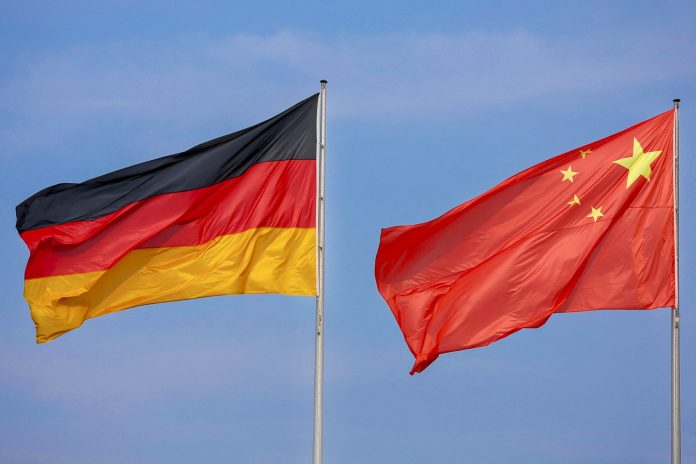
As Washington Turns Inward, German Capital Finds Its Way Back to China

0

German money is flowing back into China at a pace not seen in four years, a shift that speaks less about renewed enthusiasm for Beijing and more about growing unease with Washington.

Data compiled for Reuters by the IW German Economic Institute show that German companies invested more than 7 billion euros in China between January and November 2025, a jump of more than 55% from the roughly 4.5 billion euros recorded in each of the previous two years. The figure also sits well above the long-term average for the past decade, marking a decisive change in corporate behavior.

At the heart of the move is President Donald Trump’s trade agenda. In his first year back in office, Trump reintroduced far-reaching tariffs on European imports and revived a confrontational approach to trade that many German executives thought belonged to an earlier era. For companies whose business models rely on predictable access to global markets, that uncertainty has become costly.

Rather than doubling down on transatlantic exposure, many firms are spreading their risk. China, already embedded in German industrial supply chains, has once again become central to that strategy.

“German companies are continuing to expand their activities in China – and at an accelerated pace,” said Juergen Matthes, head of international economic policy at the IW institute.

The motivation, he said, goes beyond growth. It is about insulation.

The logic is straightforward. By producing in China for Chinese customers, companies reduce their vulnerability to tariffs, export controls, and sudden policy shifts elsewhere. The aim is to make local operations viable even if global trade routes are disrupted.

This thinking is now widespread across boardrooms in Europe’s largest economy. Reuters reported last week that German companies nearly halved their investments in the United States during the first year of Trump’s second term. In parallel, China has reclaimed its position as Germany’s top trading partner, overtaking the U.S. after a brief reversal in 2024. Rising imports from China helped drive that change.

The German government finds itself navigating a narrow path. Berlin has hardened its language on China over issues ranging from market access to security risks, yet it remains wary of undermining a relationship that underpins large parts of its industrial base. Cars, chemicals, and advanced manufacturing still depend heavily on Chinese demand.

That dependence is evident in corporate spending patterns. Volkswagen, BASF, Infineon, and Mercedes-Benz all continue to channel significant resources into China, a market that absorbs a substantial share of global vehicle and chemical sales.

Volkswagen says its investments in China and the United States are being pursued independently, guided by local market strategies. What has changed is how China fits into its global footprint. Technologies and products developed there are increasingly deployed in other regions, including Southeast Asia, the Middle East, South America, and Africa.

“China is thus helping to further strengthen the Group’s global presence and competitiveness,” a company spokesperson said.

That shift points to a deeper transformation. China is no longer just a sales destination for German firms. It is becoming a development hub and a base for exporting know-how to other fast-growing markets, a role that insulates companies from political risk in any single country.

Geopolitics looms large in these decisions. Matthes said fears of major trade disruptions or conflicts are encouraging companies to build operations that can stand on their own.

“Many companies say: ‘If I’m only producing in China for China, I’m reducing my risk of being affected by possible tariffs and export restrictions,’” he said.

Mid-sized manufacturers are following the same path. Fan and motor maker ebm-papst invested 30 million euros last year to expand its Chinese operations, more than a fifth of its total capital spending. The company framed the move as a way to stay close to customers and shield itself from tariff shocks.

“This model has proven to be an important anchor of stability, especially in times of tariffs and geopolitical tensions,” ebm-papst said, while noting it also plans to grow its U.S. business this year.

Politically, the corporate pivot is echoed by diplomatic maneuvering across Europe and beyond. Britain is heading to China this week with a business delegation seeking deals in sectors from automobiles to pharmaceuticals. The European Union is edging closer to a trade agreement with South America. Canada is exploring expanded trade ties with China and India. Each move signals a quiet recalibration as allies look for alternatives in a more fragmented global economy.

German Economy Minister Katherina Reiche captured the mood this week when she spoke of the need to seek new alliances as established relationships grow more fragile. Her remarks underline a reality facing Europe’s export-driven economies: trade policy is no longer just an economic tool, but a source of strategic risk.

However, for German companies, the renewed surge in China investment is seen as less about choosing sides and more about survival in an era of unpredictable trade rules. Trump’s tariffs were designed to pull investment back toward the United States. Instead, they are accelerating a broader diversification, one that is redrawing the map of global capital flows and pushing U.S. allies to look elsewhere for stability.