DD
MM
YYYY

PAGES

DD
MM
YYYY

spot_img

PAGES

Home Blog Page 1103

Elon Musk Pledges Renewed Focus on Tesla and His Other Ventures

0

After months of intense political involvement under President Donald Trump’s administration, Elon Musk is stepping back from his government role and returning his attention to the companies that catapulted him to global fame and immense wealth.

In a post on his social media platform X, Musk wrote: “Back to spending 24/7 at work and sleeping in conference/server/factory rooms,” referencing the platform’s recent outages and hinting at a renewed dedication to his core ventures. “I must be super focused on xAI and Tesla (plus Starship launch next week), as we have critical technologies rolling out.”

The announcement follows Musk’s earlier comments during Tesla’s April earnings call, where he revealed plans to reallocate his time.

“I think I’ll continue to spend a day or two per week on government matters for as long as the president would like me to do so, and for as long as it is useful, but starting next month, I’ll be allocating far more of my time to Tesla, now that the major work of establishing the Department of Government Efficiency is done,” he said.

A Polarizing Political Stint

Musk’s role as the head of the Department of Government Efficiency (DOGE), a newly created agency under Trump, was defined by sweeping workforce reductions and budgetary rollbacks that targeted several federal agencies, including the Consumer Financial Protection Bureau and USAID. These aggressive measures left thousands of federal workers uncertain about their futures, drawing criticism from both sides of the aisle.

His political activism extended beyond administrative functions. Musk’s super PAC poured millions into Republican-aligned causes, including a high-profile but unsuccessful effort to influence a critical Wisconsin Supreme Court race. Despite his visibility in right-wing politics, Musk recently stated at the Qatar Economic Forum that he would significantly reduce political donations going forward.

“If I see a reason to do political spending in the future, I will do it. I do not currently see a reason,” he said.

Fallout at Tesla

Musk’s political pivot sparked backlash among investors and Tesla’s core customer base, particularly among liberals and environmentalists who had long supported the brand. Tesla’s stock price significantly declined during the height of Musk’s political entanglements, and the company faced reputational challenges.

Marketing professor and analyst Scott Galloway criticized Musk’s political foray, calling it “one of the greatest brand destructions in history.” Tesla’s brand ranking plummeted from 8th to 95th in the Axios Harris Poll between 2021 and 2024.

Additionally, Tesla experienced a sharp 60% drop in vehicle sales in Germany in early 2024, a fall that coincided with Musk’s public backing of the far-right Alternative for Germany (AfD) party and comments that were seen as supportive of anti-immigrant views. Across multiple cities, protests have erupted outside Tesla factories, and Musk’s polarizing rhetoric has driven former customers to sell their vehicles in protest.

A Morgan Stanley investor survey found that 85% of respondents believed Musk’s political activity had negatively or extremely negatively impacted Tesla’s business fundamentals. There were even reports of growing pressure within Tesla’s boardroom, amid speculation that directors were quietly discussing a potential leadership transition.

Musk’s statement that he would remain Tesla’s CEO for “at least five years” was meant to quell such speculation.

“If Tesla is to continue to lead in AI and robotics, we need to make sure I have reasonable control,” Musk said during the April call.

Investors React to Political Withdrawal

In a sign of renewed investor confidence, Tesla shares rebounded sharply after Musk confirmed his intention to reduce his political involvement. The stock saw a 43% gain following the earnings call where he announced his pivot back to business.

But questions remain over how far Musk will distance himself from politics. While he has stated he will devote less time and money to political activities, it is not clear whether he will temper his political rhetoric—particularly on X, where he frequently engages in combative commentary aligned with far-right views. That rhetoric continues to alienate a significant segment of Tesla’s original base: environmentally conscious, left-leaning consumers.

A recent consumer poll cited by Bloomberg showed that a growing share of Tesla drivers have considered selling their vehicles specifically due to Musk’s political statements. Some even reported they had already sold their cars as an act of protest.

As Tesla faces mounting competition from Chinese automakers like BYD, especially in European markets, Musk’s ability to steer the company back to its innovative and apolitical roots will likely be critical. The company has already missed production targets for its next-generation electric vehicles, and its operating margins have thinned.

Meanwhile, Musk’s attention is increasingly divided among multiple ventures—SpaceX, X, xAI, and Neuralink among them—all at critical stages of technological development. His recent statement suggests a renewed effort to ensure none of them are neglected: “We’re at a pivotal point. I need to be present.”

Only time will tell whether Musk’s re-focus will include a shift in public tone or merely a shuffling of calendar priorities.


Texas Strategic Bitcoin Reserve and Investment Act Position Texas as a Pioneer in State-Level Crypto Adoption

0

The Texas Senate passed Senate Bill 21 (SB 21), known as the Texas Strategic Bitcoin Reserve and Investment Act, on March 6, 2025, with a 25-5 vote. The bill, authored by Senator Charles Schwertner (R-Georgetown) and sponsored in the House by Representative Giovanni Capriglione, establishes a state-managed Bitcoin reserve to invest in Bitcoin and other cryptocurrencies with a market capitalization of at least $500 billion. It aims to diversify Texas’ investment portfolio, hedge against inflation, and enhance financial resilience.

The reserve, managed by the Texas Comptroller of Public Accounts outside the state treasury, would be funded through legislative appropriations, dedicated revenues, crypto purchases, airdrops, forks, and donations. It includes strict security measures like cold storage and mandates biennial reports for transparency. The bill passed the Texas House on May 21, 2025, with a 105-23 vote and awaits a Senate concurrence vote on House amendments before heading to Governor Greg Abbott for final approval.

If signed into law, Texas would join New Hampshire as one of the first U.S. states with a strategic Bitcoin reserve. However, another bill, SB 778, also related to establishing a Bitcoin reserve, was introduced but referred to the Finance Committee on February 7, 2025, with no further progress noted. Critics, like Senator Roland Gutierrez, raised concerns about cryptocurrency volatility, while proponents argue it positions Texas as a leader in digital asset adoption.

By investing in Bitcoin and other major cryptocurrencies, Texas aims to diversify its investment portfolio, potentially reducing reliance on traditional assets like bonds or equities. This could hedge against inflation, given Bitcoin’s fixed supply cap of 21 million coins, often likened to “digital gold.” The act positions Texas as a forward-thinking state in the cryptocurrency space, potentially attracting blockchain businesses, startups, and talent. This aligns with Texas’ growing reputation as a tech hub, with cities like Austin already hosting crypto-related companies.

Proponents argue Bitcoin’s decentralized nature and limited supply make it a hedge against fiat currency devaluation, especially in times of economic uncertainty. Texas could benefit if Bitcoin appreciates significantly. Critics, like Senator Roland Gutierrez, highlight cryptocurrency’s price volatility. For example, Bitcoin’s price has fluctuated dramatically in the past, dropping from $69,000 in 2021 to below $17,000 in 2022. A poorly timed investment could lead to significant losses for the state.

Texas would join New Hampshire as one of the first U.S. states to hold Bitcoin as a strategic reserve, potentially inspiring other states to follow. This could normalize cryptocurrency as a legitimate asset class for public institutions. The bill’s strict security measures (e.g., cold storage) and transparency requirements (biennial reports) could set a model for responsible crypto management, influencing federal or state-level regulations.

A state-backed Bitcoin reserve could draw crypto investors and businesses to Texas, boosting local economies. It may also strengthen Texas’ position in global financial markets, given Bitcoin’s borderless nature. By embracing Bitcoin, Texas could align itself with pro-crypto jurisdictions, potentially challenging federal dominance over monetary policy and signaling skepticism toward centralized financial systems.

The reserve’s funding through legislative appropriations or dedicated revenues could strain state budgets, especially if crypto markets underperform. The bill’s reliance on airdrops, forks, and donations adds uncertainty. If Bitcoin’s value grows as projected by bullish analysts (some predict $500000+ by 2030), the reserve could yield substantial returns, funding public projects or reducing taxpayer burdens.

The bill has sparked a clear divide in Texas’ political and economic spheres, reflecting broader debates about cryptocurrency’s role in public finance. Proponents led by Senator Charles Schwertner and Representative Giovanni Capriglione, supporters include pro-crypto lawmakers, blockchain advocates, and tech entrepreneurs. They view Bitcoin as a transformative asset, with Texas’ early adoption giving it a competitive edge. The bill’s passage aligns with Texas’ pro-business stance, as seen in its welcoming of crypto miners after China’s 2021 crackdown.

Supporters argue Bitcoin’s scarcity makes it a superior store of value compared to fiat currencies, which have faced inflationary pressures (e.g., U.S. inflation peaked at 9.1% in June 2022). The 25-5 Senate and 105-23 House votes suggest strong legislative support, reflecting public interest in crypto among younger and tech-savvy Texans. Crypto advocacy groups and industry leaders likely support the bill, seeing it as a step toward mainstream adoption. Critics include cautious lawmakers like Senator Roland Gutierrez and traditional financial experts wary of crypto’s risks.

Critics point to Bitcoin’s price swings, which could jeopardize public funds. For instance, a 50% market crash, as seen in 2022, could lead to significant losses for the reserve. Skeptics argue that cryptocurrencies lack intrinsic value and are driven by speculation, making them unsuitable for state-backed investments. Federal crackdowns or unclear SEC regulations (e.g., ongoing debates over whether Bitcoin is a security) could complicate Texas’ reserve, potentially leading to legal or financial challenges.

Funds allocated to the Bitcoin reserve could be used for more immediate needs, like infrastructure or education, especially in a state with budget constraints. The bill reflects a partisan lean, with Republican-dominated Texas pushing for bold financial innovation, while critics, often Democrats or fiscal conservatives, urge caution. This mirrors national debates, where pro-crypto figures like Senator Cynthia Lummis (R-WY) advocate for Bitcoin reserves, while others, like Senator Elizabeth Warren (D-MA), warn of crypto’s risks.

Younger, tech-savvy Texans and crypto enthusiasts embrace the bill as progressive, while older or risk-averse citizens view it as reckless. Wealthier urban areas like Austin, with strong tech ecosystems, may benefit more from crypto-related growth, while rural regions might see little direct impact, potentially widening economic disparities.

The Texas Strategic Bitcoin Reserve and Investment Act could position Texas as a pioneer in state-level crypto adoption, with potential economic rewards if Bitcoin’s value rises. However, it carries risks due to market volatility and regulatory uncertainties. The divide between supporters, who see it as a visionary move, and critics, who view it as a risky gamble, underscores broader tensions about cryptocurrency’s role in public finance. The bill’s fate now hinges on Governor Abbott’s decision, which could set a precedent for other states.

Cleveland Fed’s Inflation Nowcast Estimates 0.12% MoM on U.S. Consumer Price Index (CPI) For May

0

The Cleveland Fed’s Inflation Nowcast model estimated a 0.12% month-over-month increase in the US Consumer Price Index (CPI) for May 2025, as reported on May 23, 2025. This suggests a year-over-year CPI inflation rate of approximately 2.38%, slightly up from April’s 2.3% but indicating a continued trend of moderating inflation.

The model uses daily oil prices, weekly gasoline prices, and monthly CPI data to provide real-time estimates before official Bureau of Labor Statistics (BLS) releases, which for May 2025 are scheduled for June 11, 2025. The Cleveland Fed’s Nowcast model estimating a 0.12% month-over-month US CPI increase for May 2025, translating to a year-over-year inflation rate of about 2.38%, carries several implications for economic policy, markets, and societal divides.

The modest CPI rise suggests inflation remains close to the Federal Reserve’s 2% target, potentially allowing the Fed to maintain or slightly adjust its current interest rate stance. If the Fed perceives this as stable, it might pause rate hikes or cuts, signaling a “soft landing” scenario. However, if other data (e.g., core PCE, labor market indicators) show persistent price pressures, the Fed could lean toward tighter policy, impacting borrowing costs and economic growth.

A 2.38% inflation rate is unlikely to spook markets, as it aligns with recent trends of cooling inflation (down from 2022 peaks). Equities may remain stable or rally slightly, as investors prefer predictable inflation over volatility. Bond yields, particularly on Treasuries, could stay range-bound unless unexpected data shifts rate hike expectations. The dollar might weaken slightly if rate cut bets increase.

A low month-over-month CPI increase eases pressure on consumers, particularly for essentials like food and energy, though real wage growth remains critical for purchasing power. Businesses may face less cost-push inflation, but sectors sensitive to interest rates (e.g., housing, autos) could still struggle if rates remain elevated.

High-income households and asset holders (e.g., those with investments in stocks or real estate) benefit from stable inflation and potential market gains. They’re less affected by modest price increases due to higher disposable income. Low- and middle-income households, who spend a larger share of income on essentials (e.g., housing, groceries, energy), feel the pinch of even modest inflation. Real wages for these groups often lag, exacerbating financial strain.

Stable but positive inflation widens the wealth gap, as asset-rich households gain from market stability while wage-dependent households face eroding purchasing power. Urban areas, with higher exposure to global markets and diversified economies, may absorb modest inflation better due to stronger job markets and access to cheaper goods.

Rural areas, often reliant on fixed incomes or agriculture, may face disproportionate impacts from energy and food price fluctuations, even if overall CPI is low. Rural communities could feel economically sidelined, fueling perceptions of neglect compared to urban centers. Younger generations (e.g., Millennials, Gen Z) face challenges like student debt and high housing costs, which are less alleviated by low inflation if wages stagnate or interest rates remain high.

Older generations, particularly retirees on fixed incomes, benefit from stable inflation but remain vulnerable to healthcare cost spikes, which often outpace headline CPI. Persistent inflation, even if moderate, strains younger workers’ ability to build wealth, while retirees may feel secure but face specific cost pressures.

Modest inflation may reduce political pressure on policymakers to address immediate cost-of-living crises, but lingering perceptions of economic unfairness (e.g., housing affordability, wage stagnation) could fuel populist sentiment. Social media chatter on platforms like X often highlights divides, with some users praising cooling inflation as a policy win, while others argue it does little for those struggling with rent or groceries. This reflects a polarized narrative around economic progress.

The Nowcast’s 0.12% estimate is preliminary and subject to revision with the BLS’s official CPI release on June 11, 2025. Historical Nowcast accuracy varies, but it’s generally a reliable leading indicator. Global factors (e.g., oil price volatility, supply chain dynamics) could influence actual CPI, potentially widening or narrowing the projected rate.

The Cleveland Fed’s Nowcast suggests stable inflation, supporting economic stability but not fully addressing structural divides. Low- and middle-income groups, rural areas, and younger generations face ongoing challenges, while wealthier households and urban centers are better positioned to benefit. This dynamic risks deepening economic and social divides unless accompanied by policies targeting wage growth, housing, and cost equity.

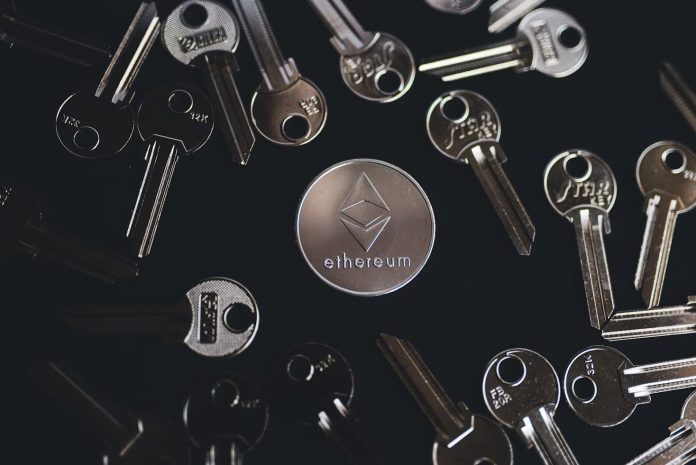
Succinct Labs SP1 Hypercube Breakthrough Generates Proof-of-History For Ethereum Scalability

0

Succinct Labs has made a significant breakthrough with their SP1 Hypercube, a next-generation zero-knowledge virtual machine (zkVM) that can generate zero-knowledge proofs for Ethereum blocks in under 12 seconds, with an average proving time of 10.3 seconds for 93% of 10,000 tested mainnet blocks. This is a major advancement for Ethereum’s scalability, enabling faster and more efficient verification for Layer 1 throughput, native rollup security, and cross-chain interoperability without compromising decentralization.

SP1 Hypercube proves Ethereum blocks in real-time (under 12 seconds), a feat previously considered near-impossible, using a cluster of ~200 NVIDIA RTX 4090 GPUs. It reduces recursive proof overhead by 40% with a new cross-table lookup system and uses multilinear polynomial-based proof systems, achieving up to 5x better latency and cost compared to its predecessor, SP1 Turbo.

The prover and verifier code are open-source, aligning with blockchain’s ethos of transparency, and the hardware cost for a proving cluster is estimated at ~$100k-$400k, making it feasible for broader adoption. This enables trustless bridging, rollup optimizations, and supports projects like Aerius Labs for storage proofs and OP Succinct for ZK rollups.

Succinct introduced the $PROVE token to incentivize its decentralized prover network, facilitating proof generation for various applications like blockchains, AI agents, and games. This development is seen as a “space race” milestone for zero-knowledge proofs, with implications for scaling Ethereum’s ecosystem while maintaining security and decentralization. The tech is still undergoing audits, with a production-ready release planned post-audit.

Implications of Succinct Labs’ SP1 Hypercube Breakthrough

Succinct Labs’ real-time Ethereum proof generation with SP1 Hypercube has far-reaching implications for the blockchain ecosystem, particularly for Ethereum and related technologies. Proving Ethereum blocks in ~10.3 seconds enables real-time validation, significantly boosting Layer 1 throughput without sacrificing decentralization. Enhances Layer 2 solutions like Optimistic Rollups and ZK-Rollups by providing rapid, trustless proof generation, reducing latency and costs for rollup operators (e.g., OP Succinct’s ZK rollup).

Cross-Chain Interoperability enables trustless bridges between Ethereum and other blockchains, improving asset transfers and data sharing with minimal latency. The PROVE token incentivizes a decentralized network of provers, potentially democratizing access to zero-knowledge (ZK) proof generation for various blockchains, AI agents, and gaming platforms.

Projects like Aerius Labs leverage SP1 for efficient storage proofs, addressing data availability challenges for rollups and other systems. Up to 5x better latency and cost compared to previous systems, with hardware costs (~$100k-$400k) making it viable for smaller organizations to participate. The open-source prover and verifier code encourage community contributions, fostering innovation and trust in the system.

ZK adoption lowers the barrier for ZK proof adoption across industries, potentially integrating with AI for verifiable computation or gaming for trustless state transitions. Real-time proofs maintain Ethereum’s security model without relying on trusted intermediaries, critical for rollups and bridges. Ongoing audits ensure robustness, with production readiness pending, reducing risks of vulnerabilities in deployment.

The ~$200k-$400k cost for a proving cluster (e.g., ~200 NVIDIA RTX 4090 GPUs) is affordable for institutions but may exclude smaller developers or communities, potentially centralizing proving power among well-funded entities. yAccess to high-end GPUs and stable infrastructure (power, cooling) may be limited in developing regions, creating a regional divide in participation. Implementing and maintaining ZK proof systems requires specialized knowledge, which may limit adoption to teams with strong cryptographic expertise.

Projects must adapt existing infrastructure to leverage SP1, which could slow adoption for smaller or less technically equipped teams. While the PROVE token aims to decentralize proving, wealth concentration among early adopters or large stakeholders could skew rewards, favoring those with significant token holdings or computing resources. gToken-based incentives introduce financial risks, as token value fluctuations could affect the economic viability of running provers.

If only a few entities can afford proving clusters, the network risks centralization, undermining the decentralized ethos of blockchain. As a leading innovator, Succinct Labs’ influence over standards or updates could create a dependency, though open-source code mitigates this to some extent. Large projects (e.g., Aerius Labs, OP Succinct) are already integrating SP1, while smaller projects may lag due to resource constraints, creating a competitive gap.

Not all blockchains may adopt SP1-compatible proofs, potentially fragmenting ZK adoption across ecosystems. Further optimizations or cloud-based proving solutions could lower hardware costs, making participation more inclusive. Community-driven tutorials and simplified integration tools could reduce the expertise barrier.

Transparent and equitable PROVE token distribution and governance can prevent wealth concentration. Leveraging the open-source model, the community can contribute to decentralizing and improving SP1, reducing reliance on a single entity. This breakthrough positions Ethereum and ZK technology for significant growth, but addressing the hardware, expertise, and economic divides will be crucial to ensuring equitable access and maintaining decentralization.

Nvidia CEO Jensen Huang Praises Trump’s Re-industrialization Policy, Calls It “Visionary”

0

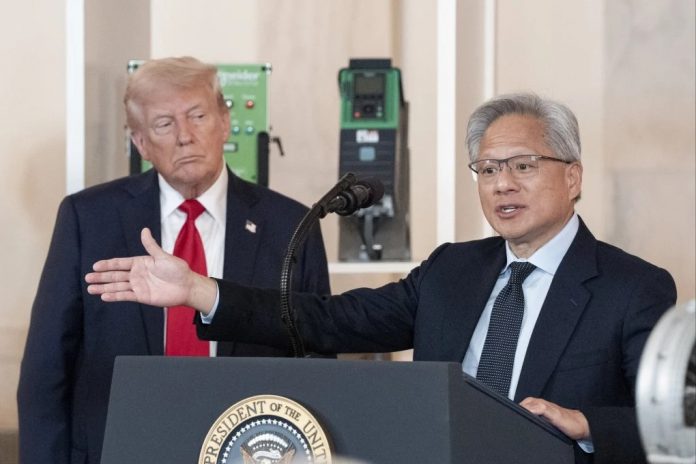
Nvidia CEO Jensen Huang has lauded President Donald Trump’s tech and trade policies as “very visionary,” aligning himself with the administration’s push to re-industrialize the U.S. economy and dominate the global technology race.

Speaking in Norrköping, Sweden, on Saturday, where he received an honorary doctorate from Linköping University, Huang applauded Trump’s sweeping effort to support U.S. technology firms, which has included scrapping Biden-era restrictions on AI chip exports to countries like Saudi Arabia, the UAE, and Sweden.

“The President would like American technology to win with Nvidia and American companies to sell chips all over the world and to generate revenues, tax revenues, invest and build in the United States,” Huang said.

Earlier, the CEO had called the Biden administration restrictions a “failure.”

“American technology companies were very successful in China four years ago. We have lost about 50% of the market share and competitors have grown,” he added, describing past restrictions as “a failure.”

Nvidia, the world’s most valuable chipmaker, announced it would be supplying its latest-generation AI data center platform to a consortium of Swedish companies, including telecom giant Ericsson and pharmaceutical firm AstraZeneca. This comes on the heels of similar partnerships in the Middle East after Trump rescinded a policy that would have limited the sale of advanced chips to certain regions.

“Manufacturing in the United States, securing our supply chain, having real resilience, redundancy and diversity in our manufacturing supply chain—all of that is excellent,” Huang said, aligning himself with Trump’s broader industrial strategy.

Dissent Within the Business Community

However, while Huang expressed confidence in the president’s approach, many others in the business community remain deeply skeptical. Many have noted that Trump’s escalating use of tariffs and threats—particularly his recent post suggesting a 60% tariff on all Chinese goods and a 50% tariff on European imports—risks destabilizing markets and dragging the U.S. and global economies into a downturn.

Although Trump’s tech policy has reopened the global supply chain for Nvidia, prompting Huang to embrace the ‘pro-industry’ posture, other business leaders have warned that his tariffs and trade disruptions may cause lasting damage. The U.S. Chamber of Commerce and the National Foreign Trade Council have repeatedly cautioned that high tariffs could backfire, raising consumer prices, damaging diplomatic relations, and cutting off U.S. companies from global markets.

Corporate leaders across industries—especially those heavily reliant on global supply chains—are also raising red flags.

“By definition, Trump’s tariffs will raise less money than expected. Tariffs increase costs for importers, which result in higher prices for the tariffed goods. Lower demand means fewer goods are imported, reducing tariff revenue. The higher the tariff, the larger the reduction,” said Peter Schiff, Chief Economist & Global Strategist at Euro
Pacific.

Auto manufacturers, semiconductor firms, and retailers warn that ongoing tariff threats are eroding long-term planning and destabilizing trade relationships painstakingly built over decades.

Even allies of Trump’s past economic policy, like former General Electric CEO Jeffrey Immelt, have expressed concern over the growing unpredictability.

“Business hates uncertainty, and that’s exactly what the current approach is feeding,” Immelt told CNBC last week. “You can’t operate global businesses with one eye on the stock ticker and the other on a presidential tweet.”

Nvidia’s Tightrope Walk

Nvidia has already suffered major setbacks in China, where its market share has plunged amid U.S. export restrictions and Beijing’s effort to build local alternatives. Now, with the easing of some restrictions under Trump, the company is trying to walk a geopolitical tightrope—keeping Western allies close while not losing access to vast overseas markets.

In China, where restrictions still apply, Nvidia is reportedly developing a stripped-down AI chip based on its new Blackwell architecture to maintain some market presence.

The company is also continuing its expansion in regions where Trump’s policies have opened doors, like the Middle East and Europe. However, even Huang has acknowledged that global trade tensions remain a significant risk to long-term growth.

This means that while Huang may see President Trump’s tech policies as a revival of American industrial power, the broader business community is increasingly divided. Though Nvidia looks to capitalize on Washington’s changing stance, others warn that Trump’s zero-sum tactics could provoke economic blowback of historic proportions.