
DD
MM
YYYY

PAGES

DD
MM
YYYY

spot_img

PAGES

Home Blog Page 1107

QFSCOIN Launches the Best Free Bitcoin(BTC) Cloud Mining: Earn Up to $5,000 a Day Without Equipment in 2025

0

Bitcoin just reached a new high of $109,000, which has made a lot of people in the crypto world very happy.  A lot of people are looking for easy and cheap methods to become engaged.  That’s where QFSCOIN comes in.  It is a cloud mining firm based in the US that lets you mine Bitcoin for free and gives you the potential to make up to $5,000 a day without having to buy any expensive hardware.

QFSCOIN is an excellent choice for both new and experienced users who want to get in on the crypto explosion without investing a lot of money.

What is QFSCOIN?

QFSCOIN is a cryptocurrency cloud mining company founded in Minnesota, USA, in 2019. Since its launch, it has grown into a trusted platform for mining Bitcoin, Litecoin, and Dogecoin, offering a regulated and secure environment for users to earn passive income. The company operates data centers in the United States, Canada, Norway, and Iceland, utilizing professional mining equipment to deliver top-level computing power and returns.

Unlike traditional mining setups that demand technical knowledge and high-power hardware, QFSCOIN removes these barriers completely. Through cloud mining, users can start earning with just a few clicks.

Why QFSCOIN is the Best Free Cloud Mining Platform in 2025

QFSCOIN is recognized for its user-friendly platform, cutting-edge technology, and commitment to accessibility. Here’s what makes it stand out:

  • Free mining package available
  • $30 registration bonus
  • Daily automated payouts
  • No electricity or maintenance costs
  • SSL and DDoS protection
  • Contracts for all budget levels
  • Affiliate program offering up to 4% commission
  • 24/7 customer support

QFSCOIN’s regulated status under US financial oversight adds another layer of trust and security, ensuring users’ funds and personal data are well-protected.

Mining Earnings & Contract Options

QFSCOIN offers multiple contract packages to suit different investment levels. Even the free plan gives a return, making it ideal for anyone starting without upfront capital.

Contract Price Term Fixed Return Daily Rate
$30 (Free) 1 Day $30 + $0.90 3.00%
$100 2 Days $100 + $5 2.50%
$300 2 Days $300 + $19.20 3.20%
$1,200 3 Days $1,200 + $144 4.00%
$3,500 3 Days $3,500 + $630 6.00%
$10,000 6 Days $10,000 + $5,400 9.00%

These returns are generated through high-performance mining hardware located in industrial-grade facilities in Iceland, Kazakhstan, and other mining-friendly regions.

Start Mining Bitcoin, Litecoin, and Dogecoin with Zero Hassle

The beauty of QFSCOIN lies in its simplicity. Anyone can sign up and start earning crypto in just a few minutes. Here’s how to get started:

Step 1: Choose a Reputable Provider

Choosing a legitimate platform is essential. QFSCOIN ticks all the right boxes—it’s regulated, well-established, and offers a free entry point into cloud mining.

Step 2: Register and Claim Your Bonus

Sign up at QFSCOIN’s website using just your email address. Once registered, you’ll receive a $30 bonus instantly, which is automatically applied to your first mining contract.

Step 3: Start Mining

Begin mining with your bonus right away. You don’t need any technical expertise or physical hardware. The cloud-based system handles everything for you.

Step 4: Explore More Contracts

Want to maximize your returns? You can upgrade to larger contracts that offer higher daily payouts, some as high as $5,400 in just six days. Whether you’re a cautious beginner or a high-rolling investor, there’s a contract that suits your goals.

A Smart Move Amid the Bitcoin Surge

Bitcoin’s rise to $109,000 is attracting fresh attention from retail and institutional investors alike. For those who missed the previous bull runs, QFSCOIN’s platform offers a second chance—without the need for expensive mining rigs or deep crypto knowledge.

With automated daily payouts and reliable returns, it’s now easier than ever to ride the crypto wave from your smartphone or computer.

Final Thoughts

QFSCOIN is setting a new standard for accessible, secure, and profitable cloud mining in 2025. With free Bitcoin mining, high-yield contract options, and support for Dogecoin and Litecoin, it offers something for everyone.

Whether you’re a crypto enthusiast looking to scale your mining earnings or a beginner testing the waters with zero investment, QFSCOIN makes the process simple, fast, and risk-free.

Now is the time to act—Bitcoin is booming, and thanks to QFSCOIN, you don’t need to be a tech wizard or a millionaire to get your piece of the pie. Sign up today and start mining your way toward daily crypto profits of up to $5,000.

For more details please visit https://qfscoin.com
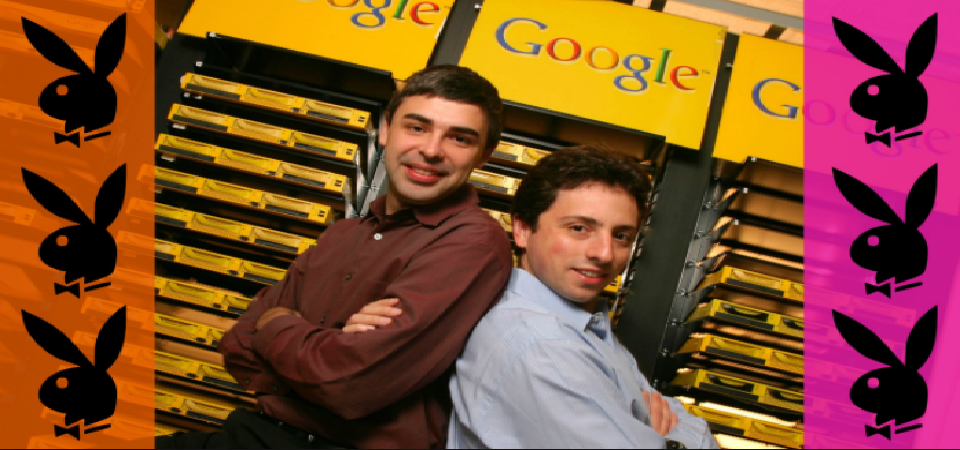
Sergey Brin Uses AI to Manage People: Decide Promotions and Delegate Work at Google’s AI Division

0

Google cofounder Sergey Brin is embracing artificial intelligence not just to build products—but to manage people.

In a recent episode of the All In podcast released Tuesday, Brin revealed he’s been relying on AI to handle leadership tasks at Gemini, Google’s large language model unit, where he returned in 2023 to help steer the tech giant’s efforts in the escalating AI race.

Since stepping away from his executive role in 2019, Brin has largely remained behind the scenes. But his comeback has coincided with a pivotal moment for Google, which is fending off fierce competition from OpenAI, Anthropic, and Perplexity.

Now, Brin is using the very tools his company is developing to manage teams—automating everything from delegating assignments to identifying which employees should be promoted.

“Management is like the easiest thing to do with the AI,” Brin said on the podcast, describing how he uses artificial intelligence to analyze group chats and assign responsibilities across teams.

“It could suck down a whole chat space and then answer pretty complicated questions. I was like: ‘OK, summarize this for me. OK, now assign something for everyone to work on.’”

He acknowledged that the cut-and-paste style of his responses made it obvious he was using AI, but that didn’t matter—it got the job done.

“It worked remarkably well,” he added.

Perhaps more startling was Brin’s revelation that he had used the tool to recommend a promotion. By analyzing group chat activity, the AI flagged a quiet engineer who hadn’t drawn much attention in meetings but was doing standout work behind the scenes.

“It actually picked out this young woman engineer who I didn’t even notice, she wasn’t very vocal,” Brin said. “I talked to the manager, actually, and he was like, ‘Yeah, you know what? You’re right. Like she’s been working really hard, did all these things.’”

The promotion, Brin added, “ended up happening.”

While AI is widely being tested in customer service, logistics, and even coding, Brin’s experiment reflects an emerging frontier: using AI to make decisions that directly affect people’s careers. His approach is already raising questions about the implications of AI-assisted leadership—particularly in companies where management decisions shape both innovation and workplace culture.

But it’s not just Brin. Other tech leaders are also integrating AI into their daily routines. Nvidia CEO Jensen Huang recently said he uses tools like ChatGPT and Gemini as daily tutors to break down complex subjects.

“I might say, ‘Start by explaining it to me like I’m a 12-year-old,’ and then work your way up into a doctorate-level,” Huang said.

Duolingo’s CTO also revealed this week that AI plays a key role in his three-step leadership method—evaluating whether a task should be delegated, delayed, or automated with ChatGPT.

However, not every executive is ready to turn over management duties to a machine. LinkedIn COO Dan Shapero recently told Business Insider that while AI can digest and summarize information, it still falls short on the human side of leadership.

“I’m not sure that it’s shown that it can inspire a team or that it can connect with people at a deeper level,” he said.

For Brin, the approach seems rooted in a belief that AI can outperform humans in select managerial tasks. He said on the podcast that AI is already better than him at math and coding—two areas in which he once excelled. Delegating management, he implied, was simply the next logical step.

His hands-on approach could signal how high-level corporate decisions may soon be informed, or quietly decided, by algorithms as the AI revolution accelerates. However, it is not clear for now whether this leads to more meritocratic outcomes or introduces new biases. What is clear considering Brin’s experience is that leadership, once considered one of the last human strongholds in the workplace, is no longer immune to disruption.

The Nature of Invention at Tekedia Mini-MBA; Register to Solve Market Equations

0

The first stage of business growth is delivering awesome products to customers. Never begin a major growth phase until you can RETAIN customers. Otherwise, you will burn your money with needless promotions! At Tekedia Institute, we explain the grand business equations:

Innovation =: Invention + Commercialization

Great Company =: Awesome Products + Superior Execution

Register for Tekedia Mini-MBA which begins on June 9th and let us solve the equations of market together.  The 12-week program goes for N120,000 ($170) and you can register here https://school.tekedia.com/course/mmba17/

Nigeria Emerges as Global Leader in Shift Toward Digital Payments, Driven by Fintech Innovation And Improved Infrastructure

0

Nigeria has solidified its position as a leader in the transition to digital payments, surpassing regional peers and several cash-reliant economies.

Between 2014 and 2024, Nigeria saw a dramatic 59% drop in cash usage, outpacing countries like the Philippines (43%), Indonesia (44%), and Mexico (41%).

According to Worldpay’s Global Payment Report 2024, this trend is set to continue, with cash transactions projected to fall to just 32% of total payments by 2030. This aligns Nigeria with the broader global movement toward cashless economies.

One of the key enablers of Nigeria’s payment revolution is its robust digital infrastructure. Platforms like the Nigeria Inter-Bank Settlement System (NIBSS) have been pivotal in delivering fast and reliable transactions. NIBSS acts as the Nigeria Central Switch, connecting all commercial banks, microfinance banks, and mobile money operators (MMOs). This allows for seamless transfer of funds and information between these institutions.

NIBSS ensures that different payment systems and institutions can work together, allowing for transactions to occur between various banks, mobile payment providers, and other financial actors. The NIBSS Instant Payment (NIP) system, comparable to India’s Unified Payments Interface (UPI) and Brazil’s Pix, processes payments in seconds and handles over a quadrillion naira in transaction value in 2024 alone.

Although Nigeria’s transaction volumes have not yet matched India’s—where the UPI processed 16.58 billion transactions in October 2024, up from 11.4 billion the previous year, the foundation has been laid for exponential growth.

Fintech as the Driving Force

Fintech companies have played a central role in this transformation. According to Africa: The Big Deal, Nigeria captured 47% of all fintech deals across Africa in 2024, solidifying its position as the continent’s fintech hub.

Nigeria hosts Africa’s largest fintech ecosystem, with platforms like Flutterwave, Kuda, Paga, OPay, Moniepoint, and PalmPay which are pioneering mobile wallets and agency banking, while Buy Now, Pay Later (BNPL) models are beginning to gain traction. These innovations mirror embedded finance trends in Western markets, such as Shopify Capital and AI-powered personalization tools.

Online and instant payments dominate Nigeria’s digital landscape, fueled by enhanced infrastructure and growing trust in platforms. The COVID-19 pandemic served as a catalyst for the growth of digital payments. When lockdowns disrupted physical banking, only institutions that had invested in digital infrastructure could operate effectively. This moment highlighted the inevitability of digital transformation in financial services.

Today, online and instant payments have become the preferred payment methods in Nigeria. This surge is driven by the growing trust in digital platforms and the expansion of reliable payment infrastructure. Fintech companies have succeeded largely because they tailor their products to the preferences and behaviors of African consumers—an approach that has proven to be critical in building user loyalty and adoption.

To ensure scalability and profitability, many African fintechs have adjusted their business models to account for the continent’s low GDP per capita and limited revenue per user. As part of this strategy, firms have expanded services like Point-of-Sale (POS) terminals and agency banking, particularly in rural and underserved areas.

POS terminals have become instrumental in driving financial inclusion. They provide cash deposit and withdrawal services in areas lacking physical bank branches. The surge in POS usage is fueled by merchant adoption, persistent cash shortages, and the integration of technologies like artificial intelligence and machine learning to better understand consumer behavior and improve user experiences.

In summary, Nigeria’s digital payment landscape has made remarkable strides. Backed by fintech innovation, policy support, and digital infrastructure, the country is well on its way to becoming a cashless economy and a continental leader in financial technology.

Tesla Stock: Still a Long-Term Bet, But Margin of Error Narrows as Trump Tax Bill Threatens EV Market

0

Tesla stock has clawed its way back from a painful decline in recent months, but the company now finds itself on even shakier ground following the passage of a controversial tax bill by the U.S. House of Representatives on Thursday.

The legislation, championed by President Donald Trump, rolls back critical incentives for electric vehicles, effectively shutting Tesla and other major EV players out of future tax credits. This move adds fresh pressure to a stock that has already weathered political headwinds, extreme volatility, and waning investor patience.

For long-term investors, the question now is not just whether Tesla remains a good company—but whether it’s still a good stock to hold.

A Long-Term Play With a Short Fuse

Charles Harris, portfolio manager at O’Neil Global Advisors, remains invested in Tesla but is candid about the stock’s punishing swings and how they’ve forced a rethink of strategy.

“I still have a large position in Tesla – particularly in my non-margin accounts – which I’m just holding,” Harris said on the Investor’s Business Daily podcast “Investing with IBD.”

“I really got killed holding Tesla,” he added, describing the fallout of holding an oversized margin position during Tesla’s steep 2022 downturn.

After reaching an all-time high of $488.54 in December 2024, Tesla shares tumbled nearly 47% within just four months. The plunge was fueled by a combination of factors: CEO Elon Musk’s close political alignment with President Trump, which sparked protests and investor anxiety; a broader market selloff in February; and fears about weakening global EV demand as tariffs loomed.

Harris, like many investors burned during the slide, now focuses on managing risk and position size—especially avoiding margin when holding high-volatility names like Tesla.

“When you enter a bear market, regardless of the conviction you have in a stock or how well you’ve done, if you’re going to hold through a base or hold a long-term stock, you can’t do it on margin,” Harris warned.

Trump’s Tax Bill Pushes Tesla Into a Tougher Spot

The situation for Tesla worsened this week with the House’s passage of President Trump’s new tax bill, a sweeping reform that dismantles several clean energy incentives aimed at boosting electric vehicle adoption.

While the bill preserves IRA (Inflation Reduction Act) tax credits through 2026, it limits eligibility to automakers that haven’t sold 200,000 EV units by the end of 2025. That automatically disqualifies Tesla, along with General Motors and Ford, which have already passed the threshold.

This leaves Tesla at a competitive disadvantage compared to smaller, newer EV players like Lucid (LCID) and Rivian (RIVN), who now gain a runway to capture more price-sensitive buyers. Analysts say this change could reshape the EV market, effectively stalling growth for established brands that once benefited heavily from federal support.

The market reacted swiftly with shares of GM, Ford, Rivian, and Lucid all declining on Friday following the bill’s passage. Tesla, despite the broader concerns, managed to inch upward—rising 46% from its April lows to trade around $342 by midday Friday. Still, it remains 30% below its December peak.

Analysts Still See Long-Term Upside

Despite the regulatory shake-up and ongoing volatility, not all analysts are bearish on Tesla. Some believe the company’s next phase—centered around autonomous driving and AI—could usher in a powerful growth era.

“We believe the golden age of autonomous is now on the doorstep for Tesla with the Austin launch next month kicking off this key next chapter of growth for Musk & Co.,” said Dan Ives, managing director at Wedbush Securities.

“We are raising our price target to $500 reflecting this massive stage of valuation creation ahead.”

Ives and others remain bullish on Tesla’s potential to dominate the future of autonomous transport and robotaxi networks—markets that could dwarf today’s EV business in scope and profitability. Musk has teased a major rollout event for Tesla’s long-promised robotaxi initiative next month at its Austin, Texas facility, a move that could revive investor sentiment and expand the company’s appeal beyond just car manufacturing.

Margin, Myth, and the Apple Comparison

Harris cautions investors not to assume Tesla will follow the same trajectory as other tech giants like Apple. Although often compared in terms of innovation and brand loyalty, the two companies have charted vastly different paths.

“I was using Apple as a precedent for Tesla, but they’re not the same thing,” Harris said. “Apple never saw a three-year consolidation period.”

Tesla’s corrections have been far more severe and frequent, often triggered by Elon Musk’s unpredictability, shifting political alliances, or the company’s dependency on future technologies that remain unproven.

“You can’t have too much faith in a precedent,” he added. “Following risk management rules should supersede one’s conviction in a stock’s fundamental story.”

Tesla remains one of the most watched and debated stocks in the market—an icon of both innovation and controversy. For every analyst projecting $500 price targets based on robotaxis and AI, there’s another warning about political fallout, regulatory pressures, and uncertain demand.