DD
MM
YYYY

PAGES

DD
MM
YYYY

spot_img

PAGES

Home Blog Page 1110

Trump Considers Travel Ban on 36 Countries, Including Nigeria, Stirring Disappointment Over Governance Failures

0

U.S. President Donald Trump’s administration is considering a sweeping expansion of its travel restrictions by potentially banning citizens of 36 additional countries—including Nigeria—from entering the United States.

This follows a fresh proclamation signed by Trump earlier this month, targeting 12 countries on national security grounds. The proposed extension, detailed in an internal State Department cable, has sparked outrage in Nigeria and raised fresh diplomatic tensions between Washington and Africa’s most populous nation.

Signed by U.S. Secretary of State Marco Rubio, the diplomatic cable lists concerns such as national security risks, unreliable identity documentation, non-cooperation in deportation processes, and visa overstays.

“The Department has identified 36 countries of concern that might be recommended for full or partial suspension of entry if they do not meet established benchmarks and requirements within 60 days,” the cable stated. The warning is that failure to address U.S. security and procedural benchmarks could result in blanket or partial travel bans for citizens of those countries.

Nigeria’s inclusion has stirred deep anger and disappointment among citizens, many of whom have taken to social media to express outrage at the country’s leaders for relegating it to what some describe as a “diplomatic low.” Many note that the situation is a direct consequence of years of poor governance, data management failures, and Nigeria’s inability to meet global security protocols, despite its status as a regional power.

This is not the first time Nigeria has come under Trump’s immigration crosshairs. During his first term, Trump attempted to ban Nigerians from entering the U.S. as part of a controversial immigration crackdown targeting Muslim-majority and African countries. The United States imposed an immigrant visa ban on Nigeria as a result of the country’s failure to comply with its established identity management and information-sharing criteria.

At the time, the Nigerian government expressed disappointment, and then-President Muhammadu Buhari set up a committee, that recommended the establishment of a National Criminal Information Management, fashioned after the INTERPOL model, and a National Criminal DNA Laboratory, to aid criminal investigation, administration of criminal justice as well as sharing of relevant information.

Although the move was later overturned by President Joe Biden in 2021, the resurgence of Nigeria on a new travel ban list under Trump’s second term has reignited long-standing concerns about Nigeria’s deteriorating diplomatic stature.

The State Department memo outlines why these countries are under scrutiny. Among the factors are the lack of competent governance to issue verifiable passports, failure to take back deported nationals, and the participation of some citizens in terrorist activities or anti-American behavior. Although the memo clarifies that not every concern applies to every country listed, it maintains that systemic weaknesses pose a risk to U.S. national security.

If the policy is implemented, Nigeria could face a full or partial suspension of visa issuance and entry into the U.S. This would severely affect students, business travelers, families, and medical tourists who rely on the U.S. for education, commerce, and healthcare. Countries identified alongside Nigeria include Angola, Ethiopia, Cameroon, Egypt, South Sudan, and Syria. Others span the Caribbean, Pacific islands, and Central Asia.

This fresh proclamation builds on Trump’s broader immigration crackdown since his return to office. Alongside new travel bans, his administration has recently deported hundreds of Venezuelans suspected of gang activity, restricted foreign student visa renewals, and enforced tighter screening protocols for visa applicants.

A senior State Department official, responding to media inquiries, said, “We are constantly reevaluating policies to ensure the safety of Americans and that foreign nationals follow our laws.”

“The Department of State is committed to protecting our nation and its citizens by upholding the highest standards of national security and public safety through our visa process,” the official added while refusing to confirm the internal deliberations made public by the leaked cable.

As the 60-day deadline ticks down, pressure is mounting on the Nigerian government to act decisively. Analysts warn that failure to address the issues identified by Washington could see Nigeria facing another prolonged period of strained relations with the United States—potentially more damaging than before.

What’s clear is that the Trump administration’s approach has shifted from broad immigration rhetoric to targeted policy, and countries like Nigeria are being held to specific benchmarks. With the prospect of a renewed travel ban, Nigeria faces a critical diplomatic test—one that many argue should never have arisen in the first place if its leadership had prioritized institutional reforms, security cooperation, and transparent governance.


Solana (SOL) Forms Bullish Setup Eyeing $400 While Viral Newcomer Little Pepe (LILPEPE) Takes On Dogecoin (DOGE)

0

As the crypto market continues to see new gains, the emergence of a new memecoin, Little Pepe (LILPEPE), is competing with well-known names like Dogecoin (DOGE) while Solana (SOL) continues its bullish ascent. As LILPEPE gears up, it seems ready to challenge Dogecoin for its place in the memecoin hall of fame.

Solana’s eye is set on 400: Bullish setup continues

Solana’s market structure is certainly moving in the right direction, showing positive signs as it attempts to break free from its consolidation phase. After the recent CHoCH (Change of Character) shift in sentiment to the bullish side, Solana has been forming higher lows which indicates a healthy bullish trend. Testing the $140 mark seems pivotal at this point.

For Solana: Key Resistance Levels

Currently trading at $145.88, SOL is nearing key resistance levels at $153, $165, and $180. Closing above $144 opens the pathway to $153 followed by further gains towards $165 and $180. If the market sentiment remains strong, long-term projections suggest Solana could be targeting $400 while continuing progress in DeFi and blockchain scalability.

Trade Setups for SOL/USDT

Breakout Long Setup: Entry above $144.20, Stop Loss below $138, Targets: $153, $165, $180

Retracement Long: Entry at $130-$132 zone, Stop Loss below $126, Targets: $138, $144, $153

Countertrend Short: Entry at $143-$144.50, Stop Loss above $146.50, Targets: $137, $130

Solana is looking optimistic with its trading volume of 3.44 billion Solana has a price point of 145.88 this positions. With the current market cap of 76.97 billion, Solana looks poised for remarkable expansion over the next half year as it establishes itself further in the blockchain industry.

Challenges Facing Dogecoin: Market Slump and Resistance 

With Solana looking toward possible expansion, the original meme cryptocurrency, Dogecoin (DOGE), is facing some serious struggles. Dogecoin still remains one of the top cryptocurrencies ranked by market cap, priced at $0.1769 and a market cap of $26.48 billion. Even with its enduring popularity and endorsements from Elon Musk, it seems like there is a cooling off period for DOGE.

What’s Causing Dogecoin to Lose Value? 

The following elements can be cited as reasoning for Dogecoin’s downtrend:

  • Due to mixed U.S. economic indicators alongside other assets being corrected, macroeconomic factors have triggered asset-wide sell-offs including Dogecoin.
  • Musk’s public quarrels with Trump and Musk’s taking a break from Dogecoin have reduced the hype that drove the meme coin’s price, leading to its price drop.
  • ETF-related speculation and a potential Dogecoin ETF have caused further downturn.
  • Shifts in investor sentiment and geopolitical tensions, combined with a move towards stablecoins or traditional assets during downturns, have harmed Dogecoin.

Notwithstanding these challenges, the whale accumulation and the memecoin community suggest there is still hope for an eventual recovery. Yet, unless favourable events happen, the overall DOGE sentiment is leaning bearish.

Little Pepe (LILPEPE): A Rising Meme Coin with Real Potential

A new frog-themed token is hopping into the spotlight- Little Pepe, or LILPEPE for short. The project sprouted as Solana lofted back toward all-time highs and Dogecoin watched its shine fade. Unlike its canine counterpart, the Pepe coin pairs meme silliness with actual blockchain muscle. Layer-2 code underpins the token, handing users fast confirmation times, tiny fees, and built-in anti-bot defenses that until now felt almost mythical in this space.

Early buyers are moving quickly, answering a fresh presale round that pulled in $300,000 inside barely two days. Economists love talking about critical price levels, so LILPEPE fans note that Stage-1 units cost $0.001 while Stage-2 units jump to $0.0025. Punch in the final listing tag of $0.003 and some spreadsheets already glow red with upside estimates.

Why Little Pepe Could Challenge Dogecoin

Dogecoin may remain the poster child of the meme-magic trend, yet chatter around Little Pepe hints at a genuine challenger. Hard numbers matter: this coin scales smoothly, trades without an extra tax bite, and still carries that unquenchable frog-joke energy. The early capital bets scream investor confidence; if the momentum holds, seasoned watchers say LILPEPE could easily gnaw at Doges market reign in the months ahead.

Conclusion: The Meme Coin Everyone Will Be Talking About

While Solana eyes the $400 mark and Dogecoin is still sorting itself out, Little Pepe is quietly gathering buzz. The presale feels almost electric, and the project comes dressed in a Layer 2 coat with zero tax on trades and defenses that keep bots from hogging the fun. If the momentum holds, 2025 could hand the little green frog an upset nobody-saw-coming seat at the very head of the meme-coin table, maybe even out-flipping Dogecoin in the process.


For more information about Little Pepe (LILPEPE) visit the links below:

Website: https://littlepepe.com

Whitepaper: https://littlepepe.com/whitepaper.pdf

Telegram: https://t.me/littlepepetoken

Twitter/X: https://x.com/littlepepetoken

Amazon Commits $13bn to Australian Data Centers in Major Cloud & AI Push

0

Amazon has announced a landmark A$20 billion (US$13 billion) investment to expand, operate, and maintain its data center infrastructure in Australia between 2025 and 2029—a move seen as part of a sweeping global shift by tech giants to secure dominance in the fast-emerging AI economy.

Described as Amazon’s largest technology commitment in Australia, the investment will focus on scaling cloud infrastructure and boosting capacity for generative AI workloads, according to a company blog post. The spending will primarily support Amazon Web Services (AWS) operations across Sydney and Melbourne and is expected to create thousands of jobs while accelerating digital innovation in the region.

“This is the largest investment our country has seen from a global technology provider, and is an exciting opportunity for Australia to build AI capability using secure, resilient infrastructure. This is exactly the kind of economic investment in our nation that we want to see, and creates opportunities for continued innovation and growth. The investment will generate economic opportunity for Australians, including skilled jobs and infrastructure that can support complex AI and supercomputing applications.” Australian Prime Minister Anthony Albanese said.

The investment comes at a time when major players, including Microsoft, Google, and Meta, are significantly ramping up spending on data infrastructure to prepare for what analysts widely view as an AI-driven economic shift. With the artificial intelligence industry projected to reach $1.81 trillion in market value by 2030, according to Grand View Research, competition for infrastructure, talent, and market share has intensified globally.

Tech companies are now racing to secure the computational power and cloud bandwidth necessary to run AI models that require massive energy and data resources. As these workloads grow in complexity, firms are establishing high-density data centers capable of supporting the next generation of AI tools, including generative applications like ChatGPT and enterprise-level automation systems.

Amazon’s Australia project underscores this broader strategy. In addition to data center expansion, the company is investing in clean energy to meet the high electricity demands of AI systems. Amazon said it will build three new solar farms in Victoria and Queensland, purchasing over 170 megawatts of combined capacity. These new projects bring the company’s total renewable energy portfolio in Australia to 11, with enough capacity to generate approximately 1.4 million megawatt-hours annually—enough to power nearly 290,000 homes.

Globally, Amazon has committed tens of billions to similar initiatives. In recent weeks, the company unveiled plans to invest $20 billion in Pennsylvania, $10 billion in North Carolina, and over $5 billion in Taiwan to build new cloud infrastructure. AWS CEO Matt Garman said these investments reflect the company’s “long-term vision” of AI becoming foundational to modern business and national development.

“This planned investment deepens our long-term commitment to supporting the growth and development of Australian organizations of all sizes and helping them harness the enormous opportunity that generative AI offers. We’re proud to be expanding our world-class data center infrastructure, bringing more renewable energy projects online, and supporting the country’s vision to be a global AI leader. AI is a once-in-a-generation transformation, and Amazon is pleased to be empowering all Australians to innovate at scale through this investment,” he said.

The new facilities are expected to help local enterprises, startups, and public sector organizations accelerate the adoption of AI technologies, enhancing productivity and reducing infrastructure costs.

Beijing’s Semiconductor Ambitions Face Major Setback As Taiwan Imposes Export Controls on Huawei, SMIC

0

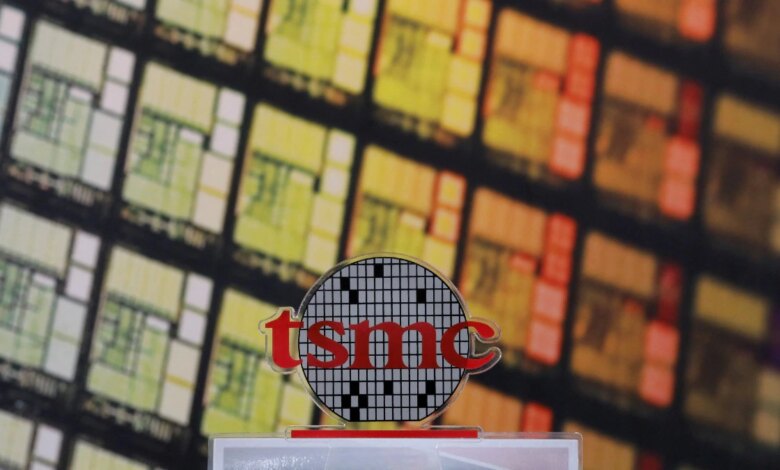
Taiwan has added China’s Huawei Technologies and Semiconductor Manufacturing International Corporation (SMIC) to its list of entities subject to strict export controls, dealing a major blow to Beijing’s ambitions of building a world-class domestic semiconductor industry.

The decision, announced by Taiwan’s Ministry of Economic Affairs on June 10, places Huawei and SMIC—along with 599 other entities from countries including Russia, Iran, Pakistan, and Myanmar—on its Strategic High-Tech Commodities (SHTC) export control list. The companies and their subsidiaries are now classified as “high-risk” entities. Taiwanese exporters will be required to seek government approval before shipping plant construction technologies, advanced chipmaking materials, or equipment to them.

According to Taiwan’s International Trade Administration, the measure is part of an effort to combat arms proliferation and protect national security. But analysts say it marks a significant tightening of the global chokehold on China’s chip sector and could complicate ongoing efforts by the government in Beijing to reduce its dependence on foreign technologies.

“This update targets entities that are directly or indirectly involved in the development of technologies that could pose risks to regional and global stability,” the Taiwanese trade agency said in a statement.

The development is expected to seriously hamper China’s goal of building a self-sufficient semiconductor supply chain. Huawei, already facing heavy U.S. sanctions since 2019, had turned to local partners like SMIC to continue developing its advanced chips using less sophisticated tools and materials still accessible under global trade laws. Taiwan’s new restrictions now threaten to shut down yet another critical pipeline of industrial-grade tools and chipmaking know-how to both companies.

Bloomberg, citing trade officials and industry insiders, reports that Huawei and SMIC will now lose access to Taiwan’s high-end plant construction technologies, chemicals, and manufacturing equipment—essentials for scaling up next-generation AI chip fabrication. This comes at a time when China is making a renewed push to position itself as a leader in artificial intelligence and supercomputing, areas that heavily rely on advanced semiconductors.

Aligning with Washington

Taipei’s decision follows months of increased alignment with U.S. policy goals. Washington has repeatedly called on allies to tighten restrictions on tech exports to China, particularly in sensitive areas like artificial intelligence, advanced computing, and chipmaking. Taiwan’s new controls mirror U.S. sanctions that already bar American firms and their global suppliers from selling equipment to SMIC and Huawei unless specifically licensed.

Earlier this year, the U.S. also pressured TSMC, Taiwan’s most important chip foundry, to halt the sale of chips to Huawei’s AI units. With Taiwan now formally codifying export controls to prevent backdoor access to sensitive technologies, the international campaign to isolate China from advanced chipmaking capabilities appears to be entering a new phase.

Taiwan’s Ministry of Economic Affairs has also cited rising cases of cyberattacks and attempts to poach semiconductor talent as part of its justification for the export control expansion. In recent years, Taiwan has seen a growing number of espionage cases linked to China, with several former employees of leading tech firms accused of stealing chip designs and industrial secrets.

The government has introduced legislation to crack down on technology theft and bolster corporate cybersecurity—part of a wider effort to protect its status as the world’s most advanced semiconductor hub.

Beijing’s Chip Drive at Risk

In China, state-backed funds have poured tens of billions of dollars into local chip firms, and recent breakthroughs—such as Huawei’s in-house development of the 7nm Kirin 9000S chip—have been hailed as milestones.

But industry experts warn that progress remains fragile and vulnerable to supply disruptions.

The inclusion of SMIC and Huawei on Taiwan’s controlled export list is expected to slow the pace of China’s advances in AI chips and 5G processors. With limited access to foreign equipment, and fewer avenues for acquiring advanced materials, the road to semiconductor independence may prove longer and more expensive than previously anticipated.

Dangote Refinery to Begin National Fuel Distribution With Free Logistics August 15 — Analyst Says Move Will Unify Prices, Cut Out Middlemen

0

The Dangote Petroleum Refinery has announced that it will commence nationwide distribution of Premium Motor Spirit (PMS) and diesel starting August 15, 2025, marking a major shift in Nigeria’s downstream petroleum market.

In what industry experts are calling a bold intervention, the company has committed to providing free logistics support to registered petrol dealers, fuel marketers, manufacturers, telecom firms, aviation companies, and other large fuel consumers nationwide.

The announcement, made via the company’s official X (formerly Twitter) account on Sunday, includes the deployment of 4,000 brand-new Compressed Natural Gas (CNG)-powered tankers and the rollout of daughter booster stations and distribution hubs nationwide. These facilities will be supported by more than 100 additional CNG-powered trucks to ensure last-mile delivery, particularly in rural and underserved regions.

“The Dangote Petroleum Refinery is pleased to announce the commencement of a significant national initiative designed to transform Nigeria’s fuel distribution landscape,” the company said. “Effective August 15, 2025, we will begin the distribution of PMS and diesel to major users with free logistics to boost the nationwide distribution network.”

Dangote Is Filling the Vacuum Left by Petroleum Equalization Fund

Energy analyst Kelvin Emmanuel has hailed the initiative as “fantastic,” describing it as a strategic step that will create price uniformity across the country.

“Dangote is now assuming the role of the Petroleum Equalization Fund that was established in 1975 by General Yakubu Gowon with Decree number 9 and amended in 1989 by General Ibrahim Babangida through Decree number 32,” Emmanuel explained. “It was eventually collapsed into the Petroleum Industry Act (PIA) as bridging allowances when PEF was merged with PPPRA and DPR to form the Nigerian Midstream and Downstream Petroleum Regulatory Authority (NMDPRA).”

He said that for years, the NMDPRA has failed to publish bridging allowances, largely because it cannot reconcile the disparity between reported fuel consumption and the volume of fuel actually lifted.

“For you to publish bridging costs, there has to be alignment between the revenues generated from actual consumption and the total amount of product lifted. The mismatch is proof that Nigeria doesn’t consume the 60 to 70 million liters per day that’s often claimed,” Emmanuel said.

According to him, this initiative could help the government establish a more accurate picture of Nigeria’s actual fuel consumption, which he estimates does not exceed 30 million liters daily.

The Dangote Refinery is offering petrol station owners a two-month window to register directly with the company to receive products on CIF (Cost, Insurance & Freight) terms. By doing so, Dangote is effectively cutting out the dominance of depot owners and fuel import lobbyists, who have long wielded disproportionate influence in the fuel distribution value chain.

“This move will help station owners boycott the middleman monopoly,” Emmanuel said. “Depot owners can no longer layer on arbitrary ‘system costs’, hoard products to create artificial scarcity, or distribute off-spec petrol that falls short of approved sulphur limits or has anti-knocking issues — all of which have plagued the market in the name of ‘Africa spec’.”

He added that this direct-to-station delivery model will enhance product quality, stabilize nationwide pricing, and limit inflationary pressures — especially considering that energy accounts for approximately 20% of Nigeria’s Consumer Price Index (CPI) basket.

Also, the refinery’s free delivery plan will reduce logistics costs for retailers and manufacturers, helping to revive dormant petrol stations and increase access to energy in rural areas. The refinery aims to support small and medium-sized enterprises (SMEs), create jobs, and improve price stability across sectors dependent on fuel by lowering fuel distribution costs.

In addition to supporting industrial production, the move is also expected to strengthen investor confidence in Nigeria’s downstream sector by eliminating long-standing inefficiencies and bringing more transparency to pricing and supply.

Bulk buyers who purchase a minimum of 500,000 liters will be eligible for an additional 500,000 liters on credit, repayable within two weeks and backed by a valid bank guarantee — a liquidity cushion likely to support smaller operators seeking to scale their distribution capacity.

The Obstacles that Fueled The Initiative

The decision is believed to have been fueled by operational inconsistencies hampering the distribution of petroleum products. For instance, the Independent Petroleum Marketers Association of Nigeria (IPMAN), South-West Zone, has already directed its transporters to withdraw from the Lekki-Epe corridor starting June 16, 2025, in protest against a new N12,500 E-Call-up fee imposed by the Lagos State Government.

The association says that the levy is arbitrary and could result in harassment of its members, with the potential to disrupt loading and delivery operations from key depots.

The Dangote Refinery’s initiative is poised to offer a timely alternative to such bottlenecks, creating a new model of distribution that is less vulnerable to regulatory friction and more focused on efficiency.

In addition to the short-term benefits, analysts say the Dangote distribution programme could signal the beginning of a structural shift in Nigeria’s fuel logistics. Dangote is believed to be effectively building a private-sector-led framework that may pressure regulators and policymakers to either reform or get out of the way, by assuming roles traditionally left to public agencies, from supply chain management to price equalization.

The refinery’s nationwide rollout is also expected to help authorities crack down on fuel diversion, smuggling, and subsidy-related fraud by providing a more transparent and traceable distribution process.