DD
MM
YYYY

PAGES

DD
MM
YYYY

spot_img

PAGES

Home Blog Page 1111

Nigeria Recovers $200m Bond in P&ID Case, Targets Full Cost Reimbursement Amid UK Legal Victory

0

The Nigerian government has recovered the $200 million bond it deposited ahead of arbitration proceedings in its legal battle against Process & Industrial Developments (P&ID) over an $11 billion judgment that was later quashed by a UK court.

The recovery marks another significant milestone in the country’s determined effort to overturn one of the biggest financial claims ever leveled against it.

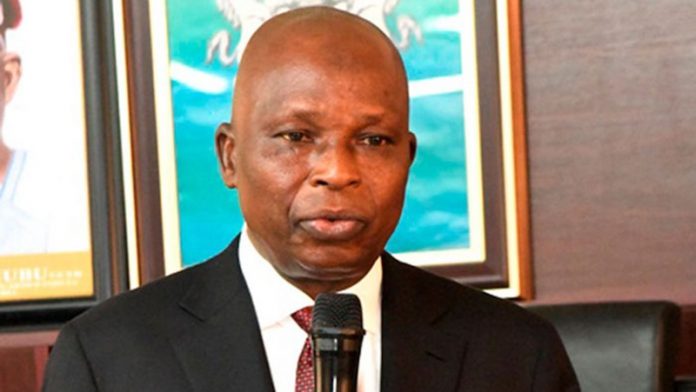
Attorney General of the Federation and Minister of Justice, Lateef Fagbemi SAN, confirmed the bond’s return during a press briefing at the OAGF headquarters on Thursday. Flanked by members of Nigeria’s legal team, including the National Coordinator of the Federal Republic of Nigeria’s Legal & Investigation for P&ID, Kofo Abdulsalam-Alada, and the UK-based lead litigation counsel, Shaistah Akhtar, Fagbemi praised the team’s resilience and skill in dismantling what he described as a fraudulent case that could have burdened Nigeria with an astronomical financial liability.

“For completeness, I want to say that before we went into this arbitration, there was a demand for a deposit or bond of $200 million, which Nigeria paid. After our success, this bond was released,” Fagbemi stated.

The government is now focused on recovering legal costs it incurred during years of litigation, with Akhtar revealing that Nigeria is entitled to “tens of millions of pounds” in legal compensation. She disclosed that the UK court has already ordered an interim payment of £20 million in Nigeria’s favor, of which £10 million has been paid. The remainder is currently stayed, pending a July 2025 Supreme Court ruling on a dispute raised by P&ID over the currency in which the final settlement should be made.

The bond refund and ongoing cost recovery reflect the comprehensive legal victory Nigeria secured in October 2023, when Justice Robin Knowles of the Business and Property Court in London ruled that the $11 billion arbitration award obtained by P&ID in 2017 was based on fraud and corruption.

The decision brought an end to more than a decade of legal wrangling that began in 2010 when P&ID signed a gas processing deal with Nigeria. Under the agreement, P&ID was to build and operate a gas processing plant in Calabar, Cross River State, to convert wet gas from Nigeria’s petroleum operations into usable products. The company later accused Nigeria of failing to fulfill its part of the bargain, prompting a 2017 tribunal ruling that awarded it $6.6 billion plus interest, ballooning the total to $11 billion.

However, Nigeria challenged the award, arguing that the original contract was obtained through bribery and fraud. Evidence presented in court showed that P&ID executives offered financial inducements to Nigerian officials during the contract’s negotiation and procurement stages, undermining the legality of the deal.

Akhtar added that P&ID and its backers had initially resisted paying the court-ordered costs, prompting Nigeria to apply pressure. The result, she said, was a partial payment while the remainder awaits final judicial determination.

Kofo Abdulsalam-Alada, a key figure in Nigeria’s legal strategy and a former director at the Central Bank of Nigeria (CBN), said the case has set a precedent that the government is committed to enforcing going forward.

“And there are similar things still going on behind the scenes, and the government, having done this in the case of P&ID, is also resolved that we are going to toe the same line and never enter into settlements with this type of people”, he said.

He also emphasized that P&ID and its financiers would be held accountable for the costs of Nigeria’s legal defense, which they have begun to pay back.

“Let it be known that these people not only lose in the courts; they’re also going to lose the amount that we spent defending this country, because they are going to pay back, and they have actually started paying back.

“And it’s a lesson, sending a signal to others who attempt to drag Nigeria through this route that they will be made to pay,” he added.

The UK High Court’s ruling was celebrated by legal observers as a significant moment for global arbitration, reinforcing the need for transparency and due diligence in high-stakes commercial contracts involving sovereign states. The judgment also spared Nigeria a devastating financial blow, equivalent to about 30% of its national budget.

The federal government had faced mounting pressure over the years to settle the P&ID claim, but President Donald Trump’s administration in the U.S., along with other allies, reportedly backed Nigeria’s stance that the claim was fraudulent and should not be honored.

As it stands, the Nigerian government is poised not only to recoup all expenditures tied to the P&ID case but also to send a clear message to other companies that fraudulent claims and backdoor dealings will not go unchallenged.

The July 2025 UK Supreme Court ruling is expected to bring a final resolution to the matter of cost reimbursements. In the meantime, Nigerian authorities say the bond recovery and partial legal fee payment represent a major win in the country’s global legal posture.
Trump Threatens 25% Tariff on iPhone Not Made in the U.S., Putting Apple in Tight Spot

0

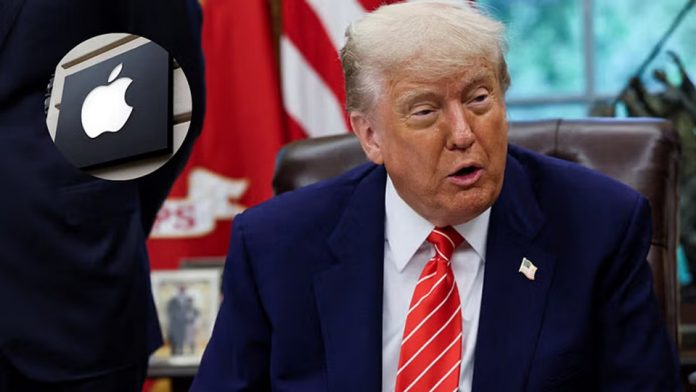
President Donald Trump has warned Apple that it could face a crippling 25% tariff on all iPhones sold in the United States — unless it moves production to American soil.

The president issued the threat Friday via his Truth Social account, making it clear he expects Apple’s flagship product to be assembled domestically rather than overseas.

“I have long ago informed Tim Cook of Apple that I expect their iPhone’s that will be sold in the United States of America will be manufactured and built in the United States, not India, or anyplace else,” Trump posted. “If that is not the case, a Tariff of at least 25% must be paid by Apple to the U.S. Thank your for your attention to this matter!”

The statement comes just days after Financial Times reported that Apple supplier Foxconn is developing a $1.5 billion plant in southern India’s Chennai to produce iPhone displays. This is part of Apple’s broader strategy to diversify its production base away from China, spurred by both the COVID-era supply chain disruptions and rising U.S.-China trade tensions.

But Trump, who has long criticized Apple’s overseas manufacturing model, is now taking aim at the company’s pivot to India and Southeast Asia.

Apple Stock Dips as Markets React

Trump’s post triggered immediate tremors in financial markets. Apple shares fell 3.6% in premarket trading Friday, dragging down the S&P 500 index by 1.5%. European indices also dropped after Trump issued a separate threat against the European Union, proposing a 50% tariff on EU goods starting June 1. He accused the bloc of exploiting the United States through “trade barriers and corporate penalties,” calling the $250 billion trade deficit “totally unacceptable.”

Earlier this month, Trump hinted at his growing frustration with Apple CEO Tim Cook. “I had a little problem with Tim Cook yesterday,” Trump told an audience. “I said to him, ‘my friend, I treated you very good. You’re coming here with $500 billion, but now I hear you’re building all over India.’ I don’t want you building in India.”

Despite Apple’s commitment to invest $500 billion in the U.S. over the next four years, and Cook’s personal $1 million donation to Trump’s 2017 inauguration, the president’s patience appears to be wearing thin.

Why Apple Can’t Just Build iPhones in the U.S.

Trump’s demand confronts Apple with a dilemma that analysts say has no easy solution. Building iPhones in America is not only logistically difficult but also economically unrealistic.

Apple’s reliance on Asia is deeply rooted in decades of global manufacturing evolution. Assembling a single iPhone involves hundreds of parts from dozens of countries, and relies on an ultra-efficient supply chain that has been perfected over time, particularly in Chinese cities like Shenzhen and Zhengzhou.

Analysts estimate that shifting production to the U.S. could cause iPhone prices to spike by 50% or more — raising the retail cost to somewhere between $1,500 and $3,500, depending on the model. That’s a steep price for consumers and would threaten Apple’s competitive edge in the global smartphone market.

“The pressure from Trump on Apple to build iPhone production in the US as we have discussed this would result in an iPhone price point that is a non-starter for Cupertino and translate into iPhone prices of ~$3,500 if it was made in the US which is not realistic in our view,” said Dan Ives, analyst at Wedbush Securities.

In manufacturing circles, Shenzhen is often referred to as having a “manufacturing brain trust” — a dense, interconnected cluster of engineers, skilled workers, and suppliers that allows production to scale up rapidly and adapt in real-time.

Cook had in the past, attributed Apple’s decision to manufacture in China to a vast supply of highly skilled vocational talent.

“China has moved into very advanced manufacturing, so you find in China the intersection of craftsman kind of skill, and sophisticated robotics and the computer science world. That intersection, which is very rare to find anywhere, that kind of skill, is very important to our business because of the precision and quality level that we like,” Cook said at the Fortune Global Forum in Guangzhou in 2017.

“The thing that most people focus on if they’re a foreigner coming to China is the size of the market, and obviously it’s the biggest market in the world in so many areas. But for us, the number one attraction is the quality of the people. The reason is because of the skill, and the quantity of skill in one location and the type of skill it is. And China has an abundance of skilled labor unseen elsewhere, says Cook,” added.

He explained that in the U.S., you could have a meeting of tooling engineers and not fill the room, while in China, you could fill multiple football fields.

That infrastructure simply does not exist in the U.S. Even when Apple has tried, the results have been limited. Its Mac Pro, assembled in Texas, is one of the few Apple products made in the U.S., but even that machine uses components sourced from around the globe.

From Trump’s ‘America First’ Agenda

The timing of Trump’s outburst is no coincidence. His administration has continued its hard line on trade imbalances, and Friday’s threats suggest tariffs will remain a key feature of his economic policy. India currently faces a baseline 10% tariff on goods imported to the U.S., while China’s rate stands at 30% — a figure that could rise again in August when a temporary reduction expires.

Until now, many Apple products, including iPhones, have enjoyed exemptions from the more punitive tariff tiers. But with Trump threatening to revoke those protections, Apple may be forced to either absorb the cost or pass it on to American consumers.

And the problem isn’t isolated to China or India. Trump’s blanket approach to trade means Apple’s other key production countries — Vietnam, Malaysia, Thailand, and even Ireland — could face similar tariff hikes, further narrowing the company’s options.

Apple at a Crossroads

This means the path forward is unclear for Apple. Moving large-scale iPhone production to the U.S. would require massive investments, workforce development, and a total reengineering of its supply chain. Meanwhile, complying with Trump’s 25% tariff without relocating would devastate its profit margins or alienate customers with soaring prices.

Though Apple has not responded publicly to the tariff threat, industry insiders say the company is unlikely to reverse its global manufacturing strategy overnight — especially when it is only now beginning to scale meaningful production outside of China.

Trump’s message, however, signals a hardening of trade policy that could force Apple — and potentially other U.S. tech giants — into a costly recalibration. The president’s stance also complicates Apple’s broader ambitions, including future product launches and its efforts to insulate itself from geopolitical shocks.

Trump Escalates Trade Fight with Europe, Proposes 50% Tariff Amid Stalled Talks

0

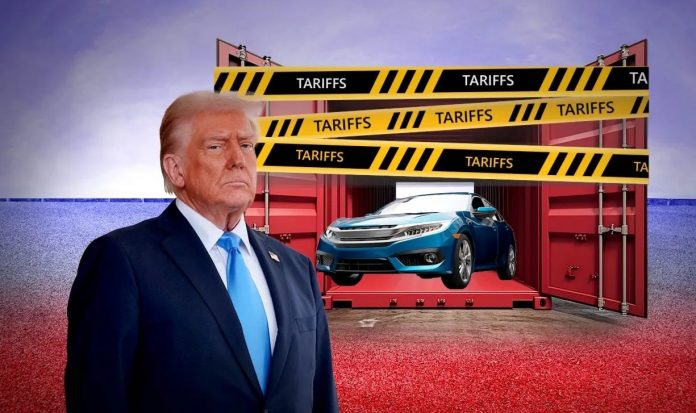
President Donald Trump has declared his intent to impose a sweeping 50% tariff on all imports from the European Union starting June 1, 2025, intensifying tensions in an already volatile global trade environment.

The announcement, made Friday morning via a Truth Social post, comes amid what Trump described as “failed” trade negotiations with the 27-nation bloc.

“Our discussions with them are going nowhere,” Trump wrote, accusing the EU of deliberately erecting barriers to U.S. products while engaging in “monetary manipulations” and “unjustified lawsuits against American companies.”

He claimed that the trade imbalance—over $250 billion annually in favor of the EU—is unacceptable.

The new tariff threat immediately rattled financial markets. European stocks dropped 2%, and U.S. stock futures fell in pre-market trading, reflecting investor anxiety over the economic fallout of an aggressive trade stance. The escalation also triggered a wave of uncertainty in U.S. tech shares after Trump, moments earlier, threatened to slap a 25% tariff on iPhones unless Apple begins manufacturing them domestically.

“There is no tariff if the product is built or manufactured in the United States,” Trump added, reinforcing his long-held demand for reshoring American manufacturing jobs.

Reigniting the Trade War

The tariff announcement marks a dramatic return to Trump’s combative trade policies. Just weeks ago, he celebrated the outlines of new trade pacts with China and the UK, raising hopes among investors that he was softening his earlier stance on tariffs. Now, the proposed 50% duty against the EU would not only undo that momentum but escalate the trade war to unprecedented levels.

“To go to 50% is a completely different order of magnitude,” said Austan Goolsbee, President of the Federal Reserve Bank of Chicago, during a CNBC interview. “If they’re putting in place tariffs that have a stagflationary impact—which is to say they slow down output by raising the cost of production while also raising prices—then that’s the central bank’s worst situation.”

In 2022, the EU was the second-largest buyer of American exports, accounting for nearly $351 billion in trade. The new tariffs, if implemented, could endanger that commercial relationship and put thousands of export-reliant jobs at risk in the U.S., especially in the manufacturing and agricultural sectors.

High Stakes and Short Deadlines

Treasury Secretary Scott Bessent, appearing on Fox News shortly after Trump’s announcement, confirmed the seriousness of the proposed tariff.

“I would hope this lights a fire under the EU,” Bessent said when asked if the bloc has time to negotiate within the nine-day window before the tariffs are enacted.

The timing of the announcement appears calculated. U.S. Trade Representative Jamieson Greer is scheduled to meet with European Trade Commissioner Maros Sefcovic later on Friday. According to a Financial Times report, Greer is expected to tell his counterpart that Brussels’ latest trade proposals “fail to meet U.S. expectations.”

The European Commission has so far declined to comment publicly on Trump’s tariff threat. But the bloc is expected to push back strongly against any unilateral imposition, with diplomats already warning of retaliatory tariffs if the U.S. proceeds with the plan.

A Pattern of Provocation

Friday’s tariff threat is not Trump’s first shot at the EU. Earlier in April, he announced a 20% blanket tariff on European imports, only to scale it down to 10% for 90 days under what he called a “reciprocal” plan. That move was seen as a negotiating tactic meant to pressure the EU into concessions. But with Trump now threatening a straight 50% tariff, many trade experts say he has gone well beyond the boundaries of leverage.

In addition to the proposed blanket tariff, Europe is still dealing with sector-specific duties imposed under Trump’s earlier directives, including a 25% tariff on steel and aluminum imports.

The impact of such aggressive trade measures could reverberate globally. The EU has long been a vital pillar of the international trading system, and any significant rupture in transatlantic commerce would disrupt global supply chains and complicate diplomatic ties, particularly in areas of shared interest like defense, technology, and energy.

Trump’s Domestic Manufacturing Strategy

Central to Trump’s justification is his campaign-style promise to bring jobs and production back to American soil. His iPhone threat is a case in point: he warned that unless Apple begins domestic manufacturing of its devices, it too will face steep tariffs.

The tariffs are sending a broader message that Trump is once again embracing protectionism as a key plank of his economic platform, using tariffs both as a weapon and a bargaining chip.

But analysts warn that the economic consequences could be severe. The combination of supply shocks, inflationary pressure, and retaliatory tariffs could trigger price spikes across sectors, from consumer electronics to automobiles and food.

As the June 1 deadline looms, attention will turn to whether the EU offers concessions to stave off the tariff or digs in for a trade confrontation. The ball is now in Brussels’ court, though trade experts believe the bloc is unlikely to respond well to what it views as economic bullying.

The Changing Landscape of Financial Strategy in Business

0

In today’s fast-paced business environment, financial strategy is no longer confined to the realm of accountants and CFOs—it’s a driving force behind corporate growth, sustainability, and resilience. With technological advancements, evolving market dynamics, and growing pressure to operate transparently and efficiently, businesses must rethink their financial strategies to stay competitive.

This blog explores how financial strategy has changed over time, what factors are shaping this transformation, and how businesses can adapt for long-term success.

From Bookkeeping to Strategic Planning

Traditionally, financial strategy was focused on historical data—primarily tracking expenses, ensuring compliance, and managing balance sheets. This reactive approach made sense in an era where markets moved slowly and data was less accessible. However, today’s global economy demands agility and foresight.

Modern financial strategy is proactive, emphasizing forecasting, scenario planning, and alignment with overall business goals. Finance teams now play a crucial role in shaping strategic decisions, offering insights into investment opportunities, risk management, and operational efficiencies.

Technology: The Game Changer

One of the biggest catalysts in the transformation of financial strategy is technology. Cloud computing, artificial intelligence, machine learning, and big data analytics have redefined how financial data is collected, analyzed, and applied. Businesses can now generate real-time financial reports, automate routine tasks, and use predictive analytics to anticipate market trends.

This shift reduces reliance on manual processes and allows decision-makers to focus on strategy rather than spreadsheets. Furthermore, cloud-based platforms enable remote collaboration, faster decision-making, and easier integration with other business systems.

The Rise of Fractional CFO Services

As businesses—especially startups and SMEs—look for cost-effective ways to manage their financial planning, the concept of the fractional CFO has grown in popularity. These services allow businesses to access high-level financial expertise without the cost of a full-time executive.

Solutions like ORBA Cloud CFO provide tailored financial leadership, supporting businesses in budgeting, forecasting, and strategic planning while leveraging cloud-based tools for maximum efficiency. This flexible model empowers companies to make informed decisions with confidence, no matter their size or stage of growth.

Navigating Uncertainty with Agility

The COVID-19 pandemic, geopolitical tensions, and economic fluctuations have highlighted the importance of financial agility. Businesses that adapted quickly—whether by shifting supply chains, reducing fixed costs, or identifying new revenue streams—were better positioned to survive and thrive.

Modern financial strategy must incorporate contingency planning and stress testing. Leaders are expected to model multiple future scenarios and prepare for the unexpected. Agility, therefore, becomes a core competency, not just in operations but in financial planning and execution.

Sustainability and ESG Integration

Environmental, Social, and Governance (ESG) criteria are no longer peripheral to business decisions—they’re central to investor expectations and customer trust. A progressive financial strategy now includes ESG considerations, balancing profitability with ethical impact.

Financial leaders must assess long-term risks related to climate change, regulatory changes, and reputational harm. Integrating ESG metrics into financial reporting is becoming a best practice, ensuring that businesses attract responsible investors and meet stakeholder demands.

Data-Driven Decision Making

Financial decisions are increasingly driven by data insights rather than intuition. The accessibility of dashboards, KPIs, and real-time metrics allows companies to monitor performance continuously and pivot strategies when necessary.

Finance departments now partner closely with other business units—such as marketing, sales, and operations—to ensure alignment and accurate forecasting. Cross-functional collaboration helps create a unified view of the business, enabling strategic decision-making based on comprehensive data.

With so much information available at their fingertips, businesses can now track spending patterns, customer behavior, and operational efficiency in real time. This data-rich environment enables more precise forecasting, early identification of financial risks, and quicker course correction when strategies fall short. Moreover, companies can benchmark their performance against industry standards and identify areas for improvement with greater accuracy. By turning raw data into actionable insights, businesses gain a deeper understanding of what drives success and what hinders progress.

Talent and Skillset Evolution

The evolving financial landscape requires new skills. It’s no longer enough for finance professionals to be number crunchers—they must be analytical thinkers, strategic advisors, and technology-savvy collaborators.

Organizations are investing in training their finance teams in areas such as data visualization, software implementation, and stakeholder communication. The ability to interpret complex data and translate it into actionable business strategies is a sought-after capability.

Customized Strategy for Diverse Business Models

Today’s financial strategy must be tailored to fit diverse business models. Whether it’s a SaaS company focused on recurring revenue, a manufacturing firm optimizing its supply chain, or an e-commerce brand scaling globally, each has unique financial challenges.

Customization is key. One-size-fits-all approaches are obsolete. Instead, businesses must develop strategic financial frameworks that consider their market, growth trajectory, and competitive landscape.

The Role of AI and Automation

Artificial intelligence is transforming everything from accounts payable to forecasting. Automated tools reduce human error, accelerate processes, and uncover patterns that would be impossible to detect manually.

AI-driven financial planning tools can suggest cost-saving measures, highlight underperforming areas, and predict cash flow issues before they arise. As adoption increases, businesses that invest early in automation will gain a significant strategic edge.

Looking Ahead: The CFO of the Future

The CFO’s role is evolving from financial gatekeeper to strategic visionary. Tomorrow’s CFO is a storyteller, capable of translating complex financial data into compelling narratives that influence the C-suite and investors alike.

They must be fluent in technology, adept at risk management, and focused on long-term value creation. As the financial strategy becomes central to overall business success, the modern CFO emerges as a key driver of innovation and transformation.

Conclusion

The landscape of financial strategy in business has undergone a seismic shift. Technology, data, sustainability, and the demand for agility have all played pivotal roles in shaping this transformation. Businesses that embrace this change—by leveraging digital tools, engaging strategic partners, and fostering a forward-thinking financial culture—will be best positioned to thrive in an increasingly complex world.

Now more than ever, a smart, adaptive, and data-driven financial strategy isn’t just a best practice—it’s a business imperative.

MTN South Africa Launches MoMo Pay to Digitize Informal Sector Payments, Driving Financial Inclusion

0

MTN South Africa has introduced MoMo Pay, a low-cost digital payment platform tailored for informal merchants. The platform aims to digitize the cash-heavy informal sector.

This move is part of the telecom giant’s vision to drive financial inclusion and economic participation among underserved communities.

In South Africa, cash remains significant particularly in the informal sector (90–95% of transactions) and for POS (ranging from 35–53%) in recent years.

Cash is preferred due to its accessibility, low transaction values, and lack of reliance on digital infrastructure, which may be limited in rural or underserved areas.

Meanwhile, cash reliance by the informal sector poses several implications, as the high usage of cash, supports liquidity in the informal economy but poses challenges like security risks (cash theft) and difficulty tracking transactions for tax purposes. It also limits financial inclusion, as cash-heavy systems make it harder for individuals to build credit histories or access formal financial services.

Launched in May 2025, MoMo Pay addresses risks like theft, limited credit access, and exclusion from the formal economy, offering a pathway to financial inclusion for millions. “We are not just digitizing payments, we are unblocking a pathway to financial dignity and scalable opportunity,” said Kagiso Mothibi, Fintech CEO at MTN South Africa.

“Our vision is simple: we want every informal trader in this country to have a shot at digital prosperity. MoMo Pay is our first major move to make that happen because real inclusion starts at the street level”, he added.

Mothibi emphasized the role of informal merchants as “community hubs,” fostering economic participation through accessible financial tools. MTN has already onboarded thousands of merchants, with especially strong uptake in townships, rural areas, and busy urban zones.

Over the next three to five years, MTN aims to onboard hundreds of thousands of small businesses, digitizing a significant portion of the informal sector and creating pathways to formal financial infrastructure.

MoMo Pay enables merchants to accept instant payments via QR codes, merchant IDs, or payment requests with a minimal 0.5% transaction fee, significantly lower than competitors. The platform requires only a smartphone, eliminating paperwork and registration fees.

Merchants can also earn commissions by selling airtime, prepaid electricity, and transport tickets. With 13 million registered MoMo users in South Africa, MTN leverages its robust mobile network to drive adoption, particularly in townships, rural areas, and high-traffic urban zones.

MoMo Pay enters a crowded market, competing with South African banks’ digital platforms and fintechs like Yoco and iKhokha, as well as social media giants and rival telecoms. MTN’s edge lies in its established infrastructure, growing user base, and focus on affordability.

MoMo Pay Across African Markets

MTN has extended MoMo Pay to several African markets, leveraging its fintech platform to enhance financial inclusion:

Benin: MoMo Pay targets merchants like supermarkets, pharmacies, and motorcycle taxis (Zemidjan) in Cotonou, with plans for nationwide expansion. It allows contactless payments and change directly into MTN Mobile Money accounts.

Ghana: Introduced in January 2017, MoMo Pay focuses on digitizing merchant payments in open markets, particularly for female merchants, to drive financial inclusion. A GSMA case study highlighted its impact on expanding mobile money use among women.

Uganda: MoMo Pay supports secure, instant payments for businesses, with partnerships like Flutterwave enhancing merchant acceptance. MTN’s focus includes scaling Banktech products like loans and e-commerce payments to achieve a cashless economy.

Looking Ahead

MTN envisions MoMo Pay as the cornerstone of a broader digital financial ecosystem, integrating informal businesses into the formal economy. The platform plans to expand beyond payments to offer microloans, savings products, and insurance, addressing barriers faced by informal traders.