DD
MM
YYYY

PAGES

DD
MM
YYYY

spot_img

PAGES

Home Blog Page 1120

XRP ETF’s Debut On The Toronto Stock Exchange Marks A Pivotal Moment

0

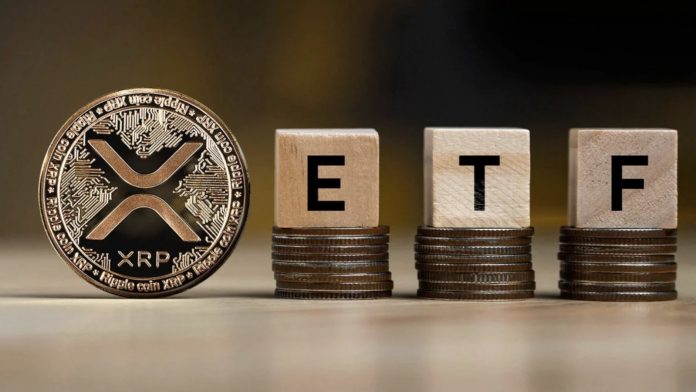
The first spot XRP ETF in North America, launched by Purpose Investments, is set to begin trading on the Toronto Stock Exchange on June 18, 2025, under the ticker XRPP. The fund has received final approval from the Ontario Securities Commission and will offer direct exposure to XRP through CAD-hedged (XRPP), CAD non-hedged (XRPP.B), and USD (XRPP.U) units. It’s eligible for registered accounts like TFSAs and RRSPs. Evolve Funds Group also announced plans for an XRP ETF to trade under XRP and XRP.U, expected to debut the same day, pending TSX approval. XRP’s price rose nearly 7% following the news, reflecting market optimism.

The launch of the first XRP ETF on the Toronto Stock Exchange on June 18, 2025, carries significant implications for the cryptocurrency market, XRP’s adoption, and investor sentiment. The ETF, offered by Purpose Investments (and potentially Evolve Funds Group), allows investors to gain exposure to XRP without directly holding the cryptocurrency. This is particularly significant for institutional and retail investors who prefer traditional financial instruments or lack the technical know-how to manage crypto wallets.

Eligibility for registered accounts like TFSAs and RRSPs in Canada broadens the investor base, potentially driving demand for XRP. The ETF’s structure (CAD-hedged, CAD non-hedged, and USD units) caters to diverse investor preferences, enhancing accessibility. XRP’s price surged nearly 7% following the ETF announcement, indicating immediate market enthusiasm. The ETF could sustain upward pressure on XRP’s price by increasing demand, especially if institutional capital flows in.

The ETF may reduce volatility over time by integrating XRP into regulated markets, as it provides a more stable investment vehicle compared to direct crypto trading. Approval by the Ontario Securities Commission signals growing regulatory acceptance of XRP in Canada, despite ongoing debates about its classification (security vs. non-security) elsewhere, notably in the U.S. with the SEC v. Ripple lawsuit.

This could set a precedent for other jurisdictions, particularly in North America, to consider XRP-based financial products, potentially influencing global crypto ETF trends. The ETF strengthens Ripple’s narrative of XRP as a utility-driven cryptocurrency for cross-border payments. Increased investor interest could accelerate adoption by financial institutions, aligning with Ripple’s mission. It may enhance Ripple’s position in its legal battle with the SEC by showcasing international confidence in XRP’s legitimacy.

The XRP ETF follows the success of Bitcoin and Ethereum ETFs in Canada and elsewhere, positioning XRP as a competitive altcoin in the investment space. It could pave the way for other altcoin ETFs, intensifying competition among cryptocurrencies. Canada vs. U.S.: Canada’s approval of an XRP ETF contrasts sharply with the U.S., where the SEC’s lawsuit against Ripple (ongoing since 2020) alleges XRP is an unregistered security. This regulatory divergence highlights a split in how jurisdictions view XRP, with Canada treating it as a legitimate asset for investment products, while the U.S. remains restrictive.

The ETF could widen this divide by attracting global capital to Canada, potentially pressuring U.S. regulators to clarify their stance or risk losing market share to more crypto-friendly jurisdictions. Ripple’s supporters, often vocal on platforms like X, view the ETF as a bullish signal, validating XRP’s utility and long-term potential. Posts on X highlight excitement, with some predicting significant price increases (e.g., “XRP to $10”).

Some investors remain cautious due to XRP’s centralized nature (Ripple controls a significant portion of the supply) and the unresolved SEC lawsuit. Others question the ETF’s impact, citing competition from Bitcoin and Ethereum ETFs or potential market saturation. Institutional investors may embrace the ETF as a low-risk entry into XRP, especially through regulated accounts. This could contrast with retail investors, who may prefer direct XRP purchases on exchanges for higher risk-reward potential or to avoid ETF fees.

The ETF could bridge this divide by offering a middle ground, but it may also deepen it if retail investors feel priced out of traditional markets or distrust institutional involvement. Within the broader crypto community, XRP has long been polarizing. Supporters argue it’s a revolutionary payment protocol, while detractors criticize Ripple’s control and question XRP’s decentralization. The ETF may amplify these debates, with pro-XRP factions celebrating and others dismissing it as a niche product.

The ETF could attract significant capital inflows, especially if paired with positive developments in Ripple’s SEC case (e.g., a favorable ruling or settlement). However, if the U.S. maintains its hardline stance, it could limit XRP’s global ETF expansion. Success in Canada may encourage other crypto-friendly regions (e.g., Europe, Australia) to launch XRP ETFs, further legitimizing the asset. Conversely, regulatory crackdowns elsewhere could temper enthusiasm.

On X, sentiment is mixed but leans bullish, with some users predicting XRP could outperform other altcoins due to the ETF. Others caution that macroeconomic factors or regulatory hurdles could mute the impact. The XRP ETF’s debut on the Toronto Stock Exchange marks a pivotal moment for XRP, enhancing its accessibility, legitimacy, and market potential. However, it also underscores divides in regulatory approaches, investor sentiment, and community perceptions.

While Canada’s move signals progress, the U.S.’s regulatory stance and ongoing debates within the crypto space will shape XRP’s trajectory. Monitoring price movements, capital inflows, and further ETF approvals globally will be key to understanding its long-term impact.


Thailand’s Crypto Tax Exemption Is A Bold Move To Capture Economic Benefits

0

Thailand’s Cabinet has approved a personal income tax exemption on capital gains from digital asset sales, effective January 1, 2025, through December 31, 2029. This applies to transactions made through platforms regulated by the Securities and Exchange Commission (SEC). The policy aims to position Thailand as a digital asset hub, attract investment, and boost the digital economy, with an estimated 1 billion baht ($30 million) in indirect tax revenue over the period.

The tax exemption on crypto capital gains in Thailand until 2029 has significant implications for the crypto market, investors, and the broader economy, while also highlighting a growing divide in global crypto regulation and adoption. The exemption removes the previous 15% withholding tax on crypto gains, making Thailand an attractive destination for crypto traders and investors. This could increase trading volumes on SEC-regulated platforms.

The policy may draw foreign crypto firms and investors, positioning Thailand as a regional digital asset hub, similar to Singapore or Dubai. The government projects 1 billion baht ($30 million) in indirect tax revenue (e.g., VAT from increased economic activity) and aims to stimulate the digital economy. The exemption applies only to SEC-regulated exchanges, likely increasing their user base and liquidity. This could marginalize unregulated platforms, enhancing investor protection but potentially stifling smaller or decentralized players.

It aligns with Thailand’s push for stricter oversight, as seen in recent SEC regulations on crypto custody and advertising. By fostering a crypto-friendly environment, Thailand could attract blockchain startups, developers, and Web3 projects, spurring innovation in fintech and decentralized technologies. The policy complements Thailand’s broader digital transformation goals, including its focus on digital baht and tokenized financial instruments.

The tax break may fuel speculative trading, potentially inflating crypto prices in the short term. However, this could also lead to market volatility if investors cash out gains tax-free. Stablecoins and tokenized assets, already popular in Thailand, may see increased adoption for both investment and everyday transactions. While the government expects indirect revenue, forgone direct tax income could strain public finances, especially if crypto market growth underperforms.

The policy’s success hinges on sustained global crypto interest and regulatory stability in Thailand. Thailand joins countries like Singapore, UAE, and Portugal (pre-2023) in offering tax incentives or light-touch regulation to attract crypto capital. These nations aim to capture economic benefits from the growing digital asset market. Contrastingly, countries like China (outright crypto ban), India (30% crypto tax with no loss offsets), and the U.S. (complex tax reporting and high capital gains taxes) impose stringent measures, discouraging crypto activity or pushing it offshore.

This divide could lead to capital flight from high-tax or restrictive jurisdictions to crypto-friendly ones like Thailand, exacerbating global inequality in accessing crypto-driven wealth creation. Thailand’s clear tax policy and SEC oversight provide a predictable environment, contrasting with jurisdictions like the U.S., where regulatory uncertainty (e.g., SEC vs. CFTC turf wars) hampers growth.

Clear rules in Thailand could attract global crypto businesses, while ambiguous regulations elsewhere stifle innovation or drive firms to friendlier markets. In Thailand, the tax break may democratize wealth-building for retail investors, especially younger demographics active in crypto. However, the focus on regulated platforms could exclude those relying on decentralized or peer-to-peer systems due to cost or access barriers.

Globally, crypto-friendly policies in wealthier or emerging markets like Thailand widen the gap with less-developed economies lacking infrastructure or regulatory frameworks to support crypto adoption. The digital divide grows, with some populations gaining access to crypto’s financial opportunities while others remain sidelined.

Tax exemptions disproportionately benefit high-net-worth individuals or early crypto adopters, potentially deepening income inequality within Thailand. Globally, crypto wealth is increasingly concentrated in jurisdictions with favorable policies, leaving stricter regimes with less exposure to the asset class’s upside. The divide between crypto “haves” and “have-nots” could fuel social and geopolitical tensions.

Crypto-friendly policies may boost energy-intensive blockchain activities (e.g., Bitcoin mining), conflicting with global sustainability goals. Thailand’s energy mix, reliant on fossil fuels, could face scrutiny. In contrast, some jurisdictions (e.g., EU’s MiCA framework) prioritize green crypto practices, creating a divide in environmental accountability. Thailand’s policy may draw criticism from environmentally conscious investors or regulators, impacting its global reputation.

Thailand’s crypto tax exemption is a bold move to capture economic benefits from the digital asset boom, likely boosting adoption, investment, and innovation. However, it amplifies the global crypto divide, pitting pro-crypto nations against restrictive ones and highlighting disparities in regulatory clarity, economic inclusion, and environmental priorities. Within Thailand, the policy could widen wealth gaps, while globally, it may accelerate capital and talent migration to crypto havens, reshaping the financial landscape through 2029 and beyond.

Top Penny Crypto to Buy Now? $APORK Gains Momentum as Congress Pushes Crypto Legislation

0

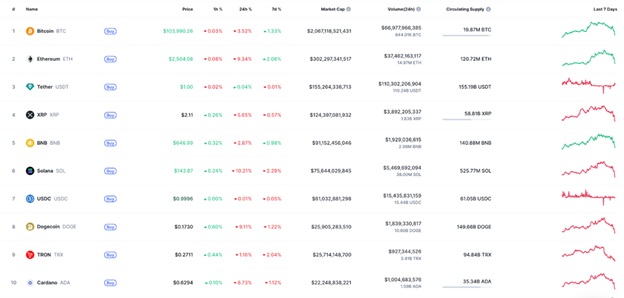
This week the cryptocurrency market unravelled almost overnight, caught midway between rising Middle East hostility and a raw public spat between two of its most famous backers. Traders were jolted when nearly $1.2 billion in long positions evaporated as volatility spiked.

Congress, however, refused to flinch. In a rare display of cross-aisle momentum, a coalition of Democrats and Republicans pushed the Digital Asset Market Clarity Act—one bill that finally tries to pin down the gray zone between a currency and a security. Lobbyists now expect at least a committee mark-up by early December.

While Washington haggles, some investors have decided that waiting for calm is overrated. A deflationary newcomer known as Angry Pepe Fork is luring late-night buyers with sky-high staking yields that flirt with 10,000% APY, and it’s CommunityFi framework let’s holders start earning within hours of their deposit. A handful of hedge funds already describe the token as a high-risk, high-beta hedge on mainstream renewal.

Bitcoin Threatens Five-Digit Territory as Markets Collapse

Bitcoin itself slipped 4% in ugly candles that took it to $100,500 and threatened to thrust it back into five-digit territory for the first time in weeks.

The Trump-Musk Catalyst

The spark was simple enough: Musk, for the second time this month, blasted Trump’s so-called Big Beautiful Bill as a “disgusting abomination,” to which Trump retorted with threats to yank federal contracts from any firm dabbling in disloyal chatter.

Exchanges lit up almost instantly, and Slack rooms of quantitative desks buzzed with orders to trim delta before liquidity vanished. For investors hoarding options, the brief chaos offered a textbook Gamma scalp that padded PnLs by Monday morning.

Political Crypto Holdings Reveal Market Paradox

A financial filing attributed to Donald Trump claims he netted $57.3 million from token placements linked to World Liberty Financial and still controls at least $1 million in ether. Such disclosures underscore how public officials are diversifying into digital assets even as their squabbles send prices swinging.

Middle East Tensions Amplify Crypto Selloff

Fresh hostilities in the Middle East injected new stress into global markets almost overnight. Israeli bombardments meant to cripple Iran’s alleged nuclear sites sent the aggregated value of all cryptocurrencies tumbling 7% to about $3.3 trillion, with Bitcoin sliding roughly 5% to $103,464.

Liquidation Tsunami Sweeps Exchanges

Exchange records kept by CoinGlass reveal that forced liquidations surged 125% in 24 hours, reaching a staggering $1.2 billion. Ethereum was knocked down 10% to $2,471, while Solana retraced 11% as jittery traders moved toward traditional havens.

Anxieties rippled beyond crypto when oil futures jumped almost 9% on Friday, pushing West Texas Intermediate crude toward the $74-per-barrel mark and reviving inflation fears that had only just begun to subside.

Congressional Breakthrough: CLARITY Act Advances

In the midst of such turbulence, lawmakers in Washington advanced legislation that could reshape the digital-asset landscape. The CLARITY Act is now scheduled for a full markup before the House Financial Services Committee, with a hearing date targeted for June 10.

Regulatory Framework Revolution

The new 236-page Clarity Act places most digital assets squarely under the Commodity Futures Trading Commission’s watch rather than the Securities and Exchange Commission’s tougher regime. A remarkable bipartisan coalition—three Democrats included—has signed on as co-sponsors, signaling broad political momentum.

In the upper chamber a complementary stablecoin bill is nearing final passage. Senator Ruben Gallego predicts a lopsided vote that could free up institutional dollars now sitting on the sidelines out of sheer regulatory uncertainty.

Angry Pepe Fork: Meme Culture Meets Serious DeFi

Away from Beltway headlines cryptocurrency markets are still feeling the weight of macroeconomic pressure. Enter the presale of Angry Pepe Fork, a project combining meme-culture flair with serious DeFi mechanics, priced right now at $0.0269 and already sparking chatter among risk-loving investors.

Sky-High Staking Yields and Supply Discipline

Early participants can stake their allocation during the sale for eye-popping annual yields of over 10,000%.

Supply discipline is baked in as well—1.9 billion tokens total, with a burning protocol meant to sustain upward price momentum.

Cross-chain availability on Ethereum, BNB Chain, and Solana maximizes the project’s reach.

CommunityFi: Activity-Based Income Revolution

Perhaps the most distinctive feature lies in its CommunityFi experiment: users earn rewards for tweeting, blogging, and otherwise promoting the protocol instead of simply parking coins in a wallet. That activity-based income stream cushions holders when broader markets slump.

GambleFi Integration

Shortly after the initial launch, the interface incorporates a set of on-chain mini-games in which participants stake $APORK tokens. Victors are rewarded on the spot, and a fixed proportion of the staked tokens is burnt, ensuring that the overall supply steadily contracts and every existing holder quietly benefits from the continuous deflationary force.

Presale Momentum Building

A staggered bonus schedule sweetens early participation: those who invest at least $50 earn 5% extra, while purchases of $150, $250, and $500 push the rewards up to 10, 15, and 20% respectively. The bracketed tiers create a built-in incentive for retail backers to commit larger sums sooner rather than later.

Market Outlook: Opportunity in Crisis

Angry Pepe Fork pairs instant-on staking rewards with a design that deliberately shreds supply while also opening several parallel earning channels. That combination gives it an edge over older blockchains now leaking capital amid regulatory headwinds. Members of Congress who once hesitated are drafting bills that lean crypto-friendly, meaning platforms with demonstrable utility and engaged user bases could be first in line for incoming institutional dollars.

The current presale is the rare window that lets new investors board before wide exchange listings and general mainstream attention. History shows that entering at this stage often delivers the richest returns in the cryptocurrency world.

Learn more about the $APORK here: Visit Angry Pepe Fork

Amazon CEO Andy Jassy Confirms AI Will Shrink The E-commerce Workforce, Following $100bn Investment in Expansion

0
Andy Jassy, boss of AWS

Amazon’s CEO Andy Jassy has confirmed what many white-collar workers have feared for years: artificial intelligence is not only here to stay, it will displace jobs.

In a memo sent to employees on Tuesday, Jassy said the company expects its corporate workforce to shrink as it gains efficiency through the adoption of AI, particularly generative AI systems and intelligent agents.

“We will need fewer people doing some of the jobs that are being done today, and more people doing other types of jobs,” Jassy said.

The announcement came as part of a broader internal communication updating employees on Amazon’s fast-expanding AI capabilities. Jassy said generative AI is already embedded in nearly every corner of the company—from logistics and inventory management to customer service and product development—and that it will “change how we all work and live.”

Amazon, the world’s second-largest employer with over 1.5 million people globally, is betting big on AI. In 2025, the company plans to spend $100 billion on capital expenditure, most of which will be funneled into expanding its AI services and building new data centers to support the infrastructure—up from $83 billion last year. Internally, more than 1,000 AI applications and services are either active or under development.

Jassy emphasized that the most transformative phase is yet to come.

“Many of these [AI] agents have yet to be built,” he said. “They’re coming, and fast. They’ll change the scope and speed at which we can innovate for customers.”

Industry Signals a Broader Shift

Across corporate America, executives are issuing similar messages, linking AI advances to both efficiency and workforce reductions. This week, UK telecom giant BT said its plans to cut 40,000 jobs by 2030 “did not reflect the full potential of AI,” suggesting that further reductions may be ahead.

Swedish payments company Klarna has said its AI assistant is now doing the job of 700 full-time customer service employees. While CEO Sebastian Siemiatkowski later admitted the company may have gone too far in cutting human roles, he still believes AI poses a serious threat to white-collar employment.

Language app Duolingo has also adopted AI to replace contract workers. CEO Luis von Ahn told staff the company would “gradually stop using contractors to do work that AI can handle” and that new hires would only be approved if automation was not feasible.

At Shopify, CEO Tobi Lütke made it clear that AI comes before hiring. He told managers they must prove why AI can’t accomplish their goals before requesting new employees. Cybersecurity firm CrowdStrike also cited AI as a reason for a 5% workforce cut this year, highlighting growing corporate dependence on automation across back and front office operations.

Even those building AI tools are expressing concern. Dario Amodei, CEO of leading AI firm Anthropic, recently warned that up to half of all entry-level white-collar jobs could disappear within five years due to AI automation.

“We, as the producers of this technology, have a duty and an obligation to be honest about what is coming,” Amodei told Axios in May. “I don’t think this is on people’s radar.”

From Efficiency to Disruption

While Jassy’s memo stressed long-term innovation and customer benefits, the tone reflects growing awareness that job losses from AI are no longer speculative. As these technologies move from support tools to core operating systems, they are fundamentally altering how companies function and how jobs are distributed.

Bloomberg Intelligence estimates that up to 200,000 banking jobs alone could be automated. AI is already being used to write code, manage inventories, and provide real-time customer service. With the technology advancing rapidly, roles once thought safe—from marketing and legal work to HR—are increasingly within AI’s reach.

In Amazon’s case, the strategy is not merely about replacing labor but reshaping the business around new capabilities. Amazon is hoping to stay ahead of competitors while trimming cost centers that no longer need as many human hands, by aggressively integrating AI into every layer of the company.

As generative AI evolves from predictive text tools into autonomous agents capable of decision-making, strategic planning, and operational execution, companies like Amazon are not just reducing staff—they are redefining what work means in a tech-driven economy. Jassy’s message is that the biggest changes are just beginning.

Key Points On The U.S.-UK Finalized Trade Deal

1
CREATOR: gd-jpeg v1.0 (using IJG JPEG v80), quality = 82

The United States and the United Kingdom finalized a trade deal on June 16, 2025, announced by President Donald Trump and Prime Minister Keir Starmer during the G7 summit. This agreement, described as a “breakthrough” and “historic,” focuses on reducing tariffs and enhancing market access, particularly for specific sectors, while maintaining some tariffs and leaving details to be finalized.

US tariffs on UK steel and aluminum imports, previously set at 25%, have been scrapped entirely. Tariffs on UK car exports to the US reduced from 27.5% to 10% for a quota of 100,000 vehicles annually, covering nearly all UK car exports (104,000 in 2024). UK eliminates tariffs on US ethanol imports, benefiting American farmers with over $700 million in ethanol exports and $250 million in other agricultural products like beef.

Rolls-Royce engines and plane parts from the UK will be exported to the US tariff-free, while the UK agreed to purchase $10 billion worth of Boeing planes. The deal provides US companies with unprecedented access to UK markets, creating a $5 billion opportunity for US exporters, particularly in agriculture (beef, ethanol, fruits, vegetables, etc.) and aerospace.

Reciprocal market access for beef, with both countries granted quotas for 13,000 metric tonnes of beef exports. Streamlined customs procedures and preferential access to UK aerospace components for US manufacturers, securing supply chains for aerospace and pharmaceuticals. The agreement establishes a new trading relationship for steel and aluminum, with negotiations for an alternative to Section 232 tariffs.

Commitments to high-standard provisions in intellectual property, labor, environment, and digital trade, though the UK’s 2% Digital Services Tax (DST) remains a sticking point, with the US expressing disappointment over its retention. Strengthens economic security through cooperation on investment security, export controls, and ICT vendor security. The deal is not a comprehensive free trade agreement but a framework for ongoing negotiations, with details on digital trade, pharmaceuticals, and other sectors still to be finalized.

The US maintains a 10% baseline tariff on most UK goods, higher than the 2.5% pre-Trump rate. UK officials aim to negotiate further reductions to the 10% tariff and address remaining reciprocal tariffs. US stakeholders, including Wisconsin Manufacturers and Commerce and Nebraska Governor Jim Pillen, praised the deal for providing stability and boosting exports. UK officials, including Chancellor Rachel Reeves and Treasury Minister Darren Jones, highlighted job protection (150,000 jobs) and benefits for carmakers like Jaguar Land Rover and the steel industry.

Prime Minister Starmer called it a “fantastic, historic day,” emphasizing job creation and economic stability. Some analysts view the deal as limited, with many tariffs remaining and unresolved issues like the UK’s DST and services trade (a significant part of US-UK trade). UK farmers, via the National Farmers Union, expressed concerns about increased competition from US agricultural imports, particularly bioethanol.

The American Automotive Policy Council criticized the deal for prioritizing UK vehicles over USMCA-compliant vehicles from Canada and Mexico. The deal’s selective tariff reductions may violate WTO’s “most favored nation” principle, potentially inviting legal challenges or retaliation from other countries. The deal is expected to have a limited immediate economic impact due to its narrow scope and ongoing negotiations.

US markets showed a muted response, with stocks rising modestly but enthusiasm fading. UK businesses, particularly in steel and automotive sectors, see it as a lifeline, but uncertainty persists regarding implementation timelines and supply chain conditions. This is the first trade deal since Trump’s “Liberation Day” tariffs on April 2, 2025, which imposed up to 50% duties on 57 trading partners, later paused for 90 days until July 9, 2025.

The UK, not hit by the higher reciprocal tariffs, benefited from its relatively balanced trade with the US ($148 billion in goods trade in 2024). The deal may serve as a template for negotiations with other nations like India, Japan, and South Korea, though challenges remain due to larger trade imbalances. The agreement aligns with the UK’s post-Brexit strategy to offset reduced EU trade and the US’s push for reciprocal trade under Trump’s tariff strategy.

The deal has been signed, but implementation details, particularly for steel, aluminum, and pharmaceuticals, are still under negotiation, with potential delays until the end of June or later. Both sides continue to work on finalizing provisions, with the UK seeking to reduce the remaining 10% tariff and the US pushing for changes to the DST. This trade deal marks a significant step in US-UK economic relations, leveraging their historical alliance to address tariff barriers, but its limited scope and ongoing negotiations suggest it is more a starting point than a fully realized agreement.