DD
MM
YYYY

PAGES

DD
MM
YYYY

spot_img

PAGES

Home Blog Page 1125

BudgIT Uncovers N6.93tn in Questionable Projects Inserted into 2025 Budget, Flags Deepening Budget Abuse by Lawmakers

0

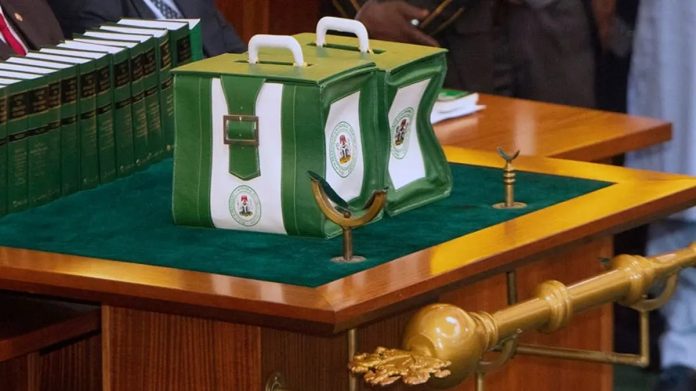
Nigeria’s civic tech group, BudgIT, has accused lawmakers of padding the 2025 budget with over 11,000 suspicious projects worth N6.93 trillion — a figure that could have slashed the country’s record-high deficit by nearly 50 percent if properly reallocated.

In a detailed report released Tuesday, BudgIT said what began years ago as isolated budget irregularities has now morphed into an “entrenched culture of exploitation and abuse” at the National Assembly.

According to the group, 11,122 projects were inserted into the 2025 appropriation bill, which President Bola Tinubu signed into law on February 28. The spending plan, totaling N54.99 trillion, includes a projected deficit of N14.54 trillion. If the N6.93 trillion allegedly padded into the budget had been removed or redirected toward critical development projects, the gap would have been significantly reduced.

The new fiscal plan nearly doubles the size of last year’s N27.5 trillion budget, a 99.96 percent jump, and has been criticized for lacking transparency and realism amid a worsening economic crisis.

N2.29 Trillion for 238 ‘Unjustified’ Mega Projects

BudgIT’s analysis shows that 238 projects, each valued at over N5 billion, were inserted into the 2025 budget with what the group described as “little to no justification.” The total cost of these items alone stands at N2.29 trillion.

Another 984 projects worth N1.71 trillion and 1,119 projects ranging between N500 million and N1 billion, totaling N641.38 billion, were also flagged as arbitrary insertions. The organization said these additions raise serious concerns about their relevance to national priorities.

Far from promoting development, BudgIT said, “these insertions appear tailored to satisfy narrow political interests and personal gains.”

It said over 3,500 of the projects, worth about N653.19 billion, were funneled into federal constituencies, while 1,972 projects valued at N444.04 billion were allocated to senatorial districts.

Among the most jarring examples:

  • 1,477 streetlight projects costing N393.29 billion
  • 538 borehole projects valued at N114.53 billion
  • 2,122 ICT projects worth N505.79 billion
  • N6.74 billion earmarked for “empowerment of traditional rulers”
  • Ministry of Agriculture’s Budget Bloated Nearly 8x

One of the biggest victims of these manipulations is the Ministry of Agriculture, whose capital allocation jumped from N242.5 billion to N1.95 trillion after being forced to absorb 4,371 projects worth N1.72 trillion.

Similarly, the Ministries of Science and Technology and Budget and Economic Planning saw their budgets inflated by N994.98 billion and N1.1 trillion, respectively, not for actual development programs, but to accommodate insertions.

BudgIT also spotlighted how institutions with no technical mandate or capacity to execute infrastructure projects were turned into project warehouses for politically influenced contracts.

“Even more concerning is the targeted misuse of agencies like the Nigerian Building and Road Research Institute (Lagos) and the Federal Cooperative College, Oji River, as dumping grounds for politically motivated projects.

“These agencies lack the technical capacity to execute such projects, leading to rampant underperformance and waste,” BudgIT said.

The Cooperative College, for instance, was assigned:

  • N3 billion for utility vehicles for farmers
  • N1.5 billion for rural electrification in Rivers State
  • N1 billion for solar-powered streetlights in Enugu State

“These are examples of agencies operating outside their mandates, managing projects unrelated to their statutory functions, and adding zero value to national development,” the group said.

Loud Silence from the Presidency

Despite the magnitude of the findings, BudgIT said the presidency has remained “conspicuously silent.” Multiple letters and inquiries sent to the executive and key government institutions were ignored.

BudgIT is urging President Tinubu to demonstrate stronger executive leadership and initiate urgent reforms that realign the budget process with the national development plan (2021–2025). It also wants the Attorney General to seek a Supreme Court interpretation of the extent of the National Assembly’s appropriation powers, particularly its ability to insert projects without the executive’s approval.

“We hope the EFCC and ICPC will track these projects to ensure Nigeria gets value for money,” the group said, calling on civil society, the media, and citizens to demand reform. “This is not just about financial mismanagement. It is a matter of justice, equity, and the future of accountable governance.”

Alarming But Not Surprising

While the figures are alarming, they are not surprising. This is consistent with Nigeria’s long and troubling history of corruption, which is notable beyond budgetary manipulation. In other areas, public officeholders have been caught embezzling funds designated for national development projects.

For instance, the Ministry of Housing and Urban Development on Tuesday announced that it had officially received a 753-unit housing estate from the EFCC, which recovered the asset from Godwin Emefiele, the embattled former governor of the Central Bank of Nigeria.

The estate, located in Abuja, was handed over during a formal ceremony at the ministry’s headquarters in Mabushi. According to ministry spokesperson Salisu Haiba, Housing Minister Ahmed Dangiwa lauded the anti-graft agency for its effort in retrieving the asset.

Experts have said the recovered estate, if replicated across all 36 states, could significantly alleviate Nigeria’s severe housing deficit. As of 2023, the country was estimated to require at least 28 million housing units to meet demand, according to data from Intelpoint.

This figure far exceeds the World Bank’s earlier projection in 2021, which predicted that Nigeria’s housing deficit would hit 20 million by 2030. That forecast was surpassed seven years ahead of schedule, highlighting the scale of the crisis and the failure of past administrations to implement adequate policy responses.

Anti-graft advocates say the recovery of Emefiele’s estate, while symbolically important, underscores the missed opportunities from years of looted public resources.

Baidu Says U.S. Chip Curbs Won’t Derail AI Ambitions as Cloud Revenue Surges

0

Chinese tech giant Baidu on Wednesday expressed confidence that U.S. semiconductor export restrictions would not derail its artificial intelligence ambitions, even as the country’s tech sector grapples with a tightening blockade on access to advanced American chips.

The company’s statement came alongside strong first-quarter financial results, boosted by surging revenue from its AI cloud business and supported by a broader nationalistic push for technological self-reliance.

Vice President Shen Dou told analysts during a post-earnings call that Baidu’s AI development would continue on the back of “domestically developed chips and increasingly efficient homegrown software,” which he described as the foundation of long-term innovation in China’s AI ecosystem. The comments marked a direct response to the latest round of U.S. export controls, which came into effect last month and effectively blocked Nvidia’s H20 chips—an advanced AI chip tailored for the Chinese market.

Baidu’s confidence is widely seen as part of a broader nationalistic tech narrative being championed by Beijing, which has in recent years doubled down on homegrown innovation amid escalating geopolitical tension with Washington. This “tech self-reliance” drive has intensified since 2019, when Chinese telecom and electronics giant Huawei was placed on a U.S. trade blacklist that cut off its access to American technology.

While many expected the move would cripple Huawei’s operations, the company responded with surprising resilience, developing its own HarmonyOS operating system and launching 5G-capable smartphones powered by its in-house Kirin chips—despite Washington’s curbs on chipmaking tools.

That resilience appears to have served as a model for other Chinese firms, including Baidu, as they navigate similar restrictions. The sense of urgency to innovate without reliance on foreign technology has led to aggressive investments in AI, semiconductors, and cloud infrastructure.

Adding to this momentum, many Chinese companies seem to have drawn renewed confidence from the recent breakthroughs of DeepSeek, a homegrown AI startup that stunned industry observers earlier this year with the performance of its large language model, DeepSeek-R1. The model reportedly surpassed several U.S.-backed models in key benchmarks, signaling that China’s AI sector could potentially close the gap with Western counterparts.

The DeepSeek breakthrough—achieved without access to Nvidia’s most advanced chips—has reinforced the belief that with sufficient talent, computational infrastructure, and focused policy support, Chinese firms can innovate around U.S. sanctions. It’s this belief that now underpins Baidu’s messaging, as the company aggressively expands its AI offerings and reduces dependence on its traditional advertising business.

In the first quarter of 2025, Baidu reported total revenue of 32.45 billion yuan ($4.50 billion), a 3% year-on-year increase that exceeded the average analyst estimate of 30.9 billion yuan, according to data from LSEG. While revenue from its online marketing segment—the company’s former core—fell 6% to 17.31 billion yuan, non-marketing revenue surged 40% to 9.4 billion yuan, driven primarily by growth in its AI-powered cloud services.

Net profit came in at 21.59 yuan per American Depositary Share (ADS), up from 14.91 yuan a year earlier, demonstrating stronger operational efficiency despite regulatory and competitive pressures.

Baidu’s strategic shift toward AI has been in motion since early 2023, when the company was among the first in China to launch a chatbot following OpenAI’s release of ChatGPT. Its Ernie large language model has undergone multiple iterations—most recently the rollout of Ernie X1 and Ernie 4.5 in March 2025, both of which were upgraded to “Turbo” versions the following month.

Despite being an early mover, Baidu now faces stiff competition from firms like DeepSeek, which has challenged the dominance of established players. In response, Baidu eliminated subscription fees for its premium chatbot services in April, an aggressive move that analysts see as part of a broader strategy to retain market share in a fast-evolving AI landscape.

On the hardware side, Baidu has leaned heavily on its own Kunlun chip line to reduce exposure to Western supply chains. CEO Robin Li recently revealed that the company has deployed a cluster of 30,000 third-generation P800 Kunlun chips—developed entirely in-house—to support the training of models comparable in scale and complexity to those developed by DeepSeek.

Even so, the market reaction was subdued. Baidu’s U.S.-listed shares edged down 0.3% in morning trading, reflecting lingering investor concerns about geopolitical uncertainty and rising competition within China’s AI sector.

However, Baidu’s optimism appears deeply rooted in the shifting dynamics of China’s tech industry, where U.S. pressure has catalyzed a wave of domestic innovation. With government support, growing semiconductor capabilities, and an expanding pool of AI talent, China’s tech giants are increasingly signaling that they are prepared to weather—and possibly thrive—under the shadow of U.S. sanctions.

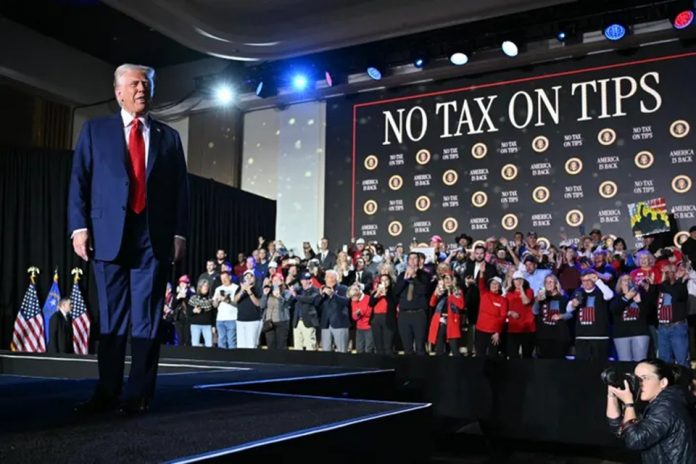
U.S. Senate Passes ‘No Tax on Tips Act’

0

U.S. Senate passed the “No Tax on Tips Act” with a 100-0 vote is supported by multiple sources. On May 20, 2025, the Senate unanimously passed the bipartisan bill, introduced by Sen. Ted Cruz (R-Texas) and co-sponsored by Sens. Jacky Rosen and Catherine Cortez Masto (D-Nevada), among others. The legislation allows a tax deduction of up to $25,000 for reported cash tips (including cash, credit/debit card, and checks) for workers earning $160,000 or less in 2025, with the income threshold adjusting for inflation in future years.

The bill aims to exempt tips from federal income tax, fulfilling a campaign promise by President Donald Trump. It now heads to the House for consideration, where it may be included in a broader tax package or passed as a standalone bill. However, critics, including the Tax Foundation and the Center for American Progress, warn it could increase the federal deficit by $100-250 billion over a decade and may primarily benefit higher-earning tipped workers while opening avenues for tax avoidance by wealthier individuals.

Implications of the “No Tax on Tips Act”

The unanimous Senate passage of the “No Tax on Tips Act” on May 20, 2025, carries significant implications for workers, the economy, and tax policy. The act allows a tax deduction of up to $25,000 on reported tips for workers earning $160,000 or less annually, effectively exempting tips from federal income tax. This could increase disposable income for millions of tipped workers, such as servers, bartenders, and delivery drivers, particularly in industries like hospitality where tips are a significant portion of earnings.

The income threshold adjusts for inflation, ensuring the benefit remains relevant in future years. Supporters argue it will boost the financial security of low- and middle-income service workers, potentially stimulating local economies as these workers spend more. The National Restaurant Association and similar groups have endorsed the bill, citing relief for employees in high-cost-of-living areas.

Critics, like the Tax Foundation, estimate a $100-250 billion increase in the federal deficit over 10 years due to lost tax revenue. This could strain federal budgets, especially if not offset by other revenue measures. The act may incentivize better tip reporting, as the deduction applies only to reported tips, potentially reducing under-the-table payments and increasing transparency in the service industry.

However, the Center for American Progress and others warn of potential tax avoidance, where high-income individuals or businesses might reclassify income as “tips” to exploit the deduction, undermining the tax code’s integrity. The $25,000 cap and income limit aim to target relief to lower earners, but critics argue higher-earning tipped workers (e.g., in upscale establishments) may benefit disproportionately.

The 100-0 Senate vote signals strong bipartisan support, reflecting the bill’s populist appeal and alignment with President Trump’s campaign promise. Its passage in the House, either standalone or within a larger tax package, seems likely given the political climate, though debates over funding offsets could arise. The bill’s success could set a precedent for further tax relief measures, potentially shaping the trajectory of Trump’s tax policy agenda in his second term.

Despite the unanimous Senate vote, the act has sparked divisions among stakeholders: Service workers and organizations like the National Restaurant Association support the bill, viewing it as a lifeline for low-wage earners who rely on tips to offset stagnant wages in inflationary times. The bipartisan sponsorship (e.g., Cruz, Rosen, Cortez Masto) and unanimous vote reflect broad political appeal, especially in states like Nevada with large hospitality sectors. Republicans frame it as a tax cut victory, while Democrats highlight support for working-class families.

Groups like the Tax Foundation and the Center for American Progress argue the bill is poorly targeted, potentially benefiting higher earners more than low-wage workers. They also highlight the deficit increase and risks of tax loopholes. Labor Advocates argue the bill distracts from addressing deeper issues, like raising the federal minimum wage for tipped workers (stagnant at $2.13/hour for tipped employees in many states). They see it as a temporary fix that doesn’t address structural inequalities in the gig and service economies.

Concerns exist about enforcement challenges, as the IRS may struggle to verify legitimate tips versus reclassified income, potentially leading to fraud or administrative burdens. While the Senate vote suggests unity, X posts reveal polarized views. Some users praise the bill as a win for workers, while others call it a “gimmick” that fails to address broader tax fairness or wage stagnation. This reflects a broader divide between those prioritizing immediate worker relief and those advocating for systemic reforms.

In the House, debates may intensify over funding the tax cut or integrating it into a larger tax package, potentially exposing partisan fault lines despite the Senate’s consensus. The “No Tax on Tips Act” offers tangible benefits for tipped workers but raises concerns about fiscal impact and tax equity.

While the Senate’s 100-0 vote reflects rare bipartisan agreement, the divide among analysts, advocates, and the public highlights competing priorities: immediate relief versus long-term fiscal and labor policy reform. The bill’s fate in the House and its implementation will likely shape these debates further, with potential ripple effects on tax policy and worker protections.

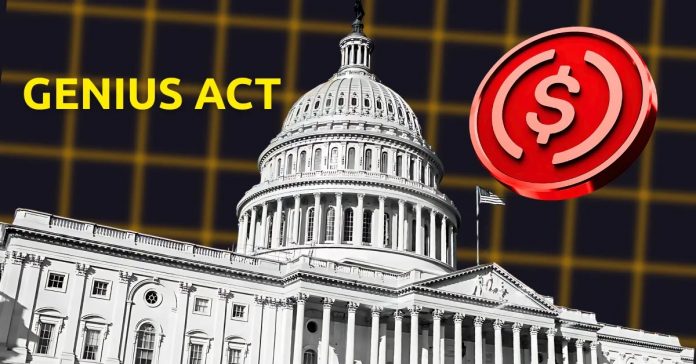
The U.S. GENIUS Act Passes Procedural Senate Votes

0

The U.S. Senate successfully passed a procedural vote on the GENIUS Act, a bill to regulate stablecoins, on May 19, 2025, with a 66-32 vote, achieving cloture to move the bill toward a full floor vote. This followed a failed attempt on May 8, 2025, where the bill fell short of the 60 votes needed, with a 48-49 tally, due to opposition from all Senate Democrats and two Republicans, Senators Josh Hawley and Rand Paul.

The recent success came after bipartisan negotiations led to revisions addressing Democratic concerns, including stronger consumer protections, limits on Big Tech issuing stablecoins, and stricter compliance for foreign issuers. Sixteen Democrats, including Senators Mark Warner, Kirsten Gillibrand, and Ruben Gallego, flipped their votes to support the bill.

Circle CEO Jeremy Allaire celebrated the vote, stating on X, “Tonight’s vote on GENIUS Act is a huge step forward in advancing dollar digital currency as the foundational layer of the Internet financial system. Fully reserved, prudentially supervised programmable digital cash that operates at Internet scale.” His comments reflect optimism about the bill’s potential to establish a regulatory framework for stablecoins like Circle’s USDC, enhancing U.S. leadership in digital finance.

However, concerns persist among some Democrats, notably Senator Elizabeth Warren, who argues the bill fails to address conflicts of interest, particularly regarding President Trump’s family ties to the USD1 stablecoin and other crypto ventures. The bill’s passage in the Senate now sets the stage for a full vote, and if approved, it will need reconciliation with a House version before reaching President Trump’s desk.

Implications of the GENIUS Stablecoin Bill

The successful Senate procedural vote on the GENIUS Act (May 19, 2025) marks a significant step toward regulating stablecoins in the U.S., with broad implications for the financial system, cryptocurrency industry, and global economic leadership. The bill establishes a regulatory framework for stablecoins, requiring issuers to maintain full reserves, comply with anti-money laundering (AML) and know-your-customer (KYC) rules, and obtain federal or state charters. This could legitimize stablecoins like Circle’s USDC, fostering trust and wider adoption.

Circle CEO Jeremy Allaire’s comments highlight the potential for stablecoins to become a “foundational layer” of the internet financial system, enabling faster, cheaper, and programmable digital transactions at scale. Clear regulations could attract institutional investment and spur innovation, positioning the U.S. as a leader in digital finance. Revisions to the bill, which secured Democratic support, include stronger consumer protections, such as safeguards against fraud and insolvency risks, and restrictions on Big Tech companies issuing stablecoins to prevent monopolistic control.

Enhanced oversight of foreign issuers addresses concerns about unregulated stablecoins like Tether (USDT), potentially reducing systemic risks to the financial system. The bill aims to bolster the U.S. dollar’s dominance in global finance by promoting regulated dollar-backed stablecoins, countering efforts by countries like China to advance their own digital currencies. It could enhance U.S. competitiveness in the global crypto market, where jurisdictions like the EU (with MiCA regulations) and Singapore have already implemented stablecoin frameworks.

Critics, including Senator Elizabeth Warren, argue the bill doesn’t adequately address conflicts of interest, particularly given President Trump’s reported ties to the USD1 stablecoin and other crypto ventures. This could fuel perceptions of favoritism or regulatory capture. If the bill passes, reconciling Senate and House versions could delay implementation, especially if disagreements arise over provisions like Big Tech restrictions or state vs. federal oversight.

Overregulation could stifle smaller issuers, consolidating the market among large players like Circle, while underregulation risks repeating past crypto failures (e.g., TerraUSD’s collapse). The GENIUS Act has exposed a stark partisan and ideological divide in the Senate, reflecting broader tensions over cryptocurrency regulation.

Bitcoin climbed to a record high on Wednesday, fueled by growing optimism over regulatory progress and increasing adoption by financial institutions. The digital asset hit $109,856, before retreating lower amid a broader downtrend in financial markets. Bitcoin’s milestone comes as legislation known as the GENIUS Act, which would create a regulatory framework for stablecoins, advanced in the Senate. Meanwhile, JPMorgan CEO Jamie Dimon said this week that the bank would enable its clients to buy bitcoin.

Most GOP senators support the bill, viewing it as a pro-innovation, pro-market measure that strengthens U.S. financial leadership. The Trump administration’s backing, with its “America First” crypto agenda, has driven Republican unity, though Senators Josh Hawley and Rand Paul dissented, likely over concerns about government overreach or corporate influence. Initially, all Democrats opposed the bill on May 8, 2025, citing insufficient consumer protections and risks of regulatory loopholes. After revisions, 16 Democrats, including moderates like Mark Warner and Kirsten Gillibrand, supported the May 19 vote, but progressives like Elizabeth Warren and Sherrod Brown remain opposed, arguing it prioritizes industry interests over public welfare.

Democrats pushed for stronger safeguards against fraud, insolvency, and market manipulation, leading to amendments that swayed some to support the bill. Critics still argue these measures fall short. Concerns about tech giants like Meta or Amazon issuing stablecoins led to provisions limiting their role, addressing Democratic fears of concentrated financial power.

The bill’s alignment with Trump’s crypto-friendly agenda, including his family’s ties to USD1 and World Liberty Financial, has fueled Democratic skepticism, with Warren highlighting potential conflicts of interest. Some Democrats and Republicans disagree on whether state regulators or federal agencies like the SEC and CFTC should have primary authority, reflecting broader debates over regulatory centralization.

Supporters, including Allaire and most Republicans, see stablecoins as a transformative technology that can democratize finance, reduce transaction costs, and maintain U.S. dollar hegemony. Progressive Democrats like Warren view cryptocurrencies, including stablecoins, as prone to fraud, instability, and enabling illicit activity, advocating for stricter regulations or outright bans on certain crypto activities.

The bill’s advancement signals growing bipartisan momentum, but the divide remains. A full Senate vote is pending, and reconciliation with the House version could reignite debates over contentious provisions. If passed, the GENIUS Act could reshape the U.S. crypto landscape, but its success hinges on balancing innovation with robust oversight—a challenge that continues to polarize lawmakers.

Tekedia Capital Welcomes Ginger, B2B Beauty Ecommerce Startup

0

Looking good is a big business, and the emerging market is logging record growth in the broad beauty sector. In Nigeria and broad Africa, for most people, after food, beauty comes next as the monthly budget is being developed. And within that framework, there is a huge opportunity to orchestrate a modern supply chain framework to ensure genuine beauty products are available in stores, salons, bars, etc when needed.

Tekedia Capital understands this emerging redesign which is reshaping Africa and we’re excited to report investment in Ginger, an all-in-one marketplace that connects brands and suppliers with global wholesale buyers in high-growth emerging markets. Operating from New York with an office in Lagos (more coming across African capitals), Ginger brings bulk buyers of beauty products and manufacturers, helping with logistics, financing and market development.

Ginger works with global brands like L’Oreal and Ivy Beauty within the B2B ecommerce framework to ensure the right beauty products are available and at the right prices across Africa and beyond. In the age of Instagram and TikTok, looking good is an opportunity. Tekedia Capital welcomes Ginger.

To learn more:

To learn more:
Tekedia Capital: capital.tekedia.com
Ginger: gingerme.io