DD
MM
YYYY

PAGES

DD
MM
YYYY

spot_img

PAGES

Home Blog Page 1126

MAGACOIN FINANCE vs XRP: Which Has the Bigger Growth Potential Going Into Q3 2025?

0

The altcoin race is heating up as Q3 2025 approaches, and two tokens are currently standing out on opposite sides of the crypto spectrum: the well-established XRP, and the fast-rising political contender, MAGACOIN FINANCE. One represents years of institutional groundwork. The other represents a fresh opportunity with explosive early-stage upside.

So which of these two offers greater growth potential over the next few months?

XRP: Steady Institutional Progress, But Limited Short-Term Multiples

XRP has built a reputation on resilience. After years of legal battles and continued partnerships with banks and remittance platforms, it remains one of the few altcoins with legitimate utility in traditional finance. However, when it comes to price action, analysts expect steady but capped gains in the near term.

Many forecasts for XRP place its 2025 price between $2.50 and $4, with a potential breakout if ETF speculation materializes. But for new investors, these returns are likely to fall in the 2x–4x range, not the kind of multiples that deliver major portfolio transformations.

MAGACOIN FINANCE: The Early-Stage Altcoin Eyeing a 25x–35x Surge

Enter MAGACOIN FINANCE, a newcomer that has ignited strong investor attention due to its unique combination of political narrative, growing visibility, and well-structured tokenomics. This project is capturing a segment of the crypto community that wants both utility and virality, and it is doing so at a price point that still offers massive upside.

Analysts tracking MAGACOIN FINANCE suggest the token could reach $0.007 by Q4 2025 — a move that would represent a 25x return from current entry levels. And with the latest limited-time promo, early buyers using the code PATRIOT35X are projecting up to 35x upside through bonus token allocations.

Why MAGACOINFINANCE Could Outpace XRP This Quarter

The difference comes down to timing and position. XRP is already integrated into global remittance systems, but that maturity comes with limited room for explosive growth. MAGACOIN FINANCE, by contrast, is still in its early phases, meaning any listing, exchange partnership, or viral event could send it soaring.

Traders are watching MAGACOIN FINANCE for several reasons:

  • It’s a narrative-driven token that aligns with U.S. political cycles
  • It has media traction across platforms like MSN and Google News
  • It’s offering aggressive entry bonuses to attract early capital

Final Verdict: Where the Bigger Opportunity Lies

While XRP remains a strong and stable player in the crypto ecosystem, the most aggressive gains heading into Q3 2025 may belong to MAGACOIN FINANCE. With early-stage pricing, high community energy, and a clear path toward listings, it is attracting the kind of speculative interest that typically fuels massive ROI moves.

For traders seeking multiples beyond 10x, MAGACOIN FINANCE is increasingly becoming the altcoin of choice.

To learn more about MAGACOIN FINANCE, please visit:

Website: https://magacoinfinance.com

Twitter/X: https://x.com/magacoinfinance.

China Threatens to Take Legal Action Against Anyone Complying With U.S. Ban on Huawei AI Chips

0

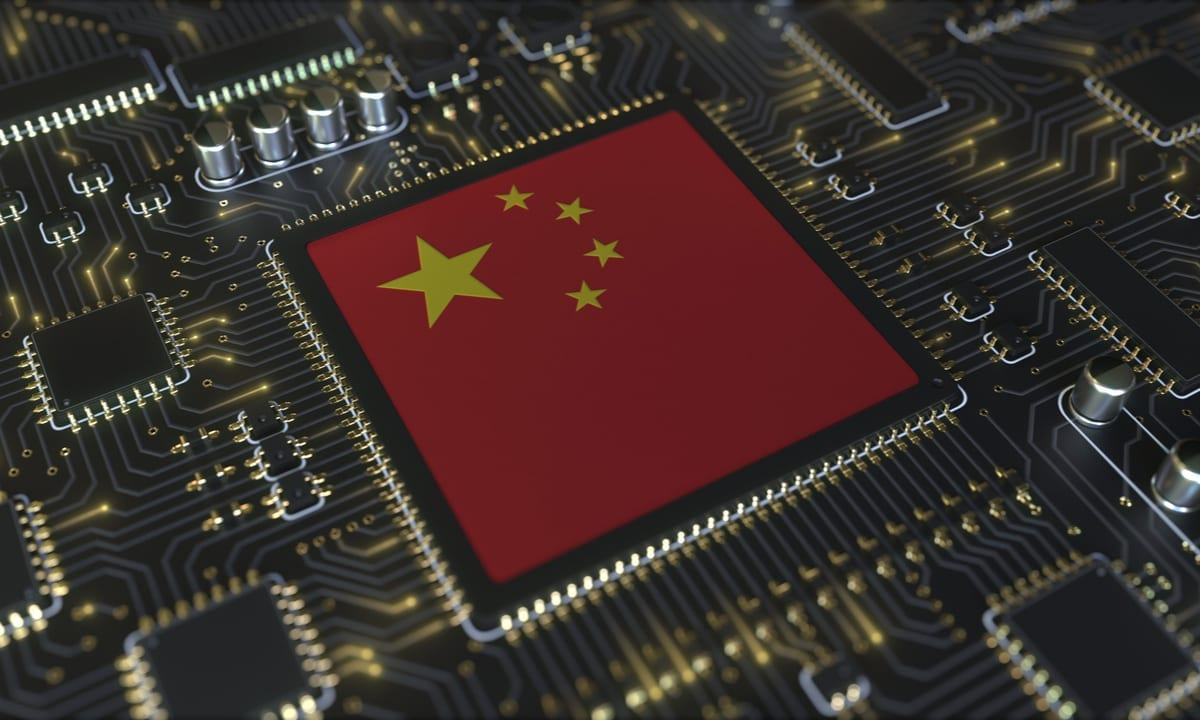
China has warned of possible legal consequences for individuals or companies that comply with new U.S. restrictions discouraging the use of Huawei’s artificial intelligence chips, marking a sharp escalation in the deepening technology rivalry between Washington and Beijing.

The Chinese Ministry of Commerce, in a strongly worded statement on Wednesday, denounced the U.S. measures as discriminatory and politically motivated, accusing Washington of abusing export control rules to suppress Chinese firms.

“The US abuses export controls to contain and suppress China, which violates international law and basic norms of international relations. This severely harms the legitimate rights and interests of Chinese enterprises and undermines China’s development interests,” it stated.

These actions violate the principles of fair competition and international economic and trade rules, the ministry said, adding that any institution or individual that enforces such discriminatory restrictions may face corresponding legal liabilities under Chinese law.

The warning comes days after the U.S. Commerce Department issued guidance suggesting that companies using Huawei’s Ascend AI chips—particularly in cloud computing and data centers—could be in violation of U.S. export control regulations. While not an outright ban, the advisory puts additional pressure on firms to steer clear of Chinese semiconductors, intensifying the technological decoupling between the world’s two largest economies.

China passed a significant rule in 2021 called the Anti-Foreign Sanctions Law. Under this regulation, anyone imposing an unnecessary ban against China or Chinese firms will be subject to prosecution and have to pay compensation for losses incurred.

A Fragile Truce Unraveling

The move risks unraveling a tentative truce reached in late 2023 between the Biden administration and Beijing aimed at stabilizing trade relations after years of tit-for-tat tariffs and blacklisting of tech companies. But with President Donald Trump returning to the White House and reaffirming his “America First” doctrine, Washington has re-energized its campaign to stifle China’s access to cutting-edge technology.

Trump has repeatedly accused China of leveraging U.S. innovations for military and surveillance purposes. In his first term, he placed Huawei on the Commerce Department’s Entity List, effectively cutting it off from American suppliers. Now, with Huawei’s AI breakthroughs in view, his administration is expanding those measures.

Beijing Hits Back

China’s threat of legal action marks the first time it has explicitly warned of judicial consequences for following U.S. tech sanctions. While it remains unclear what form these liabilities could take, analysts say that it sends a clear message that China is no longer content with issuing diplomatic protests—it may now retaliate with domestic legal tools.

The Ministry of Commerce called on the United States to “respect the legitimate development rights of enterprises in all countries, including China,” and reiterated that technological progress should not be politicized or weaponized.

Huawei Sanction-Driven Innovation: The Good Side of U.S. Restrictions

Huawei’s recent breakthroughs illustrate how U.S. pressure has inadvertently spurred Chinese innovation. Once heavily reliant on American technology, the Shenzhen-based giant has spent the past four years reengineering its supply chains.

By early 2024, Huawei announced it had successfully replaced over 13,000 parts previously sourced from U.S. companies and redesigned 4,000 circuit boards. More recently, the company achieved a milestone in producing its Ascend 910C AI chips, reportedly doubling its production yield from 20% to 40%—a major leap in semiconductor self-sufficiency.

The chips, which power Huawei’s AI cloud services and data centers, have increasingly become a symbol of China’s determination to compete in the global race for artificial intelligence supremacy. That progress has alarmed U.S. policymakers, who view advanced chips as strategic assets vital to national security.

Tech Cold War Deepens

China’s retaliatory tone signals that the tech cold war between the two powers is entering a more aggressive phase. Legal threats could deter multinational corporations from complying with U.S. directives, especially those operating in or selling to China’s massive market.

However, it also puts global businesses in a precarious position. “Companies are being squeezed from both sides—told by the U.S. not to use Chinese tech and warned by China not to comply with U.S. rules,” said Paul Triolo, a China tech expert at Albright Stonebridge Group.

The Biden administration had attempted to keep the rivalry contained within strategic parameters, but Trump’s return has revived a confrontational posture that risks fracturing global supply chains. With Huawei proving resilient under sanctions, and China now openly threatening legal retaliation, the struggle over AI chips is fast becoming a defining front in the broader geopolitical contest for technological dominance.

Sergey Brin Admits “A Lot of Mistakes” on Google Glass, Backs New AI-Powered Smart Glasses Push

0

Google co-founder Sergey Brin has admitted to “a lot of mistakes” in the company’s failed Google Glass project, as the tech giant unveiled its latest attempt to enter the smart eyewear space with AI-powered Android XR glasses.

Brin made the remarks during a surprise appearance at Google I/O 2025 on Tuesday, joining Google DeepMind CEO Demis Hassabis and journalist Alex Kantrowitz on stage. The candid conversation shed light not just on the past failures of Google Glass, but also the company’s revived confidence in the smart glasses market—this time with the backing of major partners and advanced artificial intelligence.

“I made a lot of mistakes with Google Glass,” Brin said. “I didn’t know anything about consumer electronic supply chains,” he continued, admitting the difficulty of building smart glasses that could be manufactured and sold at a reasonable price. “I’m glad the company is pursuing them again,” he added, “this time with great partners who are helping us build this.”

Earlier in the day, Google unveiled its new Android XR smart glasses, powered by DeepMind’s real-time multimodal AI project, Astra. In a live demonstration, the glasses translated foreign languages, gave real-time directions, and responded to spoken queries in natural language—a sharp contrast to the limited functions and controversial design of Google Glass more than a decade ago.

To realize this vision, Google is partnering with a range of tech and eyewear companies. The list includes Samsung and Xreal, both of which have experience in display and XR technologies. Notably, Google is also investing up to $150 million in a strategic partnership with Warby Parker, the popular direct-to-consumer eyewear brand, and has taken an equity stake in the company. Gentle Monster, a premium smart eyewear maker, is also on board.

Brin acknowledged the value of these alliances, suggesting they could resolve the technical and logistical issues that plagued the original Glass rollout.

“Those experienced eyewear and electronics makers may be able to help with some of the supply chain problems associated with producing smart glasses,” he said.

He also credited advancements in generative AI for making the promise of smart glasses more practical.

“The advent of generative AI makes the capabilities of smart glasses much more tangible than when Google Glass was around,” he said.

Once criticized for releasing a product ahead of its time, Brin now argues that time may have finally caught up to the vision. And he isn’t watching from the sidelines. Brin revealed that he has effectively come out of retirement to work with Google’s AI teams, saying he’s in the company’s Mountain View office “nearly every day.” He’s helping develop Gemini, Google’s AI assistant, as well as its video-generating model, Veo 3.

“Anybody who’s a computer scientist should not be retired right now,” Brin said. “They should be working on AI.”

Brin has reportedly urged Google staff to be more ambitious and focused, with past memos encouraging 60-hour work weeks and daily in-office presence to help the company stay competitive in the high-stakes AI race.

Tuesday’s presentation marked a return not just of Sergey Brin to the spotlight, but of Google’s enduring ambition to lead in both consumer hardware and artificial intelligence. With smarter tools, deeper partnerships, and more cautious execution, Google appears determined to avoid the missteps that sank Glass and instead chart a new path forward in wearable computing.

U.S. Department of Justice Launches An Investigation Into Coinbase Data Breach

0

The U.S. Department of Justice (DOJ) has launched an investigation into a recent data breach at Coinbase, the largest U.S. cryptocurrency exchange, which exposed sensitive customer information. The breach, disclosed by Coinbase on May 15, 2025, involved cybercriminals bribing overseas support agents, primarily in India, to access and steal data from internal systems.

The compromised data, affecting approximately 1% of Coinbase’s 9.7 million monthly active users (around 100,000 individuals), included names, addresses, phone numbers, email addresses, the last four digits of Social Security numbers, masked bank account numbers, government-issued IDs (e.g., driver’s licenses, passports), account balances, transaction histories, and limited corporate data like training materials and communications. No passwords, private keys, or funds were accessed, and Coinbase Prime accounts remained unaffected.

The attackers demanded a $20 million ransom in Bitcoin to not publicly disclose the stolen data, which Coinbase refused to pay. Instead, the company established a $20 million reward fund for information leading to the arrest and conviction of the perpetrators. Coinbase has terminated the involved support staff, is cooperating with the DOJ and international law enforcement, and has implemented heightened fraud monitoring, including additional ID checks for large withdrawals and mandatory scam-awareness prompts. The company estimates remediation costs, including customer reimbursements, to range between $180 million and $400 million.

The DOJ’s probe, involving its criminal division in Washington, is focused on the circumstances of the breach, particularly the insider bribery, and not on Coinbase itself, according to a source cited by Reuters. The investigation highlights ongoing cybersecurity challenges in the cryptocurrency sector, with attackers using stolen data for social engineering scams, leading to losses like the $7 million reported in a single day and a $2 million loss for one user. Legal actions, including potential class action lawsuits, are emerging as affected users seek compensation for privacy violations and losses.

Coinbase is also opening a new U.S.-based support hub and enhancing insider-threat detection and security measures to prevent future breaches. The company has warned users about potential phishing attempts and impersonation scams, advising them to enable two-factor authentication (2FA) with hardware keys and withdrawal allow-listing to secure transfers. Separately, the U.S. Securities and Exchange Commission (SEC) is investigating Coinbase’s past “verified user” metrics, though this is unrelated to the data breach and stems from a prior administration’s inquiry into a metric Coinbase stopped reporting in 2022.

The Coinbase data breach and the subsequent U.S. Department of Justice (DOJ) investigation carry significant implications across multiple dimensions, including Coinbase’s operations, the cryptocurrency industry, affected users, and broader regulatory and cybersecurity landscapes. Remediation costs, including customer reimbursements, are estimated at $180–$400 million, potentially straining Coinbase’s financials, though its $8.2 billion cash reserve (as of Q3 2024) provides a buffer.

The $20 million reward fund for tracking perpetrators adds to expenses but signals proactive engagement with law enforcement. Potential class action lawsuits could further increase costs, depending on settlements or judgments. The breach undermines trust in Coinbase as a secure platform, critical in the crypto industry where security is paramount. This could lead to user churn, particularly among high-net-worth clients.

Termination of involved support staff and the establishment of a U.S.-based support hub indicate a shift to reduce reliance on overseas contractors, potentially increasing operational costs but improving security oversight. Investments in insider-threat detection, enhanced fraud monitoring (e.g., ID checks for large withdrawals), and mandatory scam-awareness prompts reflect long-term commitments to bolster cybersecurity.

While the DOJ investigation targets the breach’s perpetrators, not Coinbase, it may uncover compliance gaps, prompting stricter oversight or fines. The unrelated SEC probe into past “verified user” metrics could compound regulatory pressure, potentially affecting investor confidence. The exposure of sensitive data (names, addresses, SSNs, account details) increases risks of identity theft, phishing, and social engineering scams. Reported losses, like $7 million in a single day, highlight the immediate financial impact.

Users face potential long-term consequences, such as fraudulent accounts opened in their names or targeted scams leveraging stolen data. Class action lawsuits are emerging, offering affected users a chance to seek compensation for privacy violations and losses. Success depends on proving Coinbase’s negligence, which may hinge on its handling of overseas support staff.

Users are advised to enable two-factor authentication (2FA) with hardware keys and use withdrawal allow-listing. This may push less tech-savvy users to adopt stronger security practices or abandon crypto platforms altogether. The breach reinforces concerns about cybersecurity in crypto, likely prompting regulators to push for stricter standards on data protection, insider threat prevention, and third-party contractor oversight.

It may accelerate discussions around mandatory cybersecurity frameworks for crypto exchanges, similar to traditional financial institutions. Other exchanges may face pressure to audit their own systems, particularly those relying on outsourced support, to avoid similar breaches. The incident could drive adoption of decentralized or self-custodial solutions, as users seek alternatives to centralized exchanges like Coinbase.

The bribery of overseas support agents underscores insider threats as a critical vulnerability, likely prompting other industries to scrutinize third-party contractor security. Companies may invest more in employee vetting, monitoring, and localized operations to mitigate similar risks. The DOJ’s collaboration with international law enforcement (e.g., in India) highlights the need for cross-border efforts to combat cybercrime, potentially leading to stronger global frameworks for prosecuting such cases.

The breach may fuel calls for enhanced consumer protections in the crypto sector, such as mandatory breach disclosures, free credit monitoring for affected users, or stricter penalties for data mishandling. Coinbase’s ability to manage the crisis, cooperate with authorities, and implement robust fixes will determine whether it regains user and investor trust. Its dominant position in the U.S. market provides some resilience.

The Coinbase data breach and DOJ investigation highlight systemic challenges in the crypto industry, from insider threats to regulatory gaps. For Coinbase, the incident tests its ability to balance costly remediation with user trust and operational improvements.  For users, it underscores the risks of centralized platforms and the need for proactive security measures.

Industry-wide, it may catalyze stronger regulations and security standards, while globally, it emphasizes the importance of coordinated cybercrime responses. The long-term impact depends on Coinbase’s execution of its remediation plan and the broader industry’s ability to adapt to heightened scrutiny.

Implications of a Potential Circle Acquisition by Coinbase or Ripple

0

Circle is in talks for a $10B+ acquisition with Coinbase or Ripple. However, recent reports indicate Circle, the issuer of the USDC stablecoin, has been engaged in informal discussions with both companies about a potential sale, while simultaneously pursuing a $5B initial public offering (IPO).

Sources suggest Circle rejected a $4B-$5B offer from Ripple, deeming it too low, and some unconfirmed claims on X mention Ripple raising its bid to $9B-$11B, potentially including cash and XRP. Other unverified rumors on X suggested a $20B offer, but experts like Dom Kwok argue this is unrealistic, estimating a more plausible bid range of $6B-$6.5B based on Circle’s $5B IPO valuation target.

Coinbase is seen as a more likely acquirer due to its deep integration with Circle’s USDC ecosystem, including a revenue-sharing arrangement and an equity stake from their dissolved Centre Consortium partnership. Coinbase’s $8B cash reserves and public market access strengthen its position, though Ripple’s substantial XRP holdings (valued at over $90B) provide financial leverage. Circle has publicly denied being for sale, emphasizing its IPO focus, but sources note the situation remains fluid. No formal offers are confirmed, and all discussions appear exploratory

A potential acquisition of Circle, the issuer of the USDC stablecoin, by either Coinbase or Ripple would have significant implications for the cryptocurrency industry, particularly in the stablecoin and broader digital asset markets. Coinbase, already a major player in the crypto exchange space, acquiring Circle would solidify its dominance in the stablecoin market. USDC, with a market cap of over $60 billion (based on recent data), is the second-largest stablecoin after Tether’s USDT.

Coinbase’s existing integration with USDC (through co-ownership of the Centre Consortium until its dissolution in 2023) and its revenue-sharing agreement with Circle would make this a natural fit. It could enhance Coinbase’s ecosystem, streamlining USDC’s use across its trading platform, custody services, and institutional offerings. Ripple acquiring Circle would position it as a major player in the stablecoin market, diversifying its focus beyond XRP and cross-border payments.

Ripple’s significant XRP holdings (valued at over $90 billion) could be leveraged to fund the deal, but integrating USDC into Ripple’s ecosystem might be less seamless due to its focus on XRP-based solutions like On-Demand Liquidity (ODL). As a publicly traded U.S. company, Coinbase operates under strict regulatory oversight, which aligns with Circle’s compliance-focused approach (e.g., USDC’s full reserve backing and transparency reports). An acquisition could strengthen their joint ability to navigate U.S. regulations, especially with increasing scrutiny on stablecoins under frameworks like the U.S. Stablecoin Act.

Ripple’s ongoing legal battles with the SEC over XRP’s status as a security could complicate an acquisition. Regulatory uncertainty around Ripple might raise concerns about Circle’s ability to maintain USDC’s reputation as a compliant, transparent stablecoin. However, Ripple’s global reach could expand USDC’s adoption in markets outside the U.S.

An acquisition by either party would signal further consolidation in the crypto industry, potentially reducing competition in the stablecoin sector. This could attract antitrust scrutiny, particularly if Coinbase, already a dominant exchange, acquires Circle. A Ripple acquisition might diversify the stablecoin market by introducing a new major player, but it could also spark competition concerns if Ripple uses USDC to bolster its XRP ecosystem, potentially sidelining other stablecoins.

Coinbase with its robust infrastructure (exchange, wallet, custody), could integrate USDC more deeply into DeFi, NFTs, and institutional finance, potentially accelerating innovation in these areas. However, Coinbase’s centralized model might limit the pace of decentralized innovation. Ripple’s focus on cross-border payments could lead to USDC being integrated into global remittance and financial institution networks, potentially competing with SWIFT and other traditional systems.

However, Ripple’s XRP-centric approach might prioritize its own token over USDC in some applications. Circle’s reported $5B IPO valuation and rumored $10B+ acquisition talks suggest a high-stakes deal. Coinbase’s $8B cash reserves and public market access make it financially capable, but a $10B+ deal could strain its balance sheet or require stock issuance. Ripple’s XRP holdings provide significant liquidity, but using XRP in the deal could introduce volatility and regulatory risks.

For Circle, an acquisition could provide immediate liquidity and scale, but it risks losing autonomy compared to an IPO, which would allow it to remain independent and raise capital on its own terms. The divide between Coinbase and Ripple as potential acquirers lies in their strategic goals, operational models, and market positioning. Acquiring Circle aligns with Coinbase’s goal of building a comprehensive crypto ecosystem.

USDC is already deeply integrated into Coinbase’s platform, and full ownership could streamline operations, reduce costs, and enhance profitability through USDC’s transaction fees and reserve interest. Coinbase’s focus on institutional clients and retail investors makes it a natural fit for scaling USDC’s adoption. Ripple’s interest in Circle seems driven by a desire to diversify beyond XRP and gain a foothold in the stablecoin market. USDC could complement Ripple’s cross-border payment solutions, but the integration would require significant reengineering to align with Ripple’s XRP Ledger and ODL system.

Ripple’s global focus contrasts with Coinbase’s U.S.-centric approach. Coinbase as a regulated, publicly traded entity, is better positioned to manage the regulatory complexities of owning a major stablecoin. Its compliance track record aligns with Circle’s transparent, fully reserved USDC model.
Ripple: Ripple’s unresolved SEC lawsuit creates uncertainty, which could deter Circle from aligning with it. A Ripple acquisition might face regulatory hurdles, especially if XRP is deemed a security, impacting the deal’s structure or feasibility.

With $8B in cash and access to public markets, Coinbase can fund a $10B+ deal, though it may require a mix of cash and stock. Its stable financial position makes it a safer bet for Circle’s stakeholders. Ripple’s vast XRP holdings provide theoretical liquidity, but their value is subject to market volatility and legal risks. A cash-and-XRP deal (as rumored) could complicate negotiations and valuation. The market views Coinbase as a stable, established player, and its acquisition of Circle would likely be seen as a logical consolidation. However, it could raise concerns about Coinbase’s dominance in the U.S. crypto market.

Ripple’s acquisition would be seen as a bold move to challenge Tether and Coinbase but could face skepticism due to its legal issues and XRP focus. The crypto community might question whether Ripple would prioritize USDC or use it to prop up XRP. Coinbase shares Circle’s U.S.-centric, compliance-driven culture, making integration smoother. Their prior partnership in the Centre Consortium suggests operational synergy. Ripple operates with a more global, decentralized ethos, which could clash with Circle’s centralized stablecoin model. Ripple’s focus on financial institutions contrasts with Circle’s broader DeFi and retail applications.

The implications of a Circle acquisition hinge on the acquirer’s ability to integrate USDC into their ecosystem while navigating regulatory and market dynamics. Coinbase appears better positioned due to its financial stability, regulatory alignment, and existing USDC integration, but Ripple’s global ambitions and XRP liquidity make it a wildcard.

The divide reflects a choice between Coinbase’s centralized, U.S.-focused dominance and Ripple’s riskier, globally oriented vision. However, Circle’s public commitment to an IPO suggests it may prefer independence, rendering these discussions speculative unless a compelling offer emerges.