DD
MM
YYYY

PAGES

DD
MM
YYYY

spot_img

PAGES

Home Blog Page 113

Top 5 Cryptos Under $0.50 That Could Outperform Ethereum (ETH) and Solana (SOL) This Cycle

0

On our list of five names to watch, Little Pepe (LILPEPE) is at the top of coins under $0.50, to trade above $3 before the end of 2026. Little Pepe is priced at $0.0022 and has signaled that it will even outperform coins priced above $1, even at its presale stage.

Little?Pepe (LILPEPE): Meme Power Meets Real Utility

Little?Pepe is the standout underdog here. Currently in its presale at $0.0022 in Stage?13, it has already raised over $27 million and sold more than 16.4 billion tokens. Early stage?1 buyers are already sitting on more than 120% gains. If the token lists at $0.003 as projected, current stage buyers could see about 36% upside before the launch. LILPEPE isn’t just a meme coin. It’s building its own Layer?2 chain optimized for memes, low-fee trading, and anti-bot protection. CertiK has audited the project and is now listed on CoinMarketCap, adding credibility for cautious investors. Its community engagement is remarkable, with a $777k giveaway and a “Mega Giveaway” rewarding top presale buyers (Stage?12–17) with over 15 ETH in prizes. Social buzz is off the charts. Between June and August 2025, LILPEPE peaked at 100 in ChatGPT memecoin?question volume, surpassing PEPE, DOGE, and SHIB. That kind of viral momentum, combined with real infrastructure, gives it a shot at substantial percentage gains in the next cycle.

Avalon Labs (AVL): A Utility-Driven Underdog

Avalon Labs is a competitor with significant usefulness under $0.50, now trading at about $0.17. Its platform focuses on providing BTC-backed financing, connecting DeFi with conventional banking, and tokenizing real-world assets. It has the potential to surpass larger, slower-moving cryptocurrencies like ETH and SOL if its acceptance increases due to its blend of blockchain innovation and practical utility. Avalon Labs has a fundamentally solid narrative that strikes a balance between risk and plausible use applications, even though it lacks the viral meme buzz of LILPEPE.

Boost (BOOST): Speculative Potential in Early Stages

Boost is trading at $0.0189 and has surged over 4.62% in the past 24 hours. The token is showing momentum, and its development could push it by 21x, beating ETH and SOL this cycle.

Marina Protocol (BAY): A DeFi Infrastructure Contender

BAY is stabilizing around $0.13 after that huge wick to $0.188 and deep flush to $0.081. Price is slowly grinding back up and holding the mid-range. BAY could target $4.07 and is set to outperform ETH and SOL.

Overtake (TAKE): Peer-to-Peer Digital Asset Trading

Overtake is currently trading around $0.320. It has a resistance hovering around $0.40. The recent bullish momentum could break above the resistance, potentially pushing the price to $1.20.

Why These Tokens Could Outperform ETH and SOL

Entry price is key. Tokens under $0.50 offer far greater leverage than ETH or SOL, which already have high market caps and slower percentage gains. LILPEPE’s combination of social virality, technical infrastructure, and presale incentives shows how smaller tokens can scale quickly. Boost and Marina Protocol’s DeFi potential add fundamental strength, giving investors multiple avenues for upside.

Final Thoughts

If you’re willing to swing for significant gains, Little?Pepe stands out right now. Its presale is nearly sold out, infrastructure is solid, and community momentum is immense. Early buyers are already enjoying strong returns, and the remaining presale stages still offer 36% upside, before a post-launch ride to $2.1. Boost and Marina Protocol provide alternative strategies for those seeking exposure to utility and DeFi.

For more information about Little Pepe (LILPEPE) visit the links below:

Website: https://littlepepe.com

Whitepaper: https://littlepepe.com/whitepaper.pdf

Telegram: https://t.me/littlepepetoken

 Twitter/X: https://x.com/littlepepetoken

 $777k Giveaway: https://littlepepe.com/777k-giveaway/
How AI Technology Is Changing the Way We Win a Car in Modern Car Competitions

0

Artificial intelligence is transforming nearly every industry—and now it’s revolutionizing the way people win a car through cutting-edge car competitions. From virtual racing challenges to AI-driven autonomous car contests, technology is giving participants smarter strategies and new opportunities to drive away with incredible prizes.

In the past, car competitions relied mostly on human skill, chance, or traditional racing experience. But today, AI tools are helping competitors analyze data, optimize performance, and even control vehicles autonomously. This shift is opening new paths for anyone determined to win a car by combining innovation with intelligence.

AI in Autonomous Car Competitions

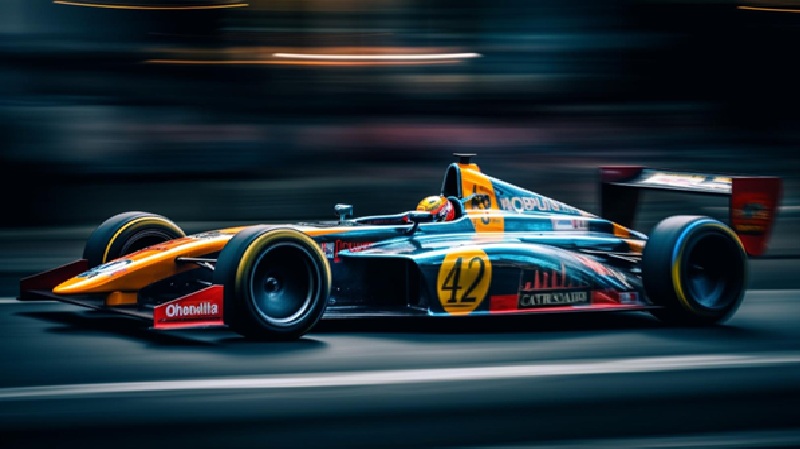
One of the most exciting developments is the rise of autonomous racing events, such as the Abu Dhabi Autonomous Racing League (A2RL). In these futuristic car competitions, AI systems take full control of the vehicle—steering, accelerating, and braking with precision that often outperforms human drivers.

Participants in these competitions train machine-learning algorithms to react in real time, analyze sensor data, and plan optimal racing lines. The more efficiently the AI performs, the higher the chances of success. In some cases, top teams or winners even have the opportunity to win a car or major cash prizes, making these events both technologically advanced and highly rewarding.

AI-Assisted Strategies for Human Drivers

Even in traditional or simulation-based car competitions, AI gives human participants a major advantage. Drivers can use AI-powered tools to study telemetry data, analyze their lap times, and simulate thousands of practice runs under different conditions.

Machine learning algorithms can identify small performance gaps—like braking too early or turning too wide—and suggest improvements that boost overall speed. Virtual reality training powered by AI also allows drivers to sharpen their reflexes, improve reaction time, and prepare for unpredictable race-day scenarios. These innovations mean that winning a car no longer depends solely on natural talent but also on how effectively a driver uses technology.

Virtual Car Competitions and AI Coaching

In the digital space, online platforms are increasingly hosting win a car challenges tied to virtual racing or skill-based competitions. Players compete in realistic simulators where AI analytics help them practice, adjust strategies, and outperform rivals. Some promotional events even integrate AI scoring or feedback systems, ensuring fair play and personalized improvement.

By embracing these tools, competitors can enhance their performance quickly—turning practice into potential victory.

The Future of Winning a Car with AI

AI’s role in car competitions is only growing. As more events adopt advanced analytics, simulation technology, and automation, the line between real-world racing and virtual performance continues to blur. While chance-based contests will always exist, skill-based challenges supported by AI are creating a fairer, more strategic way to win a car.

Whether through autonomous vehicles or AI-assisted racing, one thing is clear: artificial intelligence isn’t just changing how we drive—it’s changing how we win.

Why Is Crypto Down Today? Why Smart Money Moves to Presales Like $NNZ Token When the Market Is Bad

0

Some traders wake up to sudden price drops and start asking why is crypto down today, but the real story often lies in how buyers react when the red candles hit.

Sharp pullbacks reveal patterns that do not appear on quiet days, and one of the most common moves is the shift toward projects that do not change price every minute.

That shift has grown stronger recently in the crypto market today as more traders look for entries where the rules stay fixed even when the market turns, such as Noomez ($NNZ).

What Happens When the Market Pulls Back and Liquidity Thins Out

A market pullback usually starts when large holders reduce risk and smaller traders follow. Selling pressure stacks up across major pairs, and order books thin out because fewer buyers are willing to take the opposite side.

When liquidity drops, price swings become sharper, and even small sell orders can move a chart more than usual. Exchanges often show wider gaps between bids and asks during these periods, which makes entries and exits harder for short-term traders.

Funding rates can flip quickly, open interest can fall within minutes, and many altcoins drop faster than Bitcoin or Ethereum because they rely on tighter liquidity. These conditions create a cycle where prices fall, confidence weakens, and buyers step back even more.

Pullbacks like this are why many traders look for places where the price cannot shift with every red candle and where rules stay the same, no matter how deep the market correction goes.

Why Many Traders Ask “Why Is Crypto Down Today?” During Sharp Moves

Sharp market drops often trigger the same questions, especially when traders see crypto dropping across several charts at once. Many look for a single cause, but fast moves usually come from a mix of pressure points hitting together.

Sudden changes in funding rates can push leveraged traders to unwind positions. Large wallets taking profits can trigger a chain reaction across altcoins.

Even small updates in macro news can slow down buyer confidence, which is enough to create sharper swings when liquidity is light. These moments lead people to ask why the crypto market is down, because the speed of the move often looks bigger than the reason behind it.

  • Fast unwinds
  • Profit taking
  • Hesitation from buyers

Automated trading systems add even more pressure, since algorithms react instantly when key levels break.

When these signals line up, traders start searching for places where price changes are tied to fixed rules instead of sudden headlines.

Why Noomez Coin’s Fixed Presale Structure Holds Up When the Market Drops

Noomez enters this phase of the market with a clear 28-stage structure and pricing that does not change with every red candle. The total supply is set at 280 billion tokens, and 140 billion are assigned to the presale.

Each stage has a fixed allocation, with the early stages carrying the largest batches. Stages 1-7 each hold 12.7 billion tokens, while the later stages drop as low as 300 million, which creates natural scarcity as the Gauge moves forward.

The presale is already in Stage 5, priced at $0.0000230, and the stage closes once the allocation sells out or the seven-day limit hits. Buyers using the BONUS250 code receive a 250% bonus on their purchase, which has pushed more interest into the current stage.

These rules do not change even when the wider market pulls back. Anyone waiting risks paying more in Stage 6, since each completed stage raises the price.

Why More Traders Move Toward Noomez Coin When Conditions Turn Bearish

Noomez gives traders a level of certainty they cannot get from daily charts, which becomes more important when the wider market turns red. The token’s reward events add extra pressure to enter before the later stages shrink.

Every finished stage includes the Stage X Million Airdrop, where one buyer wins an amount equal to the stage number. Stage 5 pays out five million tokens, and the prize rises all the way to 28 million by the final stage.

The two Vault events increase the appeal even further. At Stage 14, one wallet receives 14 million tokens, and the final Vault at Stage 28 includes 28 million tokens plus NFTs and extra bonuses.

Additionally, presale participants can earn up to 66% APY through staking, with rewards accruing immediately and unlocking 30 days after launch. Plus, the referral system gives buyers a 10% bonus for sharing the presale.

The combination of fixed pricing, increasing rewards, and limited supply makes Noomez one of the few early projects that gains strength even when the rest of the market slows. Stage 5 is seen as a critical moment to enter before the curve moves higher.


For More Information:

Website: Visit the Official Noomez Website

Telegram: Join the Noomez Telegram Channel

Twitter: Follow Noomez ON X (Formerly Twitter)

Revolut’s Valuation Soars to $75bn After Fresh Share Sale, Extending Its Lead as Europe’s Top Fintech Giant

0

Revolut has taken another decisive step in its climb toward global financial heavyweight status. The London-based digital finance company announced on Monday that it has completed a major secondary share sale that pegs its valuation at $75 billion — a dramatic 66% rise from last year and one of the strongest signals yet that investors see the company as Europe’s most powerful fintech contender.

The sale attracted a dense cluster of blue-chip backers. Coatue, Greenoaks, Dragoneer, and Fidelity led the process, while Andreessen Horowitz, Franklin Templeton, and Nvidia’s venture capital arm also joined in. The valuation comes from private markets rather than a public listing, but it still positions Revolut above several of Europe’s largest publicly traded banks, surpassing Barclays, Société Générale, and Deutsche Bank. For a 10-year-old startup, that gulf is striking.

Founded in 2015 by Nikolay Storonsky and Vlad Yatsenko, Revolut has grown far beyond the travel-focused app it started as. It now has more than 65 million customers worldwide and produced a pretax profit of £1.1 billion ($1.44 billion) last year, rising 149% as its global footprint widened. Its valuation arc has been steep: $33 billion in 2021, $45 billion last year, and now $75 billion — recording one of the most dramatic climbs of any European tech company.

In its statement, Revolut said this marks the fifth time employees have been given the opportunity to sell portions of their shares, an option that has already minted fortunes for many early hires. Storonsky praised staff for helping the company grow well beyond expectations.

“I’d like to thank our team for their determination and energy, and for believing that it is possible to build a global financial and technology leader from Europe,” he said.

Storonsky himself relocated from London to Dubai last year as Revolut expanded management operations and sought friendlier regulatory environments for some of its ambitions.

Even with its momentum, Revolut is still locked in a lengthy process with UK regulators. The company has been trying for years to secure a full banking license in Britain, something Storonsky says remains his top priority. The long delay has attracted industry attention since Revolut’s size, speed of growth, and international customer base would make it one of the most significant entrants into Britain’s retail banking ecosystem in decades.

Analysts see clear strengths of a widely recognized brand, advanced technology, global accessibility, and an ability to scale quickly. But they also note challenges. Revolut still earns a large share of its income from cryptocurrency trading and from revenue tied to high-interest-rate conditions. Average customer deposits remain far lower than those at traditional banks, and the company acknowledges that too few users treat it as their primary account, limiting Revolut’s capacity to compete directly with legacy lenders on core financial relationships.

But Revolut is attempting to change that. The company is pushing into credit products, planning to expand into consumer loans, mortgages, and later, business lending. It is also exploring the possibility of acquiring a U.S. bank as part of a deeper expansion into the American financial market — a move that would give it the regulatory footing needed to go head-to-head with established institutions.

For now, the new $75 billion valuation signals that investors believe Revolut is entering a new phase. It no longer resembles an upstart challenger trying to wrestle market share from incumbent banks; instead, it looks increasingly like a technology-driven financial institution preparing for a fight on equal footing.

With customers, revenue, and investor confidence still climbing, Revolut’s trajectory suggests that the company sees itself as a future global bank — one built from code rather than branches.

Waymo Wins Green Light for Massive California Expansion

0

The slow-burn robotaxi race that started more than a decade ago has turned into a full-scale sprint, and on Friday, Waymo took another decisive step ahead of the pack.

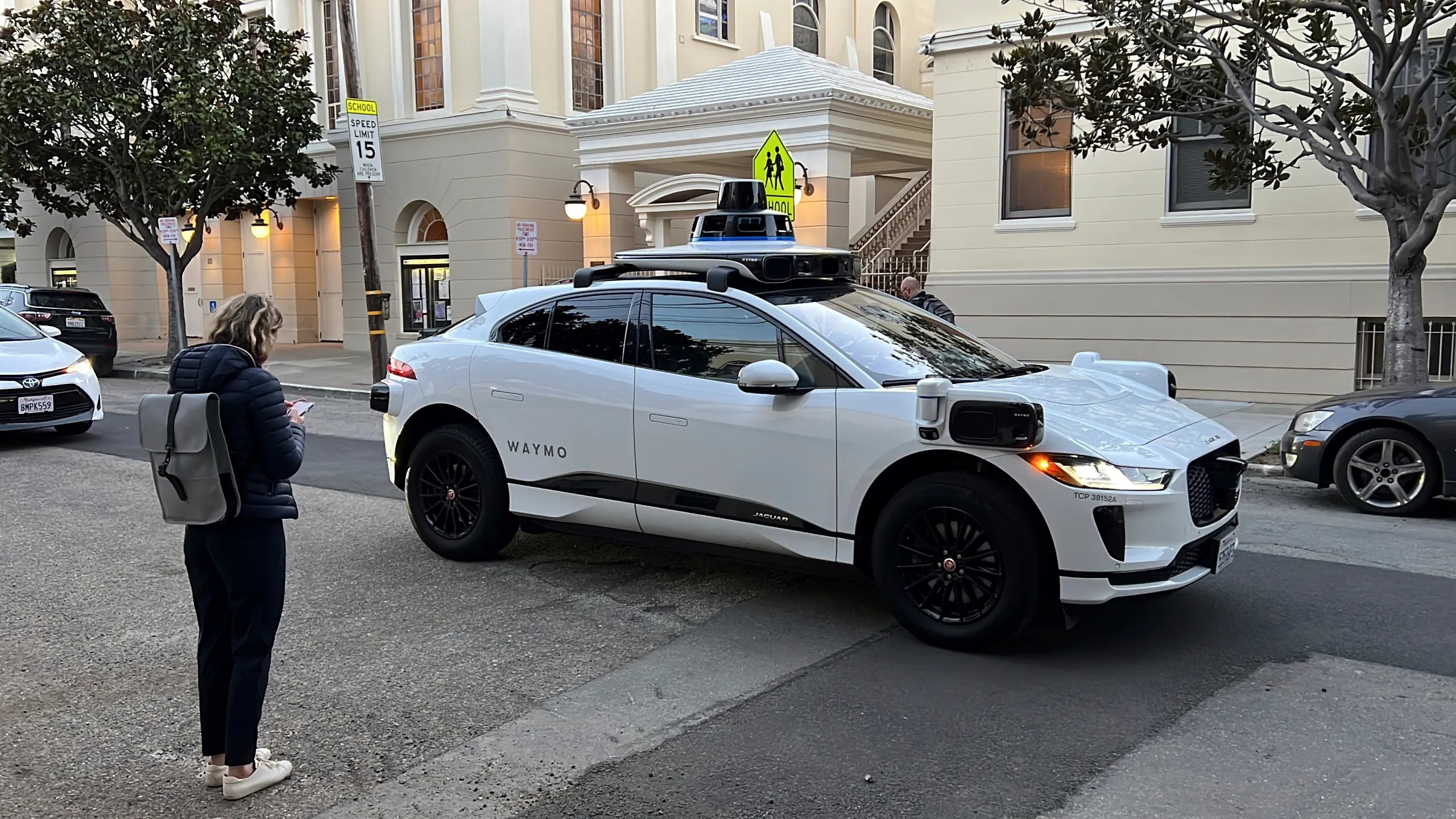
The Alphabet-owned autonomous driving company announced that it is now “officially authorized to drive fully autonomously across more of the Golden State,” a regulatory win that deepens its lead in a U.S. field crowded with hype but short on real driverless deployment.

Waymo already runs commercial autonomous operations in San Francisco, Silicon Valley, and Los Angeles, and it operates in several cities outside California, including Atlanta, Austin, and Phoenix. But new maps published by the California Department of Motor Vehicles show that the company’s accessible testing and deployment territory has expanded dramatically in both Northern and Southern California.

In the Bay Area, Waymo’s newly approved zone now covers most of the East Bay and North Bay — including Napa and the wider Wine Country — and stretches all the way to Sacramento. In Southern California, the company’s territory now reaches from Santa Clarita, north of Los Angeles, down to San Diego, significantly enlarging the corridor where its autonomous vehicles can operate without a human driver behind the wheel.

The approval allows full driverless testing and deployment, though the San Francisco Chronicle notes that Waymo still needs additional state authorization before carrying paying passengers in some of these new areas.

Even so, Waymo is already looking ahead. The company said, “Next stop: welcoming riders in San Diego in mid-2026!” That marks an adjustment from its earlier plan to begin service in San Diego next year, part of a rollout list that also included Dallas, Denver, Detroit, Houston, Las Vegas, Miami, Nashville, Orlando, San Antonio, Seattle, and Washington, D.C.

The announcement is just the latest in a flood of expansion news. Over the past two weeks, Waymo has revealed moves into Minneapolis, New Orleans, and Tampa; confirmed that it is removing safety drivers in preparation for a commercial launch in Miami; and said it will begin offering robotaxi rides that use freeways in Los Angeles, San Francisco, and Phoenix.

This pace is a direct result of a long U.S. robotaxi race that began in earnest in the early 2010s, when Google’s self-driving project — now Waymo — became the first major effort to pursue a fully autonomous, driverless ride-hailing future. Since then, competitors have entered the field, including Cruise, Zoox, Motional, and Tesla. But the companies have taken sharply different paths and achieved very different milestones.

Waymo has been the most consistent U.S. operator to secure permits for fully driverless commercial services, particularly in Arizona and California. It has deployed vehicles without human safety drivers in multiple cities and has carried paying passengers under approved programs. Cruise briefly reached similar milestones before a major safety incident in San Francisco triggered a suspension of its driverless permits in California and a significant pullback in operations.

Tesla, meanwhile, has pursued another model built around its advanced driver-assistance system, FSD, which still requires a human driver to remain attentive and ready to take control. Tesla does not operate a driverless robotaxi service, and regulators have not approved its vehicles for unsupervised autonomous operation. The company has announced plans to introduce a dedicated robotaxi vehicle, but it has not launched driverless ride-hailing operations of its own.

Waymo’s growing map — now including wine valleys, commuter belts, dense urban corridors, and the long stretch toward the U.S.–Mexico border — reflects how far it has moved ahead in the operational race. Instead of relying on supervised autonomy or limited pilot zones, it has pursued broad state-approved territories where its vehicles can operate without a human in the driver’s seat.

Its expansion has become a recurring topic on the Equity podcast. On the latest episode, co-host Sean O’Kane pointed out that as Waymo gains more unfettered access across the Bay Area, riders may begin spending longer periods in the cars, leading to new and unpredictable behavior inside the vehicles — something the company will have to manage as it grows.

The new California approval for Waymo is believed to represent a shift from operating isolated pockets of robotaxi service to building a connected network of regions that could eventually function as a single driverless ecosystem. With its mid-2026 San Diego target now on the calendar, the company appears ready to test how large and complex a driverless service can become.