
DD
MM
YYYY

PAGES

DD
MM
YYYY

spot_img

PAGES

Home Blog Page 1132

How SpacePay Is Designed for Worldwide Crypto Payments – Top Presale to Buy?

0

SpacePay’s presale has crossed the $1 million mark at $0.003181 per token by creating a payment system that works across diverse global markets. The platform’s design tackles specific regional commerce challenges and maintains universal compatibility.

The system’s 0.5% flat fee structure works equally well for high-volume Western retailers, mobile-first Asian markets, and emerging economies with limited banking infrastructure.

Breaking Payment Barriers in Emerging Markets

Emerging economies face several payment challenges that SpacePay addresses through several targeted capabilities. The platform’s compatibility with standard Android terminals proves particularly valuable in regions where specialized payment hardware remains prohibitively expensive.

Many smaller merchants in developing nations already use Android-based point-of-sale systems for basic transactions; SpacePay’s software approach allows these businesses to accept cryptocurrency without purchasing new equipment they cannot afford.

Currency volatility affects emerging markets disproportionately, where local currencies often fluctuate against major global currencies. SpacePay’s instant settlement mechanism protects merchants in these regions. This is done by allowing them to receive stable currencies like USD or EUR immediately, regardless of which cryptocurrency the customer uses.

Cross-border payments bring particular benefits to emerging economies dependent on remittances and international trade. The flat 0.5% fee undercuts traditional remittance services that often charge 5-10% for sending money across borders.

Meeting Western Market Payment Expectations

Western consumers and businesses maintain high standards for payment experiences. SpacePay’s 2-5 second transaction confirmation meets these expectations and provides speed comparable to credit card processing without sacrificing security. This quick verification allows Western retail environments to maintain their typical checkout pace even when customers pay with cryptocurrency.

Western markets typically demand cost-effective processing, particularly for businesses operating on thin margins. SpacePay’s flat 0.5% fee structure delivers substantial savings compared to the 2.5-3.5% charged by credit card networks plus the additional fixed fees per transaction.

For high-volume retailers common in Western economies, this fee difference creates bottom-line improvements that matter in competitive markets. While these merchants might accept cryptocurrency payments, most prefer immediate conversion to their operational currency to maintain accounting simplicity and avoid market exposure.

SpacePay delivers this conversion automatically. This allows Western businesses to experiment with crypto acceptance without changing their financial operations.

Asia-Pacific Region: Crypto Adoption Meets Payment Infrastructure

The Asia-Pacific region combines world-leading cryptocurrency adoption with a different payment culture that SpacePay addresses through specific regional capabilities. Countries like South Korea, Japan, and Singapore feature high crypto ownership alongside advanced digital payment infrastructures.

SpacePay bridges these elements by connecting to local Android-based payment terminals and also supports the diverse cryptocurrencies popular in each market.

Mobile-centric payment behavior dominates many APAC economies, with consumers accustomed to scanning QR codes for transactions. SpacePay’s QR-based system aligns perfectly with this cultural norm and it needs no behavioral change for consumers already familiar with scanning to pay.

The system feels native to markets where mobile payment adoption exceeds credit card usage and allows easy incorporation of cryptocurrency into existing habits.

Settlement currency diversity proves essential in the fragmented APAC economic landscape. SpacePay supports settlement in regional currencies and others beyond the major Western options. This multi-currency capability allows merchants to receive funds in their operational currency without additional conversion steps or fees.

Global Payment Unification Through $1M SPY Presale

The $1 million presale milestone at $0.003181 per token funds SpacePay’s vision of unified global payments that moves across regional boundaries while respecting local needs. This capital supports the technical foundation necessary for true cross-border functionality that connects rather than replaces regional payment ecosystems.

The SPY token itself acts as a unifying element across diverse markets. From the total 34 billion supply, 20% goes directly to the public presale. This allows for global participation regardless of location. The token’s revenue sharing model distributes value from transactions occurring worldwide back to holders in all regions.

When a merchant in Singapore processes a payment from a Japanese tourist using a European cryptocurrency, the transaction fee benefits token holders globally through the revenue distribution mechanism.

Wallet compatibility serves as another unification factor. With 325+ supported wallets, SpacePay accommodates the fragmented wallet preferences across different markets. Consumers can use regionally popular options without downloading new applications.

The platform’s regulatory approach balances global reach with local compliance. Rather than forcing a single payment methodology across all markets, SpacePay adapts to each region’s regulatory framework.

This respectful stance maintains the platform’s ability to operate in unsanctioned nations worldwide while adapting to specific requirements in each jurisdiction.

Participation in the ongoing presale shows this global approach. Investors from any location can connect their preferred wallet through the official website and purchase SPY tokens using USDT, USDC, ETH, BNB, MATIC, AVAX, BASE, or bank card.


                                  JOIN THE SPACEPAY (SPY) PRESALE NOW 

       Website    |    (X) Twitter    |  Telegram
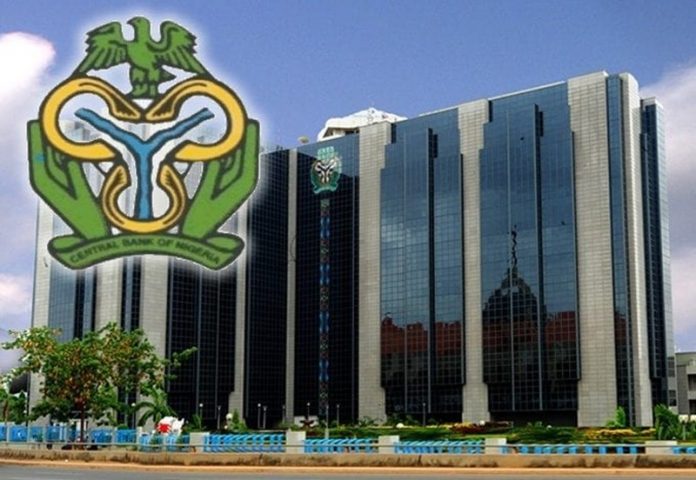
 

Central Bank of Nigeria Holds Interest Rate at 27.5% Amid Inflation Drop, Keeps CRR At 50%

0

The Central Bank of Nigeria (CBN) on Tuesday opted to keep its benchmark interest rate unchanged at 27.5 percent, despite growing expectations from sections of the financial community for a rate cut following signs of easing inflation.

Governor Olayemi Cardoso, who announced the decision at the end of the two-day Monetary Policy Committee (MPC) meeting in Abuja, said the decision was unanimous among committee members and hinged on what the bank described as “relative improvements” in macroeconomic indicators.

“The MPC noted the relative improvements in some key macroeconomic indicators which are expected to support the overall moderation in prices in the near to medium term,” Cardoso said.

He pointed to progress in narrowing the foreign exchange gap, a positive balance of payments position, easing PMS prices, and a drop in food inflation as key justifications for maintaining the status quo.

It was the second straight meeting in which the CBN held the Monetary Policy Rate (MPR) steady, following a rapid tightening cycle earlier in the year. Between February and March 2024 alone, the CBN raised the rate by 600 basis points—from 18.75 percent to 27.75 percent—before trimming it slightly to 27.5 percent in April.

The MPR, a key instrument the central bank uses to control liquidity and tame inflation, has seen a cumulative increase of 875 basis points since 2022, when the rate stood at 11.5 percent.

Analysts Had Hoped for a Cut

Some financial analysts and market observers had anticipated that the CBN would ease rates at this meeting, pointing to the marginal decline in headline inflation reported for April. The National Bureau of Statistics (NBS) pegged April inflation at 23.71%, a marginal improvement from the 24.23% recorded in March.

Although the decline was not dramatic, it prompted expectations that the apex bank might shift toward supporting economic growth by easing borrowing costs for businesses and households already struggling with the consequences of earlier rate hikes.

The Chairman of the Organized Private Sector of Nigeria, Dele Oye, advocated for a reduction of the MPR to prevent slowed business growth while criticizing the existing rate, stating, “The economy cannot run on the 27.5 percent interest rate. Nobody can borrow money at the current rate and make a profit from business.”

However, the CBN seemed to have taken a more cautious stance, choosing to allow more time for previous rate hikes to fully filter through the economy.

Cardoso, in his address, stressed that while the inflation outlook was improving, underlying inflationary pressures remained due to factors such as high electricity tariffs, persistent FX demand, and structural inefficiencies.

Policy Tools Unchanged

Beyond the interest rate, the MPC also left all other monetary policy parameters unchanged. The asymmetric corridor around the MPR was retained at +500/-100 basis points. The Cash Reserve Ratio (CRR) was kept at 50 percent for commercial banks and 16 percent for merchant banks, while the liquidity ratio remained at 30 percent.

These tools are used by the central bank to manage the volume of money circulating in the economy and ensure financial system stability.

Cardoso said the committee was encouraged by recent federal government policies to boost local production, reduce import dependence, and stabilize the exchange rate—all aimed at easing pressure on consumer prices.

He also praised the federal government’s efforts in improving food supply through targeted interventions in agriculture and better security in farming regions.

Cardoso has repeatedly positioned the CBN’s current approach as a deliberate reset to restore credibility and reinstate orthodoxy in monetary policy after years of opacity and unorthodox interventions under the previous leadership. The bank has also resumed the release of long-suppressed data, including its audited financial statements and breakdown of gross versus net external reserves.

Presently, the central bank seems committed to maintaining a tight stance in the short term, hoping that existing monetary tools and fiscal coordination will eventually tame inflation and revive growth. But with unemployment high, consumer demand suppressed, and borrowing costs choking business activity, the call for interest rate relief may grow louder in the months ahead, especially if inflation continues its downward drift.

The next MPC meeting is expected in July, where all eyes will again turn to whether the CBN finally responds to the inflation signal or remains on its cautious path.

Central Bank of Nigeria Claims FX Market Volatility Dropped Below 0.5%, But Doubt Persists Over Data Credibility

0

The Governor of the Central Bank of Nigeria (CBN), Mr. Olayemi Cardoso, on Tuesday declared that volatility in the foreign exchange (FX) market has significantly declined, dropping from over 4% a year ago to less than 0.5%, as monetary and fiscal reforms begin to take hold.

Addressing the press after the 300th Monetary Policy Committee (MPC) meeting in Abuja, Cardoso said the decline in FX volatility signals improving macroeconomic stability, restored investor confidence, and a rebound in external reserves.

According to him, these changes are a direct result of “policy consistency, orthodox monetary tightening, and enhanced transparency” by the apex bank.

“If you look at the exchange rate, volatility has reduced from over 4% a year ago to less than half of 1% now. That’s an indication of stability,” Cardoso said, emphasizing that Nigeria’s currency depreciation has been relatively modest when compared to other emerging markets grappling with similar global shocks.

The CBN chief explained that liberalization of the FX market, unification of exchange rates, and reforms to boost FX supply had begun to yield results. In addition, he said that the synergy between monetary and fiscal authorities has contributed to the recent calm in the FX market, creating a more predictable environment for foreign investors and businesses.

Cardoso noted that the naira’s adjusted exchange rate had made it more competitive, with the potential to enhance Nigeria’s position in regional trade, particularly within ECOWAS. He also said local refineries, especially the Dangote Refinery, would soon help ease FX demand pressure by reducing the country’s need for imported refined fuel products.

Reserve Rebound and Remittance Push

Beyond exchange rate stability, Cardoso disclosed that Nigeria’s net external reserves have surged from just over $3 billion to around $23 billion in recent months—a development he described as a “quantum leap.”

According to the governor, the turnaround is a result of improved transparency in reserve reporting and reforms that brought back players who had previously stayed away from the FX market. The CBN has resumed the publication of both gross and net reserve figures, which Cardoso said was meant to “bolster confidence and reduce speculative behavior.”

The gross reserves, which hovered between $33–34 billion earlier in the year, are expected to rise further due to increased oil receipts, declining fuel import needs, and expanding non-oil export earnings, particularly gas.

On diaspora remittances, the CBN said it is targeting inflows of $1 billion monthly. The bank said reforms—such as digitization of remittance processes, improved KYC compliance, and closer collaboration with the Nigerian Inter-Bank Settlement System (NIBSS)—have already raised inflows from $200 million to over $600 million at peak levels.

Cardoso said banks are now expected to develop tailored products for Nigerians abroad, after the apex bank dismantled structural bottlenecks that previously constrained the flow of funds through formal channels.

Transparency or Window Dressing?

However, while Cardoso painted an optimistic picture of the FX market and the broader economy, not everyone is buying it, at least not without scrutiny. Concerns over data credibility from government institutions have continued to surface, casting doubt over the authenticity of the central bank’s claims.

Notably, respected economist and member of President Bola Tinubu’s Economic Advisory Council, Bismarck Rewane, recently pointed to “discrepancies” in data released by the National Bureau of Statistics (NBS)—Nigeria’s chief data agency. Speaking on Monday about the state of Nigeria’s economy, Rewane warned that inconsistent and manipulated figures could erode public trust in economic governance.

“Are those numbers credible? If they aren’t, then what exactly are we seeing here? A distortion in methodology?,” Rewane queried. He did not accuse any particular agency of deliberate falsification but said the inconsistencies could lead to misinterpretation and flawed policy decisions.

While the CBN said it is now committed to greater transparency—publishing audited financial statements and reserve data regularly—there is growing skepticism in economic and civic circles that such efforts may be more cosmetic than institutional. Over the past year, multiple analysts and economists have expressed worry that a trend of data “massaging” may be evolving across federal agencies, especially as the government faces rising criticism over economic hardship.

“Let the Central Bank comply with sections 50 (1)(3) of the CBN Act and publish its annual financial statement, let us see if the net external reserves is actually $23.1bn. There are places where you don’t bring that slimy political propaganda to, and reserve management as one of the 5 pillars that forms the basis of Central Banking is an integral part, because it has a direct consequence on managing monetary policy,” economist, Kelvin Emmanuel, said last month in response to CBN’s claim that Nigeria’s FX reserves rose to $23 billion.

These suspicions are backed by the precedent set by the past administration. In the past, agencies such as the NBS, the Debt Management Office (DMO), and the Ministry of Finance have faced public backlash over statistics that either contradicted market realities or appeared misaligned with earlier releases.

Analysts say the credibility gap poses a major threat to Nigeria’s economic recovery, particularly in the FX market, where investor decisions hinge on reliable information.

“Net FX reserves came in line with expectations, but CBN’s commitment to improve quality of reserves shouldn’t be understated. While CBN didn’t publish detailed data of its short- and medium-term foreign liabilities, providing some insight into its net reserves is a significant step in the right direction,” JP Morgan said in 2023.

Institutional Reform Still Fragile

Cardoso admitted that the central bank is still undergoing a process of institutional reform, stressing that it should not be judged by the same yardsticks as commercial banks. He noted that the CBN moved from a loss of over N1 trillion in 2023 to a near breakeven position of N30 billion this year, a transition he said underscored the scale of internal restructuring.

He explained that the central bank is not a profit-making organization, making it primarily a custodian of monetary stability, whose performance should be measured against that mandate.

The CBN insists that it remains committed to its reform path. Cardoso reiterated that the apex bank will continue to tighten monetary policy, sustain FX reforms, and strengthen cooperation with fiscal authorities to anchor long-term macroeconomic stability.

Google Rolls Out AI Mode in Search, Ushering A New Era of Search Experience

0

Tech giant Google has announced the rollout of its AI mode in search, which lets users ask complex questions, signaling a new era of user search experience.

On Tuesday, the company announced this update at its annual developer conference, Google I/O 2025.

Announcing the launch, Google wrote,

“Since launching last year, AI Overviews have scaled to over 1.5 billion users and are now in 200 countries and territories. As people use AI Overviews, we see they’re happier with their results, and they search more often. In our biggest markets like the U.S. and India, AI Overviews are driving over 10% growth in the types of queries that show them, and this growth increases over time. It’s one of the most successful launches in Search in the past decade.

“For those who want an end-to-end AI Search experience, we’re introducing an all-new AI Mode. It’s a total reimagining of Search. With more advanced reasoning, you can ask AI Mode longer and more complex queries. Early testers have been asking queries that are two to three times the length of traditional searches, and you can go further with follow-up questions. All of this is available as a new tab right in Search.”

Instead of a traditional list of links, AI Mode generates direct, AI-driven answers using Google’s search index, similar to chatbots like ChatGPT or Perplexity. It’s designed for nuanced or exploratory questions, such as comparing products or diving into complex topics. Users can input queries via text, voice, or images (e.g., uploading a photo to ask about a product or scene). This integrates with Google Lens for enhanced visual search.

AI Mode is Google’s direct response to the release of search engines from Silicon Valley startups like OpenAI and Perplexity, which provide chatbot-style answers to questions and queries. The feature which will roll out to users in the U.S. starting this week, builds on Google’s existing AI-powered search experience, AI overviews, which display AI-generated summaries at the top of its search results page. Both AI Overviews and AI Mode will now use a custom version of Gemini 2.5, and Google says that AI Mode’s capabilities will gradually roll out to AI Overviews over time.

Also, Google disclosed that search results will be personalized based on users’ past searches, and if they choose to connect their Google Apps using a feature that will roll out this summer. For instance, if they connect their Gmail, Google could know about their travel dates from a booking confirmation email and then use that to recommend events in the city they are visiting that will be taking place while they are there.

Before the integration of AI to search, CEO Sundar Pichai has flagged this feature as a top priority, emphasizing that Google is leaning in heavily on AI. It is understood that search remains the engine that drives Alphabet’s business, hence the need for the upgrade.

Google’s AI mode is part of its response to growing competition from AI-first platforms like ChatGPT and Microsoft’s Bing with Copilot. By embedding generative AI directly into Search, Google is reshaping the web discovery process and redefining what users expect from search engines.

The idea behind AI Overviews is to deliver quick, summarized answers to complex questions—helping users get what they need without digging through multiple links. But recent data suggests this convenience is coming at the expense of traffic to the very sites that supply the information.

Google’s integration of AI Mode into its dominant search engine (over 90% global search market share) gives it a massive reach advantage. With no login required for AI Overviews and easy access, Google can capture users seeking conversational or multimodal search, challenging chatbots’ user bases.

Looking ahead

Google’s AI Mode raises the stakes for AI chatbots by blending advanced AI with its unparalleled search infrastructure. The shift toward AI-driven search could redefine how users interact with information, pushing chatbots to adapt or risk losing ground.

Tekedia Capital welcomes Exin Therapeutics

0

Tekedia Capital welcomes Exin Therapeutics to our community. Exin Therapeutics is a biotech company that is developing genetic therapies that  target neural activity for people suffering from neurological and neuropsychiatric disorders such as epilepsy, debilitating symptoms of autism spectrum disorder, and Parkinson’s disease.

The innovation in Exin Therapeutics is the circuit-level approach it is taking to treat these brain disorders. Largely,  instead of trying to restore missing genes, they’re supplementing already existing genes that directly change the neural activity in the brain. A proprietary AI system they invented is assisting them in the development.

For us, this is more than an investment, this is a call to mission at a glocal level since some of these diseases remain largely incurable! But with three founders – all Oxford-educated neuroscientists with capabilities in molecular biology, circuit, and systems neuroscience, we see something that is worth supporting, for all nations, and all people.

To learn more, visit:

Tekedia Capital capital.tekedia.com

Exin Therapeutics www.exintherapeutics.com