DD
MM
YYYY

PAGES

DD
MM
YYYY

spot_img

PAGES

Home Blog Page 114

Riding the AI Wave: Alibaba Shares Rise As Accelerated Cloud Sales Drive 34% Jump

0

Alibaba Group Holding signaled on Tuesday that it is prepared to aggressively ramp up capital expenditures beyond its already massive projections, betting the company’s future on an artificial intelligence boom that CEO Eddie Wu describes as “highly definitive.”

The Chinese tech titan reported accelerated sales at its pivotal cloud division, sparking a premarket rally of nearly 4.3% in New York as investors looked past a steep plunge in short-term profitability to focus on the resurgence of growth, according to CNBC.

The report offered the strongest evidence yet that Alibaba’s restructuring efforts are gaining traction. Revenue for the fiscal second quarter rose 5% to 247.8 billion Chinese yuan ($34.8 billion), beating analyst estimates. However, the spotlight was firmly on the Cloud Intelligence Group, the division responsible for training and hosting AI models. Cloud revenue surged 34% year-on-year to 39.8 billion yuan, a significant acceleration from the 26% growth recorded in the previous quarter.

According to Wu, the company is currently demand-constrained rather than supply-constrained. “We are not even able to keep pace with the growth in customer demand… in terms of the pace at which we can deploy new servers,” Wu admitted during the earnings call.

He revealed that AI-related product revenue has achieved triple-digit year-over-year growth for the ninth consecutive quarter.

To meet this voracious appetite, Alibaba is pouring capital into infrastructure. The company has spent approximately 120 billion yuan on AI and cloud infrastructure over the past four quarters alone. While the company announced a three-year, 380 billion yuan ($53 billion) investment plan in February, Wu suggested on Tuesday that this figure “might be on the small side” and that leadership “wouldn’t rule out further scaling up that capex investment” if the current trajectory continues.

Defying the “Bubble” Narrative

Wu utilized the earnings call to forcefully push back against global skepticism regarding an “AI bubble.” Addressing the debate over the depreciation of graphics processing units (GPUs) and the return on investment for generative AI, Wu painted a picture of a market suffering from acute undersupply.

“I think in the next three years to come, AI resources will continue to be undersupplied with demand outstripping supply,” Wu stated.

He noted that the scarcity of computing power is so severe that GPUs—specifically those designed by Nvidia—that are three to five years old are still “running at full capacity” alongside the newest hardware. This tightness in the supply chain extends beyond logic chips to memory and data center construction, reinforcing his view that the industry is nowhere near hitting a wall in terms of capabilities or adoption.

Alibaba’s own generative AI offering, the Qwen model, is capitalizing on this wave. On Monday, the company announced that its Qwen app—a direct rival to OpenAI’s ChatGPT—surpassed 10 million downloads within just one week of its public launch, solidifying Alibaba’s status as a leading contender in China’s domestic AI race.

The “Quick Commerce” Gamble

While the cloud division provided the optimism, Alibaba’s aggressive expansion into “instant commerce” weighed heavily on the bottom line. Overall adjusted EBITA—a closely watched measure of core profitability—plummeted 78% year-on-year to 9.1 billion yuan. The company attributed this drop largely to heavy investments in its logistics and delivery networks to compete in the cut-throat market for super-fast delivery.

Despite the margin compression, the strategy appears to be driving top-line results. Revenue from the quick commerce segment surged 60%, far outpacing the 12% growth seen in the prior quarter. This helped lift the broader China e-commerce division, which houses the flagship Taobao and Tmall platforms, to a 16% revenue increase.

“In our consumption business, quick commerce continued to scale with significant improvement in unit economics and drove rapid growth in monthly active consumers on the Taobao app,” Wu said.

Jiang Fan, who heads Alibaba’s international digital commerce group, described quick commerce as a “strategic pillar” for the future. He outlined an ambitious target to reach 1 trillion yuan in gross merchandise value (GMV) for the segment within three years. Investors appeared willing to forgive the immediate profit hit, interpreting the spending as a necessary maneuver to defend market share against domestic rivals while the high-margin cloud business powers the company’s long-term transformation.

Google, Accel Launch $2m Co-Investment Drive to Fuel Indian AI Startups

0

Alphabet’s Google and U.S.-based venture capital firm Accel announced a strategic partnership on Thursday to co-invest in at least ten early-stage artificial intelligence startups in India.

This marks Google’s first such collaborative funding effort in the country, underscoring India’s growing importance as a global technology hub.

Under the new arrangement, Google’s AI Futures Fund and Accel will jointly invest up to $2 million in each selected startup. Prayank Swaroop, partner at Accel, told Reuters that the funding would target ventures across a broad range of sectors, including entertainment, creativity, work productivity, and coding technologies.

The partnership is part of Google’s broader push into the Indian market, which has seen a surge in U.S. tech investments. Companies such as Microsoft, Amazon, and OpenAI have all intensified their engagement in India, drawn by a population of nearly one billion internet users and the nation’s rapidly growing technology ecosystem.

Last month, Google announced a $15 billion investment to establish an AI data center in Andhra Pradesh, its largest investment in India to date. The AI Futures Fund, launched six months prior, has already backed more than 30 companies, including the Indian webtoon platform Toonsutra and the U.S.-based legal-tech firm Harvey. Beyond funding, Google has partnered with Reliance Jio, India’s largest telecom operator, to provide free access to its Gemini AI platform for 505 million users, reflecting a dual strategy of market development and technology adoption.

Jonathan Silber, co-founder and director of Google’s AI Futures Fund, emphasized the strategic importance of India in shaping the next era of global technology.

“We firmly believe that the founders in India are going to be playing a leading role in defining that next era of global technology,” he said. “We think that it’s critical to invest in the early stage, particularly in key markets like India, so that we can be at the forefront of investing in the next generation of AI leaders.”

India’s AI market is poised for substantial growth, with projections indicating it could reach $17 billion by 2027, according to IT industry body Nasscom and consulting firm BCG. The global AI market is also expanding rapidly, with Gartner projecting global AI spending to approach $1.5 trillion in 2025 and exceed $2 trillion by 2026.

Some analysts see the Google-Accel partnership as part of a broader competitive race to capture the early-stage AI ecosystem in India, where government policies and market size offer a fertile ground for innovation. Startups in the country are increasingly focusing on areas such as generative AI, AI-powered productivity tools, and creative content platforms, seeking to position themselves for both domestic growth and global expansion.

The partnership aims to nurture a new generation of Indian AI companies capable of competing on the world stage by combining financial backing with strategic support and access to Google’s AI infrastructure. It is believed that these early-stage investments are critical, as they often determine which startups can survive and scale in the highly competitive global AI market.

The move also reflects a broader trend of tech giants viewing India not merely as a consumer market but as a source of innovation and engineering talent. With a growing pool of AI researchers and entrepreneurs, India is emerging as a central node in the global AI landscape, attracting billions of dollars in funding and collaboration from U.S. and other international technology players.

The Ultimate Guide To Crypto Trading: Which Exchange Is Perfect For You?

0

Anyone who decides to take crypto seriously eventually needs to learn how to trade on an exchange that actually fits their profile. In 2025, that goes way beyond comparing fees. It means understanding which products you use, how you deal with leverage, what level of security you consider acceptable, and how good the experience is on the app you open dozens of times a day.

Bitunix, for example, is a crypto exchange platform that has grown quickly among spot and derivatives traders thanks to its intuitive design and streamlined identity verification. But this guide is not a click-here-then-click-there tutorial. It is a map to help you evaluate the main options on the market.

Types Of Crypto Exchanges You’ll Find In 2025

Today, the average trader moves across three main categories. There are pure spot exchanges, focused on straightforward buying and selling of crypto, often with few or no derivatives. There are derivatives platforms that prioritize margin, margin, and more sophisticated risk structures. And finally, there are DEXs (decentralized exchanges), which run on smart contracts.

They offer more autonomy, but demand extra care with wallets, slippage, and liquidity. Bitunix was born as a crypto derivatives trading platform, but it does not stop there. It combines futures, copy trading, spot, and yield products under one roof, which appeals to users who prefer to keep funds concentrated in fewer places.

What Really Matters When Choosing An Exchange

When someone asks which exchange is perfect, the answer starts with a bit of self-analysis.

Range of pairs and products

Bitunix offers 800+ trading pairs in 2025 across futures and spot, with a focus on BTC, major altcoins, and new tokens that gradually come onto traders’ radar.

Liquidity and execution speed

The company handles billions in daily volume and supports more than 800 spot pairs, with a matching engine running at a millisecond level and very tight top-of-book spreads on the most liquid coins. This helps reduce slippage and makes it easier to open and close large positions.

Tools for reading the market

Instead of relying on an external site, traders can use TradingView inside the app, with Ultra K-line, dozens of indicators, and drawing tools. There is also a Multi-Window module that lets users trade across multiple charts on the same screen, a feature clearly designed for anyone tracking several pairs at once.

Risk management and leveraged products

On perpetual futures, Bitunix offers leverage of up to 125x, combined with robust pricing mechanisms, layered risk limits, and an advanced liquidation system to help reduce unnecessary liquidations.

These criteria help separate exchanges with solid operations from improvised projects.

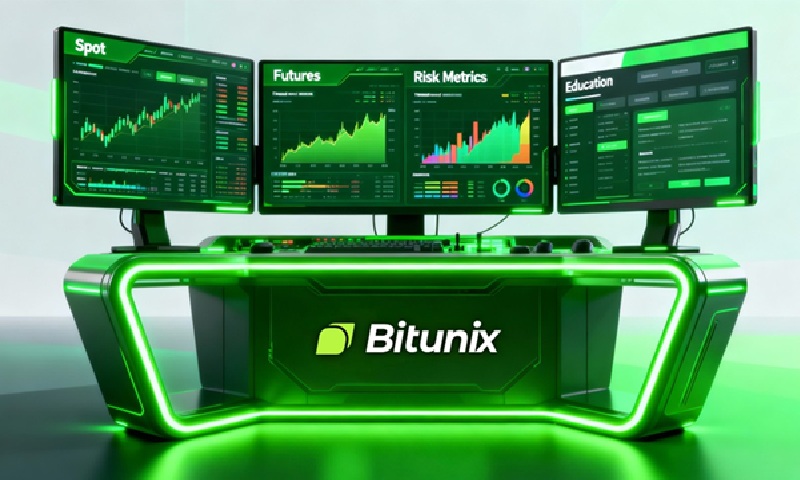
A full trading command center layout illustrating how Bitunix unifies education, execution, and analytics in one place.

Bitunix Inside: Tools That Matter For Everyday Trading

Bitunix’s edge becomes clearer when you put all the pieces together.

Futures and margin – perpetual contracts with leverage, a wide range of order types (stop-loss, take-profit, trailing stop, reverse), and a hedge mode to keep long and short positions on the same asset.

Spot trading – more than 800 pairs, a fast engine, and a focus on listing both blue chips and hidden gems.

Desktop-style tools inside the app – Multi-Window with multiple charts, native TradingView, price and funding alerts, and panels to switch between spot and futures in seconds.

Automated investing – the Bitunix Earn product, with flexible and fixed options, plus Dual Investment for users who want returns linked to price behavior without trading manually all the time.

For more active traders, this means fewer tabs open and a tighter workflow, concentrating market analysis, execution, and monitoring in a single environment.

KYC, Compliance, And Protection: Why Onboarding Matters

No ultimate guide to crypto trading in 2025 is complete if it ignores KYC. In Bitunix’s case, onboarding starts with a simple signup flow, designed as a fast registration process where users create an account in a few steps and then go through a guided verification phase.

This user-friendly verification system combines document upload, automated checks, and a selfie. It is part of a global compliance framework with a protection fund that ties user identification to security measures and capital reserved for user protection in extreme scenarios. This is an exchange that truly cares, aiming to balance regulatory requirements with a smooth experience.

Conclusion

In the end, perfect for you is not a label. It is a practical question. The best exchange is the one that offers products aligned with the way you trade, security that matches your risk appetite, and tools that help you make faster, more informed decisions. Bitunix is a strong candidate on that front, bringing together derivatives with up to 125x leverage, deep spot markets, native TradingView, Multi-Window, and a flexible KYC process.

Mono Protocol’s Black Friday Rush Highlights Rising Demand for Revenue-Sharing Infrastructure Tokens

0

Mono Protocol has entered one of its most active phases of the year as Black Friday Week drives a surge of interest across the token sale. The project has now raised $3.52 million, nearing the $3.60 million target for Stage 18, with the presale price holding at $0.0525. The team maintains a planned token launch value of $0.500, offering an estimated ~852% potential profit based on current presale pricing.

The strong inflows align with a broader shift in user attention toward infrastructure-focused crypto presale projects, particularly those offering clear utility, revenue pathways, and transparent token economics. Mono Protocol fits this trend by positioning itself not only as a chain-abstraction platform but also as a system that allows developers to earn predictable revenue from cross-chain executions.

100% Black Friday Bonus Boosts Allocation Ahead of Next Stage

The project’s 100% Black Friday bonus, active from November 24 to 30, remains a key driver behind the latest rise in participation. Every presale purchase instantly doubles the MONO allocation, offering a boosted entry while Stage 18 closes in on capacity. This structure has encouraged users to secure additional tokens ahead of the transition to the next pricing tier.

Black Friday historically generates heightened activity in seasonal crypto presale markets, particularly when incentives align with transparent pricing. Mono Protocol’s straightforward bonus mechanic—no codes, no additional forms, no conditions—has helped widen participation among buyers scanning the best presale crypto 2025 selections.

Mono Protocol Introduces a Revenue Model for Developers

A defining pillar of Mono Protocol is its focus on enabling developers and applications to earn revenue on every transaction routed through the platform. By using Mono’s chain-abstraction layer, apps can configure their own transaction fees and collect predictable revenue across chains. This model transforms routing infrastructure into a monetization opportunity, which is rare among early-stage cryptocurrency presales.

The protocol’s unified execution system removes the need to manage isolated networks and native gas requirements. Instead, applications rely on a single routing layer powered by the MONO universal gas token, which handles quoting, execution, and settlement regardless of the underlying chain.

This revenue-centered structure has become a key theme among participants researching which crypto presale projects carry practical utility beyond the promotional period.

Execution Reliability Strengthens Mono’s Position in the Presale Market

Mono Protocol’s infrastructure is built around guaranteed execution using its Resource Locks model. This system prevents failed transactions and unexpected reversions, two issues that frequently affect users interacting with cross-chain systems. In a period like Black Friday Week—where networks experience heavier usage—these guarantees carry added relevance.

The routing engine is designed to perform significantly faster than conventional cross-chain paths while maintaining MEV-resistant protections. By eliminating frontrunning exposure and value leakage, Mono aims to provide consistent performance for applications routing volume across multiple blockchains.

These execution guarantees have made the project increasingly visible on several updated crypto presale lists, particularly those focused on infrastructure tokens.

MONO Serves as the Core Asset for Gas, Staking, and Security

The MONO token anchors key functions within the ecosystem. It operates as the universal gas asset, pays routing fees, and secures the network through staking by bundlers, messaging nodes, and the orchestrator. Solvers and routers post MONO-based execution bonds to ensure settlement integrity.

With Stage 18 approaching completion at $3.52M raised, the network’s multi-tier utility model continues to appeal to users comparing long-term infrastructure-based assets during the best presale crypto 2025 cycle.

Black Friday Week Continues to Lift Presale Momentum

As the Stage 18 cap of $3.60 million approaches, Mono Protocol is positioned for sustained visibility throughout Black Friday Week. The combination of a revenue-oriented infrastructure model, transparent pricing, and a 100% bonus has helped the project maintain momentum during one of the most competitive periods for crypto presale activity.

With the current price locked at $0.0525, the remaining Black Friday window offers a limited opportunity to secure a doubled MONO allocation before the next stage begins.


Learn More about Mono Protocol

Website: https://www.monoprotocol.com/

X: https://x.com/mono_protocol

Telegram: https://t.me/monoprotocol_official

LinkedIn: https://www.linkedin.com/company/monoprotocol/

U.S. Bancorp Sets Up Digital Assets and Money Movement Unit as Stablecoin Adoption Sweeps Global Finance

0

U.S. Bancorp has created a Digital Assets and Money Movement unit, marking one of the clearest signs yet that traditional American banking is being pulled into a new era shaped by tokenization, blockchain rails, and the rapid rise of stablecoins.

Announced in mid-October 2025, the new division places the bank squarely inside a global shift that has financial institutions scrambling to modernize their infrastructure before the next generation of money movement leaves them behind.

Stable-coin adoption is sweeping across the world, transforming from a niche experiment into a financial utility. U.S. lenders, in particular, are racing to build internal capabilities. The momentum is being fueled by the popularity of dollar-backed digital tokens, which are now settling everything from cross-border remittances to corporate treasury transfers. Even conservative institutions that once kept blockchain at arm’s length are rolling out pilots or forming internal teams to prepare for widespread use of tokenized deposits, programmable payments, and instant settlement systems.

U.S. Bancorp’s move fits neatly into this new reality. With more than six hundred billion dollars in assets, the bank cannot afford to fall behind rivals that are already deploying blockchain systems. JPMorgan runs its own tokenization network. Citigroup has built tokenized cash settlement tools. Global institutions from Europe to Asia are rolling out similar initiatives.

The result is an industry-wide rush to ensure that banks—not fintech startups—control the pipes that will carry the next evolution of digital money.

The new division at U.S. Bancorp will be led by payments veteran Jamie Walker, who currently heads Merchant Payment Services. He will remain in that role until a successor is named, after which he will step into his new position under Chief Digital Officer Dominic Venturo.

Venturo said the bank’s customers, especially corporates and institutions, increasingly want to understand how digital assets can help them move money safely, store value efficiently, and interact with tokenized instruments in a regulated environment. The new structure is designed to meet that demand with a long-term focus rather than piecemeal experimentation.

The organization intends to develop blockchain-based tools that support stablecoin activity, tokenized assets, and advanced digital payment rails. That includes research into issuing or integrating stablecoins, exploring tokenized real-world assets that settle instantly, and constructing on-chain money-movement infrastructure capable of supporting both domestic and cross-border flows.

The unit will also oversee custody and settlement services for cryptocurrencies, enabling U.S. Bancorp to serve institutional clients seeking compliant exposure to digital assets. Internally, it will coordinate innovation efforts across the bank to ensure all blockchain projects meet regulatory and risk-management standards.

The establishment of this division sends a message to the wider market. While crypto markets have weathered cycles of hype and collapse, the technology underneath—especially the rails powering stablecoins—has only grown more entrenched. Dollar-backed tokens now settle hundreds of billions of dollars in monthly transactions globally.

Large corporations have begun experimenting with on-chain treasury operations. Payment companies are integrating stablecoins directly into their products. And financial regulators in major economies, including the U.S., are edging toward more structured frameworks that would allow banks to issue or custody tokenized dollars.

This shift explains why financial institutions are moving quickly. Stablecoins offer faster settlement, lower transaction costs, and programmable features that traditional payment systems cannot match. As adoption widens, banks risk losing relevance if they fail to own the infrastructure powering the new digital-money ecosystem.

Bancorp joining the fray, setting up a division dedicated to digital assets, signals that tokenized markets, stablecoins, and digital-money rails are expected to become permanent financial instruments rather than speculative experiments. For a bank of its size, the new unit is not just a response to competition—it is a bet that the next major transformation in global finance will happen on distributed ledgers, and that institutions prepared today will have the advantage tomorrow.