DD
MM
YYYY

PAGES

DD
MM
YYYY

spot_img

PAGES

Home Blog Page 1150

Oil Prices Spike as Trump Urges Evacuation of Tehran, Raising Alarm Over Iran-Israel Standoff and Global Energy Security

0

Crude oil prices surged Monday night following an incendiary post by President Donald Trump, warning of imminent danger in Iran’s capital and renewing his vow to prevent the country from acquiring nuclear weapons.

The post marked a significant escalation in U.S. rhetoric, deepening concerns that the ongoing Israel-Iran confrontation could spiral into a full-blown regional crisis with dire implications for global energy markets.

“IRAN CAN NOT HAVE A NUCLEAR WEAPON. I said it over and over again! Everyone should immediately evacuate Tehran!” Trump posted on Truth Social, the platform owned by his media company.

Within minutes of the post, oil markets reacted sharply. U.S. West Texas Intermediate (WTI) futures jumped as much as 2.7%, before stabilizing at $72.05 a barrel, while Brent crude, the international benchmark, surged 2.2% before settling 0.4% higher at $73.50. The sharp movement reflects deep market anxiety over the possibility of military escalation in one of the world’s most volatile and energy-critical regions.

Global Markets Rattle as Tensions Rise

The reaction extended beyond oil. U.S. equity futures dropped, signaling investor concern that further escalation could destabilize global markets:

  • S&P 500 futures were down 0.4%
  • Dow futures slipped 0.4%
  • Nasdaq futures fell 0.5%

Financial analysts said the president’s post added fuel to a fire already burning. Israel has continued its campaign of airstrikes on Iranian military targets in recent weeks, and Tehran has warned that it will respond decisively to any threat against its sovereignty.

“Trump’s comments inject even more uncertainty, risk, and volatility into the market,” said Vishnu Varathan, head of macro research for Asia (ex-Japan) at Mizuho Bank. He noted that the statement could be interpreted as either a calculated warning to deter Iran or the opening salvo of a broader escalation.

The most immediate market concern remains the Strait of Hormuz, the narrow maritime chokepoint between the Persian Gulf and the Arabian Sea. Roughly 20% of the world’s oil passes through this strait. Iran has long threatened to close it in retaliation to any perceived aggression from the U.S. or its allies.

As global oil markets head into the peak summer demand season, even the slightest disruption through the Strait could cause a dramatic spike in prices and lead to global energy shortages.

“A blockade remains the key risk that could push markets into uncharted territory,” said Janiv Shah, vice president of oil markets at Rystad Energy, indicating that even if the probability of a blockade is low, its potential impact is enormous. That’s why we’re seeing the market price in that risk.

The U.S. Navy maintains a strong presence in the region to ensure the strait remains open, but a direct confrontation with Iran would significantly raise the stakes — and likely trigger retaliatory moves by Iranian proxies across the region, including in Iraq, Syria, Lebanon, and Yemen.

Brinkmanship, Regime Survival, and the Shadow of 2019

This is not the first time oil markets have been shaken by brinkmanship involving Iran. In 2019, under Trump’s first administration, a similar standoff over Iran’s nuclear ambitions led to tanker seizures, drone shootdowns, and a spike in oil prices, though it ultimately stopped short of open warfare.

What makes the current situation more dangerous, according to Varathan, is the lack of viable diplomatic off-ramps. Trump’s renewed emphasis on Iran’s nuclear capabilities may corner Tehran into abandoning cautious survival strategies in favor of more aggressive posturing.

“If the leadership in Iran smells regime change on the agenda, the risk is that it may shift from loss-minimizing survival strategies to destruction-maximizing end-game,” Varathan warned.

As of Tuesday morning, there was no follow-up statement from the White House or the State Department clarifying the context of Trump’s warning or confirming the credibility of the threat to Tehran. Iran’s government, for its part, has remained defiant but cautious, indicating it will respond to any aggression “at a time and place of its choosing.”

Markets will be watching for movement on several fronts, including: Whether Israel intensifies its strikes or announces broader military objectives, any sign of Iranian retaliation or closure of shipping lanes, a formal U.S. military repositioning in the Gulf region and diplomatic efforts from regional powers like Saudi Arabia, the UAE, or Turkey to mediate or de-escalate tensions.

However, oil markets are expected to remain highly volatile, with prices sensitive to even the slightest development or signal from Washington, Tehran, or Tel Aviv.
Implications of Davis Commodities’ Bitcoin Treasury and Tokenized Commodities Plan

0

Davis Commodities Limited (Nasdaq: DTCK), a Singapore-based agricultural commodities trader, announced on June 16, 2025, a $30 million strategic growth initiative integrating Bitcoin reserves and Real-World Asset (RWA) tokenization to transform its business model. The plan allocates 15% of the funds ($4.5 million) initially to Bitcoin reserves, with an eventual increase to 40% ($12 million), citing Bitcoin’s role as an inflation hedge and its historical performance (156% growth in 2023, 121% in 2024, and over 14% in 2025).

Additionally, 50% ($15 million) will fund RWA tokenization projects for commodities like sugar, rice, and edible oils, aiming to enhance liquidity and efficiency, with projections of $50 million in annual revenue within 24 months. The remaining 10% ($3 million) will support technological infrastructure and partnerships to facilitate digital asset integration. This move positions Davis Commodities at the forefront of blending traditional commodity trading with digital finance, though it faces risks like Bitcoin’s volatility and regulatory uncertainties.

Allocating 15% initially and up to 40% of the $30 million to Bitcoin signals a bold move to hedge against inflation and fiat currency devaluation. Bitcoin’s historical returns (156% in 2023, 121% in 2024, 14%+ in 2025) support this, but its volatility (e.g., 2022’s 64% drop) introduces significant risk. This could enhance Davis Commodities’ balance sheet if Bitcoin appreciates but may erode capital if prices crash.

By investing $15 million in RWA tokenization for sugar, rice, and edible oils, Davis aims to unlock liquidity, reduce transaction costs, and attract institutional investors. Projected $50 million in annual revenue within 24 months suggests confidence in blockchain’s ability to streamline commodity trading. Success could position Davis as a pioneer in digital commodity markets.

As a small-cap Nasdaq-listed firm (market cap ~$30-50 million), this crypto-centric strategy could boost its stock price by attracting tech-savvy investors. However, traditional investors may view it as speculative, potentially polarizing its shareholder base. Tokenization requires robust blockchain infrastructure and partnerships, with $3 million allocated for tech development. This could improve supply chain transparency and efficiency but demands expertise in smart contracts and regulatory compliance.

Integration of digital assets may diversify revenue streams, reducing reliance on volatile agricultural markets (e.g., sugar prices fluctuated 20% in 2024 due to weather and export policies).  A sharp decline in Bitcoin’s value could impair Davis’ financial position, especially with a 40% allocation. Tokenized assets face varying global regulations (e.g., SEC’s scrutiny of crypto securities in the U.S., Singapore’s progressive but evolving framework). Non-compliance could lead to fines or operational halts.

Commodity buyers may resist tokenized assets due to unfamiliarity or lack of infrastructure, delaying revenue projections. Blockchain integration increases exposure to hacks or smart contract vulnerabilities. Davis’ move could inspire other commodity traders to explore crypto treasuries or tokenization, accelerating blockchain adoption in traditional markets. It may pressure competitors to innovate, potentially disrupting the $1 trillion global agricultural commodities market.

Institutional and retail investors focused on stable cash flows and tangible assets may view Bitcoin exposure as reckless, given its 30-50% annualized volatility. They may also question tokenization’s unproven scalability in commodities. Those bullish on digital assets (e.g., Bitcoin ETF holders, DeFi enthusiasts) will likely see Davis as a forward-thinking bridge between legacy and decentralized finance, potentially driving stock demand on platforms like Robinhood or eToro.

Firms like Cargill or Archer Daniels Midland rely on established supply chains and physical trading. They may dismiss tokenization as a niche experiment, prioritizing scale and relationships over tech. Smaller or tech-driven traders (e.g., AgriDigital in Australia) may follow Davis’ lead, using blockchain to compete on efficiency and transparency. This could widen the gap between tech-adopters and traditionalists.

Singapore’s clear digital asset regulations (e.g., MAS’s Payment Services Act) enable Davis’ strategy, while Dubai and Switzerland also support RWA tokenization. These regions may attract similar experiments. The U.S. and EU’s stringent crypto rules (e.g., MiCA in Europe, SEC’s Howey Test) could limit adoption by competitors or create compliance costs for Davis’ global operations, deepening a regulatory divide.

Supporters argue this strategy democratizes commodity markets via fractionalized tokens and hedges against inflation, aligning with Bitcoin’s narrative as “digital gold.” Skeptics warn of speculative bubbles, citing past crypto failures (e.g., FTX in 2022). They also question whether tokenization solves real-world issues like supply chain bottlenecks or climate-driven commodity shortages.

Davis Commodities’ $30 million plan to integrate Bitcoin and tokenized commodities is a high-stakes bet on digital finance transforming traditional markets. It could yield significant rewards—$50 million in projected revenue and first-mover advantage—but carries risks from market volatility, regulatory hurdles, and adoption challenges. The strategy underscores a broader divide between traditional and crypto-driven approaches, with Davis betting on the latter to redefine its industry.

Strategy’s $1.05 Billion Bitcoin Purchase Solidifies Its Position As A Crypto Market Titan

0

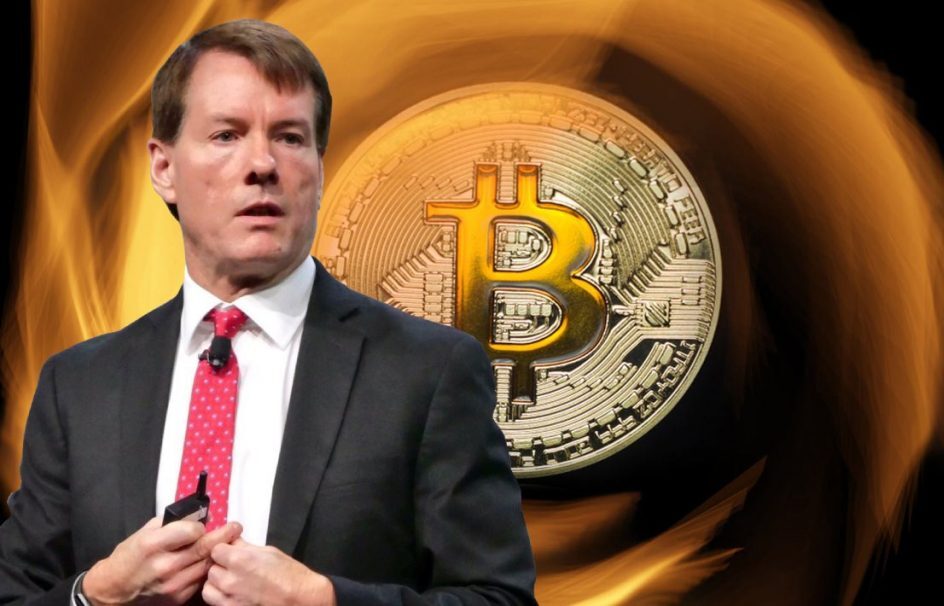
Strategy, the largest corporate holder of Bitcoin, acquired 10,100 BTC for approximately $1.05 billion at an average price of $104,080 per coin between June 9 and June 15, 2025. This purchase brings their total holdings to 592,100 BTC, valued at around $63.14 billion, with an average purchase price of $70,666 per Bitcoin. The acquisition was funded through at-the-market (ATM) stock offerings, including common and preferred shares.

Strategy’s Bitcoin portfolio shows an unrealized profit of roughly $21.2 billion, with a year-to-date Bitcoin yield of 19.1%. This move aligns with their aggressive accumulation strategy, led by Michael Saylor, despite market volatility and geopolitical tensions. Strategy’s $1.05 billion Bitcoin purchase has significant implications for the cryptocurrency market, corporate investment trends, and the broader financial landscape.

Strategy’s purchase of 10,100 BTC at $104,080 per coin signals strong institutional demand, potentially acting as a price floor for Bitcoin in the short term. Large buys like this can reduce downside volatility but may also exacerbate upward price swings if retail investors follow suit, fearing they’re missing out (FOMO). Posts on X suggest Bitcoin’s price has been bolstered by such institutional moves, with some users predicting a push toward $120,000 if momentum continues.

The purchase absorbs a significant portion of available Bitcoin liquidity, tightening supply. With Strategy now holding 592,100 BTC (roughly 2.8% of the total 21 million Bitcoin supply), their actions could further constrain market liquidity, especially as Bitcoin’s circulating supply diminishes due to halving events and hodling behavior. Strategy’s aggressive accumulation, led by Michael Saylor, reinforces Bitcoin as a legitimate corporate treasury asset. This could inspire other corporations to allocate portions of their balance sheets to Bitcoin, particularly those seeking inflation hedges or alternatives to low-yield bonds.

However, Strategy’s scale (holding $63.14 billion in BTC) makes it an outlier, and smaller firms may hesitate due to risk concerns. The purchase highlights Bitcoin’s growing acceptance as a store of value, especially amid geopolitical tensions and inflationary pressures noted in 2025 market analyses. Yet, it also raises questions about over-concentration risk for Strategy, as their financial health is increasingly tied to Bitcoin’s price.

Strategy’s move aligns with the narrative that Bitcoin is a hedge against fiat currency devaluation, particularly as global inflation persists and central banks navigate monetary policy challenges. This purchase could amplify Bitcoin’s appeal to investors seeking non-correlated assets. Large-scale corporate Bitcoin purchases draw attention from regulators. The SEC and other bodies may scrutinize Strategy’s funding methods (e.g., ATM stock offerings) and their impact on shareholders, especially if Bitcoin’s volatility leads to losses.

Regulatory risks remain a wildcard, as some X posts speculate about potential U.S. policies targeting crypto holdings. Strategy’s use of stock offerings to fund Bitcoin purchases dilutes existing shareholders, which could spark backlash if Bitcoin’s price corrects sharply. However, their unrealized $21.2 billion profit cushions this risk for now. Investors may view Strategy as a Bitcoin proxy, amplifying its stock volatility in tandem with BTC price movements.

Supporters, including Michael Saylor and Bitcoin maximalists, view Strategy’s purchases as validation of Bitcoin’s long-term value. They argue it strengthens the case for Bitcoin as “digital gold” and a hedge against economic uncertainty. X posts from crypto enthusiasts celebrate Strategy’s moves, with some calling it a “genius play” to outpace inflation and fiat depreciation.

Advocates see Strategy as a trailblazer, encouraging other firms to adopt Bitcoin. They point to the 19.1% Bitcoin yield as evidence of strategic success, positioning Strategy as a leader in a new financial paradigm. Critics argue Strategy’s heavy Bitcoin exposure is reckless, tying the company’s fate to a volatile asset. They highlight the potential for a Bitcoin price crash, which could devastate Strategy’s balance sheet and shareholder value. Some X users label it a “gamble,” noting that dilution from stock offerings burdens retail investors.

Skeptics question whether Strategy’s focus on Bitcoin diverts resources from core business operations (e.g., software development). They argue that diversifying into other assets or reinvesting in R&D could provide more stable returns. Some X posts speculate that Strategy’s large purchases manipulate Bitcoin’s price, creating a feedback loop where their buying drives up prices, benefiting their portfolio but potentially inflating a bubble.

Analysts and neutral commentators see Strategy’s moves as a high-stakes experiment in corporate finance. They acknowledge the potential for outsized returns but caution about systemic risks, including regulatory crackdowns or macroeconomic shifts (e.g., rising interest rates) that could dampen Bitcoin’s appeal. The divide also extends to retail versus institutional investors. Retail traders on X often express frustration, feeling priced out by institutional buys, while institutions view Strategy’s moves as a blueprint for entering crypto markets.

The divide reflects deeper ideological battles—Bitcoin as freedom and decentralization versus traditional finance’s emphasis on stability and regulation. Strategy’s purchases fuel this debate, with X posts split between those hailing Saylor as a visionary and others calling him a reckless ideologue. Large corporate buys like Strategy’s exacerbate perceptions of a “rich get richer” dynamic, as institutions with deep pockets can influence markets in ways retail investors cannot. This sentiment is evident in X discussions, where some users lament the growing institutional dominance in Bitcoin’s ecosystem.

Strategy’s $1.05 billion Bitcoin purchase solidifies its position as a crypto market titan, potentially stabilizing Bitcoin’s price while encouraging corporate adoption. However, it deepens the divide between bullish advocates who see Bitcoin as the future of finance and skeptics who view it as a speculative bubble. The move carries risks—volatility, dilution, and regulatory scrutiny—but also underscores Bitcoin’s growing mainstream acceptance. Monitoring Strategy’s next steps and Bitcoin’s price action will be critical to understanding whether this strategy reshapes corporate finance or becomes a cautionary tale.

Trump Mobile Unveils $499 “Made in America” Smartphone—but Questions Swirl Around Specs, Origin, and Reality

0

The Trump Organization’s latest venture, Trump Mobile, has ignited a media storm and public curiosity—not just because it’s a Donald Trump-branded wireless service, but because it comes bundled with a new $499 smartphone called the T1.

Unveiled Monday at Trump Tower, the phone was pitched as an American-made alternative to foreign-dominated devices and mobile networks. However, early scrutiny of the product’s specifications and marketing raises far more questions than answers.

According to the Trump Mobile website, the T1 phone will be released in September and supports a subscription plan pegged at $47.45 per month—an on-the-nose reference to Trump’s second tenure as the 47th U.S. President. The wireless service is being promoted with calls to “take back control” from Big Tech and coastal elites, echoing Trump’s populist tone.

But despite the nationalistic messaging and a flashy launch, the T1’s feature list has already sparked skepticism and even derision among tech analysts and journalists.

The Phone Specs: Ambitious or Absurd?

Here’s what Trump Mobile claims the T1 offers:

  • A 6.78-inch AMOLED display with a punch-hole selfie camera
  • 120Hz refresh rate
  • Triple rear camera setup: 50MP main sensor, 2MP macro, and 2MP depth sensor
  • 16MP front-facing camera
  • 5,000mAh battery
  • 256GB of storage and 12GB of RAM
  • In-display fingerprint reader and face unlock
  • Android 15
  • 3.5mm headphone jack
  • USB-C charging port

The specs put the T1 in a peculiar position—not quite a flagship device but also not entry-level. While similar features can be found on higher-end Android phones like the Asus ROG Phone 9 or even the Samsung Galaxy S23 Ultra, those devices typically retail for significantly more than $499. Critically, the Trump Mobile website leaves out one of the most important details of any smartphone: the processor.

Without information on the chip powering the phone, it’s impossible to verify whether the T1 can truly deliver the performance its specs imply. There’s also no mention of durability, water resistance, or other basic features typically listed for a modern device at this price point.

The phone’s promo image—which has been called out for clumsy Photoshop work—further clouds the issue. Observers note visual inconsistencies such as misaligned camera sensors and poorly rendered bezels that do not resemble any known phone design.

Made in America? Not Likely

The Trump Organization claims the phone is “Made in the USA,” a claim many industry experts view as improbable. Nearly every smartphone sold in America today is assembled overseas due to high labor costs and entrenched supply chains. Even U.S.-based tech companies like Apple and Google rely on Chinese, Indian, and Vietnamese factories to build their phones.

Tech analyst Paolo Pescatore dismissed the made-in-America pitch as “highly unlikely,” noting there is virtually no smartphone manufacturing infrastructure in the U.S.

“Even small-scale assembly for niche phones takes years to build and validate,” he said.

A Cloud of Uncertainty

Beyond the hardware, the Trump Mobile ecosystem raises additional concerns. The T1 phone is branded under a trademark license, and the Trump Organization is not directly involved in its engineering or manufacture. That leaves questions about who actually built it, who owns the data, and how the carrier operates.

Trump Mobile’s wireless service is almost certainly piggybacking on an existing U.S. network—most likely through a mobile virtual network operator (MVNO) arrangement with T-Mobile, Verizon, or AT&T. But no such partnerships have been disclosed.

Meanwhile, DTTM Operations, which manages Trump’s trademarks, has filed applications for broader telecom uses of the “Trump” and “T1” brands. These cover accessories, mobile services, and even retail stores, hinting at broader ambitions—but also raising the possibility of a business-driven more by branding than by tech chops.

A Phone Full of Questions

Critics are already drawing comparisons to vaporware—products hyped before they exist, often to capture political or financial momentum. Among the many unanswered questions:

  • Will the T1 actually ship by September?
  • Is it water-resistant or rugged?
  • Why are the rear cameras oddly spaced?
  • Will it ship with Trump-themed wallpapers, pre-installed apps, or crypto-related bloatware?
  • And most pressing: what phone model is it really based on, if any?

The Verge, in its breakdown, described the T1 as “as vapor-y as it gets,” warning that the promotional render “bears no resemblance to any existing phone on the market.” The website also joked about the oddly titled “T1 Phone 8002,” asking, “What happened to the first 8,001 tries?”

Political Branding in a Saturated Market

The launch of Trump Mobile and the T1 smartphone is part of a broader trend in conservative commerce—ideologically aligned products and platforms for voters who distrust mainstream institutions. But while the branding may appeal to Trump’s base, it’s entering a brutally competitive market where specs, performance, and trust matter.

The U.S. smartphone market is dominated by Apple and Samsung, who together account for the vast majority of phone sales. And with most telecom traffic handled by three national carriers—Verizon, AT&T, and T-Mobile—Trump Mobile may struggle to find a competitive edge beyond its name.

Unless more details emerge confirming the viability and origin of the T1 phone, many in the industry will continue to view it with skepticism. This means that it remains a branding gamble in a market where political loyalty might not be enough to carry a tech product.

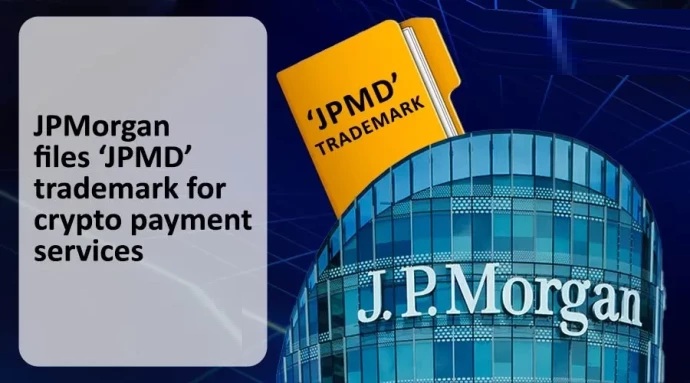
“JPMD” Trademarking Positions JPMorgan To Bridge Traditional Finance and Crypto

0

JPMorgan Chase filed a trademark application for “JPMD” with the U.S. Patent and Trademark Office, sparking speculation that it may be preparing to launch a USD-backed stablecoin, potentially named the J.P. Morgan Dollar. The filing covers a broad range of digital asset services, including trading, exchange, payments, custody, and fund transfers, but does not explicitly mention the term “stablecoin.” Industry experts suggest the “D” in JPMD likely stands for “Dollar,” aligning with naming conventions like Circle’s USDC (U.S. Dollar Coin).

This move follows JPMorgan’s existing blockchain efforts, including JPM Coin, a private stablecoin launched in 2019 for institutional settlements, which processes over $1 billion in daily transactions on its Quorum blockchain (now Kinexys). Reports from May 2025 indicate JPMorgan is also exploring a joint stablecoin venture with other major U.S. banks like Bank of America, Citigroup, and Wells Fargo to compete with crypto-native issuers like Tether (USDT) and Circle (USDC), which dominate the $245.9–$252 billion stablecoin market.

The timing aligns with regulatory developments, as the U.S. Senate advanced the GENIUS Act, a bipartisan bill to establish a clear framework for stablecoin issuers, expected to pass in summer 2025. This could facilitate broader adoption by traditional financial institutions. Despite CEO Jamie Dimon’s historical skepticism toward Bitcoin, JPMorgan has embraced blockchain technology and recently began accepting Bitcoin ETFs as loan collateral.

Speculation on X suggests strong market interest, with users viewing JPMD as a potential game-changer for institutional crypto adoption, though some express caution about centralized control resembling CBDCs. No official confirmation or launch timeline for a JPMD stablecoin has been provided by JPMorgan. The filing of the “JPMD” trademark by JPMorgan Chase signals a potential expansion of its blockchain and digital asset strategy, with significant implications for the financial and crypto ecosystems:

Mainstream Adoption of Stablecoins

A JPMorgan-backed stablecoin could accelerate institutional adoption of digital assets, leveraging the bank’s global reach and credibility. With JPM Coin already processing $1 billion daily, JPMD could target broader retail or cross-border payment use cases, competing with USDT ($139 billion market cap) and USDC ($61.5 billion market cap as of June 2025). Integration with JPMorgan’s Kinexys blockchain (formerly Quorum) could enhance efficiency in settlements, remittances, and trade finance, reducing costs and transaction times compared to traditional systems.

The timing of the filing aligns with the U.S. Senate’s advancement of the GENIUS Act, which aims to regulate stablecoin issuers with clear reserve and compliance requirements. A JPMD stablecoin would likely comply with these regulations, positioning JPMorgan as a trusted player in a market where Tether has faced scrutiny over reserve transparency. This could pressure crypto-native issuers to meet stricter standards, potentially reshaping the competitive landscape.

Reports of a joint stablecoin venture with banks like Bank of America, Citigroup, and Wells Fargo suggest a consortium approach, similar to SWIFT for traditional finance. A shared stablecoin could standardize interbank settlements and challenge crypto-native dominance, creating a “walled garden” for institutional players. However, this could limit interoperability with decentralized finance (DeFi) ecosystems, as traditional banks may prioritize private blockchains over public ones.

A JPMD stablecoin could reduce reliance on volatile cryptocurrencies for payments and increase dollar-based liquidity in blockchain ecosystems. It may also strengthen the U.S. dollar’s global dominance by embedding it further into digital finance, potentially countering central bank digital currencies (CBDCs) from other nations. However, widespread adoption could concentrate financial power among major banks, raising concerns about centralization and control over digital money flows.

JPMD could drive innovation in tokenized assets, enabling new financial products like tokenized bonds or real-world asset (RWA) markets. JPMorgan’s recent acceptance of Bitcoin ETFs as collateral suggests growing openness to crypto integration. Competition with USDC and USDT may intensify, potentially lowering fees and improving transparency for users, but could also lead to market consolidation if banks dominate.

The potential launch of JPMD highlights a growing divide between traditional finance (TradFi) and the decentralized crypto ecosystem, with distinct perspectives and tensions. JPMorgan and other banks favor centralized, permissioned blockchains (e.g., Kinexys) for control, compliance, and scalability. A JPMD stablecoin would likely operate under strict regulatory oversight, appealing to institutions but limiting integration with DeFi protocols like Uniswap or Aave, which rely on public blockchains (e.g., Ethereum).

Decentralized communities on X and elsewhere express skepticism about bank-backed stablecoins, likening them to CBDCs due to potential surveillance and control. They argue that USDC and USDT, while centralized, already integrate with DeFi, and a JPMD stablecoin might prioritize profits over user autonomy. JPMorgan’s reputation and regulatory compliance could make JPMD a “safer” option for risk-averse institutions and retail users, especially compared to Tether, which has faced reserve audits.

The GENIUS Act’s framework may further bolster trust in bank-backed stablecoins. Crypto purists on X criticize centralized stablecoins for opacity and reliance on custodial reserves, advocating for algorithmic or decentralized alternatives like DAI. They fear JPMD could enable banks to dominate the stablecoin market, sidelining smaller players. JPMorgan’s stablecoin could democratize access to digital payments for unbanked populations through regulated channels, but its focus may remain on institutional clients or high-net-worth individuals.

DeFi advocates argue that public blockchains offer permissionless access, allowing anyone with an internet connection to participate. A JPMD stablecoin tied to a private blockchain might exclude smaller players or require KYC/AML compliance, limiting inclusivity. Banks like JPMorgan aim to integrate blockchain into existing systems, prioritizing efficiency and compliance over radical disruption. JPMD could streamline cross-border payments but may not support the experimental ethos of DeFi (e.g., yield farming, DAOs).

The crypto community values permissionless innovation, where developers can build without gatekeepers. On X, users speculate that JPMD might stifle this by creating a closed ecosystem, potentially lobbying for regulations that favor TradFi over DeFi. Posts on X reflect enthusiasm for JPMD as a bullish signal for crypto adoption, with some users predicting it could drive stablecoin market cap past $300 billion by 2026. Others caution that bank-backed stablecoins could “colonize” crypto, reducing its decentralized ethos to a corporate ledger.

This split underscores a broader ideological divide: TradFi sees blockchain as a tool to enhance existing systems, while crypto natives view it as a means to replace them. The JPMD trademark filing positions JPMorgan to bridge traditional finance and crypto, potentially transforming payments and asset tokenization. However, it deepens the divide between centralized, regulated systems and decentralized, open protocols. While TradFi gains trust through compliance and scale, crypto natives prioritize autonomy and innovation.