DD
MM
YYYY

PAGES

DD
MM
YYYY

spot_img

PAGES

Home Blog Page 1160

JPMorgan Chase Completes First Tokenized U.S. Treasuries Using Public Blockchain

0

JPMorgan Chase has completed its first public blockchain transaction, settling tokenized U.S. Treasuries outside its private network. The transaction, facilitated by Ondo Finance and leveraging Chainlink’s interoperability technology, marks a significant step for the bank, which has traditionally relied on its private blockchain, Kinexys Digital Payments (formerly JPM Coin).

The settlement involved a cross-chain transfer of tokenized short-term Treasuries on Ondo’s public ledger, demonstrating JPMorgan’s move toward integrating with public blockchain infrastructure. This development is seen as a milestone in bridging traditional finance (TradFi) with decentralized finance (DeFi), with potential implications for tokenized real-world assets (RWAs).

JPMorgan’s first public blockchain transaction to settle tokenized U.S. Treasuries outside its private network has far-reaching implications for traditional finance (TradFi), decentralized finance (DeFi), and the broader financial ecosystem. This move signals a step toward integrating TradFi’s robust infrastructure with DeFi’s open, permissionless systems. By settling tokenized Treasuries on a public blockchain, JPMorgan demonstrates that large institutions can operate in public DeFi environments, potentially increasing trust and adoption.

It could accelerate the mainstream adoption of tokenized real-world assets (RWAs), such as bonds, funds, or real estate, by proving interoperability between private and public blockchains. Tokenized assets on public blockchains can be traded 24/7, unlike traditional markets with set hours. This enhances liquidity and makes assets like Treasuries more accessible to a broader range of investors, including retail and DeFi participants.

Cross-chain settlements, as enabled by Chainlink’s technology, allow assets to move seamlessly between different blockchain networks, reducing fragmentation and improving market efficiency. Public blockchains can lower transaction costs by eliminating intermediaries and streamlining settlement processes. For JPMorgan, this could mean faster, cheaper cross-border payments and asset transfers compared to legacy systems.

The use of smart contracts in public blockchains automates processes like clearing and settlement, reducing operational overhead. As a major financial institution, JPMorgan’s participation in public blockchain transactions sets a precedent for other banks and regulators. It may encourage clearer regulatory frameworks for tokenized assets and DeFi, addressing concerns around compliance, anti-money laundering (AML), and know-your-customer (KYC) requirements.

It validates public blockchains as viable infrastructure for institutional-grade transactions, potentially prompting competitors like Goldman Sachs or Citi to explore similar integrations. The transaction highlights the growing market for tokenized RWAs, with estimates suggesting the market could reach $10 trillion by 2030 (e.g., BCG and ADDX projections). Public blockchains’ scalability and interoperability could drive this growth, enabling fractional ownership and new investment opportunities.

JPMorgan’s shift from its private Kinexys Digital Payments network to public blockchains may spur innovation in hybrid blockchain models, where institutions leverage both private and public networks for different use cases. It could intensify competition between public blockchain protocols (e.g., Ethereum, Solana) and private networks, pushing advancements in scalability, security, and interoperability.

TradFi relies on centralized, permissioned systems like SWIFT or private blockchains (e.g., JPMorgan’s Kinexys). These offer control, regulatory compliance, and institutional trust but are often slower, costlier, and less accessible. DeFi operates on decentralized, permissionless public blockchains (e.g., Ethereum, Solana). These provide transparency, speed, and global access but face challenges like regulatory uncertainty, volatility, and security risks (e.g., smart contract exploits).

JPMorgan’s transaction uses public blockchains while maintaining TradFi’s compliance standards (e.g., via Chainlink’s interoperability and Ondo’s KYC/AML processes), showing a hybrid model where institutions can engage with DeFi without fully relinquishing control. TradFi operates under strict regulatory oversight (e.g., SEC, FINRA), ensuring investor protection but stifling innovation due to lengthy approval processes.

DeFi often operates in a regulatory gray zone, enabling rapid innovation but raising concerns about fraud, money laundering, and investor safety. Institutional participation, as seen with JPMorgan, could push regulators to clarify rules for tokenized assets and DeFi, fostering a more harmonized framework that balances innovation and compliance.

TradFi caters primarily to institutional and high-net-worth clients, with high barriers to entry (e.g., minimum investment sizes, accreditation requirements) while DeFi democratizes access, allowing retail investors to participate in markets (e.g., via fractionalized tokens) but requires technical knowledge and exposure to volatile crypto markets.

Tokenized Treasuries on public blockchains lower barriers to entry, enabling retail investors to access high-quality assets like U.S. Treasuries, while TradFi’s involvement ensures stability and trust. TradFi trusted due to established reputations, regulatory backing, and insured systems (e.g., FDIC). However, centralized systems are vulnerable to single points of failure.

DeFi trust is derived from code and decentralization, but risks like hacks (e.g., $2 billion in DeFi exploits in 2022) and lack of recourse deter institutional adoption. JPMorgan’s use of audited protocols like Chainlink and Ondo mitigates security risks, blending DeFi’s transparency with TradFi’s reliability.

JPMorgan’s public blockchain transaction is a pivotal moment in narrowing the TradFi-DeFi divide. It demonstrates that institutions can leverage public blockchains’ efficiency and accessibility while maintaining compliance and trust. The implications—greater liquidity, cost savings, and RWA growth—could reshape financial markets.

However, the divide persists due to differences in regulation, control, and risk profiles. Continued collaboration, like that between JPMorgan, Ondo, and Chainlink, will be crucial to building a hybrid financial system that combines the best of both worlds.

Mastercard Partners with MoonPay to Launch Stablecoin Payment Cards

0

Mastercard has partnered with MoonPay to launch stablecoin payment cards, enabling users to spend cryptocurrencies like USDC, USDT, and DAI at over 150 million merchants worldwide. The service converts stablecoins to fiat at the point of sale, powered by MoonPay’s Iron infrastructure. This expands Mastercard’s crypto push, competing with Visa, despite regulatory uncertainties. The rollout follows Mastercard’s earlier stablecoin payment capabilities announced in April 2025, involving partners like Circle, Nuvei, and Paxos for merchant settlements.

By enabling stablecoin payments at 150 million merchants, Mastercard bridges cryptocurrencies to everyday transactions, potentially accelerating adoption among consumers and businesses. Stablecoin cards could provide access to digital payments for unbanked or underbanked populations, especially in regions with unstable currencies, as stablecoins are pegged to assets like the USD.

Real-time conversion of stablecoins to fiat at the point of sale reduces merchants’ exposure to crypto volatility, making acceptance seamless without requiring them to hold crypto. Mastercard’s move strengthens its position against Visa and fintech competitors like PayPal, positioning it as a leader in crypto payment infrastructure. Partnerships with MoonPay, Circle, and others leverage stablecoins’ borderless nature, enabling low-cost, fast cross-border transactions compared to traditional remittance systems.

Stablecoins face scrutiny globally (e.g., U.S. SEC and EU MiCA regulations). Evolving rules could impose restrictions, KYC/AML requirements, or bans, impacting scalability. Stablecoins like USDC and USDT are issued by centralized entities (Circle, Tether), raising risks of mismanagement, reserve transparency issues, or government intervention. Crypto wallets and conversion systems are targets for hacks or fraud, and any breach could undermine trust in Mastercard’s system.

While stablecoins are pegged, broader crypto market fluctuations could affect consumer confidence or the ecosystem supporting these cards. Merchants and consumers may hesitate due to lack of crypto literacy, tax complexities, or preference for traditional payment methods.

Mastercard’s stablecoin cards highlight a growing divide in the financial ecosystem, with implications across economic, technological, and social dimensions. Banks and card networks like Mastercard are integrating crypto to stay relevant, but their centralized control contrasts with crypto’s decentralized ethos. This creates tension between TradFi’s regulated, fiat-based systems and crypto’s push for financial sovereignty.

Decentralized finance (DeFi) advocates may view Mastercard’s cards as a compromise, tying crypto to centralized intermediaries rather than fully decentralized systems like Bitcoin or Ethereum-based payments. In wealthier nations, stablecoin cards may be a convenience for tech-savvy users or crypto investors, but traditional cards already dominate, limiting impact.

In regions with high inflation (e.g., parts of Africa, Latin America), stablecoins could become a store of value and payment tool, but access to crypto on-ramps and regulatory hurdles may exclude low-income users, widening the digital-financial gap. Places like Singapore or Switzerland may embrace stablecoin cards, fostering innovation. For example, MoonPay’s global reach aligns with such markets.

Countries like China or India, with strict crypto bans or taxes, may restrict or heavily regulate these cards, creating a patchwork of adoption and access. Early adopters comfortable with crypto wallets will benefit, but mainstream consumers may avoid the learning curve or distrust crypto’s stability, slowing adoption.

Crypto holders (often younger, wealthier, or tech-oriented) gain spending flexibility, while those without crypto access remain tied to fiat systems, potentially exacerbating inequality. Mastercard’s aggressive crypto push (e.g., MoonPay, Paxos partnerships) pressures Visa, which has its own stablecoin pilots. This rivalry could accelerate innovation but also fragment standards. Fintechs like MoonPay gain from Mastercard’s infrastructure, but Big Tech (e.g., Apple Pay, Google) may counter with their own crypto integrations, intensifying competition.

Mastercard’s stablecoin cards are a bold step toward merging crypto with traditional payments, promising greater financial inclusion and merchant reach. However, they deepen divides between centralized and decentralized finance, developed and emerging markets, and crypto-savvy and traditional users. Regulatory clarity and consumer education will be critical to bridging these gaps and realizing the cards’ full potential.

Trump Tells Apple to Stop Building in India, Urges iPhone Production in U.S. — But That May Play Into China’s Hands

0

U.S. President Donald Trump has reignited tensions with Apple, rebuking the company for its growing production presence in India and demanding that it build its flagship products on American soil — a demand experts say may be unrealistic and could ultimately play into China’s hands.

Speaking Thursday at a policy roundtable in Washington, Trump said he recently confronted Apple CEO Tim Cook over the company’s global manufacturing strategy. The president, who has long championed an “America First” approach, expressed frustration that the Cupertino-based tech giant is moving parts of its production away from China only to settle in India, rather than bringing those operations home.

“I had a little problem with Tim Cook yesterday,” Trump told the audience. “I said to him, ‘my friend, I treated you very good. You’re coming here with $500 billion, but now I hear you’re building all over India.’ I don’t want you building in India.”

Trump was referring to Apple’s $500 billion U.S. investment pledge announced in February, which includes plans for a new facility in Texas to manufacture AI servers for its Apple Intelligence platform. But despite that commitment, the company has made no secret of its ambition to ramp up production in India — a country Apple sees as a critical pillar in its effort to diversify its supply chain.

Apple currently assembles about 90% of its iPhones in China, a reliance it has been trying to reduce due to a combination of geopolitical tension, rising Chinese labor costs, and Beijing’s increasing control over foreign companies operating within its borders. The push to India, where Apple plans to produce at least 25% of all iPhones by 2026, has been widely seen as a hedge against those risks.

Trump’s Pressure May Backfire

However, Trump’s rebuke may not just complicate Apple’s India strategy — it could inadvertently benefit China, analysts say.

Over the past year, Beijing has quietly worked to disrupt Apple’s India ambitions, including by tightening its grip on Chinese component suppliers, which are integral to the iPhone’s complex supply chain. China supplies a significant portion of Apple’s components and machinery, and most of its contract manufacturers, such as Foxconn and Pegatron, have deep operations in China, even as they begin to establish a presence in India.

By urging Apple to abandon India without offering a viable alternative, Trump could unwittingly force Apple back into deeper reliance on China, particularly now that Washington and Beijing appear to be entering a new phase of trade détente.

Earlier this month, top U.S. and Chinese officials resumed high-level trade talks, which had been frozen for years. Treasury Secretary Scott Besent and Chinese Vice Premier He Lifeng met in Guangzhou to lay the groundwork for a possible trade framework that could relieve U.S. companies of some tariff burdens imposed during the Biden administration and now by Trump. The world’s two largest economies have agreed to lower tariffs for 90 days, marking the clearest sign yet of a thaw.

Amid this backdrop, some analysts believe Apple may delay or even scale back its India pivot, particularly if conditions in China stabilize and U.S. policy turns hostile to other offshoring destinations.

Why Apple Can’t Build iPhones in the U.S.

Apple’s reliance on Asia is not just a matter of policy — it’s embedded in the economics of global manufacturing. Assembling an iPhone requires hundreds of components sourced from dozens of countries, and a tightly choreographed logistics chain that allows assembly plants to churn out millions of units with precision and speed.

If Apple were to attempt to move iPhone production to the U.S., the price of an iPhone could rise to between $1,500 and $3,500, analysts estimate — a more than 50% increase from current retail prices.

Moreover, the U.S. lacks the infrastructure, labor pool, and supplier network that Asia offers. Chinese manufacturing hubs like Shenzhen have spent decades building what analysts call a “manufacturing brain trust,” an ecosystem of expertise that allows for rapid scaling — something America simply does not have today.

Apple currently makes only a small fraction of its products in the U.S., including the Mac Pro, which is assembled in Texas. Even then, some of its components are sourced from overseas.

The Headwinds in Apple’s India Strategy

Apple’s ambitions in India remain significant. Its main supplier, Foxconn, recently received approval from the Indian government to build a semiconductor fabrication facility in partnership with HCL Group. The move signals a long-term plan to localize even more of Apple’s production ecosystem, including chips, which are currently mostly made in Taiwan and China.

But Apple’s efforts in India haven’t been without problems. The country lacks the supply chain depth of China, and Indian factories have faced repeated scrutiny over labor violations, wage disputes, and infrastructure limitations. However, Apple has steadily expanded its India footprint, now producing iPhones locally for both domestic sales and exports — a strategic shift that earned praise from Indian Prime Minister Narendra Modi’s administration.

Trump’s attack now threatens to undermine that cooperation. Under the White House’s trade protectionist policies revealed in April, Trump has imposed a so-called “reciprocal tariff” of 26% on Indian goods, which has been temporarily lowered until July.

Trump’s stance now places Apple in a difficult place: continue expanding in India at the risk of further antagonizing Washington, or retrench to China just as a fragile U.S.-China thaw emerges.

If Trump’s stance hardens and trade talks with China improve, Apple may be compelled to lean once again on the very country it has spent years trying to distance itself from, giving Beijing the upper hand in what was once seen as Apple’s strategic decoupling.

10-Year US Treasury Yield Reached 3-Month High Above 4.3%

0

The 10-year Treasury yield reaching a 3-month high above 4.5% reflects growing market concerns about persistent inflation, potential rate hikes, or shifts in fiscal policy. Analysts highlight this level as a critical threshold, with some suggesting it strains liquidity and could signal broader economic stress if sustained. Historically, yields at this level have prompted government intervention to stabilize markets. However, these alone aren’t conclusive—yields fluctuate with economic data, Fed actions, and global events.

The 10-year Treasury yield spiking to a 3-month high above 4.5% has wide-ranging implications for the economy, financial markets, and consumers, while also deepening existing divides in wealth, opportunity, and economic stability. Yields on the 10-year Treasury note, a benchmark for global borrowing, directly influence interest rates on mortgages, car loans, credit cards, and corporate debt. As yields rise to 4.5% or higher, borrowing becomes more expensive, increasing costs for consumers and businesses.

For example, 30-year mortgage rates, which track the 10-year yield, were reported at 6.81% on April 24, 2025, up from 6% in September 2024. Higher borrowing costs disproportionately affect lower- and middle-income households, who rely on loans for homes, cars, or education. Wealthier households with cash reserves or paid-off assets are less impacted, widening the affordability gap. Small businesses, often reliant on credit, face tighter margins compared to large corporations with better access to capital.

Rising yields make bonds more attractive than stocks, especially for growth stocks like tech, which are sensitive to higher discount rates. Posts on X note that the 10-year yield at 4.434% could increase market volatility, with growth stocks underperforming. Strong job growth (177,000 nonfarm payrolls in April 2025) and trade tensions have fueled yield spikes, contributing to a 5.4% S&P 500 drop since early April.

Retail investors, who often hold growth-heavy portfolios, face losses, while institutional investors with diversified bond holdings can hedge or benefit. The wealthy, with access to sophisticated financial advisors, can pivot to fixed-income assets, while average investors may lack the resources or knowledge to adapt, exacerbating wealth inequality. Higher yields increase the cost of servicing U.S. government debt, projected to hit $3 trillion in maturing Treasury debt in 2025. This strains federal budgets, potentially limiting spending on social programs or infrastructure.

Trade policies, like Trump’s 10% universal tariffs, are cited as yield drivers due to inflation fears, though a recent U.S.-China tariff suspension may ease some pressure. Reduced government spending hits lower-income communities hardest, as they depend on public services like healthcare or education. Meanwhile, tax cuts or stimulus, could favor corporations and high earners, further tilting fiscal policy toward the wealthy.

The 10-year yield surge raises borrowing costs globally, as U.S. Treasuries set a benchmark. Japan’s 30-year bond yields hit 21-year highs, and UK 30-year gilts reached 1998 peaks, reflecting synchronized pressure. Fears of China offloading U.S. bonds amid trade tensions add volatility. Emerging markets, already strained by high debt, face capital outflows as investors chase higher U.S. yields, deepening global economic disparities. Wealthy nations and investors can absorb shocks, while poorer ones struggle, reinforcing a global north-south divide.

Rising mortgage rates, tied to the 10-year yield, lock out first-time and lower-income homebuyers. With 64% of U.S. mortgages locked below 4% and 16% above 6%, only those with existing low-rate loans or cash can comfortably navigate the market. This entrenches housing inequality, as wealthier buyers snap up properties while others are priced out.

Higher yields devalue existing bond holdings, hitting banks and financial firms with Treasury-heavy balance sheets. Experts warn of potential systemic risks if yields approach 5%, as seen in 2023 when stocks fell. Smaller banks, serving local communities, are less equipped to handle losses than global giants, limiting credit access in underserved areas and widening regional economic gaps.

Expensive loans and higher debt servicing costs squeeze household budgets, particularly for low-income families. Analysts highlight how yields at 4.5% raise costs for “everything from mortgages to business loans,” slowing growth and hitting consumers. Tariff-driven inflation, despite a modest 2.3% CPI rise in April 2025, could further erode purchasing power for essentials. Wealthier households, with investments in inflation-resistant assets like real estate or commodities, are better insulated, deepening the consumption divide.

The yield spike reflects a sell-off, partly driven by “bond vigilantes” protesting trade policies, as seen in April 2025 when yields hit 4.59%. Hedge funds unwinding leveraged “basis trades” and foreign investors (e.g., China, Japan) selling Treasuries add pressure. This benefits high-net-worth investors who can short bonds or exploit volatility, while retail bondholders face losses. The complexity of these dynamics excludes less sophisticated investors, reinforcing a knowledge and access divide.

Trade policy flip-flops, like Trump’s tariff pause and China’s 125% tariff hike, create volatility. Investors betting on yields hitting 5% via futures options signal persistent fears of inflation and deficit growth. Yet, a poll on X projecting yields dropping to 4.26% in three months shows mixed expectations. The establishment narrative ties yield spikes to strong economic data (e.g., April’s 177,000 jobs) and trade policies, but this overlooks structural issues like debt issuance and eroding Treasury demand.

The “safe-haven” status of Treasuries is under scrutiny, as foreign sales and domestic sell-offs signal waning confidence. Meanwhile, the Fed’s cautious stance—holding rates at 4.25%-4.5%—may not curb inflation if fiscal policy fuels deficits, risking a feedback loop of higher yields and economic strain. The 10-year Treasury yield above 4.5% signals tighter financial conditions, higher borrowing costs, and market volatility, with ripple effects on consumers, businesses, and global economies.

It deepens divides by favoring wealthier households, large corporations, and sophisticated investors, while squeezing lower-income groups, small businesses, and emerging markets. The interplay of trade tensions, debt dynamics, and investor behavior adds uncertainty, and without clear policy responses, these gaps—housing, wealth, access, and global—will likely widen.

Ethereum Foundation Announces A Trillion Dollar Security Initiative

0

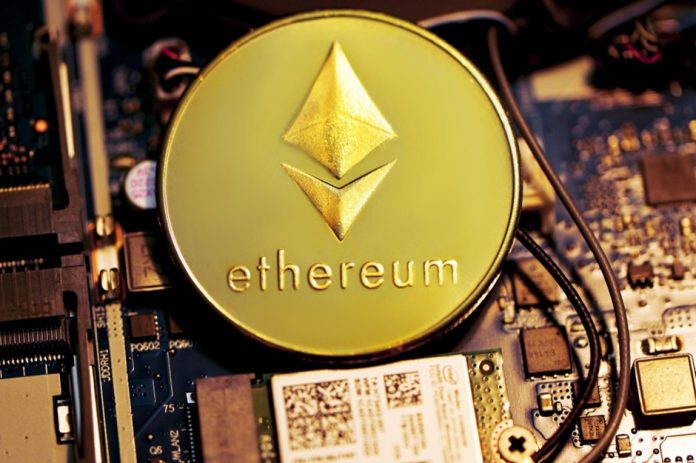
The Ethereum Foundation announced the “Trillion Dollar Security” (1TS) initiative on May 14, 2025, aiming to enhance Ethereum’s security infrastructure to support trillions in onchain assets. The initiative focuses on improving wallet safety, securing smart contracts, enhancing user experience (UX), and strengthening protocol layers. Key features include smart accounts (ERC-4337), social recovery, spending limits, and advanced key management like MPC and biometrics.

This ecosystem-wide effort seeks to boost trust and enable secure mass adoption for both individual and institutional users, positioning Ethereum as a robust global digital asset management platform. The Ethereum Foundation’s “Trillion Dollar Security” (1TS) initiative has far-reaching implications for Ethereum’s ecosystem, its users, and the broader blockchain landscape.

By prioritizing security for trillions in onchain assets, 1TS could attract institutional investors, DeFi protocols, and enterprises hesitant to engage due to past hacks (e.g., $3.7B lost in 2022). Enhanced wallet safety, smart contract audits, and protocol resilience may position Ethereum as the go-to blockchain for high-value use cases. Improved UX (e.g., social recovery, spending limits) and secure smart accounts (ERC-4337) could lower barriers for non-technical users, driving retail adoption for dApps, NFTs, and DeFi.

The initiative’s ecosystem-wide approach may spur innovation in security-focused dApps, wallets, and tools, as developers leverage standardized protocols like ERC-4337. A more secure Ethereum could handle significantly larger transaction volumes and asset values, potentially increasing ETH’s market cap and network activity.

Ethereum may widen its lead over competitors like Solana, Binance Smart Chain, or Cardano by setting a new security standard. This could shift market share toward Ethereum-based projects and layer-2 solutions. Enhanced security measures align with global regulatory demands for consumer protection and anti-money laundering (AML). This could ease Ethereum’s integration into traditional financial systems, though it may raise concerns about over-compliance among decentralization purists.

Implementing advanced security (e.g., MPC, biometrics) may increase transaction costs or computational overhead, potentially impacting Ethereum’s scalability. Layer-2 solutions like Optimism or Arbitrum may need to adapt to maintain low fees. The 1TS initiative could create or exacerbate divides within the Ethereum ecosystem and the broader crypto community.

Simplified UX and secure wallets may benefit non-technical users, but advanced features like MPC or smart contract customization could remain inaccessible without significant education efforts. Non-technical users may adopt Ethereum faster, but technical users might feel underserved if security tools prioritize simplicity over flexibility.

Institutions may demand bespoke security solutions (e.g., enterprise-grade custody), while retail users prioritize ease of use. Balancing these needs could strain development resources. If 1TS leans toward institutional needs, retail users might feel neglected, potentially pushing them to less secure but user-friendly chains.

Security measures like biometrics or centralized key recovery systems could spark debates about compromising Ethereum’s decentralized ethos. Purists may argue these features introduce single points of failure. A divide could emerge between users favoring pragmatic security and those prioritizing ideological purity, potentially fragmenting community support.

Advanced security features (e.g., biometric hardware) may be cost-prohibitive or unavailable in developing regions, where low-cost devices dominate. This could widen the digital divide, limiting Ethereum’s global reach and reinforcing perceptions of crypto as an elite technology.

If Ethereum’s security upgrades outpace competitors, it could dominate market share. However, if implementation lags or costs rise, users might migrate to cheaper or faster chains. A divide may grow between Ethereum loyalists and users exploring alternatives, affecting cross-chain interoperability efforts.

The “Trillion Dollar Security” initiative positions Ethereum to lead in secure, high-value blockchain use cases, potentially driving unprecedented adoption and economic growth. However, it risks creating divides between technical and non-technical users, retail and institutional players, and centralized and decentralized ideologies.

To bridge these gaps, the Ethereum Foundation must prioritize inclusive design, transparent governance, and equitable access to security tools. Balancing innovation with Ethereum’s core principles will be critical to ensuring the initiative unites rather than fractures its diverse community.