DD
MM
YYYY

PAGES

DD
MM
YYYY

spot_img

PAGES

Home Blog Page 1170

S&P 500 Has Entered Bull Market Territory Climbing 20% From April Low

0

The S&P 500 has entered bull market territory, climbing over 20% from its April 2025 lows, with posts on X indicating a rapid 1,000-point rally in just one month. This surge added approximately $2.2 trillion to the U.S. equities market, driven by bullish sentiment and a nine-day winning streak—the longest since 2004—partially fueled by easing trade tensions between Trump and China.

The SPY, tracking the S&P 500, reflects this uptrend, with its current price at $588.456, up from $516.05 on April 21, 2025, a roughly 14% gain, though not yet hitting the 20% bull market threshold from that specific low. However, from earlier April lows around $490 (extrapolated from broader market data), the 20% mark aligns with reports. Some sources caution that high valuations, with the S&P 500 at its third-priciest multiple in 154 years, and potential economic risks could test this rally’s sustainability.

Implications of the S&P 500 Bull Market

The S&P 500’s 20% surge from April 2025 lows, adding $2.2 trillion to U.S. equities, signals robust market optimism but carries varied implications. The rally reflects investor faith in economic resilience, potentially driven by easing U.S.-China trade tensions and strong corporate earnings. The nine-day winning streak, the longest since 2004, suggests momentum fueled by policy expectations or geopolitical stabilization.

Rising equity values could boost consumer spending, as investors and 401(k) holders feel wealthier, potentially stimulating economic growth. However, this benefits primarily those with market exposure, exacerbating wealth inequality. With the S&P 500 at its third-priciest valuation in 154 years (based on historical price-to-earnings multiples), there’s a risk of a correction if earnings disappoint or interest rates rise unexpectedly. High valuations could deter new investors, limiting further upside.

The rally’s reliance on trade policy easing (e.g., Trump-China dynamics) makes it vulnerable to geopolitical shocks or policy reversals. Federal Reserve actions on rates or inflation could also sway sentiment. Tech and growth stocks likely led the rally, given their heavy S&P weighting, but cyclical sectors (e.g., energy, financials) may lag if global demand weakens, creating uneven market gains.

The bull market highlights stark divides in economic and social outcomes. Affluent investors, institutional funds, and those with significant equity exposure (e.g., via 401(k)s or direct stock ownership) reap the $2.2 trillion windfall. The top 10% of households, owning ~90% of U.S. stocks, benefit disproportionately. Lower-income households with minimal or no market investments miss out. Only ~50% of Americans own stocks directly or indirectly, leaving many unaffected by the rally’s wealth creation.

Millennials and Gen Z, often with smaller portfolios or focused on speculative assets (e.g., crypto), may see limited gains compared to Boomers with established equity holdings. Retirees or near-retirees with diversified portfolios benefit more, securing retirement wealth but potentially fueling intergenerational resentment. Financial hubs like New York or San Francisco, tied to market-driven industries, see economic boosts via jobs and investment flows.

Communities with less market exposure or reliance on non-equity income (e.g., agriculture, small businesses) gain little, deepening regional disparities. Optimists and financial media celebrate the rally, citing technical breakouts (e.g., SPY nearing $600) and policy tailwinds. Skeptics warn of a bubble, pointing to historical overvaluation (e.g., CAPE ratio >30) and risks like inflation or global slowdowns, predicting a potential reversal.

Tax incentives for broader stock ownership (e.g., expanding IRA access) or wealth redistribution measures could spread gains more equitably. Financial literacy programs could encourage wider market participation, though risks must be clear to avoid losses for inexperienced investors. Encouraging investment in underrepresented sectors or regions could balance growth, reducing reliance on tech-heavy indices.

The bull market is a boon for markets but underscores structural inequalities. Its sustainability hinges on broader economic stability and policy clarity, while the divide calls for inclusive growth strategies.

The Best Crypto to Watch Now May Not Be What You Think—4 Underrated Contenders in Focus

0

In the current digital asset cycle, the narrative has pivoted. While prior bull markets were driven by speculation, memes, and cyclical hype, the projects now gathering momentum are those offering real-world applications and measurable market utility. Institutional capital, regulatory frameworks, and enterprise adoption have begun to demand more than just abstract roadmaps and inflated tokenomics—they’re seeking reliability, compliance, and scalable value deployment. This new standard is separating substance from noise. And, now Qubetics stands out in this new standard.

Among the categories rising fastest under these conditions is Real World Asset (RWA) Tokenization. The movement toward digitizing real estate, equities, treasuries, and other traditional assets onto blockchain rails has surged, particularly as global finance looks for more efficient, transparent, and programmable infrastructure. And while the attention often goes to a few headline-grabbing protocols, the true innovation is taking place beneath the surface—among platforms that are building quietly, yet consistently delivering breakthroughs in compliance, liquidity, and accessibility.

At the top of this list is Qubetics, a purpose-built Web3 aggregator and infrastructure suite designed to lead the charge in tokenizing real-world value. With a sophisticated token model, live developer environment, and an upcoming mainnet launch, Qubetics is redefining what it means to bridge traditional and decentralized economies. In fact, for those looking to identify the Best crypto to watch now, the answer may no longer be in the obvious picks—but in projects like these four that are bringing genuine infrastructure into the spotlight.

1. Qubetics: Web3 Infrastructure Leading the Real World Asset Tokenization Movement

Qubetics is rapidly establishing itself as the most forward-thinking platform in the RWA space, thanks to its application as a Real World Asset Tokenization Marketplace. At its core, Qubetics provides a seamless infrastructure that allows institutions, developers, and enterprises to issue, manage, and exchange real-world assets on-chain. Through programmable compliance, automated dividend flows, and jurisdiction-sensitive smart contracts, Qubetics enables tokenized real estate, equities, invoices, and commodities to be managed across multiple blockchains in real-time. This is not a concept—it’s an operational framework already in use by early enterprise partners.

What elevates Qubetics beyond its contemporaries is its foundation as a Web3 aggregator, uniting multiple blockchain ecosystems under a common operational layer. It is the only platform that integrates token creation, wallet interoperability, and compliance controls within one streamlined dashboard—powered by its proprietary QubeQode and Qubetics IDE. Whether a fintech startup in Singapore is issuing tokenized private equity, or a renewable energy project in Brazil is managing carbon credits, Qubetics allows for frictionless onboarding, liquidity provisioning, and automated regulatory safeguards. For any analyst or allocator scanning the ecosystem for the Best crypto to watch now, Qubetics has emerged as the benchmark.

Its current crypto presale is also worth watching closely. Now in Stage 34, the $TICS token is priced at $0.2532, with over 512 million tokens sold and a presale tally of $16.9 million raised. The community now includes more than 26,300 token holders, and the presale price increases by 10% every 7 days, creating a tight and disciplined entry structure. If $TICS reaches just $1 after the presale, early participants stand to gain 294.84% ROI. But projections show the token may reach $15 post-mainnet, translating into an eye-watering 5,822.63% ROI. These are not theoretical numbers—they are grounded in a roadmap with a Q2 2025 mainnet launch and a product already delivering on real use cases. That’s why Qubetics holds the title of the Best crypto to watch now, especially for those tracking tokenization and global finance integration.

2. Ondo: Institutional Yield Instruments Meet Blockchain Liquidity

Ondo has carved out a specialized niche in the digital asset space by bringing institutional-grade yield opportunities onto the blockchain. In a world increasingly focused on tokenized treasuries and yield-bearing RWAs, Ondo offers products like OUSG, a tokenized representation of U.S. Treasury bonds that grants users on-chain access to real-world fixed-income exposure. Through partnerships with SEC-regulated custodians and transparent audit processes, Ondo has emerged as a front-runner in bridging traditional finance with DeFi in a legally sound manner.

What sets Ondo apart is its composability and speed to market. While many projects remain in research phases or limited pilot tests, Ondo has already launched a suite of structured products that can be deployed within Web3 dApps, exchanges, and wallets. These offerings are built to appeal to both retail participants seeking regulated yield and institutions looking for scalable blockchain exposure without compromising compliance. By leveraging stablecoins, whitelisted access control, and tokenized yield flows, Ondo has found the formula that makes RWAs viable at scale.

Though it doesn’t carry the crypto presale momentum or upside potential of Qubetics, Ondo’s credibility and operational transparency make it a compelling short-term allocation. Its focus on tokenized debt instruments and yield-based financial architecture places it at the center of a trillion-dollar traditional asset class being ported into the blockchain world. As a result, it earns a place among the Best crypto to watch now, especially for those closely tracking institutional adoption and tokenized macro strategies.

3. Near Protocol: High-Performance Blockchain Designed for Global Scale

Near Protocol continues to maintain its position as one of the most efficient and forward-looking Layer-1 blockchains, with a sharded architecture that sets it apart from traditional monolithic chains. With Nightshade sharding, Near ensures that its network can scale horizontally, processing increasing transaction volumes without latency or cost spikes. For RWA applications that require high reliability and throughput—such as tokenized payments, compliance chains, and settlement flows—this architectural choice is pivotal.

Beyond scalability, Near’s team has shown a consistent focus on usability and integration. Developers working with Near benefit from a robust toolkit, WebAssembly compatibility, and efficient contract deployment frameworks. What this means in the context of RWA tokenization is simple: Near can support dynamic, large-scale smart contract deployments that operate across jurisdictional requirements and asset types. The protocol’s consistent efforts to bridge to Ethereum, Cosmos, and other ecosystems further elevate its modular capabilities, making it a base layer worth watching as cross-chain asset operations become standard.

Though not purpose-built for RWA like Qubetics, Near’s performance layer, developer ecosystem, and interconnectivity make it a crucial partner in any tokenization stack. Projects looking to anchor high-volume real-world asset dApps often choose Near for its reliability and speed. This alone earns Near Protocol a top spot on the list of Best crypto to watch now, particularly for those focused on infrastructure that can handle institutional-grade deployment.

4. Mantra: Compliance-Focused Tokenization and Regulated DeFi

Mantra is quietly building one of the most promising frameworks for regulated tokenization of real-world assets, with a clear commitment to bridging traditional finance and blockchain in a fully compliant manner. Unlike platforms focused purely on speed or abstraction, Mantra is building with legal interoperability at its core. Through integration of KYC, whitelist frameworks, jurisdictional tagging, and audit-ready smart contracts, Mantra is preparing for a future where digital assets will be subject to the same oversight and transparency standards as traditional securities.

This design decision is now proving to be a strategic advantage. As the global financial landscape accelerates its embrace of digital asset laws, platforms like Mantra are ahead of the curve. Their focus on tokenized securities, credit instruments, and yield products gives them immediate relevance with banks, asset managers, and regulators alike. With early pilots already underway in Dubai and Singapore, Mantra is showing its ability to execute on both technological and regulatory fronts.

Although Mantra doesn’t match Qubetics in terms of integrated development tooling or multi-chain aggregative functions, its focus on legal-grade compliance within DeFi is unique. It offers the essential policy scaffolding that will support long-term RWA growth, especially in high-regulation environments. For participants observing the next wave of compliant DeFi and institutional asset onboarding, Mantra easily qualifies among the Best crypto to watch now.

Conclusion: Qubetics Has Redefined Tokenization Standards in the Web3 Era

Among all four projects reviewed, Qubetics stands as the clear leader in terms of scope, market potential, and implementation of the Real World Asset Tokenization Marketplace model. It provides not only the development suite for creating tokenized products but also the cross-chain infrastructure and compliance logic to bring those assets to life in real-world markets. While others focus on singular aspects—such as yield (Ondo), infrastructure (Near), or regulation (Mantra)—Qubetics delivers all three in a unified, developer-friendly architecture.

Its crypto presale metrics reflect this momentum: over $16.9 million raised, more than 512 million tokens sold, and Stage 34 pricing at $0.2532. With the crypto presale price increasing by 10% each week, and a clear pathway to exponential returns (up to 5,822.63% ROI if $TICS hits $15), Qubetics is not just an infrastructure play—it is a wealth creation engine disguised as an innovation layer. Its model incentivizes early community members while building a foundation for long-term scalability and enterprise adoption.

For any serious market participant, developer, or institution tracking the Best crypto to watch now, Qubetics offers unmatched fundamentals, executable roadmap delivery, and measurable return pathways. It is not a speculative play—it is the infrastructure that makes institutional tokenization possible. And in a market desperately seeking meaningful utility, that positioning is impossible to ignore.


For More Information:

Qubetics: https://qubetics.com

Presale: https://buy.qubetics.com/

Telegram: https://t.me/qubetics

Twitter: https://x.com/qubetics

FAQs

What is the Best crypto to watch now for real-world asset tokenization?

Qubetics leads the category with its comprehensive infrastructure, real-time deployment tools, and structured crypto presale model.

How high can the Qubetics token ($TICS) go after the presale?

Projections suggest $TICS could reach up to $15 after the mainnet launch, translating into a maximum ROI of 5,822.63%.

Which crypto presale is generating the most attention in Q2 2025?

The Qubetics presale is attracting institutional and community attention alike, with over $16.9 million raised and rising token demand.

Robinhood Acquires WonderFi for $179M In An All Cash Deal

0

Robinhood Markets, Inc. has agreed to acquire WonderFi Technologies Inc., a leading Canadian cryptocurrency trading platform, for approximately C$250 million (around US$179 million) in an all-cash deal. The acquisition, announced on May 13, 2025, aims to expand Robinhood’s crypto footprint in Canada, giving it access to WonderFi’s client base and its regulated platforms, including Bitbuy and Coinsquare.

WonderFi manages over C$2.1 billion in assets and will become part of Robinhood Crypto, continuing to offer digital asset products to Canadian customers. The deal values WonderFi shares at 36 Canadian cents each, a 41% premium over their recent closing price. This move marks Robinhood’s strategic entry into Canada’s 12+ million retail investor market and its second major acquisition in 2025.

The acquisition of WonderFi by Robinhood has significant implications for the crypto and retail investing landscape, particularly in Canada, with a notable divide in perspectives among stakeholders. The acquisition provides Robinhood with a foothold in Canada’s growing crypto market, where 13% of the population owns digital assets. By acquiring WonderFi, Robinhood gains access to established platforms like Bitbuy and Coinsquare, which are fully registered with Canadian regulators, bypassing the need to build a new infrastructure.

This move strengthens Robinhood’s crypto offerings, aligning with its goal to diversify beyond U.S.-centric stock trading. WonderFi’s 1.1 million registered users and C$2.1 billion in assets under custody bolster Robinhood’s global crypto ambitions. WonderFi’s compliance with Canadian securities regulations, including its status as the only crypto trading platform with a Canadian marketplace license, gives Robinhood a regulatory edge in a tightly controlled market.

Impact on WonderFi and Canadian Crypto

WonderFi benefits from Robinhood’s resources, technology, and brand recognition, potentially accelerating product innovation and user growth. Integration into Robinhood Crypto could enhance the platform’s offerings, such as advanced trading tools or new asset classes. The deal reflects a broader trend of consolidation in the crypto industry, where larger players acquire smaller, regulated platforms to scale operations. This could reduce competition in Canada’s crypto market, as WonderFi was a dominant player.

Robinhood’s commitment to retaining WonderFi’s Toronto office as a hub for Canadian operations suggests job preservation and continued local presence, though integration may lead to some redundancies. The acquisition signals growing mainstream acceptance of crypto, as traditional fintech platforms like Robinhood deepen their crypto integrations. This could attract more retail investors to digital assets.

As Robinhood expands internationally, it may face increased regulatory oversight, especially given Canada’s stringent crypto regulations and recent global crackdowns on unregistered platforms. Competitors like Wealthsimple, Coinbase, or Kraken may need to innovate or pursue similar acquisitions to maintain market share in Canada and beyond.

WonderFi shareholders largely welcome the deal, as the 41% premium (36 Canadian cents per share) offers significant value compared to the stock’s recent trading price. Robinhood investors see the acquisition as a low-cost, high-impact move to enter a new market without building from scratch.

Some Canadian crypto users are optimistic about Robinhood’s entry, expecting improved user experiences, lower fees, and access to Robinhood’s sleek interface and broader asset offerings. Analysts view this as a savvy move by Robinhood to capitalize on Canada’s crypto-friendly retail investor base (12+ million) and WonderFi’s regulatory compliance, positioning Robinhood as a leader in North American crypto trading.

Some Canadian crypto users and WonderFi loyalists express concerns about losing the platform’s “Canadian identity.” There’s fear that Robinhood’s U.S.-centric approach might prioritize global strategies over local needs, potentially sidelining Canada-specific features or support. Critics highlight Robinhood’s past regulatory issues in the U.S., such as fines for misleading customers and outages during market volatility. There’s skepticism about whether Robinhood can navigate Canada’s stricter crypto regulations without hiccups.

Smaller Canadian crypto platforms worry that Robinhood’s entry could dominate the market, reducing consumer choice and stifling innovation among local firms. Some X posts reflect frustration, with users calling it a “monopoly move” or questioning Robinhood’s reliability based on its U.S. track record. Many Canadian retail investors are ambivalent, weighing the benefits of Robinhood’s low-cost trading model against potential risks like platform integration issues or changes to WonderFi’s fee structure.

While Robinhood’s pledge to maintain Toronto operations is reassuring, some employees may be cautious about cultural shifts or job security during the integration process. Supporters focus on economic benefits (shareholder value, market growth), while detractors emphasize cultural or operational risks (loss of local control, regulatory missteps). Robinhood’s global ambitions clash with Canadian users’ preference for homegrown platforms that understand local nuances.

Past controversies, like the 2021 GameStop trading halt, fuel skepticism about Robinhood’s reliability. Robinhood’s acquisition of WonderFi is a bold step to capture Canada’s crypto market, leveraging WonderFi’s regulatory standing and user base. It promises growth, innovation, and mainstream crypto adoption but raises concerns about market consolidation, local identity, and Robinhood’s regulatory track record.

The divide reflects a tension between global fintech expansion and local market dynamics, with stakeholders split on whether the benefits outweigh the risks. Monitoring integration outcomes, user retention, and regulatory compliance will be key to assessing the deal’s long-term impact.

Trump Administration to Allow UAE Import Over 1m Nvidia Chips, Igniting Security and Policy Debate Over Export Controls

0

The Trump administration is reportedly considering a sweeping deal that would allow the United Arab Emirates (UAE) to import more than one million of Nvidia’s most advanced artificial intelligence chips, a decision that would significantly expand the Gulf nation’s AI infrastructure while dismantling a core piece of the Biden-era technology export framework.

According to a Bloomberg report on Tuesday, the deal, still under negotiation, could permit the UAE to purchase 500,000 Nvidia AI chips annually from now through 2027. The chips in question are understood to include Nvidia’s H100s, the current benchmark in large-scale AI model training. If finalized, the agreement would mark one of the largest foreign shipments of U.S.-made AI chips to date. It would override export controls introduced during Joe Biden’s presidency that restricted such transfers on national security grounds.

Under the terms being discussed, about one-fifth of the chips would be allocated to G42, the UAE’s flagship state-backed artificial intelligence firm based in Abu Dhabi. The remaining 80% would reportedly be directed toward U.S. companies developing data center operations in the region. Among them could be OpenAI, the developer of ChatGPT, which, according to the report, may announce new AI data center capacity in the UAE as soon as this week.

The scale of the deal is significant. Sources familiar with the terms told Bloomberg that over the lifetime of the agreement, G42 could access computing capabilities equivalent to between 1 million and 1.5 million H100 chips—around four times the number it could have obtained under the Biden-era controls.

A spokeswoman for the Department of Commerce confirmed last week that the Trump administration intends to scrap the Biden administration’s “AI Diffusion Rule,” a regulatory framework that categorized countries into three tiers and imposed varying levels of restrictions on the export of advanced U.S.-made AI chips.

Under that rule, countries like China and Russia, classified in Tier 3, were barred from receiving the chips. Tier 2 countries, such as Mexico and Portugal, would have faced new restrictions for the first time. Only Tier 1 allies like Japan and South Korea were excluded from the limitations. The now-defunct policy was scheduled to take effect on May 15 before the Department of Commerce formally rescinded it.

Instead of blanket restrictions, the Trump administration is pursuing a model based on bilateral negotiations with trusted allies, while tightening scrutiny on any pathways that could enable indirect transfers to adversaries.

“The Trump Administration will pursue a bold, inclusive strategy to American AI technology with trusted foreign countries around the world, while keeping the technology out of the hands of our adversaries,” said Jeffrey Kessler, U.S. Secretary of Commerce for Industry and Security, in a statement on Tuesday.

Concerns Over G42 and China

The deal, however, is raising alarm among U.S. national security experts and lawmakers who remain skeptical of the UAE’s ties to China. G42, in particular, has drawn scrutiny from so-called China hawks in Washington who allege the Abu Dhabi-based firm could act as a backchannel for transferring advanced U.S. technology to China, circumventing direct export bans.

While no evidence has been made public to prove such transfers have taken place, the perception of strategic vulnerability has intensified. Washington’s concern is that once high-end AI chips like the H100s are installed in overseas data centers, it becomes difficult to monitor or control how they are used, or with whom they share compute access.

In the interim guidance released on Tuesday, the Department of Commerce reiterated that it remains illegal for U.S. companies to knowingly provide advanced AI chips for use in training large-scale AI models inside China, regardless of where those chips are physically located. The guidance also warned that any use of Huawei’s Ascend AI chips—blacklisted by the U.S.—remains a violation of export law.

The potential chip export agreement comes just after President Donald Trump secured a $600 billion investment pledge from Saudi Arabia to support projects in the United States. Though separate from the UAE negotiations, the Saudi investment underscores the administration’s broader diplomatic and commercial engagement with the Gulf region, especially in sectors like AI, clean energy, and digital infrastructure.

This approach represents a major break from the Biden administration’s containment strategy around critical technologies. Rather than restricting access broadly out of concern over security leaks, Trump’s Commerce Department appears to be favoring aggressive commercial expansion, cementing American tech dominance in regions where Chinese influence is also growing.

The policy pivot may also be designed to stifle global demand for Chinese alternatives. By flooding markets with U.S. AI hardware, Washington could undercut Beijing’s attempts to sell its own AI infrastructure to countries shut out of American tech.

Impact On Chip Industry

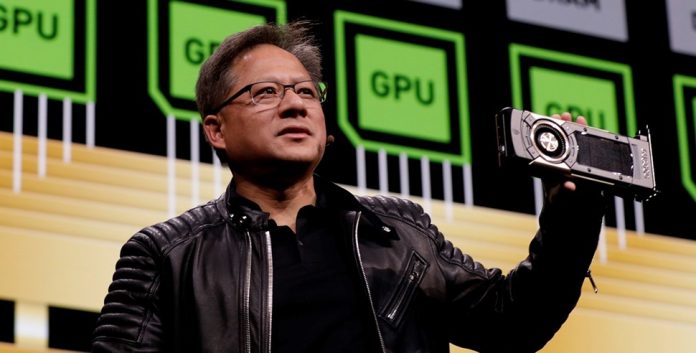
News of the possible UAE deal triggered a rally in Nvidia shares, which surged more than 6% following the report. The gain lifted Nvidia CEO Jensen Huang’s net worth by several billion dollars, pushing his total wealth to nearly $120 billion, according to Bloomberg’s Billionaires Index.

Though Nvidia declined to comment on the report, industry analysts suggest that the deal would boost the chipmaker’s already dominant position in the AI hardware sector, at a time when demand for large-scale compute infrastructure is surging across the globe.

OpenAI, whose large models are already among the most computationally intensive in the world, would also benefit greatly from regional AI supercomputing hubs in the Middle East, especially as the company eyes expansion beyond U.S. borders.

Analyst Calls for Alphabet Breakup to Unlock Shareholder Value

0

D.A. Davidson analyst Gil Luria is calling for a full-scale breakup of Alphabet Inc., urging the company behind Google to unlock shareholder value by dismantling its tech empire — a conglomerate that now faces intensifying antitrust scrutiny and growing competitive pressure from AI-driven rivals like OpenAI.

In a report published Monday, Luria said investors “want a big-bang breakup, not isolated spinoffs,” arguing that Alphabet’s current structure masks the true value of its high-growth businesses like YouTube, Google Cloud, and Waymo, which he claims are being dragged down by management’s obsession with controlling the entire stack.

“We realize that a breakup would cause dis-synergies and that management is trying to maximize profit at the Alphabet level,” Luria wrote, “but investors are much more interested in total shareholder value, not short-term profits.”

The breakup call helped buoy Google stock, which rose amid broader market optimism sparked by improved U.S.-China trade sentiment.

In Support of Two Major DOJ Lawsuits

Luria’s remarks come at a time when Alphabet is facing two antitrust lawsuits from the U.S. Department of Justice — one targeting its dominance in internet search, and the other its stronghold over the digital advertising market.

These legal battles have already resulted in two major legal rulings:

  • In April 2024, Judge Leonie Brinkema ruled that Alphabet had engaged in classic monopoly-building tactics in digital advertising.
  • Earlier, Judge Amit Mehta ruled that Google had illegally maintained a monopoly over online search, primarily by paying Apple billions of dollars annually to be the default search engine on its devices — a move that crushed competition before it could emerge.

Both rulings are expected to inform the remedies the DOJ will push for. In particular, regulators have floated the possibility of forcing Google to divest key assets, including its Chrome browser, and possibly parts of its ad tech business — a central pillar of Alphabet’s revenue machine.

Luria believes Alphabet’s leadership will resist by making “passive aggressive spinoffs”, such as separating its ad network or Chrome/Android divisions, but only after dragging its feet to buy time.

Strong Businesses Undervalued

Despite Alphabet’s steady cash flows, Luria argues the market is punishing the company’s bloated structure, valuing it at just 16 times earnings — a multiple he says implies:

  • Zero value for Waymo, Alphabet’s autonomous vehicle unit, and
  • Severe undervaluation of YouTube, Google Cloud, and the ad network.

Analysts have long contended that YouTube, if spun off, could be worth hundreds of billions on its own. Similarly, Google Cloud, which is growing but still not profitable, may attract more focused investor interest if freed from Alphabet’s umbrella.

The OpenAI Threat

Beyond antitrust battles, Alphabet’s crown jewel, Google Search, faces existential risk from OpenAI’s ChatGPT and similar AI-driven search alternatives. These new platforms bypass the traditional search-and-click model, directly answering queries instead of listing links.

While Google has responded by launching AI Overviews, a system that integrates its Gemini AI model into search results, the shift hasn’t gone unnoticed by advertisers or investors. The move may signal Google’s pivot from web-link ad revenue to answer-based monetization, but its real-world impact remains uncertain.

“Search ad revenue growth could persist well past the point the business is damaged,” Luria noted. “Only after Apple switches defaults and ChatGPT turns on ads will we see the real impact. That may take several quarters.”

This underscores a looming overhang: while Google’s search business remains profitable now, its core model is eroding, and the shift to AI could destabilize ad revenue faster than Alphabet can adapt.

Echoes of Past Breakups

The call to dismantle Alphabet is reminiscent of investor campaigns to break up other tech giants, most notably Meta Platforms and Amazon, where many have argued that sprawling empires depressed the value of otherwise high-performing assets.

In Alphabet’s case, investors have grown impatient with a corporate structure that prioritizes internal control and moonshot investments over market discipline and shareholder returns.

The D.A. Davidson report represents one of the clearest signals yet that investors are no longer content to wait, especially as legal pressure builds and AI disruption threatens Google’s monopoly profits.

If Alphabet refuses to act on its own, it may not have much of a choice for long. With two federal rulings already on the books, the DOJ is preparing remedies, and divestiture orders may not be far off. Luria suggests Alphabet’s best bet may be to preemptively break itself apart on its own terms, before regulators dictate the process.