DD
MM
YYYY

PAGES

DD
MM
YYYY

spot_img

PAGES

Home Blog Page 1170

Why Visa Remains the Most Trusted Payment Method in Online Casinos

0

Online entertainment in Canada spans streaming, gaming, and casino sites. Users expect fast funds access and strong fraud cover. Visa holds a major share in credit card use for online pay. Experts note its broad acceptance and support in regulated markets. Many casinos also list crypto options like Bitcoin or stablecoins alongside Visa. Though Visa does not process crypto directly, sites accept both methods to suit user preferences. This article from casino experts at CasinosFest explores why Visa stays the top pick for Canadians in online casinos and how it meets key user needs.

The Rise of Online Entertainment and the Need for Reliable Payments

Digital entertainment shows steady growth in Canada. Streaming services, eSports tournaments, and online casinos draw more users. The Canada Entertainment Media Market was valued at USD 135.11 billion in 2023 and may reach USD 147.4 billion in 2024, with a CAGR of around 9.1% through 2035. As spending shifts online, sites need secure payment methods for online platforms. Users expect instant fund credit and clear records. A weak pay link harms trust and repeat visits. Visa’s global network and fraud tools address these demands. Its reach cuts the delay for Canadian accounts. As online offers expand, a known payment path gains value.

What Makes Visa a Preferred Choice Among Online Users?

Online users value a payment method that they recognize and trust. Visa meets these needs with a broad reach, clear rules, and fast processing. It offers a familiar path on new sites and a record of safe use.

Global Recognition and Trustworthiness

Visa ranks as a top credit brand worldwide. In Canada, credit cards account for roughly 42% of e-commerce transactions and 48% of POS volume in 2022. Many Canadians hold Visa cards and use them in stores and online. This familiarity lowers the learning curve on new platforms. Seeing the Visa logo on a site builds confidence. Experts cite brand trust as a key factor in user choice.

Compliance and Regulatory Backing

Visa works closely with licensed platforms and meets Canadian KYC/AML rules. Online casino sites regulated by bodies like iGaming Ontario or provincial regulators link with Visa under clear standards. This legal cover reduces fraud risk and dispute issues. Users in Ontario or British Columbia gain confidence from that compliance. Experts note that visible legal backing draws users to Visa compared to less-regulated options.

Fast and Reliable Transaction Times

Visa transactions post rapidly, often within seconds for deposits. Bank wires may take days, and crypto transfers vary by network and exchange steps. Visa shows low failure rates and real-time processing in many cases. That speed keeps users engaged. Instant credit fits live bets or time-limited offers. Experts highlight that quick funds access to funds cuts the drop-off when users leave mid-session. In Canada’s e-payment market, real-time payment options are still growing, but Visa remains a leader in instant card pay.

Why Visa Dominates the Online Casino Sector

Online casinos need a payment method that works fast and wins user trust. Visa meets these needs with wide acceptance among Canadians and robust fraud protection. Its global network handles high volumes with low failure rates and clear dispute paths. These strengths keep Visa at the forefront of casino payments.

Broad Acceptance Across Platforms

Visa works with legacy sites and new platforms alike. It appears on streaming services, game stores, and casino sites. It also links to mobile wallets like Apple Pay or Google Pay in Canada. This broad reach means users avoid new accounts for each site. Players looking for reliable and accessible gaming options often turn to casinos that accept Visa, attracted by the consistent performance and compatibility Visa provides. This fits the context and adds the anchor naturally. Experts say this shared link drives user choice.

Instant Deposits and Easy Withdrawals

Visa deposits in online casinos let Canadians fund accounts in seconds, with minimums as low as C$10. Withdrawals, processed in 1-3 days, outpace bank transfers. This speed suits players chasing jackpots on slots or live dealer games. Unlike some e-wallets, Visa supports both deposits and cashouts, simplifying money flow.

Security Features That Protect Users

Visa embeds fraud tools and encryption in each transaction. Users gain chargeback support if issues arise. Casinos tap Visa Risk tools and token checks to secure card data. New payment apps may lack full fraud cover or clear recourse. Visa’s proven track record in online use makes it more attractive. Experts stress that its fraud cover helps both sites and users avoid losses and disputes.

How Visa Compares to Other Payment Methods in 2025

The fastest online casino payments in 2025 come from Visa, e-wallets, crypto, and prepaid cards. Here’s how they stack up:

Payment Method Deposit Speed Withdrawal Time Fees Security Best For
Visa Instant 1-3 days None High All users
E-wallets (PayPal, Interac) Instant 0-24 hours 1-2% High Fast cashouts
Crypto (Bitcoin) 5-30 minutes 1-2 days 0.5-3% Medium Tech-savvy
Prepaid Cards (Paysafecard) Instant N/A None High Budget control

Visa shines for its balance of speed, safety, and no fees. E-wallets like Interac offer quick withdrawals but limited acceptance. Crypto’s volatility and scam risks deter cautious players. Prepaid cards suit small deposits but don’t support cashouts, unlike Visa’s flexibility.

Cryptocurrencies Taking Over Classic Payment Methods

Visa remains the favorite for gambling online, but crypto gains ground at most sites. These two are mutually exclusive, and crypto wallets aren’t linked to Visa cards. Crypto payments bring about fast transfers, low fees, and increased anonymity. Players are able to deposit funds without sharing bank details and bypass certain geographical limitations. Blockchain records bring about a layer of transparency in payouts. The users have control over their own wallet keys and move money across borders. This path is ideal for those who welcome value fluctuations and want a new direction. Crypto stands as a new option alongside Visa and e-wallets in online casinos.

Future Outlook — Is Visa Still the Best Bet?

Visa adopts tokenization and virtual cards to cut fraud. It links with fintech apps and mobile wallets in Canada. It may tap NFC or wearable pay options. Partnerships with entertainment platforms keep Visa in play. Visa adapts to new tech via sandbox tests. It may tie into digital ID systems or real-time payment rails. Experts see Visa’s network and compliance as a base for new features. This suggests continued lead for user pay in streaming, gaming, and casinos.

Regulatory and Market Facts in Canada

Credit cards led 48% of all transactions and 59% of total value in 2022. Contactless pay grew rapidly. Online gaming in Canada expanded under regulated markets: Ontario market open in 2022. Licensed sites must meet KYC/AML and often link to Visa. The Payments Canada report shows digital payments at 86% of volume in 2023. This high digital share underscores the need for a trusted card like Visa.

Final Thoughts: Why Trust Still Favors Visa

Visa remains Canada’s top payment method for online entertainment. Its speed, with instant deposits and fast withdrawals, suits iGaming and streaming. High-grade encryption and chargeback support offer unmatched safety. Global acceptance and regulatory compliance seal its dominance over crypto or e-wallets. For Canadians seeking reliable transactions, Visa delivers every time. As digital platforms grow, Visa’s trust and flexibility keep it ahead.

Solaxy Listed On Uniswap, Added To CoinMarketCap – Solana’s L2

0

Backed by a strong community and a clever combination of a meme-styled theme with blockchain function, Solaxy matured into one of the most successful meme-based utility presales of the year.

Raising over $58 million in a relatively short period, it became a top-tier performer before even hitting the open market. With the token now officially launched and several major updates in the pipeline, Solaxy has managed to capture investor attention in a way that few projects manage to do in the current market space.

Bullish Sentiments Helped SOLX Find Footing Before Next Leg Up


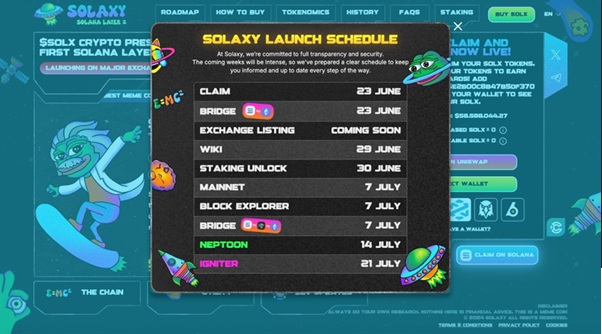
Solaxy officially launched its token on June 23, opening the gates for claims and allowing trading to begin on decentralized exchanges. The speed of its adoption was immediate and decisive. Within hours of launch, the token had already secured listings on Dexscreener, CoinMarketCap, CoinGecko, and Dextools. This visibility played a key role in its trending status across social and analytic platforms alike.

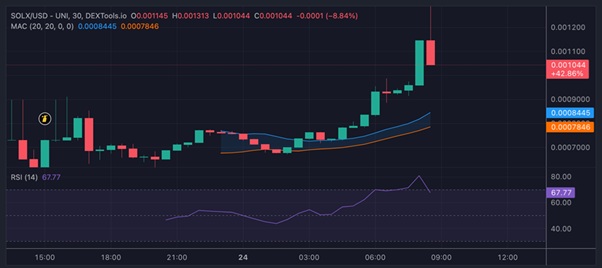
As expected with a project of this magnitude, demand surged at the opening bell. The token initially spiked to an early high of $0.001914, a price level that reflected the euphoric optimism of the presale community.

While some expected a cooldown, and one did follow, with the price settling back near $0.0006, it failed to shake off buyer interest. Unlike many launches that crumble under the weight of short-term speculation, Solaxy managed to stabilize, regain traction, and start climbing again.

Within a matter of hours, SOLX climbed back above the $0.001 range again, fueled by consistent accumulation and strong community engagement. Investors were clearly not just hoping for a pump but were positioning for longevity. Part of the appeal came from widespread speculation that the project could deliver a 50x return if momentum held.

This conviction only strengthened as broader market sentiment improved, particularly on the back of news about the ceasefire calming risk markets.

Multiple Project Developments Yet to Come

Part of what continues to drive Solaxy’s relevance is its development roadmap, which, unlike most meme projects, has been executed with precision. The team has consistently delivered updates in line with promised timelines, a trait that is increasingly rare in crypto where delays are often the rule rather than the exception.

Today, the project is expected to offer the first look at its Igniter launchpad, a major piece of infrastructure that has already piqued interest among Solana and Ethereum communities alike. If the timeline holds, Igniter will go live by the end of July.

This alone would be enough to sustain community engagement, but Solaxy is pushing ahead on multiple fronts. Plans are underway to make SOLX available across various centralized exchanges, a step that could expand its audience far beyond the current DeFi-heavy crowd. Exchange listings tend to act as liquidity magnets, and the prospect of fresh exposure is likely to keep the token’s bid strong in the near term.

Another quietly important detail is the upcoming release of the Solaxy Wiki. Scheduled for early July, this educational hub aims to demystify the project’s architecture, utilities, and broader mission. For a project riding the meme wave, the commitment to clarity and transparency reflects a deeper layer of seriousness.

SOLX – A Meme Project That Could 10X Or More

Solaxy functions as a Layer 2 protocol, built on Solana and extending operability to Ethereum. But its technical structure is only part of the story. What sets Solaxy apart is its creative fusion of meme aesthetics and blockchain architecture. The branding leans heavily into space-themed memes and surrealist humor, placing itself in the orbit of viral culture, but with something concrete underneath.

Solaxy uses a roll-up system to scale transactions off Solana’s mainnet, creating faster settlement times and reducing gas costs. This offers genuine utility to developers and users who are tired of congestion or fee spikes on popular chains. At the same time, its meme-forward design helps it reach an entirely different audience, one that might not dive into whitepapers but knows a good community when they see one.

This dual appeal has not gone unnoticed. Even before the token went live, multiple well-known YouTubers like ClayBro and many other crypto content creators had flagged the project as one to watch. These creators often have early access to emerging narratives and were quick to point out that Solaxy’s presale traction was far from a fluke.

Their coverage helped attract retail interest at scale, bringing in a crowd that saw in Solaxy the same spark that fueled some of the earlier iconic meme coin runs, only this time with better mechanics and a stronger foundation.

Implications of Reddit Using World ID for Verification

0

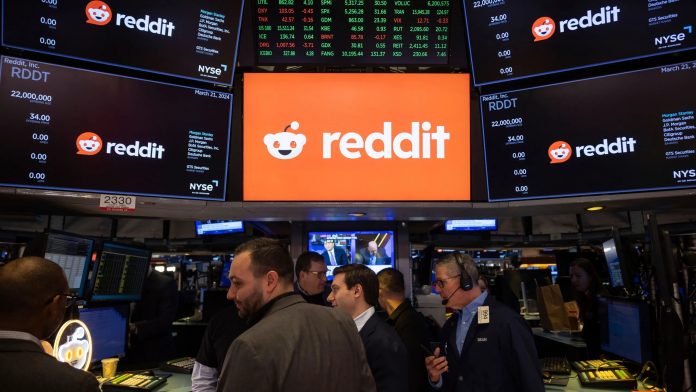
Reddit is exploring a partnership with World ID, a biometric verification system developed by Tools for Humanity, co-founded by Sam Altman. World ID uses iris-scanning “Orbs” to confirm users are real, unique humans without requiring personal information, aiming to preserve anonymity while addressing AI-generated content and age verification laws. The system creates an encrypted “IrisHash” stored locally on users’ devices, with no personal data linked.

Reddit’s CEO, Steve Huffman, emphasized maintaining user anonymity while ensuring platform authenticity, driven by incidents like AI impersonation by University of Zurich researchers and increasing regulatory pressure. World ID would likely be one of several verification options, but some Reddit users have raised privacy concerns, with a few threatening to leave the platform if implemented.

World ID could reduce AI-generated content, bots, and fake accounts by verifying unique human users, potentially improving content quality and trust on Reddit. This aligns with Reddit’s goal to combat issues like the AI impersonation incident by University of Zurich researchers. While World ID claims to preserve anonymity by storing only encrypted IrisHashes locally, the use of biometric data (iris scans) raises privacy concerns. Even with no personal data linked, some users fear potential misuse, data breaches, or future policy changes by Tools for Humanity.

Implementing World ID could help Reddit comply with age verification laws and other regulations targeting online platforms, reducing legal risks as governments push for stricter oversight of social media. Verification could streamline moderation but might deter users who value complete anonymity or distrust biometric systems. If World ID is optional, adoption may vary, but mandatory use could alienate a significant portion of Reddit’s user base.

With verified users, Reddit could better enforce community guidelines and reduce spam or malicious activity, but it risks over-centralization, potentially stifling the platform’s open, pseudonymous culture. Some users and moderators favor verification to curb bots, trolls, and low-quality AI content, seeing it as a way to enhance subreddit integrity.

CEO Steve Huffman views verification as a way to balance authenticity with anonymity, addressing both user trust and regulatory pressures. A cleaner platform with verified users could attract more advertisers, boosting Reddit’s revenue, especially post-IPO. Investors may see this as a step toward long-term sustainability.

Anti-Verification Users:

Many Redditors, valuing the platform’s pseudonymous culture, oppose biometric verification, citing risks of surveillance, data leaks, or misuse by third parties like Tools for Humanity. Users who rely on anonymity for free expression (e.g., in sensitive subreddits like r/Politics or r/MentalHealth) fear World ID could erode Reddit’s core appeal. Some have threatened to abandon the platform, as seen in X posts and subreddit discussions.

Tools for Humanity’s Worldcoin project, tied to World ID, has faced criticism for its global iris-scanning ambitions, with concerns about ethical practices, especially in developing regions. This fuels distrust among Redditors. Some users are open to optional verification if it improves platform quality without compromising anonymity. However, they await clearer details on implementation, security, and whether World ID will remain truly optional.

The divide mirrors broader debates about privacy versus security in online spaces, intensified by AI advancements and regulatory shifts. Reddit’s decision could set a precedent for other platforms, but risks fragmenting its community if not handled transparently. Pro-verification users see it as a necessary evolution, while opponents view it as a betrayal of Reddit’s ethos, with some already exploring alternatives like Lemmy or Mastodon.

Brent and WTI Crude Gapping Higher By 3% Before Reversing

0

The early 3% gap higher in Brent and WTI crude prices on Monday, followed by a reversal of gains, aligns with broader market movements. Bitcoin (BTC) and S&P 500 futures are showing positive momentum, suggesting risk-on sentiment. The dollar index’s slight uptick may be pressuring gold, which is experiencing moderate losses. These dynamics reflect a complex interplay of macroeconomic factors, potentially including geopolitical developments, demand expectations, and currency strength.

The described market movements—Brent and WTI crude gapping higher by 3% before reversing, alongside gains in Bitcoin and S&P 500 futures, a slightly stronger dollar index, and gold’s moderate losses—point to a mix of macroeconomic and sentiment-driven dynamics. The 3% gap higher in Brent and WTI suggests an initial reaction to a potential supply disruption, geopolitical event, or demand optimism (e.g., Middle East tensions or economic stimulus news). The subsequent reversal indicates a lack of sustained conviction, possibly due to demand concerns, ample supply, or profit-taking.

Volatility in oil markets may persist if underlying triggers like OPEC+ decisions, geopolitical risks remain unresolved. Energy prices could influence inflation expectations, impacting central bank policies. Positive moves in Bitcoin and S&P 500 futures signal risk-on sentiment, likely driven by optimism about economic growth, tech sector performance, or liquidity conditions. Bitcoin’s correlation with equities suggests it’s behaving as a risk asset rather than a safe haven.

Investors may be betting on continued economic recovery or stimulus, but sudden shifts in monetary policy such as the Federal Reserve tightening could reverse these gains. A slightly higher dollar index reflects modest strength in the U.S. dollar, possibly due to higher Treasury yields, hawkish Fed expectations, or relative weakness in other currencies. A stronger dollar could pressure commodities priced in USD (like oil and gold) and emerging market assets, while supporting U.S. imports but hurting exporters.

Gold’s moderate losses align with a stronger dollar and rising risk appetite, as investors move away from safe-haven assets. Higher Treasury yields or reduced inflation fears could also weigh on gold. Gold’s downside may be limited if geopolitical risks or inflation concerns resurface, but near-term pressure persists in a risk-on environment.

The mixed signals—crude’s reversal, risk assets’ gains, and safe-haven weakness—suggest markets are grappling with competing narratives: growth optimism versus inflation/geopolitical risks. Investors face uncertainty, and asset price volatility could increase if macroeconomic data (e.g., CPI, GDP) or policy decisions (e.g., Fed rate hikes) shift expectations.

Bitcoin and S&P 500 futures (risk-on) are diverging from gold (safe-haven), reflecting a split in investor sentiment. Some are optimistic about growth, while others are cautious, as seen in gold’s resilience despite losses. This divide suggests a lack of consensus on the economic outlook—growth and inflation versus potential slowdown or crisis. Crude oil’s initial spike and reversal contrast with gains in equities and crypto. Energy markets seem driven by specific supply/demand or geopolitical factors, while equities and Bitcoin reflect broader risk appetite.

If oil prices stabilize or fall, it could ease inflationary pressures, supporting equities. But persistent oil volatility could disrupt this balance. The dollar’s slight uptick is pressuring gold and possibly contributing to crude’s reversal. This highlights a divide between currency markets (favoring USD) and commodities (facing headwinds). A sustained dollar rally could cap commodity price gains, affecting inflation and global trade dynamics.

Crude’s gap and reversal suggest short-term speculative trading (e.g., algorithmic or news-driven moves), while Bitcoin and S&P 500 gains may reflect longer-term bets on growth or innovation. Markets are navigating a tension between immediate catalysts (e.g., news headlines) and structural trends (e.g., energy transition, monetary policy shifts).

If the crude spike was tied to Middle East tensions or OPEC+ actions, the reversal may indicate skepticism about sustained disruptions. A hawkish Fed or rising yields could explain the dollar’s strength and gold’s weakness, while supporting risk assets if growth expectations hold. Bitcoin’s alignment with S&P 500 futures underscores its role as a speculative asset, not a hedge like gold.

Fiserv’s FIUSD Stablecoin Platform Launched on Solana

0

Fiserv, a $90 billion financial services giant, announced on June 23, 2025, the launch of a new digital asset platform featuring a USD-pegged stablecoin called FIUSD, built on the Solana blockchain. The platform leverages infrastructure from Paxos and Circle, aiming for interoperability with leading stablecoins like PayPal’s PYUSD. FIUSD will integrate with Fiserv’s existing network, serving approximately 10,000 financial institutions and six million merchants processing 90 billion transactions annually, at no additional cost to clients.

The move aligns with advancing U.S. stablecoin regulations, including the GENIUS Act, and aims to enable real-time, programmable payments while maintaining compliance and fraud monitoring. Fiserv is also exploring deposit tokens for capital efficiency. The launch of Fiserv’s FIUSD stablecoin platform on Solana has significant implications for the financial services industry, blockchain adoption, and the broader digital asset ecosystem.

Fiserv’s vast network, serving 10,000 financial institutions and six million merchants, positions FIUSD to bridge traditional finance (TradFi) and decentralized finance (DeFi). By embedding stablecoin functionality into existing payment systems at no extra cost, Fiserv lowers the barrier for merchants and institutions to adopt blockchain-based payments.

FIUSD’s use of Solana’s high-speed, low-cost blockchain enables near-instantaneous, programmable transactions, potentially transforming payment processing for businesses. This could challenge incumbent systems like SWIFT or ACH, which are slower and costlier. The launch aligns with U.S. stablecoin regulations like the GENIUS Act, signaling a maturing regulatory environment that could encourage other financial giants to explore digital assets.

Boost for Solana’s Ecosystem

Fiserv’s choice of Solana over other blockchains (e.g., Ethereum, Polygon) underscores Solana’s scalability and low transaction costs, potentially driving more enterprise adoption to its ecosystem. By building on infrastructure from Paxos and Circle, FIUSD aims for compatibility with major stablecoins like USDC and PYUSD, enhancing Solana’s role as a hub for stablecoin transactions.

Increased transaction volume from Fiserv’s 90 billion annual transactions could boost Solana’s native token (SOL) value and network activity, attracting developers and DeFi projects. FIUSD’s smart contract capabilities enable automated, conditional payments (e.g., escrow, subscriptions), offering businesses new ways to manage cash flow and contracts.

Fiserv’s exploration of deposit tokens could redefine how banks manage liquidity, offering tokenized assets that improve capital efficiency while remaining compliant with regulations. Fiserv’s integration of fraud monitoring and compliance tools into the platform ensures that blockchain adoption doesn’t compromise security, a key concern for financial institutions.

Rivals like Visa, Mastercard, or PayPal (with PYUSD) may face pressure to accelerate their own blockchain initiatives to keep pace with Fiserv’s scale and integration. The platform could attract new players—both TradFi and crypto-native firms—into the stablecoin space, fostering innovation but also intensifying competition.

Fiserv’s platform bridges TradFi and DeFi by bringing blockchain to mainstream institutions, potentially reducing friction in adopting decentralized technologies. DeFi purists may criticize FIUSD for being centralized, as Fiserv (a corporate entity) controls the platform, potentially limiting the decentralized ethos of blockchain. This could create a divide between permissioned, corporate-led stablecoins and fully decentralized alternatives.

While Fiserv’s scale accelerates adoption, it may prioritize regulated, controlled systems over open DeFi protocols, potentially stifling innovation in fully decentralized ecosystems. Fiserv’s no-cost integration benefits its six million merchants, particularly smaller businesses that can now access fast, low-cost payments without upfront investment.

Smaller institutions or merchants outside Fiserv’s network may struggle to compete if they lack access to similar blockchain infrastructure, widening the gap between Fiserv’s clients and others. The platform could consolidate Fiserv’s dominance, creating a divide where non-Fiserv clients face higher costs or slower systems, potentially locking them out of digital asset benefits.

Fiserv’s global reach could standardize stablecoin use in payments, particularly in regions with strong regulatory support like the U.S. Emerging markets or regions with less developed financial infrastructure may lag in adoption due to regulatory uncertainty or lack of access to Fiserv’s network, deepening the global digital finance divide.

Countries with robust regulations (e.g., U.S. via the GENIUS Act) may see faster adoption, while others risk being left behind, exacerbating economic inequalities. Solana’s selection by Fiserv validates its technology, potentially attracting more developers and users to its ecosystem. The influx of corporate players like Fiserv could shift Solana’s focus toward enterprise use cases, sidelining smaller DeFi projects or community-driven initiatives.

A divide may emerge within Solana’s ecosystem, where corporate-backed projects dominate resources and attention, potentially alienating grassroots developers. Fiserv’s compliance-focused approach aligns with evolving regulations, setting a model for other firms to follow. Overregulation or stringent compliance requirements could exclude smaller crypto firms or startups lacking the resources to meet Fiserv’s standards, creating a divide between well-funded corporations and smaller players.

The stablecoin market may consolidate around a few large, compliant players, reducing diversity and innovation in the space. Fiserv’s FIUSD platform on Solana is a landmark step toward integrating blockchain into mainstream finance, offering faster, cheaper, and programmable payments while aligning with regulatory trends.

It strengthens Solana’s position and could reshape the competitive landscape for financial services. However, it also highlights divides between centralized and decentralized systems, large and small players, global and regional markets, and corporate versus community-driven blockchain initiatives.