DD
MM
YYYY

PAGES

DD
MM
YYYY

spot_img

PAGES

Home Blog Page 1172

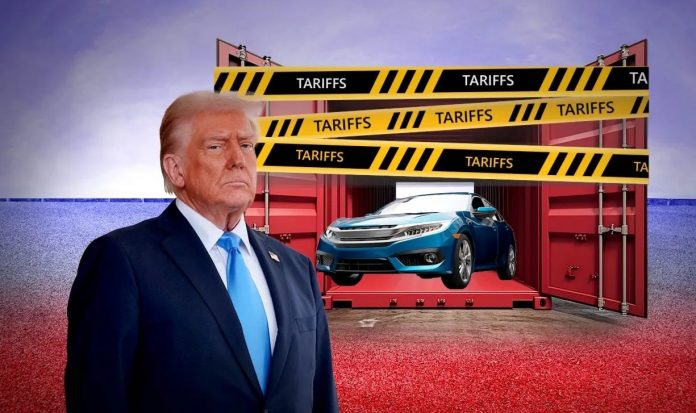
Why A $22 Billion Tariff Revenue Spike Could Bolster US Coffers

0

Historically, tariff revenue has fluctuated, with $80.3 billion collected in FY2023. Recent reports indicate April 2025 customs revenue reached $16.3 billion, a record at the time, driven by Trump’s tariffs. Projections suggest tariffs could raise significant revenue—potentially $2.7 trillion to $5.2 trillion over a decade, depending on the model—but these are estimates, not actuals, and account for dynamic effects like reduced trade volumes.

The $22 billion figure may stem from speculative calculations or misinterpretations of daily or projected revenue, as seen in claims about $2 billion daily tariff collections, which were debunked as exaggerated. Actual daily collections in April 2025 averaged around $180.94 million to $283.91 million. Without official monthly data for May 2025, the $22 billion claim remains unverified.

A $22 billion monthly tariff revenue figure, if sustained, could translate to roughly $264 billion annually, a significant jump from the $80.3 billion collected in FY2023 or the $16.3 billion record for April 2025. This could reduce federal deficits, projected to exceed $1 trillion in 2025, or fund initiatives like tax cuts or a proposed U.S. sovereign wealth fund. However, dynamic effects—reduced imports due to higher prices—could lower revenue over time, with estimates suggesting $2.4–$5.2 trillion over a decade depending on tariff rates and retaliation.

The revenue benefits high-income groups and corporations if used for tax cuts (e.g., extending the Tax Cuts and Jobs Act), but tariffs themselves are regressive, disproportionately burdening lower-income households who spend a larger share of income on goods. A $22 billion monthly collection implies significant price increases, with households facing $1,200–$4,900 annual losses, hitting the bottom income quintile hardest ($1,300–$2,200).

Inflation and Consumer Prices

Tariffs, especially at rates like 10–145% (e.g., 145% on Chinese imports), raise prices for imported goods and domestic substitutes. The Budget Lab at Yale estimates a 1.7–3% short-run price level increase, with apparel (14–65%) and textiles (11–45%) hit hardest. This could add $2,800–$4,900 per household in costs, with low-income families facing a heavier burden due to reliance on essentials like food and clothing.

Low- and middle-income consumers face a sharper erosion of purchasing power, as they allocate more income to necessities. Wealthier households, with more discretionary spending, are less affected. Posts on X highlight this, noting low-income families are hit hardest as essentials’ prices rise faster than wages. Tariffs aim to protect domestic industries (e.g., steel, autos) but reduce GDP by 0.4–8% long-term, per various models, due to higher input costs and reduced trade. Unemployment could rise by 0.4% (456,000 jobs lost), particularly in manufacturing-heavy states.

Manufacturing workers may see short-term job protection in sectors like steel, but downstream industries (e.g., auto manufacturing, construction) face higher costs, leading to layoffs. For example, 60–80 jobs are affected per steel job saved. Rural and industrial regions benefit unevenly compared to urban or service-based areas. Tariffs act as consumption taxes, inherently regressive because lower-income households spend a larger share of income on goods.

The Budget Lab notes short-run losses of $1,300–$2,200 for low-income households, versus $2,800–$4,900 average losses, exacerbating income inequality. The tax burden shifts from high-income earners (who benefit from progressive income taxes) to low- and middle-income families, worsening wealth gaps. X posts emphasize this regressive impact, noting tariffs as a “hidden tax” hitting Main Street harder than Wall Street.

Consumer confidence has plummeted, with the University of Michigan’s Consumer Sentiment Index dropping 11% in March 2025. Businesses face uncertainty, with manufacturing orders declining and small businesses reporting lower optimism. This could curb investment and hiring. Small businesses and consumers bear more uncertainty than large corporations, which can absorb costs or shift supply chains. Rural communities, reliant on agriculture and manufacturing, face greater disruption than urban centers with diversified economies.

High tariffs (e.g., 145% on China, 25% on Canada/Mexico) have sparked retaliation, with China imposing 125% tariffs on U.S. goods and Canada targeting U.S. exports. This escalates trade wars, potentially reducing U.S. exports by $15–$20 billion annually, as seen in 2018–2019. Export-dependent states (e.g., Texas, New Mexico) and sectors (e.g., agriculture, energy) face significant losses, while non-exporting sectors or states less tied to trade (e.g., service-based economies) are insulated. Canada and Mexico, with economies more trade-dependent (70% of GDP), suffer disproportionately compared to the U.S.

The OECD cut its 2025 global growth forecast to 2.9% from 3.1%, citing U.S. tariffs as a drag, with the U.S. itself facing the largest hit. This risks global recession, especially if trade wars escalate. Developing nations and trade-heavy economies (e.g., Canada, Mexico) face sharper downturns than less trade-dependent regions like the EU or UK, which may even see slight GDP gains. Within the U.S., industries tied to global supply chains (e.g., tech, autos) face disruption, while domestic-focused sectors are less affected.

Tariffs disproportionately burden low-income households, increasing costs for essentials and widening inequality. High-income groups may benefit from potential tax cuts funded by tariff revenue. Manufacturing and agriculture may see short-term protection, but downstream industries and consumers face higher costs and job losses. Rural and industrial areas are more exposed than urban, service-based economies.

The U.S. leverages its economic size against trade-dependent partners like Canada and Mexico, but risks long-term alliances and global stability. China’s retaliation further strains U.S. exporters. Rural communities, reliant on agriculture and manufacturing, face retaliatory tariffs and supply chain disruptions, while urban centers with diversified economies are less impacted.

The $22 billion figure, if accurate, may reflect a short-term surge from stockpiling before tariffs hit (e.g., April’s $16.3 billion record). Long-term revenue could fall as imports decline due to higher prices or trade deals. Frequent tariff changes (e.g., 90-day pauses, China’s rate dropping to 10%) create volatility, deterring investment and complicating supply chains.

While a $22 billion tariff revenue spike could bolster federal coffers, it exacerbates economic divides by disproportionately harming low-income households, trade-dependent industries, and U.S. allies like Canada and Mexico. The regressive nature of tariffs, combined with risks of inflation, job losses, and trade wars, underscores the need for careful policy design to mitigate these divides.

Venmo Reinvents Itself as a Full-Service Commerce Platform with Revamped Debit Card and New Checkout Options

0

Venmo, widely known for helping friends split dinner bills and birthday gifts, is shifting its identity from a peer-to-peer payments app to a full-service commerce platform.

The PayPal-owned service rolled out several key updates aimed at embedding itself into consumers’ daily spending habits both online and in-store.

The overhaul includes a major upgrade to the Venmo Debit Mastercard, expanded checkout availability across major retailers, and a rebranding campaign that signals the company’s ambition to compete more aggressively in the fintech space.

“We’re transforming from a payments app into a full-service commerce experience for users to spend their balance on everything, in-store and online,” said Diego Scotti, Executive Vice President and General Manager of PayPal’s Consumer Group.

The redesigned debit card now offers users up to 15% cash back when shopping at top retailers including Walmart, Sephora, McDonald’s, Walgreens, and Lyft. Offers can be activated directly within the app. The card also supports tap-to-pay transactions, international purchases without foreign transaction fees, and automatic reload when a user’s balance drops below a set threshold.

This is part of Venmo’s broader effort to evolve from its roots in peer payments and catch up with competitors like Cash App, which has gained a stronghold in the space. While Venmo’s debit card penetration remains in the single digits, Cash App has reached 44% of its users with its card, a sharp contrast highlighted in recent market analysis.

Despite those numbers, Venmo has made strides. Transaction volume from its debit card hit $13 billion in 2024, and total payment volume climbed to $75.9 billion. Use of the “Pay with Venmo” feature surged by 50%, and active debit card users rose by around 40%. Monthly active accounts on the platform also grew by 30% year-over-year.

The company has also made its checkout option available at an expanded slate of merchants, including TikTok Shop, Uber, Instacart, and Domino’s. Major brands such as DoorDash, Starbucks, and Ticketmaster already accept Venmo as a payment option. The company hopes that this growing merchant network and increased cashback incentives will encourage more users to treat Venmo as a default payment method, not just a transfer tool.

PayPal CEO Alex Chriss has made monetizing acquisitions like Braintree and Venmo a top priority. He recently noted that over 45% of U.S. branded checkout volume now goes through PayPal’s updated interface — a number expected to increase with the company’s expansion in Europe. He also highlighted growing debit card momentum, with nearly two million people using a PayPal or Venmo debit card for the first time last quarter, marking a 90% increase year-over-year.

While Venmo and Cash App have both lost ground in the U.S. peer-to-peer payment market as Zelle’s share rose to 66%, Venmo is betting on its loyal user base, brand recognition, and social features to fuel the next phase of its growth.

By integrating everyday rewards, broadening merchant partnerships, and updating the user experience, Venmo is making a clear play to move from a casual utility to a primary financial tool—especially for younger, mobile-first users looking for convenience, perks, and flexibility in how they manage and spend their money.

Trump Says Xi Is “Extremely Hard” to Make A Deal With, Dampening Hopes of Trade Breakthrough

0

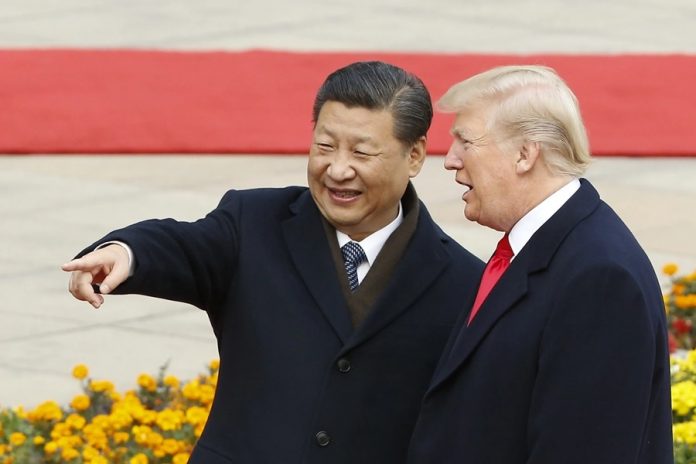
President Donald Trump on Wednesday voiced frustration over stalled trade negotiations with China, describing Chinese President Xi Jinping as “extremely hard to make a deal with.”

His remark comes at a delicate moment, as the White House signals openness to a leader-to-leader call aimed at resolving rising tariff tensions between the world’s two largest economies.

“I like President XI of China, always have, and always will, but he is VERY TOUGH, AND EXTREMELY HARD TO MAKE A DEAL WITH!!!” Trump posted on Truth Social, casting doubt on the likelihood of meaningful progress if the two leaders eventually connect.

The statement marked a stark contrast to the more optimistic tone from White House officials earlier in the week, who said a call between Trump and Xi could happen soon. But as of Wednesday, there was no confirmation that such a conversation had been scheduled.

Trump’s comments are believed to be a reflection of growing pessimism in Washington about the prospects of breaking the deadlock. His public expression of doubt has also cast a shadow over expectations that direct talks with Xi might help untangle the web of tit-for-tat tariffs and retaliatory measures that have rattled global markets.

On May 12, the two sides reached a temporary agreement in Switzerland to suspend most tariffs for 90 days and roll back China’s countermeasures, offering a brief window of relief. However, that truce has all but collapsed. The Trump administration accuses China of failing to honor its commitments, including a promise to ease restrictions on rare earth exports—key materials in electronics and defense industries.

Meanwhile, Beijing has not backed down from its position. Chinese officials have repeatedly stated that they will not yield to pressure from Washington. Foreign Minister Wang Yi reinforced that message during his meeting this week with U.S. Ambassador to China David Perdue, saying the Trump administration’s actions have been based on “groundless reasons” and violate China’s legitimate interests.

While Beijing did acknowledge Trump’s “respect” for Xi—according to the Chinese readout of the meeting—there is no indication that China is preparing to make major concessions.

American business leaders, too, are under no illusion that China will backpedal under U.S. pressure. JPMorgan Chase CEO Jamie Dimon, in a recent comment, said: “China is a potential adversary. They’re doing a lot of things well. They have a lot of problems. But they’re not scared, folks. This notion that they’re going to come bow to America—I wouldn’t count on that.”

Dimon’s assessment mirrors the broader view among U.S. industry insiders that China’s negotiating posture remains firm and strategic. As the two countries navigate this increasingly tense terrain, many agree the tariff dispute is far from resolution.

Even as Trump continues to express interest in speaking with Xi, something he has repeated in recent weeks, analysts believe China will only agree to a high-level call if there’s confidence that it won’t be followed by sudden reversals or inflammatory rhetoric from the White House.

Trump and Xi last spoke in January, just before Trump was inaugurated for his second term. Since then, the atmosphere has shifted significantly, with Washington ramping up export restrictions on Chinese access to advanced technologies and revoking visas for some Chinese students.

Presently, the hope that a phone call between the two leaders could break the deadlock appears dim. As Trump’s own words suggest, any breakthrough—if it happens at all—will be a long and uncertain walk through a minefield of competing interests, unresolved grievances, and strategic mistrust.

Circle Raises $1.1bn in Upsized IPO, Signaling Growing Market Acceptance for Stablecoins

0

Stablecoin issuer Circle Internet Group Inc. and its backers have raised nearly $1.1 billion in an upsized initial public offering (IPO) that priced above expectations, marking a significant moment of validation for the crypto industry as it inches closer to mainstream financial markets.

The IPO, which saw strong investor demand, suggests growing confidence in stablecoins at a time when the U.S. Congress is advancing legislation that could soon bring regulatory clarity to the sector.

Circle and its shareholders sold 34 million shares at $31 each, above the raised price range of $27 to $28, which itself had been increased earlier this week from the original $24 to $26 range. The offering gives the company a market capitalization of $6.9 billion, and a fully diluted valuation of approximately $8.1 billion when stock options and other securities are factored in.

The robust investor appetite led to orders outstripping available shares by more than 25 times before books closed on Tuesday, according to people familiar with the matter cited by Bloomberg.

Among those participating in the IPO are ARK Investment Management, which plans to purchase up to $150 million worth of shares, and BlackRock Inc., which intends to acquire approximately 10% of the offering. BlackRock already plays a critical role in Circle’s operations, managing a $53.3 billion reserve fund that backs its U.S. dollar-pegged stablecoin, USDC.

Circle itself sold 14.8 million shares while selling shareholders divested 19.2 million, including co-founder and CEO Jeremy Allaire. Trading of the stock is expected to commence Thursday on the New York Stock Exchange under the ticker symbol CRCL.

Circle’s public debut comes at a pivotal moment for the stablecoin industry. With Congress advancing legislation to regulate these dollar-pegged digital tokens, the IPO signals a turning point in the acceptance of crypto-related businesses by traditional markets. Legislation could boost trust and draw in even more institutional investors and competitors. According to a report from the Wall Street Journal, some of Wall Street’s largest banks are now exploring their own dollar-backed digital currencies.

Circle’s USDC currently commands about 29% of the stablecoin market, according to its SEC filings citing CoinMarketCap data. As of May 29, about $61 billion worth of USDC is in circulation. While USDC has seen its market share decline in the face of strong competition from Tether, Circle has sought to emphasize transparency in its reserve backing and its commitment to regulatory compliance.

The IPO also comes more than a year after Circle scrapped its earlier attempt to go public via a SPAC merger that would have valued the company at $9 billion. At that time, the crypto market was reeling from a series of setbacks, including the collapse of FTX and a widespread loss of investor confidence. Circle was last valued at $7.7 billion in a private funding round in 2022, according to PitchBook.

Now, with stronger demand and greater policy attention on stablecoins, Circle appears to be entering public markets under far more favorable conditions. The IPO was led by JPMorgan Chase, Citigroup, and Goldman Sachs, all of whom have deepened their involvement in digital asset infrastructure in recent years.

The success of the listing could open the door for more crypto-native firms seeking to bridge into traditional finance through public offerings, particularly if U.S. lawmakers finalize a regulatory framework that treats stablecoin issuers more like financial institutions.

Welcome Routelink Group to Tekedia Mini-MBA

0

Join me to welcome innovators and business transformers from Routelink Group to Tekedia Mini-MBA which begins on Monday, June 9, 2025. Routelink is a leading ICT solutions provider and systems integrator for application management, IT security and compliance, IT operations management, business analytics, cloud solutions, network and broadband communications.

For over 15 years, Routelink Group has been at the forefront of technological innovation and has provided cutting-edge solutions in enterprise IT, fintech, and telecommunications, empowering businesses to thrive in the digital age. Tekedia Institute appreciates this opportunity to co-learn with the innovators behind this company.

Welcome Team Routelink to Tekedia Institute; our product is Knowledge, and with that knowledge, you will discover more routes and win more territories. Welcome!