DD
MM
YYYY

PAGES

DD
MM
YYYY

spot_img

PAGES

Home Blog Page 1173

Google Bolsters Android with Cutting-Edge Security and Privacy Upgrades

0

On Tuesday, Google took the stage at the Android Show, just ahead of Google I/O, to unveil a transformative array of security and privacy enhancements for Android.

These advancements, meticulously crafted to shield users from scams, secure stolen devices, and strengthen device-level defenses, mark a significant step forward in addressing the evolving landscape of cyber threats. With protections spanning call safety, screen-sharing safeguards, messaging security, theft prevention, and system-wide fortifications, Google is weaving a comprehensive safety net for Android users.

Many of these features will debut with Android 16, while others extend to devices running as far back as Android 6, ensuring broad accessibility.

Safeguarding Calls Against Phone Scams

The scourge of phone scams, where attackers manipulate users into clicking malicious links or installing harmful apps, lies at the heart of Google’s call protection strategy. For Android 16, Google is introducing dynamic safeguards that activate during calls with unknown contact numbers not stored in a user’s contact list. These measures prevent users from sideloading apps from unverified sources, such as web browsers or messaging apps, during such calls, effectively blocking scammers from sneaking malicious software onto devices.

Similarly, the system bars apps from gaining accessibility permissions, a tactic often exploited to grant scammers remote control. To ensure continuous vigilance, Google is also locking down Google Play Protect on devices running Android 6 or later, preventing users from disabling this critical app-scanning tool during calls. This real-time intervention creates a robust barrier, alerting users to potential scams and halting risky actions when they’re most vulnerable.

Strengthening Screen-Sharing Defenses

Screen-sharing, a growing avenue for fraud, is another focal point. Scammers frequently pose as trusted entities to trick users into exposing sensitive information during shared sessions. Google’s response is twofold. First, Android devices will now prompt users to stop sharing their screens once a call ends, reducing the chance of inadvertently leaking data.

Second, in a targeted pilot with select U.K. banks, Google is testing a warning system for devices running Android 11 or later. When a user opens a partner bank’s app while sharing their screen during a call with an unknown number, a prominent alert warns of a possible scam, complete with a button to instantly end the session. This initiative, currently localized to the U.K., showcases Google’s willingness to collaborate with industry partners to tackle region-specific threats, with potential for global expansion if the pilot proves effective.

Fortifying Google Messages with AI and Encryption

In the realm of messaging, Google Messages is undergoing a significant security overhaul. Building on an AI-driven anti-scam feature launched in March 2025, Google is enhancing its on-device detection to identify a broader spectrum of fraudulent schemes, including cryptocurrency scams, gift card fraud, toll road and billing fee ruses, financial impersonation, and fake technical support.

By analyzing conversation patterns locally, this system alerts users to threats without compromising privacy, offering a seamless yet powerful layer of protection. Complementing this, Google is introducing verification keys to the Google Contacts app, set to launch in summer 2025 for Android 10 and later. This feature allows users to authenticate contacts via QR code scanning or number matching, ensuring end-to-end encrypted conversations in Google Messages. If an attacker hijacks a contact’s number through a SIM swap, the app flags the conversation as “unverified,” providing a clear visual cue to users. This blend of AI and encryption fosters trust and security in digital communications.

Locking Down Stolen Devices

Device theft, a persistent threat, is addressed through a suite of protections that render stolen phones nearly unusable and safeguard user data. Google’s Identity Check, previously exclusive to Pixel and Samsung devices with OneUI 7, is expanding to other manufacturers with Android 16. This feature mandates biometric authentication—such as fingerprint or facial recognition—for critical actions like changing a PIN, updating biometrics, disabling theft protection, or accessing Passkeys, but only when the user is outside trusted locations.

Reinforcing the Android Ecosystem

Later in 2025, Google will bolster Factory Reset protection, restricting core functions on devices reset without the original lock pattern, PIN, or Google account credentials, making stolen phones less appealing to thieves. To counter remote locking attempts, a new security challenge question adds an extra authorization step. Additionally, Android 16 will hide one-time passwords when a device is offline and hasn’t been recently unlocked, thwarting attackers seeking to intercept sensitive codes.

Beyond these targeted protections, Google is fortifying Android’s broader ecosystem. Google Play Protect’s live detection, available in the coming months for Android 6 and later, will gain the ability to spot apps with hidden or altered icons, a common hallmark of malicious software. New on-device rules will further expand its ability to catch diverse categories of harmful apps, ensuring comprehensive threat coverage.

For high-risk users like public figures, Google is enhancing its Advanced Protection Mode with tailored on-device features, though specifics remain under wraps. Meanwhile, the debut of Find My Hub introduces a user-friendly way to track items, friends, and family, seamlessly integrating security with everyday convenience.

The rollout of these features is strategically timed to maximize impact. Android 16 will usher in call protections, Identity Check expansion, and one-time password safeguards, while Factory Reset enhancements and Google Play Protect upgrades are slated for late 2025 and the near term, respectively. The Google Messages verification keys will arrive in summer 2025, and the U.K. banking app warning system remains in testing, with its future expansion contingent on success.
Trump Administration Rescinds Biden-Era AI Export Rule, Shifts Toward Country-Specific Negotiations

0

The U.S. Department of Commerce on Tuesday formally scrapped the Biden-era “Artificial Intelligence Diffusion Rule,” a sweeping regulation that would have placed tiered restrictions on the export of advanced American-made AI chips to dozens of countries. The rule was due to take effect on May 15, 2025.

The reversal, announced just days before the implementation date, marks a sharp policy shift under the Trump administration, which is now pushing for more targeted and bilateral agreements rather than blanket export controls.

“The Trump Administration will pursue a bold, inclusive strategy to American AI technology with trusted foreign countries around the world, while keeping the technology out of the hands of our adversaries,” said Jeffrey Kessler, U.S. Secretary of Commerce for Industry and Security.

What the Biden Rule Sought to Do

The AI Diffusion Rule, first introduced in January 2025, aimed to restrict the global export of high-performance AI chips, especially to nations the U.S. considers adversarial, such as China, Russia, Iran, and North Korea. The rule proposed a three-tier system, classifying countries based on perceived risk and alignment with U.S. strategic interests:

  • Tier 1, which included allies like Japan and South Korea, would have faced no restrictions.
  • Tier 2, including countries like Mexico and Portugal, would have seen AI chip export restrictions for the first time.
  • Tier 3, comprising countries like China, Russia, and Iran, would have faced even tighter restrictions than the current regulations allow.

The goal, according to the Biden administration at the time, was to slow the proliferation of high-end U.S. semiconductors capable of training and running advanced AI models that could be used in military, surveillance, or authoritarian systems abroad.

Trump Administration’s New Direction

The Department of Commerce has now halted enforcement of that rule and said it will issue a replacement in the coming months. The new approach is expected to focus on direct negotiations and country-specific frameworks rather than imposing universal restrictions.

On Tuesday, the Department issued interim guidance for U.S. companies and chipmakers. The guidance reinforced existing bans on exports involving Huawei’s AI chipsets.

“Using Huawei’s Ascend AI chips anywhere in the world violates U.S. export rules,” the Commerce Department reminded companies.

It also issued warnings on the consequences of letting U.S. chips be used in China to train AI models and urged firms to bolster security protocols against the diversion of sensitive hardware.

The policy reversal has been met with relief from American chipmakers, particularly NVIDIA and AMD, whose products had been at the center of the proposed rule. NVIDIA’s high-end graphics processing units (GPUs) are widely considered the gold standard for AI training and deployment.

Following the announcement, NVIDIA stock surged more than 3% to $130.15 by market close, while AMD saw a 1.8% gain. The market response underscores investor optimism about restored export opportunities and reduced regulatory friction in international sales.

“At a time of platform shifts, you kind of want to make sure you lean into even the new design wins, and you just don’t keep doing the stuff that you did in the previous generation,” Microsoft CEO Satya Nadella said in January, during an earlier earnings call when discussing AI growth and go-to-market strategies.

While Nadella was speaking in the context of Microsoft’s own AI cloud ambitions, the statement aligns with a broader industry push to keep pace with rapid innovation rather than be hampered by broad regulatory limitations.

Rising Stakes in the Global AI Race

The stakes in global AI development have risen dramatically over the past two years. The United States has increasingly tightened controls over technology exports to China, especially after growing concerns that advanced AI chips could be used for military modernization and surveillance.

The Biden administration’s AI rule was part of a broader national security framework, building on earlier chip export bans that were already in place. However, critics had warned that the overly broad scope of the new rule could backfire, pushing neutral countries toward Chinese suppliers or prompting retaliation against U.S. tech interests abroad.

The Trump administration appears to be betting on diplomacy and strategic alliances as a better pathway to securing America’s technological edge by shifting to bilateral arrangements.

While the Commerce Department has not released details on the replacement rule, officials have signaled that it will involve direct coordination with foreign governments and allow more case-by-case discretion.

“We reject the Biden Administration’s attempt to impose its own ill-conceived and counterproductive AI policies on the American people,” said Secretary Kessler.

In the meantime, companies are being asked to continue complying with existing export laws, particularly concerning entities on the Commerce Department’s Entity List, which includes firms like Huawei and Chinese military-linked research institutions.

The Department has not indicated a timeline for the new rule’s release, but industry stakeholders are likely to lobby for a framework that balances national security with the flexibility to remain globally competitive in a fast-moving AI race.

Best New Meme Coins to Invest in Now: Troller Cat’s Stage 4 Ends Soon as Cat in a Dog’s World and Popcat Wobble

0

What if the subsequent meme coin explosion starts with a cat, not a dog? Bitcoin continues its victory lap above $100K. Ethereum’s steady, and XRP is eyeing a breakout. But while top-tier cryptos hold strong, meme coins move with wild rhythm. Cat in a Dog’s World ($MEW) took a hit, down 12.22%, while Popcat ($POPCAT) also slipped 6.38% in the last 24 hours. Yet, in this volatile dance, one project is stealing the spotlight: Troller Cat ($TCAT) and its live presale.

Meme coins have always been about timing and community. From DOGE to SHIBA, those who got in early were rewarded with life-changing upside. And in 2025, the playbook is getting sharper. Community memes are now paired with smart tokenomics, staking models, and gamification. It’s no longer just about the meme—it’s about momentum. That’s why TrollerCat is becoming one of the best new meme coins to invest in now.

Troller Cat presale kicked off on May 2, 2025, and has already cleared over $100K in early-stage funding from 500+ buyers. With its Stage 4 price locked at $0.00000864 and only days left before Stage 5, this cat’s not playing—it’s prowling for serious ROI.

Troller Cat ($TCAT): Where Strategy Meets Sass

Troller Cat isn’t just riding the meme wave—it’s building a brand. The 26-stage presale model was designed to create sustained momentum with each stage price increase. Early adopters from Stage 1 saw the token rise 72.8%. Stage 4 buyers still have massive upside with a projected launch price of $0.0005309—that’s a 6,044.68% ROI if the math holds.

What if you invested $50,000 in TCAT at $0.00000864 today? By the time the project lists, you could have over $3 million.

It’s not just the price movement that’s turning heads. Trollercat.com is KYC-approved, fully audited, and offers 69% APY staking rewards—even during the presale. That means your holdings aren’t sitting still. They’re multiplying before the token even launches. No lockups. No fine print. Just smart yield.

But here’s the catch—Stage 4 ends in less than 72 hours. The price will jump by 34.95% in Stage 5. If you’re even half-serious about riding the meme coin wave this cycle, Troller Cat is one of the best new meme coins to invest in.

Game Center: Play to Earn, Burn to Rise

Troller Cat’s not just another token—it’s launching a fully integrated Game Center designed to gamify the ecosystem and power long-term growth. Here’s how it works: users play, ads generate revenue, and that income is used to buy back and burn TCAT tokens.

This play-to-earn loop reduces the circulating supply, creating constant deflation. Fewer tokens = higher demand = price appreciation. That’s more than a game—it’s a growth engine.

The Game Center also gives users new ways to engage with the project beyond holding. Whether you’re competing for rewards or watching your tokens shrink in supply as others play, the result is a dynamic ecosystem where every click counts.

This is a real use case that works for meme coin investors tired of hype without substance. It’s yet another reason Troller Cat stands out as one of the best new meme coins to invest in now.

Go to Trollercat.com, grab your bag, unlock your referral code, and position yourself before the next stage arrives. You won’t want to be the last to pounce.

Cat in a Dog’s World ($MEW): Purring Slows to a Whimper

Cat in a Dog’s World ($MEW) was positioned as a feline disruptor to the dog-dominated meme meta at launch. But after its latest slip, down 12.22% to $0.003739 in the past 24 hours, investors are re-evaluating its bite.

The drop wasn’t entirely unexpected. Technical indicators had been flashing bearish, with the token failing to hold support at $0.004. Social media mentions dipped, and influencers have gone quiet. The dev team has teased future roadmap expansions, but no concrete updates have landed.

For holders, it’s a test of patience. MEW’s branding is still sharp and its meme potential is intact, but momentum is fading. If no new utility or staking mechanism is introduced soon, the project could be relegated to a slow grind rather than a sharp rally.

It’s still early, and loyalists are hanging on—but in a market where action and engagement matter, MEW needs more than catnip to make noise. Until then, it’s tough to argue it’s one of the best new meme coins to invest in now.

Popcat ($POPCAT): Meme Fame, Price Pain

Popcat exploded onto the scene with instant meme recognition and viral branding. The community was electric, but the market’s been a little more cold lately. The token dropped 6.38% in the last 24 hours, settling at $0.5570.

While it’s far from dead, the current correction is part of a broader downward trend that’s now lasted over a week. Charts are showing bearish divergence, and whales have begun trimming their bags. Trading volume has also started to dip, raising eyebrows.

That said, Popcat still holds meme power. Its image is instantly recognizable, and it dominates crypto meme forums. The issue? Lack of utility. Without staking, deflationary burns, or real ecosystem value, the token’s ceiling may be closer than its fans would like.

Developers have hinted at partnerships and potential Web3 integrations, but timelines remain fuzzy. Until those become reality, Popcat feels more like a nostalgia trip than the best new meme coin to invest in now.

Conclusion

Based on our research and market trends. The meme coin space is back in motion, but only a few projects are pairing humor with substance. Troller Cat is leading that charge. It offers a rare mix of community energy, deflationary mechanics, staking rewards, and a clearly timed presale with baked-in scarcity.

Bitcoin may have started the fire. Ethereum and XRP are keeping it burning. But it’s meme coins like Troller Cat that are bringing heat in all directions.

Troller Cat presale is still in Stage 4, priced at $0.00000864. Once Stage 5 hits in 72 hours, prices jump 34.95%. This is one of the best new meme coins to invest in for anyone watching the charts or eyeing a smart early entry.

Go to Trollercat.com, grab your bag, unlock your referral code, and buy TCAT tokens before the next stage arrives. You won’t want to be the last to pounce.

For More Information:

Website: https://www.trollercat.com/

Presale: https://www.trollercat.com/buy-now/

Telegram: https://t.me/trollercat

X: https://x.com/trollercat_

Reddit: https://www.reddit.com/r/TrollerCat/

Frequently Asked Questions

  1. Why is Troller Cat one of the best new meme coins to invest in now?
    It has staking, Game Center utility, deflationary supply, and massive presale ROI potential.
  2. What happens after Stage 4?
    The price jumps by 34.95% in Stage 5. Stage 4 ends in less than 72 hours.
  3. Is staking live during the presale?
    Yes—69% APY is active even before the token is launched.
  4. What’s the referral program about?
    Buy $25+ and get a code to earn 10% of others’ purchases. They also get 10% extra.
  5. How high could $50,000 go if the ROI hits 6,044.68%?
    Over $3 million based on the projected listing price.

Glossary of Key Terms

  • Presale: Initial offering before public trading begins.
  • KYC: Know Your Customer; identity verification process.
  • APY: Annual Percentage Yield earned via staking.
  • Referral Program: Bonus system for sharing with others.
  • ROI: Return on Investment; measures financial gain.
  • Deflationary Token: A Token with a decreasing supply over time.
  • Game Center: Troller Cat’s play-to-earn utility model.

Poor Labour as Microsoft Fires 6,000 Workers!

0

America reminds that you are nobody’s kid when you see how they hire and fire: “Microsoft has begun laying off about 3% of its global workforce, amounting to thousands of jobs across different levels, teams, and geographies — even as the company continues to post strong earnings and sees its share price climbing to historic highs.” That is 6,000 strong humans! That is coming after they recently cut 10,000 people.

Two centuries ago, land was catalytic as a factor of production. A century later, labour had a moment. Today, they have invented Knowledge which rules everything. Capital and Enterpreneur’s positions remain unchanged for centuries. In this age of AI, we must keep updating our skills because it is now one AI agent away from the pink slip. All those affected, our best wishes as the future has abundance.

Deepen your skill and be ahead of employers and that can only come if you move from Labour to Knowledge within the factors of production. They will be replacing Labourers even as they pile resources on knowledge.  What is Labour? Forget what Adam Smith wrote decades ago since in his era there was no Knowledge as a factor.

Labour-level factor of production will go even as Knowledge-level factor will become extremely valuable. Machines like robots and AI will do Labour-level work. So, we need to evolve to become the knowledge species. Take time and study the career module of Tekedia AI in Business Masterclass and be ready for the future https://school.tekedia.com/course/aibusiness/

Microsoft Lays Off 3% of Global Workforce Despite Soaring Profits, Record Share Price

0
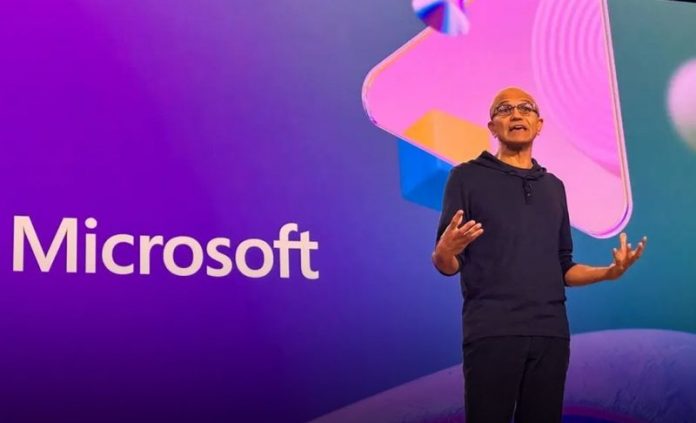
Microsoft CEO

Tech giant Microsoft has begun laying off about 3% of its global workforce, amounting to thousands of jobs across different levels, teams, and geographies — even as the company continues to post strong earnings and sees its share price climbing to historic highs.

The company, which had 228,000 employees worldwide as of the end of last June, confirmed the decision on Tuesday, calling it a strategic move to streamline operations and “position the company for success in a dynamic marketplace.”

“We continue to implement organizational changes necessary to best position the company for success in a dynamic marketplace,” a Microsoft spokesperson said in a statement to CNBC.

Although the company did not disclose the exact number of roles being cut, 3% of its workforce suggests that nearly 7,000 employees will be affected. The layoffs are not performance-related, the spokesperson added, distinguishing them from a smaller round of cuts announced earlier this year that were based on employee performance.

This marks Microsoft’s largest layoff since January 2023, when the company eliminated 10,000 roles in response to what it then described as shifting economic realities and customer demand patterns.

Layoffs Amid Record Profits and Market Performance

What makes this latest wave of job cuts particularly notable is that it comes amid strong financial performance. Microsoft reported a $25.8 billion quarterly net income in April, surpassing analysts’ expectations, and issued an upbeat forecast for its future performance, especially in its AI-powered cloud services.

In fact, Microsoft’s stock closed Monday at $449.26, the highest price so far in 2025. This comes after a previous record close of $467.56 in July 2024, underlining the company’s continued strength on Wall Street.

Analysts say this latest restructuring is not driven by financial stress, but rather by organizational recalibration. A company spokesperson said that reducing layers of management is one of the primary objectives of the layoffs.

Nadella’s Push for Structural Reforms and AI Shift

The decision reflects a broader trend in Microsoft’s internal restructuring efforts. In January, CEO Satya Nadella indicated during an earnings call that the company would begin implementing sales execution changes, especially around Azure — Microsoft’s cloud platform. He noted that revenue growth outside of AI services had slowed, partly due to strategic shifts in sales incentives.

“How do you really tweak the incentives, go-to-market?” Nadella asked. “At a time of platform shifts, you kind of want to make sure you lean into even the new design wins, and you just don’t keep doing the stuff that you did in the previous generation.”

This aligns with Microsoft’s ongoing strategy to aggressively invest in artificial intelligence and consolidate operations that support this next-generation platform push. AI-driven services, particularly through Azure, have outperformed internal projections, while more traditional areas of the business face tightening margins and slower growth.

Part of a Broader Tech Sector Realignment

Microsoft’s announcement adds to a growing list of tech companies trimming their workforce this year, often despite strong balance sheets. Just last week, cybersecurity firm CrowdStrike announced that it would cut 5% of its workforce, citing efficiency realignment rather than poor performance.

This signals a continuing pattern of proactive restructuring among top-performing tech firms — one where profitability no longer guarantees job security, and the focus is shifting toward leaner operations tailored to new technologies like AI.

Microsoft, which remains at the forefront of enterprise cloud and generative AI solutions, appears to be doubling down on this direction. Analysts say the layoffs suggest a move to consolidate non-AI divisions, while aggressively reallocating resources toward AI, cloud, and future-facing products.

For a company that’s been consistently outperforming the market and driving the AI narrative in Silicon Valley, Microsoft’s layoffs point to a paradox shaping the tech economy: while innovation booms, the jobs behind older or less profitable segments are quietly being retired.

This restructuring may improve Microsoft’s margins and investor confidence in the short term, but it also echoes a familiar refrain from recent years, where tech employees, once shielded by boom cycles, are now vulnerable even when business is good.