DD
MM
YYYY

PAGES

DD
MM
YYYY

spot_img

PAGES

Home Blog Page 1178

OpenAI Revenue Surges to $10 Billion ARR Amid Soaring Business Demand

0

OpenAI has reached a staggering $10 billion in annual recurring revenue (ARR), marking one of the fastest growth trajectories ever recorded by a U.S. tech company.

The milestone, achieved less than three years after the launch of its breakout product ChatGPT, signals not just surging demand for generative artificial intelligence, but also a critical turning point in OpenAI’s evolution from a research-focused startup to a full-blown commercial powerhouse.

The company’s ARR now includes revenue from its consumer-facing ChatGPT app, business-grade ChatGPT Enterprise tools, and usage of its application programming interface (API), which powers AI features in third-party apps and platforms. However, the figure does not include licensing revenue from Microsoft or one-time enterprise contracts, according to a spokesperson. That means the $10 billion estimate captures only recurring revenue — the kind investors value most — from OpenAI’s core commercial operations.

The jump in revenue from $5.5 billion in 2023 to $10 billion in mid-2024 reflects a significant acceleration in the company’s monetization efforts, and it’s helping to quiet growing concerns from backers about whether OpenAI’s products could ever become sustainably profitable. OpenAI reportedly burned through around $5 billion last year, prompting questions about the sustainability of its business model given the enormous infrastructure costs involved in training and serving its large language models.

Now, however, that narrative is beginning to shift. The revenue surge offers a clearer path to profitability and comes at a time when OpenAI’s valuation has ballooned to $300 billion — a figure that investors are betting will yield massive returns if the company can maintain its momentum. OpenAI’s current valuation translates to 30 times its annual revenue, a premium investors appear willing to pay given the belief that the company will be foundational to future software, productivity, and search tools globally.

Microsoft, OpenAI’s largest investor and strategic partner, has so far poured over $13 billion into the company, including a mix of equity investment and cloud infrastructure support. Much of OpenAI’s model training and inference is run on Microsoft’s Azure platform, further entrenching the two companies. The rapid uptick in OpenAI’s revenue — and growing adoption of its business products — is a positive signal for Microsoft, which has been under increasing pressure to justify its enormous investment.

Sources familiar with the matter say Microsoft is now beginning to see signs of return on investment through its ability to embed OpenAI’s models into Microsoft 365, Azure, and other enterprise software tools — an arrangement that not only improves its offerings but helps generate new enterprise customers. In effect, Microsoft is monetizing OpenAI twice: once as an investor and again as a reseller of its capabilities.

The broader adoption of OpenAI tools across industries has also been accelerating. As of March, OpenAI reported 500 million weekly active users, driven by continued interest in ChatGPT and its integrations across devices and platforms. The company also confirmed it now has over three million paying business users, up from two million in February — reflecting its expanding presence in enterprise environments, where firms are seeking AI-powered productivity gains.

Even more ambitious is OpenAI’s long-term revenue goal: $125 billion by 2029, according to internal targets cited by The Information. That would place the AI firm in the same revenue tier as tech titans like Amazon Web Services or Apple’s services division — an extraordinary goal for a company that was largely unknown outside academic and tech circles just a few years ago.

But to get there, OpenAI must navigate mounting challenges. Rivals like Google DeepMind, Anthropic, Meta, and Mistral are racing to build better and cheaper AI models. At the same time, governments across the U.S., Europe, and Asia are drafting regulations to rein in the potential harms of advanced AI systems, which could add compliance burdens and slow down deployment.

However, few companies have managed to turn hype into recurring revenue as quickly and forcefully as OpenAI. The company’s transformation from a nonprofit AI lab to a commercial juggernaut has not been without criticism, but it has undeniably changed the technology industry.

With revenue climbing, enterprise adoption spreading, and investor confidence returning, OpenAI is believed to be in a stronger position now than ever to chart the future of artificial intelligence — and to make good on the massive bets its backers have placed.

WWDC: Apple Unifies Operating System Naming with iOS 26 and a Sweeping Redesign

0

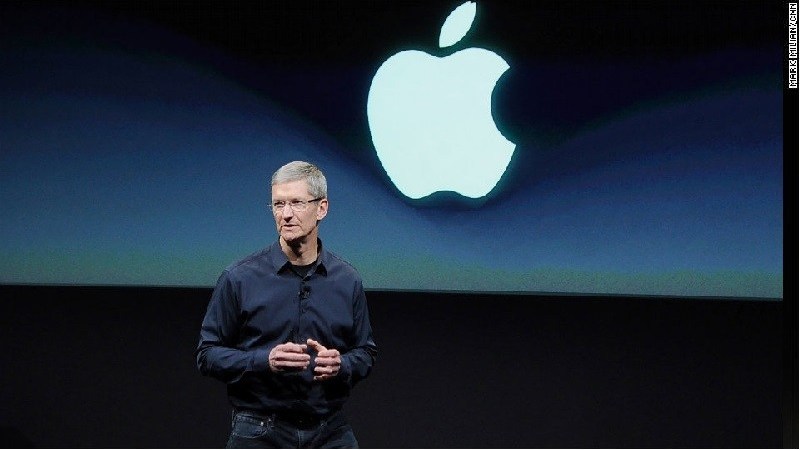
Apple has made a significant change to how it names its operating systems, shifting from version-based numbering to a unified year-based system.

The update, announced during the company’s annual Worldwide Developers Conference (WWDC), means all of Apple’s OS platforms — iOS, macOS, iPadOS, watchOS, tvOS, and visionOS — will now carry the same version number: 26. The change is aimed at simplifying the user experience by making it easier to know whether a device is running the latest software.

This year’s upcoming iPhone software update, iOS 26, marks the beginning of this new approach. Previously expected to be called iOS 19, the jump in numbering aligns the iPhone’s operating system with macOS, now called macOS Tahoe 26, and the rest of Apple’s platforms. This unified numbering will roll forward each year, taking the guesswork out of software updates across the Apple ecosystem.

A New Visual Language: “Liquid Glass”

The biggest change coming with iOS 26 is a new design language called “Liquid Glass.” Inspired by the visionOS interface designed for the Vision Pro headset, Liquid Glass introduces translucent UI elements that mimic the behavior of real-world glass. Apple says the redesign uses real-time rendering to create fluid reactions to movement, including highlights and color shifts, giving apps, buttons, sliders, the Control Center, and even the homescreen a more dynamic and immersive feel.

Tabs in apps now shrink and expand as users scroll, and the new visual styling touches nearly every part of the interface, creating a more unified look across devices.

Upgrades to Messages for Group Chats

Apple is also bringing long-overdue enhancements to its Messages app, especially for group conversations. iOS 26 will let users customize chat backgrounds to personalize threads, introduce polls to streamline group decision-making, and finally add typing indicators for group chats — a feature that should bring conversations to life and reduce awkward overlaps in responses.

Phone App Gets Smarter with AI Features

Taking cues from competitors, Apple is building more intelligence into the Phone app. A new call screening feature will allow users to filter spam or unwanted calls. Meanwhile, a “Hold Assist” feature can stay on the line for you during long hold times, letting you step away until a real person answers.

Apple is also introducing a unified layout in the Phone app, combining Favorites, Recents, and Voicemails into a single streamlined view.

Live Translation for Real-Time Multilingual Conversations

One of the most ambitious new features is Live Translation, which will let users translate conversations during phone calls in real-time. Built into Messages, FaceTime, and the Phone app, the feature relies on Apple Intelligence — the company’s on-device AI framework — to translate both text and spoken language on the fly. Apple emphasized that these translations happen entirely on-device, maintaining user privacy.

Small but Notable Apple Intelligence Enhancements

While Apple’s broader Siri upgrade is still pending, iOS 26 will introduce smaller Apple Intelligence-powered features. “Visual Intelligence” will allow users to identify and take action on items shown on their screen. “Genmoji” lets users blend two emojis into a custom hybrid. And Apple’s Shortcuts app will benefit from smarter automation through AI-powered workflow enhancements.

A New Games App

With iOS 26, Apple is also launching a dedicated Games app. It serves as a central hub for everything related to gaming on the iPhone. The Home tab tracks updates and events in your games. Apple Arcade has its own section, while the Library collects every game you’ve ever downloaded from the App Store. A Play Together tab shows what friends are playing, encouraging multiplayer engagement.

Public Beta Coming in July

The full version of iOS 26 is expected to be released in the fall alongside new iPhone models. For those eager to test it early, a developer beta is already available, with a public beta set to roll out in July.

Apple’s decision to simplify its naming scheme while introducing a bold new look and intelligent features points to a larger push toward ecosystem consistency and AI integration. With iOS 26, the company isn’t just updating software — it’s rethinking how its users interact across every Apple device.

Implications of U.S. Treasury Pressure on Bank of Japan (BOJ) to Hike Rates

0

The U.S. Treasury called for the Bank of Japan (BOJ) to hike interest rates to address the yen’s weakness. However, there have been discussions and analyses suggesting that U.S. authorities, including the Treasury, have expressed concerns about the yen’s depreciation, particularly due to its status as a safe-haven currency. The yen has weakened significantly, reaching levels like 155 against the dollar in 2024, driven by Japan’s low interest rates and yield differentials with the U.S.

The BOJ has maintained ultra-low rates, with the policy rate at 0.25% as of late 2024, and signaled gradual rate hikes, potentially to 1% by mid-2025, according to some analysts. This cautious approach contrasts with market expectations and U.S. economic dynamics, where higher yields have pressured the yen. The Treasury’s focus has been more on monitoring currency movements and encouraging transparency in foreign exchange interventions, as seen in their October 2024 report, which kept Japan on a currency monitoring list due to its trade surplus and interventions to support the yen.

While no direct U.S. demand for a BOJ rate hike is documented, pressure for Japan to adjust monetary policy stems from broader market dynamics and bilateral economic dialogues. Japan’s interventions, costing over $60 billion in 2024, aim to stabilize the yen, but experts argue sustained rate hikes are needed to address structural weakness. A stronger yen, potentially achieved through BOJ rate hikes, could stabilize global currency markets by reducing speculative pressure on the yen as a safe-haven currency.

The yen’s weakness (e.g., hitting 155 against the dollar in 2024) has fueled volatility, impacting carry trades where investors borrow in yen to invest in higher-yielding assets. A rate hike could narrow the yield gap with U.S. Treasuries, reducing capital outflows from Japan and supporting the yen, which could ease imported inflation pressures in Japan (e.g., energy and food costs). A stronger yen could lower import costs, easing inflation (Japan’s core CPI was 2.7% in 2024). Higher rates might also signal confidence in economic recovery, encouraging domestic investment.

Japan’s economy, reliant on exports, could face headwinds from a stronger yen, making goods less competitive. Higher rates could also strain borrowers, given Japan’s high public debt (over 250% of GDP) and slow growth (1.1% GDP growth projected for 2025). U.S. pressure, even if indirect, could strain bilateral ties if Japan perceives it as interference in its monetary policy sovereignty. The Treasury’s currency monitoring list, which includes Japan, signals scrutiny but avoids labeling Japan a currency manipulator.

Coordinated interventions (Japan spent $60 billion defending the yen in 2024) and dialogue through forums like the G7 could align interests, but divergent economic priorities—U.S. combating inflation vs. Japan’s deflationary concerns—complicate matters. A BOJ rate hike could strengthen other Asian currencies tied to the yen, impacting regional trade dynamics. However, it might also attract capital back to Japan, potentially reducing liquidity in emerging markets.

If the yen strengthens too rapidly, it could disrupt global risk sentiment, as investors unwind carry trades, affecting equity and bond markets. The Federal Reserve has maintained higher rates (around 4.5-5% in 2024) to combat inflation, strengthening the dollar. A weak yen exacerbates U.S. trade deficits with Japan ($70 billion in 2024) and fuels global currency volatility, prompting Treasury concerns.

The BOJ prioritizes economic stimulus and gradual normalization from negative rates (ended in March 2024). Japan fears rapid rate hikes could choke growth and reignite deflation, a decades-long challenge. This creates tension with U.S. expectations for tighter policy. The yen’s safe-haven status drives demand during global uncertainty (e.g., geopolitical tensions or market sell-offs). However, its weakness due to low rates undermines this role, creating a divide between market expectations and Japan’s policy stance.

Investors expect a stronger yen during risk-off periods, but Japan’s interventions and low rates signal reluctance to let the yen appreciate sharply, frustrating markets. A stronger yen could pull capital from emerging markets, widening the economic divide. Emerging economies reliant on dollar-based trade may face tighter conditions if U.S. rates stay high and the yen strengthens. Japan’s trade surplus with the U.S. (and globally) fuels tensions, as the U.S. pushes for currency adjustments while Japan resists rapid policy shifts to protect exporters.

The U.S. urging Japan to hike rates reflects a broader divide in economic priorities: the U.S. seeks global currency stability and trade balance, while Japan balances growth and inflation risks. A BOJ rate hike could stabilize the yen but risks Japan’s recovery and global market dynamics. The divide persists due to misaligned monetary policies and the yen’s unique safe-haven role.

IonQ to Acquire Oxford Ionics in $1.08bn Bet on Fault-Tolerant Quantum Future

0

IonQ is doubling down on its ambition to lead the global race for fault-tolerant quantum computing with the acquisition of Oxford Ionics, a British quantum hardware startup spun out of Oxford University.

The deal, valued at approximately $1.08 billion, combines mostly stock with a modest $10 million in cash and is expected to close later this year, subject to regulatory approvals.

Founded in 2019 by physicists Dr. Chris Ballance and Dr. Tom Harty, Oxford Ionics has made a name for itself by developing high-fidelity trapped-ion quantum processors on standard semiconductor chips. This chip-based approach avoids the bulk and complexity of traditional quantum systems reliant on intricate laser setups, offering a path to scalability that has eluded many competitors. The company holds several world records in single- and two-qubit gate fidelity and has proven its ability to marry quantum hardware with established silicon manufacturing techniques.

IonQ, which already uses a trapped-ion architecture, sees the merger as a technological match with deep strategic value. Its CEO, Peter Chapman, called the combination “a leap forward in scalable quantum computing,” citing the complementary strengths of IonQ’s modular networked systems and Oxford Ionics’ chip-integrated design. For IonQ, the acquisition is not only about absorbing cutting-edge IP but also about accelerating its roadmap toward fully error-corrected, commercially deployable quantum machines.

The integration of Oxford Ionics’ team, including its two founders and roughly 30 experts, will form the nucleus of IonQ’s expanded R&D operations in Europe. A new research facility near Oxford is already in the works, underscoring IonQ’s commitment to deepening its presence on the continent and positioning itself within the UK’s growing national quantum infrastructure.

Oxford Ionics has already been working with the UK’s National Quantum Computing Centre, and the acquisition is expected to deepen those collaborations while giving IonQ access to government-supported quantum programs.

IonQ’s roadmap sets an aggressive pace. The company aims to produce a quantum system with 256 algorithmic qubits and 99.99% gate fidelity by 2026. A year later, it plans to exceed 10,000 physical qubits with 99.99999% fidelity, a critical threshold for implementing robust error correction. By the end of the decade, IonQ envisions deploying systems with up to two million physical qubits, enabling as many as 80,000 logical, or fully error-corrected, qubits. Oxford Ionics’ chip-based technology is expected to be a cornerstone in meeting these targets.

In commercial terms, IonQ is already beginning to see returns on its years of investment. Its client list includes Airbus, AstraZeneca, Hyundai, and the Oak Ridge National Laboratory, and its cloud-accessible quantum systems are available on platforms like Amazon Web Services and Microsoft Azure. Recent collaborations, including a high-profile partnership with Nvidia and AstraZeneca, have demonstrated early real-world value—accelerating drug simulation workloads by nearly 20 times.

The acquisition comes amid mounting pressure on quantum companies to scale their technologies beyond proof-of-concept machines. While IonQ’s stock price jumped by as much as 11% following the announcement, reflecting investor optimism, it remains slightly down for the year. However, analysts say the Oxford Ionics acquisition could give IonQ a critical edge over rivals like IBM, Google, Microsoft, and Rigetti, each of which is pursuing different hardware strategies such as superconducting qubits or neutral atom-based systems.

This marks IonQ’s sixth acquisition since late 2022, part of a broader push to consolidate quantum talent and technologies ahead of what many expect will be a breakout decade for the field. The company is projecting between $75 million and $95 million in revenue for 2025, a sign that enterprise and government demand for quantum capabilities is starting to mature.

Governments around the world—from the United States and the United Kingdom to China and the European Union—are investing heavily in quantum computing, viewing it as a strategic national asset. Industry forecasts suggest that quantum computing could generate over $850 billion in value globally by 2040, placing companies like IonQ at the center of a potentially transformative technology shift.

However, IonQ’s acquisition of Oxford Ionics is not merely a growth move. It’s a declaration of intent—to lead in a field where success depends on more than theoretical breakthroughs. It demands execution, scale, and a clear path from lab to product. With this deal, IonQ is staking its future on just that.

A Look into U.S. SEC “DeFi and the American Spirit” Roundtables

0

U.S. Securities and Exchange Commission’s (SEC) Crypto Task Force is hosting a roundtable titled “DeFi and the American Spirit” on June 9, 2025, at SEC headquarters in Washington, D.C., from 1 p.m. to 5 p.m. ET. The event, part of the SEC’s “Spring Sprint Toward Crypto Clarity” series, is open to the public in person (registration required) and will be webcast live on SEC.gov without registration. It aims to explore regulatory challenges and opportunities in decentralized finance (DeFi), focusing on fostering innovation while ensuring investor protection.

Commissioner Hester M. Peirce, who leads the Crypto Task Force, emphasized that DeFi “exemplifies the promise of crypto, as it allows people to interact without intermediaries,” and she aims to create a regulatory environment where DeFi can thrive. The roundtable will include opening remarks, a main discussion on DeFi, a town hall Q&A session, and concluding remarks. Panelists include notable figures such as Rebecca Rettig (Jito Labs), Erik Voorhees (Venice AI), Jill Gunter (Espresso Systems), and Peter Van Valkenburgh (Coin Center), moderated by Troy Paredes of Paredes Strategies.

The event is the final in a series of five roundtables launched by Former Acting SEC Chairman Mark T. Uyeda on January 21, 2025, to address crypto asset regulation. Previous discussions covered topics like defining security status, crypto trading, custody, and tokenization. The Task Force seeks to establish clear regulatory frameworks, provide registration pathways, and craft sensible disclosure rules while moving away from enforcement-heavy approaches.

The SEC’s “DeFi and the American Spirit” roundtable highlights significant implications for the future of decentralized finance (DeFi) in the U.S., exposing a clear divide between innovation-driven crypto advocates and regulatory authorities seeking to balance investor protection with market growth. The roundtable signals the SEC’s intent to move toward a clearer regulatory framework for DeFi, potentially reducing reliance on enforcement actions like SEC’s past cases against Uniswap or Compound. A structured approach could involve tailored registration pathways or disclosure rules, as emphasized by Commissioner Hester Peirce’s push for DeFi to thrive without intermediaries.

However, any new regulations could impose compliance burdens, potentially stifling smaller DeFi projects that lack resources to navigate complex legal requirements. The SEC aims to protect investors from risks like fraud, smart contract vulnerabilities, or rug pulls, which have caused significant losses in DeFi such as the $3.7 billion in DeFi hacks in 2022 alone, per Chainalysis. Clear rules could enhance trust and mainstream adoption.

Conversely, heavy-handed regulation risks pushing DeFi innovation offshore, as seen with projects relocating to jurisdictions like Singapore or the UAE due to U.S. regulatory uncertainty. The roundtable’s “American Spirit” theme underscores DeFi’s potential to democratize finance through permissionless systems, aligning with values of individual freedom and innovation. Panelists like Erik Voorhees, a vocal libertarian, may argue DeFi empowers users by bypassing traditional gatekeepers like banks.

However, regulators may highlight that DeFi’s pseudonymous nature enables illicit activities (e.g., money laundering), creating tension with anti-money laundering (AML) and know-your-customer (KYC) requirements. Positive regulatory outcomes could boost DeFi’s market, which had a total value locked (TVL) of $85 billion as of early 2025 (per DeFiLlama). Clarity might attract institutional capital, further legitimizing DeFi. Overregulation or enforcement missteps could suppress growth, driving projects to decentralized or non-U.S. jurisdictions, fragmenting the global DeFi ecosystem.

Figures like Voorhees and Rettig champion DeFi’s decentralized ethos, arguing it reduces reliance on centralized institutions, fosters competition, and empowers individuals. They view overregulation as antithetical to DeFi’s core principles. The SEC, led by figures like Former Acting Chairman Uyeda, prioritizes investor safeguards and market integrity, often requiring centralized oversight (e.g., registering DeFi protocols as securities). This clashes with DeFi’s permissionless, trustless model.

DeFi developers argue that existing securities laws don’t fit decentralized protocols, where no single entity controls operations (e.g., DAOs). Compliance costs could exclude smaller players, consolidating DeFi among well-funded entities. The agency sees many DeFi tokens as unregistered securities under the Howey Test, creating legal risks for non-compliant platforms. The roundtable may explore compromises, but the SEC’s enforcement history (e.g., $2 million Uniswap Labs settlement in 2024) suggests a hardline stance.

The SEC’s focus on compliance could position the U.S. as a safer but less competitive DeFi hub, potentially lagging behind jurisdictions with lighter regulations (e.g., Switzerland, Malta). Other countries are attracting DeFi projects with crypto-friendly policies, creating a risk that the U.S. loses market share. For example, Binance and other platforms have shifted operations to jurisdictions with clearer rules. DeFi’s appeal lies in accessibility for retail investors, offering high-yield opportunities (e.g., staking, liquidity pools).

However, they face risks from volatility and scams, which regulators aim to address. Large investors seek regulatory clarity to enter DeFi safely, but their involvement could shift DeFi toward centralized models, alienating grassroots users who value decentralization. The roundtable represents a critical opportunity to bridge these divides, with panelists like Jill Gunter and Peter Van Valkenburgh likely advocating for balanced policies that preserve DeFi’s innovative spirit while addressing regulatory concerns.

Success hinges on whether the SEC can craft rules that avoid stifling DeFi’s growth or pushing it offshore. Failure to find common ground could deepen the divide, fragmenting DeFi’s development and limiting its potential to reshape finance in the U.S.