DD
MM
YYYY

PAGES

DD
MM
YYYY

spot_img

PAGES

Home Blog Page 1179

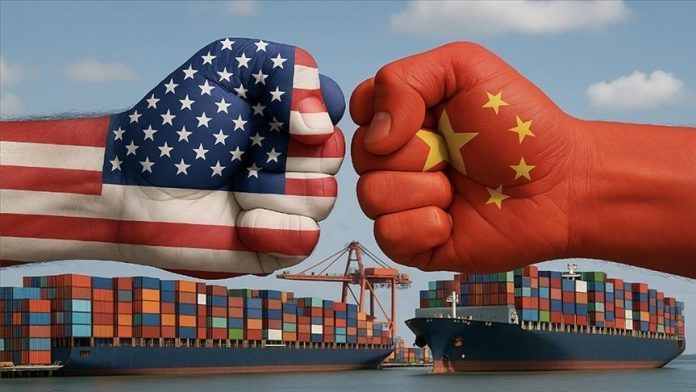
US, China Agree to Slash Tariffs, Establish Trade Consultation Mechanism After “Constructive” Geneva Talks

0

After two days of intensive trade talks in Geneva, the United States and China have agreed to establish a new “economic and trade consultation mechanism” and to significantly roll back tariffs that have strained relations between the world’s two largest economies.

The announcement follows what both sides described as “constructive” and “candid” negotiations aimed at easing a years-long tariff war.

Chinese Vice Premier He Lifeng, who led Beijing’s delegation, told reporters that “the two sides have taken an important step to resolve differences through equal dialogue and consultation.” He said the discussions led to the decision to create a joint mechanism that will facilitate further negotiations on economic issues of mutual concern.

“We will issue a joint statement on Monday,” He announced, according to China’s official Xinhua news agency, adding that both sides are preparing for “further consultations.”

He expressed Beijing’s willingness to continue working with Washington “to manage differences, expand areas of cooperation, and make the pie of cooperation bigger.”

State broadcaster CCTV reported that “substantial progress” was made during the talks, describing the atmosphere as “candid, in-depth and constructive.”

Tariff Cuts: 90-Day Timeline Set

One of the most significant outcomes of the meeting was an agreement by both sides to begin reducing tariffs that had been imposed during the escalating trade conflict. The Financial Times reported that under the new arrangement, the U.S. will lower tariffs on Chinese imports from a current average of 145% to 30%, while China will reduce its tariffs on U.S. goods from 125% to 10%. These reductions are expected to take place over a 90-day period.

Vice Premier He emphasized that while China remains open to dialogue, it will not be intimidated. “China will not be afraid,” he said, according to Reuters. “If the United States insists on continuing the trade war, we will fight to the end.”

The American delegation was led by Treasury Secretary Scott Bessent and U.S. Trade Representative Jamieson Greer.

Secretary Bessent said, “I’m happy to report that we’ve made substantial progress between the United States and China in the very important trade talks.”

Greer confirmed the establishment of the consultation mechanism, calling the outcome “a deal we struck with our Chinese partners.”

“This was, as the Secretary pointed out, a very constructive two days,” Greer said in a White House statement. “It’s important to understand how quickly we were able to come to agreement, which reflects that perhaps the differences were not so large as maybe thought.”

Markets React Positively

Following the news from Geneva, global markets responded favorably. U.S. stocks rallied on Monday morning, with the S&P 500 and Dow Jones both opening higher, as investors welcomed signs of a thaw in U.S.-China trade tensions. The tech-heavy Nasdaq also saw gains, buoyed by hopes that reduced tariffs will benefit supply chains and ease cost pressures on consumer goods.

Business Insider reported that “markets are cheering positive signs from trade talks with China over the weekend,” citing gains across key indices. The article noted that “investors were encouraged by the tariff rollbacks and the commitment to dialogue between Washington and Beijing.”

What Comes Next?

The joint statement expected on Monday will outline the framework of the new consultation mechanism, identify priority areas for dialogue, and provide a schedule for future talks.

The Geneva agreement marks a significant moment in U.S.-China relations, which have been clouded by trade disputes, sanctions, and geopolitical rivalries in recent years. While challenges remain, the tone and outcome of the talks suggest a willingness by both parties to reset the trajectory of their economic relationship, at least in the short term.

However, both sides made it clear that further negotiations will be needed. And while tariffs are being reduced, they are not being eliminated entirely.

Vice Premier He said, “The door to cooperation is open, but we will not compromise on core interests,” a sentiment that Greer echoed, noting “There’s still work to do, but we’ve demonstrated what can happen when both sides sit down in good faith.”

This means that nothing so far is concrete. While the progress recorded so far underlines hope for a positive outcome, the negotiation is still open, with a lot of potential.

US-China Trade Talks Show Progress, But Uncertainty Persists Over Trump’s 10% Tariff Baseline

0

The United States and China appear to be edging closer to easing trade tensions following two days of high-level talks in Geneva, with both sides agreeing to establish a new “trade consultation mechanism” aimed at resolving differences through direct dialogue.

The discussions, led by China’s Vice Premier He Lifeng and U.S. Trade Representative Jamieson Greer, were described as “constructive” by both delegations — a marked shift from the escalatory rhetoric that has dominated recent months.

According to China’s state-run Xinhua news agency, Vice Premier He Lifeng said the two countries had “taken [an] important step to resolve differences through equal dialogue and consultation,” and that they plan to issue a joint statement outlining their commitments. He added that “further consultations on issues of mutual concern” will be conducted going forward, signaling continued engagement beyond the Geneva meetings.

State broadcaster CCTV echoed the sentiment, characterizing the discussions as “candid, in-depth and constructive,” and reporting that “substantial progress” had been made.

Vice Premier He also emphasized China’s readiness to work with the United States, stating, “We are ready to manage differences, expand areas of cooperation, and make the pie of cooperation bigger.” However, he simultaneously issued a stern warning that if the U.S. continued to escalate trade tensions, China “will not be afraid” and is prepared to “fight to the end,” according to Reuters.

From the U.S. side, Trade Representative Jamieson Greer, who participated in the talks alongside Treasury Secretary Scott Bessent and two Chinese vice-ministers, described the outcome as a “deal we struck with our Chinese partners.” He highlighted the pace and tone of the talks, saying: “It’s important to understand how quickly we were able to come to agreement, which reflects that perhaps the differences were not so large as maybe thought,” according to a White House release.

Despite the diplomatic tone and reported progress, a major question remains unresolved: how the negotiations will address the Trump administration’s newly established 10% baseline tariff on all imported goods — a policy that currently affects not only China but nearly every trading partner of the United States.

Commerce Secretary Howard Lutnick confirmed on Sunday that the 10% tariff is not a temporary measure.

“We do expect a 10% baseline tariff to be in place for the foreseeable future,” he told CNN’s Dana Bash on State of the Union, reinforcing comments made earlier by President Donald Trump that the tariff would serve as the foundation for all trade agreements going forward.

President Trump has repeatedly stated that the 10% tariff rate is now the floor and could be “much higher” for countries with significant trade surpluses with the United States. “They made a good deal,” Trump said of the United Kingdom, which recently concluded a trade agreement with Washington. However, he also emphasized that “some will be much higher because they have massive trade surpluses.”

Lutnick defended the policy, insisting that it would not be American consumers who bear the financial burden.

“Businesses, their job is to try to sell to the American consumer, and domestically produced products are not going to have that tariff, so the foreigners are going to finally have to compete,” he said.

But this position has been challenged by economic data and market reactions. Since Trump’s April 2 tariff announcement, consumer confidence has dropped, and the prices of several household goods have already begun to rise, suggesting that businesses are passing on increased costs to customers.

This reality has created a complicated backdrop for the U.S.-China trade discussions. While the Geneva meetings suggest both sides are ready to lower tariffs and de-escalate tensions, it remains unclear whether the Trump administration will be willing to adjust its 10% baseline policy, especially since it has been publicly positioned as a non-negotiable standard.

Moreover, other countries affected by the tariff policy — including U.S. allies like Canada, Japan, and South Korea — remain in uncertainty, with no clear timeline for when, or if, exemptions or modifications will be considered.

As the U.S. and China prepare to release a joint statement and move into a new phase of consultation, the outcome of these talks could either mark the beginning of a new cooperative era or reignite global trade tensions, especially if the Trump administration’s tariff floor proves to be a ceiling too high for partners to accept.

Until further clarification is provided on how the 10% tariff will be applied to China and other countries, optimism about the Geneva breakthrough will likely remain tempered by lingering uncertainty.

Securing First Amendment Rights for Source Code is Foundational for Digital Innovations

0

Computer source code secured First Amendment rights primarily through the landmark case Bernstein v. Department of Justice in the 1990s, which established that code is a form of protected speech. Here’s a concise overview of how this happened:
In the early 1990s, cryptography was classified as a “munition” under U.S. export control laws, requiring a license to share encryption software internationally, even online. Daniel Bernstein, a graduate student, developed an encryption algorithm called “Snuffle” and sought to publish its source code, a paper explaining it, and related software.

The U.S. government restricted this, citing national security concerns, as encryption was seen as a tool for concealing communications by adversaries. Bernstein, with support from the Electronic Frontier Foundation (EFF), sued the government, arguing that these restrictions violated his First Amendment rights. He contended that source code was a form of expression, akin to writing or speech, used to communicate ideas and instructions.

In 1996, Judge Marilyn Hall Patel in the Northern District of California ruled that computer source code is speech protected by the First Amendment, stating there was “no meaningful difference” between computer languages like C++ and human languages like German or French. This was a pivotal moment, as it was the first judicial ruling to explicitly recognize code as speech.

The case progressed, and in 1999, the Ninth Circuit Court of Appeals upheld this principle in Bernstein v. Department of Justice, ruling that export controls on encryption software violated Bernstein’s First Amendment rights. The court emphasized that source code is an expressive means for exchanging information and ideas about programming. This decision led to regulatory changes, easing restrictions on publishing encryption software online without government approval.

Other cases reinforced this precedent. In Junger v. Daley (2000), the Sixth Circuit Court of Appeals ruled that source code is protected speech, as it communicates ideas to both humans and computers. Similarly, in Karn v. US Department of State, export controls on encryption were challenged, further solidifying the legal recognition of code as speech.
These rulings had broader implications:
They enabled the widespread use of encryption, enhancing online privacy and security for activities like banking and e-commerce.

They set a legal foundation for treating digital expression, including code, as equivalent to traditional forms of speech, influencing debates on issues like 3D-printed gun blueprints and AI computation. However, the protection is not absolute. Courts have clarified that while code is speech, its functionality can be regulated if it serves a substantial government interest, as seen in cases like Green v. U.S. Department of Justice (2022), where the Digital Millennium Copyright Act’s restrictions on code to bypass access controls were upheld.

The Bernstein case and its successors were critical in securing First Amendment protections for source code, balancing expressive freedom with regulatory needs, and shaping the digital landscape. The recognition of computer source code as protected speech under the First Amendment, primarily through Bernstein v. Department of Justice and related cases, has had significant and far-reaching implications.

The Bernstein ruling invalidated restrictive export controls on encryption software, allowing developers to freely share cryptographic tools online. This facilitated the integration of strong encryption into everyday technologies, such as HTTPS for secure websites, VPNs, and end-to-end encrypted messaging (e.g., WhatsApp, Signal). As a result, online privacy, secure communication, and e-commerce flourished, protecting users from surveillance and cyberattacks.

Protection of Digital Expression

By classifying source code as speech, courts established a precedent that digital forms of expression are entitled to First Amendment protections, similar to traditional speech like books or speeches. This has influenced legal debates over other digital artifacts, such as 3D-printed gun blueprints (Defense Distributed v. United States), AI algorithms, and even social media content, expanding the scope of free speech in the digital age.

The rulings empowered researchers, programmers, and open-source communities to publish and collaborate on code without fear of government censorship. This fostered innovation in software development, cybersecurity, and academic research, as developers could openly share ideas and tools globally.

The decisions curtailed the government’s ability to impose broad restrictions on code distribution under national security pretexts. However, courts have clarified that the functional aspects of code (e.g., its use in illegal activities) can still be regulated if there’s a substantial government interest, as seen in cases like Green v. U.S. Department of Justice (2022) regarding DMCA restrictions. This creates a nuanced balance between free speech and regulation.

The liberalization of encryption exports influenced global standards, enabling stronger cybersecurity worldwide. However, it also sparked tensions with governments seeking to regulate encryption for law enforcement purposes, leading to ongoing debates about “backdoors” and access to encrypted data. The precedent applies to new technologies, raising questions about whether code for AI models, blockchain smart contracts, or synthetic biology should also be protected as speech. For example, sharing code for controversial applications (e.g., deepfake algorithms) could be protected, complicating regulatory efforts.

Potential for Abuse

While protecting free speech, the rulings opened the door to legal challenges over code used for harmful purposes, such as malware or instructions for illegal devices. Courts must now distinguish between the expressive and functional roles of code, which can lead to complex litigation.

Securing First Amendment rights for source code has been foundational for digital innovation, privacy, and free expression, but it also poses ongoing challenges in balancing speech protections with societal and regulatory needs in an increasingly code-driven world.

Egyptian Proptech Nawy Raises $52M Series A Funding to Transform Real Estate With Tech-Driven Solutions

0

Nawy, a Cairo-based proptech firm, has raised an impressive $52 million in a series A funding.

This round includes $23 million in debt financing from Egyptian banks, totaling $75 million. The round was led by Africa-focused venture capital firm Partech Africa, marking one of the largest series A raised ever for an African startup. Other investors involved in the round include Nclude Fund, e& Capital, Endeavor Catalyst, HOF Capital, March Capital and several others.

The funding will enable Nawy to expand into North Africa and the Middle East, including markets like Morocco, Saudi Arabia and the UAE. 

“We’re excited to support Nawy as they build the foundation for a modern, tech-driven real estate experience,” said Tidjane Deme, general partner at Partech. “Their team has deep market insights, coupled with ambitious regional expansion plans and exceptional execution, positioning them as the clear proptech champion in Africa and the Middle East.”

In Egypt, finding the right home has always been a stressful process, as people deal with commission-driven brokers, and facing developers more focused on selling than serving.

Nawy launched to help solve this challenge and bring efficiency and transparency to the market. Co-founded in 2016, by Mostafa El Beltagy, Mohamed Abou Ghanima, Abdel-Azim Osman, Ahmed Rafea, and Aly Rafea, Nawy has helped more than 100,000 families easily find the most suitable property to turn into a loving home.

The platform uses machine learning and artificial intelligence to personalize recommendations to its clients, offering choices tailored to their specific needs and preferences to make informed decisions in buying and selling properties. Also, the ease of online navigation, the ability to compare different properties and filter according to personal interests allows customers malleability and short search times.

As a prop-tech property startup, it offers various services to customers including brokerage and property financing services. The property financing or the “Move now, Pay later” service is allowing hundreds of families to immediately move into their dream houses with payment plans of up to 10 years. Notably, Nawy Now service allows customers to move in and pay later with reasonable payment plans. This program tackles the adversity of finding ready to move homes by providing a wide array of competitively priced properties with up to 10 year installment plans.

Additionally, Nawy signed a 1 billion EGP agreement with Contact Financial’s real estate finance subsidiary Med Wealth Funds, to fund the “Move now, Pay later” service. Under the terms of the agreement, Nawy’s customers will be able to buy the property they want while paying overtime.

Nawy is driven by dedication and innovation to be the number one platform for real estate solutions in the region.

Currently, the startup has 200+ employees in numerous departments working passionately to deliver exceptional experiences to our customers. Nawy has a notable tech team that utilizes machine learning and artificial intelligence. In order to develop new cutting-edge technologies and tools to give our customers personalized recommendations.

Since it opened its doors, there have been two investment funding rounds totaling $5 million. Among the investors are well-known successful names in the industry such as the Sawiris Family Office and angel investors such as Etisalat Group’s CEO Hatem Dowidar. The startup is allocating these funds to expand its team, build a better platform and deliver new services.

On a mission to revolutionize the real estate industry, Nawy promises to help each and every one of its customers to make a well-informed decision and buy their dream house.

AI in Action: How Canadian Online Casinos Are Elevating Gameplay and Safety

0

The Canadian online casino market continues its upward trajectory, with revenue projected to surpass $2.6 billion in 2025 and potentially reach $3.49 billion by 2026. As the sector expands, artificial intelligence is becoming integral to operations, enhancing user experiences, strengthening security systems, and advancing responsible gambling practices. CasinoRIX experts emphasize that AI is not a trend but a foundational shift in Canadian iGaming. This article examines how AI is transforming the market, from personalization and fraud detection to predictive tools shaping the industry’s future.

The Role of AI in Modern Online Casino Infrastructure

In the Canadian iGaming sector, artificial intelligence refers to data-driven systems capable of recognizing behavioural patterns, automating decision processes, and adapting in real time based on user activity. These technologies are increasingly embedded in the operational backbone of licensed online casinos, helping platforms remain both competitive and compliant.

The primary areas where AI is currently applied include:

  • Player behaviour analysis: AI monitors how individuals interact with games, wagering patterns, and session frequency to develop detailed user profiles.

  • Personalized content delivery: Algorithms adjust game recommendations, bonus offers, and interface elements based on live usage data, not static assumptions.

  • Fraud prevention: Systems detect anomalies such as device switching, unusual transaction timing, or automated betting, triggering immediate risk assessments.

  • Retention and re-engagement: Predictive models identify signs of churn and initiate targeted outreach, often through dynamic bonus strategies or in-platform messaging.

  • Interface and product optimization: Casinos test and adapt layouts, banners, and promotions based on user interaction metrics gathered in real time.


Unlike traditional rule-based tools, modern AI systems evolve with each dataset, enabling continuous refinement of both customer experience and operational performance. As CasinoRIX experts observe, the adoption of AI reflects a structural transformation – one that redefines how licensed platforms in Canada deliver services, ensure integrity, and respond to market demands.

How AI Optimizes Player Experience on Canadian Gambling Platforms

AI technologies are increasingly embedded in Canadian online casino platforms to support data-driven personalization. One example is NorthStar Bets, which applies behavioural analytics to tailor homepage content, refine bonus targeting, and streamline user journeys. The platform collects and processes data on session timing, preferred game types, and player activity to adjust recommendations and promotions in real time.

For instance, if a user consistently plays live dealer games during evening hours, the platform dynamically prioritizes those tables during that time window. Slot preferences, betting range, and engagement history are used to adjust which games appear first, which offers are triggered, and how navigation flows between sections.

Some operators use AI-powered A/B testing tools to optimize visual layout and promotion display. These tools continuously evaluate which banners, buttons, or bonus formats perform best for different player groups, allowing for rapid interface refinement.

To explore casinos actively using these technologies, visit the top gambling sites handpicked by CasinoRIX experts for Canadians. CasinoRIX assesses how AI functions are implemented in practice, with attention to real-time personalization and measurable impact on user engagement.

Artificial Intelligence in iGaming Security Operations

“AI is no longer a supplementary tool; it has become a foundational layer in how modern Canadian casinos manage fraud, ensure compliance, and maintain platform integrity,” says Kris Olson, Expert Casino Reviewer & Journalist at CasinoRIX. Artificial intelligence is now embedded in key security systems, continuously learning from live data and adapting to changes in player behaviour.

One of the most widely used applications is session tracking. For example, if a user logs in from a desktop in Toronto and shortly after from a mobile device in Vancouver, the system flags this anomaly and may trigger additional verification. The same logic applies to irregular deposit behaviour or changes in betting patterns that deviate from a user’s typical activity.

AI is also applied to detect automated or suspicious gameplay. If a system observes repetitive actions with inhuman speed or unusually fast transitions between games, it may automatically suspend the account for review. In multiplayer formats like poker, AI can identify collusive behaviour by analyzing betting correlations across accounts.

Operators such as NorthStar Bets, licensed by iGaming Ontario, rely on AI-powered risk engines to meet provincial standards and protect users. These systems operate silently in the background, helping maintain a secure, compliant, and transparent environment for all players.

Adaptive Risk Monitoring: AI and Responsible Play

AI is now central to responsible gambling programs across licensed Canadian platforms. These systems analyze patterns such as session duration, bet frequency, deposit spikes, and cancelled withdrawals to assess individual risk in real time.

LeoVegas Ontario uses its proprietary LeoSafePlay tool to assign risk profiles based on behaviour and trigger tailored messages suggesting limits or breaks. If flagged patterns persist, the system may recommend self-exclusion or suspend promotional offers.

BetMGM Ontario, meanwhile, applies predictive models to monitor high-risk indicators and integrates them with its automated support workflows. For instance, users showing sudden loss escalation receive customized notifications with access to help resources.

According to CasinoRIX experts, adaptive tools like these improve long-term player trust by offering discreet, context-aware interventions. Core features include dynamic deposit caps, session reminders, and automated break suggestions – all calibrated by AI rather than set manually. This ensures early, personalized support aligned with iGaming Ontario’s consumer protection standards, without disrupting gameplay.

What’s Next for AI in Canadian Online Casinos

In 2025, the next wave of AI implementation in Canadian online casinos focuses on decision automation and regulatory alignment. Platforms are moving toward real-time risk scoring, where AI systems assess user behaviour not post-factum but moment by moment, adjusting access to promotions, session lengths, and even payment options based on dynamic risk profiles.

An emerging trend is predictive KYC, where AI pre-validates user identity against behavioural and transactional norms before triggering manual verification. This reduces onboarding friction while strengthening fraud prevention, especially under Ontario’s evolving regulatory guidelines.

Conversational AI is also evolving. Operators are integrating multilingual virtual assistants that resolve compliance-related queries and responsible gambling requests, such as limit adjustments or account cooling, without escalation to human support.

CasinoRIX experts point to growing investment in explainable AI. Operators are under pressure to justify how automated systems make decisions that impact player access or rewards. Transparent logic models, backed by audit-friendly architecture, are becoming a requirement rather than a future goal.

Canadian operators are moving from experimentation to structured implementation, where AI meets compliance, auditability, and fairness standards.

Conclusion

AI is already integrated into the key systems of Canadian online casinos. It supports real-time decision-making, improves risk oversight, and shapes how platforms meet regulatory and player expectations. According to CasinoRIX experts, the priority now is to refine these tools, making them more transparent, adaptable, and aligned with long-term operational goals.