DD
MM
YYYY

PAGES

DD
MM
YYYY

spot_img

PAGES

Home Blog Page 118

Senate Markup on CLARITY Act Delayed for Agriculture Committee Version 

0

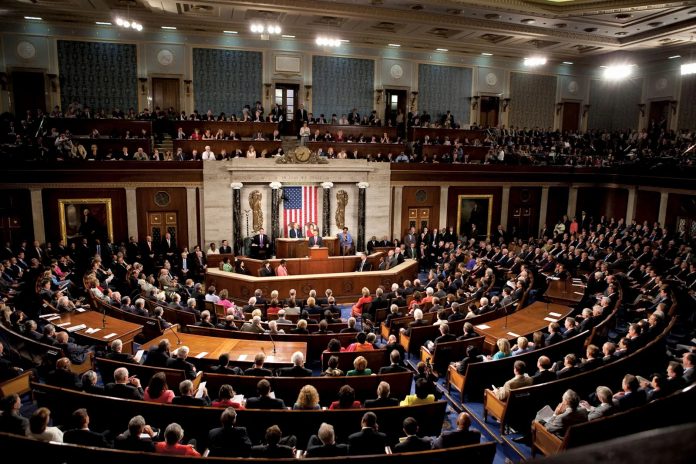
The Senate markup on the crypto market structure bill often referred to in connection with frameworks like the CLARITY Act or building on prior FIT21 legislation has been delayed for the Senate Agriculture Committee version.

Senate Agriculture Committee Chairman John Boozman (R-AR) announced on January 12-13, 2026, that the planned markup—originally aligned with the Senate Banking Committee’s session on January 15—has been postponed to the last week of January.

This is to allow more time for bipartisan negotiations to finalize remaining details and secure broad support. Key sticking points include treatment of decentralized finance (DeFi), stablecoin yield/rewards where banks have lobbied against competitive yields on stablecoins to protect deposits, and clarifying jurisdiction between the SEC and CFTC.

The Senate Banking Committee chaired by Tim Scott, R-SC had been on track for its markup on January 15, but recent developments show pushback: Coinbase withdrew support from the latest draft citing issues like restrictions on stablecoin rewards and other provisions seen as worse than the status quo, leading to reports of postponement or cancellation of that session as well, with negotiations continuing.

This legislation aims to provide long-sought regulatory clarity for digital assets, dividing oversight like spot crypto markets under CFTC as commodities, securities under SEC, building on prior laws like the GENIUS Act for stablecoins. However, intense lobbying from banks concerned about deposit flight if stablecoins offer yields and crypto advocates has complicated progress.

Over 100+ amendments were proposed in some drafts, highlighting ongoing debates.The delay reflects efforts to avoid a rushed or partisan outcome that could stall the bill entirely, especially with midterms approaching. If both committees advance reconciled versions later in January, it could move toward a full Senate floor vote relatively soon—but timing remains fluid amid these negotiations.

Crypto markets have shown volatility in response, with some assets reacting to the uncertainty. The treatment of DeFi (decentralized finance) in the ongoing Senate crypto market structure bill—often referred to as the Digital Asset Market Clarity Act—is one of the most debated and unresolved aspects.

As of mid-January 2026, the bill remains in negotiation and markup delays pushed to the last week of January for the Senate Agriculture Committee, with the Banking Committee markup also postponed amid pushback, largely due to concerns around DeFi provisions, among other issues like stablecoin yields.

Core Approach to DeFi

The drafts from both Senate Banking and Agriculture Committees, reconciling elements of the House CLARITY Act aim to integrate DeFi into a formal regulatory perimeter without stifling genuine decentralization. This is a shift from the current enforcement-heavy status quo, where the SEC has often pursued DeFi protocols under securities laws if they involve investment-like elements.

Key elements include: Protections for developers and non-custodial activities — A major focus is shielding software developers, open-source contributors, and infrastructure participants from automatic classification as regulated intermediaries. Activities like:Writing/publishing/maintaining code

Running nodes or validating transactions. Operating non-custodial user interfaces/front-ends. Providing liquidity pools without custody/control. Developing wallets or decentralized messaging systems. These do not, by themselves, trigger registration or full compliance obligations under SEC/CFTC rules, provided the person does not custody user funds, exercise control over assets, or act as a centralized counterparty.

This draws from concepts in prior bills like FIT21 and the Blockchain Regulatory Certainty Act, emphasizing that code publication or protocol maintenance ? financial intermediation. Focus on identifiable intermediaries — Obligations target centralized or application-layer service providers, front-ends with significant influence, or entities exercising “control or sufficient influence” over protocols.

Truly decentralized protocols avoid broad burdens. BSA/AML compliance pathway — The bill directs the U.S. Treasury in coordination with SEC/CFTC to develop tailored rules for how DeFi platforms/protocols comply with Bank Secrecy Act (BSA) and anti-money laundering (AML) requirements.

This is a first for statutory recognition of decentralized environments, avoiding outright bans but requiring feasible compliance via front-ends or identifiable operators rather than imposing impossible rules on pure code. SEC/Treasury rulemaking on DeFi — Agencies are instructed to clarify obligations for DeFi trading protocols, including securities law applicability, disclosures, and recordkeeping.

This promotes “responsible DeFi innovation” through studies, voluntary cybersecurity programs, and calibrated rules rather than defaults to enforcement. DeFi remains highly contentious: Groups like Coinbase argue some drafts impose overly restrictive rules on tokenized assets or protocol governance, potentially worse than the status quo by chilling innovation or creating compliance impossibilities for decentralized systems.

Banking/traditional finance concerns — Fears of regulatory arbitrage, where DeFi could enable less-regulated trading of tokenized securities or facilitate illicit finance. Over 100+ up to 137 reported amendments circulated, many targeting DeFi language.

Senators like Cynthia Lummis and Pete Ricketts pushed pro-DeFi revisions for developer protections; others from Democrats sought stronger controls on “influence” or illicit finance risks. No full safe harbor yet — Unlike narrower exclusions in some drafts, there’s no blanket immunity—enforcement for fraud/manipulation remains, and “decentralized” status may involve subjective tests.

Why the Delay Matters for DeFi

The postponement to late January gives more time for bipartisan tweaks to balance innovation protecting open-source DeFi with protections (AML, investor safeguards). If reconciled versions advance, DeFi could gain clearer boundaries, shifting from SEC enforcement actions to predictable rulemaking.

But if compromises fail, too much Treasury/SEC discretion, it risks stalling the bill or weakening pro-DeFi elements. This framework, if passed, would represent one of the most explicit U.S. legislative efforts to address DeFi directly.


Tokenized Stocks Crossed $800M Milestone

0

Tokenized stocks— blockchain-based representations of traditional equities like Tesla, Nvidia, Apple, and others have reached a significant milestone, with on-chain monthly trading volume hitting a record high of approximately $800 million.

This figure comes from recent market analysis shared by The Kobeissi Letter and echoed across crypto analytics sources. It reflects rapidly growing liquidity as traditional finance (TradFi) assets migrate on-chain, enabling 24/7 trading, fractional ownership, instant settlement, and global access without traditional market hour restrictions.

Platforms like Jupiter Exchange on Solana are handling nearly $200 million of that monthly volume alone, capturing a substantial share ~25%. Robinhood has described tokenized assets as an “unstoppable freight train” heading toward major markets.

Nasdaq is actively pushing for SEC approval to enable tokenized stock trading, with comments from their crypto chief indicating they’re “moving as fast as they can” this was noted about two months prior to the latest surge.

This comes amid broader growth in real-world assets (RWAs): Total tokenized public stocks value is now in the range of $800M–$1.2B market cap/TVL figures vary by source, with some reports showing surges like 2,500% year-over-year growth.

Leading platforms include xStocks via BackedFi and Ondo Finance, with popular tokens mirroring high-demand names like TSLAx (Tesla), NVDAx (Nvidia), and indices like SP500/SPYX. Solana has been a dominant chain for tokenized stock activity in some periods, flipping others like Ethereum in volume share due to low fees and high speed.

The trend signals accelerating convergence between TradFi and crypto/DeFi, driven by regulatory progress, institutional interest from players like Robinhood, Coinbase, Kraken, and Ondo, and demand for efficient, borderless exposure to equities. However, risks remain, including regulatory hurdles, custody concerns, potential for synthetic and fake tokens, and market volatility.

This is part of the larger RWA boom, where tokenized assets overall are expanding liquidity and accessibility—quietly reshaping finance at a historic pace. Tokenized stocks are digital tokens on a blockchain that represent ownership in — or economic exposure to — traditional company shares like Apple, Tesla, Nvidia, or ETFs tracking indices such as the S&P 500.

They bridge traditional finance (TradFi) and blockchain/DeFi, allowing equities to be traded, held, and used in ways not possible on conventional stock exchanges. Tokenized stocks are part of the broader Real-World Assets (RWAs) category, where off-chain assets get represented on-chain. The process typically follows these steps.

A regulated entity (custodian, issuer, or special purpose vehicle) holds the actual shares or provides the backing. This is usually done 1:1 — meaning one tokenized stock corresponds to one real share or a fraction thereof.

Token Issuance

The issuer creates digital tokens via smart contracts on a blockchain commonly Solana for speed/low fees, Ethereum for maturity, or others like BNB Chain/TON. These tokens are ERC-20-like or equivalent and track the real stock’s price using oracles like Chainlink price feeds for accurate, real-time valuation.

Direct/1:1 backed models most common today: Real shares are custodied off-chain by regulated institutions like banks or broker-dealers. Proof-of-reserves via Chainlink or audits verifying the backing. Tokens mirror price movements, dividends often passed through, and corporate actions.

Some older/simpler versions were synthetic derivatives tracking price without holding shares, but these carry higher risks and are less dominant now. Trading and Usage Tokens trade 24/7 on crypto platforms, centralized like Kraken, Bybit, Bitget; decentralized like Jupiter on Solana.

Fractional ownership is easy (buy 0.1 of a Tesla token). Instant settlement (T+0 vs. traditional T+1 or T+2). Global access without traditional brokers or market-hour limits. Composability: Use in DeFi (collateral for loans, liquidity pools, yield farming). Redemption (if supported).

Holders can sometimes redeem tokens for the underlying shares or cash equivalent, depending on the issuer’s rules and regulations. 1:1 custody of real shares; token represents economic rights (price, dividends) Token = legal share ownership on-chain (rarer, more complex).

Leading examples in 2026 include: xStocks by Backed Finance, often on Solana: Dominates retail volume; tokens like TSLAx, NVDAx, AAPLx; live on Kraken, Bybit, and DeFi. Ondo Global Markets: Multi-chain (Ethereum, Solana, etc.); strong institutional push; high TVL. Others: Securitize, Dinari, emerging Nasdaq and Coinbase efforts.

Fractional shares ? lower entry barriers. Global, permissionless access non-U.S. users often prioritized due to regs. Transparency via blockchain ledger. Treated as securities in many jurisdictions; availability often excludes U.S. persons due to SEC rules. Platforms comply variably, Swiss/EU issuers common for xStocks.

Relies on the issuer/custodian holding real shares. Manipulation or delays could affect accuracy. No full voting rights in most cases. Combines stock market + blockchain volatility.

Tokenized stocks represent the accelerating fusion of TradFi equities with blockchain efficiency. As of January 2026, the sector has grown rapidly (hundreds of millions to billions in value/volume), driven by platforms like xStocks and Ondo, signaling a shift toward more accessible, always-on global equity markets — though still early and regulation-dependent.

Dogecoin and Zcash Hunt for Momentum While Zero Knowledge Proof Runs Live Auction With $100M Foundation

0

Bullish signs are showing up across the market again. Dogecoin is flashing early turnaround hints. Zcash is fighting to take back lost ground after a steep slide. Traders are glued to charts, hunting for the next big move. But price patterns by themselves don’t create lasting gains. What counts is whether demand can keep going without falling apart under pressure.

This is where Zero Knowledge Proof (ZKP) steps in. Unlike Dogecoin and Zcash, ZKP isn’t trying to climb back from an old high. It sits in active price discovery through a live presale auction with a daily coin spread and zero private deals. Instead of hoping momentum comes back, ZKP builds bullish pressure through its design. That gap matters. One path is guesswork recovery. The other is planned growth.

Dogecoin (DOGE): Bullish Hints but Shaky Ground Underneath

Dogecoin is showing early bullish action again. Based on recent chart coverage, DOGE bounced from key support levels and is trying to form higher lows. This sparked fresh interest from traders who see it as a quick momentum play. For many, DOGE stays a known name, simple to trade, and packed with emotion.

But the trouble with Dogecoin has never been getting in. It’s been staying power. DOGE rallies tend to run on bursts of social buzz rather than steady use-driven demand. When interest fades, price often drops just as fast. That pattern has played out across several cycles.

Supply setup also plays a part. A big chunk of DOGE sits in a small number of wallets. This crowding makes price moves sensitive to what big holders do. Retail energy can push DOGE higher, but without built-in demand mechanics, it struggles to stay up.

So while the Dogecoin (DOGE) price bull story may pull short-term eyes, it doesn’t fix the core problem. DOGE moves because people guess that others will buy. It doesn’t move because the system itself pushes prices up. That makes its bullish hints weak.

Zcash (ZEC): Bounce Tries, but Stability Stays Risky

Zcash has always been known for putting privacy first. It brought zero-knowledge payments to the table long before most of the market knew what that meant. Recently, ZEC bounced from lows, pulling attention from traders watching for snap-back plays. But that bounce comes with warnings.

The current Zcash (ZEC) price breakdown review shows holes in the price structure and uneven liquidity. When ZEC falls, it often falls hard. When it rises, the move is usually sharp but shaky. This kind of action suggests big holders still have major pull on short-term swings.

ZEC also faces a spotlight problem. While its tech earns respect, its use hasn’t kept up with newer privacy-focused trends. Many buyers now link Zcash with past cycles rather than future ones. That turns each bounce into more of a chart trade than a true belief play.

Like Dogecoin, Zcash is trying to regain steam. But both need the mood to swing their way. Neither has a built-in system that forces a fair spread or blocks sudden supply dumps. That makes lasting bullish movement hard to keep.

Zero Knowledge Proof (ZKP): Growth Engine Built From Day One

Zero Knowledge Proof (ZKP) doesn’t need a comeback story. It’s not rising from a crash as the top bullish crypto. It’s not waiting for a fresh buzz cycle. Its presale auction runs live, its coin spread keeps going, and its setup is already done. That changes the whole game.

Instead of handing out coins through private rounds, ZKP spreads a set number of coins every day. Buyers get coins based on daily joins, with a strict per-wallet cap. This stops big holders from grabbing control early. It also stops sudden supply floods that can crush prices.

This design creates steady scarcity. As more people join, the daily supply stays the same. Price moves up not because of hype, but because demand gets squeezed by spread rules.

ZKP also ties future gains to real use, not guessing games. Through its Proof Pods system, network action connects to real compute and checking tasks. Rewards don’t hang on market noise. They link to activity. That’s a key split from meme coins or old privacy coins.

The project funded itself with $100 million, cutting ties to venture fund cycles or private deals. No seed unlocks wait to hit the market. No insiders got special terms. Everyone enters under the same rules.

This is why ZKP looks like a top bullish crypto from a structural view. It doesn’t need hope to work. It works by design. If adoption follows the system’s planned path, huge upside results become math-based, not hype-based, because the supply mechanics back it up.

Why Planned Growth Beats Guesswork Recovery

Dogecoin and Zcash are both trying to win back lost ground. Their bullish cases rest on traders believing others will jump back in. That can work in quick bursts, but it rarely lasts long. Without built-in demand rules, the price stays fragile.

ZKP handles growth another way. It doesn’t ask the market to believe. It forces fairness through code. It controls supply through the daily spread. It limits control through wallet caps. And it wipes out insider edges completely.

This is the gap between hoping for a pump and building one. Dogecoin might spike. Zcash might bounce. But ZKP is built to climb.

When markets turn toward projects with openness, controlled spread, and trackable demand, systems like ZKP tend to shine. That’s why it doesn’t look like a wild bet. It looks like a built one. In cycles where trust runs low and swings run high, structure becomes the top bullish crypto signal.

Find Out More about Zero Knowledge Proof:

Website: https://zkp.com/

Auction: https://auction.zkp.com/

X: https://x.com/ZKPofficial

Telegram: https://t.me/ZKPofficial

Bitcoin Hits 50-Day High as US–Iran War Tensions Escalate

0

Bitcoin has surged to a 50-day high, briefly climbing above $97,000 in recent trading sessions amid escalating geopolitical tensions between the US and Iran.

This rally, which began around January 13, 2026, pushed BTC past key resistance levels not seen since mid-November 2025, with prices hovering around $96,000–$97,000 as of January 15, 2026. The price action aligns with reports of Bitcoin reaching this milestone as investors sought “haven” or alternative assets during uncertainty.

The US State Department issued urgent warnings for American citizens to leave Iran immediately and prepare for potential prolonged communication outages, amid ongoing mass protests in Iran and hardening rhetoric from Washington.

Fears of broader regional conflict potentially involving military action have prompted some to view Bitcoin as a hedge outside traditional government-controlled systems. Iranian-backed groups have issued threats, and US officials have reportedly weighed strike options, though no direct conflict has erupted yet.

Steady US inflation data has eased concerns over aggressive rate hikes, boosting risk-on sentiment in crypto markets. Institutional and whale accumulation has outpaced retail selling in some analyses, with Bitcoin ETFs seeing strong inflows recently.

This move reflects Bitcoin’s occasional role as a “geopolitical hedge” during crises, similar to patterns seen in past global tensions. However, crypto remains highly volatile—prices could face pullbacks if de-escalation occurs or if risk-off sentiment dominates broader markets.

As of mid-January 2026, Bitcoin trades in the high $96,000s, up roughly 1–2% in the last 24 hours across sources, with traders eyeing $100,000 as the next psychological target if momentum holds.

Bitcoin’s historical performance during major crises has been mixed, often showing short-term volatility and correlation with broader risk assets like stocks rather than consistent “safe-haven” behavior like gold.

While Bitcoin is sometimes called “digital gold” due to its fixed supply and decentralization, empirical evidence reveals it frequently behaves more like a high-risk asset in acute downturns, with sharp drops followed by strong recoveries in many cases.

Bitcoin experienced one of its most severe drawdowns, plunging over 50% in a single day on March 12–13, dropping from around $7,900–$8,000 to a low near $3,800–$4,000. This mirrored the global stock market panic, S&P 500 fell sharply, disproving early claims of it being a reliable safe haven during liquidity crises.

However, BTC rebounded aggressively, recovering to $10,000 by May 2020 and eventually surging to new all-time highs above $60,000 by early 2021 and much higher in later cycles. The crash highlighted Bitcoin’s risk-on nature in forced liquidations but also its resilience in post-crisis environments fueled by stimulus and monetary easing.

Russia-Ukraine War 

Bitcoin initially dropped significantly around 7–16% in the first days of the invasion, falling to lows near $34,000 amid broader risk-off sentiment. It later saw temporary surges up to 16–20% in early March of 2022 as some viewed it as a hedge against sanctions or capital flight in Russia and Ukraine.

It correlated with stocks during the initial shock but recovered strongly over months, rising from post-crash levels to new highs by late 2024/early 2025. Studies note increased trading volume and use in affected regions, but Bitcoin did not consistently act as a strong safe haven—often amplifying volatility instead.

US-Iran Tensions, Soleimani Assassination in  January 2020

Bitcoin surged notably, rising from around $7,000 to over $8,500 roughly 20%+ in the days following the event, as investors sought non-sovereign assets amid fears of escalation. This aligned with a brief “geopolitical hedge” narrative, similar to gold’s reaction, though the move faded as tensions de-escalated.

Analyses of dozens of geopolitical events like Israel-Gaza/Hezbollah conflicts, Iran-Israel escalations in 2024–2025, Russia-Ukraine ongoing show a common pattern. Often sharp sell-offs or high volatility e.g., 8–16% drops in some Iran-Israel flare-ups, with Bitcoin behaving like a risk asset.

Frequent recoveries and outperformance, sometimes rising above pre-crisis levels within weeks/months. For instance, in several 2023–2025 Middle East conflicts, Bitcoin stabilized or rebounded quickly, aided by institutional inflows.

Compared to gold: Gold often outperforms in medium-term horizons e.g., stronger in ~62% of events over 90 days, while Bitcoin shows higher average long-term returns but greater downside risk.

Bitcoin does not reliably act as a strong safe haven during the acute phase of crises—especially liquidity-driven ones like March 2020—where it tends to correlate positively with equities and suffer amplified drops.

However, it has demonstrated hedge-like qualities in specific geopolitical scenarios e.g., sanctions evasion, currency controls in affected countries and often excels as a “recovery asset” post-shock, driven by factors like monetary stimulus, institutional adoption, and its narrative as an alternative to fiat systems.

Recent patterns suggest growing institutional buffering via ETFs may reduce downside severity compared to earlier eras, but volatility remains high. With ongoing tensions, Bitcoin’s rally to 50-day highs reflects this evolving “geopolitical hedge” role in uncertain times—though always monitor live conditions, as crypto can shift rapidly.

Trump’s 10% Credit Card Rate Cap Proposal Splits Corporate America, Exposing Fault Lines in Consumer Finance

0

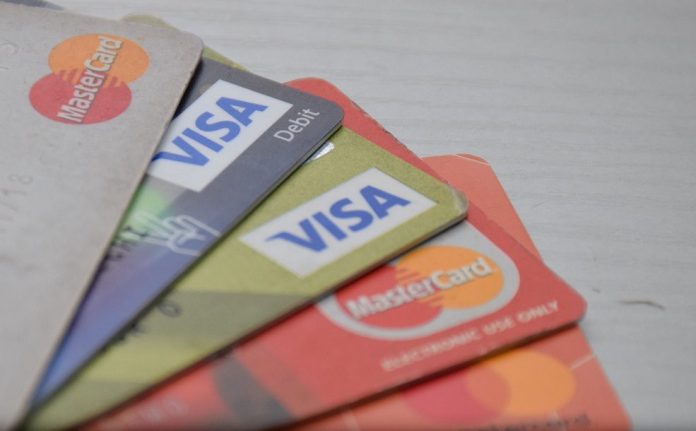
President Donald Trump’s call for a one-year cap of 10% on credit card interest rates has evolved into more than a policy soundbite. It is now a flashpoint that exposes long-standing tensions in the U.S. consumer finance system, pitting banks and card issuers against fintech executives and consumer advocates, while raising questions about how far government should go in reshaping private markets.

Trump framed the proposal as a response to what he described as excessive borrowing costs, arguing on Truth Social that Americans are being “ripped off” by rates that can climb into the 20% and 30% range. Although Congress would need to legislate any such cap, the idea has already unsettled financial markets and boardrooms because it strikes at one of the most profitable segments of retail banking.

For large banks, credit cards are not only a lending product but a cornerstone of broader customer relationships, driving deposits, payments, and loyalty. Executives from JPMorgan Chase, Citi, Bank of America, and others have been unusually direct in warning that a blunt interest rate ceiling would undermine the economics of that system. Their central argument is that higher rates subsidize risk. Remove that pricing flexibility, they say, and lenders will respond by tightening approval standards, shrinking credit limits, or exiting parts of the market altogether.

Jamie Dimon, JPMorgan’s chief executive, captured that concern when he told investors that sharply lower rates could hurt customers with weaker credit profiles most, because banks would be less willing to lend to them at all. Citi’s finance chief Mark Mason went further, warning that a cap could have a “very negative impact on the economy,” not just on banks, by constricting consumer spending at a time when growth remains uneven.

The airline industry has also sounded the alarm, underscoring how intertwined credit cards have become with sectors far beyond banking. Delta Air Lines chief executive Ed Bastian said a 10% cap would “upend the whole credit card industry,” highlighting the risk to co-branded card partnerships that generate billions of dollars annually through rewards programs and interchange fees. Those partnerships, particularly with American Express, are a major source of predictable cash flow for airlines.

Yet the pushback from incumbents has been met by an equally forceful counter-narrative from parts of the fintech world. Klarna chief executive Sebastian Siemiatkowski has emerged as one of the most vocal supporters of Trump’s idea, arguing that the traditional credit card model is designed to encourage persistent debt at high interest rates. In his view, the system disproportionately penalizes lower-income borrowers while rewarding wealthier users who pay off balances monthly and collect perks such as cash back and airline miles.

Siemiatkowski’s support reflects a broader critique that has gained traction in recent years: that credit card rewards are effectively cross-subsidized by borrowers who carry balances, often at punitive rates. From that perspective, a cap is not just a consumer protection measure but a corrective to what supporters see as a structurally unfair market.

Other executives see opportunity rather than threat. SoFi chief executive Anthony Noto suggested that if traditional card lending contracts are under a rate cap, alternative products such as personal loans could fill the gap. His comments point to a likely second-order effect of any cap: credit demand would not disappear, but could migrate to different forms, potentially reshaping the competitive landscape in consumer lending.

Critics of the proposal warn that this migration could be dangerous. Bill Ackman, the billionaire head of Pershing Square, argued that restricting rates would push some borrowers out of regulated credit markets entirely, increasing reliance on informal or higher-cost options. While he acknowledged Trump’s stated goal of lowering borrowing costs, Ackman said structural reforms to encourage competition and innovation would be more effective than price controls.

The debate also carries political and historical echoes. Interest rate caps have surfaced repeatedly in U.S. policy discussions, particularly during periods of high inflation or public frustration with banks, but they have rarely advanced far in Congress. Opponents often cite lessons from state-level usury laws and international examples, arguing that strict caps tend to reduce credit availability rather than make borrowing cheaper overall.

What makes Trump’s proposal notable is not just the policy itself, but the signal it sends. It aligns with a broader pattern of his administration, showing greater willingness to challenge entrenched corporate interests, even in sectors traditionally aligned with free-market orthodoxy. Whether the proposal is ultimately enacted or not, it has already forced a public reckoning over who benefits from the current credit card system and who bears its costs.

The central tension has so far remained unresolved, even as lawmakers weigh the idea. Supporters argue that unchecked interest rates amount to consumer exploitation. Opponents counter that credit, by its nature, must be priced for risk, and that blunt intervention could do more harm than good.